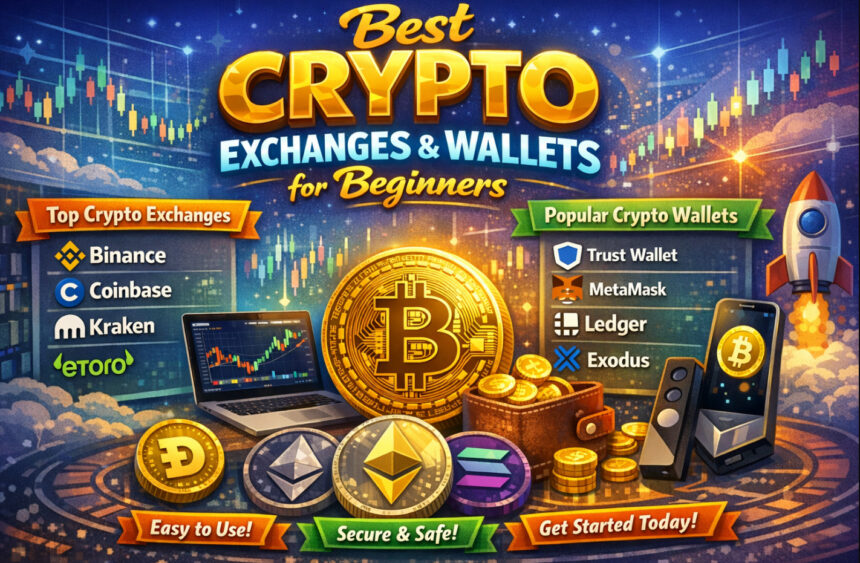
In 2026, considering how quickly cryptocurrency is expanding, it’s important for new users to decide which platform to use. The Best Crypto Exchanges & Wallets for Beginners prioritize security, keep fees as low as possible, and provide an easy to use platform for users.
This allows new investors to trade, protect, and manage digital assets. User friendly exchanges like Coinbase and dependable wallets like Exodus help new investors crypto trade with confidence.
| Platform | Best For Beginners Because… |
|---|---|
| Phemex | Simplest onboarding + strong beginner support ecosystem |
| Coinbase | Easy buy/sell with strong trust and compliance |
| Binance | Wide crypto access and learning tools |
| Kraken | Clear fee structure + path to pro tools |
| MEXC | Good for exploring smaller tokens with simple UI |
| KCEX | Beginner cost‑conscious trading choice |
| OKX | Easy entry with upgrade path to self‑custody |
| Kraken Wallet | Trustworthy wallet for holding crypto post‑purchase |
| Zengo | Simplest setup (no recovery phrase) for newbies |
| Exodus | Simple UI on desktop/mobile with swaps |
1) Phemex
Phemex is a global crypto exchange founded in 2019. Known for its clean and beginner-friendly interface, it enables fast trading. It provides spot and derivatives trading. Its competitors have lower fees, with Phemex charging about 0.1% for spot trades.
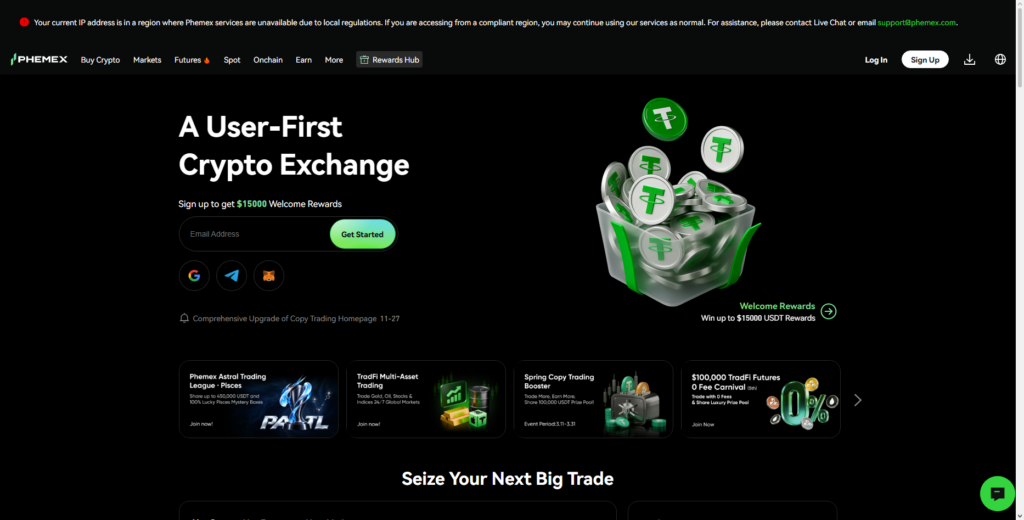
Unlike other exchanges, it often charges no fees to deposit, while it does charge fees to withdraw based on the coin network used. Bank transfers, credit/debit cards, and third-party on-ramps are among Phemex’s payment options.
Beginner-friendly Live Chat and Email customer support, along with other resources, is available. Phemex makes staking and learning resources available to new users.
Phemex Key Features
- Trading on Spot & derivatives (futures) is allowed.
- Have a structure for competitive fees and promotions.
- Possess a simple interface alongside advanced charting.
- Supports Fiat gateways (cards and bank transfers).
- Offers staking and savings products.
Pros
- Fast execution and low trading fees.
- Beneficial for both beginner and advanced traders.
- New tokens and multiple asset listings.
- Support live chat at all times.
Cons
- Some regions have limited support for fiat.
- For novices, the derivatives can be quite a gamble.
- During peak hours the support can be slow.
2) Coinbase
The company was created in 2012. Due to its simple user interface, it is a good option for novice investors. Due to their spread and service fees, which in most cases are higher than the fees charged by competing companies, and for payment options (Bank Transfer (ACH), Credit/Debit Card, Paypal (in some countries)), the company has transparent fees.
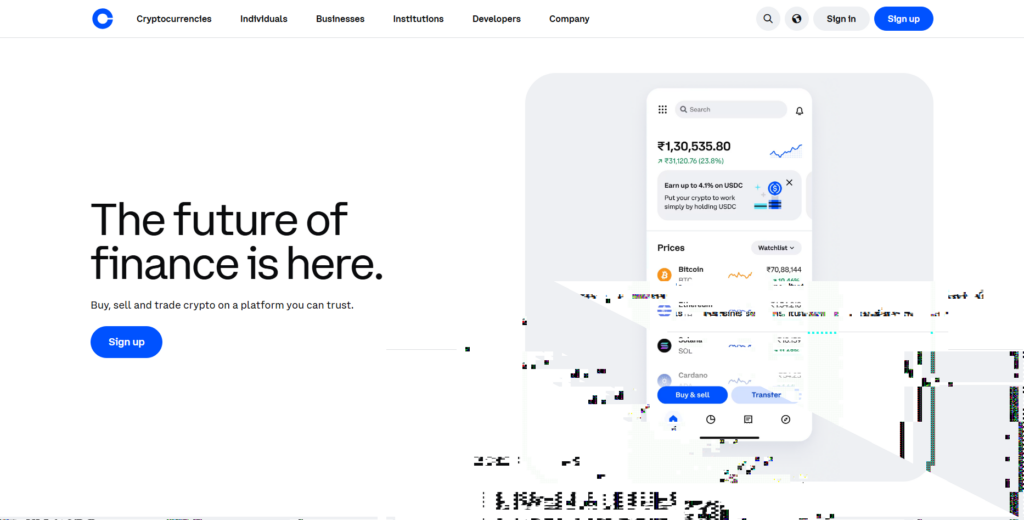
Deposit and withdrawal fees vary by asset and may be free at Coinbase. The company has a help center, and live customer service is available 24/7. The company has 2FA and insurance to secure your account. Buying and selling is simple, and educational guides are rewarding.
Coinbase Key Features
- Super beginner friendly interface.
- Supports the biggest cryptos.
- Built in educational rewards.
- Insurance on custodial assets, and secure storage.
- Lots of payment methods.
Pros
- Flow is simple for buying/selling.
- Compliance with regulations is strong.
- Supports PayPal in a lot of regions.
- Secure and high trust platform.
Cons
- Fees on this exchange are higher than a lot of other exchanges.
- Trading tools are limited.
- Some trading features not all trading features are available for some countries.
3) Binance
Founded in 2017, Binance is the biggest crypto exchange in the world with the largest trading volume. Advanced trading options are offered; for example, trading with spot, futures, staking, savings, etc. Also, you can trade with a very low fee of 0.1% in spot trading, and with even lower fees if you are a holder of BNB.
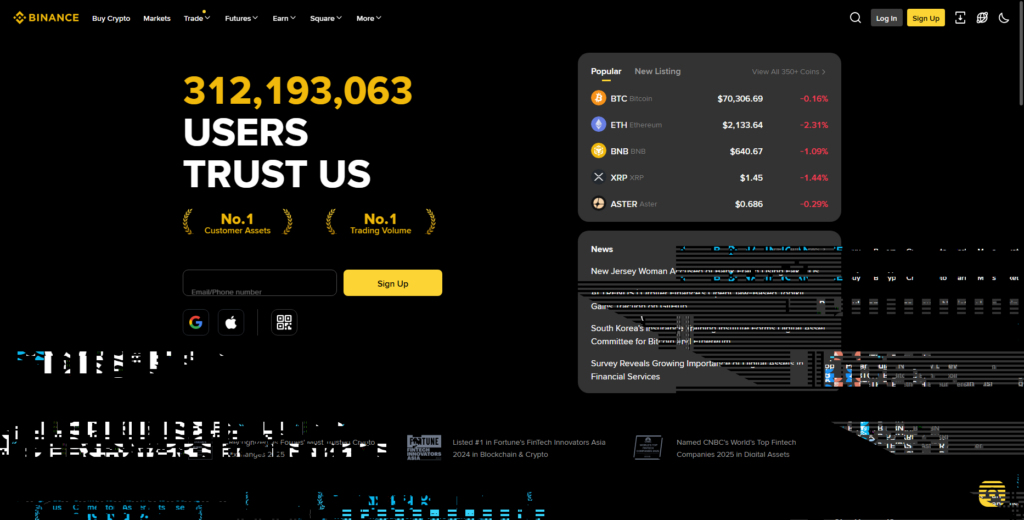
For payment methods, there are Bank Transfer, Credit/Debit Card, P2P, and other 3rd Party providers. In some countries, there are localized payment methods.
There are live chat and ticket systems for customer service, and a large FAQ. In terms of security, there is a SAFU Fund and Multi-tier verification, and therefore it is optimal for novices and pro traders too.
Binance Key Features
- More than sufficient selection of assets.
- Services for Spot, Margin, Futures, and Staking.
- Maker/taker fees are low.
- P2P trading with fiat currency.
- Access through multiple devices (website and application).
Pros
- Extremely low fees.
- Extensive trading alternatives.
- Ample liquidity.
- Abundance of educational resources.
Cons
- Beginners may find it too much.
- Some regions have restricted regulations.
- During busy periods, verification takes longer.
4) Kraken
Kraken was founded in 2011 and is one of the oldest crypto exchanges. It is known for security and reliability. It offers spot, futures and staking services. The fee structure is 0% -0.26% and varies according to volume and trading type.
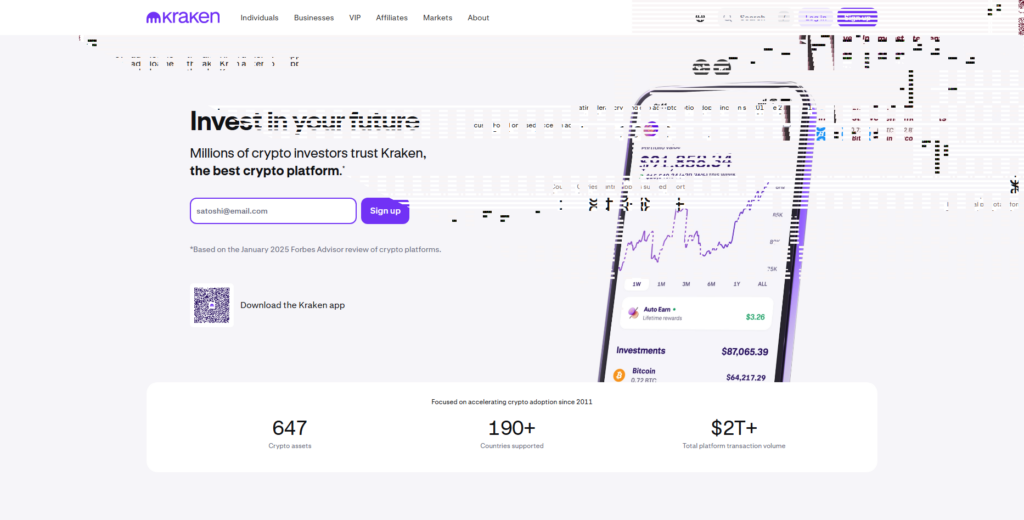
Payment options include Bank transfers (SWIFT, ACH), Wire, and Crypto deposits. In some regions, credit/debit purchases may be available. The customer service support includes 24/7 ticket and chat services.
There is also a large help center. Kraken is good for beginners because it has a lot of strong security such as cold storage, two‐factor authentication, and professional-grade safety.
Kraken key Features
- Spot and Futures Trading.
- It has good network safety.
- It Provides Staking.
- There are multiple fiat funding options.
- It has a complex interface for professional users.
Pros
- They have a good record for security.
- Good enough for some.
- Great for serious traders.
- Decent customer service.
Cons
- The interface is not as simple as some.
- The selection of altcoins is smaller than the bigger exchanges.
- Support is slow at times.
5) MEXC
MEXC was founded in 2018. and is a crypto exchange that is known for new users and available altcoins. It provides spot and futures trading, and the average trading fee of 0.2% can be reduced in the case of high trading volume or holding MX tokens.
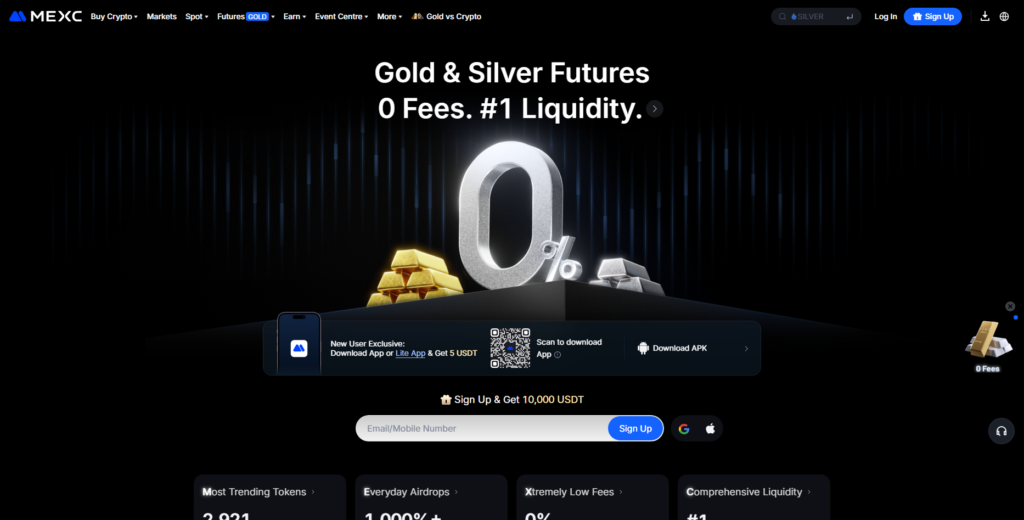
MEXC provides payment methods such as Credit/Debit cards, Bank transfers, and Crypto deposits. MEXC has P2P services where and when available. The support services include live chat, email help desk, and a knowledge base.
For beginners MEXC has great services such as quick trade options, tutorials, and ongoing promotions. MEXC is a good choice for users who want to trade a lot of different tokens.
MEXC Key Features
- Large selection of altcoins.
- Spot and Leveraged Tokens.
- New projects listed quickly.
- P2P and Fiat gateways.
- Lots of promotions and bonuses.
Pros
- It is good for finding new altcoins.
- It is good for finding new promotions and discounts.
- The trading interface is easy to use.
- The community is responsive.
Cons
- It is not user friendly for novice users.
- There is a lack of simplicity in the advanced functions of the traded products.
- Other competitors are cheaper.
6) KCEX
Established in (year varies, emerging exchange), KCEX is a crypto trading platform designed for beginners and intermediates. It offers spot trading with competitive trading fees of approximately 0.15%–0.25% per trade and benefits for high-volume traders.
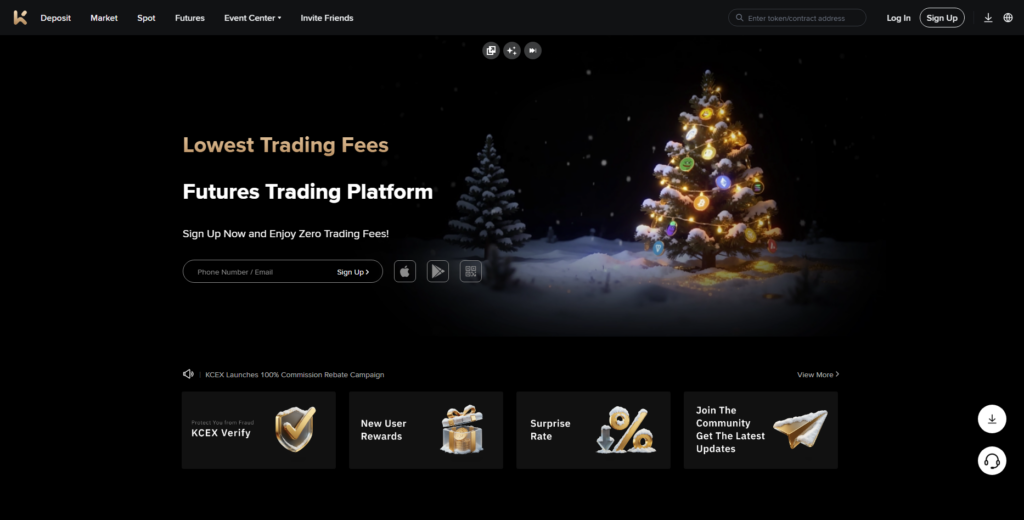
Payment options include crypto deposits and some fiat options, such as bank transfers or cards through partners. Support is via email, ticketing systems, and community channels.
KCEX aims to equal ease of use with the ability to trade a variety of tokens. Although KCEX is newer than many of the bigger players in the market, its focus is on beginners who value low barriers to entry and clear trading and fee structure.
KCEX Key Features
- Spot trading available.
- Supports Fiat gateway.
- Fee tiers are competitive.
- Onboarding is easier.
- Engages with the community.
4 Pros
- Trading is easy.
- Entry is easier.
- Fees are easy to understand.
- Options for support are basic.
3 Cons
- There’s less liquidity since the platform is newer.
- There are not as many features.
- There’s less support.
7) OKX
Established in 2017, OKX (previously OKEx) is an all-in-one platform for trading cryptocurrencies. Users can buy and sell cryptocurrencies, trade futures, options, and use DeFi tools. What makes this exchange attractive is its low fees, often 0.1% for spot trades and higher tier users receive better fees.
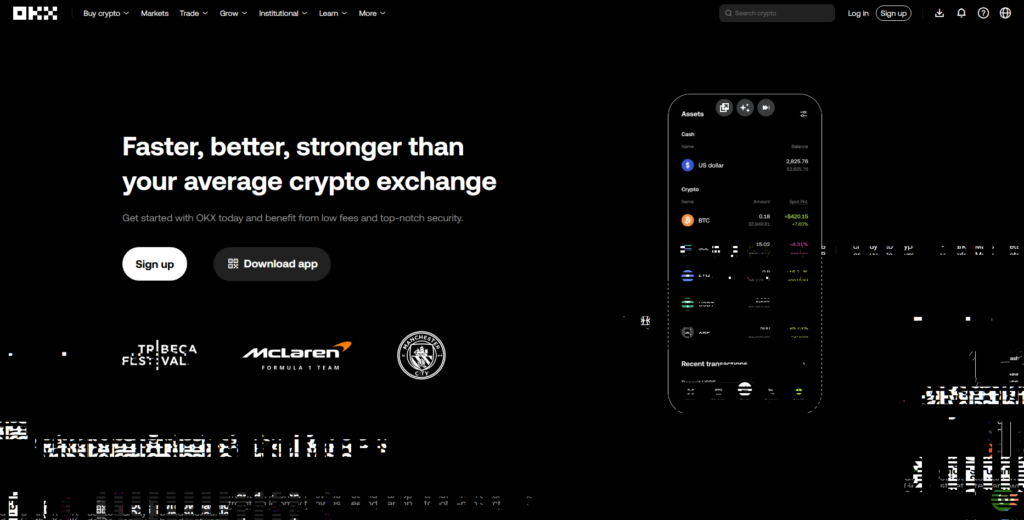
OKX offers a large variety of payment methods from bank and card transfers to P2P on many regions. Token withdrawals can vary. OKX offers customer support 24/7, a help center, and in an app chat.
Security is not an issue for this exchange, as they offer cold wallets, multi-sig, and account protections. Advanced users and beginners can use the platform as they offer many trade options and simple buy/sell options.
OKX Key Features
- Spot, futures, and options.
- Staking and earn products.
- Supports Fiat and has P2P.
- Charts that are advanced.
- There are mobile and web apps.
4 Pros
- Portfolio is broad.
- Fees are competitive.
- There is a strong layer of security.
- Support is decent.
3 Cons
- For new users the interface is complex.
- Some features have regional restrictions.
- There are delays in withdrawals.
8) Kraken Wallet
The Kraken Wallet was launched in 2011 by Kraken, the first exchange to offer users an easy to use non-custodial wallet option which empowers them to control their own private keys. There are no fees for service, however, there will be network fees when sending crypto, Users can send, store, receive, and swap crypto assets.
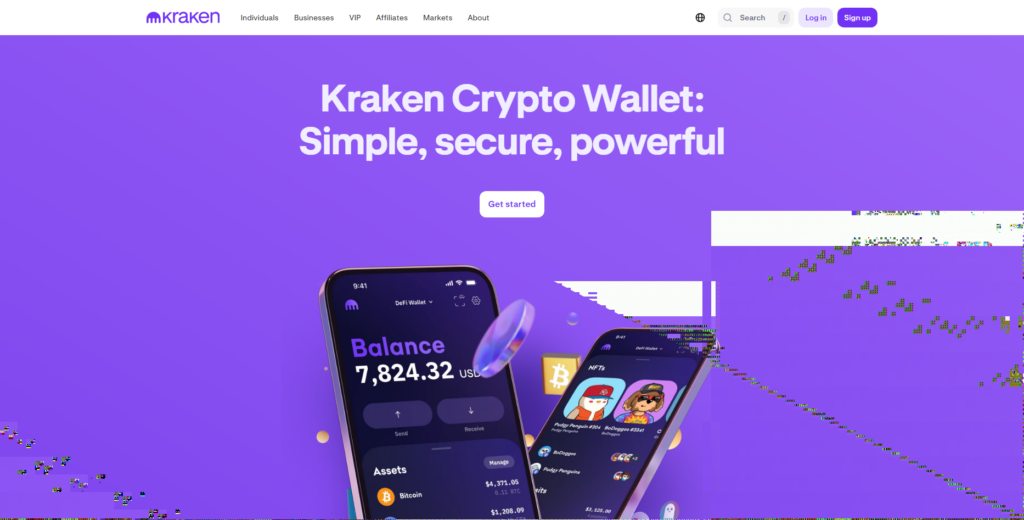
Options for payment when buying crypto using a linked exchange account, or through network partners where you can pay via cards or bank accounts will be available. The help desk has shared support with Kraken, and there are numerous tickets and help support resources available.
Security and user stewardship are transferred through the control of the user keys, and this wallet will be an optimal choice for users who are looking for a wallet to safely house their funds.
Kraken Wallet Key Features
- Control over your keys with non-custodial
- The storage is secure.
- Sending and receiving is easy.
- Integrated with the Kraken exchange.
- Basic swap features.
Pros
- The private keys are fully controlled.
- There is better security.
- The design of the wallet is better.
- Better security as the wallet is Kraken’s.
Cons
- The wallet has fewer features than some mobile wallets.
- There are no built-in fiat purchases.
- Less than optimal tools for trading crypto.
9) Zengo
Zengo is a mobile-based crypto wallet est. in 2018. It utilizes keyless technology and allows for encrypted private keys to be managed and stored. Network gas fees will apply. Each crypto swap will incur an additional charge by the platform.
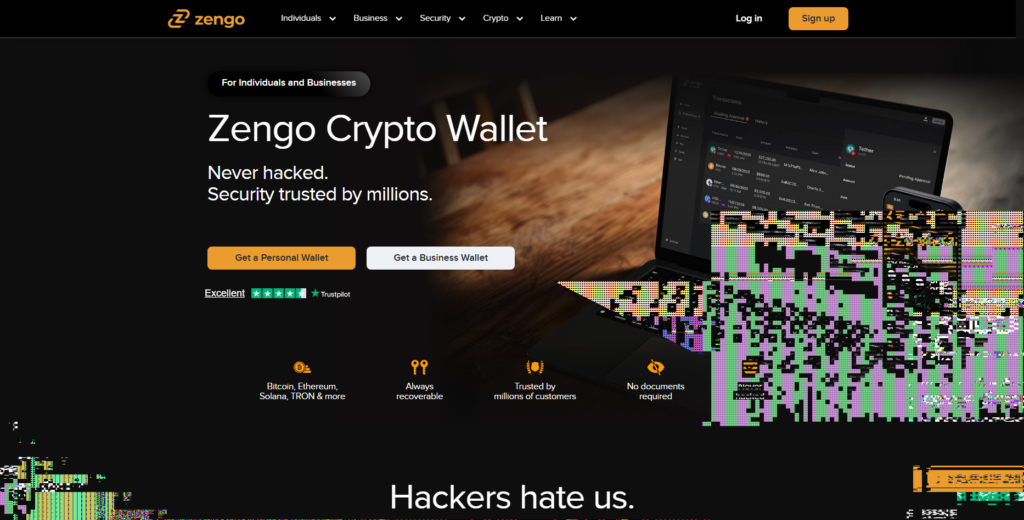
Multiple assets are available for support, and partner based service channels are used for credit/debit card or bank account linked purchases. Email support, along with in-app help and tutorial videos are available.
For new users and beginners using Zengo’s mobile-based wallet will be perfect for them as it is user friendly and will eliminate the complex issues associated with key management. For secure crypto custody and keeping, Zengo offers biometric login and a recovery method through a trusted contact system.
Zengo Key Features
- No keys model for security.
- Biometric security.
- Buying and swapping inside app.
- Many asset classes supported.
- Recovery via trusted contact.
Pros
- Extremely simple for new users.
- Impressive security without needing private keys.
- Nice mobile design.
- Simple way to recover.
Cons
- On swapping, the fees may be higher.
- Trading tools to be advanced are restricted.
- Certain assets are not supported.
10) Exodus
Being founded in 2015, Exodus has established itself as a popular desktop and mobile crypto wallet due to its user-friendliness. Users keep their own keys and the wallet is considered non-custodial.
The only fees users are charged are network fees when sending transactions, and when swapping, there are fees. There are fees associated with buying crypto, and they go through partnered vendors.
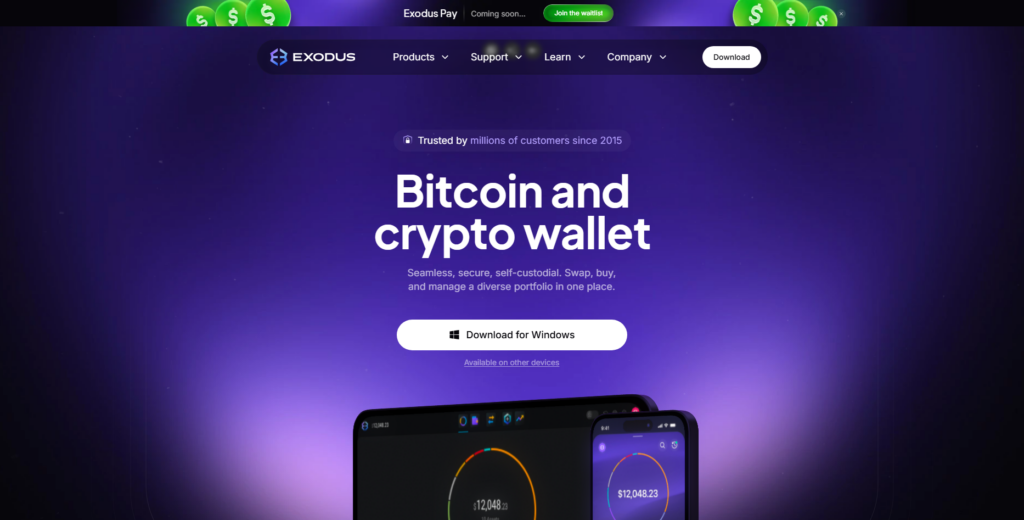
The partnered vendors offer crypto purchase options through cards or bank purchases. Support is offered 24/7 through email, as well as the FAQs, tutorials, and community help. Exodus has portfolio tracking, an in-built exchange, and displays tracker features.
With its easy-to-use UI, strong security, and ability to hold multiple different assets, it is a great choice for beginner users looking to self-custody their crypto.
Exodus Key Features
- Wallet for mobile and desktop.
- Feature for swapping built in.
- Tool for tracking portfolio.
- Many coins supported.
- User friendly interface.
Pros
- Incredible for new users.
- Amazing design.
- Synchronization between multiple devices.
- Easy buying options.
Cons
- User is custodially responsible.
- Swap fees are not fixed and may be higher.
- Exchange services not available.
Key Factors to Consider When Choosing a Crypto Platform
Security
Before choosing an exchange, make sure they have 2-factor authentication, cold storage, and encryption. Beginners need to feel like their funds are not exposed to phishing and hacks.
Fees & Charges
Beginner’s profits will be maximized when hidden fees, transparent pricing, and low fees are present. Beginners also want to trade, deposit, and withdraw quickly without paying unexpected fees.
Payment Methods
Beginner’s will have a better experience when they can use a crypto platform with bank account, credit/debit card, Paypal, and crypto deposit payment methods. More payment methods equal easier account funding.
User Experience
The bottom line is that more seamless navigation and a clean interface will lead to better beginner experiences. Support to trade and track portfolios is extra helpful to beginner users.
Asset Availability
Preference for a crypto platform will be bottom line with variety available. More assets mean more opportunities to invest and trade without utilizing other platforms to other cryptos.
Customer Support
Assured support through live chat, email, and assistance centers is important. Prompt replies and step-by-step guides help newcomers deal with technical issues and comprehend the process of trading, depositing, or withdrawing with ease.
Regulatory Compliance
Check whether the exchange complies with regional laws, KYC, and AML. This will guarantee safety, legality, and the protection of newcomers from cons, scams, or unexpected collapses of the platform.
Tips for Beginners
Start Small:
Learn the ropes of trading, wallets, and the platform without risking too much of your money. Invest just the smallest amount and step amount.
Security is Key:
For added protection, always turn on two-factor authentication (2FA), and use extreme password protection. If you plan to store some coins use a cold (hardware) wallet.
Diversification is important:
Don’t spread all your money into one coin or token. Make investments into several different coins to reduce risk and increase the overall stability of your portfolio.
Trustworthy Platforms:
Find wallets and exchange platforms that are known and heavily reviewed. Do your due diligence on the trust level of the customer service, and review the sites.
Education Before Trading:
For the sake of your money, learn the basics of cryptocurrency, the strategy of trading and how the market works. Your Decison will appreciate your learning. There are a lot of tutorials on trading, and how to safely navigate your funds.
Transaction History:
For the sake of reporting your taxes, and for the sake of avoiding a mistake, and to help yourself with the analysis of your portfolio, formulate a record of all your moves, trades, and deposits.
Stay Rational
All markets are driven by logic except for cryptos. Always do backwards logic. Tell yourself you cannot make money and reverse engineer. Just because a lot of people are doing it does not mean you should. Always come up with a defensible logic before making a stronger market move.
Keeping Softwares Updated
Keep your wallet and trading applications updated to take advantage of trading and software security.
Conclusion
From 2026 onward, security, user experience, and low costs remain the main focus of beginner-friendly cryptocurrency platforms. Due to their liquid markets and simple user interfaces, Binance and Coinbase are the top competitors.
For consumer-controlled custody without self-storage, Exodus and Zengo are the dual custody wallet competitors. Beginners have an easier time entering cryptocurrency as new platforms with varying payment methods and quality customer service are introduced.
Beginning investors look to diversify as well as calm their investing fears. Choosing low-risk and regulated/rested exchanges reduces scamming opportunities.
For beginners to establish a cryptocurrency portfolio, the most optimal platform will have a mix of secure features and user-friendly mechanics along with a variety of assets.
FAQ
Which crypto exchange is best for beginners in 2026?
Based on 2026 data, Coinbase and Phemex are ideal for beginners due to their intuitive interfaces, educational resources, and secure infrastructure. Low fees and multiple payment options make onboarding simple.
Are crypto wallets safer than exchanges?
Yes. Non-custodial wallets like Exodus and Zengo provide full control over private keys, reducing the risk of hacks or exchange failures. Exchanges are convenient but custodial.
How can beginners minimize trading fees?
Opt for exchanges with low maker/taker fees like Binance, use platform-native tokens (BNB, MX), and avoid frequent small trades. Choosing P2P or bank transfer options can also reduce costs.
What payment methods can beginners use to buy crypto?
Most beginner-friendly platforms support bank transfers, credit/debit cards, PayPal, and sometimes P2P crypto purchases. Check regional availability to ensure smooth deposits.
How much should a beginner invest in crypto?
Start with small amounts you can afford to lose, typically 1–5% of your total investment portfolio. Gradually increase as you gain confidence and understanding of market volatility.