
This article covers the most reliable developer-friendly crypto wallet APIs for constructing secure blockchain applications. Wallet APIs enhance the management of blockchain transactions and crypto assets and simplify the incorporation of support for multiple chains.
Devs have the opportunity to use the most cutting-edge APIs and advanced features for high-performance apps and Web3 integration to build cryptocurrency platforms prepared for the year 2026.
What Are Crypto Wallet APIs?
Crypto Wallet APIs facilitate the seamless integration of applications with blockchain wallets by offering highly efficient management of digital assets and execution of crypto transactions. Crypto Wallet APIs simplify the processing of wallet balances, transaction histories, token information, and smart contracts as well as multi-chain blockchain networks.
Developers rely on Crypto Wallet APIs to securely build crypto wallets, DeFi platforms, and payment and Web3 applications without the hindrance of developing a blockchain infrastructure.

Evaluation Criteria for the Best Crypto Wallet APIs of 2026
- Diversity of supported blockchain networks and digital currencies: APIs that allow integration of multi-chain and token support were examined.
- Transaction safety and protective mechanisms: Various protective mechanisms for safe transactions were evaluated.
- API efficacy and consistency: Uptime and speed of response for consistent API support were examined.
- Ease of integration and developer guides: Documentation and the quality of offered guides and integration tools were considered.
- Enterprise scalability: APIs that support large numbers of users and large scale applications were considered.
- Cost and customization considerations: APIs that offered flexible pricing and cost structures were examined.
Key Points & Best crypto wallet APIs for developers In 2026
| Crypto API | Why Use It |
|---|---|
| Fireblocks API | Enterprise digital asset security |
| Alchemy | Provides powerful APIs for wallets, smart contracts, transactions, and blockchain development. |
| DeBank | Scans wallets to identify staking, liquidity pools, debts, and DeFi positions. |
| CoinMarketCap API | Delivers real-time prices, market metrics, and historical crypto data efficiently. |
| QuickNode | Connects applications with fast blockchain nodes across multiple supported networks. |
| Coinbase API | Enables trading, account connections, and secure crypto transfers inside applications. |
| ChangeNOW | Integrates seamless cryptocurrency swaps directly into user-friendly application interfaces. |
| Covalent (GoldRush) | Provides structured blockchain data, balances, and events across 100+ networks. |
| Blockchair | Offers secure blockchain analytics, address screening, and transaction monitoring tools. |
| CoinGecko API | Provides extensive token listings, exchange data, and developer-friendly endpoints. |
10 Best crypto wallet APIs for developers In 2026
1. Fireblocks API
Fireblocks API offers developers a high-quality crypto wallet infrastructure. This product enables developers to build tools for managing and securing digital assets. Advanced wallet management, transaction automation, and protective measures like MPC are included.
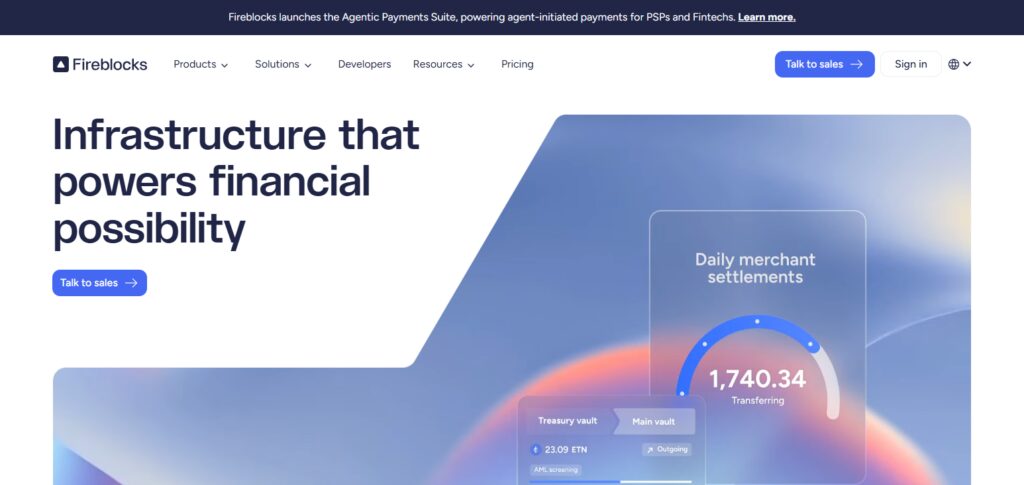
Developers now have the ability to build applications that manage and transfer digital assets across a number of blockchain networks using the Fireblocks API. Developers using this API are able to exercise compliance and operational control as well.
Fireblocks API offers the products and infrastructure that a number of financial technology companies, stock exchanges, investment banks, and enterprises that require secure and scalable crypto wallet solutions for their Web3 applications.
CoinStats API – Features
- MPC Security: Protects private keys and eliminates security concerns with Multi-Party Computation (MPC) technology.
- Cross Blockchain Management: Simplifies management of digital assets across multiple blockchain networks via a single platform.
- Wallet Management: Streamlines the creation, management, and oversight of institutional crypto wallets.
- Automated Transactions: Enables automated crypto transfer and approvals, as well as automated workflow management.
- Custom Governance Policies: Flexible policies for transaction rulings, custom permissions, approvals, and control.
- Easy Integration: Easy to integrate, developer-ready APIs and SDKs.
- Instant Visibility: Continuous tracking of blockchain activities with instant visibility of asset transfers.
- Custody Infrastructure: MPC technology provides the required custody infrastructure for banks and crypto asset exchanges.
Pros & Cons of Fireblocks API
| Pros | Cons |
|---|---|
| Advanced MPC security provides strong protection for digital assets | Pricing can be expensive for small developers and startups |
| Supports multiple blockchain networks and digital assets | May require technical expertise for full integration |
| Enterprise-grade wallet infrastructure for institutions | Better suited for businesses than individual developers |
| Provides secure transaction approval workflows | Setup and configuration can be complex |
| Offers powerful APIs and SDKs for developers | Limited usefulness for simple wallet projects |
| Strong compliance and governance features | Enterprise features may increase operational costs |
| Real-time monitoring and transaction tracking capabilities | Requires understanding of security policies and controls |
| Trusted by financial institutions and crypto companies | Not ideal for low-volume applications with basic needs |
| Scalable infrastructure for high transaction volumes | Customization options may require additional development effort |
| Supports automation of digital asset operations | Learning curve for advanced features can be high |
2. Alchemy
Alchemy has a great blockchain infrastructure and helps developers build scalable dApps on Ethereum and all EVM-Compatible chains. Their developer tools go as far as guaranteed nodes, wallet tracking, smart contract creation, transaction tracking, and blockchain analytics.
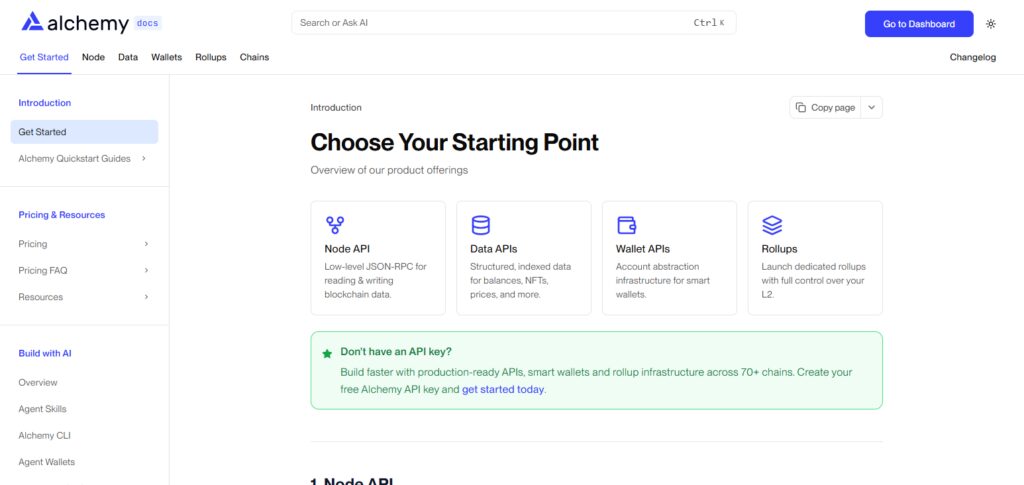
Alchemy makes backend infrastructure significantly easier for Web3 engineers and in turn makes dApps faster and more reliable. In 2026, Web3 gaming, DeFi, and other enterprise blockchains are all going to be in high demand, and Alchemy will be the best tool available.
Alchemy – Features
- High-Performance Blockchain Infrastructure: Node access underpins scalable Web3 apps and dApps.
- Ethereum and EVM Support: Eases development on Ethereum and EVM compatible chains.
- Smart Contract Tools: Developers can engage with and oversee smart contracts on the blockchain.
- Transaction Monitoring: Comprehensive analytics on blockchain transactions, with a time emphasis.
- Developer Optimization: APIs and tools that positively advance the optimization of dApps.
| Pros | Cons |
|---|---|
| Provides highly reliable blockchain infrastructure for Web3 developers. | Pricing can become expensive for high-volume applications. |
| Offers powerful APIs for Ethereum and EVM-based networks. | Primarily focused on developer infrastructure, not market data. |
| Improves dApp performance with scalable node solutions. | Beginners may require technical blockchain knowledge. |
| Supports smart contracts, wallets, NFTs, and transactions. | Limited support outside supported blockchain ecosystems. |
| Trusted by enterprises building large-scale Web3 applications. | Free plans have usage limitations for growing projects. |
3. DeBank
DeBank excels in advanced DeFi portfolio analysis and tracking wallet activity across blockchain networks. Traditional crypto APIs tell the user their total balance, but DeBank offers an analysis of different activities across DeFi protocols, such as staking rewards, liquidity pools, lending and borrowing, as well as yield farming.
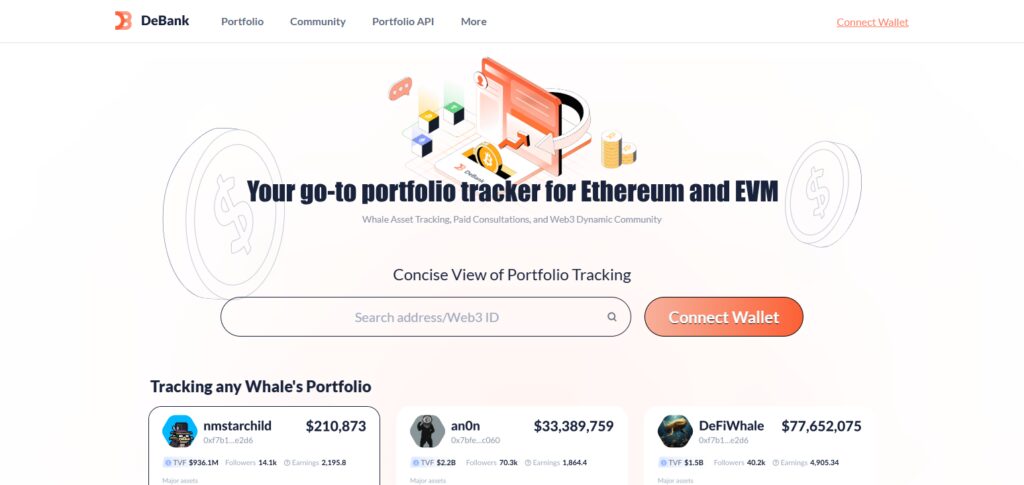
Its API can be leveraged to build DeFi dashboards and portfolio management systems. DeBank’s tools and analytics can be used in professional grade Web3 applications to provide analytics and DeFi investment tracking and investment risk exposure, user asset analysis, and interaction with various action protocols within the ever growing DeFi space of 2026.
DeBank – Features
- Deep DeFi Portfolio Tracking: Enhanced viewing of DeFi positions, going beyond basic wallet balances.
- Multi-Chain Wallet Analysis: User engagement across varying blockchains.
- Liquidity Pool Monitoring: Discovers where users stake and farm liquidity.
- Debt and Lending Tracking: Tracking where users lend or borrow.
- Web3 Analytics Tools: Focus on the creation of advanced DeFi dashboards and investment tools.
| Pros | Cons |
|---|---|
| Provides deep visibility into DeFi wallet activities. | Mainly focused on DeFi rather than general crypto data. |
| Tracks staking, lending, borrowing, and liquidity positions. | Coverage depends on supported blockchain protocols. |
| Helps build advanced DeFi portfolio management platforms. | Complex DeFi data may require additional processing. |
| Offers valuable insights into user asset exposure. | Less suitable for simple price tracking applications. |
| Supports multi-chain DeFi analytics for developers. | API availability may vary for specific use cases. |
4. CoinMarketCap API
For many developers building DeFi applications, the CoinMarketCap API is a go-to crypto market data API. It does not fail in delivering any market stats or price information, providing a wealth of real-time trade data, token prices, volumes, capitalizations, and all exchange and historical trade crypto data.
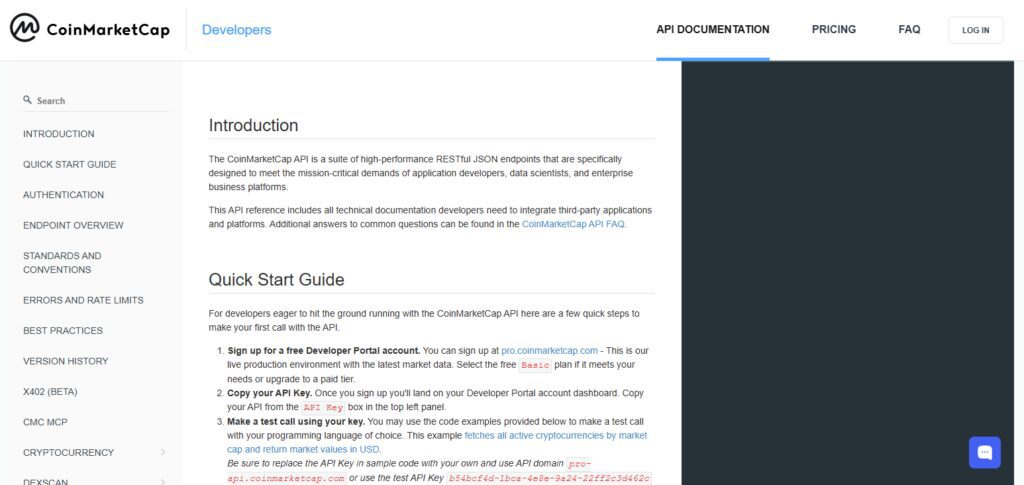
It has been used to build portfolio apps, price alerts, and trading or even financial analysis and trade dashboards. In 2026, the API will continue supporting crypto based apps, providing a rich and reliable data feed for thousands of digital assets. Its accuracy and easy setup make it a perfect candidate for enterprises needing solid crypto market data.
CoinMarketCap API – Features
- Real-Time Crypto Prices: Always current prices of crypto and where they’re available.
- Market Data Access: Statistics on market cap, trade volumes, and exchanges.
- Historical Crypto Data: Lets clients assess market trends.
- Best in Class Crypto Data: Supports countless virtual assets including tokens and cryptocurrencies.
- Supports Portfolio Applications: Aids users to build financial trackers, alerts, and analytical platforms.
| Pros | Cons |
|---|---|
| Provides reliable cryptocurrency prices and market statistics. | Free access includes limited API request capacity. |
| Covers thousands of tokens and digital assets globally. | Premium plans may be costly for large businesses. |
| Offers historical data for analysis and reporting. | Data accuracy depends on exchange information sources. |
| Easy integration for portfolio and trading applications. | Less focused on blockchain transaction-level data. |
| Widely recognized by crypto developers worldwide. | Advanced analytics require higher-tier subscriptions. |
5. QuickNode
QuickNode offers high-performance blockchain infrastructure and developer tools that reduce the level of complexity associated with building and scaling applications on blockchain networks. QuickNode developer tools include secure access to nodes, blockchain query services, NFT data services, and Web3.
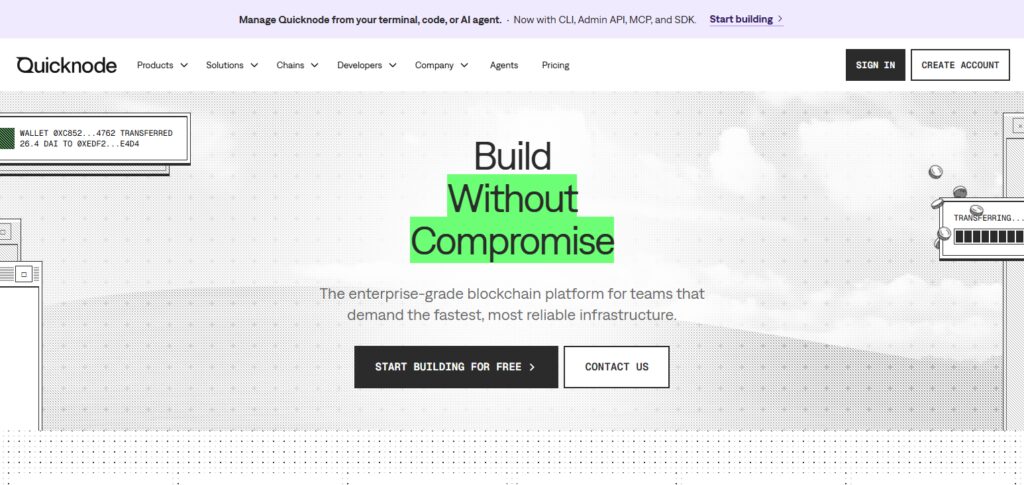
QuickNode’s low-latency infrastructure, available in 2026, will enhance the performance of gaming, DeFi, and trading applications that employ QuickNode’s infrastructure and services. Developers who wish to avoid the complexities and burden of managing blockchain servers and infrastructure, while maintaining the performance of their applications, choose QuickNode.
QuickNode – Features
- Fast Blockchain Nodes: Facilitates swift connections to optimize the processing of transactions on the blockchain.
- Multi-Chain Infrastructure: Operates on Ethereum, Bitcoin, Solana, and other blockchains.
- Web3 Development & Scalability: Allows applications to scale to growing users and transactions.
- NFTs & Blockchain APIs: Provides APIs to query NFT data and blockchain.
- Developer Infrastructure: Simplifies the burden of managing a personal blockchain server.
| Pros | Cons |
|---|---|
| Provides fast blockchain nodes with low network latency. | Costs increase as application traffic grows. |
| Supports multiple chains including Ethereum and Solana. | Requires technical knowledge for advanced configurations. |
| Helps developers avoid managing blockchain infrastructure. | Not designed primarily for market data analysis. |
| Improves scalability for Web3 applications and dApps. | Heavy usage can create dependency on provider uptime. |
| Offers powerful developer tools and blockchain APIs. | Some niche networks may have limited availability. |
6. Coinbase API
The Coinbase API makes it easy for developers to embed cryptocurrency trading and wallet services, payment processing, and account access functionality into their applications. It is a secure gateway to exchange-backed crypto services, enabling users to manage their digital assets seamlessly and in one place.
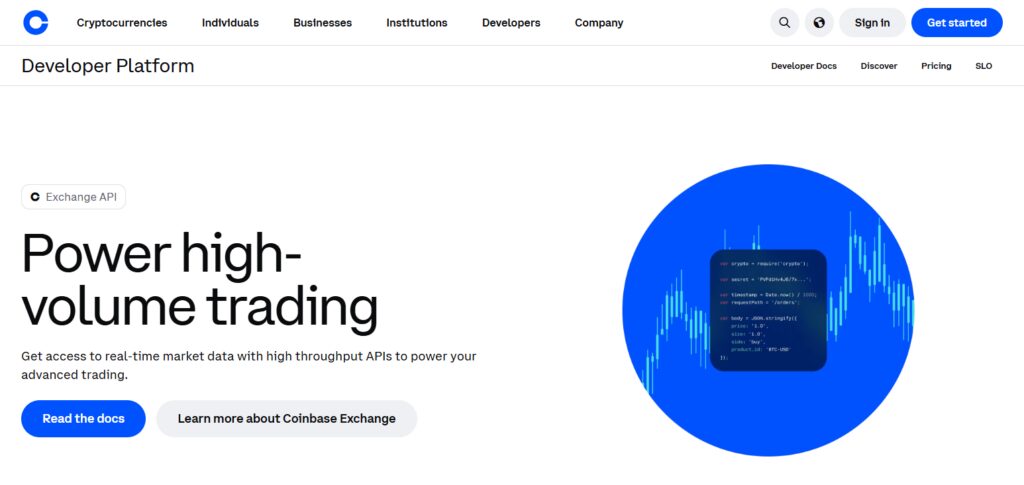
Payment services, crypto fintech applications, and investment platforms that rely on a secure exchange infrastructure utilize the Coinbase API. As the 2026 economy increasingly incorporates digital payments, the Coinbase API will provide developers a secure and easy-to-use gateway to crypto payments within the Coinbase ecosystem, as well as a seamless and secure end-user experience.
Coinbase API – Features
- Trading Capabilities: Allows applications to buy, sell and trade virtual assets.
- Wallet Connectivity: Users are able to manage and connect their Coinbase accounts.
- Crypto Payment Integration: Assists firms in adopting crypto payment channels.
- Exchange Infrastructure: Provides services that are secure and built on the Coinbase foundation.
- Developer Integration: Eases the process of integrating crypto to financial applications.
| Pros | Cons |
|---|---|
| Provides secure exchange-backed crypto integration features. | Mainly connected with Coinbase ecosystem services. |
| Enables trading, payments, and wallet management solutions. | API restrictions may affect certain business models. |
| Trusted infrastructure with strong security standards. | Transaction fees may impact integrated applications. |
| Suitable for fintech and payment-focused crypto platforms. | Less flexible than decentralized blockchain APIs. |
| Offers reliable user account connectivity options. | Requires compliance with exchange regulations. |
7. ChangeNOW
With ChangeNOW, developers can integrate cryptocurrency swapping into their applications with ease. Their API provides the option for instant crypto exchange between numerous blockchains without the need for users to partake in complicated trading activities.
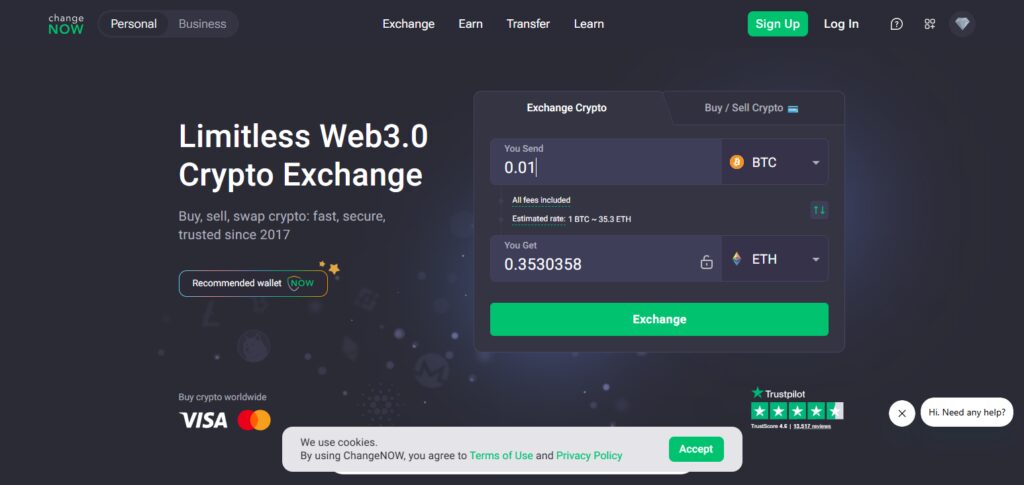
Swap functionalities can be integrated into crypto wallets, payment applications, and Web3 applications, thus significantly improving the convenience of users.
Cross-chain functionality becomes increasingly crucial as users engage with multiple blockchains; this will be the case in 2026. ChangeNOW enables developers to simplify the asset conversion process and make it more accessible to the average cryptocurrency user.
ChangeNOW – Features
- Crypto Exchanges: Allows users to rapidly swap virtual currencies without the intricacies of a trade.
- Cross-Chain Exchanges: Users are able to swap assets on different blockchains.
- Wallet Swapping: Helps users integrate swapping in crypto wallets.
- Payment Platforms: Offers exchange functionality to digital payment platforms.
- Easily Integrated APIs: Lowers the difficulty of adding exchange functionalities.
| Pros | Cons |
|---|---|
| Easily integrates crypto swaps into applications. | Exchange availability depends on supported assets. |
| Supports cross-chain transactions without complex development. | Swap fees may vary based on market conditions. |
| Improves user experience with built-in conversion features. | Less control over internal swap mechanisms. |
| Useful for wallets and payment applications. | Not designed for advanced trading analytics. |
| Reduces complexity of multi-chain asset exchanges. | Requires third-party service reliability. |
8. Covalent (GoldRush)
Covalent (GoldRush) makes available organized blockchain data, which assist developers interested in the analysis of wallet histories, token balances, transactions, and smart contracts across many blockchains.
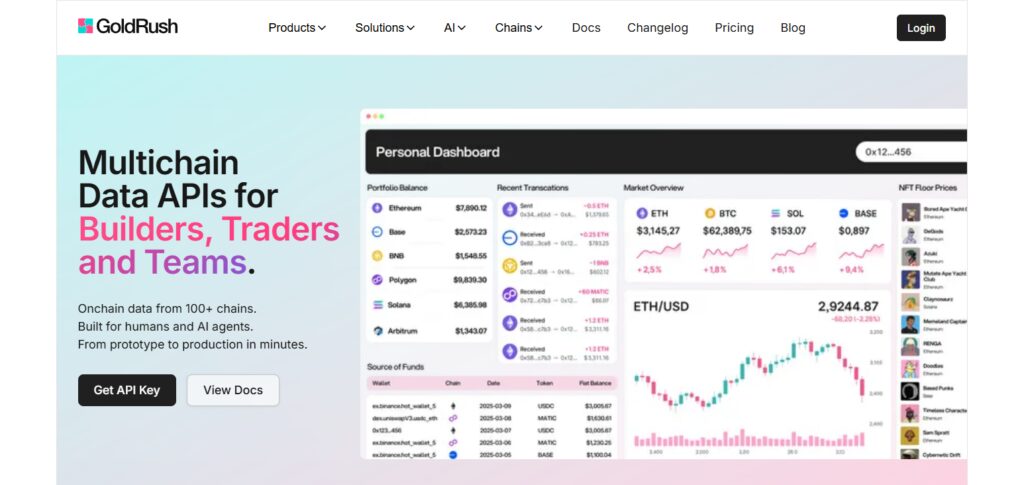
With its singular API, developers are no longer required to build customized data portals for each blockchain. Covalent is a popular choice among developers for portfolio trackers, blockchain analytics, and institutional analytics.
The demand for clear and comprehensive blockchain analysis will grow in 2026. For those applications needing detailed on-chain analysis across multiple cryptocurrency ecosystems, Covalent is an excellent choice.
Covalent (GoldRush) – Features
- Chain Agnostic Data: Offers clients structured data across multiple blockchains.
- Transaction History Tracking: Offers an in-depth analysis of wallet transactions and activities.
- Multi-Chain Data Access: Facilitates blockchain analytics throughout a variety of ecosystems.
- Smart Contract Insights: Assists with the analysis of contract interactions and blockchain activities.
- Institutional Analytics Support: Enables the creation of sophisticated reports for institutions and research-focused companies.
| Pros | Cons |
|---|---|
| Provides structured blockchain data across multiple networks. | Large datasets may require strong data processing systems. |
| Simplifies access to transaction and wallet histories. | Some advanced features may require paid plans. |
| Supports portfolio tracking and blockchain analytics platforms. | Data indexing delays can occasionally occur. |
| Uses unified APIs for easier multi-chain development. | Developers may need blockchain data expertise. |
| Valuable for research and institutional analytics applications. | Smaller projects may find features excessive. |
9. Blockchair
Blockchair is a privacy oriented blockchain analytics platform that search engine developers. For UTXO chains like Bitcoin, Blockchair has tools for monitoring addresses and analyzing transactions. Blockchair is also great for exploring the blockchain.
Because Blockchair has a large amount of transaction data, it is useful for compliance platforms, security researchers, and applications requiring analysis of blockchain transactions. In 2026, with the growing importance of security and regulation on the blockchain,
Blockchair provides developers a reliable yet private way to see the detailed transaction records of a given blockchain and the transactional and behavioral patterns of wallets on the blockchains they serve.
Blockchair – Features
- Blockchain Explorer Data: Offers in-depth information for transactions and addresses through every network.
- UTXO Chain Support: Versatile for analysis of Bitcoin and UTXO-based and privacy-centric blockchains.
- Transaction Monitoring: Offers a secure method to track and scrutinize transactions across the blockchain.
- Compliance Analytics: Assists with the application of security research and a regulatory scan.
- Advanced Search Tools: Allows in-depth exploration and analysis of blockchain data.
| Pros | Cons |
|---|---|
| Provides detailed blockchain explorer and transaction data. | Limited focus on smart contract-based ecosystems. |
| Useful for Bitcoin and UTXO blockchain analysis. | Interface may feel complex for beginners. |
| Supports privacy-focused transaction investigation tools. | Not ideal for consumer portfolio applications. |
| Helps compliance and security research activities. | Advanced analytics require technical understanding. |
| Offers transparent blockchain search capabilities. | Fewer developer-focused features than infrastructure providers. |
10. CoinGecko API
CoinGecko API is a low-cost, developer friendly API that provides thousands of token listings, pricing, trading, and historical data. For crypto startups and developers who need data on a budget, CoinGecko has the bare minimum highly required data.
A key feature of CoinGecko is its simple and fast integration, making it useful for developers of portfolio trackers, market analysis tools, and crypto education.
Developer access is a key component to the widespread use of its crypto data, and in 2026, the extensive offerings of CoinGecko will mean fast, low-cost reliable crypto offerings.
CoinGecko API – Features
- Extensive Token Database: Access a wealth of data for many cryptocurrency tokens.
- Market Price Tracking: Provides real-time price and trading info along with exchange data.
- Historical Market Insights: Access data on the historical performance of cryptocurrencies to aid analysis.
- Developer-Friendly Access: A streamlined API option for integrations within crypto apps.
- Affordable Data Solution: Cost effective for early stage startups and developers.
| Pros | Cons |
|---|---|
| Provides extensive cryptocurrency market and token information. | Free API access has request limitations. |
| Developer-friendly documentation and simple integration process. | Does not provide deep blockchain transaction data. |
| Covers thousands of tokens and exchange listings. | Premium features require paid subscriptions. |
| Suitable for startups and educational applications. | Data refresh speed may vary by asset. |
| Affordable option for crypto market applications. | Advanced institutional features are limited. |
Future Trends of Crypto Wallet APIs In 2026
AI for Crypto Portfolio Management: AI will improve automated portfolio assessment, including risk analyses, as well as suggest optimal trading decisions to users.
Diverse Multi-Chain Wallets: Developers will focus on building APIs that accommodate multiple blockchains, allowing users unified asset control.
Account Abstraction and Enhanced Smart Wallets: Smart wallets will further enhance security, simplify the user experience, and automate safety transactions.
Faster Payments Across Web3: APIs will provide instant crypto payments on all digital channels.
Automating Crypto Security: Advanced technology will facilitate the automation of fraud detection, assessment, and the safety of transactions.
Rise of Institutional-Based Crypto Apps: More companies will invest in wallet APIs for safe digital asset channels.
Conclusion
Final Thoughts: Leading Crypto Wallet Developer APIs Connecting with crypto wallet APIs has become necessary for developers construction of interactive blockchain applications that are secure and scalable.
APIs supporting multiple chains, exceptional security and proven reliability, coupled with ease of integration are some of the most effective APIs. These APIs will, for example, facilitate developers creation of payment solutions
DeFi, and Web3 applications within a significantly shorter time frame by the year 2026. The right crypto wallet API selection is critical for businesses to maintain a competitive edge within a rapidly evolving digital asset space.
FAQ
Which is the best crypto wallet API for developers?
The best API depends on needs like blockchain support, security, scalability, and application type.
Are crypto wallet APIs secure?
Yes, reliable APIs use encryption, authentication, and security protocols to protect digital assets.
Can crypto wallet APIs support multiple blockchains?
Yes, many APIs support Ethereum, Bitcoin, Solana, and other blockchain networks.
Do crypto wallet APIs support DeFi applications?
Yes, many APIs provide DeFi tracking, token management, and smart contract integration features.
Are crypto wallet APIs suitable for beginners?
Yes, developer-friendly APIs offer documentation, SDKs, and simple integration tools.