
The Best Embedded Finance Platforms for SaaS Companies, which allow software companies to include banking, payments, and financial services straight into their apps, will be covered in this article.
Without having to start from scratch with complicated banking infrastructure, these solutions assist SaaS companies in managing corporate spending, issuing cards, streamlining transactions, and offering consumers seamless financial experiences.
Key Point & Best Embedded Finance Platforms for SaaS Companies
| Company | Key Point / Offering |
|---|---|
| Stripe Treasury | Embedded banking services for businesses, including bank accounts, payments, and cash management APIs. |
| Plaid | Connects apps to users’ bank accounts for data access, verification, and payment initiation. |
| Treasury Prime | Banking-as-a-service platform enabling companies to offer accounts, cards, and payments through APIs. |
| Marqeta | Modern card issuing and payment processing platform with customizable card programs. |
| Galileo Financial Technologies | API-driven platform for card issuing, digital banking, and fintech infrastructure. |
| Railsr (Railsbank) | Global open banking platform offering accounts, cards, and compliance solutions for fintechs. |
| FISPAN | Cloud-based platform integrating banking services into ERP systems for corporate payments automation. |
| Mambu | Cloud-native core banking system enabling banks and fintechs to launch financial products quickly. |
| Evolve Bank & Trust | Banking partner offering payment solutions, account services, and fintech support. |
| Payhawk | Corporate spend management platform with card issuance, expense tracking, and automated accounting. |
1. Stripe Treasury
Stripe Treasury offers an innovative way for companies to embed banking services in their apps. Businesses can provide services such as cash flow management, payment support, and even fully operational bank accounts.
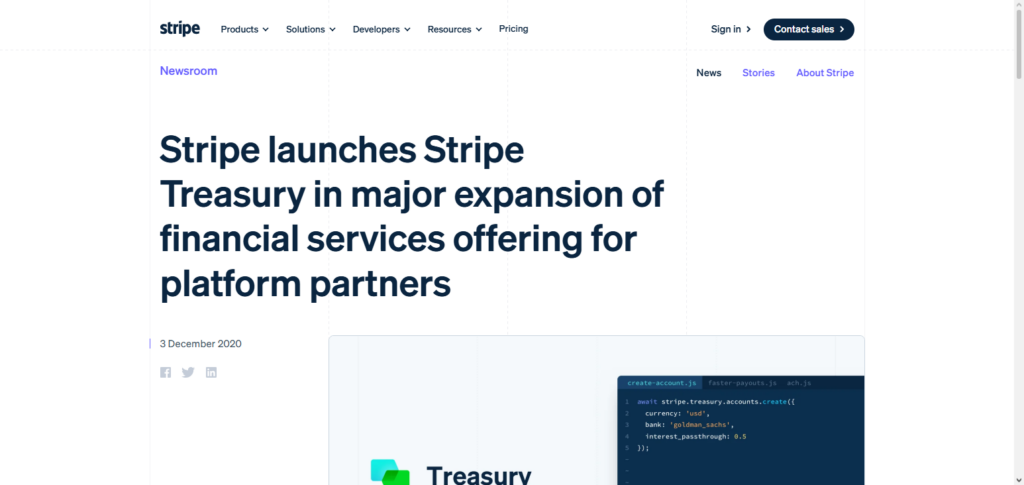
Thanks to their API support for seamless integration for deposits, withdrawals and account management, Stripe Treasury offer users cash management and other financial services.
Because Stripe Treasury integrates with Stripe payment features, it is one of the Best Embedded Finance Platforms for SaaS Companies. This makes it easier for SaaS services to offer banking, payment, and subscription services.
Stripe Treasury Features, Pros & Cons
Key Features
- Embedded accounts and cash management
- API for deposits and withdraws
- Compliance and KYC support
- Stripe Payments/Connect Integration
- Balance and transactions tracking in real-time
Pros
- Documentation and developer tools
- Integration into the payments ecosystem is seamless
- Payments are processed in multiple global markets
- Compliance is handled automatically
- Integrates easily with your growing SaaS
Cons
- At scale, it can become costly
- Lending features are limited
- Banking partnerships are not the same in all regions
- Limited customization for niche use cases
- Best value is obtained with Stripe payment stack
2. Plaid
Plaid offers API solutions for identity verification, account aggregation, payment initiation, and other services. The company’s platform allows provides SaaS applications access to users’ financial data. The simplified access to financial data also allows for tracking of spending, account verification, and transaction tracking.

Software providers are able to integrate real-time banking data, and fully compliant, secure, and seamless experiences are added to applications which increases user engagement and the financial insights within the apps. These features have earned Plaid the recognition of being one of the Best Embedded Finance Platforms for SaaS Companies.
Plaid Features, Pros & Cons
Key Features
- Aggregation of bank account data
- Auth for payment verification
- Access to transaction history
- Identity verification and income
- Payment initiation APIs
Pros
- Coverage of financial data is at the top of the market
- Connections that are compliant and secure
- Integration easy for SaaS and Fintech
- Integration in multiple banking networks
- Analytical and data insights are great
Cons
- No accounts/cards provided (not a banking provider)
- Payment initiation is limited in some geographical locations
- Costs increase with number of data calls
- Advanced usage requires developer effort
- Relies on stability of bank interface
3. Treasury Prime
Treasury Prime enables businesses to create financial products with no infrastructure by providing a full banking-as-a-service solution. SaaS organizations may offer checking accounts, debit cards, and ACH payments while adhering to regulations thanks to its API-first methodology.
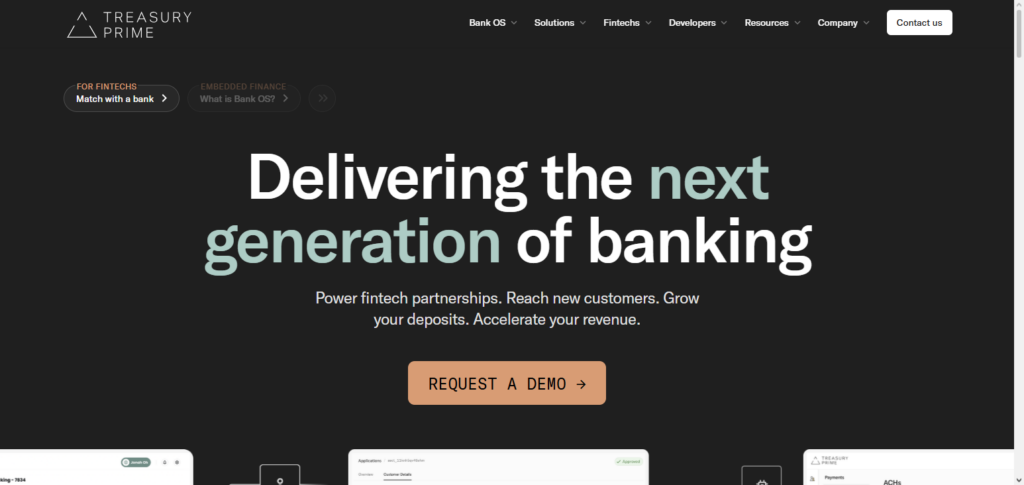
Treasury Prime takes care of the complexities of banking relationships and compliance, freeing up companies to concentrate on developing new products.
Treasury Prime, which is frequently listed as one of the Best Embedded Finance Platforms for SaaS Companies, enables software providers to incorporate financial services straight into their platforms, creating a fully integrated experience that includes robust reporting and user management tools along with payments, accounts, and card issuance.
Treasury Prime Features, Pros & Cons
Key Features
- Banking-as-a-service APIs
- Savings and checking accounts
- Issuance of debit cards
- Wires and ACH
- Onboarding of bank partners
Pros
- Robust banking capabilities
- Good compliance support
- Banking functions for SaaS APIs
- Documentation and SDKs are good
- Flexible financial products can be created
Cons
- Longer onboarding is possible
- Less international opportunities compared to Stripe
- Requires bank partnership
- Pricing is complicated
- Developer support is slow during high demand
4. Marqeta
Marqeta is a contemporary card-issuing platform that enables businesses to design personalized payment programs, virtual cards, and solutions to manage expenses. With an open API, SaaS companies can have real-time control over issuing cards, spending, and transaction management.
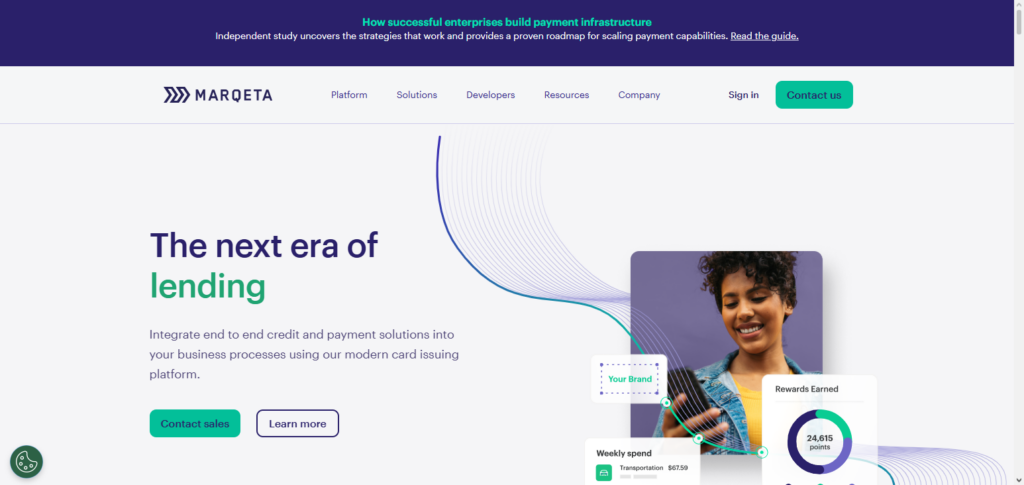
The platform includes tokenization and other premium security layers that are suitable for fintech uses. Marqeta is recognized as one of the Best Embedded Finance Platforms for SaaS Companies. With Marqeta, software developers can embed card-based financial services in their apps to help users manage digital payments and corporate spending with control and transparency as well as in-depth analytics.
Marqeta Features, Pros & Cons
Key Features
- Issuance of cards (virtual and physical)
- Controls for transactions in real time
- Funding on demand
- Security and tokenization
- Dashboards for managing programs
Pros
- Excellent flexibility and control for cards
- Strong tools for risk and fraud
- Good for consumer apps and corporate expense apps
- Scalable for high volume
- Excellent customer service
Cons
- Need a partner bank for funding rails
- Pricing complexity for small SaaS
- Limited financial services besides cards
- Advanced features come with a learning curve
- Some use cases are region restricted
5. Galileo Financial Technologies
Galileo Financial Technologies offers API-based solutions to help fintech businesses with digital banking, payments, and card issuing. SaaS companies can utilize Galileo’s technology to provide proprietary banking solutions, including virtual and physical cards, ACH, and mobile wallets.

Its adaptable and efficient structure allows businesses to expand without worrying about the financial back end. One of the Best Embedded Finance Platforms for SaaS Companies recognitions goes to Galileo for making it easier for software developers to integrate banking into their products, enabling SaaS businesses to offer their end users a safe and seamless financial solution.
Galileo Financial Technologies Features, Pros & Cons
Key Features
- Infrastructure for card issuing
- Banking as a service (BaaS) APIs
- Wallet & prepaid cards
- Management of ACH & transfers
- Fraud detection
Pros
- Developed platform for embedded finance
- Comprehensive range of features (not just cards)
- Impressive reliability & strong uptime
- Suitable for international expansion for embedded finance
- Very flexible & customizable
Cons
- Entry barriers are higher
- Partnership with a bank is required
- Complicated technical integrations
- Lack of cost transparency
- Not suitable for SaaS solutions that are not finance related
6. Railsr (Railsbank)
Railsr (previously branded as Railsbank), is a global open banking platform that allows SaaS businesses to offer accounts, cards, and payment solutions. Businesses can also automate banking functions, card issuance, and cross-border payments with an API.

Railsr facilitates collaboration and manages compliance and regulatory challenges, simplifying operational hurdles for software providers. The platform is recognized as one of the Best Embedded Finance Platforms for SaaS Companies.
As a result, SaaS companies can allow their users to access financial services through their platforms, and have a fully layered fintech offering that will include card issuance, payments, account services, and regulatory compliance in multiple jurisdictions.
Railsr (Railsbank) Features, Pros & Cons
Key Features
- APIs for open banking
- Banking accounts & cards
- Payments across borders
- Automated compliance
- Features for virtual banking
Pros
- Coverage worldwide
- Banking support end to end
- Compliance is well integrated
- Many different applications
- Good tools for fintech
Cons
- Difficult for beginners
- Service-by-service pricing
- Long onboarding is common
- Significant development effort required
- Support is not uniform across the globe
7. FISPAN
FISPAN focuses on the integration of banking services with enterprise software (especially ERP systems) to facilitate corporate payments and cash management. FISPAN’s platform allows the automation of payment workflow, reconciliation, and banking operations, empowering SaaS solutions to offer banking functionality. FISPAN is a direct bank API integrator.
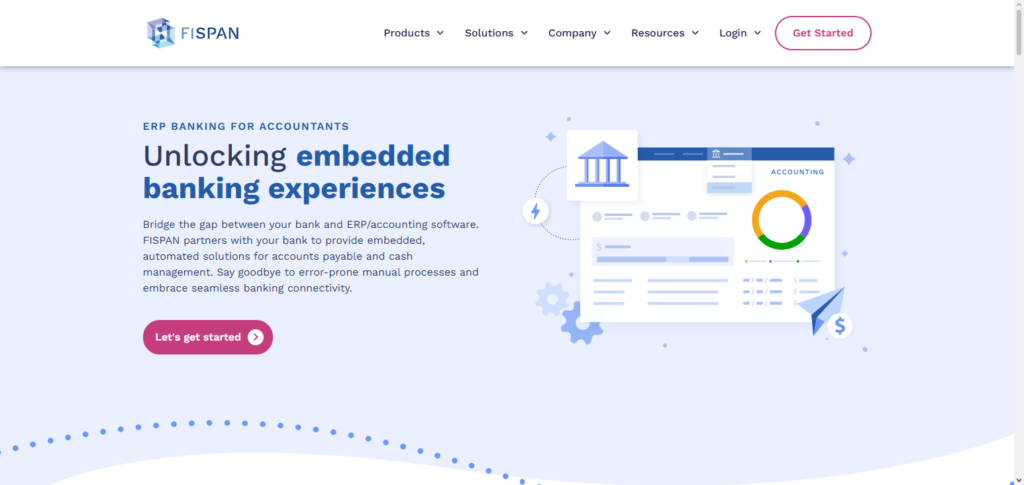
Therefore, the financial operational workflow becomes automated. Recognized as one of the Best Embedded Finance Platforms for SaaS Companies, FISPAN provides value to software creators by enabling financial functionalities, cash management control, automated reconciliation, and providing an uninterrupted closure of the loop for corporate users within the application.
FISPAN Features, Pros & Cons
Key Features
- Banking integrated with ERP systems
- Automated cash flow
- Tools for reconciliation
- Workflow for payments
- Multiple banking connections
Pros
- Excellent for corporate SaaS finance components
- Less manual reconciliation
- Compatible with Key ERPs
- Improves visibility with treasury
- Focus on B2B
Cons
- Banking services are limited
- Integration is a pain
- Primarily built for enterprise SaaS
- Requires specific customizations
- Services for consumers are few
8. Mambu
Mambu enables SaaS companies and fintechs to rapidly market and sell financial products. Its tools for account management, loans, deposits, and payments services are delivered via APIs that are simple to integrate and use. Mambu provides fully functional banking options for businesses that need to embed banking.
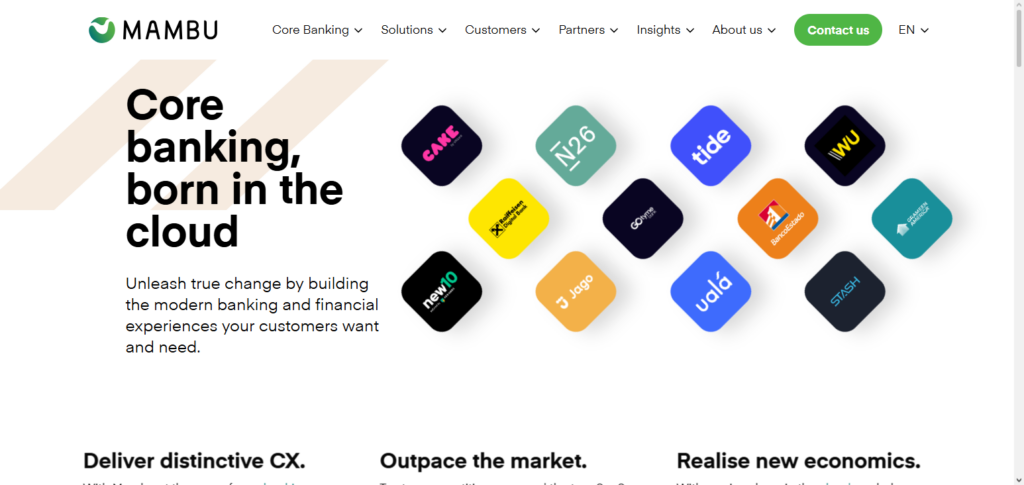
Mambu is recognized for being one of the Best Embedded Finance Platforms for SaaS Companies because it enables software companies to integrate banking, lending, and payment services into their applications. This provides end-users with the highly seamless, scalable, and secure banking services they need.
Mambu Features, Pros & Cons
Key Features
- Core banking is cloud-native
- Products for loans & deposits
- Prioritizes APIs
- Configurator for Products
- Supports several currencies
Pros
- Core engine is flexible
- Fintech/SaaS banking products
- Business growth implies more products
- Available globally
- Plenty of partners
Cons
- Bank partners are needed
- Heavy custom builds
- Expensive initial setup
- Focus on other areas
- Region affects quality of support
9. Evolve Bank & Trust
Evolve Bank & Trust offers financial partnership services that serve as a one-stop banking solution to fintech companies and SaaS businesses by providing deposit account, payment processing, and card issuance services.
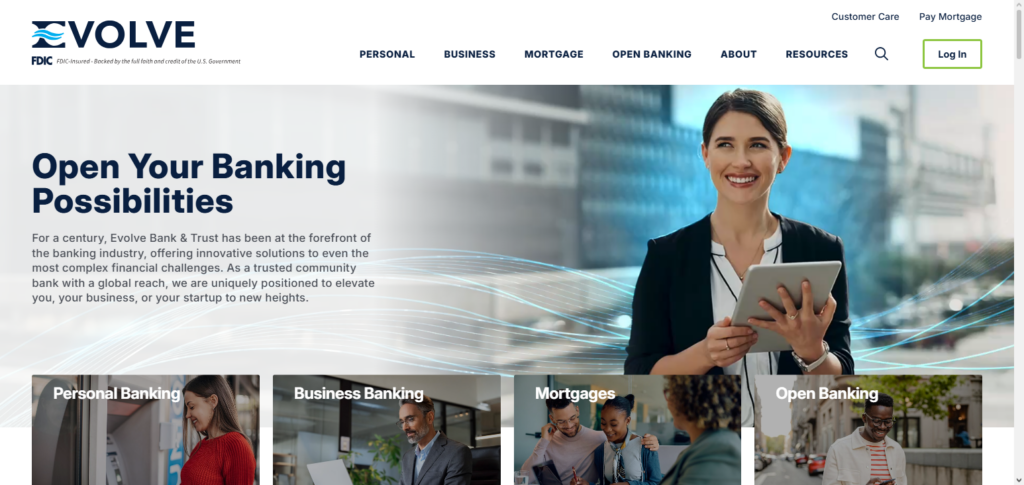
The lending and banking service is offered on a white-label basis, meaning the service does not require any infrastructure to be built. Evolve’s partnership and compliance services greatly reduce the operational complexity of SaaS platform ecosystems.
Evolve Bank & Trust is recognized among the Best Embedded Finance Platforms for SaaS Companies for enabling Evolve’s customers to integrate payments, accounts, and card services directly into their applications. This provides SaaS users with seamless banking solutions and advanced financial services designed for the software ecosystem.
Evolve Bank & Trust Features, Pros & Cons
Key Features
- Services for banking & fiduciary
- Accounts for deposits
- Cards can be issued
- Processing payments
- Partners with fintech
Pros
- With banking partners
- Compliance support is strong
- Options for white labeling
- Complete banking services
- Managing risk is good
Cons
- Less API focused
- Onboarding is long
- Flexibility is limited with SaaS
- Unclear pricing5. Predominantly U.S. centered
10. Payhawk
Payhawk is an all-in-one business spend management solution. Payhawk’s licensed software integrates with expense management, card issuance, expense reimbursements, and accounting automation. SaaS companies can use Payhawk to manage employee spend, integrate with accounting software, and issue virtual and physical cards.
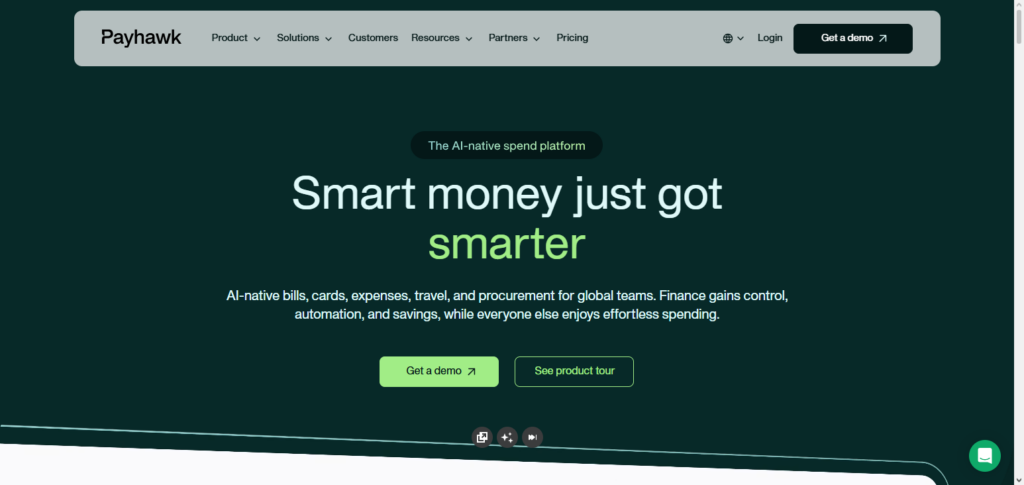
Payhawk also enhances operational transparency and simplifies process automation, and received recognition as one of the Best Embedded Finance Platforms for SaaS Companies.
Payhawk also enables software providers to offer users expense and payment management solutions embedded in their applications, allowing users to manage and control their budgets, automate expense report submissions, and reduce transactional silos in their financial processes.
Payhawk Features, Pros & Cons
Key features
- Corporate spend management
- Virtual & physical cards
- Expense automation
- Accounting integration
- Budget controls
Pros
- Great for expense workflows
- Accounting integrations
- Card controls in real time
- Comprehensive analytics dashboard
- Use it on mobile and desktop
Cons
- Only spend management focused, not banking
- Not a good fit for consumer finance
- Complexity with pricing tiers
- Not for banking services in general
- Underlying banking services are partnered
Conclusion
In conclusion, SaaS organizations have never-before-seen opportunity to improve their platforms with seamless banking, payments, and financial services thanks to the embedded finance landscape.
Software providers can deliver banking features without creating complicated systems from scratch thanks to platforms like Stripe Treasury, Plaid, Treasury Prime, Marqeta, Galileo Financial Technologies, Railsr (Railsbank), FISPAN, Mambu, Evolve Bank & Trust, and Payhawk, which offer reliable APIs, compliance support, and scalable infrastructure.
Embedded finance is a strategic advantage in today’s competitive SaaS market since it enables organizations to enhance user experience, optimize financial operations, and spur growth by selecting the best partner from these Best Embedded Finance Platforms for SaaS Companies.
FAQ
What is embedded finance for SaaS companies?
Embedded finance allows SaaS platforms to integrate financial services like payments, bank accounts, cards, and lending directly into their applications. This eliminates the need for separate banking processes, offering users a seamless financial experience within the software.
Why should SaaS companies use embedded finance platforms?
By using embedded finance, SaaS companies can enhance customer engagement, provide value-added financial services, automate payments and accounting, and create new revenue streams without building banking infrastructure from scratch.
Which platforms are considered the best for embedded finance?
The top platforms include Stripe Treasury, Plaid, Treasury Prime, Marqeta, Galileo Financial Technologies, Railsr (Railsbank), FISPAN, Mambu, Evolve Bank & Trust, and Payhawk. They provide APIs, compliance support, and scalable infrastructure to embed financial services seamlessly.
How do these platforms integrate with SaaS applications?
Most embedded finance platforms offer developer-friendly APIs and SDKs that allow SaaS companies to embed banking, payment, and card services into their existing workflows. This ensures secure, real-time transactions and account management.
Can small SaaS companies benefit from embedded finance?
Absolutely. Embedded finance is not just for large enterprises; even small SaaS businesses can use these platforms to offer financial services, streamline payments, and enhance user experience without heavy investment in infrastructure.