I’ll go over the top endpoint security software for companies and organizations in this post. Protecting endpoints like PCs, laptops, and mobile devices is essential given the surge in cyberthreats including malware, ransomware, and phishing attempts.
We’ll look at the best options that offer centralized management, automatic response, AI-powered detection, and real-time monitoring for total cybersecurity.
What is Endpoint Security Software?
One kind of cybersecurity solution is endpoint security software, which guards against online attacks on computers, laptops, smartphones, and servers. It keeps an eye out for, identifies, and stops malware, ransomware, phishing scams, and other nefarious activity that could jeopardize network and data security.
Advanced features like AI-powered threat detection, real-time monitoring, automated response, and centralized management are frequently seen in contemporary endpoint security solutions. This software helps maintain business continuity in an increasingly interconnected digital environment, protects sensitive data, and stops unwanted access by safeguarding every endpoint within an organization.
Why It is Endpoint Security Software Matter
Protection against malware and ransomware: Endpoint security software protects your devices against the malicious software, viruses, and ransomware attacks can lead to a loss of data and can disrupt operational processes.
Protection of Important Business Information: Endpoints often contain and are critical to a business and its customers. Protection ensures correctness, confidentiality, regulatory compliance, and the preserving of data.
Real-Time Threat Detection: Modern endpoint systems provide continuous device monitoring for suspicious activity and actions and mitigate the threat before the device spreads a virus to the network.
Less Cyberattack Threat: Endpoint security protects against unauthorized access, and phishing attacks, and defends against zero-day exploits, which collectively reinforce the overall defenses of business against the costly lapse of security.
Centralized Management and Compliance is Enhanced: Updating policies, managing security, and viewing the reports is simplified in a single central console which protects all of the endpoints consistently to ensure compliance to regulations, and is central to unified threat management.
Key Point & Best Endpoint Security Software List
| Endpoint Security Software | Key Points / Features |
|---|---|
| CrowdStrike Falcon | Cloud-native platform, AI-powered threat detection, real-time endpoint protection, low system impact, managed threat hunting. |
| Microsoft Defender for Endpoint | Integrated with Windows, advanced threat analytics, automated response, strong reporting, cross-platform support. |
| SentinelOne Singularity | Autonomous AI detection, automated remediation, ransomware protection, EDR & XDR capabilities, easy deployment. |
| Sophos Intercept X | Deep learning malware detection, anti-ransomware, exploit prevention, managed threat response, web filtering. |
| Palo Alto Cortex XDR | Unified XDR platform, behavior analytics, integrates with network & cloud, automated investigation, threat hunting tools. |
| McAfee Endpoint Security | Real-time threat protection, firewall integration, centralized management, behavioral analytics, strong malware defense. |
| Trend Micro Apex One | Machine learning threat detection, ransomware protection, vulnerability protection, central console, endpoint detection & response. |
| ESET Endpoint Security | Multi-layered protection, anti-phishing, device control, low system impact, cloud-assisted threat prevention. |
| Kaspersky Endpoint Security Cloud | Cloud-managed, anti-malware & ransomware protection, mobile device security, centralized admin console, automated updates. |
| VMware Carbon Black Cloud | Cloud-native EDR, behavioral threat detection, real-time response, threat hunting, integrates with VMware ecosystem. |
1. CrowdStrike Falcon
CrowdStrike Falcon’s cloud-native architecture, which enables quick deployment without requiring extensive on-premises infrastructure, makes it one of the top endpoint security software options.
Its AI-driven threat detection keeps an eye on endpoints in real time, spotting ransomware, malware, and zero-day threats before they can do any harm. Falcon offers managed threat hunting services that proactively look for hidden threats while ensuring minimal disruption to corporate operations due to its low system effect.
Comprehensive reporting and analytics that improve visibility across all devices are advantageous to organizations. All things considered, CrowdStrike Falcon is excellent in fusing security, performance, and proactive threat intelligence.
CrowdStrike Falcon Features, Pros & Cons
Features:
- Simple deployment due to cloud-native architecture
- Threat detection and prevention powered by AI
- Monitoring and alerting in real time
- Services for managed threat hunting
- Usage of system resources is low
Pros:
- Efficient and quick on endpoints
- Protection from ransomware and malware is strong
- Intelligence on threats is excellent
- It is scalable for large enterprises
- Proactive hunting of threats is supportive
Cons:
- Price is higher for small businesses
- Additional modules are needed for some advanced features
- Cloud dependency is problematic for low-bandwidth environments
- Protection while offline is limited
- Expertise in tech is needed to set it up initially
2. Microsoft Defender for Endpoint
Microsoft Defender for Endpoint is one of the most integrated and comprehensive endpoint security options for enterprises that are heavily invested in Microsoft.
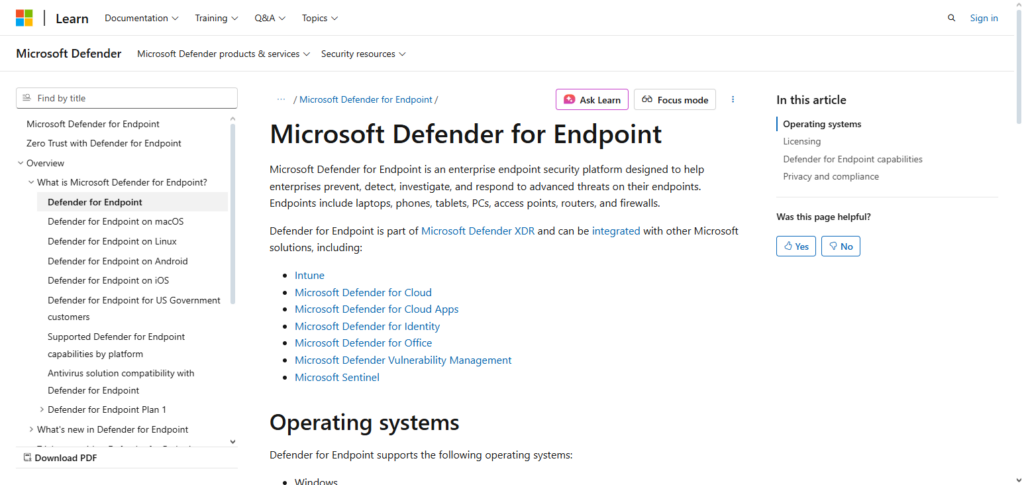
Windows Defender has built-in endpoint security which is integrated with threat analytics to detect and respond to emerging threats. Endpoint also supports macOS, Linux, iOS, and Android, providing cross-platform protection.
Defender’s security automation features such as investigation, remediation, and reporting to Microsoft 365 and Azure allow enterprises to optimize the Defender Endpoint. It’s native and comprehensive Windows solutions are ideal for large enterprises.
Microsoft Defender for Endpoint Features, Pros & Cons
Features:
- Integration with Windows Operating System
- Analytics based on AI and behavior
- Automated response and investigation
- Support for Microsoft Windows, macOS, Linux, iOS, and Android
- Reporting and dashboards centralized
Pros:
- Integration with Microsoft products is excellent
- No extra client installation needed for Windows
- Detection of threats is excellent
- Reducing of the admin workload is due to automation
- For companies using Microsoft 365, it is low in cost
Cons:
- Advanced features are limited which are outside Microsoft environment
- Older devices will have limited system resources available
- An interface that is not as intuitive for non-Windows systems.
- A dependency on the cloud for most of the functions.
- Certain integrations need advanced licensing.
3. SentinelOne Singularity
Singularity is a top tier software solution thanks to its fully robotic detection features. Singularity employs its graduated learning system to determine the presence of malfunctioned software, ransom stealing programs, and file-less invasions.
There is no more need for manual changes. The system is able to provide full automated fixes, and rollbacks to changes said to be damaging, with the addition of deep dive forensics to track the event.
This system features EDR (Endpoint Detection & Response) and XDR (Extended Detection & Response) merger offerings, granting total visibility for users across endpoints, and throughout the networks and clouds of the continuum. Endless system layout options coupled with minimal event processing load create the ultimate solution for entities aiming for the greatest levels of Endpoint security.
SentinelOne Singularity Features, Pros & Cons
Features:
- Threat detection that is autonomous and driven by artificial intelligence.
- Remediation and rollback that are automated.
- Integration of EDR and XDR.
- Monitoring of real-time behavior.
- Forensic analysis that is detailed.
Pros:
- An extremely low rate of false positives.
- Rapid recovery from ransomware attacks.
- Strong cross-platform protection.
- Cloud, on-prem, and hybrid environments are all supported.
- Minimal human involvement is usually required.
Cons:
- Compared to other providers, the cost is high.
- For smaller companies, some features may be too complicated.
- New users may find it difficult.
- Outside of XDR, there are limited third-party integrations.
- Time-consuming initial deployment.
4. Sophos Intercept X
Sophos Intercept X is recognized as one of the leading endpoint security software applications due to its multi-layered endpoint security which includes anti-ransomware, exploit protection, and even ransomware detection.
Intercept X is Sophos’s leading endpoint security product, and from its constructive endpoint detection and response solution, and the threat mitigation service, security teams can dedicate less time and focus to time-consuming threat investigations.
Sophos also includes endpoint devices control, and intercept X also allows security teams greater control using the centralized management console to view the reports, and Sophos provides the security teams with greater management control.
Sophos integrates the automated threat mitigation response with the user-friendly management console and proactive threat detection measures, which helps organizations of virtually any size.
Sophos Intercept X Features, Pros & Cons
Features:
- Malware detection using deep learning.
- CryptoGuard anti-ransomware.
- Analysis of exploit prevention and root causes.
- Response to managed threats.
- Filtering of the web and control devices.
Pros:
- Outstanding protection from ransomware.
- Threat detection that is proactive.
- A management console that is centralized.
- Easy to deploy and of a lightweight nature.
- Protection of the endpoint, mobile, and server is supported.
Cons:
- Upgrades to subscriptions are necessary for access to advanced features.
- Tuning may be required for some alerts.
- Reporting in the cloud may be slow.
- The lack of capabilities when offline is limited.
- Smaller companies may find the cost higher.
5. Palo Alto Cortex XDR
Cortex XDR by Palo Alto Networks stands out as a top-tier option for endpoint security. It provides a unified platform for endpoint, network, and cloud security and offers advanced detection and response (XDR) services.

Using behavioral analytics, Cortex XDR detects suspicious activities, lateral movements, and advanced threats that traditional antiviruses fail to cover. Cortex XDR performs automated investigation and responses to lessen the burden on security teams.
The platform includes threat hunting services, empowering organizations to discover and counter potential risks. Moreover, Cortex XDR offers seamless integration with other Palo Alto Networks security products to deliver thorough protection. Their advanced analytical tools and visibility across different environments cater to the needs of enterprise-level cybersecurity.
Palo Alto Cortex XDR Features, Pros & Cons
Features:
- Integrated XDR frameworks (endpoints, networks, cloud)
- Behavioral analytics
- Automated response and investigations
- Forensics and threat hunting
- Palo Alto ecosystem integration
Pros:
- Comprehensive, cross-environment coverage
- Shortens time in threat detection and response
- Advanced analytics and visibility
- Large-scale enterprise agility
- Reduced manual work with increased automation
Cons:
- High cost for small enterprises
- Complex configurations and setups
- Best used for integrations with other Palo Alto tools
- Advanced trained security people may be needed
- Advanced configurations cost extra
6. McAfee Endpoint Security
McAfee Endpoint Security provides some of the best endpoint security software solutions due to it being able to offer real-time malware detection alongside an integrated firewall, and centralized management.

Behavioral analytics help detect unknown threats including ransomware and other zero-day attacks, and the centralized console provides administrators the capability to deploy policies and monitor endpoints. Web filtering and device control add additional layers of security against potential breaches.
Endpoint Security McAfee ensures reliable threat detection and response capabilities cross endpoint consistency and safety across devices. Flexible and scalable deployment option make it the ideal choice for organizations, and SMB and large enterprises.
McAfee Endpoint Security Features, Pros & Cons
Features:
- Protection against malware and other threats in real time
- Scanning with heuristics and analytics
- Filters at the web and firewall integrated
- Management console that centralizes
- Control of the devices and policies enforcement
Pros:
- High recognition and reliability
- Deployment that is scalable for the enterprise
- Detection of malware that works
- Comprehensive command and control of the endpoints
- It has good features with a lot of logging and reporting
Cons:
- Can have a lot of impact on system performance.
- Less new than other competitors
- Licenses for other features may be needed
- Upgrading systems can be disruptive
- The AI is less new and more basic than other options
7. Trend Micro Apex One
One of the leading software solutions for endpoint security is Trend Micro Apex One. It is machine learning threat detection and advanced ransomware protection is one of the most trusted in the industry.
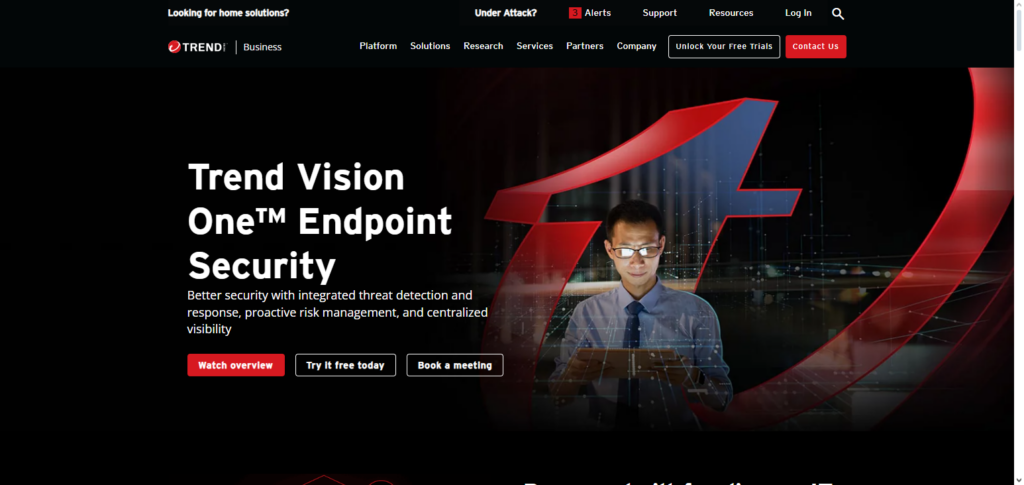
For easy management and monitoring, Apex One comes with a central console. It’s automated detection and response capabilities mitigate threats rapidly without the need for any manual intervention.
Apex One also includes endpoint detection and response (EDR) tools, giving you the ability to integrate with EDR and providing you with forensic detail, insight, and response for every incident. Trend Micro Apex One combines preventive and reactive measures, making sure your endpoint protection is complete while also making sure your system is not overly impacted, which is a great fit for today’s corporate environments.
Trend Micro Apex One Features, Pros & Cons
Features:
- Threat detection using Machine learning
- Ransomware protection with rollback
- Protection from vulnerability and exploits
- Management from a centralized console
- Endpoint detection and response (EDR) capabilities
Pros:
- Strong AI-based detection
- Management is simple from a central console
- Ransomware protection is good
- Scalable to mid to large companies
- Multiple OS platform support
Cons:
- Could take up more system resources
- Additional modules are needed for some features
- User interface can be complex for beginners
- Manual intervention may be needed for some updates
- Less intuitive tools for advanced threat hunting
8. ESET Endpoint Security
Due to its advanced malware detection, low system impact, and multilayered protection, ESET Endpoint Security is considered one of the best endpoint security software. ESET’s security solution employs malware detection, machine learning, and heuristics to identify both known and unknown security threats.
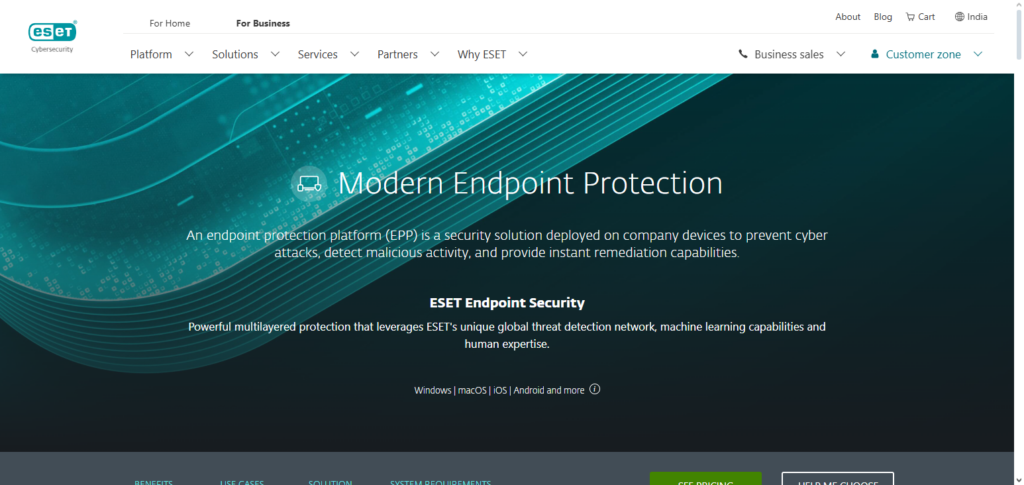
ESET has a wide array of additional features such as anti-phishing, cloud assisted threat detection, and device control. These features aid in ensuring endpoints remain secure. IT teams can efficiently deploy, monitor, and adjust updates to endpoints through the centralized management feature.
Its lightweight design ensures users can work without disruption, making it a fitting endpoint security software for any size business. ESET Endpoint Security is a software that works in all aspects; it has outstanding performance, great usability and provides top tier protection.
ESET Endpoint Security Features, Pros & Cons
Features:
- Multi-layer protection from malware
- Anti-phishing and device control
- Cloud supported threat prevention
- Low system impact
- Centralized console for management
Pros:
- Efficient and lightweight
- High capabilities anti-malware
- Simple to manage and deploy
- Low impact on endpoints performance
- Licensing is affordable
Cons:
- Limited EDR features
- Less automation than competitors
- Simplistic reporting features
- Other security tools have basic integration
- The cloud management system needs more improvement
9. Kaspersky Endpoint Security Cloud
For organizations needing easily managed cloud protection, Kaspersky Endpoint Security Cloud is one of the best options available. Cloud managed access with data protection against malware and ransomware, along with mobile device protection, is offered through a centralized admin console.
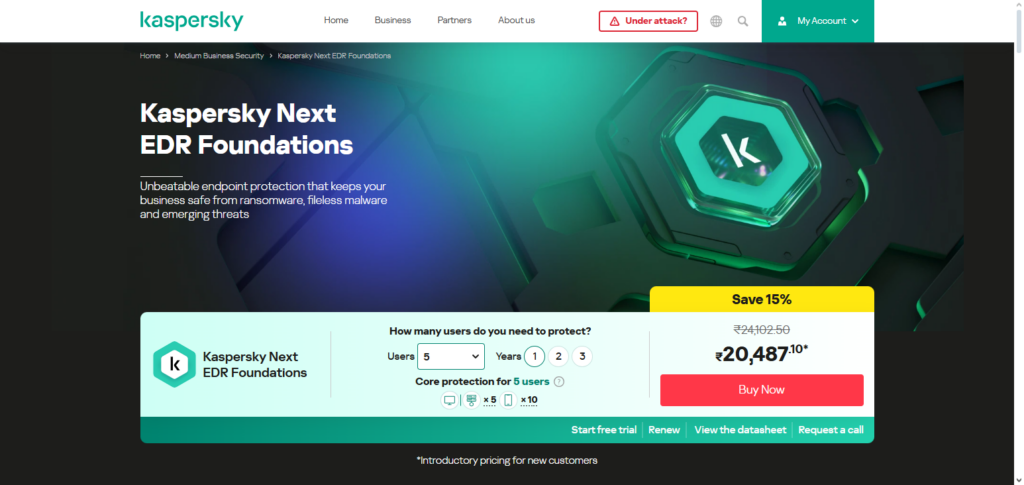
Cloud monitoring allows admins to manage and monitor the endpoints and is automating to keep updates current. Endpoint protection helps to monitor and manage policies using the device and web control features. Advanced threat detection and minimal system impact factor in to make Kaspersky a good cloud security center candidate to make space and relieve admin stress in diverse endpoint environments.
Kaspersky Endpoint Security Cloud Features, Pros & Cons
Features:
- Protection from endpoints using cloud management
- Security from malware, ransomware and mobile security
- Centralized admin console
- Automated updates and reporting
- Controlling policies for web and devices
Pros:
- Deployment to the cloud is simple
- Protection against malware and ransomware is efficient
- Resources utilized on endpoints is minimal
- Monitoring and management is easy and centralized
- Great for businesses of smaller and medium size
Cons:
- Advanced functions are only available with premium subscriptions
- Protection from being offline is limited
- Dependency on cloud-based services is troublesome to some
- The platform can be difficult to navigate for users who are new
- Compared to enterprise solutions, advanced threat intelligence is lacking
10. VMware Carbon Black Cloud
VPNware Carbon Black Cloud is considered to be one of the leading software solutions for endpoint security due to its cloud-native EDR capabilities and advanced response solutions. Each endpoint is monitored across the network to identify and detect malicious activity like ransomware and other malware.
Carbon Black also takes the advantage of vulnerability and attack threat hunting capabilities. Adding VMware tools to the ecosystem to enhance security across virtualized environments. Automated response capabilities reduce the response time to potential threats. Black Cloud offers comprehensive reporting and analytics to security teams. The endpoints security is enhanced with the cloud protection and proactive capabilities of Carbon Black.
VMware Carbon Black Cloud Features, Pros & Cons
Features:
- EDR with behavioral monitoring in the cloud
- Threats are detected and responded to in real-time
- Tools for threat investigation and hunting
- In the VMware ecosystem, integration
- Reporting and analytics that are comprehensive
Pros:
- Solid detection of behavior and threats
- Threat hunting capabilities are proactive
- Flexible and scalable in the cloud
- Great integration for cloud environments
- No disruption of endpoints
Cons:
- Smaller businesses have to bear more costs
- The configuration can be complex
- The environments are best suited for VMware
- Users have to overcome a learning curve
- Extra modules are needed for advanced functionalities
Conclusion
Endpoint security is becoming an essential part of any organization’s cybersecurity strategy in today’s digital environment. SentinelOne Singularity, CrowdStrike Falcon, Microsoft Defender for Endpoint,
Sophos Intercept X, and other top endpoint security programs provide complete defense against malware, ransomware, phishing scams, and advanced persistent threats. To protect devices and sensitive data, these solutions integrate AI-driven detection, real-time monitoring, automated response, and centralized management.
The size, infrastructure, and particular security requirements of your company will determine which endpoint security software is best. Investing in a strong, dependable solution guarantees business continuity, lowers risk, and improves your organization’s overall cybersecurity posture, making it more resistant to contemporary cyberthreats.
FAQ
What is endpoint security software?
Endpoint security software is a solution designed to protect devices such as computers, laptops, servers, and mobile devices from cyber threats. It monitors, detects, and blocks malware, ransomware, phishing attacks, and other malicious activities. Modern endpoint security solutions often include EDR (Endpoint Detection & Response), automated remediation, and cloud-based management to safeguard organizational data and networks effectively.
Which is the best endpoint security software for businesses?
Some of the best endpoint security software for businesses include CrowdStrike Falcon, Microsoft Defender for Endpoint, SentinelOne Singularity, Sophos Intercept X, Palo Alto Cortex XDR, McAfee Endpoint Security, Trend Micro Apex One, ESET Endpoint Security, Kaspersky Endpoint Security Cloud, and VMware Carbon Black Cloud. These solutions provide real-time threat detection, AI-powered protection, and centralized management, making them ideal for enterprises of all sizes.
What features should I look for in endpoint security software?
Key features include real-time malware and ransomware protection, AI-driven threat detection, automated response and remediation, centralized management, behavioral analytics, and cross-platform support. Additional features like cloud management, device control, and threat hunting capabilities enhance overall security.
Is cloud-based endpoint security better than traditional antivirus?
Yes. Cloud-based endpoint security provides real-time updates, remote management, and scalability that traditional antivirus software lacks. Cloud solutions often include AI-powered threat detection, EDR/XDR capabilities, and integration across networks, endpoints, and cloud environments, offering a more proactive defense against modern cyber threats.
Can endpoint security software prevent ransomware attacks?
Yes. The best endpoint security software, such as Sophos Intercept X, CrowdStrike Falcon, and SentinelOne Singularity, includes ransomware protection features like behavior monitoring, rollback capabilities, and automated remediation to prevent or mitigate attacks before they spread.