

Only the Best Forex Brokers with Direct TradingView Integration will be covered in this post. These brokers combine sophisticated charting, real-time analysis, and smooth trade execution by enabling traders to link their accounts straight to TradingView.
These brokers offer the resources, dependability, and functionality required for more intelligent, quick, and effective Forex trading, regardless of your level of experience.
Key Point & Best Forex Brokers with Direct TradingView Integration
| Forex Broker | Key Points / Highlights |
|---|---|
| OANDA | Trusted global broker, advanced charting, flexible lot sizes, competitive spreads. |
| FOREX.com | Robust platform, strong research tools, US-regulated, extensive currency pairs. |
| Pepperstone | Low-latency execution, ECN pricing, excellent for scalping & algorithmic trading. |
| IG Group | Comprehensive trading tools, strong global presence, regulated, versatile platforms. |
| Capital.com | AI-powered insights, beginner-friendly interface, tight spreads, low fees. |
| FXCM | User-friendly platforms, advanced analytics, social trading, reliable execution. |
| Exness | Flexible leverage, fast withdrawals, competitive spreads, wide account types. |
| Eightcap | ECN pricing, MT4/MT5 support, low fees, global regulation. |
| ThinkMarkets | Advanced charting, excellent research, tight spreads, multiple platforms. |
| AvaTrade | Wide instrument selection, strong educational resources, regulated, multiple platforms. |
1. OANDA
With its headquarters located in New York and a robust regulatory presence in major jurisdictions, OANDA is a well-established international Forex and CFD broker that was co-founded in 1996 by Drs. Michael Stumm and Richard Olsen.
With its fxTrade platform, it first offered online FX rate services before branching out into complete brokerage services. Since 2017, OANDA has offered Direct TradingView integration, enabling traders to execute straight from TradingView’s charting interface.
OANDA also provides a wide range of trading instruments, substantial liquidity, and sophisticated charting tools. Professionals looking for dependable execution and in-depth analysis continue to choose OANDA because of its reputation for transparency, micro-lot trading, and strong research resources.
OANDA Features, Pros & Cons
Features:
- Supports MT4 and advanced fxTrade platform.
- TradingView provides direct access.
- Micro and flexible lot size options.
- Extensive tools for analysis and research.
- Multiple jurisdiction regulation.
Pros:
- No concealer cost and pricing.
- Speed of execution is excellent.
- Good reputation globally.
- Education material is good.
- Accounts to fit your needs.
Cons:
- The range of products offered is limited beyond FX.
- No proprietary app customization for mobile.
- Accounts with with smaller deposits have higher spreads.
- They have limited bonuses and promotions.
- Trading at higher leverage is not recommended.
2. FOREX.com
Founded in 1999 under the GAIN Capital name, FOREX.com launched its platform in 2004 and is currently a member of the StoneX Group. It provides a large choice of currency pairs, CFDs, and trading tools and is heavily regulated in the US, UK, EU, and Asia.
Its Direct TradingView integration, which allows traders to link accounts and trade easily using TradingView’s interface with real-time data and sophisticated charts, has earned the broker recognition. In addition, FOREX.com provides research resources, MetaTrader 4/5 support, and custom platforms, making it a complete option for expert traders looking for strong analysis tools and access to international markets.
FOREX.com Features, Pros & Cons
Features:
- A lot of currency pairs to choose from.
- Integration with TradingView.
- Platforms include MT4/5 and and their proprietary software.
- Great research tools and technical analytics.
- They have regulations for the US and globally.
Pros:
- They have good regulations.
- Great analysis tools and charts.
- They offer all the markets.
- They offer good execution of trades.
- They offer a good interface for beginners.
Cons:
- Fees for trading in certain areas is high.
- Limited options for CFD trading outside of FX.
- No interface for beginners.
- Accounts with all some customers have no access to ECN.
- The withdrawal process can take a long time.
3. Pepperstone
Established in 2010 in Melbourne, Australia, Pepperstone has quickly become a top Forex and CFD broker with a reputation for reasonable pricing and low execution latency. Top regulators including as ASIC, FCA, and CySEC oversee it, and it supports a number of platforms, including cTrader and MetaTrader 4/5.
With Pepperstone’s Direct TradingView interface, experienced traders can use TradingView charts to evaluate markets and place trades. Scalpers, algo traders, and professionals looking for tight pricing and quick trade execution across international markets are drawn to Pepperstone because of its raw spreads, ECN execution, and access to more than 1,000 markets.
Pepperstone Features, Pros & Cons
Features:
- Low spreads, and offers ECN pricing.1. MetaTrader and cTrader options
- Integration with TradingView
- Low latency and quick executions
- ASIC, FCA, CySEC regulation
Pros
- Good for algorithmic and scalping trading.
- Good customer service.
- Opening different account types.
- Trading costs are low.
- Good for trading internationally.
Cons
- The tools are less original.
- Resources for learning are minimal.
- The product range is minimal, aside from CFDs and FX.
- A limited range of products outside CFDs and FX.
4. IG Group
One of the first online brokers, IG Group was established in London in 1974 and is now a major player in forex, CFDs, options, and spread betting worldwide. With a market value of billions and a listing on the London Stock Exchange, IG is subject to stringent regulations and provides broad market access.
Professional traders can use TradingView’s extensive charting and analytical tools in addition to its own strong platforms thanks to the broker’s support for Direct TradingView integration. Serious forex and derivatives traders throughout the world choose IG because of its reputation, market depth, research, and educational materials.
IG Group Features, Pros & Cons
- The broker has existed globally and established since 1974.
- Integration with TradingView
- Good market access of options, CFDs and FX.
- MetaTrader 4 and proprietary platforms.
- The regulation is strong and global.
Pros
- There is a widely covering reputation of decades,
- There is a wide covering the market.
- There are advanced tools for trading liquidity and also large trading.
- Good tools and resources advanced charting for all types of educational levels.
- There is strong liquidity.
Cons
- The accounts with a lesser amount have wider spreads
- There is a fee structure for some tools that is limited for some countries.
- The leverage is limited and is more limited for some countries.
- The advanced tools are not very user friendly for beginners.
- The desktop platform is not very user friendly for beginners.
5. Capital.com
Founded in 2016 and based in Limassol, Cyprus, Capital.com has rapidly expanded into a significant international broker providing access to CFDs, FX, and other financial instruments. Rapid adoption was demonstrated by its reported $1.7 trillion in trading volume and millions of clients, with regulatory authorizations in the UK, EU, Australia, and other countries.
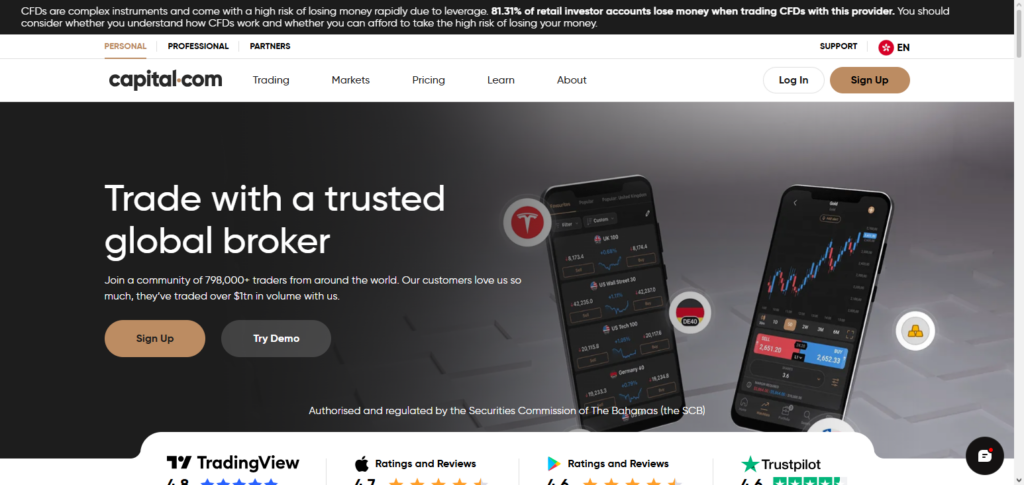
TradingView is fully integrated into Capital.com’s trading infrastructure, providing traders with state-of-the-art charting and analytics to help them execute market strategies. It is a dynamic choice for TradingView-centric execution and market analysis because of its AI-powered insights and user-friendly interface, which appeal to both novice and expert traders.
Capital.com Features, Pros & Cons
Features:
- Trading insights from AI
- Integration with TradingView
- Mobile & web platforms are user-friendly
- Regulation worldwide (FCA, CySEC, ASIC)
- Fees that are low and spreads that are tighter
Pros:
- Opening an account is hassle-free
- Enhanced AI insights and analytics
- Well-regulated and secure
- Extensive multi-asset coverage (CFDs, Indices, FX)
- Professional tools and beginner friendly
Cons:
- Fewer order types available
- Comp. lower product range
- Withdrawals may take longer
- Fe. less bonuses and promotions
- Less developed MT4/MT5 integration
- Less diverse product range
6. FXCM
Established in 1999, FXCM (Forex Capital Markets) is a retail forex and CFD broker with a long history of providing sophisticated trading tools and access to multiple platforms, such as MetaTrader 4, NinjaTrader, and proprietary systems. TradingView integration is supported by FXCM, allowing traders to place and manage trades by connecting straight from TradingView.
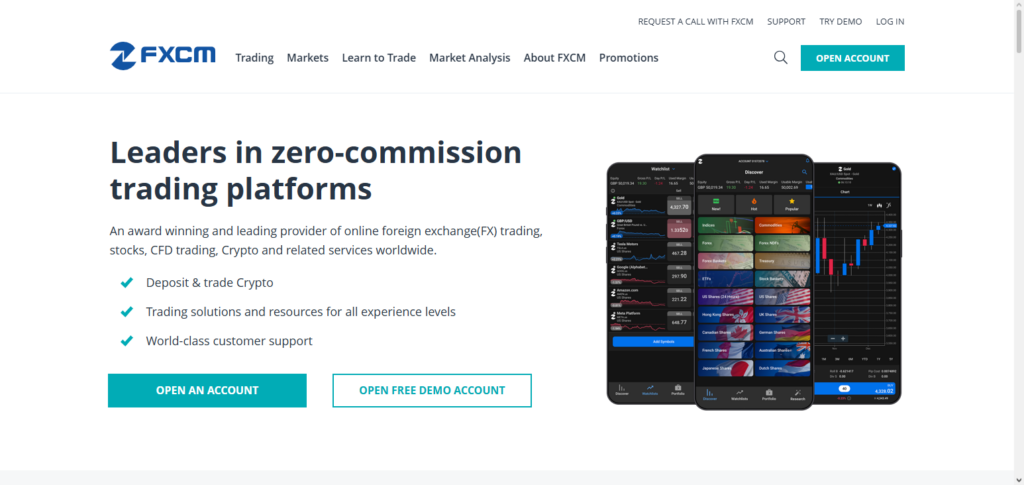
Despite regulatory issues in the past, FXCM is still a reputable broker offering a wide range of markets and learning materials. FXCM is appropriate for traders that prioritize technical execution in conjunction with analysis because of its broad market coverage and charting tools
FXCM Features, Pros & Cons
Features:
- Wide selection of CFDs and FX
- Multiple platforms, including NinjaTrader
- MT4 and TradingView integration
- Charting and analysis tools
- Regulation in UK, AU, and US
Pros:
- Reliable execution
- Flexible choice in platforms
- Competitive spreads
- Social trading capabilities
- Strong analytic tools
Cons:
- Regulatory fines in the past
- Less availability for high-frequency trading
- Less educational resources
- platforms can be less intuitive to use
- fewer option for trading cryptocurrency
7. Exness
Founded in 2008, Exness is a well-known multi-asset broker with headquarters in Cyprus and regulatory status in multiple jurisdictions. It is known for its cutting-edge trading technology, transparent pricing, and extremely tight spreads.
Exness provides its own Exness Terminal and MetaTrader 4/5. It also integrates with TradingView, allowing live trading and technical analysis using TradingView charts. Exness is a good choice for professional traders looking for scalable liquidity and dependable market infrastructure because of its outstanding execution and extensive selection of products, which include FX, indices, commodities, and cryptocurrencies.
Exness Features, Pros & Cons
Features:
- Variable leverage and tight spreads
- Integration with TradingView
- Platforms MT4 and MT5
- Variety of account types
- Some regulation
Pros:
- Trade algorithms
- Lots of instruments
- Strong liquidity
- Flexible leverage
- Quick withdrawals
Cons:
- Minimal learning resources
- No own desktop platform
- Higher minimum deposits on some account types
- Some locations are experiencing slower customer support response times
- Global market research is less extensive when compared to industry-leading brokers
8. Eightcap
Established in 2009 in Australia, Eightcap is a regulated forex and CFD broker that offers a wide range of assets and customizable account options to international traders. Its connectivity with MT4, MT5, and TradingView allows traders to execute straight from the interface while utilizing TradingView’s expert charts.
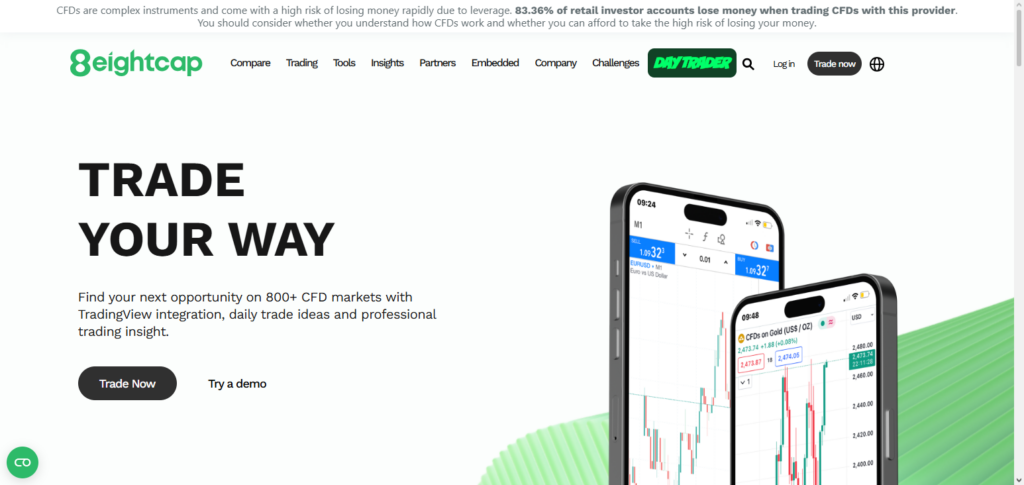
Eightcap offers professional insights and top-notch technical analysis tools, and is well-known for its competitive spreads and excellent execution quality. Its immediate order placement and simple access to sophisticated charting make it a desirable choice for traders who prefer streamlined TradingView access and mostly rely on visual technical analysis.
Eightcap Features, Pros & Cons
Features:
- Low spreads and ECN pricing
- Integration with TradingView
- Platforms: MT4/MT5
- Global Regulation (ASIC, VFSC)
- Various account types
Pros
- Spreads are tight for pro traders
- Speed of execution is high
- Accounts for beginners and pros
- Regulation on global scale provides safety
- Multiple instruments are available
Cons:
- Limited global reach
- Proprietary tools are few
- Less advanced analysis options
- Educational offerings are scarce
- Promotions/bonuses are few
9. ThinkMarkets
ThinkMarkets is a multi-regulated online broker that was founded in 2010 and has a significant global presence in Australia, the UK, Europe, and Asia. It focuses on award-winning platforms, strong client care, and cutting-edge tools while providing forex, CFDs, and other services. Direct execution and smooth analytical workflows from TradingView’s charts are made possible by ThinkMarkets’ support for TradingView integration.
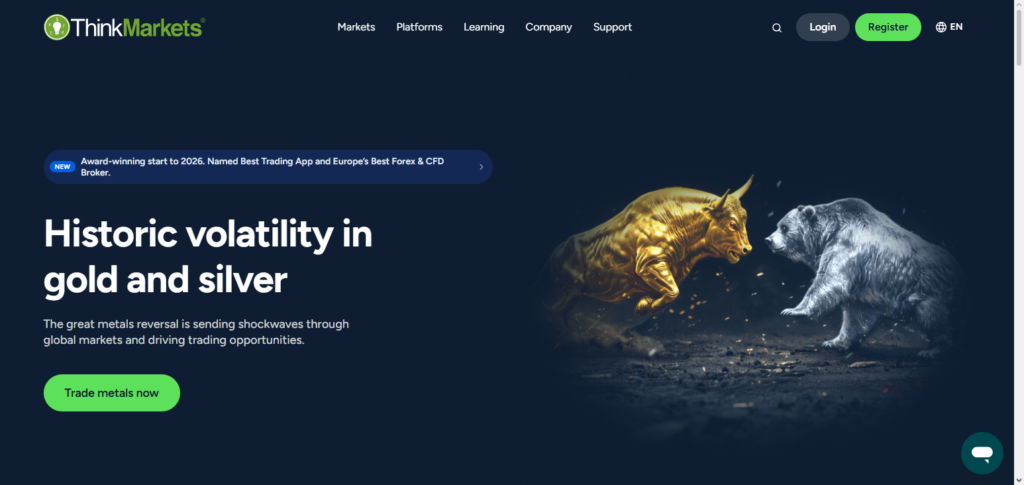
ThinkMarkets attracts traders who appreciate platform choice and in-depth research because of its competitive price and wide range of instruments. Professionals looking for strong analytics and effective order execution should trust it because of its reputation for innovation and customer service.
ThinkMarkets Features, Pros & Cons
Features:
- Coverage on FX and CFDs is extensive
- Integration with TradingView
- Proprietary and platforms MT4/MT5
- Tools for charting and research are award-winning
- Global Multi- regulation
Pros:
- Analytics and research support is strong
- Execution is reliable and tight spreads
- Communication/development is Multi platform
- Great for pros
Cons:
- Product offering is limited outside FX/CFDs
- Accounts with small balances incur higher fees
- Educational content is more limited than competition
- Varying response times on customer support
- Promotions are sparse
10. AvaTrade
AvaTrade is a global Forex and CFD broker that was established in 2006 and has its headquarters in Dublin, Ireland. It offers a variety of markets, such as stocks, commodities, cryptocurrencies, and currencies. It is regulated in several jurisdictions and supports proprietary platforms as well as MetaTrader 4/5.
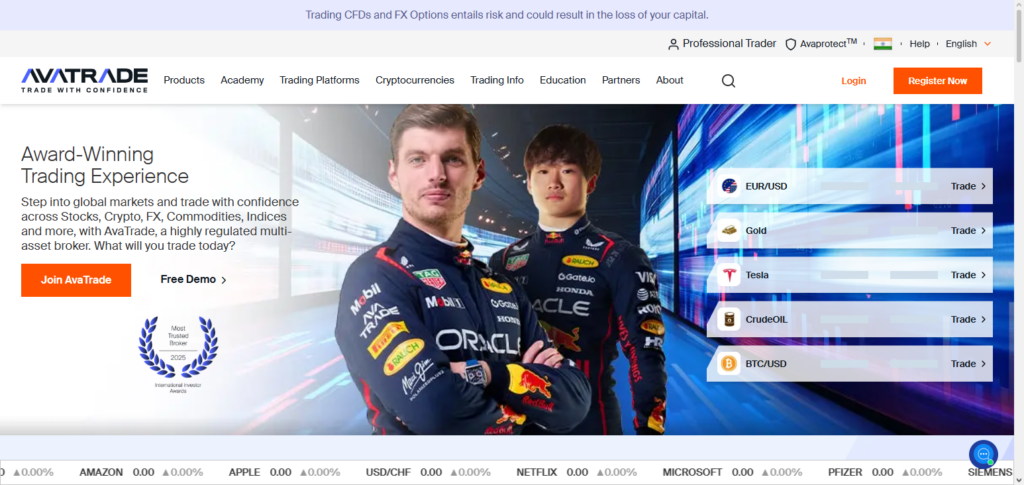
AvaTrade is listed in many evaluations as one of the brokers that integrates with sophisticated charting tools like TradingView, which improves the professional trading experience by tying execution and analytical insights together. From novices to seasoned pros, AvaTrade continues to cater to a wide range of traders because to its reasonable price, educational materials, and wide selection of instruments.
AvaTrade Features, Pros & Cons
Features:
- MT4/MT5 and proprietary platforms
- Integration with TradingView
- Multi-assets (FX, CFDs, crypto, indices)
- Regulation in several countries
- Extensive offerings in education
Pros:
- Complete coverage of market sectors
- Strict international compliance
- High-end charting and analytics
- Algorithmic trading supported
- Dependable executions
Cons:
- Small accounts have wider spreads
- Fewer options for ECN accounts
- Certain platforms can be overly complex
- Fees for withdrawals in some locations
- Poorly suited for high-frequency scalping
Conclusion
For traders who wish to combine sophisticated charting with flawless execution, choosing the appropriate Forex broker is crucial. Brokers that are notable for their dependability, strong platforms, and direct TradingView integration include OANDA, FOREX.com, Pepperstone, IG Group, Capital.com, FXCM, Exness, Eightcap, ThinkMarkets, and AvaTrade.
This tool improves efficiency, accuracy, and strategy execution by enabling traders to monitor markets and execute trades straight from TradingView. These brokers offer the resources, market access, and technology advantage required to trade more intelligently in the rapidly shifting Forex markets of today, regardless of your level of experience.
FAQ
What does TradingView integration mean for Forex brokers?
TradingView integration allows traders to link their broker accounts directly to TradingView charts. This means you can analyze markets using TradingView’s advanced tools and execute trades in real-time without switching platforms.
Which brokers offer direct TradingView integration?
Top brokers with direct TradingView integration include OANDA, FOREX.com, Pepperstone, IG Group, Capital.com, FXCM, Exness, Eightcap, ThinkMarkets, and AvaTrade. These brokers combine robust platforms with professional-level charting and analytics.
Why is TradingView integration important for professional traders?
Integration streamlines trading by combining technical analysis and order execution in one interface. It reduces errors, saves time, and allows faster reactions to market movements, improving overall trading efficiency.
Are these brokers regulated?
Yes. All listed brokers are regulated by reputable authorities such as FCA (UK), ASIC (Australia), CySEC (EU), and NFA/CFTC (US), ensuring safe, transparent, and compliant trading practices.