
Every millisecond and pip matters to scalpers, thus picking a broker is crucial. Despite Pepperstone’s popularity, traders frequently look for rivals that offer tighter spreads, even faster execution, and more sophisticated trading tools.
In this article, we examine the Best Pepperstone Alternatives for Scalpers, emphasizing brokers that combine cost-effectiveness, speed, and dependability to enable high-frequency traders optimize returns while confidently and precisely navigating unpredictable markets.
Key Point
| Broker | Key Point for Scalpers |
|---|---|
| IC Markets | Ultra-low spreads from 0.0 pips with ECN execution, ideal for high-frequency scalping strategies. |
| FP Markets | Offers raw spreads and lightning-fast execution, perfect for scalpers who need precision. |
| Tickmill | Low-cost trading with high leverage and tight spreads, optimized for short-term scalping trades. |
| Exness | No restrictions on scalping, extremely fast execution, and variable spreads suited for frequent trades. |
| HotForex | Low minimum deposits, competitive spreads, and instant execution suitable for scalping beginners and pros. |
| XM | Flexible trading conditions with low spreads and no requotes, making it scalper-friendly. |
| Axi (formerly AxiTrader) | ECN pricing with low latency execution, tailored for scalpers using MT4/MT5 platforms. |
| RoboForex | Offers ECN accounts with spreads from 0.0 pips and low commissions, ideal for short-term trading. |
| FXTM (ForexTime) | Tight spreads and fast execution with multiple account types for scalping strategies. |
| OctaFX | Competitive spreads, high leverage, and smooth platform execution for scalpers focusing on forex pairs. |
1. IC Markets
IC Markets – This brokerage has become one of the most popular options for high-frequency scalping (HFS) due to its True ECN pricing model with raw spreads that attract almost 0.0 pips, deep liquidity, and very rapid execution that allows one to place numerous trades quickly.
This brokerage allows for the use of popular platforms such as MT4, MT5, and cTrader that provide integrated charting and algorithmic one-click execution functions.

The IC Markets brokerage allows for leverage up to 1:500 and with low round turn commissions as IC Markets allows scalpers to have less of a financial burden when entering/exiting trades.
IC Markets is also strongly globally regulated and has a solid infrastructure allowing it to be used for automated and other professional trading strategies.
IC Markets Key Point
- Founded: 2007 (Australia)
- Regulatory Body: ASIC (Australia), CySEC (Europe), FSA (Seychelles)
- Fees and Spreads: Raw ECN with commission of 7 dollars (7 $) per standard lot (round turn) and spread of about 0.0 pips
- Leverage: Up to 500 (depends on region)
- Minimum Deposit: 200 USD
- Trading Platforms: MetaTrader 4, MetaTrader 5, cTrader
- Deposit and Withdrawal Methods: Bank transfer, Credit/Debit cards, PayPal, Skrill, Neteller, Cryptos, and others.
IC Markets Pros & Cons
Pros
- Raw spreads are often as low as 0.0 pips.
- Deep ECN liquidity allows for rapid execution.
- MT4, MT5, and cTrader are just a few examples.
- Regulation from CySEC and ASIC.
Cons
- Compared to rivals, some may find the minimum deposit to be higher.
- Costs per trade due to commissions on raw accounts.
- No option for an account with fixed spreads.
- Support from customers is slow and takes longer.
2. FP Markets
FP Markets is a solid choice as a Pepperstone alternative, especially for scalpers seeking raw ECN spreads starting from 0.0 pips and a good price range. FP Markets provides high-speed ECN execution via MetaTrader 4, MetaTrader 5, and IRESS which can be a big advantage during market volatility.
Scalpers are also provided with deep liquidity and low latency for less slippage and better order fills. The broker also provides free VPS hosting for automated scalping systems. FP is regulated by ASIC and CySEC which provides an additional layer of credibility and security.
FP Markets Key Point
- Founded: 2005 (Australia)
- Regulatory Body: ASIC (Australia), CySEC (Cyprus), FSCA (South Africa), FSA (Seychelles)
- Fees and Spreads: Raw ECN with spread of 0.0 pips and commission of 6 usd per lot (round turn)
- Leverage: Up to 500 (depends on entity)
- Minimum Deposit: 100 USD
- Trading Platforms: MT4, MT5, IRESS
- Deposit and Withdrawal Methods: Bank transfer, Credit/Debit cards, Skrill, and Neteller.
FP Markets Pros & Cons
Pros
- Commissions are competitive, and raw ECN spreads are offered.
- Execution speed is better than average, and pricing is competitive.
- Advanced traders may find IRESS among the other platforms.
- FSCA, CySEC, and ASIC are among the global regulations.
Cons
- Beginners may find the minimum deposit for raw accounts to be discouraging.
- Selection is limited for instruments NOT related to forex.
- Fee structures may seem complex for some.
- Minimum balance is a requirement for access to VPS.
3. Tickmill
Tickmill is the best choice for scalpers who are looking for a broker that provides them with very low trading costs and a very small range of spreads.
Tickmill also provides a raw ECN pricing model that provides a 0.0 range which means that that scalper has to pay the lowest amount possible for each individual trade. This is due to the fact that it is necessary when scaling a extremely high amount of trades each day.

With a slippage reduction for short-term traders, Tickmill offers quick trade executions on MetaTrader 4 with execution speeds usually less than 50 ms.
Tickmill also includes full support for automated strategies and has FCA and CySEC regulation, so traders can feel safe. Tickmill’s pro-account structure and reasonable pricing are an advantage for novice as well as expert scalpers.
Tickmill Key Point
- Founded: 2014 (UK)
- Regulatory Body: FCA (UK), CySEC (Europe), FSCA (South Africa)
- Fees and Spreads: ECN with 0.0 pips spread and low commission on Raw decimals
- Leverage: Up to 500 (depends on asset and regulation)
- Minimum Deposit: 100 USD
Tickmill Pros & Cons
Pros
- Commission and spread levels are among the best in the industry.
- Fast and reliable execution is among the best in the industry.
- Good liquidity and stable pricing.
- Client rewards and active trading contests.
Cons
- Limited product range outside forex & indices.
- Not as widely regulated globally.
- Fewer educational resources than some peers.
- No proprietary platform.
4. Exness.
Scalpers are drawn to Exness for having **at times near 0.0 pips ultra tight spreads **, as well as boosts in capital efficiency through short-term trades and high leverage opportunities. Known for its fast execution engine, Exness has minimal slippage thanks to its MT4/MT5 platform support, and quick position entry/exits.

Exness has numerous account types which are suitable for beginner scalpers as well as high-volume professionals. Transparent pricing and deep liquidity makes Exness popular despite its regulatory coverage being split up by entity. Highly recommended for high-frequency, scalable scalping.
Exness Key Point
- Founded: 2008
- Regulation: FCA (UK), CySEC (EU), FSCA (South Africa), FSA (Seychelles)
- Fees and spreads: Raw, Zero spreads from 0.0 pips; trading commissions are low
- Leverage: Unlimited (offshore entity) then usually 1:2000
- Minimum deposit: 10
- Platforms: MT4, MT5, and mobile apps, Exness Terminal
- Deposit & Withdrawal Methods: Bank cards, e-wallets (Skrill, Neteller), crypto; Very fast crypto withdrawals
Exness Pros & Cons
Pros
- High levels of leverage available.
- Minimum deposit required is low.
- Deposits and withdrawals are lightning fast.
- Many pairs have raw spreads that are tight.
Cons
- There are little to no protections with offshore entities.
- Retail traders are at risk with unlimited leverage.
- During volatile periods the quality of spreads may vary.
- Research tools are lacking.
5. HotForex (HFM)
HotForex (HFM) – also referred to as HFM, HotForex offers high execution speeds, competitive spreads, and a reliable platform, all of which are great for scalping. With low-spread and raw ECN accounts, scalpers are able to take advantage of fast execution and tight spreads.
HFM’s multiple account types, strong global reputation, and partnership with MetaTrader 4 and 5 allow full scalping and und restricted operational use for both automated systems and manual scalpers. Therefore, traders looking for a reliable Pepperstone alternative with a greater variety of markets and tools, have greater flexibility.
HotForex (HFM) Key Point
- Founded: 2010
- Regulation: DFSA (Dubai), FSA (Seychelles), CySEC (EU), FCA (UK), FSCA (South Africa)
- Fees and spreads: Spreads starting from 0.1 pips; commission for certain accounts
- Leverage: Up to 1:1000 (depends by entity)
- Minimum deposit: 5
- Platforms: HFM app, MT4, MT5
- Deposit & Withdrawal Methods: Bank transfers, credit and debit cards, Skrill, Neteller
HotForex (HFM) Pros & Cons
Pros
- Low deposit required.
- Regulations apply to multiple entities across regions.
- Many types of accounts are available.
- EA & Scalping strategies are supported.
Cons
- With standard accounts, spreads are wider than those of pure ECN brokers.
- Some accounts have a commission.
- Raw ECN counterparts are not as fast.
- Customer service is not the same quality across regions.
6. XM
XM – Offering educational resources, account flexibility, and protective features, XM appeals to scalpers due to low major pair spread and rapid order execution. This is also seen with accounts offering micro-lots and smaller accounts.
The region is a scalper benefit due to higher leverage potential, stability during busy sessions, and consistent execution. While spreads may not be as low as pure ECN providers, XM provides strong execution and high stability.
XM Key Point
- Founded: 2009
- Regulation: ASIC (Australia), CySEC (Europe), IFSC (Belize)
- Fees and spreads: Spreads starting from 0.6 pips; Standard and Ultra Low accounts have no commission
- Leverage: Up to 1:1000 (depends by region)
- Minimum deposit: 5
- Platforms: MT4, MT5
- Deposit & Withdrawal Methods: Bank transfers, credit/debit cards, e-wallets
XM Pros & Cons
Pros
- A low deposit is required.
- Ultra-low spread and micro accounts are available.
- They have a lot of educational resources.
- There is a lot of available leverage.
Cons
- Top ECN brokers have better, tighter spreads.
- All accounts have no true ECN pricing.
- Compared to larger brokers, the product range is limited.
- Some regions have longer withdrawal times.
7. Axi
Axi Offering stiff competition and strong regulation globally, Axi (AxiTrader) offers rapid execution and tight spreads, providing a reliable and cost-effective service to scalpers. Axi supports MetaTrader, rapid one-click trading, and advanced charting which enables quick reactions to price changes and provides access for fast monitoring.
Offering reliability, low latency, and a variety of trading tools, Axi may not have the tightest spreads like some raw-spread ECN brokers, but stands as a strong Pepperstone alternative for traders looking for efficient scalping execution.
Axi (AxiTrader) Key Point
- Founded: 2007
- Regulation: FCA (UK), ASIC (Australia)
- Fees & Spreads: Competitive spreads; slightly higher than raw ECN brokers
- Leverage: Up to 1:500
- Minimum Deposit: $1 (depends on account type)
- Platforms: MT4, PsyQuation analytics tool
- Deposit & Withdrawal Methods: Bank transfer, credit/debit cards, e-wallets
Axi Pros & Cons
Pros
- Stable pricing and reliable execution.
- Low minimum deposit required for some regions.
- Strong regulation from the FCA and ASIC.
Pros
- Local restrictions more favorable in some regions
- Quality of education
- Deposit amount is very low
- Variety in types of accounts to open
8. RoboForex
Scalpers favor RoboForex because it is flexible for algorithmic trading and offers low spreads and high leverage, meaning users can trade smaller price moves while keeping their trading capital lower.

Its varied account types and low minimum deposit requirements make it accessible to a wide variety of traders, and while RoboForex’s regulation is limited, the wide range of trading tools and flexibility for algorithmic trading create many reasons why scalpers consider it a strong Pepperstone alternative. Scribehow
RoboForex Key Point
- Founded: 2009
- Regulation: FSC Belize (offshore)
- Fees & Spreads: ECN spreads from 0.0 pips; moderate commissions
- Leverage: Up to 1:2000
- Minimum Deposit: $10
- Platforms: MT4, MT5, cTrader, R WebTrader, R MobileTrader, R StocksTrader
- Deposit & Withdrawal Methods: Bank transfer, credit/debit cards, e-wallets, crypto
RoboForex Pros & Cons
Pros
- Flexible for high leverage.
- Supports cTrader and various other platforms.
- Diverse range of instruments.
Cons
- Offshore regulations pose greater risk.
- Better or worse spreads, depending on account type.
- Costs on commission when opening an ECN account.
- Inconsistent responsiveness from customer service.
9. FXTM
FXTM (ForexTime) offers scalpers quick execution as well as fast trading at low cost by offering low spreads. Overall low trading costs are the result of the fast execution of many short-term trades, which is also the focus of scalping.

Several account types are offered by FXTM to fit traders’ risk tolerance. Global reach and the reach of regulation covering avoidance of risk are also offered by FXTM.
Considering that FXTM does not always compete with ECN brokers in terms of the lowest raw spreads, the quality of its execution, the caliber of its educational resources, and the availability of its client services justify that many scalpers searching for alternatives to Pepperstone may consider FXTM to be an attractive option.
FXTM (ForexTime) Key Point
- Founded: 2011
- Regulation: FCA (UK), CySEC (Europe), FSCA (South Africa), IFSC (Belize)
- Fees & Spreads: Variable spreads; ECN accounts available with low spread + commission
- Leverage: Up to 1:2000
- Minimum Deposit: $10
- Platforms: MT4, MT5, FXTM Trader app
- Deposit & Withdrawal Methods: Credit/debit cards, bank transfer, e-wallets
FXTM Pros & Cons
Pros
- Variety of account types.
- Balanced regulation on both sides.
- Extremely low deposit required.
- Adequate materials and resources for self study.
Cons
- Non ECN accounts typically have worse spreads.
- Rival commission rates are typically better.
- ECN peers typically better.
- Only limited platforms offered (cTrader is not offered at all).
10. OctaFX
OctaFX – OctaFX is a broker that is friendly to scalping, with spreads as low as 0.6 pips in major pairs, leverage up to 1:500, and trade execution speeds that are excellent on MT4, MT5 or its własne OctaTrader.
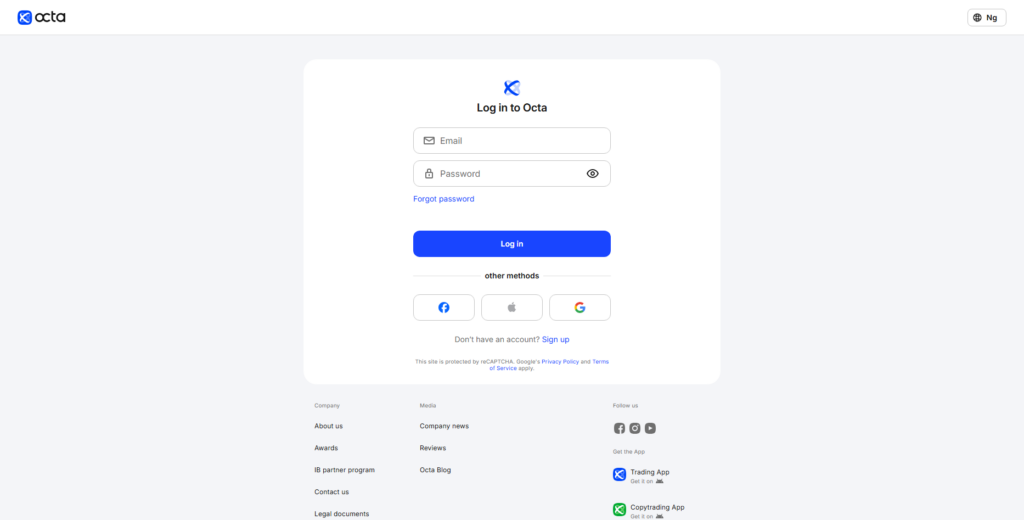
OctaFX allows the implementation of scalping and hedging, and its spread‑only pricing (commissions are not charged separately) pricing model makes it easier to calculate costs when making multiple trades.
With a low minimum deposit requirement and a 24/7 support, beginner and experienced scalpers can trade with OctaFX, though traders should be aware of the relatively less regulation in the location they are trading from.
OctaFX Key Point
- Founded: 2011
- Regulation: CySEC (Europe) and other depending on region
- Fees & Spreads: Floating spreads from ~0.7 pips; no/minimal commissions
- Leverage: Up to 1:500
- Minimum Deposit: $5
- Platforms: MT4, MT5, OctaTrader
- Deposit & Withdrawal Methods: Bank transfer, credit/debit cards, Skrill, Neteller, UnionPay, Fasapay
OctaFX Pros & Cons
Pros
- Scalping and hedging are permitted
- Low deposit amount obligations
- High leverage is allowed
- Low fees on accounts
Cons
- Wider spreads than classic ECN brokers
- Weak regulation in some regions
- Limited access to analytical tools
Key Features Scalpers Should Look For
Ultra-low spreads
Scalpers look for brokers that offer ultra-low spreads. This allows them to trade frequently, even in volatile markets, without spreading their trading capital too thin.
Quick trade execution
The quicker the trade execution the less chance of negative slippage and missed trading opportunities. Low latency and quick trade execution is crucial to any scalping strategy.
Good liquidity
Good liquidity is a must have for any scalping brokers. If market liquidity is low, and price improves when the order is executed, and the order is not in the market, then the order is highly risky.
Good trading software
Good trading software includes MT4, MT5, cTrader and similar. Good trading software allows traders to respond to price changes quick, and enables the use of automated trading strategies.
Good slippage control
Scalping is hopping in and out of the market constantly and every little movement in market price can erode profits. Good trading brokers offer the execution price is guaranteed.
Leverage
Good trading brokers allow traders to set the amount of leverage provided, and this allows the trader to control how much potential profit, their opening price needs to be.
Dependable Customer Service
Scalping depends on continuous trading. Brokers with quick and responsive support can help with issues at any time, and help avoid account issues that can hurt your trading strategies.
Minimal Cost Per Trade
Frequent trading means higher costs due to the number of trades. Brokers that have low costs per trade allow scalpers to keep more of their profit.
Tools To Manage Risk
Scalp trading can have tools to help them rest easy while they are trading and managing their exposure. Brokers that have different tools help with trading even in the most volatile and turbulent of times.
Trading Automation & Mobile Apps
Scalpers can be very successful in their trading due to the development of trading apps and trading automation.
How to Choose the Best Alternative?
Execution Speed
Test the latency of the broker’s servers and the speed of order processing. Lower latency and faster order processing allow for more accurate trade placement, decreasing the number of trades skipped (trading opportunities lost due to delay) and increasing profit potential during rapid scalping sessions.
Spread and Commission Comparison
Evaluate the broker’s spread and trading commission. Narrow spread (the difference between the selling and buying price of a security) and low commission (the fee the trader pays) help the trader to minimize loss, as the loss due to making a trade is decreased.
Platform Reliability
The trading platform must be able to be relied upon for speed and dependability (it must be able to function without crashes and technical malfunctions) so that trades can be executed without delay.
Checks on Liquidity Providers
The more reliable their liquidity the less slippage, meaning trades will not be executed at the wrong prices and therefore will be scalped at the same price for reliability.
The more flexible the leverage offered by the broker, the easier it is to take advantage of small price fluctuations.
Risk Management Tool Evaluation
To verify the placement of stop loss, take profit, and trailing order functions. These features help scalers manage their trade so that they will not lose money in the event that they lose the order during a highly volatile market where prices are changing rapidly.
Customer Support
24/7 customer support is crucial for scalping trading strategies as trading is very fast-paced, and any issues are likely to lead to delays or execution problems. Responsive customer support solves quick issues, and prevents fast trading strategies from being interrupted.
Read Regulations and Reputation
To ensure that your funds are safe and your broker executes trades ethically and maintains transparent pricing, work with a broker who is regulated and has a good reputation. This is important in high-frequency scalping as good brokers are reliable.
Account Type
In order to implement strategies that are quick and profitable, it is important to use the right account type. Make sure to review the accounts that offer features such as low minimum deposits, raw spreads, or ECN execution.
Demo Accounts
Before risking your actual funds, it is wise to use demo accounts to see how fast the execution is, to see how the tools of the platform work, and to see how the spreads and slippages are to determine the best Pepperstone alternative for your sc to use.
Conclusion
FAQ
Can I scalp with any broker?
Not all brokers allow scalping. It’s important to choose a broker with policies that permit high-frequency trades, minimal restrictions, and fast execution without re-quotes or trade limitations.
Why are low spreads important for scalping?
Scalping involves making numerous trades to profit from small price movements. Low spreads reduce trading costs, ensuring even tiny market movements translate into actual profits over time.
How does execution speed affect scalping?
Execution speed is critical. Delays or slow order processing can cause slippage, meaning trades are executed at worse prices than expected. Fast execution ensures precise entries and exits.
What trading platforms are best for scalping?
Platforms like MT4, MT5, and cTrader are ideal because they provide advanced charting, one-click execution, automated trading, and real-time market data, all crucial for quick, accurate scalping trades.
Is leverage necessary for scalping?
Leverage allows scalpers to amplify small price movements. While it can increase potential profits, it also raises risk. Choosing a broker with flexible leverage lets traders manage both opportunity and risk.