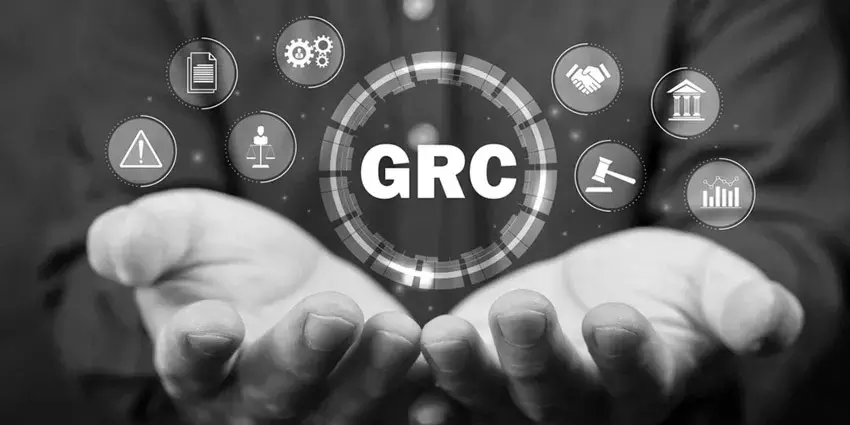
The Best Software for IT Governance, Risk, and Compliance (IT-GRC) will be covered in this post. For modern firms, controlling IT risks, guaranteeing regulatory compliance, and upholding sound governance are essential.
The appropriate IT-GRC software enables businesses to make well-informed decisions and improve overall IT and business operations by streamlining risk management, automating workflows, tracking compliance, and providing actionable insights.
How to Choose the Right IT-GRC Software
dentify Your IT‑GRC Requirements
- Specify all of your risk and compliance goals (e.g. audit management, policy tracking, IT risk assessments).
- • Identify which compliance-based regulations that your organization must meet (e.g. ISO, GDPR, SOX).
- • Based on your existing and prospective IT‑GRC needs, prioritize the features.
Assess Fundamental Characteristics
- Identify risk assessment automation, compliance tracking, dashboards, and reporting capabilities.
- • Determine whether the software has functions for policy & control management, audit workflow management, and incident management.
- • Determine whether customizable risk assessments, real-time analytics, and compliance tracking are available.
Scalability and Integration
- Ensure the software can meet the risk-related needs of your organization, as your requirements evolve.
- • Confirm if the software integrates with any existing IT systems (ERP, SIEM, ITSM).
- • Assess the availability of an API for seamless and automated data transfer between systems.
Usability and Adoption
- Assess how easy and intuitive the user interface is.
- • Look for software that requires less time to learn and train.
- • Think about the vendor’s onboarding, training, and support.
Automation and Workflow Capabilities
- An IT-GRC platform should be able to automate control monitoring, compliance check, alerting, and remediation workflows.
- • Automation diminshes the effort required, increases the accuracy, and keeps things audit ready.
Reporting and Dashboards
- Look for dashboards that help with monitoring risks and compliance.
- • You should be able to improve advanced reporting to help provide insights to stakeholders and executives.
- • Regulations are easier to meet with automated evidence collection and audit trails.
Vendor Reputation and Support
- Analyze how skilled the vendor is by looking for customer reviews, time in the industry, and awards.
- • Confirm that the vendor provides the necessary technical service, and keeps tools updated along with security patches.
- • Think about whether the vendor provides extra help for implementation.
Cost and Total Ownership
- Analyze different models of pricing like implementation cost, subscription and licensing.
- • Assess the expected worth after a long time rather than just the initial investment.
- • Account the cost of support, upgrades, training, and how easy it is to add more to the tools.
Key Point & Best Software for IT Governance, Risk & Compliance (IT-GRC) List
| Platform | Key Point |
|---|---|
| RSA Archer | Enterprise-grade risk and compliance management with strong workflow automation. |
| MetricStream | Scalable GRC platform offering risk, compliance, and audit management across industries. |
| ServiceNow GRC | Integrates GRC into broader IT service workflows for real-time risk visibility. |
| LogicGate Risk Cloud | Flexible, low-code platform for building customized risk and compliance applications. |
| OneTrust GRC | Focused on privacy, security, and compliance with automation capabilities. |
| Diligent Compliance | Centralized platform for policy management, compliance tracking, and board reporting. |
| IBM OpenPages | AI-powered risk and compliance management with deep analytics capabilities. |
| NAVEX Global | Broad compliance solutions emphasizing ethics, policy, and incident management. |
| Hyperproof | Continuous compliance and risk management with automation and evidence tracking. |
| Resolver Risk Management | Enterprise risk management platform with strong incident, audit, and reporting tools. |
1. RSA Archer
With Managing enterprise risk, regulatory compliance, audits, and policy documents through any of the Best Software for IT Governance, Risk & Compliance (IT-GRC) applications, processing the gaps and outcomes in risk and compliance becomes an achievement and an outcome of enterprise risk management.
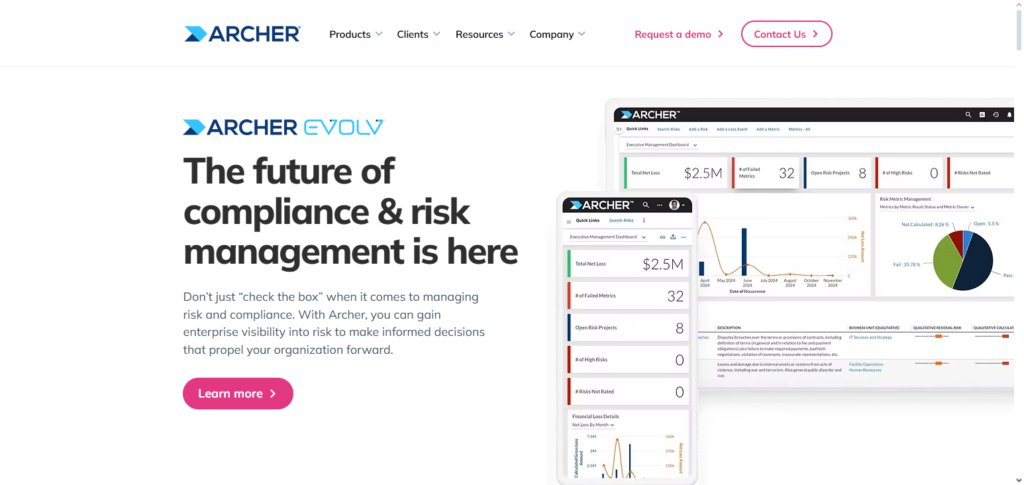
With the primarily customizable reporting and dashboards, inter and intra department functionality is enhanced through the analytics and other defined reporting elements.
process and outcome reporting, and risk repository management, prompted the achievement of enhanced reporting overall. Inter and intra department process and outcome reporting, and risk repository management, prompted the achievement of enhanced reporting overall.
RSA Archer Features, Pros & Cons
Features
- Risk registry and enterprise risk assessment
- Compliance with regulations
- Management of compliance incidents and issues
- Workflow of audit management
- Compliance dashboards and reporting
Pros
- Customizing to fit complex needs of the enterprise
- Robust documentation of audit and risk
- Risk framework documentation with change management
- Compliance documentation and change management
- Proven use of the immature solution in multiple cases
Cons
- Difficult to use if you are a novice
- Takes a long time to execute the implementation
- Needs an administrator with a lot of experience
- Time to revise the system is needed
- Compared to modern Indigenous gaming development tools, the user interface is outdated
2. MetricStream
MetricStream is considered one of the frontrunners in the category of Best Software for IT Governance, Risk & Compliance (IT-GRC) as it provides an enterprise-wide solution for managing risk and compliance. It has modules for operational risk, policy, regulatory, audit, and third-party risk management.
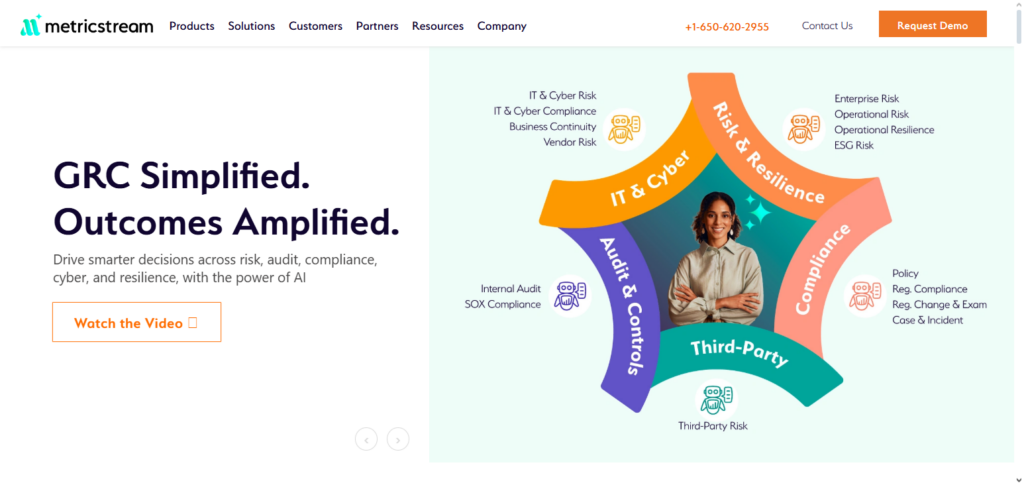
With global organizations in mind, it has a scalable architecture that includes real-time dashboards, automated workflows, and predictive analytics.
Decision-making and ongoing monitoring are supported by an intuitive interface and a centralized virtual data repository. Where others see operational gaps, MetricsStream helps organizations close these gaps, as well as maintain regulatory compliance and manage IT-GRC goals across all business units.—
MetricStream Features, Pros & Cons
Features
- Modules for integrated risk and compliance
- Assessments and testing of compliance control
- Tracking of operational risk and event loss
- Risk and map visualization (heat maps)
- Governance of documents and policies
Pros
- Integrated framework for various GRC domains
- Visualization of enterprise risk is excellent
- Control standardization is improvement
- Greater complexity of governance is well supported
- Risk and compliance seamless change management
Cons
- This solution appears to be complicated for smaller teams.
- Setup typically involves implementation partners.
- Some dashboards require adjustments.
- Costs can add up for complete package.
- Sometimes slow performance with big data.
3. ServiceNow GRC
Among the top-rated software in IT Governance, Risk, and Compliance (IT-GRC), ServiceNow GRC deserves praise for its ability to weave governance, risk, and compliance into the IT workflows. GRC combines continuous risk management, policy management, and audit tracking on the ServiceNow platform, with real-time monitoring.
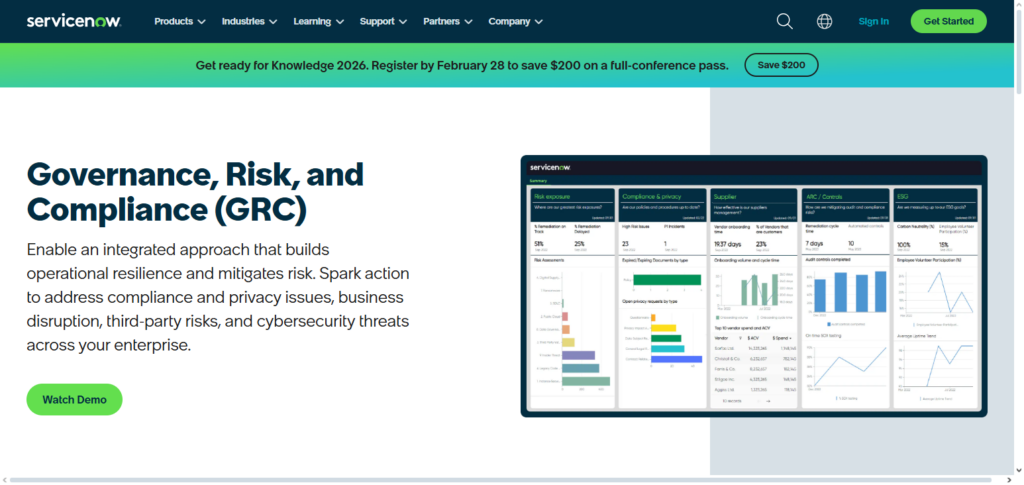
Other features such as risk management through automated workflows and real-time customizable dashboards and reporting foster compliance with regulatory requirements.
The platform’s proactive risk avoidance and rapid resolution of incidents are a result of its seamless integration with IT operations. The ability of ServiceNow GRC to unify IT and business processes makes it essential for organizations focused on operational effectiveness and a comprehensive IT-GRC strategy.
ServiceNow GRC Features, Pros & Cons
Features
- Policy and compliance management
- Risk and control monitoring
- Automated workflows and escalations
- Integration with ServiceNow ITSM
- Real‑time risk dashboards
Pros
- Great automation and workflow engine
- Out-of-the-box integration with ServiceNow
- Real-time insights and alerts
- Nice for IT risk and operational alignment
- Good incident-to-resolution tracking
Cons
- Best value when already leveraging ServiceNow IT modules
- Initial configuration can be complex
- ServiceNow specialists required for optimization
- Costs increase with added modules
- Some risk features require additional modules
4. LogicGate Risk Cloud
LogicGate Risk Cloud is extremely versatile and one of the winners of Best Software for IT Governance, Risk & Compliance (IT-GRC)” as it allows users to create custom applications for risk, compliance, and audit.
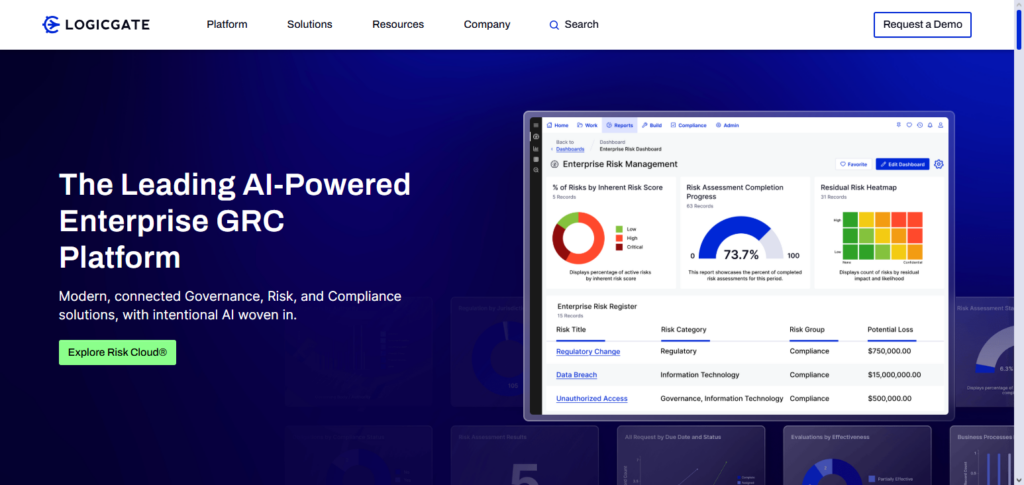
Teams operate within a ‘low-code’ environment to build IT-GRC workflows tailored to their exclusive requirements, inhibiting the need to depend on IT. Risk Assessments, reporting, tracking issues, and managing evidence are some of the services that LogicGate provides, accommodating both large and scaling businesses.
It improves accountability and decision-making with visibility of operational and IT risk. The platform improves compliance and provides adaptive responsiveness to organizations as it keeps them updated on the latest regulatory changes.
LogicGate Risk Cloud Features, Pros & Cons
Features
- No-code risk workflow builder
- Custom risk registers
- Incident and control tracking
- Audit trails and evidence repository
- Configurable dashboards
Pros
- Quick to deploy with no-code
- Simple to customize to unique processes
- Visual workflows are easy to navigate
- Fits smiddle-midsize businesses well
- Provides value quickly for risk teams
Cons
- Limited capacity for predictive risk analytics
- Not in compliance with the strong enterprise.
- Some reporting options require configuration4. Architecture plays a role in variety of integrations.
- Some advanced capabilities may require administrator involvement.
5. OneTrust GRC
OneTrust GRC is awarded as one of the Best Software for IT Governance, Risk & Compliance (IT-GRC) platforms for its focus on the management of privacy, security, and regulatory compliance. Organizations can use the platform to manage audits, and to automate the risk assessment and compliance tracking processes.
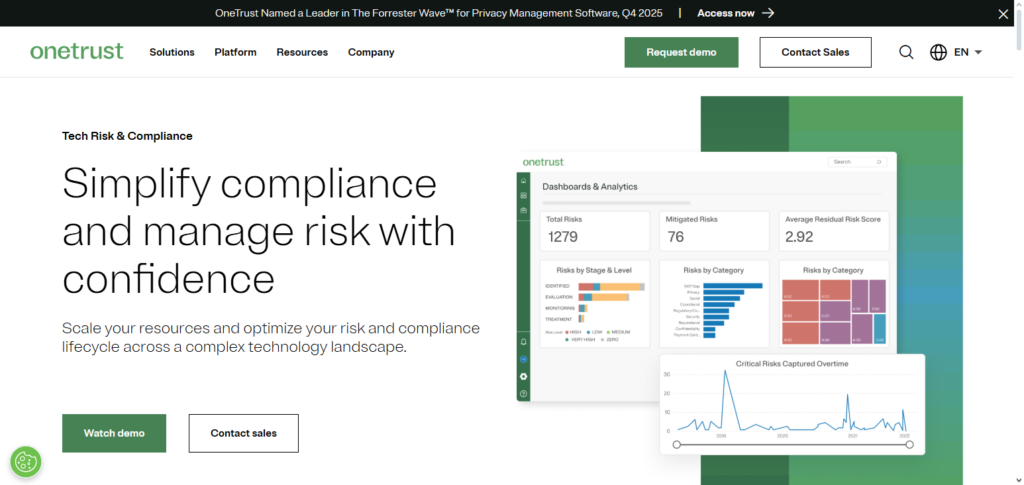
There are tools for dashboards and reporting to offer insights. From policies, to controls and incidents, OneTrust keeps IT-GRC aligned with regulations such as GDPR and CCPA. With the added integration of privacy and security risks into IT-GRC processes, OneTrust strengthens organizational liability and governance through operational resilience.
OneTrust GRC Features, Pros & Cons
Features
- Third-party & vendor risk management
- Policy and compliance automation
- Central risk library and scorecards
- Incident and issue workflows
- Privacy and risk controls
Pros
- Strong privacy and compliance focus
- Good for vendor and third-party risk scoring
- Intuitive interface for policy tracking
- Flexible automation capabilities
- Cloud-native design with regular updates
Cons
- Features can overwhelm smaller teams that lack resources.
- Some modules require additional licenses.
- Advanced reporting setup needed.
- Full feature set adoption required time investment.
- System-specific requirements for integration setup.
6. Diligent Compliance
Diligent Compliance has recently been recognized as one of the Best Software for IT Governance, Risk & Compliance (IT-GRC) for policy management, audit management, and compliance reporting. Diligent Compliance has developed a consistent approach to managing corporate policies and procedures and is also a regulatory hub for the enterprise.
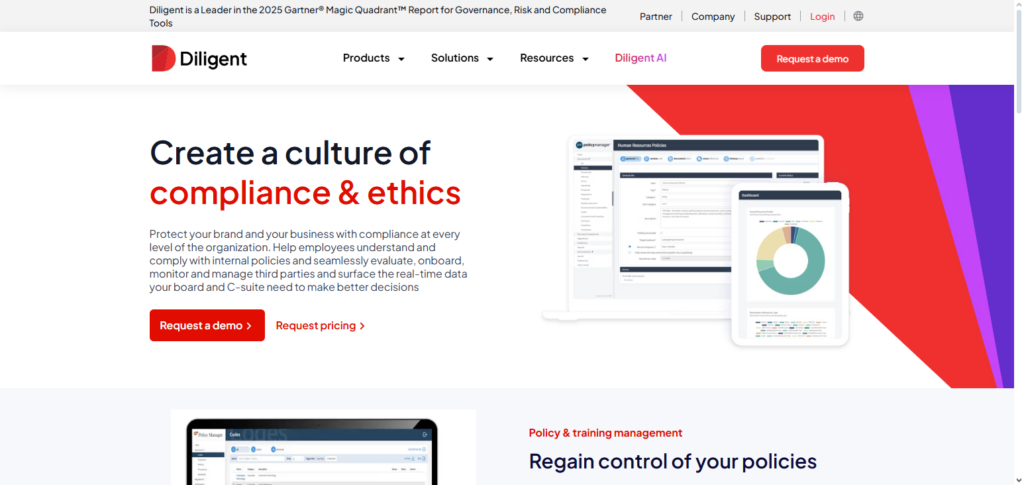
With the use of Diligent Compliance’s automated workflows, reporting dashboards, and board insights, enterprises are better equipped to manage and monitor compliance. Diligent Compliance also provides improved transparency, decreased manual management, and enhanced accountability.
Diligent Compliance is one of the few solutions that allows enterprises to centralize IT-GRC processes, making it easier for enterprises to manage regulatory compliance while improving operational efficiency. This makes Diligent Compliance an exceptionally suited solution for enterprises that require extensive governance and risk oversight.
Diligent Compliance Features, Pros & Cons
Features
- Audit and compliance dashboards
- Regulatory change tracking
- Evidence and documentation management
- Policy and control libraries
- Board and executive risk reporting
Pros
- Strong focus on governance and reporting for executives.
- Central repository for compliance documentation
- Audit trails
- Visuals for boards
- Good for highly regulated industries
Cons
- Operational risk workflows are not as deep
- Pricing is at an enterprise level.
- Advanced features require training.
- Custom work may be needed on integrations.
- Less adaptable for workflows that are unique.
7. IBM OpenPages
IBM OpenPages is an industry frontrunner for Best Software for IT Governance, Risk & Compliance (IT-GRC), utilizing AI and analytics for risk and compliance coverage. It creates a streamlined system for combined operational, IT, and regulatory risk analytics, providing dashboards, automated workflows, and reporting for enterprise visibility.
OpenPages is adaptable for large-scale global organizations supporting complex IT-GRC through regulatory compliance, audit management, policy management, and risk assessment. It addresses potential risks and maintains compliance through actionable insights and predictive analytics. IBM OpenPages improves IT-GRC, empowering organizations to make strategic choices and build resilience.
IBM OpenPages Features, Pros & Cons
Features
- Risk scoring powered by AI
- Unified policy and compliance management
- Workflows for automated risks
- Architecture for scalable enterprises
- Predictive analytics for risk
Pros
- Exceptional insights and analytics
- Designed for large multinational corporations
- Libraries for integrated controls
- Models for powerful risk prediction
- Strong support for compliance
Cons
- Lengthy cycles for implementation
- Costs are exorbitant
- Admins need to be specialists
- Mid- market teams may find it complex
- Reporting integrations need customization
8. NAVEX Global
NAVEX Global is the winner of Best Software for IT Governance, Risk & Compliance (IT-GRC) , with a focus on the area of compliance, ethics and risk management. It has modules for policy management, incident reporting, whistleblower services, third-party risk and audits. NAVEX Global’s cloud-based solution helps organizations track compliance and build transparency.
With the help of integrated reporting, dashboards and workflow automation, companies can streamline the management of compliance programs. NAVEX Global integrates risk management with ethical governance, fulfilling an organization’s legal compliance and building an internal structure of compliance, accountability and ethics. This is especially true for organizations with high levels of corporate responsibility.
NAVEX Global Features, Pros & Cons
Features
- Reporting for compliance and ethics
- Management of incidents and cases
- Distribution and creation of policy
- Updates for regulatory content
- Dashboards for compliance
Pros
- Compliance and ethics are focal points of strength
- Distribution of policy and training is simple
- Whistleblower functionality is helpful
- Simplicity in the cloud
- Support resources are helpful
Cons
- Deep risk modeling is limited
- The scope of core GRC is less broad
- To some users, the UI may seem old
- Additional features are necessary for enterprise risk
- The complexity of integrations may be shallow
9. Hyperproof
Hyperproof is a cloud-based IT Governance, Risk, and Compliance (IT-GRC) platform that focuses on flexible and continuous risk management. It automates processes to simplify operational compliance and regulatory reporting, including evidence collection, control testing, and audit tracking.

Hyperproof is also equipped with real-time dashboards, custom workflows, and integrations with other IT systems, which facilitates the management of various compliance frameworks, Hyperproof’s emphasis on automation lessens the workload and boosts the accuracy of an organization’s IT-GRC programs.
Hyperproof provides organizations the ability to manage their audit status, ensure accountability, and respond to regulatory changes quickly, making it an effective solution for organizations with compliance management needs.
Hyperproof Features, Pros & Cons
Features
- Mapping of Framework Control
- Collection of Evidence Continuously
- Workspaces for teams of Audit
- Tracking of tasks and workflows
- Dashboards for risk and compliance
Pros
- Readiness for audit is excellent
- User friendly and intuitive design
- Effective evidence management
- Task assignment and tracking is adequate
- Effective through all compliance cycles
Cons
- Weaknesses in enterprise risk modeling
- Integrations require specific planning
- Advanced capabilities require higher tiers
- Customization in reporting can be restrictive
- Best suited for compliance, and not full GRC coverage
10. Resolver Risk Management
Resolver Risk Management offers enterprise-wide risk, incident, and audit management capabilities, and is most often recognized as a Best Software for IT Governance, Risk & Compliance (IT-GRC) platform.
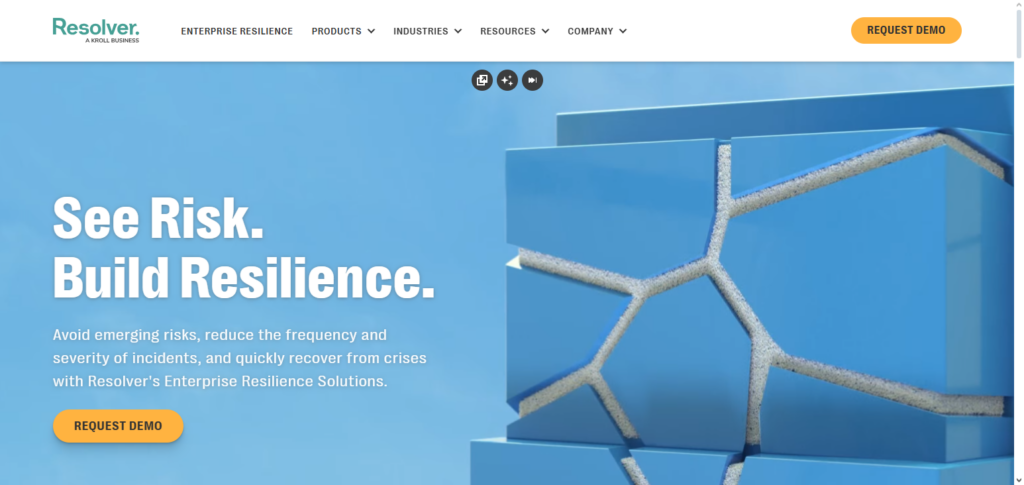
It provides users with a centralized platform to identify, assess, and mitigate risks at the operational and IT risk levels. Risk, reporting, and dashboards workflows are automated to enable decision support, and preemptive, streamlined monitoring of compliance initiatives.
In addition, the platform offers policy management, compliance reporting, and risk analytics for prescriptive guidance. From the consolidation of the IT-GRC processes, Resolver strengthens, broadens, and manages the governance of risk for organizations with a holistic and proactive approach to IT-GRC.
Resolver Risk Management Features, Pros & Cons
Features
- Risk scoring and risk registers
- Logging for incidents and events
- Control testing and assurance
- Tracking compliance
- Risk dashboards for executives
Pros
- Risk and compliance tools that are simple
- Design suited for mid-market
- Incident workflows are clear
- Dashboards that are user friendly
- Reporting and alerting features are good
Cons
- Analytics are not as in depth as big ERPs
- Admin work needed for customization
- Modules for third-party risk are limited
- Advanced reporting is requires set up
- Reporting integration is flexible
Conclusion
For businesses looking to efficiently manage risks, guarantee regulatory compliance, and improve overall IT governance, selecting the best software for IT governance, risk, and compliance (IT-GRC) is essential.
Comprehensive tools to centralize risk management, automate workflows, monitor compliance, and produce actionable insights are offered by platforms such as RSA Archer, MetricStream, ServiceNow GRC, LogicGate Risk Cloud, OneTrust GRC, Diligent Compliance, IBM OpenPages, NAVEX Global, Hyperproof, and Resolver Risk Management.
Organizations can proactively detect risks, enhance decision-making, maintain audit preparedness, and promote an accountable culture by putting these IT-GRC solutions into practice. In the end, an appropriate IT-GRC platform enables businesses to protect their operations, comply with legal requirements, and promote long-term company growth.
FAQ
Which are the best IT-GRC software platforms?
Some of the best IT-GRC software include RSA Archer, MetricStream, ServiceNow GRC, LogicGate Risk Cloud, OneTrust GRC, Diligent Compliance, IBM OpenPages, NAVEX Global, Hyperproof, and Resolver Risk Management. Each offers unique capabilities, such as risk analytics, workflow automation, and compliance tracking.
How do I choose the right IT-GRC software?
When selecting IT-GRC software, consider your organization’s size, regulatory requirements, risk management needs, integration capabilities, ease of use, and scalability. Evaluate features like automated workflows, reporting dashboards, audit management, and evidence tracking to ensure alignment with IT-GRC objectives.
Can IT-GRC software be used by small businesses?
Yes. Many modern IT-GRC platforms, like LogicGate Risk Cloud and Hyperproof, offer scalable solutions suitable for small and medium-sized businesses, providing automated risk tracking, compliance management, and centralized oversight without the complexity of enterprise-only platforms.
What are the benefits of implementing IT-GRC software?
Implementing IT-GRC software helps organizations reduce compliance risks, streamline operations, improve transparency, maintain regulatory readiness, enhance decision-making, and create a culture of accountability across IT and business functions.
How does IT-GRC software integrate with existing IT systems?
Most IT-GRC platforms provide API integrations and connectors with IT service management, ERP, and cybersecurity tools. This allows automated data collection, real-time risk monitoring, and seamless workflow management across IT and business processes.