The South Korean government has announced plans to implement digital assets, specifically focused on exchange-traded funds (ETFs), stablecoins, and financial infrastructure using blockchain.
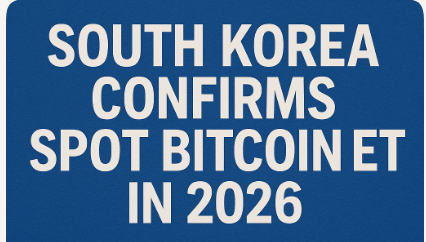
A spot Bitcoin ETF is at the center of this plan, with regulators currently preparing for this to happen by 2026. The announcement comes with the Economic Growth Blueprint for 2026, showing a willingness to implement digital finance with regulations.
The South Korean government has stated that the earliest digital asset ETFs could become a reality is this year, and that work on the requisite regulations will begin shortly.
South Korean regulators are planning to address crypto regulatory frameworks with what are being termed the ‘second wave’ of digital asset regulations, with an emphasis on investor protection, issuance, and the overall stability of the markets.
While this is a progressive approach, it will take some time for a Bitcoin ETF to become operational, but Frameworks for other digital assets are likely to become established in the Interim.
With the most recent developments in South Korea, it is shown that the South Korean government has an increasing fear of the adoption of stablecoins. The government fears that stablecoins will become an unregulated threat in the world.
Although there is the development of new standards on the disclosure of stablecoins and the standards of reserve holdings, there is still no agreement on the institutions that should be able to issue stablecoins.
Also, the South Korean government has taken a considerable amount of time to formulate a comprehensive digital asset strategy. This has allowed South Korea to become progressively more accommodating of digital currency innovations.
The South Korean government recently lifted a restriction that prevented crypto firms from obtaining venture capital. This allowed venture capital for blockchain companies, which has removed barriers to funding and has sparked growth and development.
We have also seen increased levels of participation from institutional investors. Last December, Binance purchased the South Korean cryptocurrency exchange, Gopax. This acquisition was Binance’s first purchase in South Korea after a series of regulatory obstacles in the country’s cryptocurrency industry.
With the current regulations surrounding crypto ETFs and stablecoins, the South Korean government has also shown interest in the use of blockchain for public finance. One example is the proposed creation of a ‘deposit token,’ which is a digital asset that is blockchain-based and is backed by deposits from commercial banks. The South Korean government has set a goal of 2030 to have 25% of the national treasury invested in these types of financial instruments.
Revisions to the Bank of Korea Act and the Treasury Administration Act, which should be completed by the end of the year, will provide the first legal basis for the use of blockchain technology for payment and settlement systems, and the digital wallets for deposit tokens linked to government spending will also be developed.
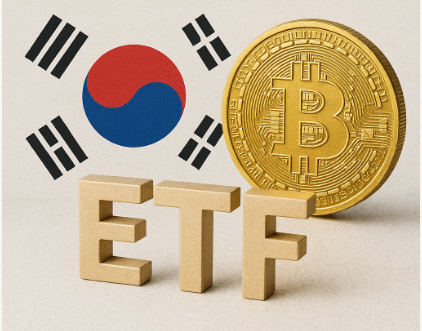
In addition, after the U.S. and Hong Kong, South Korean authorities will also have spot digital asset ETFs. Together with the finalized rules around cross-border stablecoin transfers and proposals from the Financial Services Commission (FSC), South Korea is positioned to be a leader in the next stage of global digital asset adoption.