
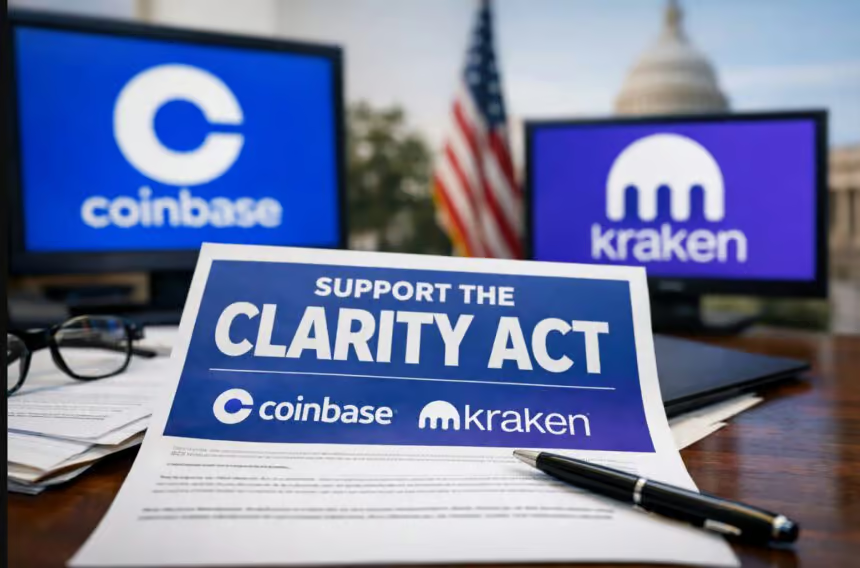
More than 60 crypto and blockchain companies are calling upon the US Senate to pass the CLARITY Act and keep protections for software developers. Concerns are growing about these protections as the negotiations for this Act become more uncertain.
The letter, not only signed by the executives of the companies named, included the signatures of many others, including executives of Uniswap, Solana, and Anchorage Digital. The signatories strongly support the Blockchain Regulatory Certainty Act (BRCA), which is a bipartisan addition to the CLARITY Act.
The signers said the BRCA offers necessary legal protections for software developers and service providers in the crypto space that do not handle customers’ funds. The signers thanked the Senate Banking Committee for the development of what the signers called “essential protections for software developers.” They strongly urged that the CLARITY Act be approved by the Senate with the BRCA protections as they are.
As the political opposition to the Act is increasing, so is the resistance of the developers. Political prediction markets are indicating that the probability of the passage of this Act from the Senate has decreased from 55% to 48%. Disagreements are increasing in the Senate on the developer protections, Stablecoin yield, and other ethics requirements.


Sources close to the discussions suggest negotiations over ethics language have intensified. Reports to this effect say that issues between Democratic legislators, Republican negotiators, and White House officials have made reaching a working compromise more difficult and pushed a vote in the Senate to the back burner.
BRCA language advocates say that maintaining the existing language is crucial for future innovation in the U.S. blockchain industry. The coalition argues that taking these protections away would mean a ‘go-ahead’ to regulatory confusion for engineers creating decentralized technologies, Bitcoin-based infrastructure, DeFi, and smart contract applications that are built to be open and trustless.
The letter went on to say that developers should be free, without regulatory worries, to build and improve decentralized tools. Supporters say that BRCA would help real software developers and digital engineers stay on one side of the line, while financial and commercial businesses stay on the other.

The argument has also drawn interest from several federal and law enforcement agencies. White House officials have recently been reported as discussing the challenges posed to the enforcement of financial crime by digital assets if developer protections are included.
The coalition, on the other hand, has said the opposite. They have argued that regulatory clarity would strengthen financial crime enforcement. They stated that the CLARITY Act and BRCA language would keep open the U.S. digital asset industry while giving the regulators enforcement tools to go after the bad players.