
Introduction
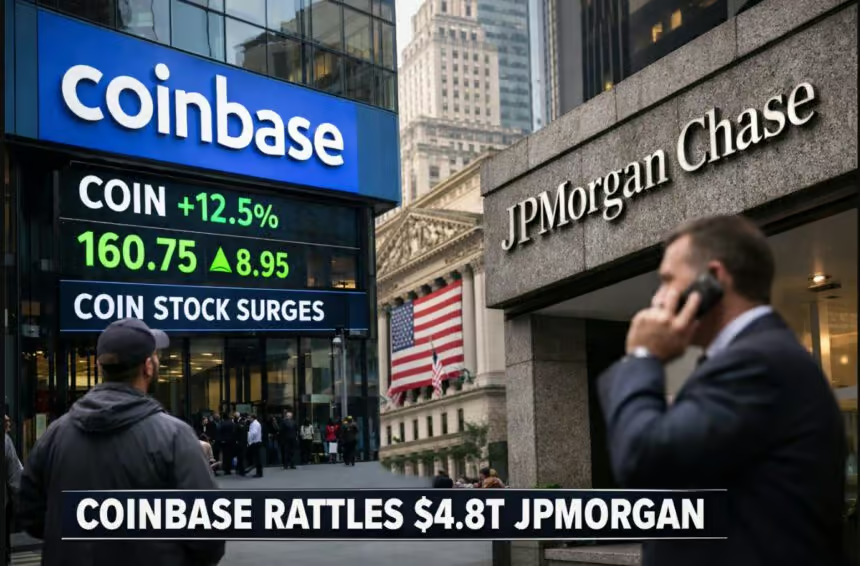
On May 29, several factors combined to make Coinbase (NASDAQ: COIN) stock particularly interesting to investors for the first time since the stock traded at $189, more than 3% higher than the $182.00 closing price on May 29. Enhanced regulatory oversight and strategically planned expansions coincided with increasing friction between crypto executives and traditional banking executives, fueling this brief stock momentum.
COIN Gains with Positive Market Sentiment
Trading in COIN shares reflected a very positive market momentum, especially with the entry of more institutional investors. The stock advanced and closed above the critical support range of between $173 and $176. The bullish momentum continued as more positive regulatory developments and expansion news were released.
Increased Sentiment with CFTC Approval and Deribit Partnership
Positive momentum translated to an immediate stock increase when the U.S. Commodity Futures Trading Commission (CFTC) made an announcement regarding Coinbase. The announcement stated that Coinbase was authorized to offer its U.S. customers access to crypto futures with respect to perpetual contracts that are traded outside of the U.S.
Coinbase will also be able to strengthen its global position in crypto trading derivatives with its partnership with Deribit. This partnership should begin to integrate Coinbase with TradFi, increasing the company’s institutional focus.

JPMorgan’s Jamie Dimon and Coinbase
JPMorgan’s Jamie Dimon has taken issue with Coinbase despite the company’s growth. Dimon believes Coinbase receives regulatory perks not afforded to traditional banking institutions.

In a FOX interview, Dimon increased the friction between the two companies by labeling Coinbase’s Brian Armstrong as “full of s–t” and stating he will fight against legislative movements in relation to the CLARITY Act.
Dimon also said that banks will not endorse the CLARITY framework in its current form, and that crypto companies should be subject to the same laws and regulations as banks.
CLARITY Act and Stablecoins
Dimon also plans to take issue with the CLARITY Act in relation to stablecoins. He stated that Coinbase should not be providing the opportunity to earn interest in stablecoins and should not be allowed to provide the service, as customers may prefer to earn interest in crypto rather than leave funds in a traditional bank.
Dimon claims that he is not opposing Coinbase due to the desire to protect traditional banks from competition. According to Dimon, the issue is that Coinbase is providing banking-like services while not following the banking regulations.
Coinbase and the Banking System

While these regulatory issues are being discussed, Coinbase is increasingly cementing its role in the traditional banking system. Coinbase has now provided the ability to trade U.S. stocks around the clock. Additionally, following a May 19 executive order, discussions regarding a Federal Reserve master account could provide Coinbase access to the largest global payment system.
COIN Stock Technical Outlook
Technically, COIN stock rose by 3.67% on May 29, with price activity continuing to the upside, confirming the buying interest existed. The 50-day simple moving average (SMA) at $189 will be seen as a limit to COIN’s stock price.
Resistance Levels and Market Indicators
If buying interest persists, COIN stock will attempt price activity to the $213 resistance level. A breakout will mean price activity moves to close above $213 for several consecutive sessions; this will likely result in the price moving toward the 150-day SMA at $221. COIN has only closed above $213 since January 2026 on 1 occasion.
The Relative Strength Index (RSI) is at a neutral position of 48. The upward trend in the index will show an increase in buying activity with the gradual increase of confidence from the investing community.
Conclusion
Coinbase sits at the eye of a storm with altered financial systems. A convergence of changing regulations, potential partnerships with major institutions and political push-back from the banking elites. In the short term, the price barriers are not functioning as they should, and due to the growing connections with the Traditional Financial networks, COIN from an investing perspective, has high potential with the threats of jump trading and price manipulation.