Aave Conflict Over Allocation of Fees and Community Issues Surrounding Aave Labs
The largest DeFi lending protocol, Aave, is currently facing a governance dispute concerning the distribution of swap fees. This situation has sparked debates about decentralization and potential risks to AAVE holders. Controversy arose when Aave Labs, one of the co-founders of Aave, Stani Kulechov, updated the protocol with CoW Swap, and began redirecting millions in swap fees to a private address owned by the company, rather than to the Aave DAO treasury.
The integration originated to enhance users’ swap experience by providing better rates, and more protection from MEV (Miner Extractable Value) attacks. However, Aave DAO delegates were concerned that this change potentially diverts $10 million in annual revenue from the DAO to Aave Labs, triggering accusations of the “privatization” of community assets.
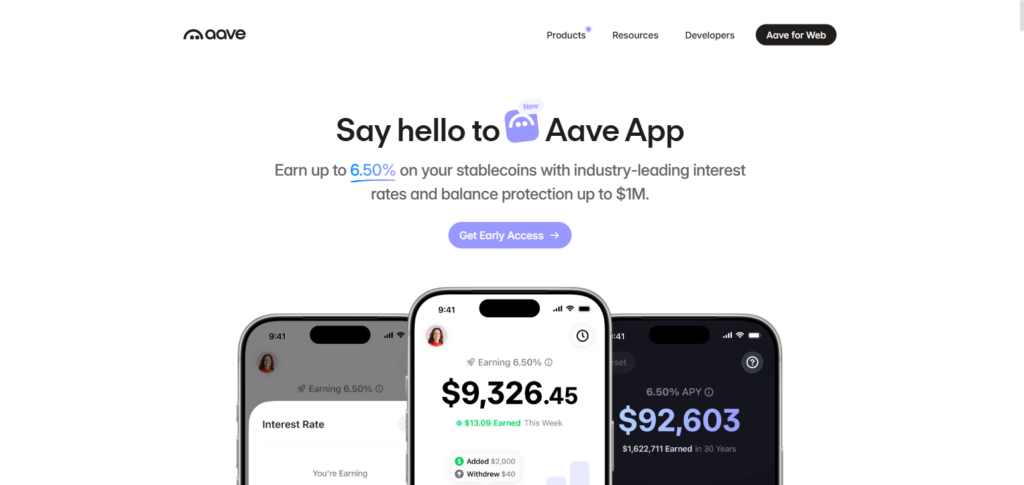
Aave used to work with ParaSwap swap adapters, which permitted surplus revenue to shift directly to the DAO treasury. Now users have to pay 15–25 basis points on fees when using the CoW Swap and that revenue goes to Aave Labs, not the DAO.
Zeller reported that someone appeared to be engaging in what he termed “stealth privatization” of roughly 10% of Aave DAO’s Annual Revenue, calling the circumstances “extremely concerning”. Zeller went on to speculate on the possibility of other components of Aave, such as Vaults, Horizon, and the V4 liquidation engine, potentially being revenue diverting from the DAO.
Stani Kulechov refuted claims that revenue was stolen, explaining that ParaSwap fees were voluntary donations to the DAO and constituted a “discretionary surplus”. Kulechov as acknowledged that Aave protocol is and will stay governed by the DAO, and that Aave Labs manages, sponsors, and finances the protocol’s frontend as well.
He stated that it is a fair assumption that Aave Labs and other employees could earn revenue off of their own products as they bear the costs of providing engineering and security resources to the site.
Aave Labs acknowledged the gap in communication regarding the revision of fees but defended their change on the basis of lower execution prices and increased MEV protection. In any case, the ongoing issues of DAO governance, who ‘owns’ the revenue of the protocol, and the accountability of the service providers funded by the DAO remain apparent to all.
In the face of conflict, the price of AAVE is doing great. Earlier today, the token changed hands at $195.95, a 0.5 p% increase in the last day and a continuation of its monthly rally, in which its price increased by 30%+.
The last day also saw a surge in the token volume traded to the tune of 40%, that showed active participation by the traders in the market. The very near term also saw Aave’s v4 upgrade to enhance the efficiency of the lending and improve the rates that suppliers and borrowers get by unlocking a better rate on the liquidation engine and the Liquidity Hubs.
As the Aave community now looks to Aave Labs to give the Aave community a formal response in the form of an announcement about the event, the event brings to all investors the risk that exists in the protocols, on the other hand, and the discretionary governance, on the other hand, and the company’s service.