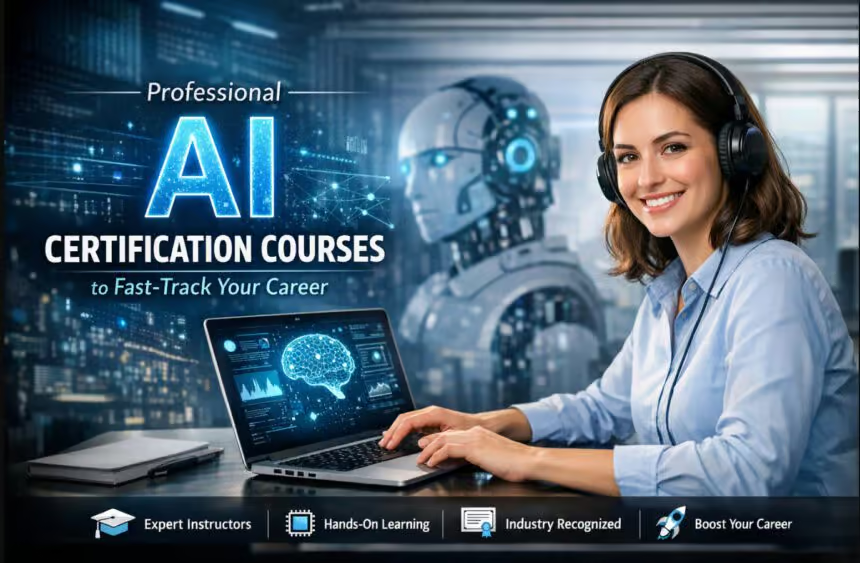
From now on, Professional AI Certification Courses to Fast-Track Your Career are marked as the fastest & options you have to build a potential career in one of the most profound growing technologies.
The programs offer a comprehensive study of machine learning, deep learning, and data science while emphasizing hands-on applications and practical skills.
Obtaining recognized certifications not only enables professionals to increase their convenience level, but they also have a chance to get more job opportunities and achieve significant career growth in critical positions such as AI and advanced digital technologies.
Key Point
| AI Certification Course | Key Point |
|---|---|
| Machine Learning Specialization | Covers supervised & unsupervised learning with practical projects; ideal for beginners entering AI with strong industry-recognized certification. |
| AI Engineering Professional Certificate | Focuses on real-world AI model deployment, deep learning, and APIs; includes hands-on labs using industry tools like Watson. |
| Professional Certificate in AI | Offers foundational AI concepts, Python, and machine learning with academic rigor and globally recognized certification credibility. |
| Deep Learning Specialization | Covers neural networks, CNNs, RNNs, and NLP; highly valued for deep technical expertise in modern AI systems. |
| Applied AI with DeepLearning | Combines theory with real-world projects including chatbots and recommendation systems; suitable for career switchers. |
| AI Programming with Python Nanodegree | Teaches Python, NumPy, and neural networks; focuses on building AI applications from scratch with portfolio-ready projects. |
| Microsoft Certified: Azure AI Engineer Associate | Validates skills in AI solutions using Azure; strong demand in enterprise environments and cloud-based AI roles. |
| Google Professional Machine Learning Engineer | Focuses on designing, building, and productionizing ML models using Google Cloud; highly valued for MLOps roles. |
| Artificial Intelligence A-Z™ | Beginner-friendly course covering AI basics, Q-learning, and deep learning; affordable and practical introduction. |
| Certified Artificial Intelligence Scientist (CAIS™) | Advanced-level certification focusing on AI strategy, architecture, and leadership roles in AI-driven organizations. |
1. Machine Learning Specialization
The Machine Learning Specialization is well-established as one of the most trusted points into making your way to AI for both newcomers and those looking to pivot their skills toward data science roles.

It works on supervised learning, unsupervised learning, and building a model using an actual dataset. Offered through Coursera and taught by Andrew Ng, it covers practical labs, programming in Python and basic algorithms.

This course helps you to understand the real world problem solving, model evaluation and deployment basics.
The learners get the following: Job-Ready skills, solid theoretical foundation, portfolio projects, recognition with industry partners and a pathway into advanced AI specializations such as deep learning and MLOps.
Machine Learning Specialization Key Features
- Beginner-friendly structured ML foundation
- Includes supervised and unsupervised learning
- Hands-on Python-based coding labs
- Real-world dataset practice
- Step-by-step model building approach
Skills You Learn
- Machine learning algorithm implementation
- Data cleaning and feature preparation
- Model evaluation and tuning
- Python programming for ML
Career Roles
- Machine Learning Engineer
- Data Scientist
- AI Analyst
- Research Assistant
2. AI Engineering Professional Certificate
Ai engineering professional certificate: This program is focused in real-world environments on building, training and deploying AI models. Offered by IBM through Coursera, it includes data machine learning, deep learning, neural networks and AI APIs.

They learn by doing with tools such as Watson, Python and cloud-based AI services. Program includes hands-on labs, capstone projects and deployment workflows.
This is best for aspiring AI engineers looking for relevant skills from industry, exposure to enterprise system, validater with a certification, portfolio in hand and amazing job opportunities in AI product development and roles focused on automation.
AI Engineering Professional Certificate Key Features
- Industry-focused AI engineering curriculum
- Real-world AI deployment training
- Cloud-based AI tools practice
- Capstone project included
- Enterprise AI workflow exposure
Skills You Learn
- Training and implementation of AI models
- Integrating APIs for AI systems
- Deep learning fundamentals
- Cloud AI service usage
Career Roles
- AI Engineer
- Machine Learning Engineer
- AI Solutions Developer
- Automation Engineer
3. Professional Certificate in AI
The Professional Certificate in AI is also an excellent academic foundation, accompanied by actual implementation of the concepts learned. It is offered by edX in partnership with Harvard University and includes modules on Python programming, machine learning algorithms, data analysis, and ethics in AI.
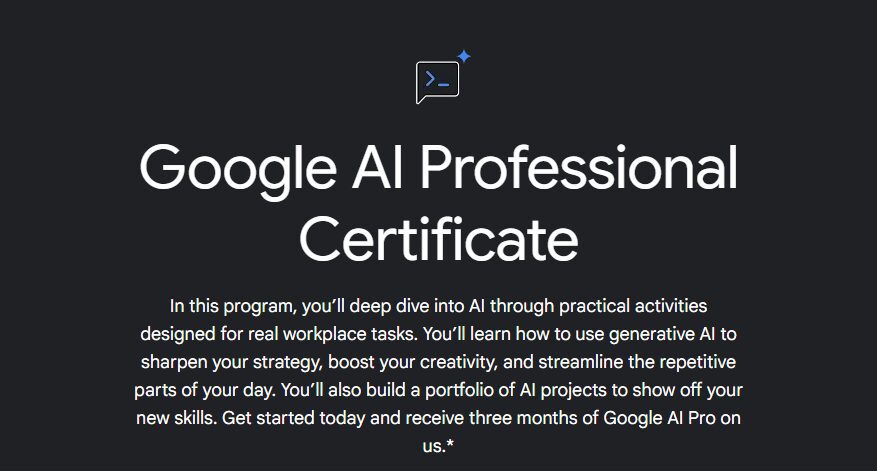
It features demanding tasks, practical case studies and engaging learning modules. It is meant for learners who want accreditation, theoretical background and experience!
Benefits you can expect are international recognition, curriculum structure, placement of strong analytical skills, project-based learning pedagogy, academic excellence in AI and preparation for advanced roles or specialization.
Professional Certificate in AI Key Features
- Academic-level structured learning
- High theory + practice focus
- Includes Python and ML fundamentals
- Case-study based learning
- Globally recognized certification path
Skills You Learn
- Data analysis techniques
- AI algorithm understanding
- Statistical reasoning
- Python programming
Career Roles
- AI Research Associate
- Data Analyst
- Junior Data Scientist
- AI Consultant
4. Deep Learning Specialization
If you are interested in mastering neural networks and advanced AI techniques, the Deep Learning Specialization is targeted at people just like you.
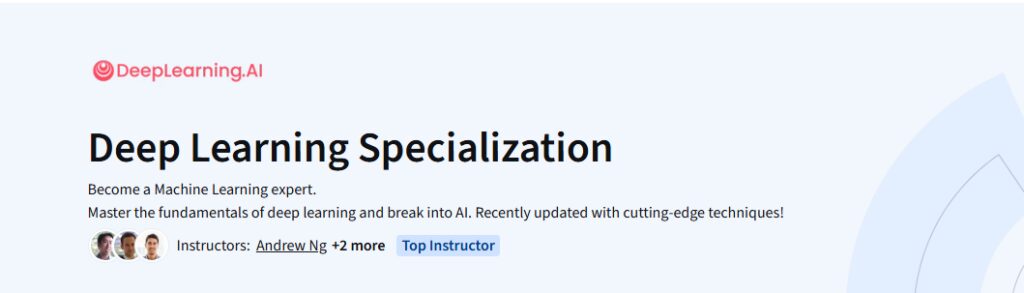
Offered by DeepLearning. Artificial Intelligence This course touches on CNNs, RNNs, NLP and model optimization. This course is focused on practical coding, with real world applications and in-depth theory.
Learners develop real-world projects like image classification, and sequence models. Expert instruction that is industry-relevant and rooted in cutting-edge AI concepts.
Deep Learning Specialization Key Features
- Advanced neural network training
- CNN, RNN, and NLP coverage
- Strong coding-based learning
- Real AI project building
- Industry-grade deep learning concepts
Skills You Learn
- Neural network design
- Models designed for image and speech recognition
- Natural language processing
- Model optimization techniques
Career Roles
- Deep Learning Engineer
- AI Research Scientist
- Computer Vision Engineer
- NLP Engineer
5. Applied AI with DeepLearning
Applied AI with DeepLearning is dedicated to bringing real-world AI applications and theory together. Provided by Simplilearn, it includes machine learning, deep learning, NLP and computer vision projects.
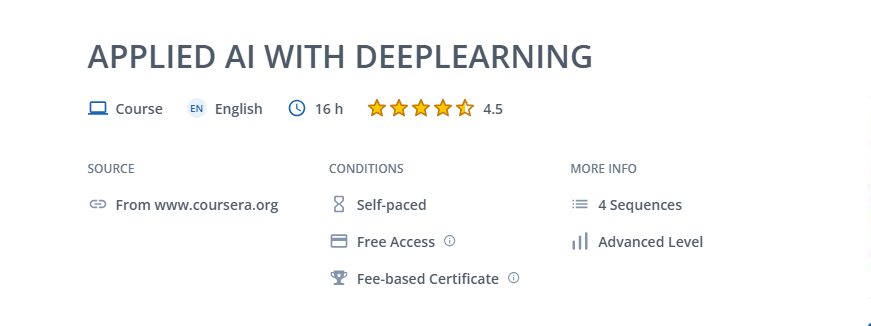
The course features multiple projects like building chatbots, recommendation systems, AI-driven analytics and more. It is perfect for professionals who want to step into AI jobs hands-on.
The concept of project-based learning is driven by industry projects and realistic case studies so that they can be aware of the current trends in AI development.
Applied AI with DeepLearning Key Features
- Practical AI implementation focus
- Industry project-based learning
- Chatbots and recommendation systems
- Real business use cases
- Hands-on deep learning exposure
Skills You Learn
- Applied machine learning
- AI solution design
- Fundamentals of NLP and computer vision
- Model deployment basics
Career Roles
- Applied AI Engineer
- AI Developer
- ML Engineer
- Data Science Associate
6. AI Programming with Python Nanodegree
First up is the AI Programming with Python Nanodegree, which emphasizes foundational programming skills to get started in your AI development journey. This is offered by Udacity and includes Python, NumPy, Pandas, Matplotlib and Neural network basics.
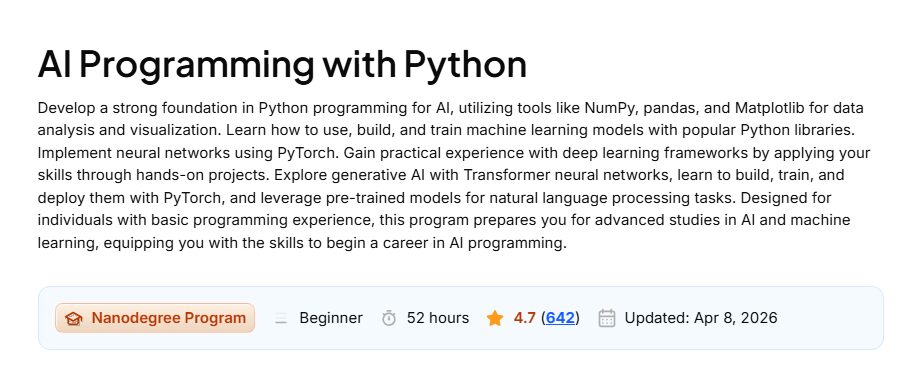
Projects include hands-on projects on image classifiers and AI applications. It is focused on coding, playing with data and developing algorithms.
Main benefits include building your portfolio, hands-on programming experience with industry-standard tools, flexibility in learning, task-oriented curriculum development that builds a strong technical base as well as prepares you for careers, advanced paths involving AI, machine learning and data science.
AI Programming with Python Nanodegree Key Features
- Strong Python programming foundation
- AI-focused coding projects
- NumPy, Pandas, Matplotlib training
- Beginner to intermediate progression
- Portfolio-building assignments
Skills You Learn
- Python programming for AI
- Data manipulation techniques
- Basic neural networks
- Data visualization
Career Roles
- Python AI Developer
- Junior Data Scientist
- AI Programmer
- Data Analyst
7. Microsoft Certified: Azure AI Engineer Associate
A Microsoft Certified: Azure AI Engineer Associate demonstrates proficiency in the design and implementation of AI solutions powered by cloud services, among other skills. It is provided by Microsoft and covers Azure AI services, machine learning models, cognitive services and NLP solutions.
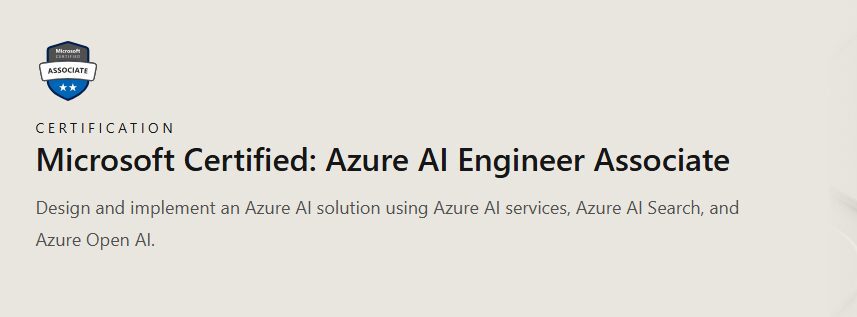
The certification covers concepts, industry use-cases and cloud deployment models. Such skills are very much in demand for roles working with AI on the cloud.
Some of them are enterprise recognition, cloud specialization, hands-on training, high job demand, certification credibility etc. in tune with scalable AI solutions knowledge and great career opportunities in the current era run by a cloud-based organizations.
Microsoft Certified: Azure Developer Associate Key Features
- Cloud-based AI specialization
- Training in Microsoft Azure AI tools
- Enterprise-level AI solutions
- Real deployment scenarios
- Industry-recognized certification
Skills You Learn
- Azure AI services usage
- Cognitive services integration
- Machine learning deployment
- Cloud AI architecture
Career Roles
- Azure AI Engineer
- Cloud AI Specialist
- ML Engineer
- AI Solutions Architect
8. Google Professional Machine Learning Engineer
The Google Professional Machine Learning Engineer certification covers the end-to-end design to build and productionize ML models at scale. Provided by Google, it focuses on Google Cloud tools, MLOps, data pipelines and model optimization.
The graduate course teaches practitioners to deploy AI systems and monitor performance in practice. Strong industry demand, cloud AI expertise, production-level skills; certification prestige and credibility, scalability knowledge, real-world applications focus, promotion potential to well-paid machine learning and AI engineering positions.
Google Professional Machine Learning Engineer Key Features
- Training for the Google Cloud AI ecosystem
- Production-level ML focus
- MLOps and pipelines included
- Real-world scalable systems
- Advanced AI deployment skills
Skills You Learn
- ML model productionization
- Data pipeline management
- Model monitoring and optimization
- Google Cloud AI tools
Career Roles
- ML Engineer
- MLOps Engineer
- AI Engineer
- Cloud Machine Learning Specialist
9. Artificial Intelligence A-Z™
Artificial Intelligence A-Z™: Learn How To Build An AI. It includes machine-learning, deep-learning, and reinforcement learning algorithms such as Q-learning. It’s all about hands-on implementation with a step-by-step approach.
It is perfect for people who would like to dive into the basics of AI. The advantages of these fundamentals courses are that they are affordable, film language is more comprehensible, real-world exercises are plentiful and engaging, you learn the basics thoroughly with little theory background knowledge needed, self-paced learning is at your disposal (e.g. Udacity).
Skills can be learned quickly and implemented in your own work environment without massive overheads or costs incurred to the company where you work as an employee or yourself if self employed/free-lance but also serve as a launch point onto courses on specific avenues of AI deeper into maths-oriented models based especially on neural nets.
Artificial Intelligence A-Z™ Key Features
- Beginner-friendly AI introduction
- Step-by-step practical tutorials
- Reinforcement learning basics
- Simple coding exercises
- Affordable learning option
Skills You Learn
- AI fundamentals
- Q-learning and reinforcement learning
- Basic ML model building
- Python AI basics
Career Roles
- AI Intern
- Junior ML Developer
- Data Assistant
- AI Trainee
10. Certified Artificial Intelligence Scientist (CAIS™)
The Certified Artificial Intelligence Scientist (CAIS™) is an advanced-level certification intended for AI professionals and leaders. Provided by USAII, it covers topics relating to AI strategy, system architecture, advanced analytics and enterprise AI enablement.

The program focuses primarily on leadership, innovation and decision-making leveraging AI technologies. Executive Knowledge Insights Play Global Recognition Advanced Curriculum Leadership Focus Highly Industry Relevant Prepare students for senior roles such as AI architect, consultant or chief AI officer
Certified Artificial Intelligence Scientist (CAIS™) Key Features
- Advanced AI leadership program
- AI strategy and architecture
- Enterprise-level AI systems training
- Executive decision-making focus
- Global certification recognition
Skills You Learn
- AI system design
- Strategic AI implementation
- Advanced analytics
- Enterprise AI governance
Career Roles
- AI Scientist
- AI Architect
- AI Consultant
- Chief AI Officer (CAIO)
How To Choose the Professional AI Certification Courses to Fast-Track Your Career?
AI certification selection is less about selecting a “popular course” and more about aligning it with your current skill level, career goal, and industry demand. The wrong choice could waste years of time; the right one can supercharge your job prospects.
Identify Your Career Goal First
Be specific about your target role before choosing any AI certification. If you wish to pursue a career as a Machine Learning Engineer, then seek out technical, coding-focused programs. If your intent is management or strategy within AI, go for leadership-based certifications such as (CAIS™). Everything from course depth to tools and even difficulty level is determined by your end goal.
Check Your Current Skill Level
AI certifications are also typically structured by level: beginner, intermediate, and advanced. It is recommended that beginners start with python and take basic machine learning courses. Mid-grade learners are also going towards deep learning or applied AI. Experienced professionals should pick cloud AI or architecture-based certifications such as Azure AI Engineer, Google ML Engineer.
Evaluate Course Curriculum Depth
- A strong certification must include:
- Machine learning fundamentals
- Deep learning concepts
- Real-world projects
- Coding (hands on Python or cloud tools)
- Model deployment exposure
Do not take courses entirely theoretical or with no practical assignments, because AI is skill-based.
Focus on Industry Recognition
Focus on certifications that carry a lot of weight with employers. Larger platforms and tech ecosystems give more weight to programs in hiring decisions. Why Certifications Based on Real Companies or Cloud Platforms?
Check Hands-On Project Opportunities
AI learning is not limited to theory. Strong certifications include:
- Capstone projects
- Real datasets
- Model building tasks
- Deployment exercises
And projects help you build your portfolio, which is often more valuable than the certificate itself in job interviews.
Consider Tools & Technology Stack
The course should cover modern tools too, like:
- Python
- TensorFlow or PyTorch
- Cloud platforms (Azure, Google Cloud)
- AI APIs and frameworks
You are unable to utilize the latest tools for contemporary AI work.
Examine Career Outcomes & Employment Positions
Verify what positions the credential qualifies you for before committing. A good AI course should definitely lay out how you can expect to enter roles such as:
- Machine Learning Engineer
- AI Engineer
- Data Scientist
- AI Solutions Architect
There may be no industry focus in the course if job outcomes are unclear.
Conclusion
In the current digital job market, AI certifications have emerged as a strong catalyst toward boosting career growth. Analytics also find that professionals with an AI training course structured under recognized avenues like machine learning, deep learning, cloud AI and Python programming are far more likely to land high-demand roles such as Machine Learning Engineer, AI Engineer, Data Scientist and Architect.
Certifications not only prove the technical knowledge but also give practical project experience, which is extremely recognized by employers. Courses that emphasize the real-world application of skills, deployment expertise, and industry standard tooling consistently outperform theory-centric programs in career outcomes.
Appropriately selecting a certification in accordance with an individual’s skill level and career objectives has the potential to expedite job readiness, strengthen salary prospects, and unlock global doors within this swiftly developingness AI sector.
FAQ
What is an AI certification course?
An AI certification course is a structured training program that teaches skills like machine learning, deep learning, data analysis, and AI model building. It helps learners gain industry-relevant knowledge and practical experience to work in artificial intelligence roles.
Are AI certifications useful for career growth?
Yes, AI certifications are highly valuable because they validate technical skills, improve employability, and help candidates qualify for high-demand roles such as Machine Learning Engineer, AI Engineer, and Data Scientist.
Which AI certification is best for beginners?
Beginner-friendly certifications include Machine Learning Specialization, Artificial Intelligence A-Z™, and AI Programming with Python Nanodegree. These focus on foundational concepts and basic coding skills.
Which AI certifications are best for advanced learners?
Advanced learners should consider Deep Learning Specialization, Google Professional Machine Learning Engineer, Microsoft Azure AI Engineer Associate, and Certified Artificial Intelligence Scientist (CAIS™).
Do AI certifications guarantee a job?
No certification guarantees a job, but they significantly improve your chances by providing skills, projects, and credibility that employers actively look for.