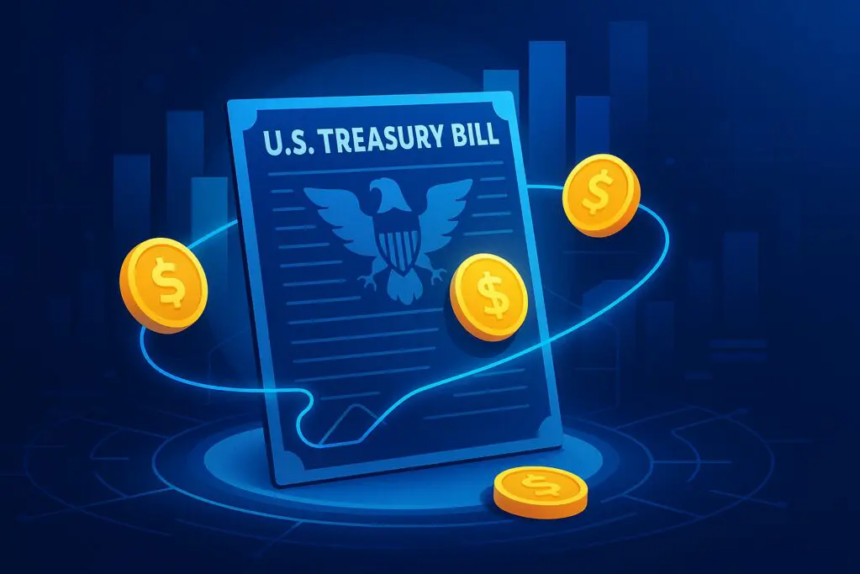
I’ll talk about tokenized US Treasuries and how they’re changing the DeFi scene in this post. Tokenized T-bills, which are blockchain representations of conventional U.S. government securities, provide investors with fast settlement, fractional ownership, and transparent, programmable yields.
For both individual and institutional cryptocurrency users, they offer a very accessible, low-risk alternative by fusing the security of government-backed assets with decentralized financing.
What Are Tokenized US Treasuries?
Tokenized US Treasuries are blockchain-based digital versions of conventional US government debt, such T-notes, T-bonds, or T-bills. Through direct trading, lending, and staking on DeFi platforms, each token signifies ownership of a portion of a Treasury instrument.

Tokenized Treasuries provide fast settlement, fractional ownership, and worldwide accessibility in contrast to regular T-bills, which need middlemen like banks or brokers.
They are a desirable “risk-free” return alternative for DeFi investors since they preserve the U.S. government’s creditworthiness while taking advantage of blockchain features like transparency, programmability, and round-the-clock market access.
Why DeFi Users Are Turning to Tokenized T-Bills
“Risk-Free” Yield
With backing from the U.S. government, tokenized T-bills are among the safest assets in the unpredictable crypto market.
Fractional Ownership
Tokenized T-bills can be purchased in smaller amounts, broadening access to retail investors, in addition to institutional investors.
Instant Settlement
Blockchain technology enables settlements in seconds, eliminating the banking system’s settlement lags.
Transparency
Blockchain technology demonstrates ownership, and yields can be calculated by anyone.
Programmability
Tokenized T-bills can be used in DeFi systems to stake, lend, or provide liquidity to earn higher yields.
Global Access
Tokenized T-bills can be purchased by anyone, from any country, without any economic or geographical restrictions.
Mechanism of Tokenized T-Bills in DeFi
T-Bills Acquisition
U.S. Treasuries receive T-Bills through auctions which are then captured by approved middlemen.
Tokenization
A custodian or DeFi platform converts T-Bills into tokens representing fractional ownership of those T-Bills on a blockchain.
Trading On-Chain
Tokenized T-Bills can be bought and sold by investors and transferred on DeFi markets. Middlemen are excluded.
Yield Tokens
Tokenized T-Bills enable additional yield from staking or lending, and interest is earned by holders on underlying T-Bills as they mature.
Yield Generation by DeFi Protocols
The tokens can be employed as collateral and applied in lending, or integrated into liquidity pools for yield generation.
Redemption and Settlement
Tokenized T-Bills can be reinvested on-chain or redeemed for their cash value after maturity.
Advantages of Tokenized US Treasuries in DeFi
Government Backing
One of the safest options as it is backed by the full faith of the US government.
Reduced Counterparty Risk
Less reliance on traditional middlemen and so the risks of defaults are diminished.
T-Bills as Fractional Assets
High quality and safe assets are made available to all by allowing investors to own fractions of T-Bills.
Quick/Instant Settlements
Processes can happen 24/7 due to the nature of Blockchain technology.
On-chain Provenance
Provenance on the Blockchain records transfers, ownership, and audit data so the ownership can be verified.
Programmable Yields
Returns can be improved by using DeFi protocols and can be designed to allow staking, lending and provision of liquidity.
Universal Participation
Financial and geographical constraints do not exist for potential investors.
Risks and Considerations
Smart Contract Risks
The DeFi platform’s code may have bugs or loopholes that could be exploited or cause the loss of money.
Platform/Custodian Risks
The organization that controls the tokenization could collapse, lose control of the assets, or go bankrupt.
Regulatory Risks
There is no clear regulation surrounding the tokenized securities; law changes may, in the future, control how trading, custody, and yields are handled.
Market Liquidity Risks
Tokenized versions of T-bills may be more liquid than traditional T-bills, but may also experience periods of low liquidity on some markets.
Counterparty Risks
Even though these are U.S. government securities, using intermediaries for settlement and redemption poses some risk.
Technical Risks
Understanding DeFi, wallets, and keys is necessary, and mistakes could lead to loss of money.
Case Studies / Examples
JPMorgan’s Onyx Digital T-Bills
With Onyx, US T-Bills can be tokenized and traded, which makes JPMorgan the first bank to have investors have fractional ownership of T-Bills and trade them on a private blockchain.
Ondo Finance
Ondo offers T-Bill tokens, which are digital representations of treasury T-Bills. Investors can earn a yield on T-Bill tokens and engage in lending and staking.
Yield Protocol
Users can mint T-Bill Tokens and use them as collateral to borrow stablecoins. This means you can hold government debt and have the flexibility of DeFi.
tBill.fi
Users can gain exposure to US Treasuries via a fully DeFi automated Treasury Bills on the platform. Users earn yield and can trade instantly.
Centrifuge Treasury Pools
Tokenized T-Bills are included in liquidity pools and users can earn a yield. This merges traditional finance and DeFi by providing users with risk-free assets.
Future Outlook
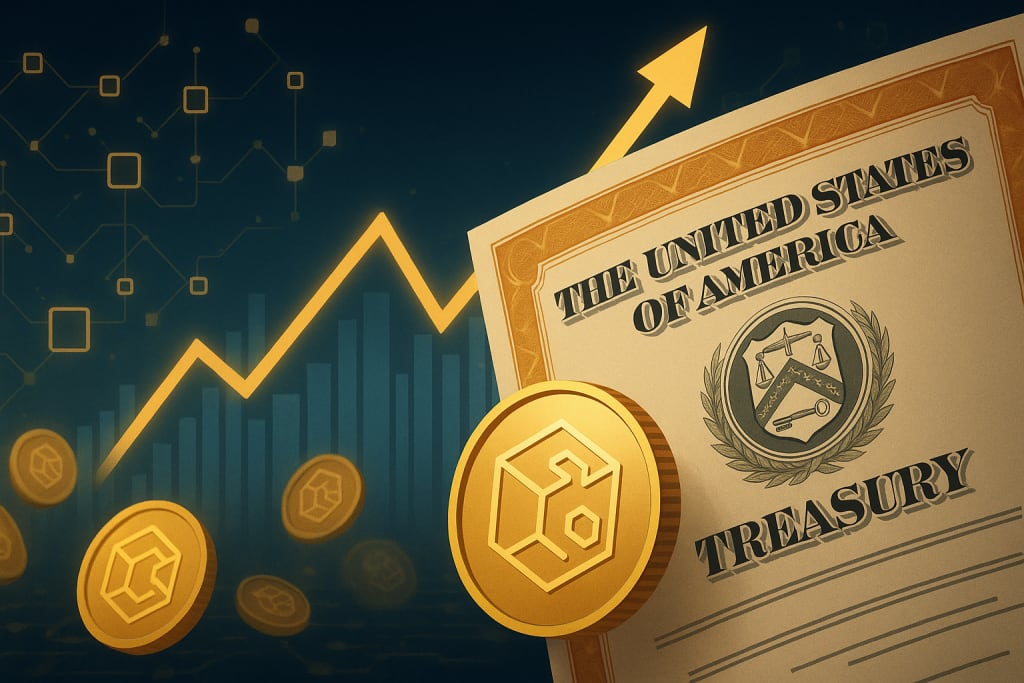
Increasing Adoption in DeFi – Tokenized T-bills are expected to be widely adopted in DeFi protocols as more investors search for “risk-free” yield.
Use in Lending, Derivatives, and Structured Products – The usefulness of Tokenized Treasuries will be multifaceted. They can be used as collateral for lending, derivatives trading, and structured products.
Improved Liquidity Solutions – T-bills will be further on-chain tradable as platforms build secondary markets and liquidity pools for T-bills.
Opportunities for Investment Beyond Borders – Without the traditional banking and brokerage constraints, investors from anywhere in the world can easily access U.S. Treasuries.
Streamlined Regulations – Regulations will be simplified and will allow institutions to participate, thereby increasing credibility and adoption of the practice.
Yield Optimization Innovations – Strategies that are more effective in yielding profits can be achieved by using a combination of other DeFi tools with standard tokenized T-bills.
Conclusion
By fusing the speed, transparency, and accessibility of blockchain technology with the security of government-backed T-bills, tokenized US Treasuries are revolutionizing how investors obtain “risk-free” return in DeFi. Both retail and institutional users find them appealing since they provide fractional ownership, quick settlement, and interaction with DeFi protocols.
Although there are still hazards associated with smart contracts and legal uncertainty, the industry’s increasing innovation and adoption point to a bright future. Tokenized T-bills offer investors looking for low-risk exposure in a tumultuous cryptocurrency market a strong link between conventional and decentralized finance.
FAQ
What are tokenized US Treasuries?
Tokenized US Treasuries are digital representations of U.S. government securities, like T-bills, issued on a blockchain. Each token represents fractional ownership and can be traded or used in DeFi.
How do tokenized T-bills generate yield?
Investors earn interest as the underlying T-bill matures. Some DeFi platforms also allow staking, lending, or liquidity provision to boost returns.
Are tokenized T-bills really “risk-free”?
They carry the creditworthiness of the U.S. government, making them low-risk, but smart contract, platform, and regulatory risks still exist.
How can I buy tokenized US Treasuries?
They can be purchased on DeFi platforms that tokenize T-bills, often requiring a crypto wallet and connection to the platform.