

In this article, I will cover the Top Berachain Alternatives for Proof-of-Liquidity and how their liquidity models differ from Berachain’s approach. Aerodrome, Curve, Velodrome, Sonic, Meteora, Raydium, Trader Joe, Osmosis, Uniswap, PancakeSwap etc. I will compare projects in terms of their liquidity mechanisms, incentives, governance, revenue models and PoL similarities. The aim is to understand which platforms apply such liquidity driven strategies and where their underlying models differ.
What Is Berachain Proof-of-Liquidity?
Berachain’s Proof-of-Liquidity (PoL) is a blockchain incentive mechanism that aligns network security, ecosystem liquidity and application growth. PoL employs validators and governance to direct network emissions toward approved liquidity pools, rather than traditional staking incentives.
Users can provide liquidity and participate in the ecosystem while applications vie for liquidity incentives. The model is designed to create a feedback loop, where liquidity fuels apps, apps create economic activity, and network incentives fuel participation. This makes liquidity a key component of Berachain’s entire economic architecture instead of just a feature at the DEX level.
Key Points
| Brand / Project | Key Point |
|---|---|
| Aerodrome Finance | Uses veAERO voting to direct AERO emissions toward liquidity pools, while voters receive trading-fee and incentive revenue. |
| Curve Finance | CRV locking and gauge mechanics connect governance participation with liquidity rewards, making it one of the foundational gauge-based incentive models. |
| Velodrome Finance | Uses vote-escrow governance and emissions allocation to coordinate liquidity across the Optimism ecosystem; its model is closely related to the Aerodrome design. |
| Sonic | Routes 90% of network transaction fees to the FeeM system for eligible applications, while 10% goes to validators. |
| Meteora | Focuses on programmable liquidity markets and dynamic liquidity strategies rather than making liquidity provision part of chain consensus. |
| Raydium | Combines DEX liquidity with token incentives and Solana-native trading activity, providing an application-level alternative to liquidity bootstrapping. |
| Trader Joe | Its Liquidity Book architecture and incentive mechanisms provide a liquidity-focused DEX model without tying liquidity directly to network consensus. |
| Osmosis | Combines liquidity provision with staking-related utility, creating a closer connection between liquidity and network-token economics. |
| Uniswap | Provides permissionless liquidity markets and fee-based LP economics, but does not make liquidity a consensus-security mechanism. |
| PancakeSwap | Uses trading fees, farming incentives and liquidity programs to attract capital across its multi-chain DEX ecosyste |
1. Finance of Aerodromes
Aerodrome Finance was launched on August 28, 2023 on Base and is meant to be the trading and liquidity hub of the network. Its liquidity model is based on AERO emissions and veAERO voting: liquidity providers can stake liquidity to earn AERO rewards, while veAERO holders vote on which pools receive emissions.

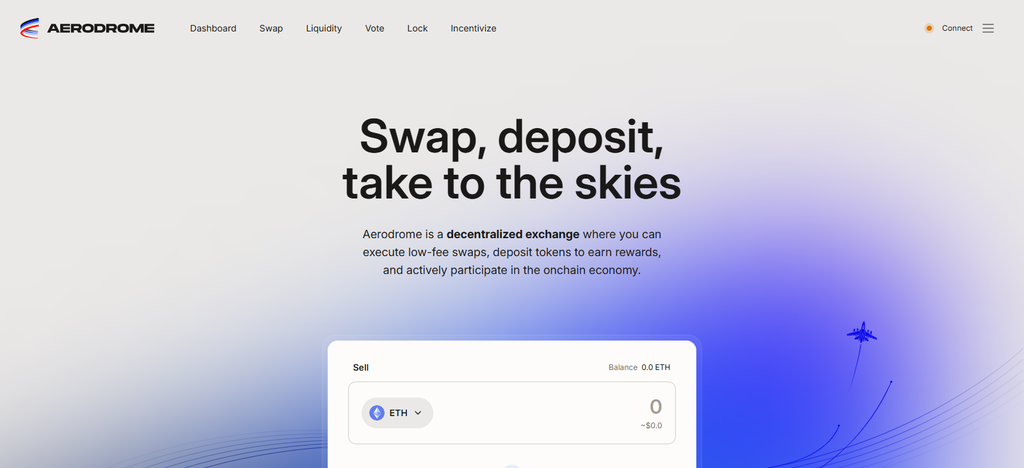
Projects can also add as a voting incentive liquidity incentives. Swap fees and voting/launch incentives account for much of the revenue. Exchange revenue is shared with token operators.
The model has high PoL similarity as liquidity allocation, emissions, application incentives and revenue are tied together by a recurring economic flywheel, although Aerodrome is itself a DEX, not a blockchain consensus mechanism.
Major Differences**
- DEX Level Model: Berachain integrates liquidity incentives into the overall blockchain economy while Aerodrome mainly organizes liquidity at the DEX level.
- Gauge-Based Emissions: veAERO holders decide where AERO emissions are directed via voting.
- Base Focus: Aerodrome is built on the Base ecosystem rather than its own Layer-1 blockchain.
- Trading Focus: Economic activity is strongly related to swaps, LPs, fees and liquidity incentives.
- No PoL Consensus: The validator and network-level consensus rewards are not determined by the liquidity.
Limitations**
- Based on Base ecosystem activity.
- Emissions can have a significant effect on LP behavior.
- Incentives get tricky with gage competition.
- No direct technical replacement for PoL.
2. Curve Finance
Launched in 2020, Curve Finance quickly became a major Ethereum-based DeFi liquidity protocol, particularly for stablecoin and correlated-asset markets. It uses a liquidity model with specialized AMM pools and its vote-escrowed CRV (veCRV) system empowers governance participants to steer the distribution of liquidity rewards through gages.
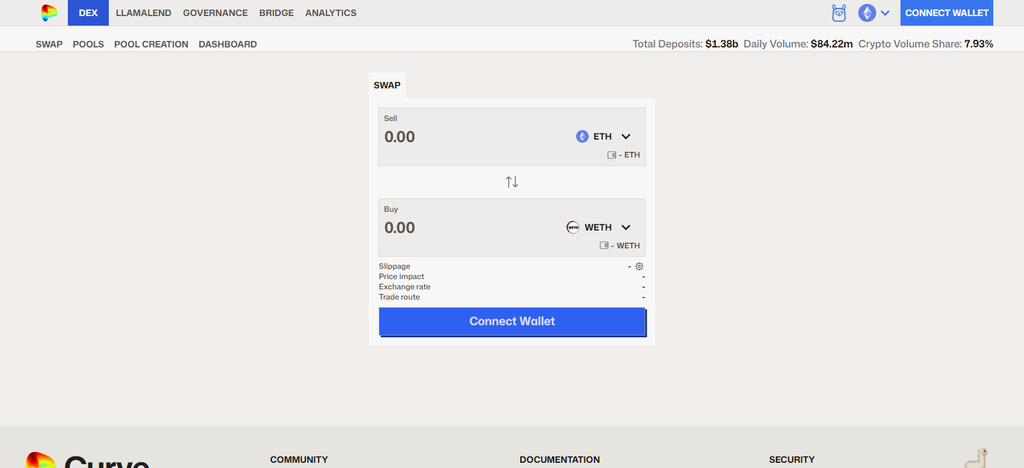
Liquidity providers receive trading fees and CRV-related incentives. Governance governs key aspects of emissions and incentives to pools. Curve’s revenue is closely linked to trading activity and how protocol fees are set.
PoL similarity is high at the liquidity-incentive level, as governance-directed emissions can direct liquidity toward selected pools, but Curve does not embed liquidity incentives into blockchain consensus like Berachain does with its PoL model.
Major Differences
- Stablecoin heritage: Curve was originally built for stable and correlated assets.
- veCRV Governance: Locked CRV voters decide how gages are allocated.
- Ethereum-Backed: Curve was built on Ethereum, not an L1 with a focus on liquidity.
- AMM-Centric: It is primarily used as a liquidity for decentralized exchange.
- Consensus Incorporation: Liquidity incentives are not incorporated into the consensus of the blockchain validators.
Limitation
- Governance mechanics may be complicated.
- CRV emissions cause dilution concerns.
- Liquidity incentives can move between pools.
- Does not copy Berachain’s network level PoL architecture
3. Velodrome Finance
Velodrome Finance launched on Optimism on June 2, 2022 with V2 launching in June of 2023. It is a liquidity hub and AMM for the Optimism Superchain. It uses VELO emissions, gages and veVELO voting in its model. LPs are rewarded with emissions based on the votes their pools receive and VELO holders lock tokens to receive veVELO voting power.
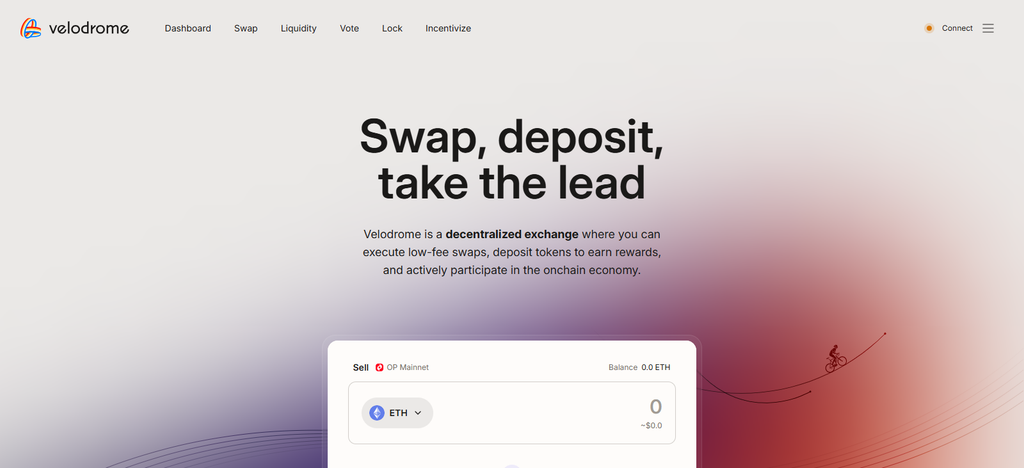
Traders and voters can receive fees and incentives. The protocol earns revenue from swap fees and voting incentives, which are paid out within its economic system. Velodrome has high PoL similarity as emissions are actively directed toward productive liquidity but its mechanism is at the DEX level not blockchain level consensus.
Key Distinctions
- Optimism Ecosystem Velodrome is deeply embedded in the Optimism and Superchain ecosystems.
- veVELO Model: Binding VELO to vote on governance and liquidity emission.
- DEX Infrastructure: Its main job is to enable swaps and liquidity.
- Gauge Allocation: Pool emissions are allocated through governance votes.
- No L1 PoL: Liquidity incentives are not part of the consensus of blockchain.
Limitations
- Highly dependent on its ecosystem.
- Need to understand ve-token mechanics.
- Emission competition can alter the LP incentives.
- Not a direct replacement for PoL;
4. Sonic
Sonic launched its mainnet on December 18, 2024 as a EVM-compatible Layer-1 forked from Fantom. Sonic does not directly replicate Berachain’s PoL mechanism, but introduces Fee Monetization (FeeM) and ecosystem incentives to incentivize application growth and liquidity.
Developers are able to earn a large chunk of the fees generated by their applications, and the FeeM Vault earns 90% of transaction fees from designated core token contracts and can allocate funds toward liquidity incentives and ecosystem development.
S is used for fees, staking, validators, and governance. Hence Sonic has medium PoL similarity. Economic activity can generate resources which are redirected toward ecosystem applications and liquidity. But this is an application incentive model and not Berachain-style Proof-of-Liquidity consensus.
Big Differences**
- Layer-1 Architecture: Sonic is a standalone EVM compatible blockchain.
- Fee Monetization: Its model focuses on returning transaction-fee economics to applications.
- Application Growth: Incentives are partly meant to foster the development and use of applications.
- Validator Economy: Liquidity itself does not continue to secure the network, that is still done by staking and validators.
- Different From PoL: Sonic does not emulate the liquidity directed consensus model of Berachain.
Limitations
- Incentives are network activity-dependent.
- Application rewards will vary based on usage.
- Its model is broader than pure liquidity co-ordination.
- Not strictly equivalent to Berachain PoL.
5. Meteora
Meteora is a solana-based liquidity infrastructure platform for dynamic liquidity markets and token launches. Its model includes DLMM (Dynamic Liquidity Market Maker), DAMM and Dynamic Bonding Curve products, enabling liquidity providers and token projects to adopt different liquidity management mechanisms.
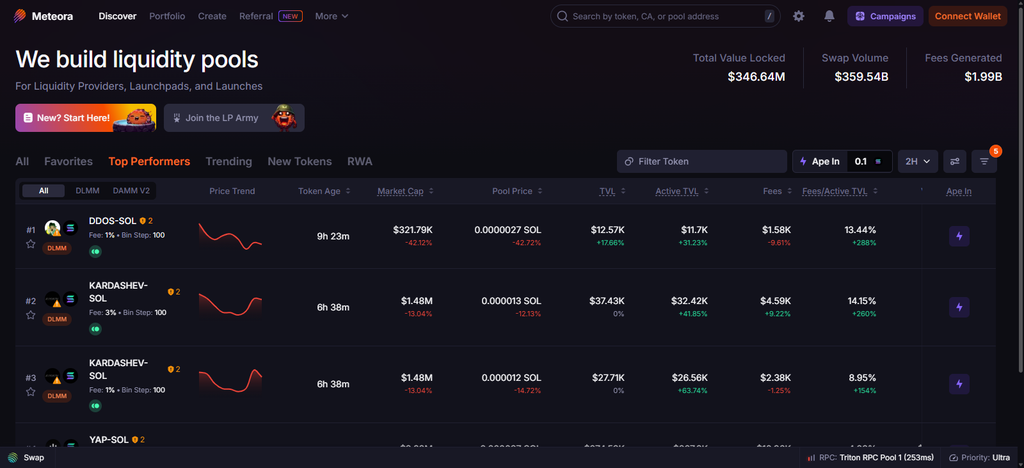
DLMM leverages concentrated liquidity and dynamic fees, and farms and launch infrastructure that can offer additional incentives. Therefore, governance and emissions should be evaluated at the level of individual products or incentive programs, rather than as a single PoL mechanism for the entire blockchain.
Meteora has a medium-to-low PoL similarity: it heavily prioritizes efficient and programmable liquidity, but liquidity remains an application level function and not baked into network consensus or validator economics like Berachain’s PoL.
Differences**
- Based on Solana: Meteora is a platform based on Solana.
- Dynamic liquidity: Its DLMM model employs concentrated liquidity and dynamic fees.
- Application Level: Liquidity management occurs at the protocol level.
- Capital Efficiency Focus: It has an architecture that is built for efficient LP capital deployment.
- No PoL Consensus: Liquidity is not a factor in validator rewards at the blockchain level.
4 Limitations
- Greater active management of liquidity needed.
- Concentration of liquidity may create range-related risks.
- Powered by activity on the Solana ecosystem.
- No PoL system on the blockchain level.
6. Raydium
Launched in 2021 on Solana, Raydium offers AMM, liquidity-pool and concentrated-liquidity infrastructure. It’s liquidity model includes constant-product pools and concentrated liquidity which allows LPs to earn trading fees and eligible positions can also earn farm rewards.
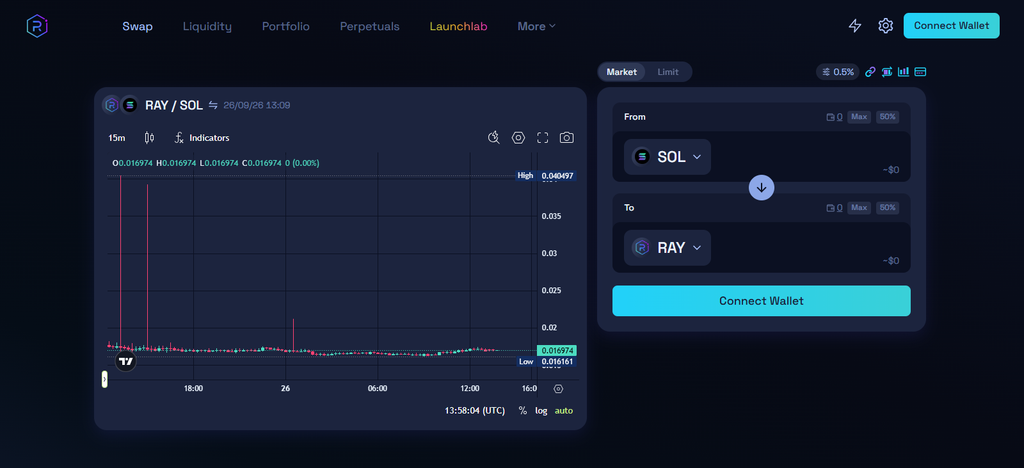
Raydium’s incentive mechanism allows for token emissions on top of regular LP fees, and in the case of concentrated-liquidity farms, positions need to be in range for rewards. Most of its money is made from trading and fees for providing liquidity.
Raydium has medium similarity to PoL as it offers liquidity and other incentives, but does not make liquidity a network-security or consensus requirement. So, it is more correctly described as a liquidity-incentive alternative than a direct PoL replacement.
Major Differences
- Solana DEX: Raydium is a decentralized trading and liquidity protocol on Solana.
- AMM + Concentrated Liquidity: It provides various types of liquidity.
- Farm Incentives: Pools that get selected will get rewarded with additional tokens.
- Trading Focused: Liquidity is primarily used to facilitate trading.
- No Consensus Role: LP participation does not confer the underlying Solana network.
Limitations
- Incentive availability may vary by pool.
- Concentrated liquidity needs active management.
- Concentration of the ecosystem due to dependency on solana.
- Does not replicate Berachain’s PoL mechanism.
7. Trader Joe’s
Trader Joe was founded in 2021 and is deeply connected to the Avalanche ecosystem, but has since expanded to many other networks. Its primary liquidity model is the Liquidity Book, which is built on the idea of concentrating liquidity in specific price bins rather than relying solely on traditional constant-product liquidity.
LPs can get trading fees for liquidity activity, and extra incentives can be used to attract liquidity to selected markets. JOE is the native ecosystem token and has been employed in governance and incentive mechanisms.
Trader Joe has a medium PoL similarity as it focuses on capital-efficient liquidity and incentive-driven market growth, but its mechanism is DEX-level, not chain-level. As opposed to Berachain, blockchain consensus rewards are not directly based on liquidity.
Differences
- Liquidity Book: Trader Joe manages liquidity with separate price bins.
- Avalanche Roots: It was born in the Avalanche ecosystem.
- DEX-Centric: It primarily serves as a trading and liquidity economy.
- Capital Efficiency Liquidity can be aggregated around certain price points.
- No network PoL: LP activity does not directly affect blockchain consensus incentives.
Restrictions
- Liquidity bin mechanics require further understanding.
- LP performance may be price distribution dependent.
- Incentives differ by market.
- Not an L1-level alternative to PoL.
8. Osmosis
Osmosis was launched in 2021 in the Cosmos ecosystem and is an interchain AMM based on the Cosmos SDK and IBC. Its liquidity model supports custom pools and targeted liquidity incentives. In the past, OSMO governance has been pivotal in deciding which pools qualify for liquidity rewards and how those rewards are allocated.

LPs can earn trading fees and liquidity incentives, and OSMO is also a governance and staking-related asset. Osmosis thus has medium-to-high PoL similarity at the incentive layer since governance can steer liquidity rewards to strategically chosen pools.
However, liquidity incentives are separate from blockchain consensus, and Osmosis shouldn’t be marketed as being technically equivalent to Berachain’s Proof-of-Liquidity.
Main Differences
1. Cosmos Ecosystem: Osmosis is an appchain on the cosmos ecosystem.
2. Interchain Ready: With IBC, you can connect to other chains in the Cosmos.
3. Governance-Driven Incentives: Governance might affect how liquidity incentives are shared.
4. AMM-Driven: Liquidity is mostly used to enable decentralized trading.
5. Consensus Relationship is Separate: Liquidity incentives are not linked to the underlying security of the network validators.
Limitations
- Dependent on Cosmos ecosystem.
- Governance can complicate incentive structures.
- Liquidity rewards are subject to change.
- Does not duplicate Berachain’s exact PoL architecture.
9. Uniswap
Uniswap was launched in 2018 on Ethereum, and has since grown into a multichain AMM ecosystem. Its liquidity model allows users to provide assets to permissionless pools, and newer versions like V3 and V4 support concentrated liquidity and customizable pool mechanics.
LPs earn swap fees for the liquidity they are actively providing . Governance can decide some protocol fee parameters . So Uniswap’s revenue model is centered around the volume of trading activity and, if enabled, protocol fees.
Its PoL similarity is low-to-medium: it offers foundational liquidity marketplace and fee-based LP model, but does NOT use network-wide token emissions to direct liquidity as a part of blockchain consensus. It is therefore a major liquidity model comparison rather than a direct PoL equivalent.
Differences
- Permissionless AMM Anyone can create or participate in liquidity markets that are supported.
- Concentrated Liquidity: V3 and subsequent versions enable more granular control over liquidity ranges.
- Fee-Based LP Economics: LPs primarily earn from trading activity.
- Multichain Presence: Uniswap is available on multiple blockchains.
- No Emission-Based PoL: Liquidity is not consensus-bound through native emissions.
Limitations
- LPs are subject to impermanent loss.
- Concentrated liquidity is not a “set it and forget it.
- Trading activity affects fee income.
- It lacks network-level liquidity incentives, as seen in Berachain.
10. PancakeSwap
PancakeSwap was launched in 2020 and has grown from BNB Chain into a multichain DEX ecosystem. Its liquidity model is traditional pools, V3 concentrated liquidity and StableSwap. The LPs can earn trading fees. Eligible positions can also be staked in farms to earn CAKE rewards adding another layer of liquidity-incentive.
CAKE, along with other incentives in the ecosystem, are deployed as dictated by governance and PancakeSwap’s tokenomics. Its revenue is mainly associated with trading activity and related protocol services.
PancakeSwap has medium PoL similarity in that it combines liquidity provision with farming incentives based on tokens, but it is still a DEX-level system. Liquidity is not the consensus mechanism of the blockchain, as it is in Berachain’s PoL architecture.
Main Differences**
- BNB Chain Roots PancakeSwap was born as a product in the BNB Chain ecosystem.
- Multichain Expansion: Now supports trading and liquidity across multiple chains.
- CAKE Incentives CAKE can be used by farms and other mechanisms to incentivize participation.
- AMM-Centric: The core of the economic activity is decentralized trading and liquidity.
- No Consensus PoL: CAKE incentives don’t make liquidity part of the blockchain consensus.
Limitations
- Tokenomics can alter the incentive structures.
- LP return is calculated based on trading and reward conditions.
- Multichain deployment increases ecosystem complexity.
- It’s not a direct PoL replacement, it’s a DEX liquidity model.
Why Look for Berachain Alternatives?
Different liquidity models: There are gage systems, concentrated liquidity, AMMs, dynamic liquidity, fee-sharing, etc. There are many different ways to attract, manage, and incentivize liquidity in the ecosystem.
More Ecosystem Options: Berachain is limited to its own ecosystem, whereas competitors span Base, Ethereum, Solana, Cosmos, Avalanche, Optimism, and other blockchain ecosystems.
Different Incentive Structures: Different platforms distribute liquidity rewards via token emissions, governance voting, trading fees, farming programs or application incentives, resulting in different economic models.
Capital Efficiency: Some of the alternatives rely on concentrated or dynamically managed liquidity, which may allow liquidity providers to allocate capital more precisely to specific trading ranges.
Governance Variants: Alternatives include different methods for governing liquidity incentives such as ve-token voting, DAO governance, protocol-controlled variants and application-level governance.
Revenue Models: Various projects have different avenues where liquidity generates economic value such as: trading fees, protocol fees, revenue from applications, voting incentives, and ways to monetize fees at the network level.
Diversifying Liquidity: By exploring alternatives, users and applications can assess the liquidity landscape across various ecosystems, rather than being confined to a single network’s infrastructure, incentives, and market dynamics.
Diverse Risk Profiles: Each model has different exposure to token emissions, impermanent loss, smart contract risks, governance changes, liquidity migration and dependence on ecosystem activity.
Key Factors to Compare Before Choosing an Alternative
Liquidity Model: Analyze how each platform manages, distributes and attracts liquidity including AMMs, gage system, concentrated liquidity, dynamic markets or network level incentive mechanisms.
Sustainable Incentives: Determine whether incentives are linked to token emissions or real protocol revenue, and whether incentives can sustain liquidity when reward rates fall.
Revenue Generation: Compare the methods the protocol uses to generate revenue from trading fees, application revenue, protocol fees, fee sharing, or other mechanisms that support the long-term economic model.
Governance Control: Determine who controls the liquidity incentives and emissions: tokenholders, ve-token voters, DAOs, validators, applications, or protocol-controlled mechanisms.
Capital Efficiency: Evaluate how effectively liquidity is utilized through concentrated ranges, dynamic pricing, unique pools, etc., to maximize the impact of deposited capital.
Liquidity Retention: Check if liquidity persists after incentives disappear or if the platform is overly reliant on ephemeral rewards that might promote short-term or mercenary liquidity.
Risk exposure: For an alternative, be aware of possible smart-contract risk, impermanent loss, token dilution, governance changes, emission reductions, migration of liquidity, ecosystem dependency.
Conclusion
Berachain alternatives provide different methods to attract, coordinate, and incentivize liquidity across blockchain ecosystems. Aerodrome, Curve and Velodrome use governance directed liquidity incentives, while Meteora, Raydium and Trader Joe focus on specialized liquidity and capital efficiency.
Sonic emphasizes application-level fee monetization, Osmosis combines interchain infrastructure with liquidity incentives, and Uniswap and PancakeSwap have been long-term AMM-based liquidity markets. The models are quite different from the network-level Proof-of-Liquidity design of Berachain.
Users are advised to conduct a comparative assessment of liquidity design, sustainability of incentives, governance, revenue generation, capital efficiency, liquidity retention, ecosystem compatibility, and exposure to risk before choosing an alternative. “Ultimately, the best choice will depend on the specific liquidity and ecosystem requirements.”
FAQ
What is Proof-of-Liquidity?
Proof-of-Liquidity is Berachain’s economic model that connects network incentives with ecosystem liquidity. It is designed to direct rewards toward applications and liquidity while creating an economic relationship between network participants.
What are Berachain alternatives for Proof-of-Liquidity?
Berachain alternatives include projects such as Aerodrome Finance, Curve Finance, Velodrome Finance, Sonic, Meteora, Raydium, Trader Joe, Osmosis, Uniswap, and PancakeSwap. Their liquidity and incentive mechanisms differ from Berachain’s PoL architecture.
Is Aerodrome Finance the same as Berachain?
No. Aerodrome is a DEX and liquidity hub on Base that uses veAERO governance and gauge-directed emissions. Berachain integrates liquidity incentives more deeply into its blockchain-level economic architecture.
How is Curve Finance similar to Berachain?
Curve uses vote-escrowed CRV and gauge voting to direct liquidity incentives toward selected pools. This creates a similarity at the liquidity-allocation level, but Curve does not use liquidity as blockchain consensus.