
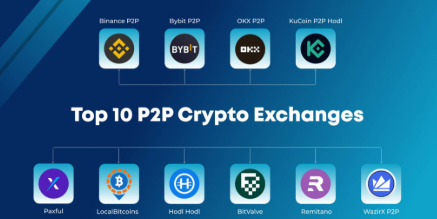
I’ll go over the Best No-KYC P2P Crypto Exchanges for 2026 in this post. Without requiring identity verification, these services let users exchange bitcoins directly with peers.
Exchanges like Hodl Hodl, Bisq, and AgoraDesk, which prioritize privacy, security, and usability, provide escrow protection, multi-crypto support, and worldwide accessibility, making them perfect for secure peer-to-peer trading.
What is No-KYC P2P Crypto Exchanges?
Peer-to-peer trading platforms known as “no-KYC P2P Crypto Exchanges” enable users to purchase and trade cryptocurrencies directly with one another without the need for identity verification (KYC, or “Know Your Customer”).
These exchanges place a high priority on decentralization and privacy, frequently securing transactions via multisignature wallets or escrow mechanisms. They facilitate international trading by supporting numerous cryptocurrencies and, frequently, regional fiat currencies.
While still providing security measures, quick service, and secure peer-to-peer trading environments, no-KYC P2P exchanges appeal to users who value anonymity, control over their assets, and minimal barriers to entry.
How To Choose No-KYC P2P Crypto Exchanges to Consider
Security Measures – Look for P2P crypto exchanges that protect your funds and implement security during trades using escrow systems, multisig wallets, and wallets that use encryption.
Supported Cryptocurrencies – See what crypto exchanges support what cryptos. Some exchanges have altcoins, and some have Bitcoin and USDT.
Regional Availability – See if the exchange you want to use is available in your country. If you use a specific fiat currency, check if they support that also.
Privacy & KYC Policies – Check if you can trade without having to KYC. Some exchanges have a KYC policy that does not enable you to maintain your anonymity.
Liquidity & Trading Volume – Trades can be done a lot quicker if the exchange is highly liquid. In addition to this, they can also be done cheaper, especially if you are planning on doing large trades.
User Interface & Experience – If you are a beginner, a straightforward, easy to use crypto exchange will help you trade more efficiently and avoid mistakes.
Customer Support – If you run into a technical problem, good customer support will help you undoubtably.
Reputation & Community Feedback – If you want to use a relatively new exchange, it is wise to check if there are any good reviews or feedback on the exchange.
Key Point & Top No-KYC P2P Crypto Exchanges to Consider List
| Platform | Key Point |
|---|---|
| Hodl Hodl | Non-custodial P2P platform, allowing secure trades directly between users. |
| Bisq | Fully decentralized exchange, privacy-focused with no KYC requirements. |
| Paxful | Popular P2P marketplace, limited to certain regions, supports multiple payment methods. |
| Bitania | Peer-to-peer trading platform with a focus on low fees and regional access. |
| AgoraDesk | Non-custodial P2P exchange emphasizing privacy and crypto-to-crypto trades. |
| KuCoin (partial) | Offers P2P trading in selected regions, integrated with KuCoin exchange features. |
| Bitget P2P | P2P trading via Bitget, supporting multiple fiat options and crypto pairs. |
| Bybit P2P | Integrated P2P service, fast transactions with competitive rates. |
| TradeOgre | Simple P2P-like crypto exchange, specializes in altcoins with minimal verification. |
| RoboSats | P2P and automated trading platform for Bitcoin, emphasizing speed and ease of use. |
1. Hodl Hodl
Launching in 2016, Hodl Hodl is a non-custodial exchange that allows P2P trading of Bitcoin and does not require KYC from users. It offers trading in other cryptos like BTC, USDT, among others, and uses multisig escrow to secure the trades.
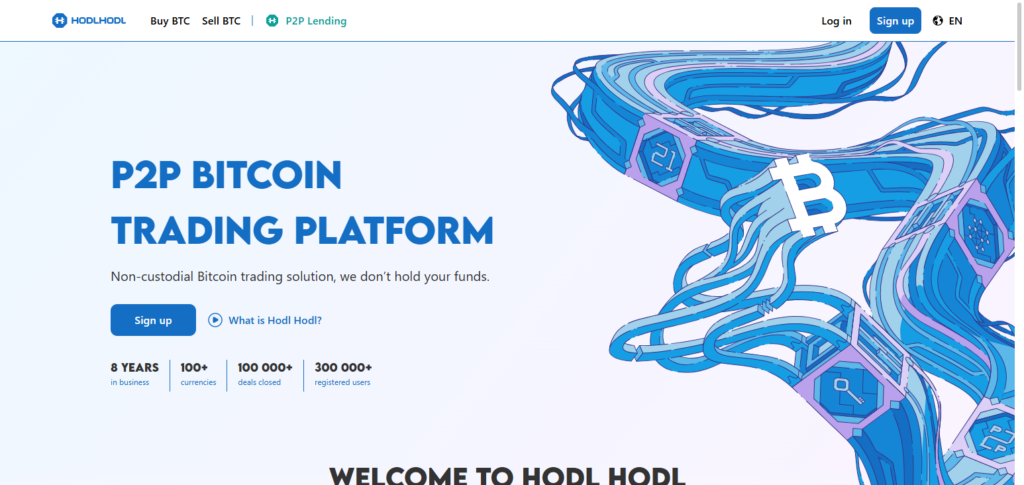
The exchange is translated into several local languages and accommodates various local fiat currencies. Hodl Hodl is a privacy and peer-to-peer security oriented exchange that never holds users funds in a central account.
With fast ticketing support, user issues are resolved in no time. For privacy protecting trading, Hodl Hodl is one of the Top No-KYC P2P Crypto Exchanges to Consider with a low trading fee and high community trust.
Hodl Hodl Features, Pros & Cons
Features:
- A non-custodial P2P exchange.
- Supports Bitcoin and USDT.
- Has multi-sig escrow protection.
- Multi-language support.
- Optional KYC (Know Your Customer) for privacy.
Pros:
- They put a high emphasis on trade privacy, and there is no central ref control.
- They can charge lower fees.
- They offer a global trading marketplace.
- They offer secure escrow services on trades.
- They provide a user-friendly interface.
Cons:
- They offer a limited selection of cryptocurrencies.
- They have a smaller user base than other major exchanges.
- They offer slower trade liquidity on the marketplace for large trades.
- They do not support Fiat wallet services.
- They are among the least popular exchanges for some regions.
2. Bisq
Bisq has been operational since 2014 and it’s an open-source peer-to-peer cryptocurrency exchange. The platform has a strong emphasis on protecting user privacy and does not mandate KYC (Know Your Customer) processes.
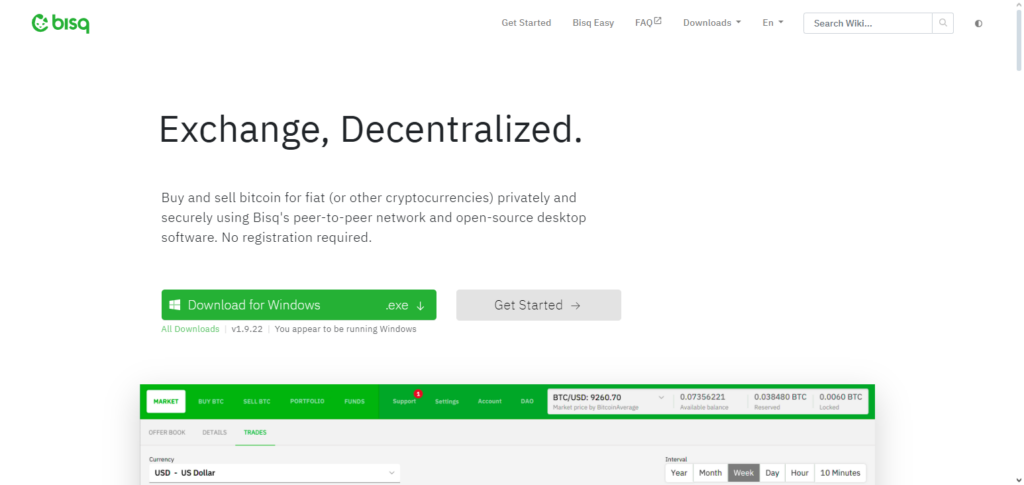
Users can transact in Bitcoin and 30 other cryptocurrencies and can buy and sell using local currency. Bisq is fully decentralized and each transaction is secured and signed with multi-signature wallets. It is a global platform, with available customer support in several languages. The servers are completely decentralized and support anonymity.
The strong privacy provides a compelling use case for Hedged to include Bisq in prior lists of top peer-to-peer crypto exchanges. Users can trade and hold their local and remote cryptocurrency safely as Bisq provides a significant layer of privacy.
Bisq Features, Pros & Cons
Features:
- A fully decentralized and open-source trading platform.
- Supports Bitcoin and other altcoins.
- Has a multi-sig escrow trading system.
- A desktop app for trading.
- KYC (Know Your Customer) is not required.
Pros:
- They offer 100% privacy.
- They are censorship resistant.
- They offer services on a global scale.
- They have robust security and privacy measures.
- They have a good reputation for a community-governed platform.
Cons:
- Trades can take longer than other exchanges.
- Some altcoins do not have enough liquidity to support trading on the exchange.
- The platform has a steep learning curve for novice traders.
- The platform is only available on desktop, iOS, and Android do not have a trading app available.
- Bisq has higher fees than some other P2P exchanges.
3. Paxful (limited regions)
Paxful is a peer-to-peer Bitcoin exchange established in 2015. It provides a marketplace for customers to trade Bitcoin and other cryptocurrencies (limited by region). Paxful accepts numerous payment methods, including bank transfers, e-wallets, and even gift cards.
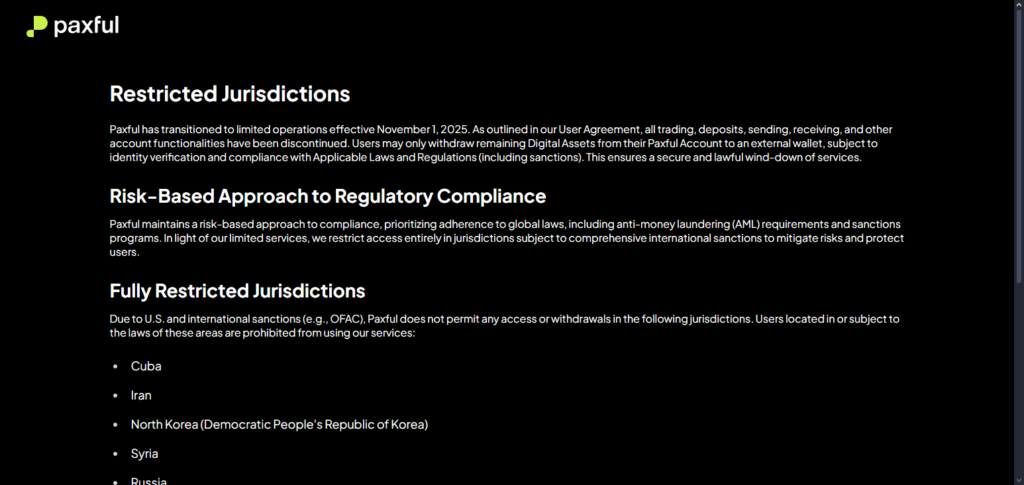
Customers can trade using their local language, and Paxful uses escrow to secure individual trades and has a system to resolve trade disputes.
Support to resolve trades is available 24/7. Paxful is able to provide peer-to-peer capabilities due to regulations only partially verifying users. Paxful can be ranked in the top peer-to-peer crypto exchanges especially for traders in the countries in which Paxful is able to trade.
Paxful (limited regions) Features, Pros & Cons
Features:
- A P2P marketplace focused primarily on BTC.
- A P2P marketplace. Support for multiple payment methods: (bank, gift cards, e-wallets).
- Escrow protection for trades.
- Regional restrictions may apply.
- Customer support available.
Pros:
- Multiple payment options.
- Intuitive platform.
- Engaged user base.
- Trades are executed swiftly.
- Escrow service is dependable.
Cons:
- KYC needed for some areas.
- Global access is limited.
- Fees are steeper than some rivals.
- Fewer options for altcoins.
- Access may be limited due to country regulations.
4. Bitania
Founded in 2018, Bitania is a regional, P2P focused crypto platform with low trading fees and secure trading with local fiat, Bitcoin, USDT, and certain altcoins. The platform is multilingual and privacy-focused with an optional KYC. Users receive escrowed trades, and trades are protected with an escrow service, and responsive customer support.

The brokerage is simple, designed to provide users with access to trade crypto without full KYC/identity verification. Bitania is listed among Top No-KYC P2P Crypto Exchanges to Consider for its contemporary platform, ease of use, quick processing, and availability on a regional basis for those seeking a straightforward and private trading experience.
Bitania Features, Pros & Cons
Features:
- BTC & USDT P2P platform.
- Costs of trades are low.
- Focus on accessibility by region.
- Trades are protected by escrow.
- KYC is optional.
Pros:
- Transactions are completed in a timely manner.
- The interface is easy to use.
- Customer support is quick to respond.
- Trading with privacy is available.
- Local areas are able to access the platform.
Cons:
- Access to the platform is limited globally.
- The variety of cryptocurrencies is small.
- There is less liquidity than in bigger exchanges.
- The platform is not as well-known globally.
- More basic features for trading available.
5. AgoraDesk
Founded in 2017, AgoraDesk prioritizes P2P non-custodial/ crypto trading, privacy, and crypto-to-crypto trading. Users can trade Bitcoin, Ethereum, USDT, and other altcoins, and they can pay in local currencies.
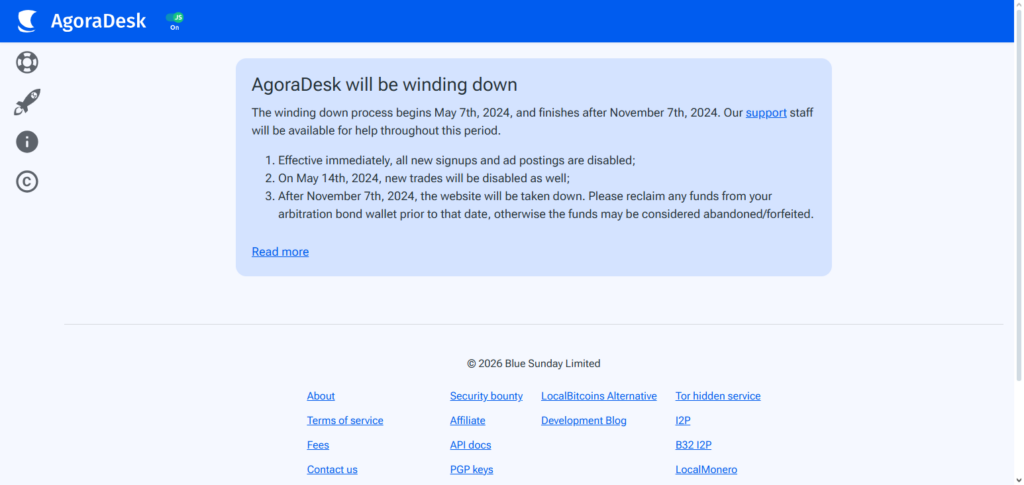
AgoraDesk is global and multilingual, with advanced security through escrow. KYC is not enforced, and therefore they are placed on Top No-KYC P2P Crypto Exchanges to Consider.
Their service is low-cost, quick transaction support, and customer service. AgoraDesk is especially great for those who prioritize anonymity, as it offers safe, straightforward, decentralized P2P crypto trading.
AgoraDesk Features, Pros & Cons
Features:
- P2P crypto-to-crypto trading with a non-custodial model.
- BTC, ETH, USDT, and a selection of altcoins are supported.
- Trades are protected with escrow.
- Support for multiple languages.
- KYC is optional.
Pros:
- A platform that prioritizes privacy.
- Fees that are low.
- Rapid execution of trades.
- A secure peer-to-peer trading environment.
- An interface that is easy to use.
Cons:
- Less support for fiat currency.
- Users are scarce.
- Less altcoins than leading exchanges.
- Support may vary by region.
- Less recognition overall.
6. KuCoin (partial)
Beginning operations in 2017, KuCoin is mainly a centralized exchange, although they have some P2P capabilities in select countries. They have a wide range of supported cryptocurrencies, along with multiple fiat payment options, and they provide localized language support.
KuCoin P2P is focused on safety and provides escrow accounts and 2-factor authentication. They have good customer support and help users with P2P trades within their countries. KYC may be required, depending on the country, but the exchange is still very usable for people who want privacy.
KuCoin is on the Top No-KYC P2P Crypto Exchanges to Consider because they have a good combination of a centralized exchange with P2P capabilities and is appropriate for more casual users as well as experienced traders.
KuCoin (Partial P2P) Features, Pros & Cons
Features
- Built-in P2P service on KuCoin exchange
- Multiple cryptocurrencies and fiat support
- Escrow-protected trades
- Access based on region
- Security via KuCoin
Pros
- Trusted centralized exchange support
- Accessibility / ease of use
- Transactions secured
- Liquidity
- P2P with KYC lite
Cons
- Geographic limitations
- Centralized services provide limited privacy
- KYC may still apply
- Fees are higher when KYC is absent
- Certain regions are limited in altcoin selection
7. Bitget P2P
Bitget was established in 2018 and their P2P offering allows users to purchase cryptocurrencies with their country’s fiat currency. They support BTC and USDT, as well as a selection of other altcoins and provide languages along with escrow services for added security. Bitget provides users with fast and clear transactions, along with support for resolving any transaction disputes that may arise.
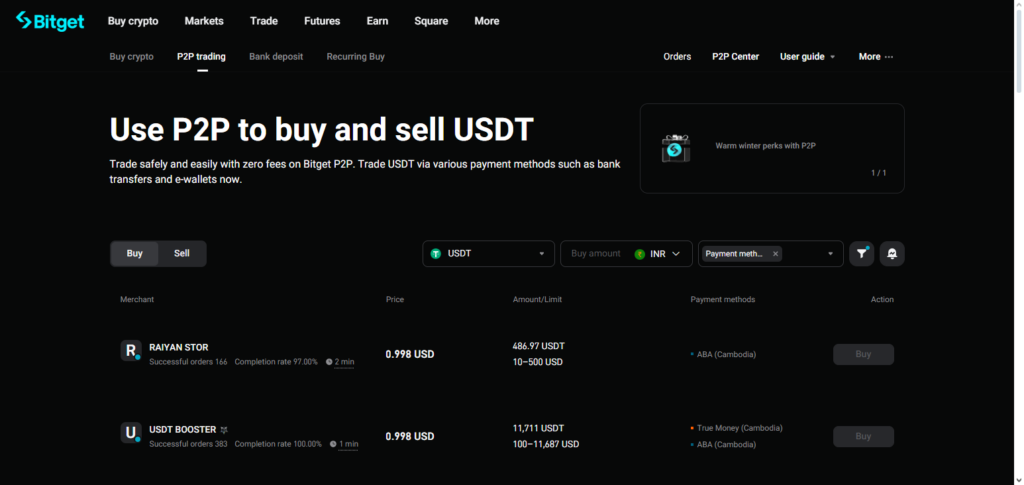
KYC is optional, which allows users to maintain their privacy, while also providing KYC compliance in some jurisdictions. Bitget is also in the Top No-KYC P2P Crypto Exchanges to Consider because their user interfaces are simple and they have good pricing along with services in many countries for those users that want P2P trading without the requirement of KYC.
Bitget P2P Features, Pros & Cons
Features
- Supports altcoins, BTC, and USDT
- Local fiat payment methods
- Escrow-assured trades
- Multilingual support
- KYC is for use of discretion
Pros
- Trading takes place quickly and without complications
- Costs are minimal
- Support is responsive
- Security is in place
- Region specific
Cons
- The world is not as accessible
- Newer platforms have smaller user bases
- There are not many altcoins
- KYC is required for some features
- Volume traders may struggle
8. Bybit P2P
Bybit was launched in 2018 and has since become one of the world’s leading crypto derivatives platforms. With Bybit’s P2P service, users can buy and sell cryptocurrencies such as Bitcoin, USDT, and various fiat currencies. Users’ security as well as escrow transactions and fast processing times are other notable P2P services.
Additionally, customers can contact service representatives any time of day or night. Due to the fact that Bybit P2P does not require KYC in many areas, it is an excellent platform for users who want to protect their privacy. Bybit has become one of the Top No-KYC P2P Crypto Exchanges to Consider since it balances customer satisfaction with safety and affordability.
Bybit P2P Features, Pros & Cons
Features:
- Bybit has integrated P2P services.
- P2P services support BTC, USDT, and other altcoins.
- Trades protected by escrow.
- Trading for fiat currencies.
- KYC requirements by region – some locations do not require KYC.
Pros:
- Transactions can be completed quickly.
- Fees are low.
- Customer support is fast and efficient.
- The platform is secure.
- User-friendly interface.Pros:
- Safe P2P transactions.
- Supported by a prominent cryptocurrency exchange.
Cons:
- Some areas are blocked.
- Altcoins are restricted.
- Compared to totally decentralized exchanges, this one is not as private.
- User bases in certain areas are smaller.
- Some trading activities may necessitate a degree of verification.
9. TradeOgre
TradeOgre is an exchange that was established in 2017. It is one of the first exchanges with the look and feel of P2P exchanges, with a specialization in high privacy and low KYC for altcoins. It provides support for BTC, USDT and many other smaller cryptocurrencies while providing support in multiple languages.
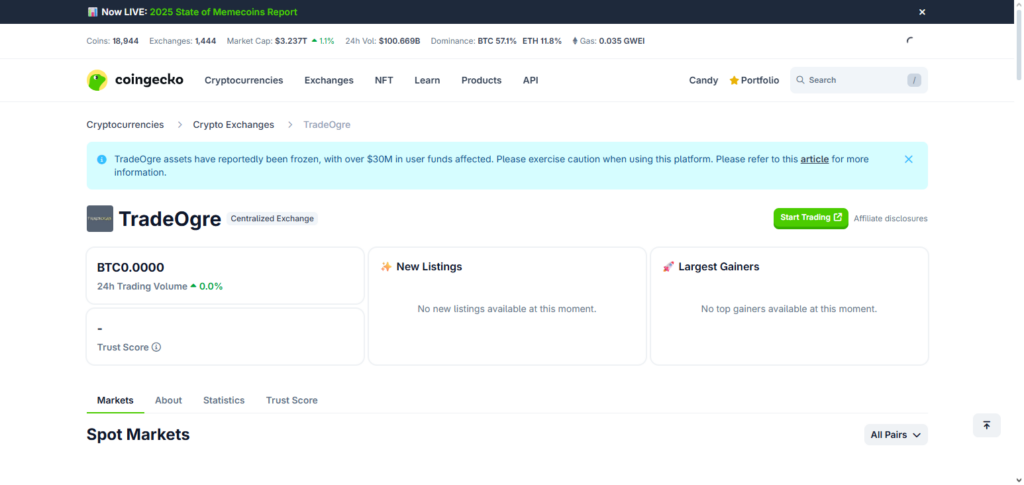
TradeOgre has a strong focus on providing users with low trading fees, a frequent trading experience, and quick support to ensure that users are able to complete their transactions. TradeOgre is one of the Top No-KYC P2P Crypto Exchanges to Consider that is perfect for users who want fast and simple crypto trading with altcoins.
TradeOgre Features, Pros & Cons
Features:
- Altcoin exchange in a P2P style.
- Little verification is needed.
- Offers a large selection of altcoins& BTC, and USDT.
- User-friendly layout.
- Quick execution of trades.
Pros:
- No KYC.
- Fees are low.
- There is a high level of privacy.
- Minimalist design allows altcoin traders to easily use the platform.
- Speedy trades.
Cons:
- The selection of cryptocurrencies is minimal.
- No support for fiat.
- The user base is small.
- Support is minimal.
- Trade features are subpar.
10. RoboSats
RoboSats started out in 2020, and offers peer-to-peer and automated Bitcoin trading. They emphasize Speed, Simplicity and Privacy, and Support Trading in Bitcoin, Tether, and local Fait pairs.
They use Secure Systems and Encryption, as well as Privacy Features that do not require ID verification, earning al RoboSats a place in the list of Top No-KYC P2P Crypto Exchanges to Consider. RoboSats offers additional quality as they are one of the few to offer automation in P2P trading. You can Count on reliable anonymous trading and security.
RoboSats Features, Pros & Cons
Features:
- Automated trading for Bitcoin and P2P.
- USDT and BTC are supported.
- Trades are secured in escrow.
- KYC is optional.
- Support for multiple currencies and countries.
Pros:
- Trading automation is fast.
- The system is private.
- They offer support.
- The features are easy to use.
- The escrow system is reliable.
Cons:
- They offer few cryptos.
- Less popular (and therefore, less community support).
- Larger trades may not be fully supported by liquidity.
- Feature access is restricted in some areas.
- Compared to larger exchanges, fewer altcoins are available.
Conclusion
No-KYC P2P exchanges are a crucial choice for consumers who want control over their money in 2026 since security and privacy are still top concerns for cryptocurrency dealers.
While some platforms, including KuCoin P2P, Bitget, and Bybit, combine ease with optional KYC, others, like Hodl Hodl, Bisq, Paxful, and AgoraDesk, provide decentralized, escrow-protected trading with minimum verification. Every exchange offers distinctive features like support for many cryptocurrencies, local cash acceptance, bilingual interfaces, and attentive customer service.
By selecting one of these Top No-KYC P2P Crypto Exchanges to Think About, traders may strike a balance between accessibility, security, and privacy, guaranteeing secure and effective peer-to-peer transactions across the globe.
FAQ
What are No-KYC P2P crypto exchanges?
No-KYC P2P exchanges allow users to trade cryptocurrencies directly with peers without mandatory identity verification. These platforms prioritize privacy, security, and peer-to-peer transactions.
Are No-KYC P2P exchanges safe?
Yes, most top no-KYC exchanges like Hodl Hodl and Bisq use escrow systems, multisig wallets, and strong encryption to ensure funds are secure during trades.
Which cryptocurrencies are supported?
These exchanges typically support Bitcoin (BTC), USDT, and multiple altcoins. Platforms like TradeOgre and AgoraDesk specialize in a wider range of altcoins.
Do these platforms support local currencies?
Yes, most no-KYC P2P exchanges accept local fiat currencies, enabling users to trade directly in their region without intermediaries.
What regions are supported?
Some platforms, like Paxful and KuCoin P2P, have regional restrictions, while others like Bisq, Hodl Hodl, and AgoraDesk operate globally.