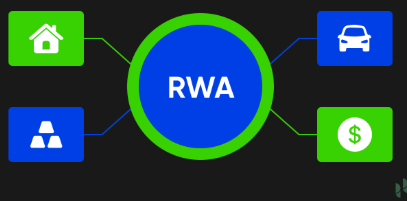
The Top RWA Protocols for Fractional Bonds will be covered in this post, along with platforms that connect blockchain technology with conventional finance.
These protocols provide investors with transparency, liquidity, and a variety of return options by enabling fractional ownership of tangible assets like bonds and loans. We’ll discuss the most cutting-edge approaches influencing tokenized real-world investments going forward, from Ondo Finance to Tokeny.
Benefits Of RWA Protocols for Fractional Bonds
Fractional Ownership: Investors can purchase less than the full value of a bond and loan, enabling them to invest less capital for exposure to higher value institutional-grade assets.
Diversification: Bonds that are issued in fractions provide the opportunity to invest in multiple real-world assets, thus reducing risk and stabilizing the portfolio.
Transparency: Investors have access to a blockchain-based automation and reporting on RWA protocols that includes clear and on-chain tracking for every smart contract.
Liquidity: With the flexibility to trade or redeem previously illiquid assets on secondary markets, tokenization optimizes the investment.
Predictable Yields: With real-world debt instruments, structured pools, and tranching, investors are able to receive consistent income streams.
Global Access: Investment in fractional bonds can be done in any part of the world, eliminating any geographical or regulatory hurdles.
Compliance and Security: Top RWA protocols have smart contracts that reduce the risk of counterparty defaulting while ensuring compliance.
Integration with DeFi: Fractional bonds can be used in conjunction with DeFi platforms for additional yield.
Key Point & Top RWA Protocols for Fractional Bonds
| Protocol | Key Point |
|---|---|
| Ondo Finance | Provides flexible structured products for fractionalized real-world assets on-chain. |
| Maple Finance | Decentralized lending platform connecting institutional borrowers with crypto lenders. |
| Centrifuge | Bridges real-world assets to DeFi, enabling tokenization of invoices and loans. |
| Goldfinch | Focuses on crypto-backed loans to real-world businesses, fostering global credit access. |
| Credix | Enables decentralized credit markets for emerging markets with on-chain transparency. |
| Kuma Protocol | Offers tokenization of alternative assets with automated liquidity and risk management. |
| Backed Finance | Fractionalizes traditional bonds and loans, providing DeFi investors access to RWAs. |
| Superstate | Simplifies investment in real-world assets via blockchain-based fractional ownership. |
| Securitize | Compliance-first platform for issuing and managing digital securities and tokenized bonds. |
| Tokeny | Enterprise-grade platform for creating, managing, and transferring tokenized securities. |
1. Ondo Finance
Ondo Finance is a prominent platform that offers structured financial products that enable investors to effectively access fractionalized real-world assets. Ondo Finance allows investors to engage in diversified portfolios of bonds, loans, and other real-world assets without requiring significant cash by utilizing blockchain technology.

Its creative strategy guarantees liquidity, risk mitigation, and transparent yield production. Ondo Finance is one of the Top RWA Protocols for Fractional Bonds because of its emphasis on compliance and on-chain asset management, which connects traditional finance with DeFi and provides investors with safe access to institutional-grade prospects.
Ondo Finance Features, Pros & Cons
Features:
- Structured investment products for fractionalized assets.
- Tranching yields and segmenting risk.
- It incorporates on-chain asset management.
- Operations with emphasis on compliance.
- Investor liquidity pools.
Pros:
- Excellent transparency and ability to audit.
- Having access to products of an institutional level.
- Investments with segmented risk.
- Payouts and yield distribution are automated.
- Diversification into an assortment of real world assets.
Cons:
- There is a limited number of assets.
- There is a structured product requirement to understand.
- Liquidity may be variable.
- Certain products incur platform charges.
- Limited track record of early stage adoption.
2. Maple Finance
Maple Finance connects institutional crypto lenders with borrowers. Investors can finance real-world loans, from which they can receive returns, due to rigorous underwriting and smart contracts. Investors can receive fractional real estate loans in diversified credit business lending pools.
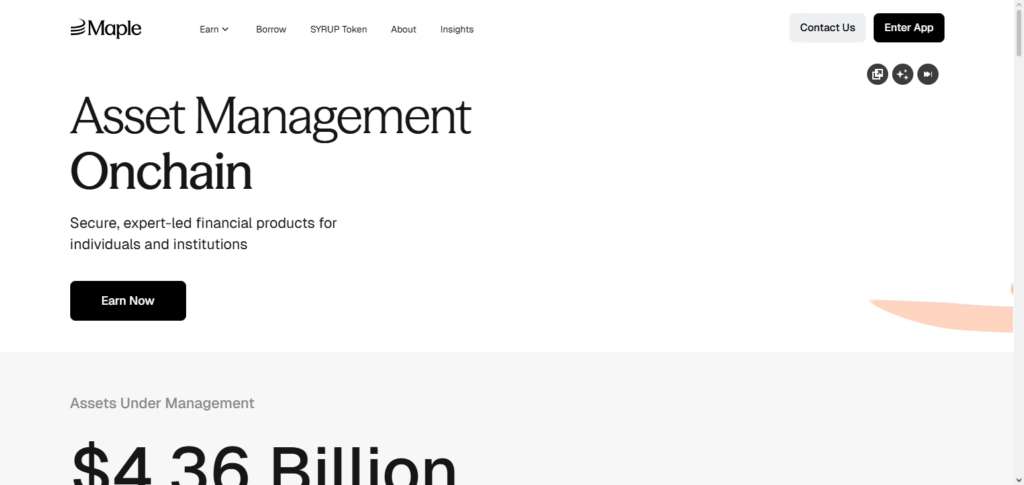
Real-world business loans, triggered automated payback, and legal risk compliance are some of the features that make Maple Finance one of the Top RWA Protocols to secure Fractional Bonds. High transparency, accessibility, legal credit watch, and automation, yield, and real-world structured credit compliance are some of the means to attract institutional and retail clients.
Maple Finance Features, Pros & Cons
Features:
- Provision of decentralized lending to institutional debtors.
- Full cycle automation with smart contracts.
- Creation of a lending pool in fractional amounts.
- Integration of credit scoring.
- Repayment on-chain tracking.
Pros:
- Lenders may rely on predictable yield.
- Funding of the loan is fully transparent.
- Primary focus on institutional debtors.
- Small participant access is available.
- With automation, the risk of operational failure is reduced.
Cons:
- Reliance on the credit history of the borrower.
- Limited operational territory.
- A risk of tie-up in the available network.
- There is a level of market liquidity risk.
- A risk of vulnerability to smart contracts.
3. Centrifuge
Centrifuge facilitates the tokenization of business assets such as invoices, loans, and receivables by integrating them with the blockchain. Centrifuge enables business to capture fractional ownership through the creation of business assets in NFTs and/or ERC-20 tokens and to attain previously unreachable liquidity.
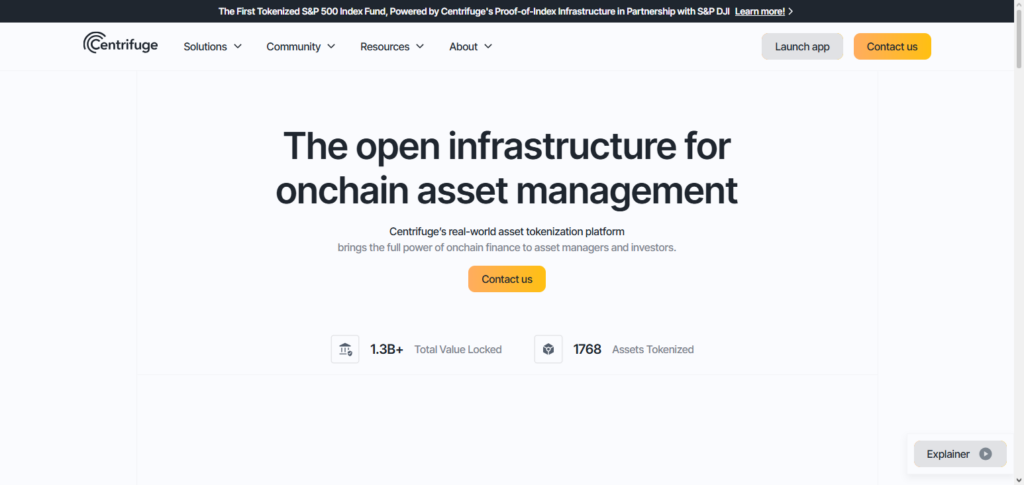
With Tinlake pools, investors have the opportunity to make structured investments while maintaining transparency and compliance. For efficient capital raising and on-chain exposure to diversified pools of real-world assets with decreased credit risk, Centrifuge is recognized as one of the Top RWA Protocols For Fractional Bonds.
Centrifuge Features, Pros & Cons
Features:
- Tokenization of loans and invoices
- Investment pools in Tinlake
- Collateralization on the blockchain
- Investors as fractional owners
- Framework focused on compliance
Pros:
- Bridges the gap between real-world assets and decentralized finance
- Tokenized assets have more liquidity.
- Investment tracking is transparent.
- Participation is fractional.
- It accommodates a variety of assets.
Cons:
- Assets have little variety.
- If the borrower does not repay, the pool’s performance is adversely affected.
- Regulatory variability in each jurisdiction
- It needs some expertise
- It involves some risk
4. Goldfinch
Goldfinch’s services include crypto-backed loans to businesses, specifically those in global markets that are neglected by the conventional finance system. Goldfinch enables investors to take on fractional loans backed by blockchain collateral, as well as real-world credit.
Goldfinch’s decentralized credit system fosters transparency, responsible risk evaluation, and modifications to repayment plans. Goldfinch is different from other Top RWA Protocols for Fractional Bonds because it merges credit assessment from the traditional system with the mechanics of DeFi. This allows investing and earning to be coupled with financial inclusion for the other businesses in the emerging markets.
Goldfinch Features, Pros & Cons
Features:
- Loans to businesses, backed by crypto
- Decentralized credit scoring
- Investment pools that are fractional
- Borrowers from all over the world
- Tracking repayments on the blockchain
Pros:
- Potential for high returns.
- Emerging markets can be accessed
- Lending is a transparent process
- Investment fractions are available
- Financial inclusion is high
Cons:
- Emerging markets can have high default rates.
- Risk from crypto’s price fluctuations
- Not widely adopted
- Regulations may be unconsidered
- Difficult for end users
5. Credix
A decentralized finance protocol called Credix establishes open credit markets for developing nations. It enables investors to take advantage of on-chain monitoring, smart contract automation, and dynamic risk assessment while funding real-world loans in fractional quantities. Credix provides investors with access to institutional-grade debt with minimal capital requirements by tokenizing credit contracts.
Its legal-first approach reduces counterparty risk and guarantees compliance. Credix is regarded as one of the Best RWA Protocols for Fractional Bonds, providing a special option for investors looking for yield from international real-world lending markets while upholding security and transparency.
Credix Features, Pros & Cons
Features:
- Decentralized credit markets
- Loans that have been tokenized for investors
- Risk measurement that is monitored on the blockchain
- Investors can access fractions
- A framework that is compliance-first
Pros:
- Decentralized global credit markets are still available
- Automation using smart contracts
- Less risk of counterparty
- Fractional investing
- Operations are transparent
Cons:
- Currently small market size
- Dependent on borrower repayment
- Regulatory uncertainty
- Some pools have limited liquidity
- Beginners face a learning curve
6. Kuma Protocol
Kuma Protocol focuses on tokenization and fractional ownership of alternative assets such as bonds, loans, and securities backed by real estate. Its unique automated risk reversal mechanism and liquidity pools combined with smart contracts facilitate efficient asset allocation. With Kuma Protocol, investors can reap the benefit of structured yield opportunities and access diversified portfolios with lower capital deployments.
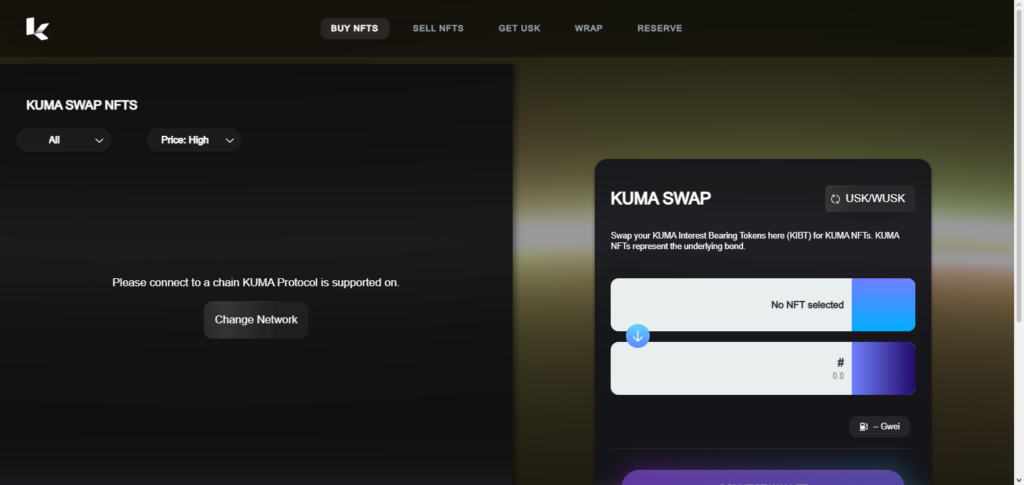
Bridging traditional finance and decentralized systems while focusing on compliance and transparency, Kuma Protocol has been recognized as one of the Top RWA Protocols for Fractional Bonds which allows users to make fractional investments in real-world financial instruments and gain secure, on-chain exposure to premium asset classes.
Kuma Protocol Features, Pros & Cons
Features:
- Alternative asset tokenization
- Investor liquidity pools
- Automated risk management
- Options for fractional ownership
- Compliance integration
Pros:
- Predictable returns
- On-chain transparency
- Attention from small to large investors
- Diversification into real-world assets
- Efficiently allocated invested capital
Cons:
- Adoption limited
- Technical risk
- Understanding technology is necessary
- Limited asset combinations
- High onboarding costs
7. Backed Finance
Backed Finance is a platform that fractionalizes traditional bonds and loans for the DeFi ecosystem. With real-world assets being converted into digital tokens, investors can take advantage of structured diversified debt portfolios.
Fully compliant with regulations, automated payments, and risk management are features of the Backed Finance platform. Both small and large investors are welcome, with access to the previously unattainable institutional-grade opportunities. As one of the Top RWA Protocols for Fractional Bonds, Backed Finance connects users to productive yield-generating assets on a blockchain while furthering the efficiency of capital markets.
Backed Finance Features, Pros & Cons
Features:
- Bonds and loans fractionalization
- Digital tokens
- Compliance maintenance
- Risk-layered investment pools
- Automated investment distributions
Pros:
- Potentially divided ownership in institutional assets
- Systems simplicity and transparency
- Complex asset ownership split
- Portfolio division
- Security provided by blockchain
Cons:
- Limited asset combinations at the beginning
- Knowledge of bonds is needed
- Adoption of early stage
- History of liquidity in the market
- The use of the platform incurs a cost
8. Superstate
Superstate’s platform offers fractional ownership of bonds, loans, and other assets that are typically more difficult to invest in. This provides hyperliquidity to previously illiquid markets. Superstate customers can diversify their investments while managing compliance, risk, and asset transfer.
In addition, Superstate’s offerings simplify investments for smaller investors, and as a result, it has received recognition as one of the Top RWA Protocols for Fractional Bonds. Superstate bridges DeFi with Traditional Finance, providing customers with transparent, on-chain, and predictable returns.
Superstate Features, Pros & Cons
Features:
- Fractional ownership on the blockchain
- Investing in bonds, loans, and other assets
- Provisioning of liquidity
- Compliance oversight
- Diversification of portfolios
Pros:
- Availability to retail investors
- Makes complicated investments easy
- Transparent tracking on the blockchain
- Yield on investment is predictable
- Ability to create diversified portfolios
Cons:
- Fewer asset classes availabe
- Market liquidity can change
- Regulatory uncertainties
- Still new to the market
- Specialized knowledge is needed
9. Securitize
Securitize provides management and issuance of digital securities with an emphasis on compliance, including tokenized bonds. Securitize manages regulatory compliance, investor onboarding, and automated corporate actions through the blockchain.
In addition, Securitize offers the fractionalization of assets, which enhances liquidity and widens the investor base for real-world assets.
Securitize has partnerships with DeFi protocols and offers real-world assets as structured products to institutional and non-institutional investors. This makes Securitize a notable member of the Top RWA Protocols for Fractional Bonds as it keeps investing in real-world assets compliant and operationally efficient on-chain.
Securitize Features, Pros & Cons
Features:
- Tokenized bonds with embedded compliance
- Digital security issuance
- Automated corporate action
- Integration with DeFi
- Management and onboarding of investors
Pros:
- Excellent compliance
- Securitize supports fractional ownership
- Powerful corporate infrastructure
- Access to multiple investors
- Automated management of tokens
Cons:
- Limited asset classes at start
- Investors have to pay issuance fee
- Complexity of the platform
- Decreased demand
- Regulatory risks
10. Tokeny
Tokeny turns enterprise-grade solutions into offerings for the creation, management, and transferring of fully-compliant, tokenized securities, including fractional bonds. Its platform focuses on compliance, investor management, and automated smart contracts, thereby broadening the reach of traditional assets.
By bond and loan fractionalization, Tokeny improves capital allocation and liquidity. Its solutions are optimized for scalability, security, and compliance. Ranking with the best of the Top RWA Protocols for Fractional Bonds, Tokeny offers investors real-world, on-chain assets of an institutional calibre, remaining clear, automated, and frictionless through the entirety of the investment process.
Tokeny Features, Pros & Cons
Features:
- Tokenized securities with an enterprise level
- Automation of smart contracts
- Continuously compliant fractional bonds and loans
- Scalable asset management
Pros:
- Investment is fractional and automated
- Investors enjoy high transparency
- Reduced error automation
- Compliance to regulations is always guaranteed
- Scalable issuance is offered
Cons:
- More geared to institutional clients
- Complexity of the platform
- Increased demand risks
- Asset classes at the start are limited
- Fees could potentially be charged
Conclusion
To sum up, access to real-world assets is being revolutionized by the Top RWA Protocols for Fractional Bonds, including Ondo Finance, Maple Finance, Centrifuge, Goldfinch, Credix, Kuma Protocol, Backed Finance, Superstate, Securitize, and Tokeny.
These systems connect traditional finance and DeFi by allowing fractional ownership, offering investors alternatives that are transparent, compliant, and varied.
These protocols provide safe yield creation, liquidity, and on-chain efficiency for everything from loans and alternative assets to institutional-grade bonds. Using these leading RWA protocols guarantees accessibility and innovation for investors looking for superior, fractionalized investment options as the market for tokenized real-world assets expands.