
The world of cryptocurrency is very fast paced, Why Crypto Exchanges Suddenly Freeze User Withdrawals can happen at any given moment. Users are sometimes left anxious and confused. Exchange freezes are often caused by security concerns, compliance issues, liquidity concerns, or abnormal activity.
It is possible to feel frustrated, however, there is always a protective reason why a freeze occurs. It is to protect the users funds and freez the the exchange. These reasons explain why these measures are taken. These concerns are meant to help users respond to these freezes better in the future.
Why Crypto Exchanges Suddenly Freeze User Withdrawals
The main reasons exchanges limit withdrawals are to safeguard customer money and maintain business stability. Liquidity shortages, security risks, regulatory pressure, technical issues, or blockchain network latency are common causes of sudden freezes. These are short-term defenses against systemic dangers or more significant financial losses.
Shortage of Liquidity
During a market crash, an exchange can experience a sudden loss of liquidity. This gap for the exchange means it cannot process requested withdrawals since the assets necessary to cover the demands of the clients are simply not available.
Problems with Banking or Payment Networks
Withdrawals can get stuck due to delays or issues with the exchange’s fiat banking partner. In these situations, the exchange will have to lock in the withdrawals until funds can be moved within the payment network’s rules.
Threats to Withdrawals and Hacks
Unusual rogue activity, hacks, or other types of potential intrusions into a network can also result in the withdrawals being frozen to protect the assets of the clients and mitigate the chance of loss.
Regulatory Issues
Government directives, probes, or more stringent rules can cause the exchange to be legally bound to inactivate withdrawals until some of the compliance issues are resolved.
Tech Issues or Maintenance
Withdrawals can be paused due to certain software issues, system bugs, or wallet upgrades. Exchanges will have to stop withdrawals to ensure the integrity of the transactions.
High Network Congestion
In times of network congestion on the blockchain, exchanges will stop withdrawals to protect themselves from unsuccessful or missing transfers.
Financial Troubles or Operational Strain
Insolvency, mismanagement, and/or unexpected high withdrawal requests can lead withdrawals to be frozen in order to stabilize an exchange’s operations or to avoid bankrupting the exchange.
How Users Can Protect Themselves from Exchange Withdrawal Freezes
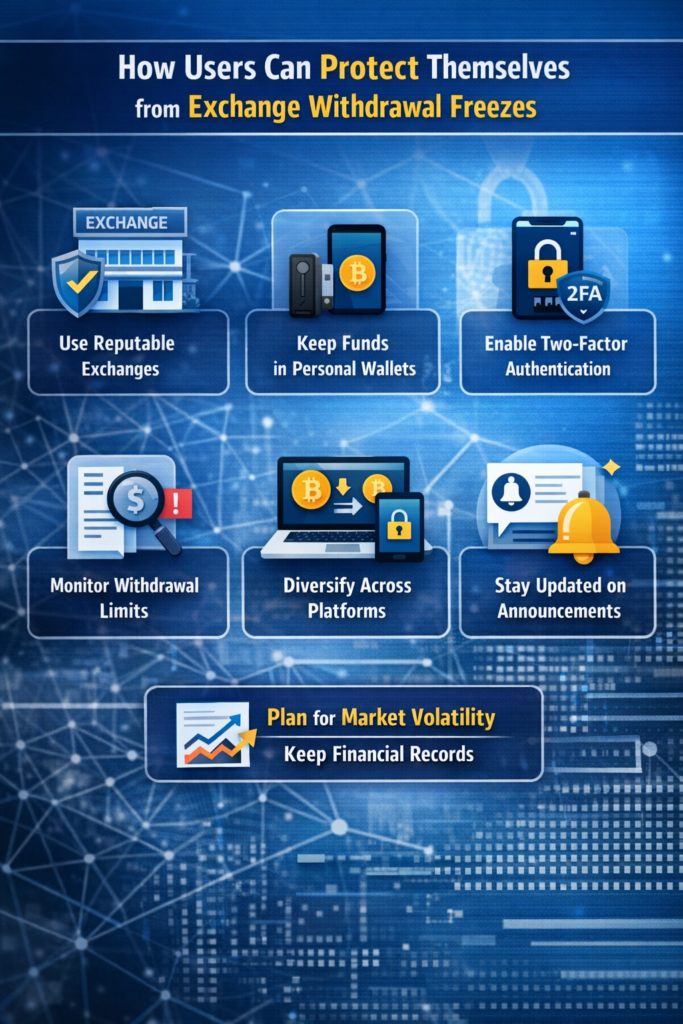
Use Reputable Exchanges: Select exchanges that offer better security, more liquidity, and have improved track records. More trustworthy platforms are less likely to inappropriately temporarily freeze withdrawals and handle issues more professionally.
Keep Funds in Personal Wallets: Store most of your digital currency in wallets that are non-custodial and that you personally control. The exchange should only keep funds to be used for trading.
Enable Two-Factor Authentication (2FA): Two-factor authentication and a strong password should be used to secure accounts. This is done to keep unauthorized users out to avoid security freezes and keep your money secure.
Monitor Withdrawal Limits and Activity: Be conscious of and monitor daily withdrawal limits and your exposed account activity. Recognizing and observing limits reached will help avoid unnecessary freezes on your account.
Diversify Across Platforms: Don’t keep your entire crypto holding on one exchange. Losing access to one exchange will have less impact if your crypto assets are spread across several exchanges.
Keep an Eye on Exchange Announcements Follow the channels used by the exchange. Knowing things like scheduled down time, network slow down, or changes to compliance rules will help you take action before withdrawals get locked.
Anticipate Market Fluctuations Withdrawals often get stuck when there is a lot of movement in the market. By having a plan to shift your tokens before hand, you will eliminate chaos, and not find yourself in a position where you get frozen out.
Here is a concise summary of your content on How do I unfreeze my crypto? incorporating useful statistics, causes, and actionable recommendations:
How Do I Unfreeze My Crypto?
Having your crypto frozen can cause a host of problems, however, it is often just a part of the compliance routine, legal obligations, or company policy. Here is how users can fix this issue:
Steps To Take To Get Your Crypto Back.
Open a Support Ticket. Get in touch with your exchange as fast as possible. You will need to provide the details they ask for and provide instructions to begin the unfreeze process.
Complete Your Identity Verification. Some exchanges will ask for a government-issued ID, proof of residency, or a short video to verify your identity.
Demonstrate Ownership of the Funds. You may be asked to provide the source of your currency i.e. bank statements showing legal purchases, or activity history showing no connection to illegal activity.
Respond to Compliance Requests. If your funds were frozen due to government-mandated sanctions and/or regulations, answering these compliance questions correctly is the best way to get your account unlocked.
Real World Data
Impact of US Sanctions. As of early 2025, US law enforcement has frozen and even confiscated $1.8 billion worth of crypto due to violations of OFAC sanctions.
Sanctioned Wallets: By early 2025, there were 1,245 crypto wallets on the US sanctions list. That includes more than 50 individuals and groups.
Crypto Sanctions Trend: In 2024, 23% of all new sanctions involved crypto. This is an increase from 17% in 2023. This increase shows more regulatory scrutiny.
Why Was My Wallet Flagged?
Automated security checks on crypto platforms are meant to protect the user’s funds. There are multiple reasons your wallet might be flagged, such as:
- A deposit that is linked to either stolen crypto or a wallet that is deemed as high-risk.
- Any transactions that were processed through wallets that are linked to crime or terrorism.
- Login attempts from unusual devices or locations that activate security protocols.
Why Has My Account Been Restricted?
To protect your funds, an account may be restricted. Some of the reasons are:
- Your deposit involved funds that are either flagged as high-risk or a part of fraud/ illegal activity.
- Multiple devices or IP addresses show suspicious activity.
- There are protocols in place that the exchange sets in order to protect against theft, and they were triggered.
How to Avoid Having Your Crypto Frozen
- Avoid sudden, large, or unusual transactions that are outside of your usual spending habits.
- Keep your financial records in order and accessible, including bank statements or payslips that show how the funds were legally acquired.
- Stick to established exchanges that have good compliance and security measures.
- Keep updated on the sanctions and other regulations that impact the crypto ecosystem.
- Proceed with verification requests from the exchange in order to avoid long periods of account freezes.
Conclusion
The main goals of cryptocurrency exchange freezes are to safeguard customer money, adhere to legal requirements, and preserve platform security. According to data, US officials froze $1.8 billion in cryptocurrency related to OFAC sanctions at the beginning of 2025, underscoring the growing regulatory control.
Unusual transactions, ties to high-risk funds, or security alerts are frequently the cause of wallet flags and account limits. By maintaining correct records, quickly confirming identities, avoiding erratic transactions, and utilizing reliable exchanges, users can lower risks.
Faster resolution and safer management of cryptocurrency assets are ensured by comprehending these causes and adhering to the right processes.
Operational StrainsInsolvency, a lack of control, or a sudden wave of large withdrawals can result in the exchange freezing further withdrawals in order to stabilize its operations.
FAQ
Why did my crypto get frozen?
Your crypto may be frozen due to security alerts, unusual transactions, regulatory compliance checks, or deposits linked to high-risk wallets. Exchanges act to protect funds.
How do I unfreeze my crypto?
Open a support ticket with your exchange and follow instructions. You may need to verify identity, provide proof of ownership, or submit transaction/source-of-funds documents.
Do freezes mean my crypto is lost?
No. Freezes are usually temporary safety measures. Funds remain secure while the exchange investigates or completes compliance verification.
How long does it take to unfreeze crypto?
Resolution time varies based on the complexity of verification and documentation required. Simple identity checks may take hours, while compliance-related freezes could take days or weeks.
How can I avoid my crypto being frozen?
Use reputable exchanges, maintain accurate financial records, avoid sudden or unusual transactions, and respond promptly to verification requests. Proper preparation reduces freeze risks.