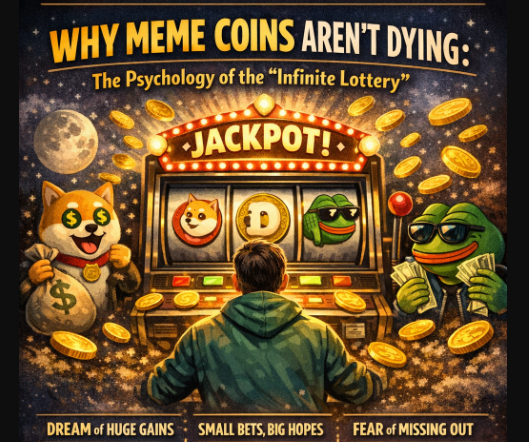
Why Meme Coins Aren’t Dying: The Psychology of the “Infinite Lottery” they’re thriving in a system that’s essentially built like a jackpot that never stops giving. Tokens such as Dogecoin and Shiba Inu exploit the strong psychological loop in which small amounts of money feel like lottery tickets with a life-changing payoff potential.
Stoked by endless hype, meme stories and fear-mongering purchases, this “infinite lottery” keeps drawing back investors — a testament that in crypto, belief and attention can sometimes be just as valuable as fundamentals.
Why Meme Coins Aren’t Dying: The Psychology of the “Infinite Lottery”

Meme coins are not a passing trend — they have transformed into an ever-present sector of the crypto ecosystem with tie-ins to behavioral finance and digital culture.
Tokens like dogecoin, shiba inu, pepe and dogwifhat have gone from being internet memes to highly-liquid high-attention assets. Although there was a significant contraction in 2025–2026 that ended weaker projects, the remaining meme coins are now serving as key metrics for market sentiment and speculative risk appetite.
Their resilience is fueled by the idea of the “infinite lottery,” where low-cost tokens offer unlimited hope for exponential payoffs, reinforced with nonstop social media bombardment.
The Psychology Behind the “Infinite Lottery”
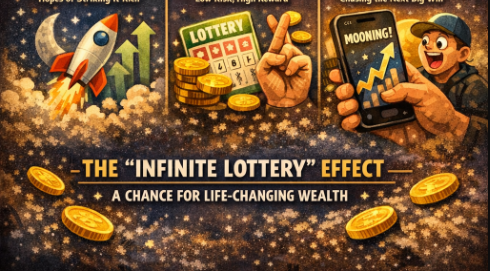
Overnight Millionaire Myth and the Lottery Effect
Meme coins trade at very low prices, allowing investors to buy millions of tokens at a cheap price. It creates a potent illusion that even a modest increase in price could yield life-changing wealth, mimicking lottery-style thinking.
FOMO (Fear of Missing Out)
Viral success stories on sites such as X and Telegram intensify FOMO. The traders jump in to the trending coins on hype and not analysis, usually entering at the most expensive prices of these emotional traders.
Dopamine-Driven Reward System
The fast pivots in price — sometimes 50% to 90% over a few days — have dopamine triggers like gambling. This neurological reward loop returns traders searching charts and making extra trades in no time.
Social Proof and Herd Mentality
Mass participation creates perceived legitimacy. A project with no real fundamentals or utility behind it creates false confidence when thousands of users hype or invest in a coin at the same time.
Why Meme Coins “Are Not Dying” in 2026
Filtered Ecosystems
This is followed by the 2025 accounts correction, which served to washout poor quality projects. Now, only meme coins with good communities and liquidity left — those with high engagement made the ecosystem stronger.
Capital Rotation Tool
They are often the first indicators of a bullish cycle in meme coins, which you can see after major uptrends. They are a major part of how capital flows in 2026, with traders regularly utilizing them for small-scale profits before reinvesting those profits into larger assets like Bitcoin and Ethereum.
Technological Maturation
Today’s meme coins are no longer about speculation. Several now come equipped with features like staking, gaming ecosystems, and revenue-sharing models built in that apply layers of utility and user engagement beyond hype.
“Attention is Value” Economy
Meme coins are products of the attention economy. They thrive on virality, influencer endorsement and community narratives; visibility and engagement drive price momentum.
Risks and Sustainability
Meme coins are still among the most dangerous asset classes in crypto, although they have survived. The 2026 market is extremely competitive with algorithmic trading bots and whales dominating the space, so timing is key. The vast majority of late entrants become exit liquidity, with estimates finding that about 99% of casual traders lose money.
But the cycle continues due to the “infinite lottery” effect — that every crash is followed by a renewed optimism for the next 100x opportunity. The hype cycle, wishful thinking atmosphere, and speculation is a vicious loop that makes sure meme coins are not going anywhere from crypto market structure.
Market Structure Supporting Meme Coins
Meme coins are not a passing trend — they have transformed into an ever-present sector of the crypto ecosystem with tie-ins to behavioral finance and digital culture. Tokens like dogecoin, shiba inu, pepe and dogwifhat have gone from being internet memes to highly-liquid high-attention assets.
Although there was a significant contraction in 2025–2026 that ended weaker projects, the remaining meme coins are now serving as key metrics for market sentiment and speculative risk appetite.
Their resilience is fueled by the idea of the “infinite lottery,” where low-cost tokens offer unlimited hope for exponential payoffs, reinforced with nonstop social media bombardment.
Role in Crypto Market Cycles
Attention Economy Dominance
In the attention economy, meme coins flourish; they gain value and traction only through visibility. Viral trends, influencer endorsements and day-to-day engagement on channels such as X boost hype and affect price pressure directly.
Community-Driven Growth
They are decentralized marketing engines running on strong online communities. The loyal supporters become meme creators, narrative spreaders and maintain engagement, leading to long term visibility and an ever-increasing influx of new investors into meme coin ecosystems.
Liquidity and Accessibility
Retail investors can typically enter these markets easily, as the entry barriers are low and they require little capital to invest in. Moreover, the presence of high liquidity on exchanges makes for an easy trade due to quick transactions making meme coins a good option for those looking to speculate over short periods and capitalize on rapid profits.
Exchange and Listing Dynamics
Being listed on the largest exchanges adds a lot of credibility and exposure. Introducing meme coins into mainstream platforms generates buying pressure, entices newcomers and reinforces speculative cycles across worldwide crypto exchanges.
Algorithmic and Bot Trading Influence
Advanced bots and algorithmic trading systems further increase volatility by executing rapid trades. These are trend-based systems that generate kind of fake momentum and generally work against retail traders taking time to adapt to the movement in markets.
Risks and Reality Check
Extreme Volatility
Meme coins are volatile, frequently pumping or crashing 50–90% in a matter of days. This unpredictability renders them extremely risky as far as investing is concerned, particularly for newer investors who may struggle to handle erratic market conditions.
Whale Manipulation
What does that mean: Large holders have a large supply, which allows them to change the price. Whales buying or selling unexpectedly can lead to explosive pumps or crashes, leaving smaller retail traders subject to sudden losses.
Bot and Algorithmic Trading Dominance
High-frequency automated trading bots executes trades at superhuman speed taking advantage of price inefficiencies. Retail traders can never match this speed, blindly and late joining trades with the advanced players all the way to being exit liquidity.
Lack of Fundamental Value
Most of the meme coins have neither utility in real life, nor revenue streams that can be sustained. Their value is mostly based on hype and speculation, so they can suddenly fold once attention disappears or narratives change.
High Probability of Loss
Retail investors lose money most of the time trading meme coins. Success stories are only isolated exceptions, the rest buy on a hype peak and sell on downswings, which leads to stable life-time losses.
Rug Pulls and Scams
Some projects are arisen for the sole purpose of robbing investors. The developers may intentionally abandon a project or withdraw the liquidity without notice, which causes the price of the token to plummet immediately, and investors are left with a useless asset.
Psychological Addiction and Overtrading
Addictive behaviors come to light from continuous price watching and emotional trading. Chasing loss, overtrading and neglecting risk management can cause long-term losses for investors.
The Sustainability of the “Infinite Lottery”
Continuous Hope Cycle
Every crash resets expectations, but also optimism. Despite repeated historical losses, new meme coins receive steady inflow of fresh new capital as investors continue to chase the next 100x.
Constant Launch of New Tokens
Every day new meme coins are introduced, each one promising viral potential. This perpetual supply resupply keeps the ecosystem functioning, creating boundless opportunities for speculation and maintaining the “infinite lottery” narrative.
Social Media Amplification
Feeding the hype, trends and success stories 24/7 are platforms like X and Telegram. This constant exposure keeps meme coins relevant, leading new participants to seek entry and speculative demand bolstered from all over the world.
Low Entry Barrier Appeal
Meme coins have a low entry, making them easy for the global retails audience. The micro-value proposition also aids in repeat participation, with users happy to throw away small amounts for the chance of massive returns.
Emotional Over Rational Investing
Investors choose more out of thrill, desire and panic than reason. “My emotional investment made my bond with Tarot so strict that week and I continued to think it had a better success rate – despite the evidence suggesting otherwise, high risk low reward.”
Influence of Viral Narratives
News of early adopters suddenly becoming millionaires circulated widely through social media, influencing market movement. These stories gloss over any risks involved, luring new entrants to pursue parallel outcomes and keeping the speculative narrative cycle repeating in perpetuity.
Integration with Emerging Trends
How meme coins evolve with gaming, NFTs & AI. This evolution ensures their cultural relevance, easy access for new audiences, and a lifecycle length that exceeds basic speculative tokens.
Conclusion
Meme coins have settled into a stubborn fixture in the crypto market more for their psychological and structural drivers than any firm fundamentals. Examples like Dogecoin and Shiba Inu show that community power, social media-backed virality and speculative appeal can keep a long-term attraction.
The “infinite lottery” describes their sustainability — low-upfront costs, potential for outsized rewards and ongoing monkey buzz keep the cycle going. Despite two recent market corrections that wiped out weaker projects, new tokens continue to come on the scene and investor optimism resets each time, keeping interest alive.
But this sustainability carries big risks. When high volatility, whale dominance and bot-driven trading are involved, the average player burns. Still, the potential for life-changing rewards has high emotional tug and keeps many retail investors coming back.
In conclusion, meme coins may never completely go away; rather they will continue to evolve as a high-risk, attention-driven asset class and always reflective of market sentiment, speculative behavior and the increasing prevalence of digital culture in our financial world.
FAQ
What are meme coins?
Meme coins are cryptocurrencies driven primarily by internet culture, community engagement, and social media hype rather than strong fundamentals. Examples include Dogecoin and Shiba Inu.
Why are meme coins called an “infinite lottery”?
They offer low-cost entry with the potential for massive returns, creating a lottery-like experience. Investors continuously chase the next 100x opportunity, keeping the cycle active indefinitely.
Why aren’t meme coins dying in 2026?
They persist due to strong communities, constant social media hype, and their role as speculative trading tools. Surviving projects have better liquidity and act as early indicators of market sentiment.
What role does psychology play in meme coin popularity?
Psychological factors like FOMO, herd mentality, and dopamine-driven trading behavior drive participation. Emotional decision-making often outweighs rational analysis, sustaining demand despite high risks.
Are meme coins a good investment?
They are high-risk, speculative assets. While some investors achieve significant gains, most participants lose money due to volatility, poor timing, and market manipulation by whales and trading bots.