


The Best Forex Brokers Offering Institutional-Grade Order Routing will be covered in this article, with an emphasis on platforms that offer professional-level trading infrastructure, deep liquidity access, and cutting-edge execution technologies.
These brokers are perfect for high-volume, algorithmic, and professional forex traders looking for institutional-quality performance since they are built to provide quick order fills, less slippage, and transparent pricing.
Why Use Forex Brokers Offering Institutional-Grade Order Routing
Access to a Broader Range of Liquidity: Brokers with institutional-grade order routing provide access to a wider variety of liquidity. With a better range of liquidity, traders have access to better pricing, quotes, execution, and even spreads during times of higher market volatility.
More Reliable and Quicker Execution: Order routing technology tends to have lower amounts of latency and slippage which makes order execution a lot quicker. Quicker order execution is a must for traders who use strategies such as scalping, algorithms, or high-frequency trading.

More Transparency With Pricing: Forex brokers who provide institutional-grade order routing often operate with a Direct Market Access (DMA) or Electronic Communication Network (ECN) model that gives traders the ability to trade at the true market price.
Better Execution When Trading Larger Sizes: Forex Brokers that provide institutional-grade order routing brokers can better optimize the execution of large trades which helps to lessen the overall market impact.
Access to Professional Trading Tools: Brokers that provide institutional-grade order routing also often provide tools such as complete trading APIs, advanced risk management tools, and enhanced servers.
Fewer Conflicts of Interest: Brokers employing a non-dealing desk execution model do the best job at aligning the interests of the broker and the trader as the trades are sent straight to the market rather than getting internalized by the broker.
Better Scalability for Increasing Trade Volumes: With institutional-grade order routing, brokers can provide consistent execution quality which makes them suited for professional traders and advanced retail traders with a growing number of trading volumes.
Key Point & Best Forex Brokers Offering Institutional-Grade Order Routing List
| Broker Name | Key Point / Core Strength |
|---|---|
| Interactive Brokers (IBKR) | Institutional-grade liquidity, ultra-low spreads, and direct market access across global forex and multi-asset markets. |
| IG | Highly regulated global broker offering deep liquidity, competitive pricing, and an advanced proprietary trading platform. |
| Saxo Bank | Premium multi-asset broker with tier-1 liquidity, advanced analytics, and strong risk-management tools for professionals. |
| Pepperstone | ECN-style execution with low latency, tight spreads, and strong support for algorithmic and high-frequency trading. |
| CMC Markets | Powerful Next Generation platform with robust charting, pricing transparency, and extensive currency pair coverage. |
| FxPro | Multiple execution models with fast order processing and access to deep liquidity pools for active forex traders. |
| IC Markets | True ECN broker offering raw spreads, high-speed execution, and excellent conditions for scalping and EA trading. |
| AvaTrade | Well-regulated broker with fixed and floating spreads, strong educational tools, and beginner-friendly platforms. |
| FOREX.com | Trusted global broker backed by strong regulation, deep liquidity access, and comprehensive market research tools. |
| NinjaTrader | Specialized trading platform with advanced automation, futures-focused forex access, and professional-grade analytics. |
1. Interactive Brokers (IBKR)
Interactive Brokers is an elite industry broker offering multi-asset services that is recognized on a global scale with regulations from the SEC in the United States, CFTC, the IIROC, the UK FCA, and additional providers.
Brokers have regulations from all major global jurisdictions, so clients have optimal protection. Additionally, Interactive Brokers provides structured instruments in over 150 global markets that include forex, stock, futures, options, bonds, etc.
They have, priced, professional execution. Interactive Brokers also provides institutional-grade order routing and smart routing services to ensure optimal fills. Professionals have access to multiple platforms, including their proprietary Trader Workstation (TWS), APIs, and additional third-party integrations. Support is available 24/5 and educational tools are also available.
Interactive Brokers (IBKR) Features, Pros & Cons
Features
- Global markets, institutional-grade smart order routing
- Forex, stocks, options, futures, and bonds multi-asset trading
- Advanced Trader Workstation (TWS) platform
- Algorithmic trading and API support
- Worldwide Tier-1 regulation
Pros
- Pricing and spreads that are ultra-competitive
- • Excellent execution quality and deep liquidity
- • High levels of regulation in several jurisdictions
- • Professional-grade tools for advanced traders
- • Access to a wide range of markets
Cons
- Beginners may find the platform difficult to navigate
- • Some account types have higher minimums
- • Can be difficult to understand fee struct
- • Account inactivity fees on some accounts
- • Customer service is inconsistent across regions
2. IG
IG is one of the world’s leading brokers that provides CFDs and Forex. They have regulation from the FCA, ASIC, and additional providers.
They also cover over 17,000 different instruments which include Forex, Indices, Commodities, Crypto, and other CFDs. They have also incorporated Forex trading with Direct Market Access (DMAs) and have also included CFDs, which offer additional access to the markets. Their infrastructure also provides institutional-grade order execution.
IG offers its clients various platforms including mobile and web apps, advanced L2 Dealer, MT4, and API access for algorithmic trading. The leverage (which can be as high as 1:200, depending on local regulations) is determined by the existing regulations for each country. Their support includes an array of educational materials and 24/5 multi-channel support.
IG Features, Pros & Cons
Features
- Direct Market Access & DMA order routing
- Global regulation from the FCA, ASIC & others
- MT4 and proprietary platforms
- Instruments across the range (FX, CFDs, crypto)
- Research tools and educational offerings
Pros
- Diverse Markets: An extensive selection of CFDs and forex.
- Strong Research: High-quality news and market analysis.
- Regulated Globally: Protected via ASIC and FCA.
- Reliable Order Routing: Order Direct Markets Access for transparent operational execution.
- Multiple Platforms: Compatible with Web and mobile platforms, as well as MT4.
Cons
- Leverage Limits: Depending on the area, leverages can be different.
- CFD Costs: in regard to some goods, they can be quite expensive.
- Platform Learning Curve: It takes time to learn proprietary tools.
- Execution Delays: Occasional lag in volatile markets.
- Not Ideal for HFT: Restrictions on very rapid strategies.
3. Saxo Bank
Saxo Bank is an investment bank and multi-asset broker based in Denmark. They are regulated by the Danish FSA, FCA, and several other global regulators providing them with good institutional credibility and protection of client funds.
They offer a comprehensive range of services in the financial market, including professional order execution and customizable order types in forex, stocks, ETFs, CFDs, futures, and bonds, with order types that reflect institutional-grade order execution principles.
Their proprietary platforms, SaxoTraderGO and SaxoTraderPRO, provide API access and a variety of advanced analytics and risk management tools. Retail leverage is determined by local regulations and is generally capped (e.g., in the EU/UK it is 1:30); however, professional clients have access to higher tiers. They provide a multi-lingual global support team as well as research resources.
Saxo Bank Features, Pros & Cons
Features
- Institutional-grade routing and execution
- Tier-1 regulation (FSA, FCA, etc.)
- SaxoTraderGO and PRO platforms
- Multi-asset coverage
- Robust research and risk tools
Pros
- Professional Routing: Fills and pricing of an institutional grade.
- Premium Platforms: SaxoTraderGO & PRO.
- Global Assets: Stocks, forex, ETFs, CFDs, and bonds.
- Advanced Analytics: Integrated research tools.
- Strong Compliance: Regulatory scope of Tier-1.
Cons
- High Minimum Deposit: Increased barrier to entry for novices.
- Fees: Compared to discount brokers, higher pricing.
- Inactivity Penalties: Costs for being inactive.
- Leverage Restrictions: Local regulation dictates lower leverage.
- Complex Tools: Potential to intimidate casual traders.
4. Pepperstone
Pepperstone is an Australian forex and CFD broker regulated by ASIC, FCA, CySEC, and a variety of other authorities. They are known for providing fast execution with a low spread, which is appealing to active and institutional-styled traders. They provide support in forex, stocks, commodities, and other asset classes through their proprietary platforms as well as MT4, MT5, and cTrader.
Traders using high-frequency and algorithmic strategies benefit from minimal slippage thanks to competitive order routing and the aggregation of institutional-grade liquidity. Retail traders can access leverage of up to 1:200, and depending on the jurisdiction, professional traders may qualify for 1:1000. Support consists of customer service and training materials, available 24/5.
Pepperstone Features, Pros & Cons
Features
- Access to ECN liquidity and institutional-grade routing
- Excellent platforms: MT4, MT5, and cTrader
- Fast execution and low spread
- Support for algorithmic trading
- Regulation from ASIC, FCA, and CySEC
Pros
- ECN Execution: Achieved by a combination of the company utilizing an External Liquidation Network and an Execution Canadian Network.
- Platform Variety: MT4, MT5, and cTrader are all good programs.
- Low Latency: There is also low latency in regards to price filling and slippage.
- Strong Support: The company does also provide good support. It is also available 24/5 in a multitude of languages.
- Algorithmic Friendly: The company does also provide a good environment for algorithms as well as for scalping.
Cons
- Limited Asset Range: There is also limited variation in a country’s assets that are over and above a country’s current currency.
- No Proprietary Platform: The company does also provide no platforms that are proprietary.
- Data Costs: In electronic data, there is also a cost that is considered data.
- Leverage Varies: The Control over Leverage that is applied depends on the country’s stock restrictions as well as the country’s Leverage laws.
- Smaller Research Library: There is also less in the way of built-in research than there should be.
5. CMC Markets
CMC Markets provides brokerage services out of the UK, with FCA and ASIC regulation, and offers a complete range of tradeable instruments, including forex, commodities, indices, and shares.
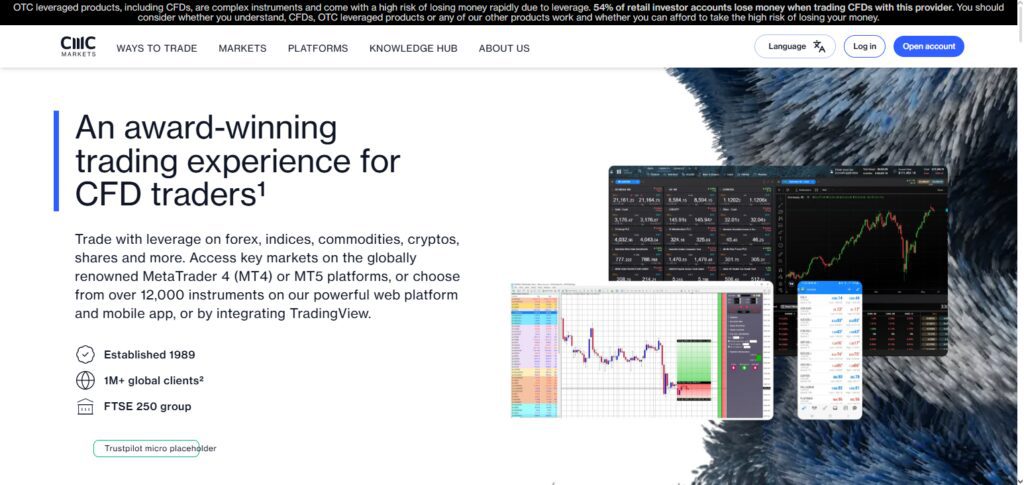
He has his own Next Generation proprietary trading platform, which comes equipped with tools for advanced charting, risk mitigation, and execution reliability, making it well suited for high-level traders.
While he offers competitive spreads and efficient order execution, the level of retail leverage offered is contingent on the location of the client (e.g. he has been implementing EU regulations). CMC is a web and mobile broker, and he offers access to the MT4 platform, education, and support, along with Research complemented by 24/5 Support.
CMC Markets Features, Pros & Cons
Features
- Access to DMA and Institutions
- FCA, ASIC Regulation
- Powerful Charting and Tools
- A Variety of CFDs and Forex
Pros
- Next-Gen Platform: The company does also provide good charting that is some of the best.
- DMA Pricing: There is also good prove for the company to provide the best primary market for direct market access.
- Regulation: Oversight from FCA & ASIC.
- Broad Market Access: Multiple forex pairs & CFDs.
- Educational Tools: Comprehensive resources.
Cons
- Tool Complexity: Can be frustrating for beginner traders.
- Additional Tools Costs: Fees for extra resources.
- Crypto Options: Limited selection.
- CFD Fees: More costly depending on the region.
- Platform Learning Curve: More time needed for full functionality.
6. FxPro
FxPro provides online brokerage services out of London and has regulation from the UK FCA and other bodies and access to more than two million clients globally.
He provides access to OTC services, including forex, commodities, shares, market CFDs, indices, and precious metals. With regards to trading infrastructure, he is robust, and he has multiple trading platforms, including MT4, MT5, and cTrader, which help to facilitate access to their deep liquidity and fast order execution capabilities.
Although leverage levels vary by client’s country and respective regulations, FxPro’s execution models are designed to accommodate smooth execution and premium pricing. Support includes multi-channel customer support and educational material for all categories of traders.
FxPro Features, Pros & Cons
Features
- Multiple Models and Routing of Execution
- Platforms MT4/MT5/cTrader
- Regulation FCA and worldwide
- Classes of Wide Assets
- Algo Trading & VPS Support
Pros
- Diverse Execution Options: Access to MT4, MT5, & cTrader.
- Institutional Routing: Active traders get competitive fills.
- Diverse Instruments: Access to forex, CFDs, metals, & futures.
- VPS Support: For automated systems.
- Global Regulation: Includes FCA & others.
Cons
- Variable Spread: Spread not consistently the lowest.
- Uneven Costs on Select Pairs: Structural costs vary.
- Research Tools Availability: Weaker than large competitors.
- Occasional Execution Gaps: Rare, but happens during high volatility.
- Support Availability: Varies, not 24/7 everywhere.
7. IC Markets
IC Markets claims to be the largest ECN broker offering forex, CFDs on commodities, indices, cryptocurrencies, and bonds with raw spread accounts and quick execution. It has dual licenses, with one from ASIC and the other from CySEC, which allows it to target retail clients, but due to the range of its services, it also manages to attract institutional clients.
It is also able to accommodate algorithmic trading and provides full support for MT4, MT5, and cTrader. It has institutional-grade order routing and claims to be able to minimize slippage and improve fill rates by consolidating liquidity from several different providers. With the range of services that it offers, customer service is offered unidirectionally from the education department.
IC Markets Features, Pros & Cons
Features
- ECN Access that is True & Liquidity that is Aggregated
- Platforms MT4/MT5/cTrader Available
- Regulation by ASIC & CySEC
- Spreads that are Raw & Low Commissions
- Execution that is Rapid
Pros
- ** ECN Liquidity:** Extremely close and raw spreads.
- Quick Execution: High speed with low latency.
- Variety of Platforms: MT4, MT5, and cTrader.
- Low Fees: Commissions are competitive.
- Scalping & EA Compatible: Favorable for automated trading strategies.
Cons
- Lack of Proprietary Platform: Only third-party platforms offered.
- Limited Research Tools: Less features overall.
- Leverage Limitations: Red Tape and closed access.
- Regional Support Limits: Not 24/7 everywhere
- Extra Data Fees: For advanced feeds.
8. AvaTrade
AvaTrade offers forex, CFDs, options, and cryptocurrencies with MT4, MT5, AvaTradeGO, and other proprietary platforms. It is licensed from multiple regulators, including ASIC, CBI, and FSCA, and has retail and some institutional offerings. It does not provide retail features. It also has some professional offerings with decent execution and technical features.
Despite being less flexible than pure ECN brokers, AvaTrade offers institutional-grade order routing, competitive spreads, and fills, with leverage to regulatory caps. Support is provided by multilingual 24/5 assistance and a wealth of educational resources.
AvaTrade Features, Pros & Cons
Features
- Globally regulated (ASIC, CBI, FSCA, etc.)
- AvaTradeGO, MT4 and MT5
- Floating and fixed spreads
- Teaching tools and risk management
- Some execution technology
Pros
- Strong Regulation: Oversight from ASIC, CBI, FSCA.
- Multiple Platforms: AvaTradeGO, and MT4/MT5 apps.
- Educational Tools: Excellent resources.
- Stable Execution: Consistent routing technology.
- Risk Management: Features for pre-set risk levels.
Cons
- Not ECN: Brokers with ECN have lower spreads.
- Fewer Pro Trading Features: Missing complex routing trading.
- Smaller Instrument Range: Limited asset classes.
- Extra Fees: For some features.
- Less Institutional Focus: Limited service for pros.
9. FOREX.com
FOREX.com is a global forex and CFD broker with a presence in a number of major CFTC/NFA, FCA, ASIC and other, leading global regulators, offering safe and seamless navigation for trading forex, indices, commodities, and crypto.
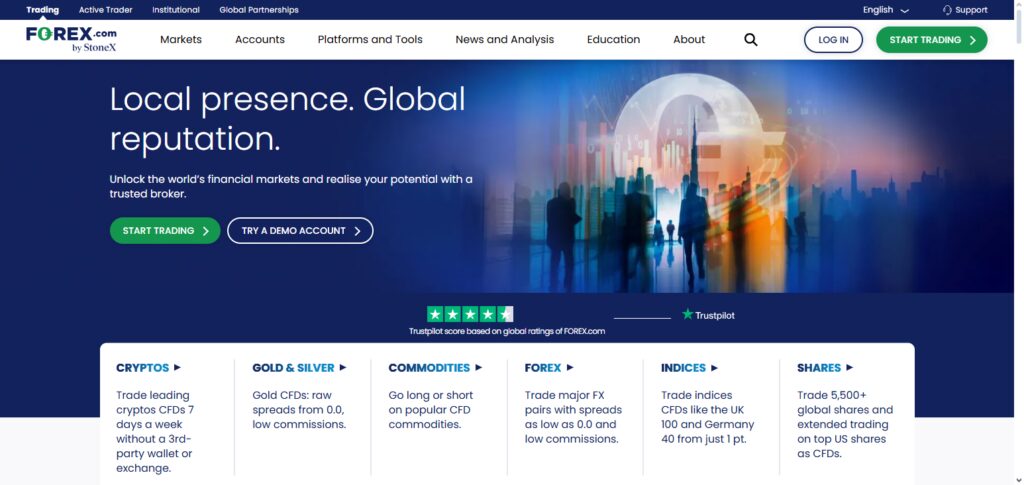
They provide sophisticated platforms such as Web, MT4 and MT5, including advanced charting and execution. They offer institutional-grade trade execution, with deep-sourced liquidity and flexible infrastructure, though leverage is dependent on the country. Support is offered in multiple channels 24/5, including education and research, for new and seasoned traders globally.
FOREX.com Features, Pros & Cons
Features
- Direct market access and liquidity
- Regulatory approvals (CFTC, FCA, ASIC, etc.)
- Custom tools and MT4/5
- Advanced analytics
- Focused on foreign exchange
Pros
- Deep Liquidity Access: Robust routing and execution.
- Strong Regulation: CFTC/NFA, ASIC, and FCA.
- Platforms: Options for MT4/MT5 and proprietary.
- Rich Research: Tools for analysis and news.
- Wide FX Range: Numerous pairs.
Cons
- Commission on Some Accounts: Additional expenses.
- Platform Lag: Some slow moments.
- Leverage Limits:** Regional restrictions.
- Less Non-FX Variety: Limited assets in some areas.
- Learning Curve: Complex advanced features.
10. NinjaTrader
By providing a powerful independent trading platform and brokerage services centered on futures, FX, and options, NinjaTrader sets itself apart from conventional brokers. It offers expert charting, automation, and algorithmic trading tools with access to liquidity through connected brokers, while not being a full multi-asset broker like others on the list.
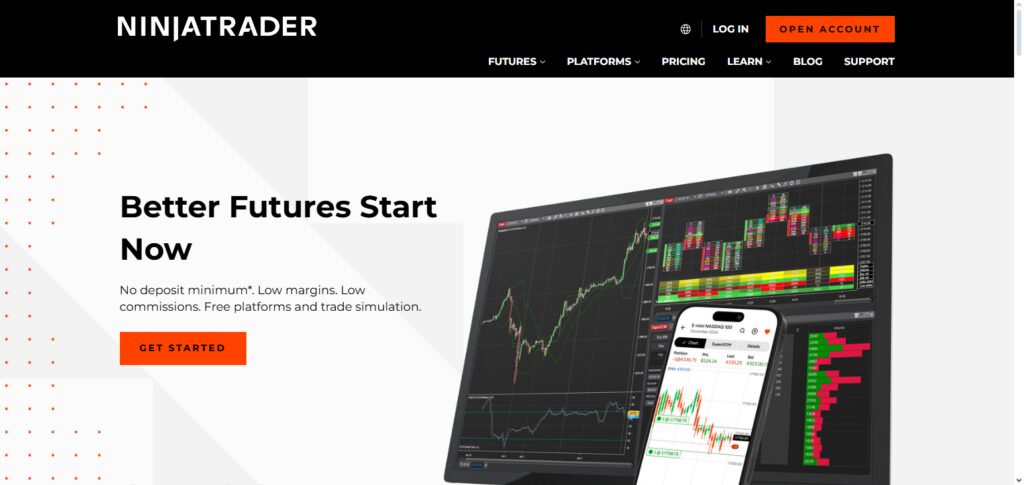
It is well-liked by active and professional traders because to its comprehensive analytics and institutional-grade order routing. Support consists of community forums, tutorials, and direct client service with an emphasis on platform proficiency; leverage is dependent on the clearing broker and instrument type. (Note: Unlike other CFD brokers, NinjaTrader primarily functions as a platform + brokerage connection.
NinjaTrader Features, Pros & Cons
Features
- sophisticated trading platform
- Automation & professional charting
- Links with various brokers
- Institutional routing with partners
- Focus on forex and futures
Pros
- Professional Platform: Advanced analytics & charting.
- Algo Trading: Excellent support for automation.
- Brokerage Connectivity:** Multiple partner access.
- Data & VPS Support: For advanced users.
- Custom Strategy Tools: Strong developer community.
Cons
- Not independent: Needs a 3rd party bridge.
- Chargeable Data: Costs for Market data.
- High Learning Curve: More time for advanced features.
- Less Integrated Liquidity: Relies on linked brokers.
- Not for newcomers: Targeted to professionals.
Conclusion
For traders who want deep liquidity, quickness, and transparency, selecting the top forex broker with institutional-grade order routing is crucial. Strong global regulations, direct market access, and advanced routing technology make brokers like Interactive Brokers, Saxo Bank, and IG stand out. For scalpers and algorithmic traders, ECN-focused providers like IC Markets and Pepperstone offer extremely tight spreads and low-latency execution.
Platforms like CMC Markets, FxPro, and FOREX.com, on the other hand, strike a balance between sophisticated execution, robust research, and retail accessibility. Your trading volume, regulatory requirements, preferred platform, and performance expectations will ultimately determine which broker is best for you.
FAQ
What is institutional-grade order routing?
Institutional-grade order routing refers to advanced execution systems that access deep liquidity pools and multiple liquidity providers to fill trades efficiently, with minimal slippage and tight pricing. This technology is typically used by hedge funds, professional traders, and institutional clients but is also offered by brokers to high-volume and sophisticated retail traders.
Why does order routing matter in forex trading?
Order routing impacts how quickly and at what price your forex trades are executed. Better routing can mean better fills, reduced slippage, and access to tighter bid-ask spreads, especially during high volatility or low liquidity periods.
Which brokers are known for institutional-grade order routing?
Brokers such as Interactive Brokers, IG, Saxo Bank, IC Markets, Pepperstone, CMC Markets, FxPro, and FOREX.com are recognized for robust execution infrastructure, access to multiple liquidity providers, and professional-level order processing.
Do all brokers offer institutional-grade routing to all clients?
Not necessarily. Some brokers reserve the highest tier execution and liquidity access for professional or high-volume clients. Retail traders can still benefit from strong execution, but specific conditions may be required to unlock institutional pricing.
What should I consider besides order routing?
Look at regulation (FCA, ASIC, CFTC, etc.), trading platforms (MT4, MT5, proprietary platforms), leverage limits, asset range, customer support, and educational resources. All of these influence your overall trading experience.