

The Innovation Exemption, a new SEC framework that permits private enterprises to tokenize stocks and equities, will be covered in this article.
This regulation enables companies to engage international investors, provide fractional ownership, and raise funds more effectively while still remaining compliant. We will examine the operation of this exemption, as well as its advantages, disadvantages, and potential to change the investment environment.
Understanding Tokenization
Tokenization refers to converting real-world assets to digital tokens on a blockchain. Each token corresponds to a fraction of the ownership of the real-world asset. Because of this, investors will own a fraction of the asset which allows them to buy, sell, and trade the digital token privately and securely.
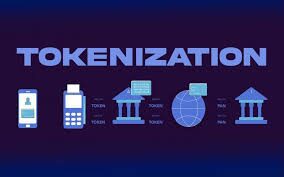
Because of the fractional ownership, there is no minimum requirement which allows small investors to invest in the asset. Because of being digital, the tokens can be traded in secondary markets and offer quicker and easier options than traditional stock exchanges. Also, the blockchain is transparent and cannot be altered.

This will reduce the chance of fraud. Since tokenization is border less, investors can easily access them. Overall, tokenization gives investors a shorter and more efficient way of settling their asset.
Key Provisions of the Rules
Eligibility for Offerings of Tokenized Equities
- Only some private firms can issue tokenized equities.
- Companies have to abide by the securities laws and the exemptions.
Restrictions on Investors
- Depending on the type of asset, participation can be restricted to accredited investors or sophisticated investors.
- Less experienced investors can be protected by imposing limits on the amount they can invest.
Requirements for Disclosure
- Companies have to provide a disclosure to the tokenized asset.
- Disclosure includes financial statements, potential risks, and the rights of the token holders.
Compliance and Reporting Obligations
- Companies have to make periodic reports to the SEC for the sake of transparency.
- Companies have to comply with the requirements for keeping these records.
Rules Governing Fractional Ownership
- A broader participation can be achieved by allowing the tokens to represent a fraction of equity ownership share.
- Special rules have been created to ensure that fractional share ownership complies with the laws governing securities.
Trading on the Secondary Market
- For the purpose of having increased liquidity, tokens can be traded on any of the recognized and approved secondary markets.
- Any and all platforms that facilitate these trade must be registered and subject to the SEC trading compliance and oversight.
Tech and Security Requirements
- The blockchain used for token issuance must be secure.
- Cybersecurity protocols are required to secure the assets of investors.
Exemptions
- Exemptions do not apply to every type of security; some classes of assets are excluded.
- Companies are required to take reasonable steps to avoid the issuance of non-compliant tokens.
Advantages for Companies
Better Fundraising Capabilities
- Companies can raise money from more diverse investors through tokenized offerings.
- Less reliance on traditional funding from venture capital or bank financing.
More Opportunities for Fractional Ownership
- Smaller investors can participate by buying partial shares through tokens.
- Greater investor base and increased market participation.
Transactions are Faster and More Efficient
- Tokenized shares settle through blockchain technology.
- Less delays and administrative work compared to traditional equity take-outs.
Savings
- Less brokers and clearing houses means there are lower fees.
- Less operational costs from compliant and automated processes.
Access to Global Investors
- Investors from all around the world can reach tokenized assets increasing the potential for fundraising.
- Provides access to previously hard-to-access market opportunities.
More Trust and Transparency
- Trust can be increased through blockchain which provides a secure, unchangeable record of ownership and transactions.
- More accountability and better visibility of a transaction may build the investor’s trust.
More Innovation Opportunities, Competitive Edge
- More potential to be a market leader through the first use of tokenization.
- Is capable of attracting technically informed investors and partners.
Real-World Applications
Private Equity Tokenization
- Allows issuance of digital tokens for ownership in a private equity fund.
- Smaller investors are now able to invest in markets that were previously out of reach.
Tokenized Stock Offerings
- Startups and private corporate entities can issue tokenized shares.
- Facilitates trade and keeping of records whilst ensuring compliance with the SEC.
Fractional Real Estate Investments
- Investors can become fractional owners in real estate by offering tokenized properties.
- Real estate investors can invest in markets outside their own with a limited budget.
Venture Capital Funds
- Tokenization of fund shares in VC firms promotes onboarding a wider pool of investors.
- Provides liquidity for long-held investments.
Secondary Market Trading Platforms
- Existing regulated exchanges like tZERO and OpenFinance provide means for the trade of tokens.
- Tokenized securities can be traded and will have the benefit of trade security and transparency.
Corporate Bonds and Debt Instruments
- Tokenized bonds and debts can be issued by companies, and will simplify distribution and settlement.
- Provides opportunities to investors to have fractional participations in Corporate Bonds.
Cross-Border Investment Opportunities
- With tokenization, borders do not pose challenges. International investors can now reach private equity or stocks for the first time.
- Provides the company a potential increase for capital-raising efforts globally.
Risks and Considerations
Regulatory On the Go
- As time goes on, the SEC rules could draw in new regulations to the rules of the game in regards to tokenized offerings.
- Therefore, firms have to monitor and keep up with them to avoid being penalized.
Market Unpredictability
- Traditional assets and newly opens up, tokenized securities, tend to have price ranges.
- Some people think of putting on a fraction of trades to become a partner with them by the people to show a high degree of speculative behavior.
Investor Protection Fears
- The less people know and the fewer people have the experience, the more exposure to risk.
- Companies will have to avoid legal liabilities by creating the possibility of clear disclosures.
Risks arising from Technology and Cybersecurity
- It can affect how fraud, hacking, and system failure occur more if it is a blockchain system.
- It is even more fundamental to have wrong token issuing and safe systems to keep the interests of investors.
Risks to Liquidity
- Although a token can have a lot of illiquidity if the secondary market activity is very small for that token.
- If the market is illiquid to a point that investors will find it ill.
Cost of Legal and Compliance
- Companies can be seamlessly adaption to the operational costs with the token since legal and technical parameters.
- Closing token issuance assumes the legal and technical dependencies.
Reputation Risk
- Unintended tokenized offerings mismanagement and security breaches can impair an image of a company.
- Negative press may diminish investor confidence and hurt potential future rounds.
Challenges in Adopting Technology
- Blockchain technology is unfamiliar to certain investors and businesses.
- To aid in seamless adoption, both education and infrastructure will need to be addressed.
Future Implications
The Innovation Exemption is likely to change the issuance, trading, and access to private equity and stocks in a fundamental way. The SEC Innovation Exemption allows for the tokenization of private equity. This provides means to raise capital for companies in a new way. It gives the opportunity for a worldwide investor pool which incorporates fractional ownership and provides investment opportunities to the masses.
The SEC Innovation Exemption is also likely to boost overall market liquidity and, over time, improve ease of operating at compliance costs and reduce operational costs for issuers at tokenized securities. There is also the reality that as technology and compliance codes improve and the merge of the new and traditional market(s) of finance snap together, securities that are tokenized will be exchanged similarly to how digital stocks/ equities are exchanged in digital markets.
There are numerous realities that will determine the success/ feasibility of the tokenization of new equities: investor awareness, the market technology as a whole, and government oversight on compliance / regulations.
The Innovation Exemption has the potential to combine the traditional markets of finance with decentralized markets to create something that has never existed before in more quality markets of investment. This fusion gives a quality investment market more inclusiveness and efficiency.
Conclusion
The SEC Innovation Exemption marks a significant step toward modernizing financial markets by allowing private companies to tokenize stocks and equity. Through blockchain technology, it promotes efficiency and transparency while providing firms with global investor reach, fractional ownership opportunities, and faster access to finance.
To get the most out of this framework, businesses must carefully manage market risks, cybersecurity issues, and legal constraints.
The Innovation Exemption may change how investors engage in stocks and private equity as tokenization gets pace, connecting traditional finance with the ecosystem of digital assets. This regulation lays the groundwork for an investment environment that is more inventive, efficient, and inclusive.
FAQ
What is the SEC Innovation Exemption?
The Innovation Exemption is a set of SEC rules allowing certain private companies to issue tokenized equity or stocks, making it easier to raise capital while maintaining regulatory compliance.
Who can issue tokenized securities under this exemption?
Eligible private companies that meet the SEC’s criteria for tokenized offerings can issue securities. Companies must ensure they comply with disclosure, reporting, and investor protection requirements.
Who can invest in tokenized stocks or equity?
Depending on the rules, investors may need to be accredited or sophisticated. Some offerings may have limits on investment amounts to protect less experienced investors.
What are the benefits for companies?
Companies gain easier access to capital, fractional ownership options, faster transactions, global investor reach, and cost savings due to fewer intermediaries.
What are the risks of tokenized securities?
Risks include regulatory changes, market volatility, cybersecurity threats, liquidity issues, compliance costs, and potential reputational risks if offerings are mismanaged.