

I’ll go over the Best MEV Bots in this post, emphasizing their functionality, key characteristics, potential for profit, and supporting infrastructure.
To optimize profits while lowering execution risks, you will discover how the best MEV bots function in the Ethereum, Solana, and Cosmos ecosystems, seize arbitrage and liquidation chances, and interact with private relay networks.
Key Point & Best MEV Bots
| Platform | Key Point |
|---|---|
| Flashbots | Leading Ethereum-focused MEV infrastructure that enables private transaction routing and MEV-Boost to reduce harmful frontrunning while improving validator rewards. |
| Jito (Solana) | Solana-based MEV solution offering MEV-optimized validator clients and block engine auctions to improve validator revenue and network efficiency. |
| Blocknative | Provides real-time mempool monitoring and transaction simulation tools to help traders and builders manage gas fees and MEV risks. |
| 1inch Fusion | MEV-protected swap mechanism that uses resolvers and off-chain auctions to minimize slippage and prevent sandwich attacks. |
| Skip Protocol (Cosmos) | Cosmos ecosystem MEV infrastructure enabling cross-chain block building and fair transaction ordering for app chains. |
| Manifold Finance | Offers MEV infrastructure and secure block-building solutions focused on fair ordering and transaction privacy. |
| Eden Network | Priority transaction network on Ethereum designed to reduce frontrunning and give predictable block space access. |
| Balancer MEV Guard | Built-in MEV protection for swaps, routing transactions privately to protect users from sandwich attacks. |
| KeeperDAO (Rook) | Community-driven MEV capture protocol designed to redistribute extracted MEV profits back to users. |
| Chainflip MEV Tools | Cross-chain MEV mitigation tools designed to protect swaps and liquidity routing across multiple blockchains. |
1. Flashbots
Flashbots is the leading MEV research organization and provides infrastructure that seeks to minimizes harmful MEV (Miner/Maximal Extractable Value) on Ethereum.

They are pioneers in private transaction relays as well as MEV-Boost, which allows validators to financially incentivize block construction by Builder Blocks in order to maximize value, thereby minimizing exposure to the open mempool and front-running.

Flashbots promote a market for MEV to be traded in a transparent and positive way. Backrun Bots, Arbie, and Eden Arbitrage are examples of the best MEV bots of Flashbots and do not clog the public mempool. Flashbots continues to improve the order of transactions on blockchains.
Flashbots Features, Pros & Cons
Features
- Private relays for trans. MEV relays.
- Marketplace for block building via MEV-Boost.
- Protection of public mempools.
- Optimization of validator revenue.
- Open bots/searchers ecosystems.
Pros
- Less frontrunning significantly.
- Increased block revenue for valdiators.
- Permissionless and transparent.
- Active and supported community and research.
- Multiple integrations with MEV bots.
Cons
- Bots with competing interests.
- High resource consuming
- Remaining Ethereum focused.
- High technical skill demanded.
- Some believe it is a centralizing block building incentive.
2. Jito (Solana)
Jito is a Solana ecosystem MEV infrastructure project that both improves the revenue of validators and improves transactional order fairness. Jito runs an MEV-optimized validator client and a block-building marketplace where solvers (i.e. bot runners) bid to include transactions that become profitable.
With Jito, Solana validators can efficiently capture MEV revenue and maintain the same level of network performance. Jito also runs the best MEV bots, with sniper and arbitrage focused bots that are built to take advantage of the throughput of Solana, including Serum arbitrage bots, liquidation bots, and priority fee bots that strive to maximize the value of Jito’s private block pipeline. This system helps to provide improved revenue sharing and improved block propagation.
Jito (Solana) Features, Pros & Cons
Features
- MEV-block construction for Solana.
- Private transaction pipeline.
- Solver bidding marketplace.
- Validator integration for MEV revenue.
- Real-time block construction.
Pros
- Validator profitability increases.
- Built for Solana’s high throughput.
- Less public mempool submissions.
- Better transaction ordering.
- Growing Solana searching ecosystem.
Cons
- Only Solana specific.
- Still emerging, less developed.
- Custom validator implementation required.
- Needs experience, little documentation.
- Bots with competing interests.
3. Blocknative
Blocknative helps traders, developers, and bots understand and mitigate the MEV problems on a number of different blockchains with the help of effective real-time mempool data, simulation tools, and transaction insights. With the help of Blocknative, users can see pending transactions, in order to simulate a transaction, understand the required gas fees, and identify an MEV opportunity.
Many of the best MEV bots, including frontrunners, sandwich bots, and opportunistic arbitrage bots, use Blocknative’s APIs to execute an optimization of the execution time to monitor mempool flows. Adjusting bids, avoiding negative slippage, and capturing profitable MEV opportunities is the goal of traders using Blocknative’s alerting and simulation features.
Blocknative Features, Pros & Cons
Features
- Data streams for mempool activity in real-time.
- Simulations for transactions and predictions.
- Analysis of gas prices.
- Alerts for MEV opportunities.
- Support for multiple chains.
Pros
- Visibility for pending transactions is improved.
- Optimization for bot strategy is aided.
- Transaction failures are reduced.
- Developers and traders consider it valuable.
- Blocks multiple chains in integration.
Cons
- MEV execution engine is not complete.
- Data can be housed behind a pay tier.
- MEV is not captured directly.
- Bot infrastructure is external.
- May be more than what beginners can handle.
4. 1inch Fusion
1inch Fusion is a protected trading method for users on the 1inch aggregator to protect users from harmful MEV events such as frontrunning and sandwich attacks. Fusion combines and privately routes swapps through a resolver and solver network that bypasses the public mempool to provide better pricing. Users experience less slippage and better pricing execution.
The Fusion bots that are able to extract MEV in the best way are those that are integrated with private order flow systems, such as batch arbitrage bots and protected trade solvers that internally match orders without public liquidity exposure. Fusion’s design is thus able to enhance the user experience while limiting MEV that can be exploited.
1inch Fusion Features, Pros & Cons
Features
- Swap mechanism with protection from MEV.
- Networks of resolvers and solvers.
- Routing for orders privately.
- Protection from slippage.
- Execution with liquidity aggregated.
Pros
- Sandwich attacks are prevented.
- Users receive improved pricing.
- Aggregation for multiple DEX’s is broad.
- Swaps face reduced MEV extraction.
- Many chains are compatible.
Cons
- Tool for MEV capture beyond general is not available.
- Swaps are all integration is.
- 1inch ecosystem integration required.
- Lesser usefulness for non-swapping bots.
- Competition from solvers is possible.
5. Skip Protocol (Cosmos)
Skip Protocol is building MEV infrastructure for the Cosmos ecosystem that promotes fair transaction ordering and building blocks cross-chain. It allows Cosmos application-specific blockchains to delegate block construction to the competitive builders’ ecosystem, In a way, Ethereum MEV-Boost model, but for Cosmos. Skip wants to minimize the negative effects of ordering, while also providing the positive impacts of ordering to validators and solvers.

Some of the best MEV bots (interchain arbitrage and cross-chain liquidation) within the ecosystem of Cosmos use the cross-chain liquidation Arbi inter liquidation liquidator Skip, having better visibility to liquidate and cross the IBC Skip Builder. Builders and validators to place in the ecosystem by providing healthy incentives to builders and validators.
Skip Protocol (Cosmos) Features, Pros & Cons
Features
- Network of builders for blocks of MEV in Cosmos.
- MEV infrastructure that is cross-chain via IBC.
- Marketplace for sequenced transactions.
- Integration of validators.
- Focus on Fair Ordering.
Pros
- MEV diversifies away from Ethereum.
- Cosmos chains enable fair block constructing.
- Identifies potential across chains.
- Ecosystem economics offer healthy rewards.
- Positive impact on validator profit.
Cons
- Primary development stages.
- Further documentation is needed.
- Engagement in Cosmos ecosystem is obligatory.
- Lower bot presence in comparison to Ethereum.
- Cross-chain mechanics are complicated.
6. Manifold Finance
Manifold Finance develops MEV infrastructure and private block building services that protect users and increase revenue for participants. Some of these services are high-frontrunning and sandwich attack risks that ensure order fairness, block builders’ fees, and decreased risks of front-running and sandwich attacks.
The best MEV bots that operate on the Manifold infrastructure are the bots that are designed to capture MEV privately, and these include internal arbitrage bots and liquidation bots that have been designed for Manifold books. Manifold’s technology is designed to ensure fair sequencing, and targeting fairness and value capture is also a goal of Manifold’s technology.
Manifold Finance Features, Pros & Cons
Features
- Block building is private.
- Transaction privacy with fair ordering.
- Builder marketplace is open.
- Incentive alignment of the protocol.
- Options for MEV protection.
Pros
- Protective measures from MEV endangering users.
- Transaction ordering is fair.
- Possibility of decentralized builder revenue.
- Participants in the open ecosystem.
- Focus on ecosystem improvement.
Cons
- Chain specific integrations.
- Adoption level lower than that of Flashbots.
- Growth of infrastructure is in development.
- Builder competition is high.
- Technical configuration for some options.
7. Eden Network
Eden Network is a priority transaction network that offers users and validators access to exclusive ordering and execution privileges on Ethereum. With Eden’s private order flow and priority gas auctions (PGA), users can lower the negative impact of MEV (miner extractable value) while validators (blockchain entities that maintain the network and process transactions) can enjoy predictable returns.
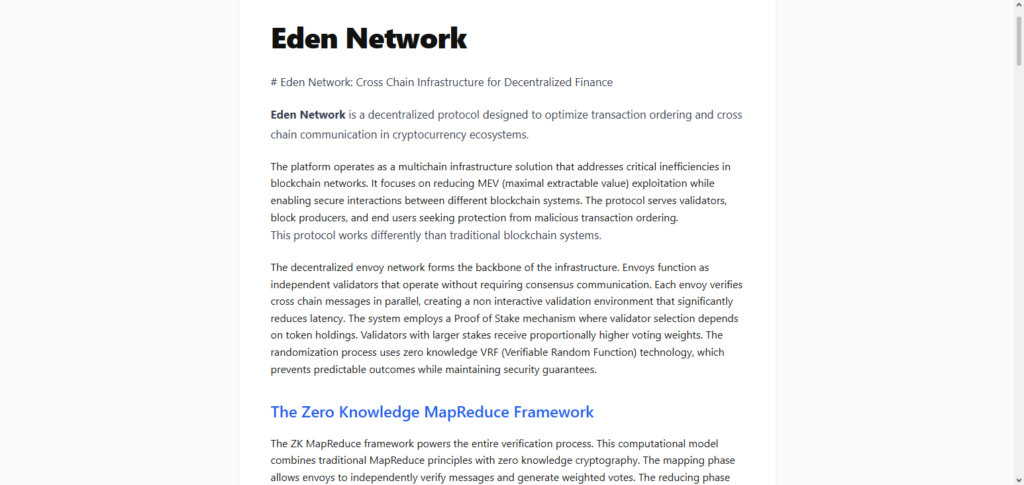
Eden’s ecosystem offers best MEV (miner extractable value) bots like priority fee maximizers and strategic frontrunners who target PGAs to grab high-value block slots. These bots bid on Eden’s priority queue to minimize the impact of public competing MEME (minimum extractable value) bots on arbitrage and liquidation. Eden aims to provide participants with predictable and less volatile (more than likely) execution.
Eden Network Features, Pros & Cons
Features
- There is a system of Priority Gas Auctions (PGA).
- There is an infrastructure for the reduction of MEV.
- The integration of validator earnings.
Pros
- Transaction outcomes are predictable.
- Leaks from the public mempool are reduced.
- The execution, in the control of the bot, improves.
- The quality of execution improves.
- There is a strong and supportive community.
Cons
- There is a focus on priority ordering to the detriment of capturing a wide MEV.
- There is a requirement to bid on fees.
- This is not a generic bot platform.
- Slot Competitive Environment.
- Could benefit bidders with high fees.
8. Balancer MEV Guard
Balancer’s MEV Guard is a built-in protective feature for swaps on the balancer DEX that offers antifrontrunning and sandwich attack protection by routing swaps in a private manner. It shields liquidity providers and traders from loss, and improves pricing by concealing the intent of the swap until the swap is in a block.

The best MEV bots in the Balancer ecosystem include guarded arbitrage bots and protected router bots, which are MEV Guard’s private channel bots. These bots prefer internal execution opportunities, and leverage tighter spreads and better offers to users by utilizing Balancer’s liquidity pools without revealing transactions.
Balancer MEV Guard Features, Pros & Cons
Pros
- Protection on DEX swaps.
- Orders routed privately.
- Slippage reduction.
- Part of Balancer smart contracts.
- MEV resistant swap execution.
Pros
- User protection
- Trader capital efficiency.
- Sandwich risk removed.
- Balancer integration.
- Optimized liquidity results.
Cons
- Limited to Balancer.
- MEV revenue not captured.
- No bot structure.
- Minimal non-DEX use.
- Competition from solvers.
9. KeeperDAO (Rook)
KeeperDAO is a community-driven MEV capture protocol that is redistributing MEV profits to users and liquidity providers instead of value extracting solely for validators or block builders. KeeperDAO captures MEV opportunities such as arbitrage and liquidation, and rewards participants via its unique tokenomics model.
KeeperDAO has some of the best MEV bots, including liquidation bots and cross-DEX arbitrage bots that are optimized for Rook’s pooled MEV system, and thus KeeperDAO has to funnel captured value back to the DAO and stakers. By democratizing MEV capture, KeeperDAO aligns all participants’ interests, be it retail or institutional and captures value from the blockchain.
KeeperDAO (Rook) Features, Pros & Cons
Features
- Community MEV capture.
- MEV pooling and redistribution.
- Opportunities for arbitrage and liquidations.
- Incentives using the Rook token.
- Rewards for liquidity provision.
Pros
- Users able to share MEV revenue.
- Incentives aligned for the community.
- Automated capture of liquidations.
- Participation made easy.
- Incentives to grow the ecosystem.
Cons
- Instead of exclusive capture, MEV is shared.
- Dependent on DAO governance.
- Token price risk.
- Competitive bot participation is required.
- Not for protected execution.
10. Chainflip MEV Tools
Chainflip’s MEV tools aim to minimize the negative impacts of MEV on cross-chain swaps and liquidity operations. As a cross-chain DEX, Chainflip must deal with specific ordering problems, and its MEV tools include private submission channels and equitable ordering for cross-chain transactions.
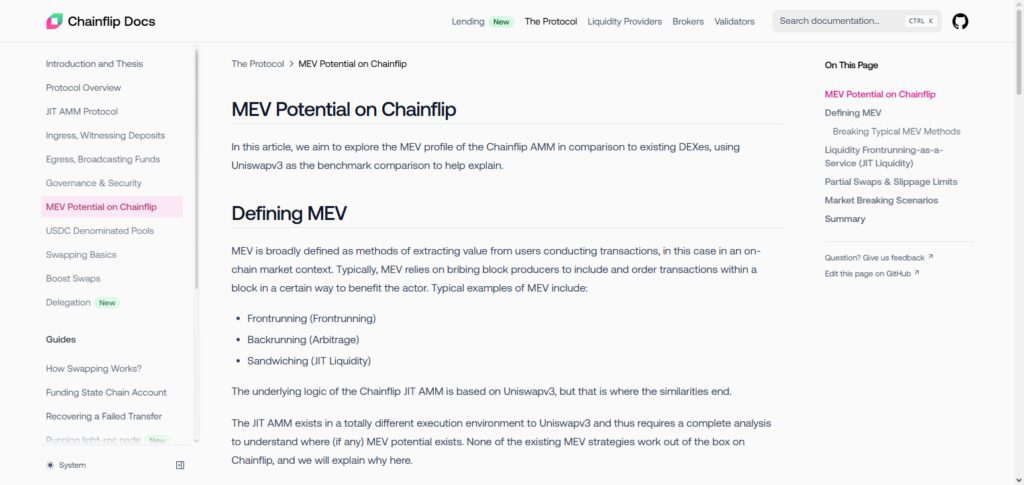
The best MEV bots in this context are cross-chain arbitrage bots and protected swap solvers that utilize Chainflip’s infrastructure to me be on the profitable side of a spread and avoid overwhelming the public mempools on any of the integrated chains. These tools improve the quality of execution and save users from extractive bots and cross-chain captures value efficiently.
Chainflip MEV Tools Features, Pros & Cons
Features
- Protection on cross-chain swaps.
- Private transaction pipelines.
- Fair transaction sequencing across multiple chains.
- MEV mitigation on cross-chain bridges.5. Optimization of execution for liquidity across multiple chains.
Pros
- Saves users from cross-chain exploit bots.
- Improved liquidity across multiple chains.
- Works with swapping protocols.
- Minimizes damaging MEV on cross-chain bridges
- Better DEX execution.
Cons
- Adoption of ecosystem is still early.
- Less than Ethereum MEV networks.
- Needs active participants across multiple chains.
- Developing infrastructure.
- Currently integrated bots are fewer than before.
Conclusion
To conclude, the most effective MEV bots are not just the fastest or most aggressive, but those with strategic integrations with next generation MEV frameworks such as Flashbots, Jito, and Skip Protocol.
The most successful MEV bots optimize and put front and center the private order flow, block building, cross-chain arbitrages, and liquidations while front running the least. Increasingly, user protection and equitable execution are the center of 1inch Fusion and Balancer MEV Guard.
The best MEV bots in the most competitive blockchain ecosystems capture value ethically and sustainably through a combination of speed, advanced routing and under system integration, and effective private relay risk management.
FAQ
What are MEV bots?
MEV (Maximal Extractable Value) bots are automated trading programs that scan blockchain networks for profitable opportunities like arbitrage, liquidations, and sandwich trades. They analyze pending transactions in the mempool and attempt to reorder or insert transactions to capture value before blocks are finalized.
How do the best MEV bots work?
The best MEV bots monitor mempool data, simulate transactions, calculate gas fees, and submit optimized bundles to block builders. Many operate through private relays like Flashbots to avoid public mempool exposure and reduce failed transactions.
Which blockchains support MEV bots?
MEV bots are most common on Ethereum but are expanding to Solana, Cosmos, and cross-chain ecosystems. For example, Jito supports MEV on Solana, while Skip Protocol enables MEV infrastructure within the Cosmos network.
Are MEV bots legal?
Yes, MEV bots are legal in most jurisdictions because they operate within blockchain protocol rules. However, some strategies like sandwich attacks are controversial and considered harmful to users, leading many platforms to develop protective mechanisms.
What are the most profitable MEV strategies?
The most profitable strategies include DEX arbitrage, liquidation bots on lending platforms, cross-chain arbitrage, NFT mint sniping, and priority gas auctions. Profitability depends on speed, capital size, gas optimization, and integration with private block builders.