

Two well-liked strategies for generating passive income from cryptocurrencies in 2026—Binance Earn and Staking—will be covered in this post.
We’ll go over how each approach operates, weigh the risks, flexibility, and possible rewards, and assist you in selecting the one that best fits your investing objectives. This handbook covers all you need to know, regardless of your preference for rapid growth or steady incomes.
What is Binance Earn?
The goal of Binance Earn, a complete cryptocurrency savings platform, is to assist users in generating passive income from their digital assets. It offers a range of products designed to accommodate varying investment horizons and risk appetites.
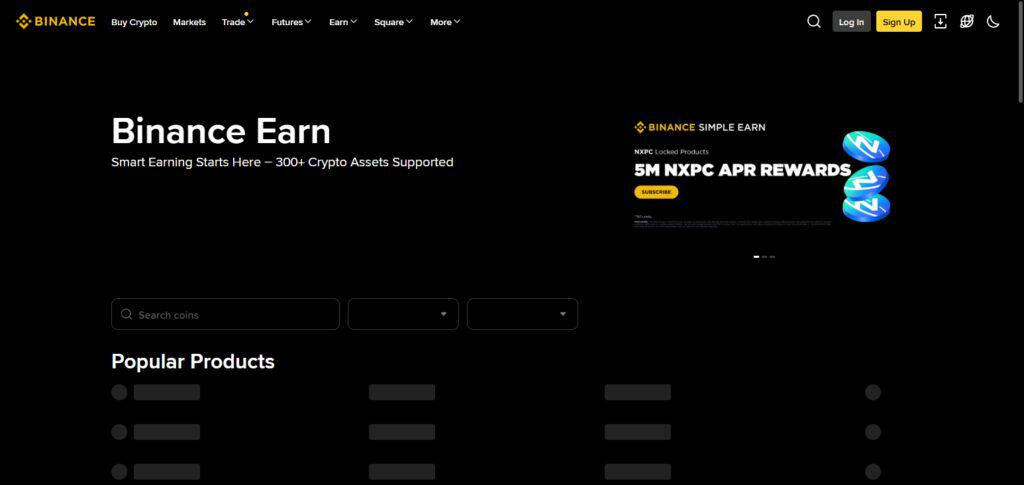
Launchpool, where users can stake tokens to earn rewards from new cryptocurrency projects, Locked Savings, which offers higher yields for fixed-term deposits, Flexible Savings, which enables users to deposit and withdraw at any time with daily interest, and Dual Investment, which combines flexible investment with potentially high returns depending on market conditions, are some of the main offerings.

Because of its user-friendly interface, extensive cryptocurrency compatibility, and transparent annual percentage yields (APYs), Binance Earn is a viable choice for both novice and seasoned traders looking for consistent cryptocurrency growth.
What is Staking?
In the cryptocurrency ecosystem, staking is the method by which users secure their digital assets to support the operations of a blockchain network, usually one that employs a consensus mechanism like Proof-of-Stake (PoS).

Participants contribute to transaction validation, network security, and blockchain integrity by staking their currency. They receive staking benefits in exchange, typically in the form of more tokens. Depending on the coin and platform, staking can be carried out directly on blockchain wallets, through exchanges, or through staking pools.
Although some networks permit flexible staking, it frequently necessitates a set lock-up period. In comparison to more conventional crypto savings techniques, staking rewards can yield larger returns and are contingent on tokenomics, network performance, and total staked amount.
Key Differences Between Binance Earn and Staking
| Feature | Binance Earn | Staking |
|---|---|---|
| Definition | A crypto savings platform on Binance offering passive income through various products. | Locking cryptocurrencies to support a blockchain network and earn rewards. |
| Flexibility | High flexibility with options like Flexible Savings; funds can often be withdrawn anytime. | Moderate to low flexibility; many staking options require lock-up periods. |
| Returns | Moderate and predictable APYs depending on product and crypto. | Potentially higher returns, but depends on network performance and tokenomics. |
| Risk Level | Platform risk (Binance security, insolvency) and market volatility. | Network risk, market volatility, and slashing penalties for misbehavior. |
| Supported Cryptos | Wide range of coins supported on Binance platform. | Limited to coins that support staking (PoS or similar). |
| Ease of Use | Beginner-friendly with user interface and clear APYs. | May require technical knowledge or using staking pools. |
| Additional Benefits | Access to products like Launchpool, Dual Investment, and promotions. | Supports network security and governance; may provide voting rights in some networks. |
Which Option Is Better in 2026?
Risk Appetite
- Investors looking for less risk with their funds may prefer Binance Earn for low risk and more predictable returns.
- Those willing to take on more risk, and are in favor of potential greater returns may prefer Staking.
Need for Flexibility
- If you want short-term access and easy withdrawals, choose Binance Earn.
- Some Staking options have lock up periods, and as a result, there may be no access to funds.
Potential for Returns
- Generally, Staking presents the opportunity for greater returns, particularly if you are involved with some of the more lucrative PoS tokenomics.
- With the potential for consistent, but moderate returns, Binance Earn is more or less a sure thing.
Level of Technical Knowledge
- There is no added complexity involved with Binance Earn as it is easy for beginners.
- Staking may be more demanding as it requires a certain level of expertise with wallets and pooling.
Strategy for Diversification
- Using both can help to maximize returns such that for safety, you would use Binance Earn and for growth it is advisable to use Staking.
Benefits Of Binance Earn vs Staking
Benefits of Binance Earn
More Flexible – Flexible savings permits you to deposit and withdraw whenever you’d like.
More Friendly to Beginners – Simple design makes it easier to use for novice crypto investors.
More Variety – Flexible savings, Locked savings, Launchpool, Dual Investment.
More Predictable – APY’s are visible so you know what you’re going to get.
Less Knowledge Required – No need for wheel set ups or networks.
Benefits of Staking
Higher Returns – Standard crypto savings usually has lower yield than staking.
More Support for Blockchain Networks – Staking helps secure and keep the networks integrity.
More Passive Income – Rewards for staking are given in the cryptocurrency that’s been staked.
Increased Governance – Staking allows you to vote on network proposals.
Greater Opportunity for Growth – Best for investors who want to hold their assets for a long time.
Tips to Maximize Crypto Earnings
Diversify Your Investments
- Don’t become reliant on just one platform or just one cryptocurrency. Spread out your assets and infect them into other earning methods to reduce your exposure to possible losses or less earnings.
Monitor APYs Regularly
- Keep a close and continuous watch on the shifting yields, both for the cryptocurrencies and the yields from other platforms. Make as many adjustments as possible to sustain the highest yields.
Choose Reliable Platforms
- Use platforms such as Binance that have the most security as well as the most efficient systems for generating rewards.
Understand Lock-Up Periods
- Make sure you know how long you will be locked in for staking, as with flexible options you may receive less in return.
Combine Short-Term and Long-Term Strategies
- Use Binance Earn if you need a more liquid and secure short-term solution. Use staking if you need a less liquid long-term solution, as that will help you earn more.
Stay Updated on Market Trends
- To keep your earnings strategy as optimized as possible, always stay on top of the latest and most market updates.
Reinvest Rewards Strategically
- The best way to maximize your returns over time is to continually reinvest your earnings from other sources.
Risk & Consider
Platform Risk
- Binance Earn is only as good as the security of the Binance platform. Depending on the platform, the security and steadiness concerning losses can be an area of concern.
Market Volatility
- The values of crypto can be bullish or bearish within minutes. The underlying asset value is subject to fall despite the high APYs or staking rewards.
Lock-Up Periods
- With staking, funds are required to be locked for a certain period. Withdrawal before the period ends, is not only impossible, but there are also penalties to be paid.
Slashing Risk
- Staking rewards will be lower or nonexistent due to network downtimes and the slashing activities of the network.
Interest Rate Changes
- Changes to the expected value of returns are possible as the APYs on Binance Earn will change at any time.
Network Activity
- The network’s participation can be the reason behind the decrease of rewards due to the system’s tokenomics and the activities of the blockchain.
Diversification Importance
- The risks are reduced by ensuring funds are spread out among other platforms, coins, or products.
Pros and Cons Binance Earn vs Staking
Pros and Cons Binance Earn
Pros:
- High Flexibility – Flexible Savings allows easy deposits and withdrawals.
- Beginner-Friendly – Very easy interface and requires no technical setups.
- Variety of Products – Flexible Savings, Locked Savings, Launchpool, and Dual Investment are offered.
- Predictable Returns – Clear APYs mean a steady income is expected.
- Low Risk for Beginners – No technical risks involved as there are when staking directly.
Cons:
- Moderate Returns – Less yield compared to staking for more long-term growth.
- Platform Dependence – Binance’s security and stability are a risk too.
- APY Fluctuations – Rates change frequently and so do your earnings.
Pros and Cons Staking
Pros
- Higher Potential Returns – Standard savings and Binance Earn is often outperformed.
- Supports Blockchain Networks – Helps to secure the networks and validate the transactions.
- Passive Income in Native Tokens – Rewards are in the cryptocurrencies that you stake.
- Governance Participation – Stakers of some coins are granted voting rights.
- Long-Term Growth – Good for those who want to hold their assets for a long time.
Cons
- Lock-Up Periods – Your funds could be locked for weeks to even months.
- Network Risks – Rewards could be less due to slashing, network downtime, or poor performance.
- Technical Knowledge Required – In this case, you may need to set up a wallet or participate in a staking pool.
- Price Volatility – Due to the unpredictable nature of cryptocurrencies, the value of your rewards may be less than the value of your losses.
Conclusion
Although they serve different objectives and risk tolerances, Binance Earn and staking are both viable strategies for generating passive income from cryptocurrencies in 2026. For novices or short-term investors, Binance Earn is the best option since it provides flexibility, steady profits, and simple fund access.
Staking, on the other hand, is best suited for long-term investors who want to promote blockchain networks and lock their cryptocurrency in exchange for higher payouts.
The optimal approach frequently incorporates both: staking provides development potential, while Binance Earn provides safety and liquidity. Investors can optimize their cryptocurrency profits while striking a balance between security and returns by being aware of dangers, annual percentage yields, and lock-up periods.
FAQ
What is the difference between Binance Earn and Staking?
Binance Earn is a crypto savings platform offering flexible and locked products for passive income. Staking involves locking crypto to support a blockchain network and earn rewards.
Which option offers higher returns in 2026?
Staking generally offers higher potential yields, especially for long-term investors. Binance Earn provides moderate, predictable returns with more flexibility.
Can I withdraw my funds anytime?
Binance Earn’s Flexible Savings allows easy withdrawals. Staking often has lock-up periods, so early withdrawal may be restricted.
Is one option safer than the other?
Binance Earn carries platform risk but is beginner-friendly. Staking involves network risk and possible penalties, but can be more rewarding long-term.
Can I combine both methods?
Yes. Combining Binance Earn for stable returns and staking for higher yields is a smart strategy to maximize crypto earnings.