

In 2026, the importance of online privacy will have intensified due to the continuous evolution of surveillance systems, tracking mechanisms, AI, and data profiling technologies.
In such a climate, higher numbers of users will be looking to multi-hop (Double VPN) services, which offer anonymity via greater levels of internet traffic routing through various, layered encrypted servers, among other leading security innovations.
“The Top 10 Multi-Hop (Double VPN) Services for Maximum Anonymity in 2026” will identify the best VPNs to counter both traditional and emerging threats to data privacy.
Top 10 Multi-Hop (Double VPN) Services for Maximum Anonymity in 2026
| VPN Service | Key Privacy Strength |
|---|---|
| NordVPN | Routes traffic through two encrypted servers; strong no-logs policy |
| Surfshark | Unlimited devices + flexible server pairing |
| Proton VPN | Routes traffic through hardened secure core network |
| IVPN | Strong transparency + anti-tracking design |
| Perfect Privacy | Highly advanced routing across multiple hops |
| VPN.ac | Strong encryption + privacy-focused jurisdiction |
| OVPN | Open infrastructure + no-logs verification |
| Mullvad VPN | Anonymous account creation, cash payments |
| FastestVPN | Includes kill switch + encryption + multi-hop mode |
| NymVPN | Strong anonymity via decentralized multi-node system |
Top Multi-Hops (Double VPN) Services for Maximum Anonymity in 2026
1. NordVPN
NordVPN’s Double VPN feature is one of the most robust features in the world of multi-hop VPNs. It routes your data through not one but two separate encrypted servers. That makes it that much more difficult for ISPs and attackers to track your data and makes your IP twice as hard to discover. NordVPN is based in a privacy-protective country (Panama) and it follows a strict no logs policy that has been independently audited.

When using NordVPN, you get Double VPN with the option of using safe routes through places like Sweden or Switzerland. The speed of NordVPN is slightly less because of the double encryption, but with that, there is a trade-off of redundancy. That makes NordVPN an ideal VPN for not only gamers, but journalists as well, due to the extreme levels of privacy that it can bring.
Real-World Use Cases
- Secure browsing on public Wi-Fi (cafes, airports) with encrypted Double VPN protection.
- Journalism and research work requiring extra IP masking across jurisdictions.
- Online banking and financial transactions with added anti-tracking protection.
- General use VPN for gaming with browsing speed and privacy.
❌ Limitations
- Reduced speed from Double VPN mode.
- Less control in terms of deploying custom multi-hop server combinations.
- Streaming services may detect usage of NordVPN.
- Complexity of certain options may be a disadvantage for novice users.
2. Surfshark MultiHop
A MultiHop system feature is found at the Surfshark VPN, which allows for the option for the first and final VPN servers to be chosen by you. This feature provides a lot more customization than a lot of VPN services. Plus, you get unlimited connections.
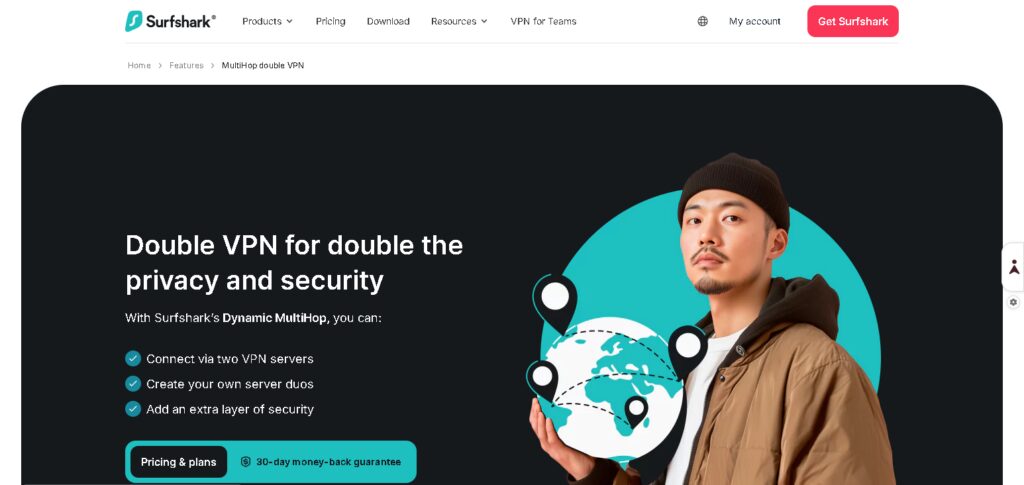
The only downside at all is that sometimes Surfshark’s MultiHop may not be the most optimal routes for speed, along with the performance of the VPN being dependent on the servers you have selected to connect to.
However, this all does not matter in the grand scheme of affordability and features such as the strong RAM-only servers; it is one of the best privacy-based VPNs on the market in 2026.
Real-World Use Cases
- Convenient for families and those with many devices due to the multiple connection option.
- Online privacy on a budget for students and remote workers.
- Lifting censorship (bypassing restrictions) with MultiHop in your location.
- IP Layered protection assists with safe torrenting.
❌ Limitations
- Performance varies from optimal multi-hop latency.
- Less performance and potential lag from entry and exit node selection.
- Weaknesses in high surveillance situations compared to premium privacy VPNs.
- Service speed reduction when many users are on the server.
3. Proton VPN (Secure Core)
Proton VPN pioneered Secure Core, which runs privacy traffic through a series of protected exit points in Switzerland, Iceland, and Sweden, before making a final leap to the internet. Its multi-hop architecture is perhaps the most effective because Proton controls secure infrastructure end to end.
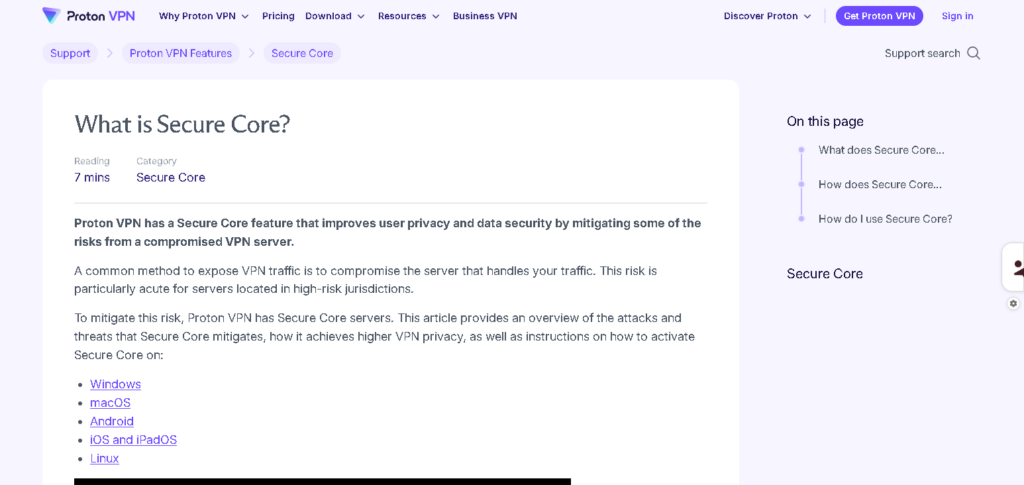
Massive resistance to surveillance and attacks is the primary advantage of this system. The downside is that Secure Core has a significant speed decrease when multiple secure gateways are used. Because of this, it’s best suited for users such as high-risk privacy users and activists who prioritize performance the least.
Real-World Use Cases
- Accessing websites that have been restricted or censored in log and track modes.
- High privacy communications in high surveillance regions.
- Browsing high privacy in Switzerland.
- Research requiring high level anonymity (Secure Core).
❌ Limitations
- Secure Core highly will reduce browsing and downloading speeds.
- No multi-hop or secure core for free accounts.
- Less agile in the server deployments compared to competitors.
- Not designed for gaming or streaming performance needs
4. IVPN (Multi-hop)
IVPN has a true multi-hop routing system, meaning that multi-hop is now part of the Pro plan. It allows traffic to cross two different tunneled VPN servers, with the user being able to select each one. Being able to control routing paths directly strengthens anonymity against IP correlation attacks. The system is also known for robustness, open-source systems, and excellent engineering that inherently protects privacy.
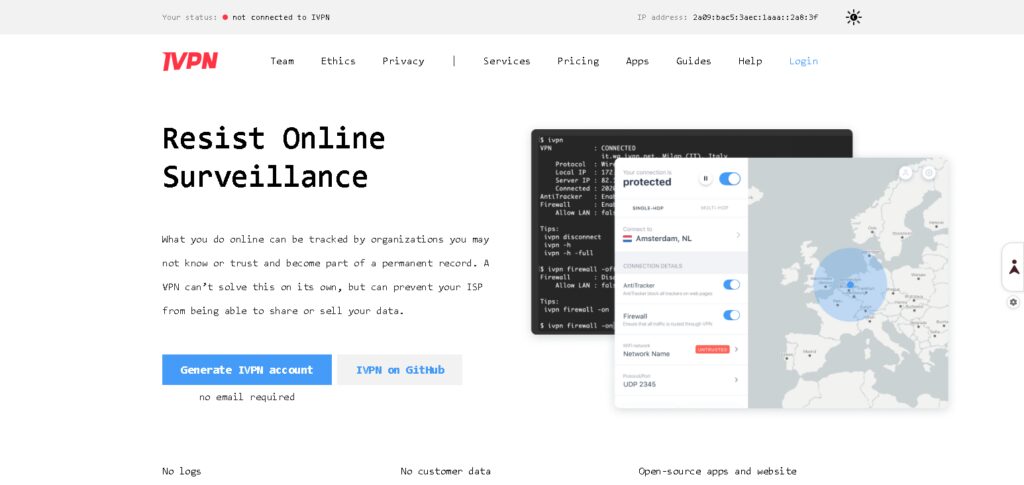
Expense is the primary disadvantage of this system, along with poor multi-hop plan scalability and being limited to upper-tier plans. Despite this, a borderless service with a secure, minimal-data architecture that IVPN built is something privacy experts love.
Real-World Use Cases
- Protecting privacy and security for digital communication
- Enabling secure telework with customized multi-hop routing
- Data-protected browsing with no tracking or logs
- Research security and testing
❌ Limitations
- More expensive than traditional, more widely used VPNs
- Smaller number of servers leading to limited access globally
- Not designed for media consumption
- Multi-hop only available to higher-tier subscribers
5. Perfect Privacy
Perfect Privacy offers one of the best multi-hop systems. Users can configure chains of up to four VPN servers in sequence. Combined with its NeuroRouting technology, which routes user traffic dynamically to increase privacy, this makes it one of the strongest anonymous VPNs.
The drawback is the higher price and increased complexity. It’s not user-friendly, and it can be difficult to establish the optimal chain. However, for users with a higher skill level, it offers really high levels of anonymity, and it’s extremely difficult to track, surveil, or perform any traffic analysis on.
Real-World Use Cases
- Advanced privacy in high-risk monitored situations
- Multi-layered routing for investigative journalism
- Combined multi-hop plus NeuroRouting for anti-tracking
- Cross-border communications protection
❌ Limitations
- Difficult for beginners
- Costly, especially with little competition in the market
- Slower due to multi-hop chaining of up to 4 nodes
- Not fit for users without tech background for complete optimization
6. VPN.ac (Double VPN Chains)
VPN.ac supports pre-configured double VPN chains, which means that user traffic passes through two secure servers, both of which are in user privacy-protecting countries. As a result of the way they allocate resources, they focus on strong encryption and a secure infrastructure and don’t focus on marketing or streaming.
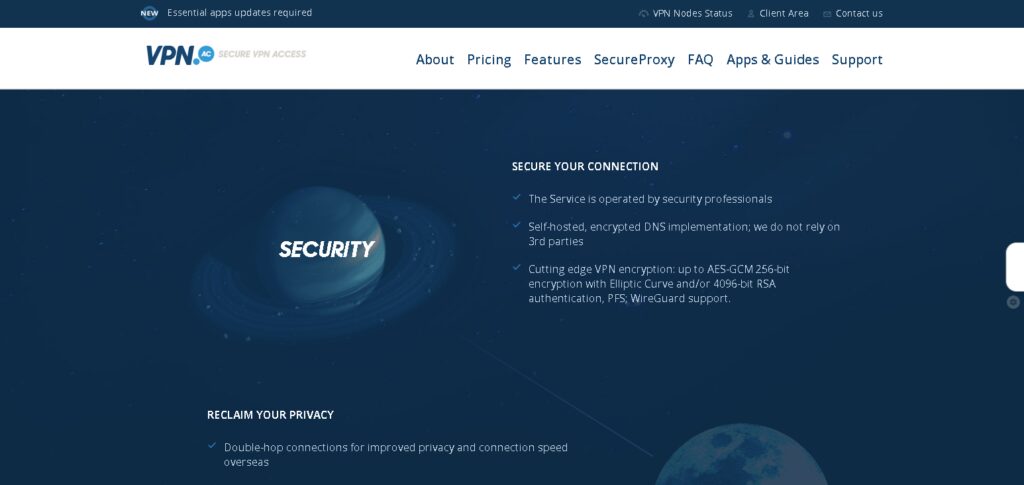
The limitation is that their server network is small and therefore slow, and users suffer from limited control and accessibility on a global scale. However, for users who need basic anonymity, it’s a solid choice as VPN.ac is a strong option for users who prioritize oversimplified design and user convenience.
Real-World Use Cases
- Dual-encrypted tunnels for basic web browsing
- Light protection for everyday privacy
- Safe use of public Wi-Fi
- Simple protection for the internet for users with no tech background
❌ Limitations
- Smaller server network resulting in limited performance
- Not designed for gaming or streaming
- Lacks features of modern VPNs offered by competitors
- Limited brand recognition
7. OVPN (Custom Multi-hop)
OVPN allows users to custom-chain VPN servers via their multi-hop routing, which provides greater user anonymity. They are also known for their strong transparency policies and their commitment to no-logs, RAM-based infrastructure, and are therefore trusted by a lot of the community users.
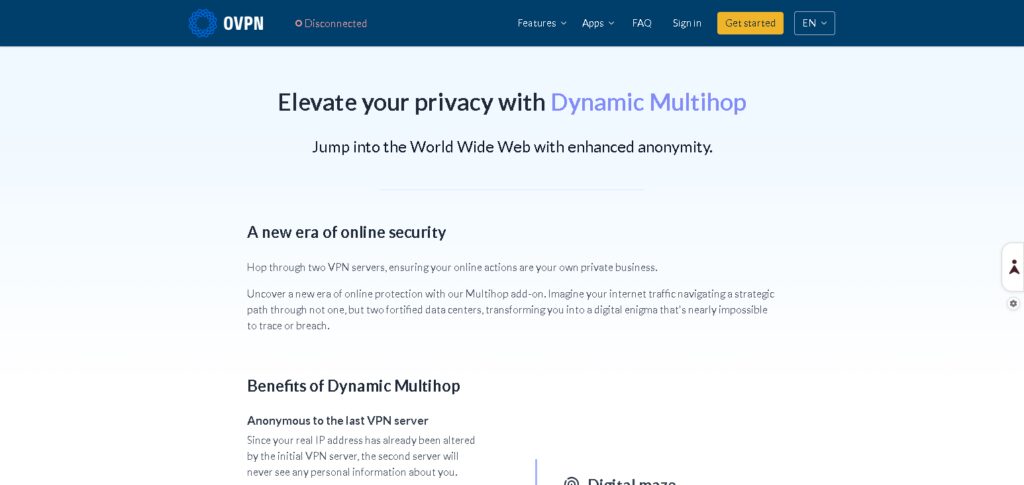
However, OVPN offers fewer servers than the most popular VPNs, and therefore users are more limited across the global network. However, for users who care most about real transparency, it’s a really good option as a VPN.
Real-World Use Cases
- Verified no-logs security for privacy-centered users
- Customizable multi-hop configurations for private browsing
- Encrypted communication for small businesses
- Hardware-based security for infrastructure-based VPNs
❌ Limitations
- Restricted number of global server locations
- Same-day delivery services are not available
- Reduced speed with multi-hop technology
- Limited features when compared to other VPN services
8. Mullvad VPN (Bridge + Multi-hop Support)
Mullvad VPN provides extreme anonymity through bridge servers and multi-hop routing. Mullvad doesn’t require an email or other personal information, such as an address. There is an option to pay with cash and crypto, and because of all of this, Mullvad is one of the VPNs that is most focused on user privacy.
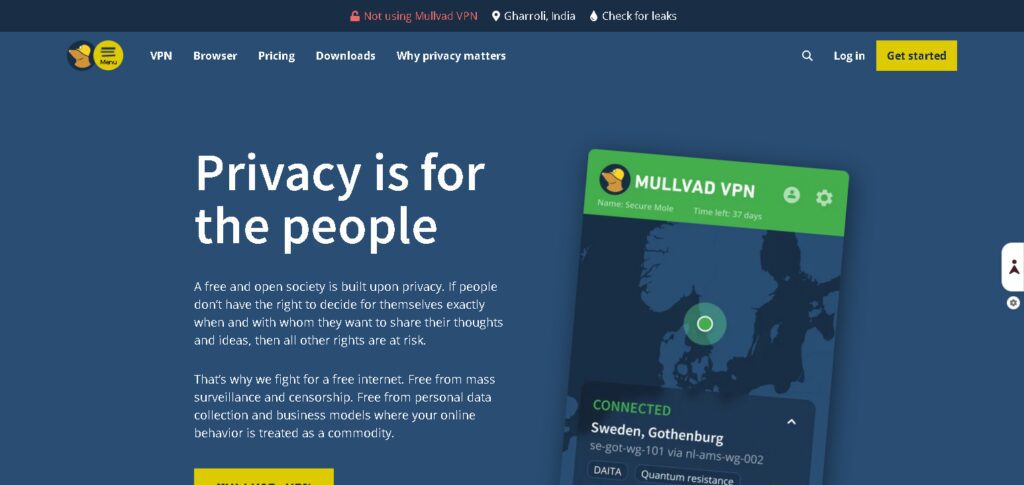
Mullvad VPN is great for privacy, but not great for streaming VPNs. Mullvad does not have geo-unblocking and its multi-hop system is designed with security and anonymity in mind for users who like to keep a low digital footprint.
Real-World Use Cases
- Browsing the internet anonymously without having to register an email or an account
- High-level communications
- Torrenting securely with little to no trace
- Paying anonymously, either with physical cash or online with cryptocurrency
❌ Limitations
- Does not support torrenting or other geo-unblocking activities
- Focus on customer entertainment is severely limited
- Certain servers run into heavy traffic and become very slow
- Basic user interface in comparison to other commercial VPNs
9. FastestVPN (Double VPN Mode)
FastestVPN’s Double VPN feature comes with a built-in configuration that provides a double encryption path. It’s great for users who want multi-hop protection but without the complicated process.
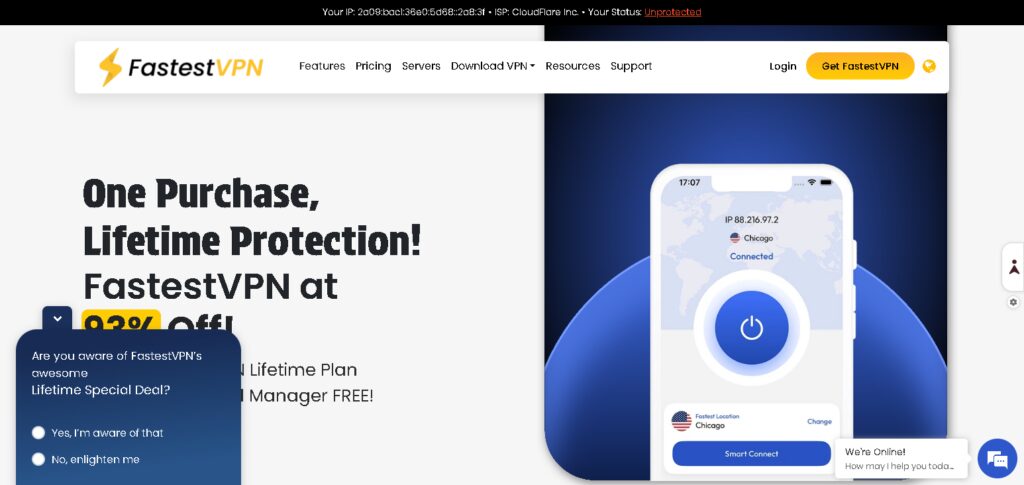
Even with all the pros of this VPN, it is still very basic, and a user should not expect an advanced privacy ecosystem with this tool. It is best to think of FastestVPN as a budget multi-hop VPN rather than a tool that is designed for high-end anonymity.
Real-World Use Cases
- Using a Double VPN service with basic capabilities
- VPN service that is affordable with basic browsing and VPN access
- Safe browsing on public Wi-Fi
- Basic VPN secured torrenting
❌ Limitations
- No other audits have been completed unlike other VPNs
- Limited resources that impact locations and use case scenarios
- High risk secure browsing is not possible
- Lack of privacy mechanisms
10. NymVPN (Mixnet Multi-hop System)
NymVPN’s routing structure uses a completely decentralized mixnet. Each routing hop is performed through a large number of random, routed and changed nodes as opposed to the standard VPN servers. This allows a very high level of anonymity and breaks timing and metadata correlations.
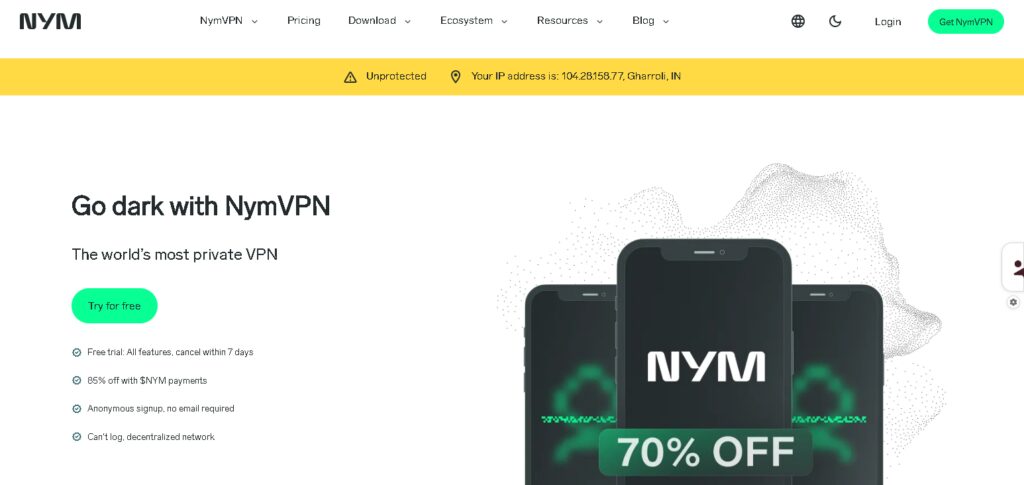
This system comes at a very high cost to speed, however. For basic surfing, the cost may be worth it. However, this extreme level of privacy is best suited for users who are exposed to very high level and advanced surveillance.
Real-World Use Cases
- Environments that are secure and that require the protection of metadata
- Removing the internet from surveillance through communications that are routed to Mixnet
- Research on the new privacy technologies that are in their infancy
- Users who need high levels of anonymity
❌ Limitations
- A multi-node Mixnet architecture that severely hinders speed
- Poor performance in gaming, streaming, or large downloads
- An ecosystem that remains in its infancy with little to no mainstream participation
- More complicated than conventional VPNs
Why Multi-Hop VPNs Matter in 2026
Better protection from sophisticated surveillance systems.
MULTI-HOP VPNs are an extra layer of routing, making it more complicated for government, ISP, or assailants to trace user activity back through a single network point.
Protection against IP correlation and traffic analysis attacks.
Multi-hop setups minimize the risk of timing and metadata attacks used to identify users under encryption more than simple VPNs.
Greater anonymity for users who are at an even higher risk.
Be it journalists, researchers, activists, and whistle-blowers, who need online anonymity are better served through multiple encryption hops that prevent the association of one’s online activity.
Less reliance on a single jurisdiction.
Because data travels through multiple countries, jurisdictional issues make legal tracking or data requests more complicated, and hence less successful.
Better privacy in profoundly censored regions.
Multi-hop routing helps solve very strict internet censorship and improves access to disallowed data.
Better protection against the scenario of one or more VPN hops being compromised. If even one of the hops is compromised or made to monitor users, all the other hops will help ensure the user will still be anonymous.
Growing demand because of increasingly sophisticated tracking technology.
As AI-driven tracking technology becomes more sophisticated and automated personal identity implication becomes more readily available, multi-hop VPNs will become the more secure option, as they employ layered defenses against automated personal identity implication.
Key Features That Define a True Multi-Hop VPN
Multi-Server Routing Architecture
A genuine multi-hop VPM employs multiple encrypted servers to ensure that no server can see the user’s destination or origin.
Strong End-to-End Encryption Standards
A multi-hop architecture must employ end-to-end encryption at every server to protect user data. Every server must use strong encryption standards such as AES-256.
Strict No-Logs Policy with Independent Audits
A reliable multi-hop VPN should not store user activity logs, and third-party security audits must validate privacy claims.
Jurisdiction in Privacy-Friendly Countries
The VPN should operate in countries with strong privacy laws and/or outside of intelligence-sharing alliances to reduce the legal exposure of user data.
Leak Protection Mechanisms
A reliable VPN should include DNS leak protection, IPv6 leak protection, and a kill switch in order to protect users’ identities from being exposed.
Performance-Optimized Multi-Hop Design
A genuine multi-hop VPN system should have a good balance of usability and security by having low latency and optimized routing paths even after multiple layers of encryption.
Customizable or Pre-Configured Multi-Hop Options
Reliable VPNs should allow users to either customize their own multi-hop options or have the best multi-hop flexibility and stability.
Future of Multi-Hop VPN Technology
AI Routing Innovations
The next generation of multi-hop VPNs will use AI to determine the overall network threat level and discover the optimal chains of servers based on speed and safety.
Decentralized VPN Network Expansion
VPN providers will increasingly decentralize their networks, lowering their reliance on single providers and increasing their ability to sustain shutdowns and their ability to resist surveillance.
Zero-Trust Security Model Integration
Multi-hop VPNs will be integrated into Zero-Trust Security Models, where no connection is assumed to be trustworthy and instead is verified the entire time.
Protection Against AI-Based Tracking
Multi-hop VPNs will incorporate further obfuscation layers to prevent behavioral and metadata profiling, aiming to stay ahead of the trend of AI-assisted tracking.
Innovation
Utilizing innovative, new protocols will allow the implementation of multi-hop systems without the drawbacks of increased latency.
Corporate Adoption
As the ease of remote work increases, corporations will be more likely to adopt multi-hop VPNs for protecting their remote employees, sensitive data transfers, and communications.
Global Privacy Regulation Pressures
Due to the pressures of stricter data protection regulations, multi-hop VPNs will become the de facto privacy solution for more users and organizations.
Conclusion
Multi-hop (Double VPN) technology is critical for online privacy protection in 2026 as Multi-hop (Double VPN) technology is critical for online privacy protection in 2026 as new surveillance systems, AI tracking, and sophisticated techniques for data profiling put users at risk. Compared to standard single-hop VPNs, multi-hop VPNs considerably reduce the risks relative to IP tracing, traffic analysis, and exposure of personal identity by routing internet traffic through several layered encrypted servers.
Multi-hop VPNs also present certain trade-offs. These include increased latency, reduced speeds, and higher levels of complexity. While NordVPN and Surfshark VPN strike a balance between effective anonymity and jurisdictional separation with an improved user experience, Proton VPN, IVPN, and NymVPN (anonymity-tailored VPNs) take the route of maximum privacy in exchange for a great user experience.
Multi-hop (Double VPN) technology is vital against the most recent threats, making the technology essential, not a niche tool. Anonymity versus speed and convenience remain the most important factors guiding the selection of the appropriate multi-hop VPN.
FAQ
What is a Multi-Hop (Double VPN)?
A Multi-Hop VPN routes your internet traffic through two or more encrypted servers instead of one. This adds extra layers of encryption and hides your real IP address more effectively, improving anonymity and reducing tracking risks.
Why are Multi-Hop VPNs important in 2026?
They are important because online tracking, AI-based fingerprinting, and surveillance technologies have become more advanced. Multi-hop routing helps protect users from IP correlation attacks and metadata analysis.
Do Multi-Hop VPNs make you completely anonymous?
No VPN can guarantee 100% anonymity. However, Multi-Hop VPNs significantly increase privacy by making it much harder to trace user activity back to its original source.
Which VPN offers the best Multi-Hop feature in 2026?
Based on performance and usability balance, NordVPN is widely considered the best overall, while Proton VPN, IVPN, and NymVPN offer stronger privacy-focused architectures for high-risk users.
Are Multi-Hop VPNs slower than normal VPNs?
Yes, Multi-Hop VPNs are generally slower because data passes through multiple servers, increasing latency. However, premium providers optimize routing to reduce speed loss as much as possible.