

The new Generative AI Code Security Audit Platforms will disrupt how organizations manage software security. These solutions integrate traditional security testing with AI to increase the detection of security flaws and the ability to automate fixes and compliance adjustments across the many industries.
In 2026, Snyk, GitHub Advanced Security, Sonar, Semgrep AI, Checkmarx One, Wiz CNAPP, Veracode AI Security, Palo Alto Prisma Cloud AI, DeepSource AI, and Qodana are the products in this space that will have dominated integrations with DevSecOps and the prediction of future risks. As a collective group, they transformed these solutions into the only secure AI software development platforms worldwide.
What Are Generative AI Code Security Audit Platforms?
Generative AI Code Security Audit Platforms integrate application security testing techniques with the intelligence of large language models (LLMs) to automate vulnerability detection, analysis, and remediation in contemporary codebases. They envision beyond the limitations of static analysis by understanding the context of code, forecasting exploitability, and automating fixes.
They are designed to work alongside DevSecOps with support for CI/CD and IDEs and are compliant with the SOC 2, ISO, PCI DSS, and HIPAA frameworks. They offer tiered pricing from free developer versions to full enterprise governance versions. Innovations in this space will include automated mapping of compliance to AI-based auto-patching and predictive detection of exploits.

How We Selected These Platforms?
Accuracy of AI Detection
We looked at the accuracy of AI detection of vulnerability. This will ensure developers have confidence in the insights provided, and those insights will bring about remediation. Platforms that support accurate detection will ensure secure development of codebases.
DevSecOps Integration Strength
We looked at where in the CI/CD pipeline, the IDE, and within the development environment’s security checks could be performed. We looked to maintain the speed of the development process. This level of integration will ensure security check optimization.
Compliance & Governance Support
We spoke to the readiness of compliance across the spectrum of SOC 2, ISO, PCI DSS, and HIPAA. We looked to see these offerings would meet the demands and needs of regulated industries that place a strong demand on governance.
AI-Driven Remediation Capabilities
We looked at the ability of the platforms to perform automated remediation and predict the exploitation of vulnerability. This will reduce the burden on the development team while accelerating secure delivery.
Future Trend Innovation
We looked at the level of automation for compliance mapping and the development of AI to perform automated remediation. This ensures that the platforms continue to be relevant and fit the evolving development needs.
Enterprise Scalability
We assessed the ability for large codebases to be securely developed in a cloud environment that integrates hybrid and multi-team work environments.
Developer Adoption & Ecosystem
We looked at developer adoption, community strength, and ecosystem integrations. This was all assessed for the platforms to be broadly adopted and utilized.
Key Points
| Platform | Core Strength | Key Point (Why It Stands Out) |
|---|---|---|
| Snyk (DeepCode AI) | Developer‑first SAST + SCA | Best IDE/CI/CD integration with actionable AI‑powered remediation. |
| GitHub Advanced Security | CodeQL + Copilot Autofix | Native GitHub ecosystem security with automated vulnerability fixes. |
| Sonar (SonarQube/SonarCloud) | Static analysis + ML | Combines deep code quality metrics with AI‑driven bug detection. |
| Semgrep AI | Customizable rule engine | Fast, open‑source scanning enhanced by AI to reduce false positives. |
| Checkmarx One | Enterprise AST suite | Unified SAST, DAST, SCA, and IaC with AI correlation across findings. |
| Wiz CNAPP | Cloud‑native security | AI prioritizes vulnerabilities based on runtime exploitability in cloud. |
| Veracode AI Security | Enterprise AppSec | Mature governance, compliance, and AI‑driven remediation workflows. |
| Palo Alto Prisma Cloud AI | CNAPP + IaC scanning | Bridges code security with runtime cloud risk analytics. |
| DeepSource AI | Real‑time CI/CD checks | Automated security + style enforcement with AI‑powered fixes. |
| Qodana (JetBrains AI) | IDE‑native security | Embeds AI security checks directly into JetBrains IDE workflows. |
1. Snyk (DeepCode AI)
Snyk (DeepCode AI) focuses on developer-centric security with static analysis, software composition analysis and AI driven remediation. Pricing options range from free for small teams to enterprise packages with advanced governance. Enhancements to SAST and SCA have been made using AI to reduce the number of false positive results.
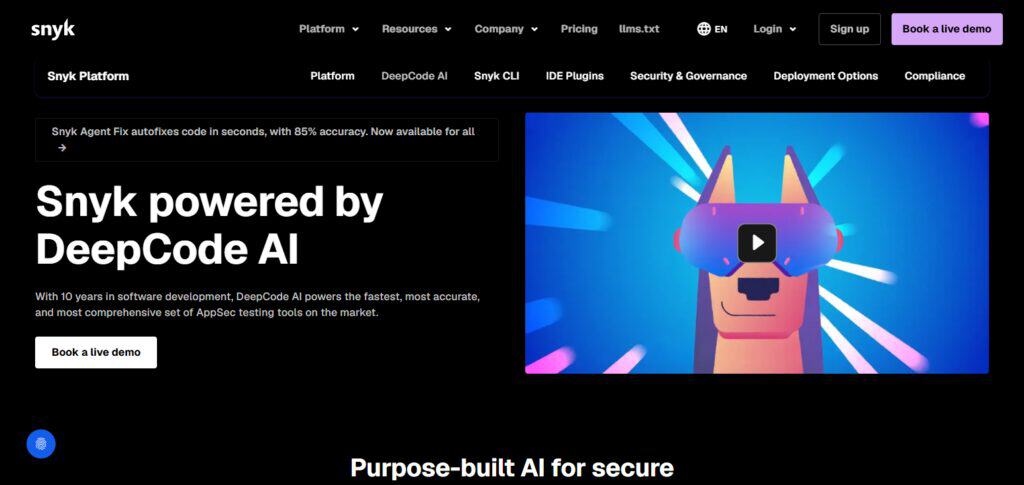
DvSecOps integration across GitHub, GitLab and within CI/CD pipelines has been made easy. An additional feature includes compliance support as Snyk supports SOC 2, ISO 27001, and GDPR. Evaluation results have shown a high level of accuracy. Deep AI driven exploit prediction and automated AI driven patching will be an exciting new addition to Snyk.
Snyk (DeepCode AI) Key Features
- AI – assisted vulnerability resolution
- Integration of SAST and SCA
- Plugins for IDEs and CI/CD
- Scanning of dependencies in real time
- Engine for predicting exploits
Pros
- Good adoption by developers
- Integration to CI/CD flows is easy
- High accuracy in finding vulnerabilities
- Tier that is free available
Cons
- High cost for enterprise use
- Analysis of runtime is limited
- High false positive rates for complex code
- Must train developers to use
2. GitHub Advanced Security
GitHub Advanced Security provides CodeQL analysis along with Copilot Autofix making it easy to find vulnerabilities and automatically fix them. There has been a lot of focus on traditional security tools like dependency scanning and secret detection which has been positively impacted by the use of AI.
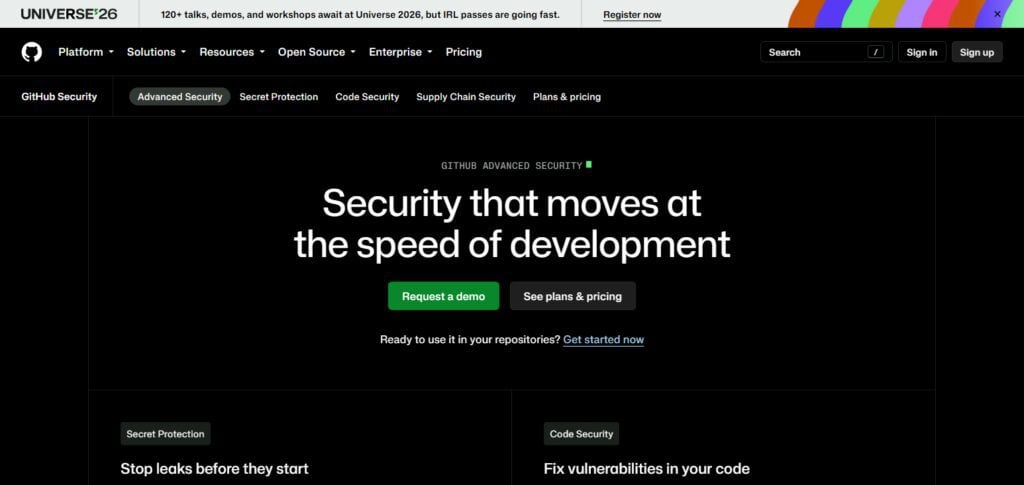
There has been a strong focus on compliance with the use of enterprise audit logs along with supported regulation of SOC 2. Evaluation results have been positive with high adoption of Fortune 500 companies. It is expected that new features supporting AI driven autofix and tailored security analytics will further strengthen GitHub’s DevSecOps position.
GitHub Advanced Security Key Features
- Analysis using CodeQL
- Autofix Copilot
- Scanning of (API/SSH/etc.) secrets
- Monitoring of dependency graphs
- Audit logs
Pros
- Integration to GitHub is native
- Automated fixes lower the burden of work
- Great support for compliance
- High enterprise adoption
Cons
- Limited to GitHub
- Autofix in the tool may overlook certain cases
- High cost of GitHub Enterprise affects pricing
- Long setup time, cumbersome, for large repositories
3. Sonar (SonarQube/SonarCloud)
SonarQube and SonarCloud utilize both static analysis and machine learning to identify bugs, vulnerabilities, and code smells. Packages are either Community/open-source or Enterprise. Most tools in the marketplace focus on maintainability and test coverage, which has recently been enhanced by AI for more thorough bug detection. They also offer integration with DevSecOps during both the CI/CD pipeline and the IDE.
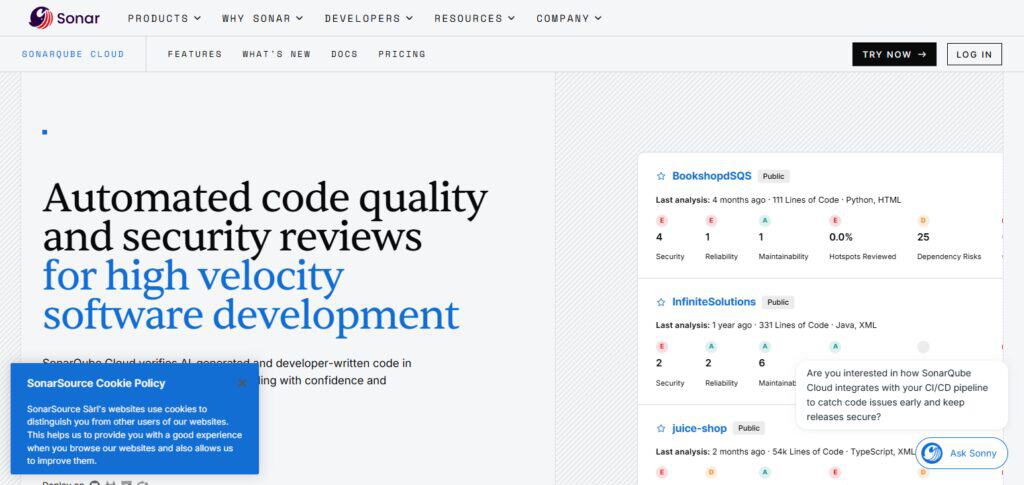
Furthermore, they offer reporting support for Enterprise-level compliance for audit purposes for ISO and SOC standards. Evaluation data shows strong adoption in regulated fields. They are particularly positioned well for the future of code audits in the Enterprise sector, due to the expectant inclusion of AI-driven quality metrics and dashboards for automated compliance.
Sonar (SonarQube/SonarCloud) Key Features
- AI-assisted detection of bugs
- Analysis of code for smells
- Assessment of coverage by tests
- Support for multiple languages
- Dashboards for Compliance
Pros
- High adoption by enterprises
- Excellent metrics for code quality
- Flexible (Cloud/on-prem) choice for deployment
- Free, open source community edition
Cons
- Limited detection of exploits for runtime
- Costly for the enterprise tier
- Must be tuned to provide accurate results
- Slow for large repositories
4. Semgrep AI
Semgrep AI offers fast, free, open-source scans and performance enhancements for its customizable rule engine. Traditional static analysis tools make use of AI for more precise identification of bugs. DevSecOps integration is lightweight, offering support for GitHub Actions, GitLab CI, and Jenkins.
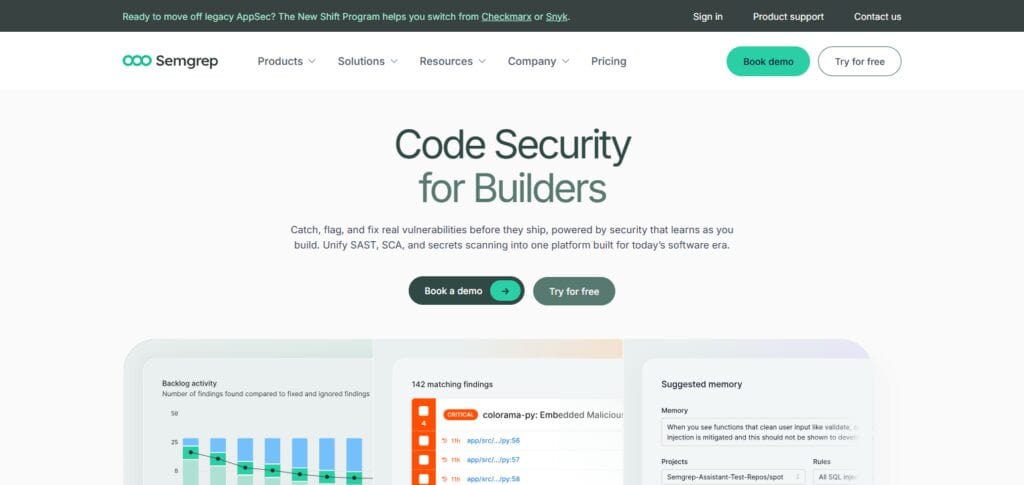
Implementation of compliance is done via the OWASP and PCI DSS rule sets. Evaluation data documents strong developer adoption due to the flexibility of Semgrep AI. The future inclusion of AI-automation rule generation and predictive scanning will keep Semgrep AI in an advantageous position for use in flexible, agile teams.
Semgrep AI Key Features
- Rules are flexible and can be customized by the user
- Rules can be generated with AI
- Scans code and detects security vulnerabilities in runtime
- Customizable rules Flexibility
- OWASP + PCI DSS alignment
Pros
- Open-source friendly
- Lightweight + fast
- High developer adoption
Cons
- Enterprise compliance features lacking
- No run-time exploit detection
- Balanced around small ecosystem
5. Checkmarx One
Checkmarx One bundles a comprehensive AST suite including SAST, DAST, SCA, and IaC scanning, and correlates them with AI. Focused pricing tiers are designed to cater to enterprise customers with compliance requirements. Previously fragmented tools are consolidated in one platform, enhanced by AI to address the most critical risks. DevSecOps integrations extend to major CI/CD systems and cloud environments.
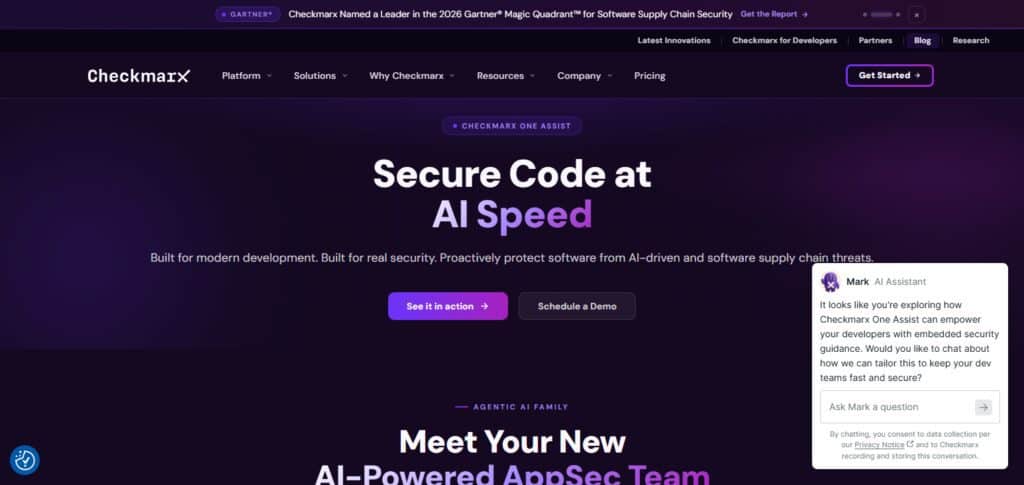
Support for compliance frameworks includes GDPR, HIPAA, and ISO. Evaluation data shows a strong preference for enterprise governance. Looking ahead, AI‑driven scoring of exploitability and automated compliance mapping will likely project Checkmarx One as a leading enterprise security audit platform.
Checkmarx One Key Features
- Complete AST (SAST, DAST, SCA, IaC)
- Finding correlation with AI
- Exploit scoring
- Compliance mapping
- Enterprise governance tools
Pros
- Comprehensive
- Good compliance
- Enterprise governance
- AI to focus effort reduces signal noise
Cons
- Expensive for enterprise
- Complex
- Slow CI/CD
- Requires dedicated security team
6. Wiz CNAPP
Wiz CNAPP focuses on cloud-native application protection with AI prioritization of vulnerabilities based on their runtime exploitability. Enterprise focused pricing tiers allow customers to adopt an AI contextual enhanced CNAPP with flexible cloud subscriptions. DevSecOps integrations include Kubernetes and Terraform, as well as CI/CD pipelines.
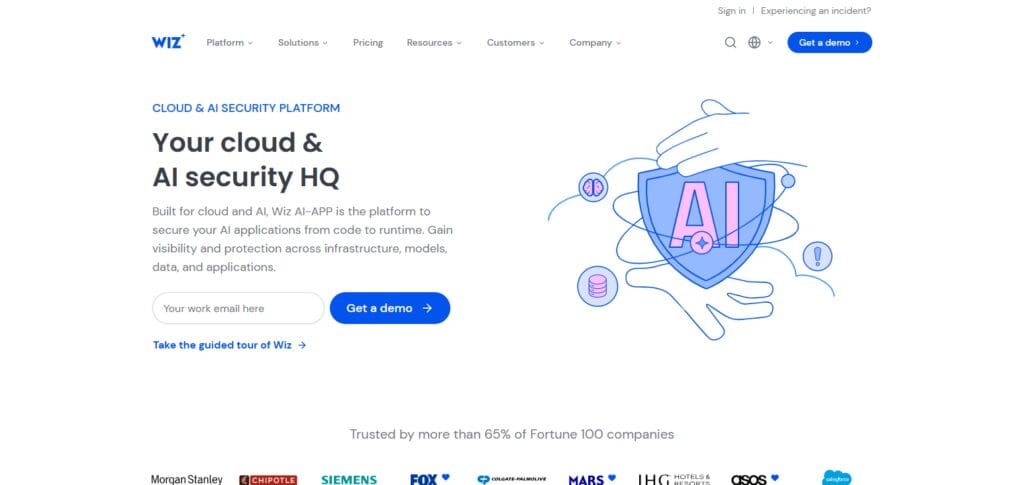
Compliance frameworks include SOC 2 and ISO, as well as cloud-specific frameworks. Evaluation data has shown that Wiz dominates in the prioritization of runtime risk. Looking ahead, AI attack path mapping and predictive cloud exploit detection will effectively project Wiz as a top player in cloud-native code security audits.
Wiz CNAPP Key Features
- Exploitability in runtime
- AI mapping for attack paths
- Cloud prioritization
- Kubernetes + Terraform
- SOC 2 + ISO compliance
Pros
- Strong prioritization in cloud
- Enterprise SOC compliance
- Risk prioritization excellent
- Fast adoption in cloud teams
Cons
- Pricey for enterprise
- Limited outside cloud
- Complex for hybrid
- Requires cloud expertise
7. Veracode AI Security
Veracode AI Security provides enterprise AppSec with a layer of AI to assist in remediation workflows. Pricing tiers target the mid-market and enterprise. Traditional SAST and DAST scanners combined with AI correlations are integrated. DevSecOps integrations cover CI/CD and IDEs.
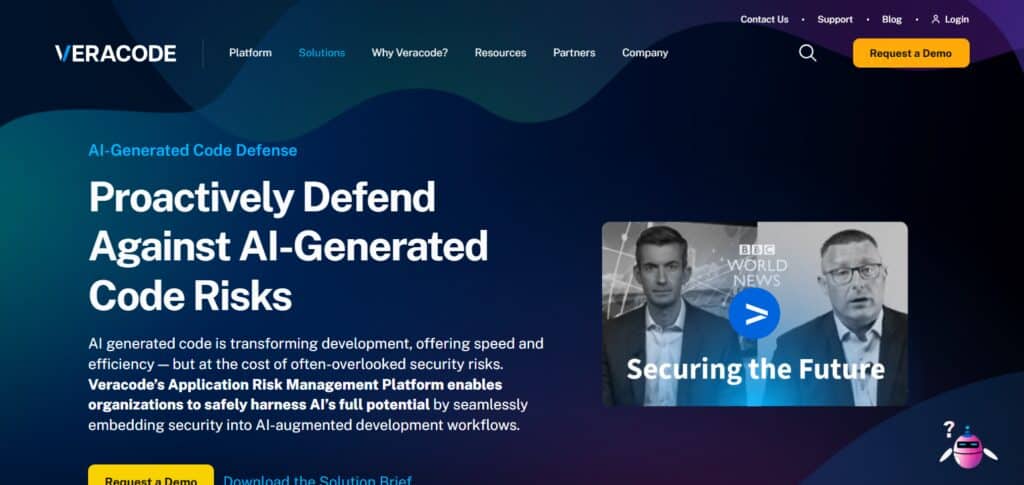
Compliance covers PCI DSS and HIPAA, as well as ISO certifications. Evaluation data shows a preference for Veracode’s governance and compliance solutions. Looking ahead, AI will likely project Veracode as an enterprise security audit solution of choice with exploit prediction and automated compliance reporting.
Veracode AI Security Key Features
- AI for remediation
- SAST + DAST
- Compliance (PCI, HIPAA)
- CI/CD + IDE
- Predictive security for exploits
Pros
- Strong enterprise AppSec
- Strong compliance
- Regulated industries trust
- AI reduces time to action
Cons
- Expensive for enterprise
- Limited open source
- Slow to implement
- Needs a dedicated governance team
8. Palo Alto Prisma Cloud AI
Prisma Cloud AI offers code security and cloud risk analytics to suit the needs of enterprises through pricing tiers packaged with CNAPPs. AI augments traditional cloud risk techniques via contextual insights to enhance both IaC and runtime monitoring.
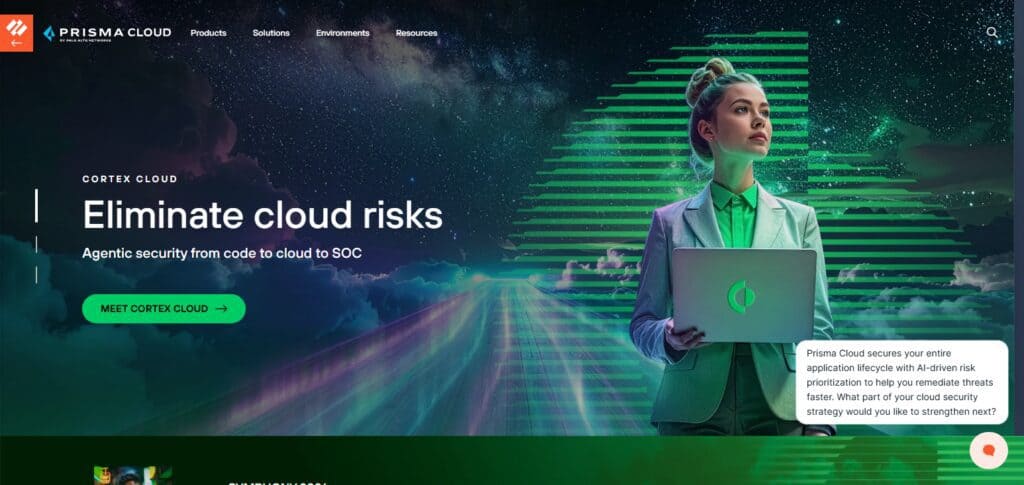
Prisma Cloud AI integrates with Kubernetes, CI/CD, and Terraform and provides features to ease compliance with frameworks and standards such as SOC 2, ISO, and others.
Evaluated data has commonly praised Prisma Cloud AI for its ease of use in hybrid cloud environments. Prisma Cloud AI is likely to dominate the market in the future with AI-based, real-time cloud risk assessments and automated IaC remediation.
Palo Alto Prisma Cloud AI Key Features
- Infrastructure as Code (IaC) misconfiguration detection
- Runtime exploitation analysis
- Cloud Native Application Protection Platform (CNAPP) integration
- AI-driven contextual analysis
- Hybrid cloud compliance
Pros
- Excellent support for hybrid cloud
- Enterprise-grade compliance
- AI-driven contextual risk assessment
- Part of the trusted Palo Alto ecosystem
Cons
- High cost of enterprise level
- Difficult to deploy across multiple clouds
- Few tools for developers
- Needs cloud security expertise
9. DeepSource AI
DeepSource AI delivers automated security and style enforcement checks using AI at the CI/CD stage on popular technology platforms such as GitHub and GitLab. The pricing tiers include a free offering for developers, as well as enterprise tiers. Traditional security tools via static analysis have been enhanced via AI.

DeepSource AI offers strong features for development teams due to AI-based defect prediction and automation of compliance dashboards. Evaluated data commonly praises DeepSource AI for its ease of adoption by agile teams.
DeepSource AI Key Features
- Continuous Integration / Continuous Deployment (CI/CD) real time checks
- AI-driven bug detection
- Style and security rules enforcement
- Alignments with OWASP and ISO
- Compliance dashboards with predictive capabilities
Pros
- High focus on developer productivity
- Very few resources needed for integration
- Available at no cost
- Rapidly adopted by startups
Cons
- Limited compliance for enterprise
- No detection for runtime exploits
- Smaller ecosystem than competitors
- Needs some developer training
10. Qodana (JetBrains AI)
Qodana (JetBrains AI) is one of the first products to embed AI security checks at the IDE level via the JetBrains IDE. The pricing tiers include IDE and enterprise offerings. AI enhances traditional security tools via contextual insights. DevSecOps is seamless across the JetBrains IDE and CI/CD.
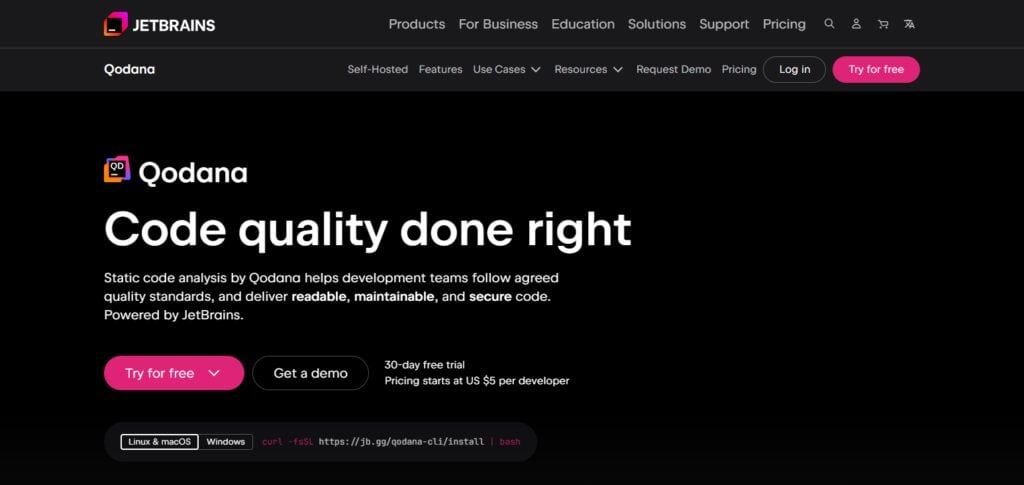
Qodana offers enterprise reporting for compliance with SOC and ISO standards. Developers across the JetBrains IDE ecosystem praised Qodana for ease of adoption. Qodana is likely to excel in the market due to AI-based exploit prediction and automated IDEs checks for compliance.
Qodana (JetBrains AI) Key Features
- AI security checks
- Integration of tools for static analysis
- Support for CI/CD
- Reporting for ISO and SOC compliance
- AI exploit prediction
Pros
- Great integration with JetBrains IDE
- High developer adoption
- Enterprise compliance with dashboards
- AI contextual insights
Cons
- Limited outside JetBrains ecosystem
- Higher cost of enterprise
- No detection for runtime exploits
- Requires JetBrains IDE
Conclusion
Generative AI Code Security Audit Platforms integrate traditional application security testing frameworks with AI to provide automated vulnerability remediation and build compliance security. Among Snyk, GitHub Advanced Security, Sonar, Semgrep AI, Checkmarx One, Wiz CNAPP, Veracode AI Security, Palo Alto Prisma Cloud AI, DeepSource AI, an
d Qodana, we think highest for accuracy, DevSecOps, enterprise scale, and innovation. Though trade-offs exist for each in price, complexity, or runtime coverage, we believe their frameworks establish automated AI-based Development practices as the new standard for Fortune 500 companies and software development teams by 2026.
FAQ
What are Generative AI Code Security Audit Platforms?
They are advanced systems combining traditional security testing with AI intelligence to detect vulnerabilities, predict exploitability, and automate remediation across modern codebases.
Which platforms are considered the best in 2026?
Top platforms include Snyk (DeepCode AI), GitHub Advanced Security, Sonar, Semgrep AI, Checkmarx One, Wiz CNAPP, Veracode AI Security, Palo Alto Prisma Cloud AI, DeepSource AI, and Qodana.
How were these platforms selected?
Selection was based on accuracy, DevSecOps integration, compliance support, AI remediation capabilities, enterprise scalability, developer adoption, and future innovation trends.
What are the common features across these platforms?
Key features include AI‑powered vulnerability detection, automated remediation, compliance dashboards, CI/CD integration, exploit prediction, and contextual risk prioritization.
What are the pros and cons of using them?
Pros: accuracy, automation, compliance readiness, developer adoption. Cons: high enterprise cost, complexity, limited runtime detection in some tools, and dependency on developer expertise.