Starting out a new token is often met with fanfare and excitement, but if that project doesn’t have the right amount of liquid assets to support trading, all of the great development in the world will not be enough to move the dial for most token holders. The solution to this issue is the help of market makers, specifically crypto market maker services.
Market makers are firms that provide services for new or up-and-coming digital assets that create orderly books of orders, keep bid/ask spreads tight and ensure continuous trading volume on exchanges-all key to prevent volatility and bring confidence to token buyers. What are some of the best market makers and how could they support a new token from pre-TGE into the first 30-day period (and beyond) in 2026?
What Is Crypto Market Making for New Tokens?
Crypto market making for new tokens is supplying liquidity on exchanges to foster consistent and stable trading during the initial phases of a token’s existence.
Market makers insert both bid and ask orders to CEX’ sand DEX’s-minimizing the spread, sustaining adequate order depth, minimizing volatility, engaging more traders and increasing investor confidence.


Because new tokens have such thin liquidity, especially pre-TGE (token generating event) and for the first month, market making is essential to ensure stability and sustained trading activity.
Why New Tokens Need Market Making After TGE?
Liquidity Stability Market makers provide liquidity across exchanges, maintaining deep order books to prevent price swings due to thin liquidity, which dissuades traders from participating.
Spread Control Narrow bid-ask spreads attract buyers and sellers, ensuring efficient trading, minimal slippage, and fostering traders’ trust in the token’s market activity.
Price Consistency Market makers provide liquidity across multiple exchanges and DEXs to eliminate arbitration differences, keeping the price stable during its early days on the market.
Trader Confidence Consistent liquidity guarantees confidence for investors in the token’s first months on the market, discouraging fear of volatility and manipulations.
Exchange Support The listed tokens often guarantee the support of exchanges, which prefer active tokens that have market makers because of smoother listings and good trading volume and liquidity.
Growth Momentum Maintaining liquidity for up to 30 days of the token’s launch allows for increasing its pace of growth and attracting the necessary volume for its long-term adoption.
Risk Mitigation By balancing liquidity in the trading markets, market makers prevent price pumps anddumps, maintaining a fair market environment for investors at all stages.
| Market Maker | Best For |
|---|---|
| CLS Global | Full-cycle support from launch to growth |
| Wintermute | Large-cap tokens, institutional OTC |
| GSR | Regulated, compliance-first mandates |
| Motion Trade | Pre-TGE prep & CEX listings |
| Keyrock | European projects, MiCA-aligned liquidity |
| Flowdesk | Transparent MMaaS (Market-Making-as-a-Service) |
| Amber Group | Global liquidity & institutional coverage |
| Kairon Labs | Mid-cap tokens, flexible onboarding |
| Gravity Team | Algorithmic liquidity across exchanges |
| Cumberland | Institutional-grade OTC & liquidity |
1. CLS Global
CLS Global offers a retainer-based pricing model with optional profit sharing, covering tier-1 exchanges and providing balanced liquidity for DEXs. Their strategy prioritizes algorithmic order book depth, making them a strong choice for newly launched tokens needing a stable market. Key performance indicators include spread tightness, daily volume, and liquidity depth.
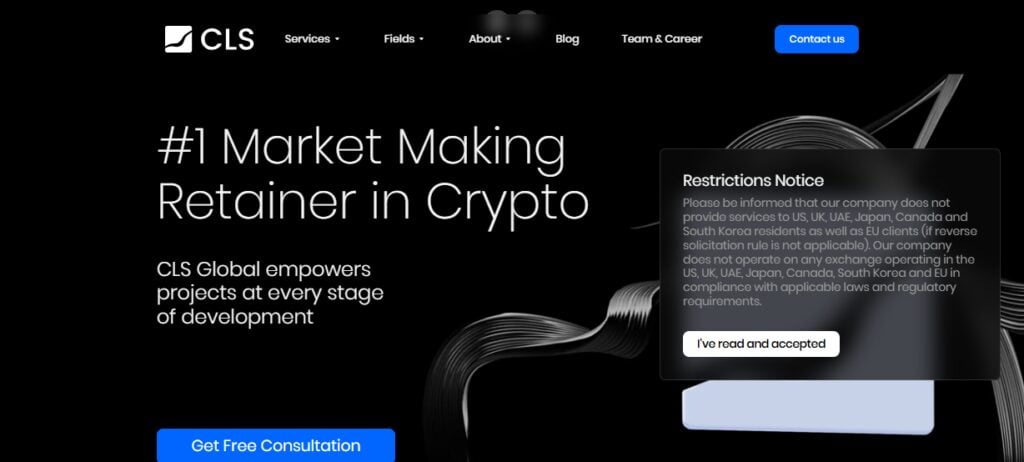
CLS Global typically requires a minimum six-month contract term and provides transparent weekly dashboard reporting.
They prepare liquidity pools pre-TGE, stabilize listings during TGE week, and ensure consistent trading activity in the first 30 days. For the growth stage, they focus on cross-exchange arbitrage prevention and long-term liquidity scaling.
Key Features
- – Flexible retainer + profit sharing pricing
- – Wide CEX coverage (Tier-1) and expanding DEX capabilities
- – Algorithmic control of liquidity deepth
- – Weekly reports with a dedicated dashboard
- – Strong pre-TGE liquidity pool management
Best For
- – Launches requiring stability
- – Projects looking for full-cycle liquidity management
- – Teams with high transparency standards
- – Assets aspiring to have liquidity across multiple exchanges
2. Wintermute
Wintermute employs a hybrid pricing model combining token loans with optional profit sharing, supporting major CEXs like Binance, Coinbase, and OKX, with selective DEX coverage. Their liquidity strategy utilizes institutional-grade algorithms, positioning them well for large-cap or ambitious new token projects. Wintermute’s KPIs include order book depth, volatility reduction, and execution speed.

Contracts are bespoke and may require collateral, with moderate reporting transparency through monthly liquidity reviews. Before TGE, they advise on tokenomics, deploy liquidity bots during the listing week, and ensure tight spreads in the first 30 days. Growth stage efforts center on institutional adoption and OTC desk integration.
Key Features:
- – Hybrid pricing options (loan + option)
- – Comprehensive CEX coverage (Binance, Coinbase, OKX and more)
- – Institutional-level liquidity algorithms
- – Monthly reporting and analysis
- – OTC desk for enhanced growth phase
Best For
- – Established projects with larger market capitalizations
- – Growth strategies focusing on institutional clients
- – Tokens needing significant and rapid liquidity
- – Teams who are time sensitive and prioritize execution speed
3. GSR
GSR follows a loan-plus-options pricing model designed for compliance-focused projects. They cover regulated CEXs but have limited DEX integration. GSR’s liquidity strategy emphasizes compliance-first execution, making them suitable for tokens aimed at institutional investors. Their KPIs focus on regulatory adherence, spread control, and liquidity sustainability.
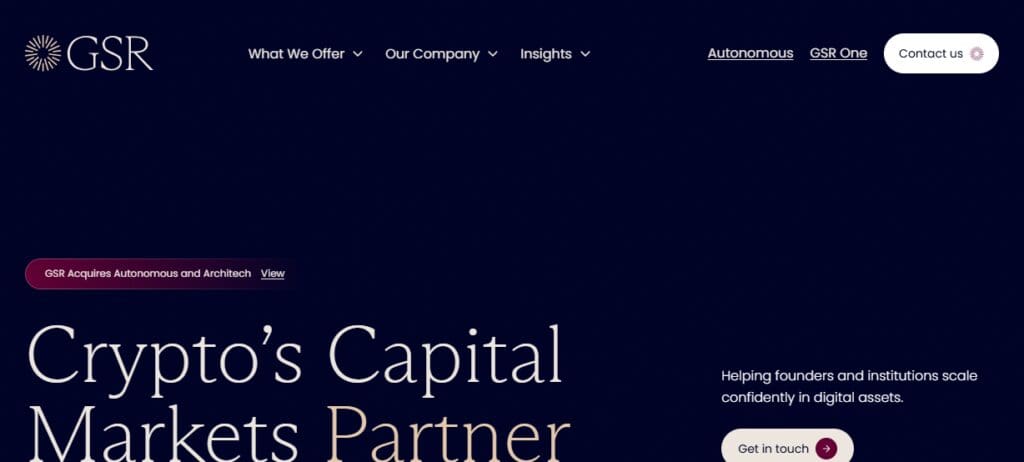
Contracts tend to be restrictive and may undergo legal review. GSR offers strong reporting with audited dashboards. They assist with pre-TGE compliance documentation, ensure smooth TGE week listings, and stabilize liquidity on regulated venues for the first 30 days. The growth stage includes OTC integration and ongoing compliance monitoring.
Key Features
- – Loan + option pricing model
- – Broad regulated CEX coverage
- – Compliance-focused liquidity solutions
- – Audited reporting dashboards
- – Long-term OTC capabilities
Best For
- – projects operating in highly regulated spaces
- – Institutional level token launches
- – Teams needing a high degree of assurance
- – tokens targeting European/US investors
4. Motion Trade
Motion Trade offers a retainer-based pricing model with optional profit sharing. They focus on mid-tier CEXs and are expanding their DEX coverage. Their liquidity strategy is centered on pre-TGE preparation, making them ideal for early-stage tokens. Key performance indicators include listing success, spread tightness, and liquidity depth.

Motion Trade’s contracts are flexible and offer short-term options. They provide high transparency with daily dashboards. They build liquidity pools pre-TGE, stabilize listings during TGE week, and maintain consistent trading activity in the first 30 days. Growth stage support involves broadening liquidity to larger exchanges and increasing order book depth.
Key Features
- – Retainer only pricing structure
- – Mid-tier CEX coverage with expanding DEX options
- – Focus on preparing pre-TGE liquidity
- – Daily detailed reports via dashboards
- – Flexible short-term agreements possible
Best For
- – early-stage projects
- – Rapid onboarding and setup process
- – Teams prioritizing readiness before token generation event (TGE)
- – Tokens aiming to list on mid-tier exchanges
5. Keyrock
Keyrock’s pricing model combines retainer and loan components. Their CEX coverage is particularly strong in Europe, with DEX coverage aligning with MiCA regulations. The liquidity strategy emphasizes algorithmic stability, making them a top choice for European projects. Keyrock’s KPIs include spread control, liquidity sustainability, and compliance adherence.
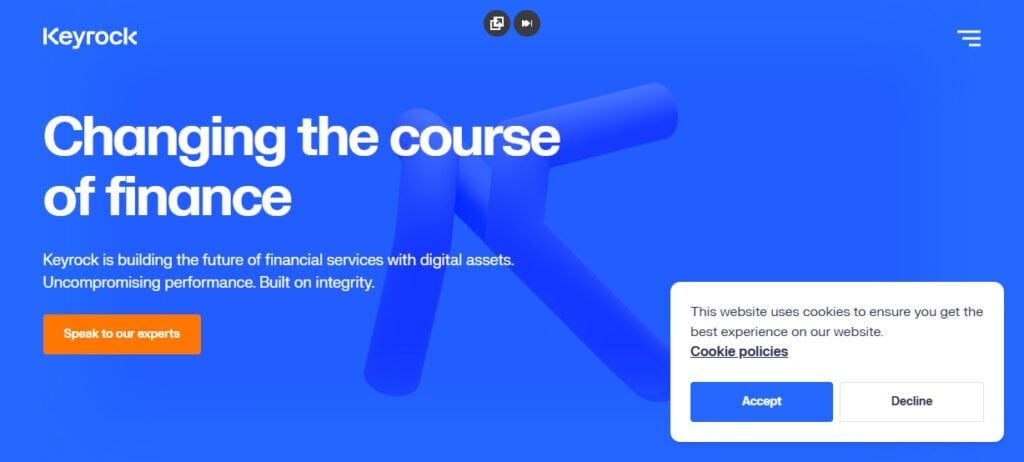
Their contracts can be moderately restrictive and may require minimum commitments. Keyrock provides strong reporting with weekly dashboards. They prepare liquidity pools pre-TGE, stabilize listings during TGE week, and ensure consistent trading activity for the first 30 days. The growth stage focuses on scaling liquidity across European exchanges and ensuring regulatory compliance.
Key Features:
- – Retainer + loan pricing model
- – Extensive coverage of European CEXs
- – MiCA compliant liquidity strategy
- – Weekly reports and dashboards
- – Moderate contract terms
Best For
- – European token projects
- – Launches in regulated environments (MiCA)
- – Teams who need to align with EU regulations
- – tokens targeting growth across European markets
6. Flowdesk
Flowdesk utilizes a transparent retainer-only pricing model with wide-ranging CEX coverage and robust DEX integration. Their Market-Making-as-a-Service (MMaaS) liquidity strategy appeals to projects seeking clarity. Key performance indicators include spread tightness, liquidity depth, and reporting accuracy. Contracts are flexible, offering short-term options.

Flowdesk delivers excellent transparency with real-time dashboard reporting. They build liquidity pools pre-TGE, stabilize listings during TGE week, and ensure consistent trading activity in the first 30 days. Growth stage efforts concentrate on scaling liquidity across exchanges and upholding transparency.
Key Features:
- – Transparent retainer only pricing
- – Full CEX and DEX coverage (Tier-1 + robust)
- – Market-Making-as-a-Service (MMaaS) model
- – Real-time, comprehensive reports and dashboards
- – Flexible short-term contracts available
Best For
- – Projects who demand complete transparency
- – Teams who want to avoid the token loan model
- – New tokens requiring balanced liquidity
- – Startups with a focus on data accuracy
7. Amber Group
Amber Group’s pricing models are hybrid, blending retainers with profit-sharing. They offer global CEX coverage with selective DEX integration. Their institutional-grade execution strategy makes them a good fit for ambitious new token projects. Amber Group’s KPIs focus on spread control, liquidity sustainability, and execution speed.

Their contracts are bespoke and often require collateral, with moderate reporting transparency through monthly dashboards. Pre-TGE, Amber advises on tokenomics, deploys liquidity bots during the listing week, and ensures tight spreads in the first 30 days. The growth stage priorities are institutional adoption and OTC desk integration.
Key Features:
- – Hybrid pricing models (retainer + profit sharing)
- – Broad global CEX reach, targeted DEX access
- – Institutional-grade execution strategies
- – Monthly detailed reporting dashboards
- – Integrated OTC services for trading desk use
Best For
- – Highly ambitious new token projects
- – Projects focused on institutional adoption
- – Teams seeking wide global liquidity reach
- – Those who prioritize high-speed trade execution
8. Kairon Labs
Kairon Labs operates on a retainer-based pricing model, covering mid-tier exchanges and gradually expanding their DEX coverage. Their flexible onboarding liquidity strategy suits mid-cap tokens. Key performance indicators include spread tightness, liquidity depth, and listing success. Kairon Labs’ contracts are flexible, offering short-term options.

They provide strong reporting with weekly dashboards. They build liquidity pools pre-TGE, stabilize listings during TGE week, and ensure consistent trading activity in the first 30 days. The growth stage involves scaling liquidity to larger exchanges and increasing order book depth.
Key Features:
- – Retainer based pricing
- – Mid-market CEX coverage with a developing DEX footprint
- – Flexible onboarding and liquidity strategies
- – Weekly performance reporting dashboards
- – Short-term agreement capabilities
Best For
- – Established projects with mid-market capitalization
- – Quick integration and liquidity setup requirements
- – Projects targeting mid-sized exchanges
- – Tokens with gradual scaling strategies
9. Gravity Team
Gravity Team offers a retainer-based pricing model, with tier-1 CEX coverage and algorithmically driven DEX liquidity. Their strategy prioritizes algorithmic execution for tokens requiring automated liquidity. Key performance indicators include spread tightness, liquidity sustainability, and execution speed.

Gravity Team’s contracts are flexible, offering short-term options. They provide strong reporting with weekly dashboards. They build liquidity pools pre-TGE, stabilize listings during TGE week, and ensure consistent trading activity for the first 30 days. The growth stage involves scaling liquidity across exchanges and maintaining algorithmic efficiency.
Key Features:
- – Retainer only pricing
- – Full Tier-1 CEX coverage coupled with smart DEX execution
- – Highly automated liquidity strategies
- – Weekly comprehensive reporting dashboards
- – Flexible short or long-term contracts
Best For
- – Tokens who need automated and programmatic liquidity
- – Teams who value efficient, automated operations
- – Projects scaling across multiple exchange listings
- – Startups who prioritize execution speed and automation
10. Cumberland
Cumberland offers bespoke pricing models designed for institutional clients, covering regulated CEXs and having limited DEX integration. Their OTC desk integration strategy is ideal for institutional-grade tokens. Key performance indicators focus on regulatory adherence, liquidity sustainability, and spread control.
Contracts are often restrictive and require legal vetting. Cumberland provides moderate reporting through monthly dashboards. They assist with pre-TGE compliance documentation, ensure smooth TGE week listings, and stabilize liquidity on regulated venues for the first 30 days. The growth stage centers on OTC integration and long-term compliance monitoring.
Key Features:
- – Custom pricing models (bespoke)
- – Regulated CEX focus with select DEX coverage
- – OTC desk dominant strategy
- – Monthly reporting dashboards
- – Highly restrictive contracts, often requiring extensive legal review
Best For
- – Institutional-grade token launches
- – projects operating in highly regulated and legal environments
- – Teams needing reliable OTC market access
- – tokens targeting strictly regulated markets
How We Selected and Ranked These Market Making Services?
Liquidity Depth Firms were ranked by their ability to maintain deep order books, ensuring smooth trading, tight spreads, and reduced volatility across both centralized and decentralized exchanges.
Exchange Coverage Services with broad CEX and DEX coverage scored higher, as multi-exchange liquidity ensures price consistency and wider market access for new tokens.
Pricing Transparency Clear, fair pricing models like retainers or MMaaS ranked better than opaque loan-based structures, reducing risks of misaligned incentives for token projects.
New-Token Fit Firms offering tailored pre-TGE, TGE week, and first 30-day liquidity strategies ranked higher for supporting early-stage tokens effectively.
Reporting Quality Services with real-time dashboards, audited reports, and transparent KPIs scored higher, ensuring token teams can monitor liquidity performance accurately.
Contract Flexibility Market makers offering short-term or customizable contracts ranked better than restrictive, long-term agreements, giving projects agility in liquidity management.
Compliance Standards Firms aligned with regulatory frameworks like MiCA or US compliance scored higher, as adherence builds institutional trust and long-term sustainability for new tokens.
How to Choose the Right Market Maker for Your New Token?
Liquidity Depth Firms were ranked by their ability to maintain deep order books, ensuring smooth trading, tight spreads, and reduced volatility across both centralized and decentralized exchanges.
Exchange Coverage Services with broad CEX and DEX coverage scored higher, as multi-exchange liquidity ensures price consistency and wider market access for new tokens.
Pricing Transparency Clear, fair pricing models like retainers or MMaaS ranked better than opaque loan-based structures, reducing risks of misaligned incentives for token projects.
New-Token Fit Firms offering tailored pre-TGE, TGE week, and first 30-day liquidity strategies ranked higher for supporting early-stage tokens effectively.
Reporting Quality Services with real-time dashboards, audited reports, and transparent KPIs scored higher, ensuring token teams can monitor liquidity performance accurately.
Contract Flexibility Market makers offering short-term or customizable contracts ranked better than restrictive, long-term agreements, giving projects agility in liquidity management.
Compliance Standards Firms aligned with regulatory frameworks like MiCA or US compliance scored higher, as adherence builds institutional trust and long-term sustainability for new tokens.
Conclusion
Summary In a nutshell, choosing the best crypto market maker is the deciding factor between a new token having sticky liquidity, a stable spread, and achieving long-term success. CLS Global, Wintermute, and Flowdesk were among the highest-rated exchanges on our list due to their transparent, exchange-centric, and custom strategy approach.
To ensure your project, its growth, and the token’s entire lifecycle are covered, research your potential market maker based on their pricing strategy, reporting standards, regulatory compliance, contract terms, and contract adaptability.
A good market maker will cover the entire spectrum from pre-TGE all the way to continued growth to avoid slippage and thin liquidity, ultimately building investor confidence, encouraging continued adoption, and allowing for competitive growth in the increasingly tight crypto space.
FAQ
What is crypto market making?
Crypto market making is the process of providing liquidity by placing buy and sell orders to stabilize token prices, reduce volatility, and ensure smooth trading across exchanges.
Why do new tokens need market making after TGE?
After TGE, market making prevents thin liquidity, controls spreads, and builds trader confidence, ensuring tokens gain traction during their first 30 days and beyond.
How are market makers ranked?
We ranked services based on liquidity depth, exchange coverage, pricing transparency, reporting quality, contract flexibility, new-token fit, and compliance standards.
What pricing models do market makers use?
Common models include retainers, profit-sharing, loan-based structures, and Market-Making-as-a-Service (MMaaS). Each impacts incentives and transparency differently.
Which firms are best for new tokens?
CLS Global, Flowdesk, and Kairon Labs are strong for early-stage tokens, while Wintermute and GSR suit institutional-grade projects needing compliance and deep liquidity.