

This article researches the best stablecoin payment tools in freelance markets. It focuses on payment tools services that aid marketplaces in quicker, lower, and more flexible freelancer payment solutions. We will compare tools based on the stablecoins that are supported, the blockchain networks, pricing, payment tools, integrations, security, and tools that facilitate global payment disbursements. We hope this evaluation can assist businesses in selecting the most appropriate payment solution for their freelance markets.
What Are Stablecoin Payment Tools for Freelance Markets?
Stablecoin payment tools for freelance markets are systems for sending, receiving, and managing payment flows of stablecoins like USDC and USDT. Unlike other volatile cryptocurrencies, stablecoins are designed to be pegged to the dollar.
There are multiple tools to support cross border payments, payment put in escrow, make payment link, give API interface for payment systems, and move funds to and from payment wallets, and convert stablecoins to cash.
These payment tools help freelance markets to simplify overseas payments. Transaction fee and compliance rules differ based on the selected provider between various international markets. Marketplaces will need to determine whether they prefer non-custodial, custodial, or self-hosted payment systems.

Why It Is Stablecoin Payment Tools for Freelance Markets Matter?
Cross-Border Payments: Stablecoins enable freelancers to get paid quicker than the typical bank transfer.
Less Expensive: Depending on the provider and blockchain, stablecoin transfers can be far less costly than traditional payment methods.
Less Volatile: USDC and USDT help reduce the price volatility freelancers are subject to in other payment methods that involve cryptocurrency.
Reach Global Freelancers: Stablecoins can help markets reach freelancers who do not have international payment methods.
More Flexible Payment Options: Some stablecoin tools allow freelancers to be paid to crypto wallets while also offering a currency conversion tool.
Automated Payments: Payment infrastructure and APIs can automate payment workflows and disbursements for freelance platform contracts.
Record Payment Status: Tools that use blockchain can help freelance platforms track payments and settlements.
Payment Infrastructure: Payment tools that integrate multiple blockchains provide freelance markets more options when using different payment methods.
Easier Cash Flow: Stablecoin payments can be processed more quickly and help freelance platforms distribute payments internationally to their freelancers.
Scalable Global Payments: Infrastructure designed for enterprise stablecoins can enable larger freelance platforms to process payments on a large global scale and integrate a unified payments framework.
Key Points
| Tool | Strengths | Best For |
|---|---|---|
| NOWPayments | Multi-chain stablecoin support, simple invoicing | Freelancers needing easy plug-and-play crypto payments |
| Bitwage | Payroll + invoicing, USDC/USDT rails | Freelancers wanting payroll-style payouts |
| Coinbase Onchain Payments | Trusted gateway, fiat + stablecoin | Freelancers working with corporate clients |
| BitPay | Global reach, fiat conversion | Freelancers invoicing large companies |
| BTCPay Server | Non-custodial, zero KYC | Freelancers preferring privacy and autonomy |
| BotDigit | Hybrid fiat/crypto escrow, USDC focus | Developers & AI freelancers needing milestone escrow |
| LaborX | Smart contract escrow, TIME token fee reduction | Web3-native freelancers |
| CryptoTask | DAO-based dispute resolution, low fees | Peer-to-peer freelance gigs |
| Merge | Local fiat rails + stablecoin API | Freelancers needing cross-border fiat + stablecoin integration |
| Braintrust | USDC settlement, enterprise adoption | Freelancers in enterprise projects |
1. NOWPayments
Best for: Freelance marketplaces wishing to maximize their potential client base by accepting a wider variety of cryptocurrencies and stablecoins. Founded: 2019. With NOWPayments, marketplaces can accept and settle a wide variety of cryptocurrencies to their wallets.
The payment processor accepts 300+ cryptocurrencies. Because it offers a variety of stablecoins and cryptocurrencies, NOWPayments is a great option when your freelancers desire payment flexibility.
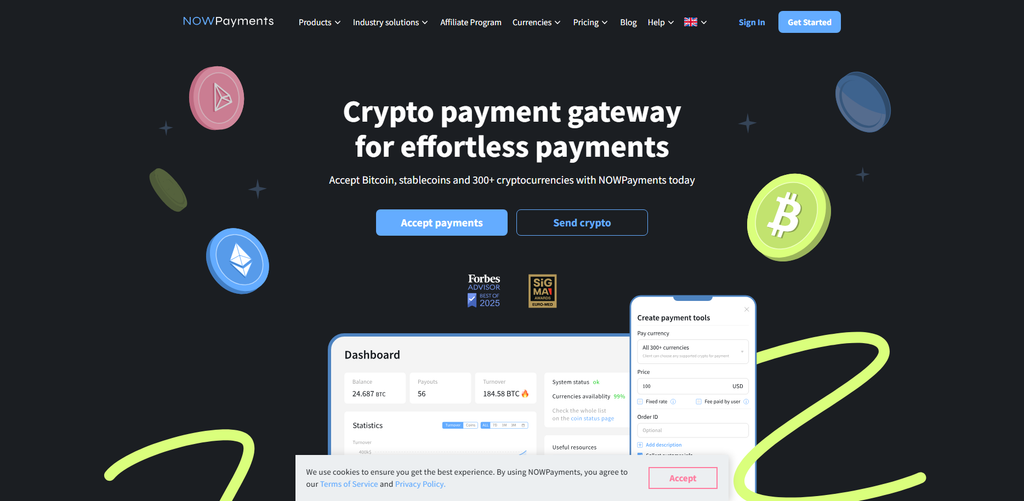
Pricing: For a single-currency payment, service fees start around 1%. For payments involving multi-currency swaps or automatic conversions, service fees go up to 1.5%, and, like with every crypto payment, the cost of the transaction varies by the blockchain.
NOWPayments offers the flexibility of working with multiple assets across different chains, with its major clientele being marketplaces wanting customizable crypto payments, APIs, invoices, and payment automation, with the assurance of keeping customer funds.
| Attribute | Details |
|---|---|
| Platform Type | Crypto payment gateway |
| Founded | 2019 |
| Best For | Freelance marketplaces accepting multiple crypto assets |
| Stablecoin Support | USDT, USDC and other supported stablecoins |
| Integration | API, plugins, invoices, payment links |
| Custody Model | Non-custodial |
| Key Advantage | Broad cryptocurrency coverage |
| Settlement | Crypto-to-crypto and crypto-to-fiat options |
NOWPayments Pros & Cons
Pros
- Large selection of cryptocurrencies and stablecoins.
- Has various integration options, including API and invoicing.
- Non-custodial payment framework lessens custody concerns.
- Good for paying international freelancers.
- Offers automatic conversion crypto-to-fiat or crypto-to-crypto.
Cons
- Fees vary based on payment and conversion options.
- Network fees are in addition to processing fees.
- Large asset coverage increases complexity in payment management.
- Requires some technical integration for advanced features.
- Many payment options vary by cryptocurrency and offer limitations.
2. Bitwage
Best for: Freelance marketplaces that are focused on payroll for contractors and recurring cross-border payments. Founded: 2014. While Bitwage has the features of a traditional crypto payment processor, it more closely resembles a combination of a crypto payroll and payment solution, especially when freelancers opt to get paid in Bitcoin, Ethereum, stablecoins, or their local currency.
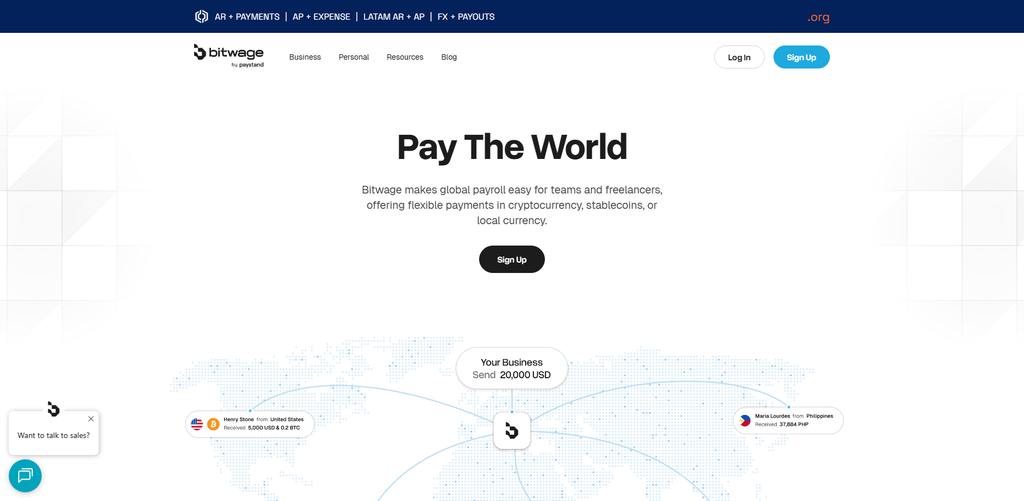
When it comes to stablecoins, freelancers can receive payments in USDT (Ethereum, Polygon, and Tron), USDC (Ethereum and Stellar), DAI (Ethereum) and DAI. Pricing: Individual Standard accounts start at $0/month; Premium accounts are $15.99/month; stablecoin payout fees are asset-specific and vary by network.
The payroll accounts offered to businesses are free and, respectively, Premium. Best for marketplaces that desire structured contractor payments, local currency payments, invoice payments, and stablecoin payments, instead of a simple merchant payment solution.
| Attribute | Details |
|---|---|
| Platform Type | Crypto payroll and contractor payment platform |
| Founded | 2014 |
| Best For | Freelancer and international contractor payouts |
| Stablecoins | USDC, USDT and other supported assets |
| Payment Methods | Crypto, stablecoins and local currency |
| Payroll | Recurring payroll support |
| Integrations | Payroll and invoicing workflows |
| Key Advantage | Built around employee and contractor payments |
Bitwage Pros & Cons
Pros
- Has services specifically for payroll, contracting, and freelancing.
- Payout options include BTC, ETH, and a few stablecoins.
- Good for paying international contractors.
- Supports regular payments and invoicing.
- Great service for contractors that need to pay in fiat and receive funds in crypto.
Cons
- Less suited for marketplace payment solutions and more payroll focused.
- Less supported networks and assets compared to many crypto gateways.
- Variable payout fees for stablecoins based on the payout network.
- Will likely incur a higher monthly subscription for premium features.
- Some payout methods are country and account type restricted.
3. Coinbase
Best for: Freelance marketplaces looking for the infrastructure to receive regulated stablecoin payments with the option to convert to fiat.
Founded: Coinbase was founded in 2012. 2026 saw Coinbase monetizing its former Commerce product by transforming it into Coinbase Business. Thus, older mentions of Coinbase Commerce should be interpreted accordingly.
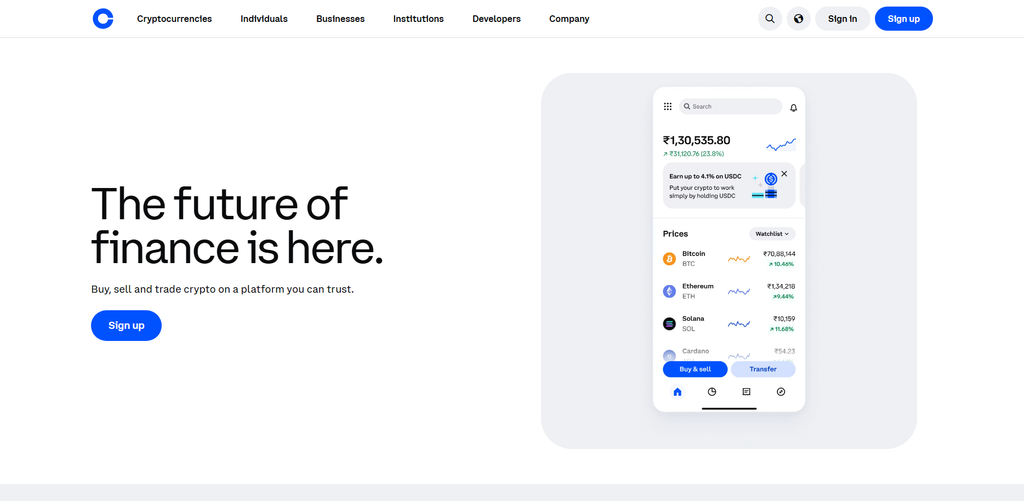
Coinbase Business enables USDC and USDT. Coinbase facilitates USDC payments on Ethereum, Base, Polygon, Optimism, and Arbitrum, and USDT on Ethereum. Pricing: Coinbase charges a fee for every completed payment. Current prices are displayed in the business account.
The service provides payment links, invoices, checkouts, bank withdrawals, and custody. It’s best for established marketplaces that offer services of a compliant, direct fiat converted, stablecoin settlement, accounting workflow.
| Attribute | Details |
|---|---|
| Platform Type | Institutional crypto payment infrastructure |
| Founded | 2012 |
| Best For | Established businesses and marketplaces |
| Main Stablecoins | USDC and USDT |
| Supported Networks | Ethereum, Base, Polygon, Optimism, Arbitrum and others depending on asset |
| Business Tools | Payments, invoices, accounts and settlement |
| Fiat Conversion | Available |
| Key Advantage | Strong institutional crypto infrastructure |
Coinbase Business Pros & Cons
Pros
- Indicates a more robust and established backend in crypto service.
- Excellent capabilities for payment and settlement of USDC.
- Supports multiple blockchains for USDC.
- Offers a business focused crypto payment and financial service.
- Ideal for crypto marketplaces focused on a crypto-to-fiat conversion services.
Cons
- Narrower offering of Stablecoins and blockchains compared to other multi-asset gateways.
- Availability of services may vary by region.
- Transaction fees apply to each payment made.
- Account verification and compliance may require significant time and resources.
- Least appropriate for a business that requires a completely self-hosted payment solution.
4. BitPay
Best for: Established freelance marketplaces that are in need of a mature crypto payment processor. Founded: 2011. BitPay was one of the pioneers of cryptocurrency payments, launched 15 years ago, and offers many cryptocurrencies, stablecoins, and tokens such as BTC, ETH, LTC, XRP, USDT, USDC, and other famous tokens.
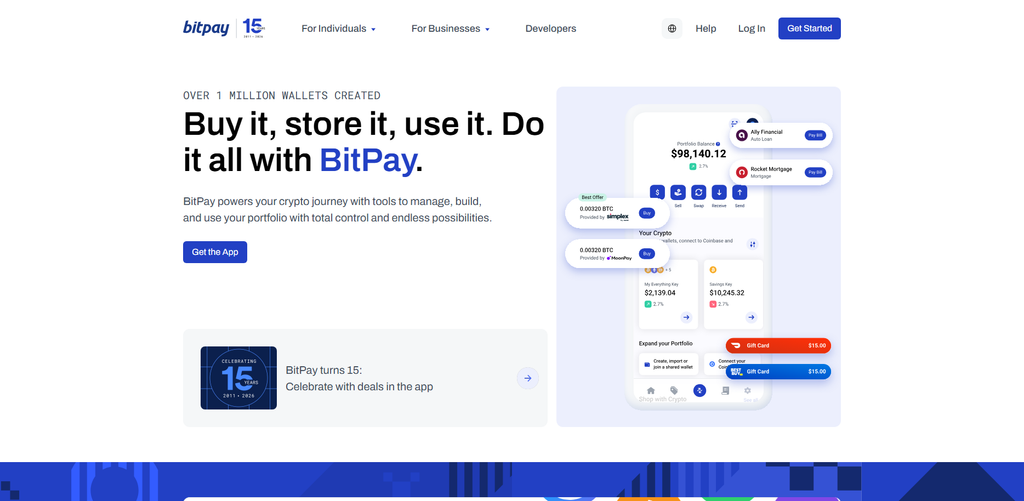
It facilitates payment services on several blockchains, integrates self-custody and exchange wallets. Pricing: BitPay mostly implements merchant pricing that is dependent on transactions, and current merchant rates are defined by account and payment setup.
It also offers settlements in traditional currencies, which can help companies limit the exposure of direct volatility of cryptocurrencies. Best for marketplaces that prefer payment processing, invoicing, and settlements, and wallet services, and compliance-oriented infrastructure to establish crypto payments.
| Attribute | Details |
|---|---|
| Platform Type | Cryptocurrency payment processor |
| Founded | 2011 |
| Best For | Businesses seeking established crypto payment processing |
| Supported Assets | BTC, ETH, LTC, XRP, USDC, USDT and others |
| Merchant Tools | Checkout, invoices and payment processing |
| Settlement | Crypto and selected fiat currencies |
| Integrations | API, plugins and business integrations |
| Key Advantage | Long-established merchant payment infrastructure |
BitPay Pros & Cons
Pros
- History of offering cryptocurrency payment services.
- Includes major cryptocurrencies and stablecoins.
- Merchant payment services and invoice creation.
- Offers options to settle payments with reduced volatility.
- Good choice for businesses wanting a reliable payment solution.
Cons
- Higher payment processing fees.
- Reliance on a centralized payment solution.
- Not all cryptocurrencies offer the same payment and settlement options.
- Merchant verification may be necessary.
- Less flexible than payment solutions built independently.
5. BTCPay Server
Best for: Freelance marketplaces that want complete control over their payment infrastructure. Founded: 2017.
BTCPay Server is an example of a decentralized payment processor that works very differently than most payment processors. It is a self-hosted, open-source, and free software to process payments, which primarily focuses on payment integration for Bitcoin with on-chain and Lightning Network payments, although it can be extended to support more cryptocurrencies.
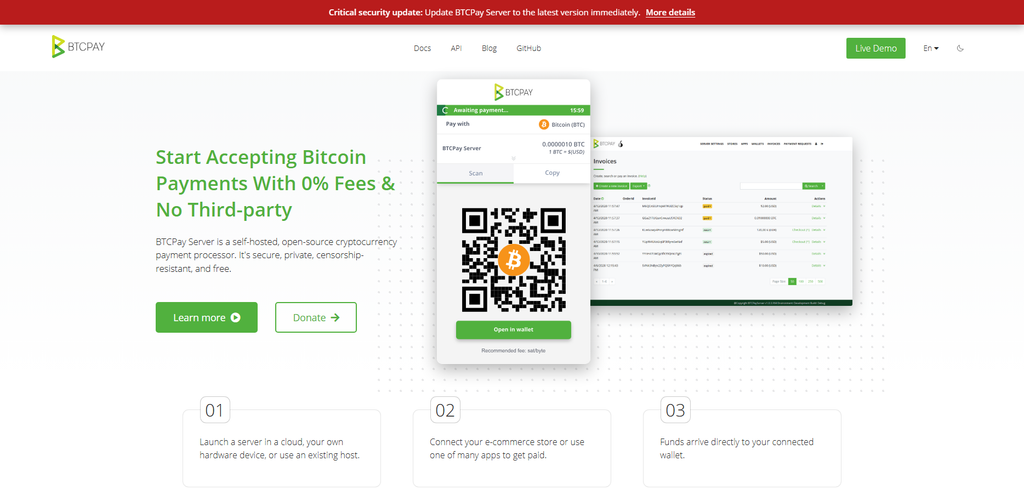
In terms of pricing, it comes with no subscription and 0% processing fees. However, marketplaces using it will still have to bear the cost of blockchain transactions, hosting, and the infrastructure. One of the many benefits of BTCPay Server is that it sends payments to the wallet and eliminates the need for a third party to hold the funds.
It is designed with open source architecture to aid developers with customization as well as support transparency. BTCPay Server is a great option for freelance marketplaces with a technical background that want self custody of funds.
| Attribute | Details |
|---|---|
| Platform Type | Open-source payment processor |
| Founded | 2017 |
| Best For | Technical marketplaces wanting self-hosted payments |
| Core Asset | Bitcoin |
| Payment Networks | Bitcoin on-chain and Lightning |
| Processing Fee | 0% platform processing fee |
| Hosting | Self-hosted or third-party hosting |
| Key Advantage | Full control and self-custody |
BTCPay Server Pros & Cons
Pros
- Free and open-source software.
- No automatic fees or charges percentage of the payments.
- Businesses fully control their funds.
- Supports payment via Bitcoin and the Lightning Network.
- Flexible for developers and marketplace needs.
Cons
- Requires technical know-how for setup and upkeep.
- Businesses must manage hosting and the related infrastructure.
- More focused on Bitcoin payments than on stablecoin payments.
- Transaction and network fees apply.
- Buyer/seller support is not the same as support for commercial payment solutions.
6. BotDigit
Best for: Freelance marketplaces that need support for stablecoin escrow and contractor payments built-in. Founded: 2024. BotDigit offers a special offering for Freelance marketplaces built on top of crypto. Their offering provides contractor hiring and payment services using stablecoins.
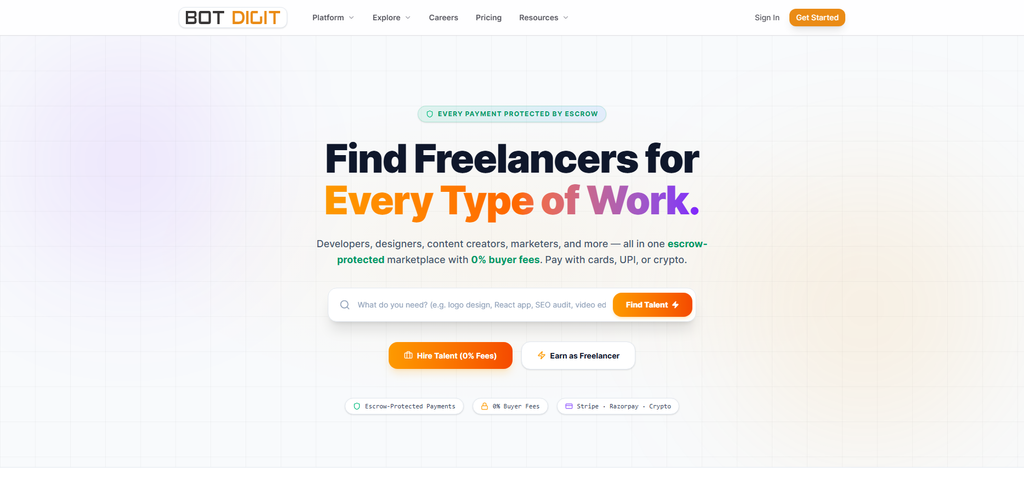
Their offering supports USDT and USDC and allows clients to set payments in stablecoins or even fiat. Pricing: BotDigit claims they will not be charging any platform fees for clients, unlike other competitive offerings. Their main focus is built-in Escrow and payment processing instead of charging hefty fees.
Their 2026 platform includes Milestone contracts, Escrow and instant stablecoin settlement. The company says this offering is India built and claims they completed international payment compliance in 2025.
Best for marketplaces that want freelance matching, milestone management, Escrow, and stablecoin payouts built-in to a single workflow instead of using multiple payment integrations.
| Attribute | Details |
|---|---|
| Platform Type | Crypto freelance marketplace |
| Founded | 2024 |
| Best For | Freelance hiring with stablecoin settlements |
| Payment Assets | USDT, USDC and supported currencies |
| Escrow | Milestone-based escrow |
| Client Fees | Promotes 0% client platform fees |
| Marketplace Tools | Hiring, contracts and payouts |
| Key Advantage | Freelancing and crypto payments combined |
BotDigit Pros & Cons
Pros
- Payment solution focused on contractors and freelancers.
- Includes escrow with milestone payments.
- Supports stablecoin payouts to contractors.
- Allows the seamless integration of hiring, contracting, and payments.
- Ideal for marketplaces catering to freelancers who prefer payment in cryptocurrencies.
Cons
- Smaller ecosystem than major payment processors.
- Fewer payment assets and blockchain options than many crypto gateways.
- Newer platform with less operating history.
- International coverage likely narrower than enterprise providers.
- Marketplace-centric features may not meet the needs for a payment API.
7. LaborX
Best for: Web3 freelance marketplaces looking for native crypto job payments and escrow. LaborX was built in the ChronoBank ecosystem in 2017. Focused on decentralized employment and cryptocurrency-based freelance payments, LaborX is currently using multiple blockchains (BNB Chain and Ethereum).
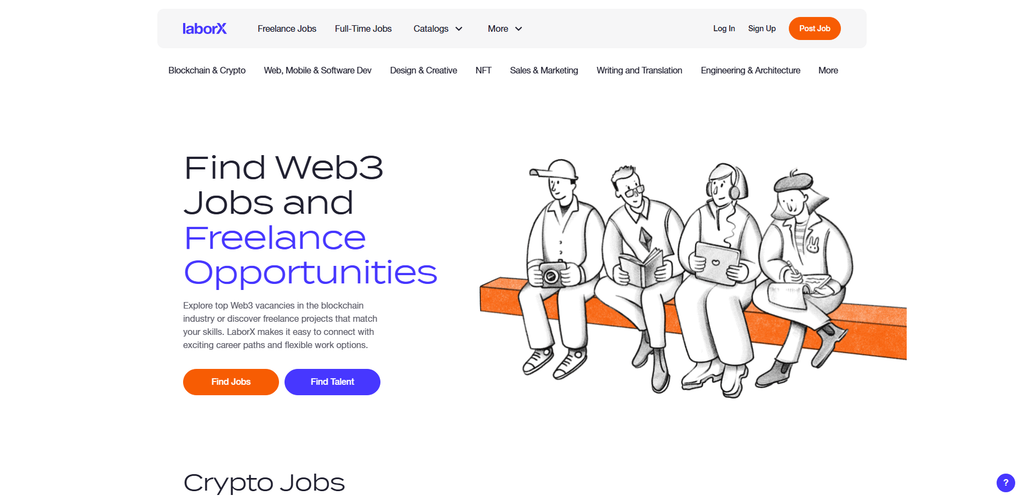
While the hiring documentation states other blockchains (e.g., Ethereum, BNB Smart Chain, etc.) along with TRON, Polygon, Arbitrum, and Fantom, the supported assets are limited to ETH, WBTC, stablecoins (USDC, USDT, DAI), and network-native tokens.
Pricing: The marketplace fees differ based on the structure and type of account, so the users need to check the fees first before publishing the marketplace. Best for Web3-native freelance marketplaces that prioritize blockchain settlement, escrow, and payments for contractor tokens.
| Attribute | Details |
|---|---|
| Platform Type | Decentralized freelance marketplace |
| Founded | 2017 |
| Best For | Web3 and crypto-native freelancers |
| Stablecoins | USDT, USDC, DAI and supported assets |
| Networks | Ethereum, BNB Chain, Polygon, TRON, Arbitrum and others |
| Payment Model | Blockchain-based escrow |
| Talent Focus | Web3 professionals |
| Key Advantage | Native crypto freelance ecosystem |
LaborX Pros & Cons
Pros
- Specifically made for crypto and Web3 freelancing.
- Has crypto-based escrow for freelancing.
- Allows stablecoins and major cryptos.
- Has a worldwide Web3-focused talent pool.
- Has several blockchain ecosystems.
Cons
- Mainly a freelance marketplace, not a payment gateway.
- Web3 focus can turn away lots of users.
- Blockchain transaction costs can apply.
- Crypto-based workflows can be unfamiliar to lots of users.
- Support for assets and networks can change.
8. CryptoTask
Best for: Freelance marketplaces that charge low fees for crypto escrow. Founded: 2017. CryptoTask is a decentralized freelance marketplace built to cater to blockchain and crypto users. Its payment bridge supports several stablecoins based on Ethereum, Tezos, Binance Smart Chain, and Polygon using the BUSD and DAI stablecoins.
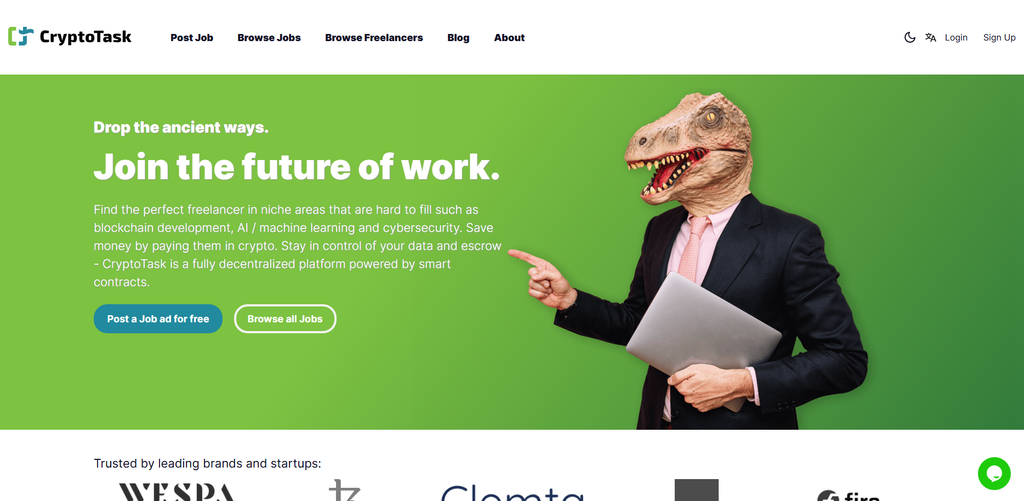
CryptoTask charges 0% for basic transactions and 3% for escrows, therefore making it attractive for marketplaces where transaction costs play a big role. Payments do not require some popular payment apps as they can be done through the escrow system.
Best for crypto-native freelance marketplaces that need decentralized task payments and escrow, as well as multiple blockchain options and stablecoin support. Its biggest challenge is that it is more specialized than general freelance marketplaces.
| Attribute | Details |
|---|---|
| Platform Type | Decentralized freelance marketplace |
| Founded | 2017 |
| Best For | Crypto-focused freelance transactions |
| Stablecoins | USDT, USDC, DAI and network-specific stablecoins |
| Escrow | Decentralized escrow |
| Supported Networks | Ethereum, BNB Chain, Polygon, Tezos and others |
| Transaction Fee | Escrow fees can apply |
| Key Advantage | Low-cost crypto-native freelance payments |
CryptoTask Pros & Cons
Pros
- Designed for decentralized freelance transactions.
- Has escrow functionality for freelance work.
- Allows several cryptos and stablecoins.
- Marketplace transaction fees are fairly low.
- Good option for crypto freelancers.
Cons
- Small marketplace ecosystem compared to popular freelance platforms.
- Targets mainly crypto users.
- Users have to understand wallets and blockchain transactions.
- Blockchain network fees can make payments costly.
- Can have fewer enterprise features than institutional payment providers.
9. Merge
Best for: Large freelance marketplaces in need of an enterprise-level stablecoin payment infrastructure.
Merge is a regulated B2B payment infrastructure (London) built for Fintech, marketplaces, payroll providers, and enterprises, which provides USDC, USDT stablecoins with settlement in local fiat via payment rails.
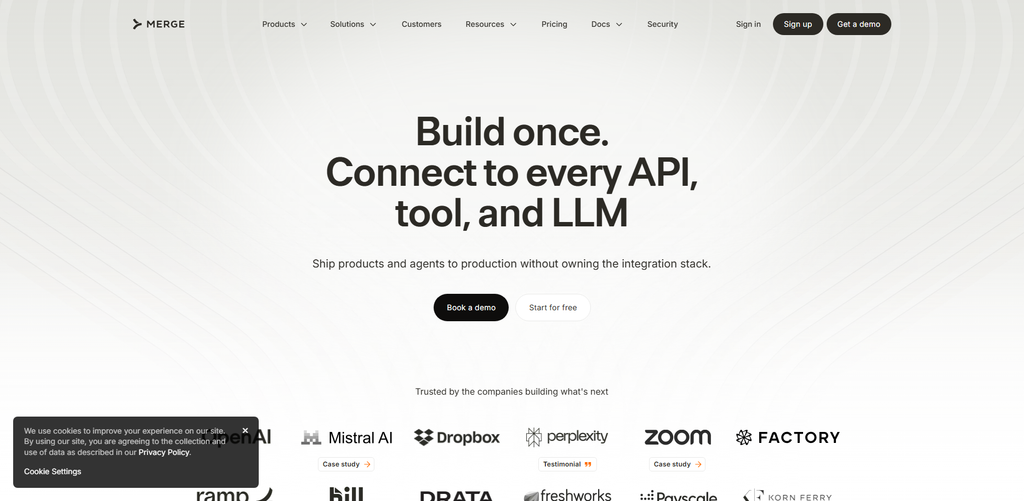
It says it offers payment APIs that incorporate stablecoin payments, on/off ramps, multi-currency accounts, payouts and reconciliation services. They do business in over 100 countries and support over 60 currencies.
Pricing: Unlike competitive offerings, Merge uses a customized enterprise pricing model versus a simple marketplace fee. Best for high-volume freelance platforms wanting global automated payouts and compliance controls/KYB, transaction monitoring, local payment rails and programmable stablecoin settlement all done through a single API.
| Attribute | Details |
|---|---|
| Platform Type | B2B stablecoin payment infrastructure |
| Founded | 2022 |
| Best For | Enterprise marketplaces and global payouts |
| Stablecoins | USDC and USDT |
| Coverage | 100+ countries and 60+ currencies |
| Infrastructure | APIs, accounts, payouts and on/off-ramps |
| Compliance | KYB and transaction monitoring |
| Key Advantage | Stablecoin-to-fiat payment infrastructure |
Merge Pros & Cons
Pros
- For enterprise stablecoin and fiat payments infrastructure.
- Allows stablecoin payouts and rail for global payments.
- API-based payment framework for marketplaces.
- Provides transaction-monitoring features and ensures compliance.
- Good for paying international contractors en masse.
Cons
- Functions better for large scale businesses.
- Payment gateways have a flat fee (per transaction) model, whereas enterprise pricing is flexible, thus more complicated.
- Will need a developer for integration.
- Onboarding more involved due to compliance.
- Likely too much for small freelance marketplaces with low payment volume.
10. Braintrust
Best for: Enterprise freelance marketplaces merging vetted talent with blockchain technology to enable ownership. Braintrust was launched in 2018 aiming to build a decentralized talent network and reduce employment staffing middlemen.
The marketplace uses BTRST tokens for network governance and ownership, while talent-facing operations charge no platform fees to talent. Previously, Braintrust charged clients a success fee. In the current public offering of talent, Braintrust has zero fees to professionals.
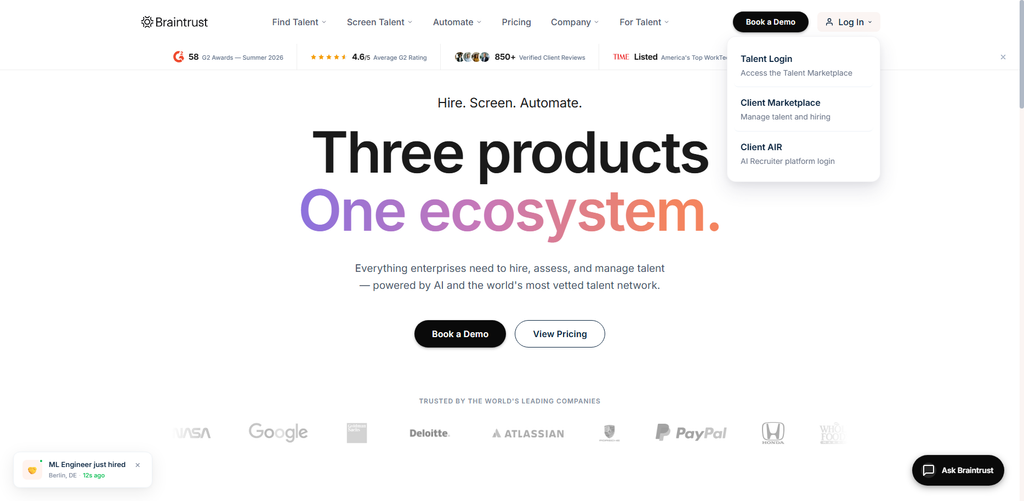
Braintrust is unlike BitPay or NOWPayments where it does not focus solely on stablecoin processing, rather on talent marketplace construction.
Best for enterprise freelance talent acquisition where blockchain-based marketplace governance, the presence of vetted professionals, marketplace talent matching, and lower talent fees matter more than the ability to process multiple stablecoins or reach various blockchain payment systems.
| Attribute | Details |
|---|---|
| Platform Type | Decentralized talent marketplace |
| Founded | 2018 |
| Best For | Enterprise freelance and professional hiring |
| Blockchain Ecosystem | BTRST ecosystem |
| Talent Fee | $0 platform fee for talent |
| Talent Model | Vetted professional network |
| Governance | Blockchain-enabled community governance |
| Key Advantage | Enterprise talent marketplace with Web3 ownership model |
Braintrust Pros & Cons
Pros
- Good for businesses looking to contract professionals.
- Professionals can use the platform without paying the usual high freelancer platform fees.
- Aimed at professional and enterprise talent.
- Governance in the BTRST ecosystem.
- Good option for businesses looking to hire specialized professionals.
Cons
- Not really a stablecoin payment processor.
- Payment methods are not its core offering.
- Better for talent hiring than a payment framework.
- Smaller talent offering compared to other traditional freelance marketplaces.
- Governance in BTRST adds complexity for users unfamiliar with Web3.
Conclusion
Stablecoins can be used by freelance marketplaces in 2026 to improve faster international transactions, lessen the need for traditional banking systems, and facilitate easy cross-border payments for contractors. Tools like NOWPayments, Bitwage, Coinbase Business, and BitPay can provide effective payment systems for marketplaces. BTCPay Server can serve businesses that want self-hosted and self-custodial payment systems.
BotDigit, LaborX, and CryptoTask focus more on crypto-related freelance marketplaces, whereas Merge offers infrastructure for stablecoin payments for the enterprise. Braintrust is unique amongst the competition for being a talent marketplace rather than a payment processor. After support for stablecoins, blockchains, fees, escrow, compliance, payout countries, and APIs are considered, the right payment system can be selected.
FAQ
What are stablecoin payment tools for freelance marketplaces?
Stablecoin payment tools help freelance marketplaces accept, hold, convert, or distribute digital currencies such as USDC and USDT. They can make cross-border freelancer payments faster while reducing the price volatility associated with cryptocurrencies such as Bitcoin and Ethereum.
Which stablecoin payment tool is best for freelance marketplaces?
There is no single best option for every marketplace. NOWPayments is suitable for broad crypto acceptance, Bitwage for contractor payroll, Coinbase Business for established businesses, BTCPay Server for self-hosted payments, and Merge for enterprise-scale stablecoin payouts.
What stablecoins are commonly supported by these platforms?
USDT and USDC are the most commonly supported stablecoins across the platforms discussed. Some services also support DAI and additional stablecoins depending on the blockchain, payment product, and geographic availability.
Can freelancers receive payments directly in stablecoins?
Yes. Platforms such as Bitwage, LaborX, CryptoTask, BotDigit, and other crypto payment providers can facilitate stablecoin-based freelancer payments. The freelancer generally needs a compatible crypto wallet or supported account to receive the funds.
Are stablecoin payments cheaper than traditional freelance payments?
They can be, particularly for international transfers, but the actual cost depends on the provider, blockchain, transaction volume, conversion requirements, and network fees. A marketplace should compare the total payment cost, rather than looking only at the provider’s headline fee.