Investment apps have streamlined the investment process for Canadians, allowing users to build their portfolios and adjust them at their convenience. However, there is no shortage of options out there, combining low fees, ETFs, stocks, automated investing, and registered accounts, increasing the difficulty of selection.
In our Best Investment Apps In Canada guide, we will analyze the top flexible options and assist you in the selection of the investment app that meets your goals within the context of your level of experience. This will cover facets of each app such as price, user account options, investment options, simplicity, design, features, and overall value.
What Makes an Investment App Good in 2026?
Trading commissions may be lower or even zero, but the best investment apps will include other features in 2026. Before choosing a platform, investors should consider account options, investment access, FX costs, ease of app functionality, security, research, and automation.
Also, TFSA, RRSP, and FHSA account support, fractional shares, and recurring investments will be very useful for Canadian investors. Mobile app stability, and real-time data with biometric security and transparent pricing should also be priorities.

Evaluating the overall cost will be important, and investors should not focus on the advertised trading commissions. The overall cost must be considered, and it includes trading costs with FX costs, account fees, fund MER and other costs.
How to Choose the Right Investment App in Canada
Think about the total cost. Focus on the total cost, not the $0 commission, when figuring out what specific costs you could be charged with each app. Think of trading fees, FX spread costs, service charges, ETF MERs, and any other charges you may be responsible for.
Analyze Account Options. Check the investment platforms for the accounts you are going to need. Accounts need to be available for a TFSA, RRSP, FHSA, RESP as well as accounts for personal use.
Investment Access Evaluation. Determine if the investment access is available for trading Canadian and US stocks and ETFs. Also, determine availability for access to bonds, GICs, and mutual funds. Lastly, determine availability for access to trading options and other securities.
Look at FX Costs. If you plan to buy U.S.-listed stocks or securities frequently, compare currency-conversion costs for all available choices and an FX account. FX costs can be greater than trading costs.
Ease of Use. Determine how active and reliable the app is for trading orders and how well the app tracks your portfolio. How fast and easy is it to move money to and from your account?
Research Tools. Look at what tools are available for investment research, process traders, and do it yourself traders. Look at stock screener availability, advanced charting, market data, analyst research, and order types.
Security Evaluation. Look at the investment dealer regulating the app. Look at the tools that help secure your account. Look at two-factor authentication and biometric account securing. Check to make sure you are protected with account notifications.
Investing Style. Determine the tools you want. Determine simplicity for beginners, flexibility for do it yourself, and advanced features for the active investor. Check investment costs for different tools for global investing.
Key Points
| App | Best For | Key Point (2026) |
|---|---|---|
| Wealthsimple | Beginners | $0 commissions on stocks, ETFs, and options; clean mobile app; bundles cash, crypto, and tax filing. |
| Questrade | All-rounder DIY investors | Commission-free stocks/ETFs; fractional shares; wide account types including RRSPs, corporate, and trust accounts. |
| Qtrade Direct Investing | Service-focused investors | Free trading, top-rated customer service, strong mobile + desktop platforms. |
| TD Direct Investing | Traditional bank users | Fractional shares, robust research tools, strong integration with TD banking. |
| Scotia iTRADE | Bank-linked investors | Access to global markets, strong research, integration with Scotiabank accounts. |
| BMO InvestorLine | Balanced investors | Full-service platform, strong mobile app, integration with BMO accounts. |
| CIBC Investor’s Edge | Cost-conscious bank clients | Competitive pricing, integration with CIBC accounts, solid mobile tools. |
| Desjardins Online Brokerage | Quebec-based investors | Low fees, strong local support, growing mobile platform. |
| Interactive Brokers (IBKR) | Global & active traders | Advanced tools, global market access, margin trading, professional-grade platform. |
| National Bank Direct Brokerage | Zero-commission seekers | First major Canadian bank to offer $0 commissions on stocks/ETFs; strong mobile app. |
1. Wealthsimple
For Canadian beginners or long-term investors aiming for simplicity, Wealthsimple is an excellent choice. Commission-free trading for stocks and ETFs is accessible, and users can have accounts for TFSA, RRSP, FHSA, and non-registered. Investors have access to U.S. and Canadian stocks, ETFs, and even fractional shares.

Foreign exchange is the main cost to watch and can be seen when Canadian dollars need to be converted to U.S. dollars. When considering managed portfolios, an additional cost is charged for the management, while ETFs and funds have their own MER. In summary, the main cost is trading fees, foreign exchange, account fees, fund MERs, and other cost-related fees. This is a good choice for passive investors.
Key Features
- Commission-free trading on stocks and ETFs
- TFSA, RRSP, FHSA, and non-registered accounts
- Invest in fractions of shares
- Set up automated and recurring investments
- Mobile-focused investment platform
Pros
- Beginner-friendly platform
- Cost-effective trading of Canadian stocks and ETFs
- Fractional investment feature
- Automation and recurring investment feature are robust
Cons
- Can impact U.S. stock investors due to FX costs
- Lacks IBKR trading tools
- Some features behind a paywall
- Inadequate for very active traders
2. Questrade
Questrade is for the investor who wishes for more control and flexibility of their portfolio. Investors can execute trades for stocks and ETFs in the Canadian and U.S. markets, at low competitive rates. Options and other specialty products do incur a charge.
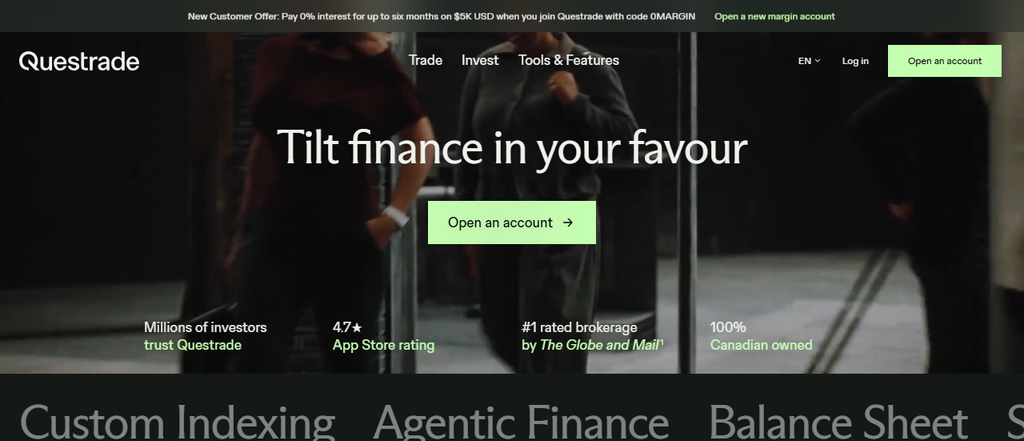
Similar to Wealthsimple, Questrade has accounts for TFSA, RRSA, and FHSA. Questrade also can hold margin accounts in both CAD and USD, which can assist more regular buying of U.S.-listed securities. Currency conversion should be considered when as a frequent cross-border investor.
Similar to Wealthsimple, Questrade’s total cost is Trading Fees + FX Costs + Account Fees + Fund MER + Other Applicable Charges. Questrade is for the DIY investor that is looking for more funded options and flexibility of choices in research for the market.
Key Features
- Trade Canadian and U.S. stocks and ETFs
- TFSA, RRSP, FHSA, and margin accounts
- CAD and USD account options
- Sophisticated research and trading tools
- Recurring investments with active portfolio management
Pros
- Excellent for DIY investors
- Extensive investment options
- USD account option is great for U.S. investors
- Great pricing for stocks and ETFs
Cons
- Significant FX costs
- Can be overwhelming for beginner investors
- Options and other specialized products are offered at a cost
- More advanced features demand more investor education
3. Qtrade Direct Investing
Qtrade Direct Investing offers its clients a full self-directed invest platform for Canadian and U.S. stocks, ETFs, mutual funds, bonds and GICs, as well as options and self-directed investing. Active investors will appreciate the lower cost per trade. TFSA, RRSP, FHSA, and non-registered accounts are available.
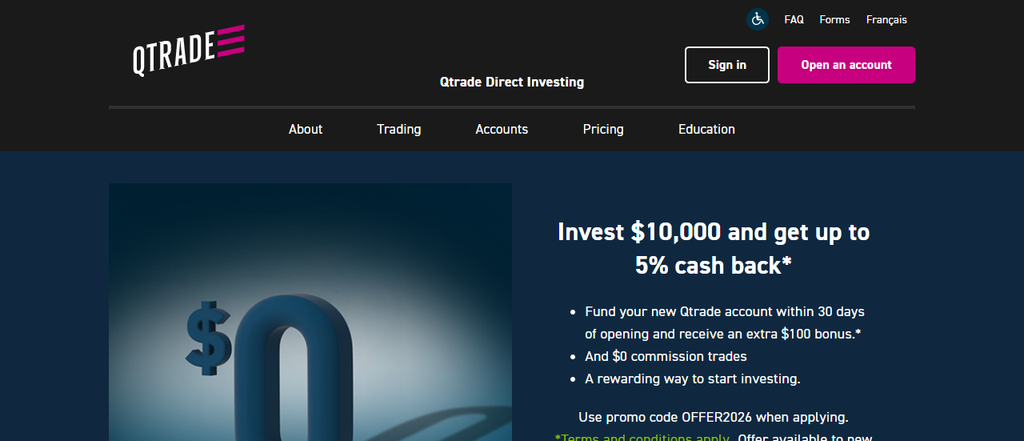
Consider the cost of FX when buying U.S. stocks, and ensure to account for MERs on ETFs or mutual funds in your portfolio. Qtrade offers additional value to clients with its portfolio analysis and research tools.
The fee structure is Total Cost = Trading Fees + FX Costs + Account Fees + Fund MER + Other Applicable Charges, making it appropriate for DIY research-driven investors.
Key Features
- Wide range of investment products including stocks, ETFs, mutual funds and fixed income
- TFSA, RRSP, FHSA and non-registered accounts
- Investing and research tools
- Stock and ETF screenings
- Latest market data available to trading
Pros
- Great research and analysis tools
- Affordable trading costs
- Plenty of investment options
- Ideal for long-term DIY investors
Cons
- U.S. investments incur FX costs
- Some account services might have fees
- More advanced features can be complex
- Less user-friendly than simple finance apps
4. TD Direct Investing
TD Direct Investing combines the infrastructure of one of Canada’s largest banks with self-directed investing. This service provides access to Canadian and U.S. stocks, ETFs, mutual funds, options, bonds and GICs through registered/non-registered accounts (TFSA and RRSP).
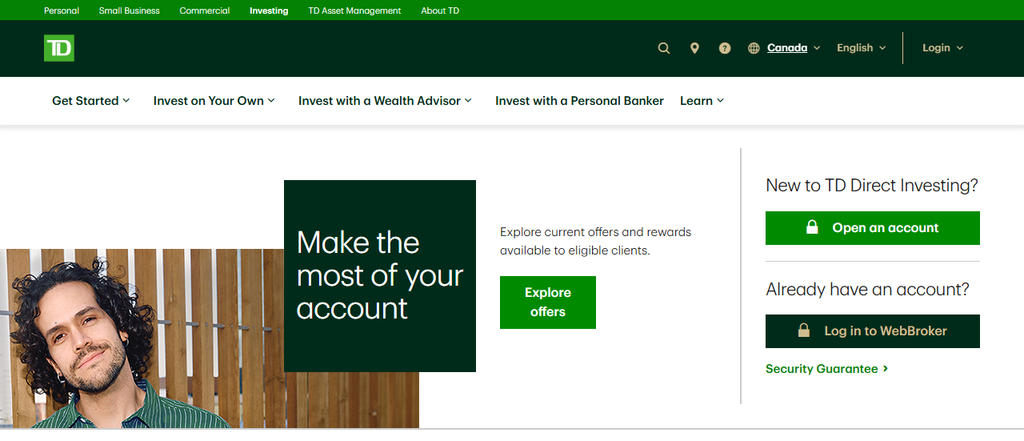
At times, TD Direct Investing may have trading commissions that are higher than competitors, yet some ETFs and actively traded equities may qualify for lower pricing. U.S. investors will want to check TD’s FX costs for converting CAD to USD. Funds that charge a MER also qualify in the cost analysis.
Therefore, the overall cost of investing is TD’s Total Cost = Trading Fees + FX Costs + Account Fees + Fund MER + Other Applicable Charges. TD Investing may appeal to investors requiring a strong bank and research integration.
Key Features
- Invest in Canadian and U.S. stocks and ETFs
- Access to TFSA, RRSP, FHSA and other registered accounts
- Invest in mutual funds, bonds, Guaranteed Investment Contracts (GICs) and options
- Access to market research and information
- TD banking services integration
Pros
- Strong integration with TD Bank
- Able to invest in a variety of options
- Established infrastructure for research and trading
- Good for those who want to combine banking and investments
Cons
- Trading commissions are on the higher side
- GICs and options investments incur FX costs
- Account fees may be applicable
- Less user friendly than other fintech apps
5. Scotia iTRADE
Scotia iTRADE gives you access to Canadian and US stocks and ETFs, mutual funds, options and fixed income. Scotia iTRADE supports registered and non-registered accounts and therefore can be used for both Retirement and non-Retirement investing. Although some commission-free fintech platforms may have lower trading commission costs, the ballpark costs are similar.
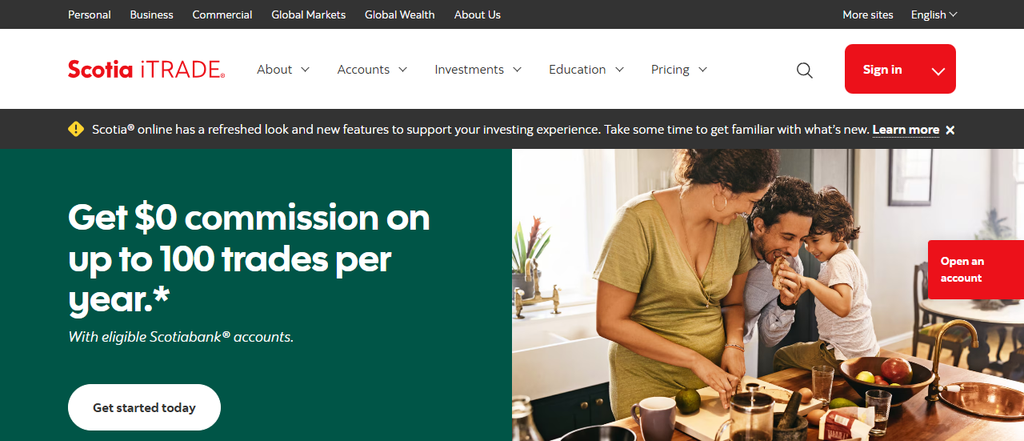
Active traders can qualify for lower costs on trading. Some ETFs can be traded commission free. When investing in the US, you will want to consider the foreign exchange costs.
Additionally, you want to consider mutual fund, ETF, or other investment costs. Total Cost = Trading Fees + FX Costs + Account Fees + Fund MER + Other Applicable Charges. This option would be better for investors who want to use a Bank’s Brokerage services.
Key Features
- Buy Canadian and U.S. stocks
- Trade in ETFs and mutual funds
- Access to options and fixed income products
- Open registered and non-registered accounts
- Scotia Banking connected with investment research
Pros
- A variety of investment options
- Good choice for Scotia customers
- Access to a range of account types
- Good research and investment tools
Cons
- Higher standard commissions
- U.S. investments incur FX costs
- Costs are related to account circumstances
- More complex than other investment options for first-time investors
6. BMO InvestorLine
BMO InvestorLine provides self-directed access for investors to trade stocks, ETFs, mutual funds, and other fixed income and investment products. You can choose from both registered accounts (RRSPs or TFSAs) as well as non-registered accounts based on your needs. The Total Cost will depend on trading frequency and will include commissions, currency exchange, and any fees on your account.
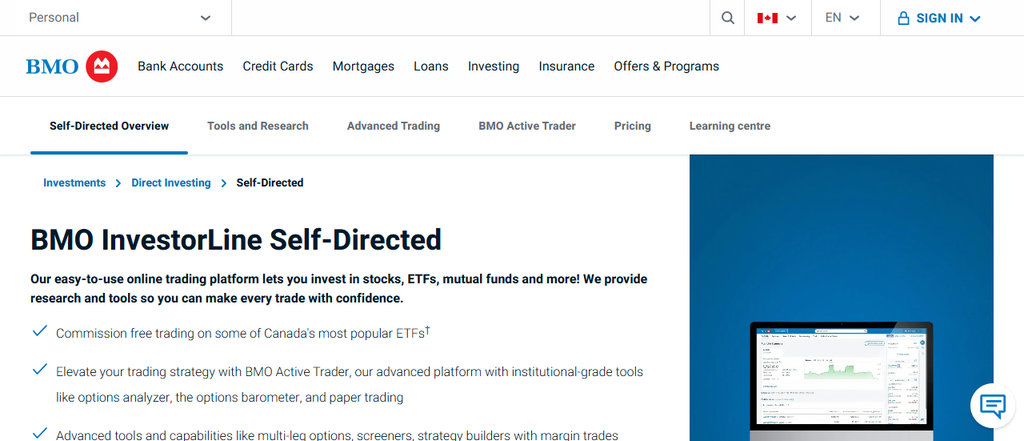
If you buy any US listed securities, you will want to account for Foreign exchange costs, as continuous conversions from CAD to USD will have a large effect on your portfolio returns.
Mutual fund and ETF investors should also account for the MER. Total Cost = Trading Fees + FX Costs + Account Fees + Fund MER + Other Applicable Charges. BMO is a good choice for investors who like the integration of Banking and research services.
Key Features
- Canadian and U.S. Securities and Exchange Commission (SEC) stocks and Exchange traded funds (ETFs)
- Fixed income and mutual funds
- Registered accounts including RRSP, TFSA, etc
- Investment analysis and research tools
- Integrated with BMO financial services
Pros
- Existing BMO customers will find this helpful
- Lots of options available to invest
- Good capability for investment research tools
- Good for self-directed investment and for long term investing
Cons
- Higher trading costs compared to available fintech options
- FX cost burden for U.S. trades
- Costs for account services may apply
- Less focus on simple mobile investing for customers
7. CIBC Investor’s Edge
CIBC Investor’s Edge is a Canadian discount broker with the ability to buy and sell Canadian and U.S equity, ETFs, mutual funds, and options as well as fixed income markets. With CIBC Investor’s Edge, users can create accounts of all types (i.e TFSA, RRSP, FHSA, non-registered) and credit/debit card accounts to fund transactions.
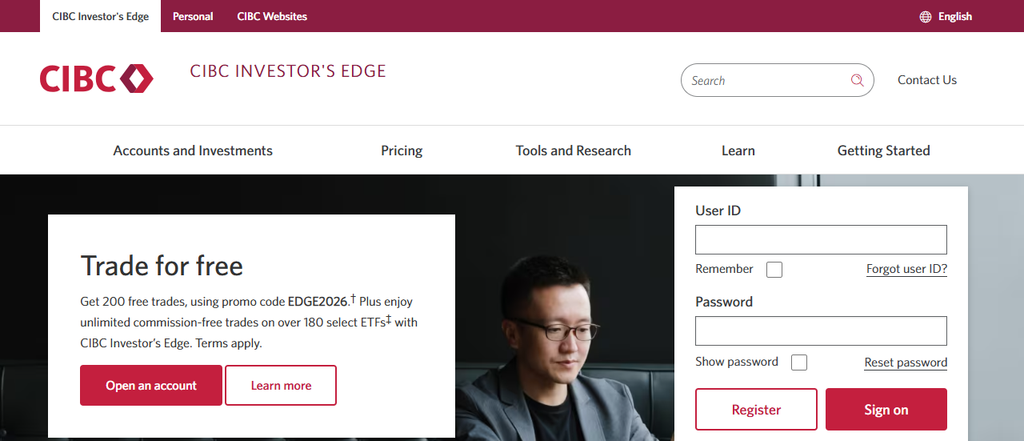
Trading costs will depend on security and client type, and some ETFs may even have commission-free or special pricing. Foreign exchange spread is always an important consideration for any trade involving conversion to U.S. dollars. For U.S. investments,
FX conversion costs can add up. Users should also be responsible for ETF or mutual fund MERs. Overall, the CIBC Investor’s Edge total cost is Trading Fees + FX Costs + Account Fees + Fund MER + Other Applicable Charges. This makes CIBC Investor’s Edge ideal for integrated banking and investing for current CIBC clients.
Key Features
- Canadian and U.S. stocks and ETFs
- TFSA, RRSP, FHSA, and all other non-registered and registered investment accounts
- Options and fixed income and mutual funds
- Research tools and investment portfolio management tools
- Integrated with CIBC banking services
Pros
- Considerable assortment of available accounts
- Good choice for existing CIBC clients
- Wide array of investment options
- Decent pricing for offered ETFs and investor categories
Cons
- Typical trading costs higher than investment app based brokers
- FX costs for U.S. securities apply
- Account fees apply based on account balance and other conditions
- Learning the interface may take some time for new users
8. Disnat (Desjardins Online Brokerage)
Disnat (Desjardins Online Brokerage) is connected with Disnat, and offers self-directed securities investing in both Canadian and U.S. markets, along with other investment products. Investors can open accounts of the TFSA and RRSP variety, and non-registered accounts.
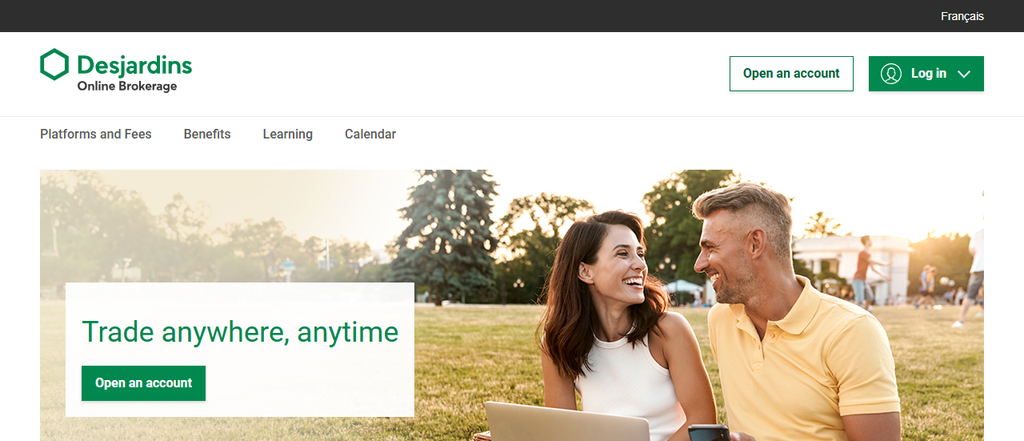
Total costs are a combination of trading and account related factors, conversion, and activity. Investors should be weary of FX costs on U.S. listed ETFs and stocks. Investors should also be responsible for ETF and mutual fund MERs.
The total cost is Trading Fees + FX Costs + Account Fees + Fund MER + Other Applicable Charges. Investors seeking self-directed investing in the Desjardins ecosystem will find Disnat ideal.
Key Features
- Self-directed investing in stocks and ETFs
- Access to both Canadian and U.S. markets
- RRSP, TFSA accounts, and other options available
- Online trading and offers portfolio management services
- Integrated with Desjardins financial services
Pros
- Great choice for Desjardins clients
- Flexible self-directed investing
- Access to both Canadian and U.S. major markets
- Good choice for investing for long term, to develop your portfolio and your wealth
Cons
- FX costs apply to U.S. investments.
- Some products might have unique costs.
- Some tools may be complex and difficult to master.
- Less beginner-friendly compared to basic investing applications.
9. Interactive Brokers (IBKR)
Interactive Brokers (IBKR) is a great option for active, experienced and internationally focused investors because it has access to all markets and trading products worldwide. For Canadian clients, the platform allows the trading of stocks and ETFs, in addition to Options and other securities.
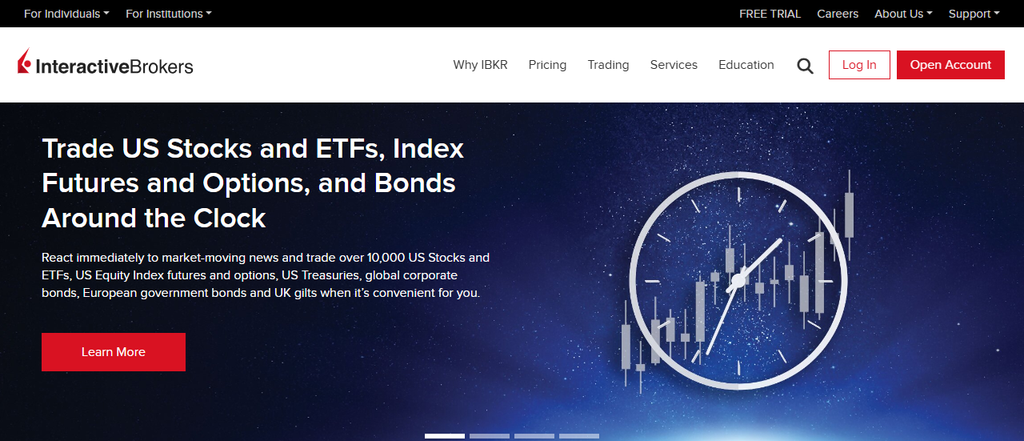
The platform is also known for affordable currency conversion and has some of the best trading tools available. Trading commission, however, is not fixed. There are many factors that would determine the exact price of each trade, such as the security, the market, and the pricing plan.
Investors must also consider the exchange rate, regulatory costs, data costs, and all other applicable fees. Fund or ETF costs should also include the MER. Therefore, the Total cost is the sum of Trading Fees, FX Costs, Account Fees, Fund MER, and Other Applicable Charges. IBKR is best suited for traders that want global access and low trading costs.
Key Features
- Global access to stocks and ETFs.
- Options and derivatives trading.
- Good currency conversion rates.
- Trade fractions of shares.
- Professional trading and analysis tools.
Pros
- Amazing access to global markets.
- Good trading and FX costs.
- Great trading tools.
- Great for active, professional traders.
Cons
- More difficult to learn.
- Designs for professional traders can overwhelm novices.
- Pricing can be tricky.
- Features are overwhelming and unnecessary for passive traders.
10. National Bank Direct Brokerage
National Bank Direct Brokerage is a Canadian self-directed brokerage that provides a trading platform allowing users to purchase stocks and ETFs within registered and non-registered accounts. TFSA and RRSP account structures are available to help users better manage their portfolios.
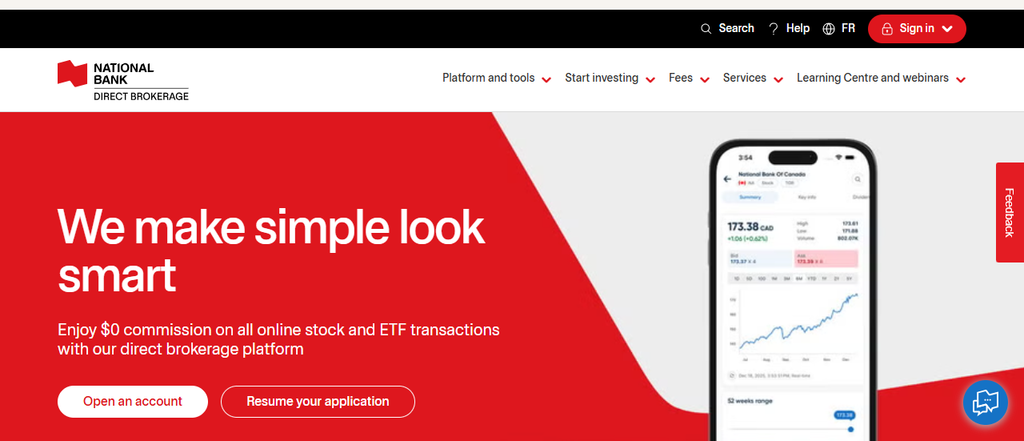
The brokerage is particularly appealing to investors with an emphasis on cost; however, the final cost to invest is dependent upon trading activity along with other transaction-specific costs. To calculate the total cost of an investment, you must account for trading fees, currency conversion fees, account fees, embedded fund management fees (MER), and other costs.
When investing in U.S. securities, you must calculate currency conversion costs; if you invest in ETFs or mutual funds, you must also consider the embedded MER of those funds. The total cost equation is as follows: Total Cost = Trading Fees + Currency Conversion Fees + Account Fees + Fund MER + Other Costs. In comparison to other Canadian financial service providers, National Bank Direct Brokerage is one of the best options out there for low-cost self-directed investing.
Key Features
- Self-directed trading of stocks and ETFs.
- Access to Canadian and U.S. markets.
- Registered accounts, TFSA, RRSP, etc.
- Online trading and portfolio tools.
- Integrated with other National Bank services.
Pros
- Good option for investors focused on costs.
- Good option for self-directed investment portfolios.
- Good access to registered investment accounts.
- Good for long-term investors in Canada.
Cons
- FX costs are an important consideration for U.S. investments.
- Advanced traders may prefer other trading platforms.
- Fees for some transactions may apply.
- Less focus on beginners compared to other investing applications.
Conclusion
Deciding among the 10 best investment apps in Canada 2026 will depend on your investment wants and needs along with the costs and account fees. Wealthsimple has a simple approach with other apps such as Questrade and Qtrade having a greater emphasis on self-initiated accounts and research tools. Interactive Brokers is better suited for investors who are global and active.
For investors who prefer a banking ecosystem and are more traditional, TD Direct Investing, Scotia iTRADE, BMO InvestorLine, and CIBC Investor’s Edge will also work well. Investors should compare trading fees with FX costs, account fees, fund MERs as no commission fee means the investment is not cost efficient.
FAQ
What is the best investment app in Canada in 2026?
There is no single best app for every investor. Wealthsimple is well suited to beginners, Questrade and Qtrade are strong choices for DIY investors, while Interactive Brokers (IBKR) is better for active and global investors.
Which investment app is best for beginners in Canada?
Wealthsimple is a strong beginner choice because of its simple interface, fractional-share investing, recurring investments and commission-free stock and ETF trading. Investors should still compare FX charges and fund expenses before investing.
Are investment apps in Canada really commission-free?
Some platforms offer $0 commissions on eligible stock and ETF trades, but commission-free does not mean completely free. Investors may still pay FX costs, ETF MERs, account fees, options charges or other applicable expenses.
Which investment apps offer TFSA, RRSP and FHSA accounts?
Major Canadian investment platforms generally support registered accounts such as TFSA, RRSP and FHSA, although the exact account lineup varies by provider. Investors should confirm eligibility and current account availability before opening an account.
What is the total cost of using an investment app?
A useful way to compare platforms is: Total Cost = Trading Fees + FX Costs + Account Fees + Fund MER + Other Applicable Charges. This provides a more realistic comparison than looking only at advertised trading commissions.