


This article will explore the top-ranked Stablecoin Payout Tools for Affiliate Networks. Fast and flexible affiliate commission payments will be the primary focus of this article. I will break down the payout models and fees, which stablecoins and blockchain networks are supported, how fast payments can be made, and compliance features, automation, and key advantages of each. This will help guide Affiliate Networks to the Stablecoin Payout Tool that best fits their payment needs.
What is Stablecoin Payout Tools for Affiliate Networks?
Stablecoin payout tools are used by affiliate networks to send affiliate payments via stablecoins such as USDC or USDT instead of bank transfers. These tools can handle recurring payments as well as mass payouts. They can handle transactions across various blockchain networks. Some tools can be integrated with stablecoin payments to be processed alongside fiat payments and within accounting systems.
They can also be used to streamline payments across borders. For networks, these tools lessen the burden of the traditional payment infrastructure and allow affiliates to receive payments in digital assets settlement that is much faster. Other tools may offer KYC/KYB verification, wallet management, transaction control, payout approvals, API integrations, reporting, and reconciliation.
Key Points
| Tool | Strengths | Best For |
|---|---|---|
| Eco | Native treasury + payout stack, strong compliance hooks | Affiliate networks needing end-to-end treasury + payouts |
| Bridge.xyz | 10,000+ batch size, global fiat rails, USDC/USDT/USDB | Large affiliate programs with global reach |
| BVNK | Regulated coverage, EMT support, fiat + stablecoin | Networks requiring regulatory-grade payouts |
| Circle Mint API | Direct USDC mint/burn, strong compliance | Affiliates preferring Circle-backed infrastructure |
| Conduit Pay | LATAM + Africa depth, local rails | Emerging market affiliate networks |
| Request Finance | Invoice-based payouts, multi-chain support | Affiliate programs with invoice workflows |
| Dakota | Intent-based routing, deterministic settlement | Networks needing SLA-backed payouts |
| Mesh Payments | Corporate card + stablecoin payouts | Hybrid affiliate + vendor ecosystems |
| Stripe Crypto Payouts | Largest distribution, fiat + stablecoin | Affiliate programs needing mainstream reach |
| Utopia Labs | DAO-native payouts, compliance hooks | Web3-native affiliate networks |
1. Eco
Eco’s features make it desirable for affiliate networks requiring efficient and automated payout systems. Eco’s infrastructure relies on programmable routing and settlement and thus does not require a typical affiliate dashboard. Eco’s compliance requirements will vary implementation and counterparty usage of the infrastructure.


The primary goal of Eco is to ensure predictable transaction economics. Eco does not state a universal affiliate payout. Eco plans to automate stablecoin payout with fast settlement.
Eco connects multiple blockchains and digital-asset markets through programmable routing. Eco has not stated what stablecoins are supported, and networks and assets should be verified prior to deployment.
Best For: Affiliate networks looking for fully automated cross-chain stablecoin payouts accessible via an API.
Key Advantage: Automated chain selection, intent-based routing, batch-payment and settlement confirmation.
Potential Limitation: More designed for developer teams, networks may experience this as lacking a ready-made affiliate payout dashboard.
Best Use Case: High-volume international affiliate commissions sent to recipients across different blockchain networks.
Watch Before Choosing: Verify current supported chains, stablecoins, pricing, and localized compliance for your payout region.
Eco Pros & Cons
| Pros | Cons |
|---|---|
| Fast, programmable stablecoin payouts | More technical than a simple payout dashboard |
| Supports automated payout workflows | Requires integration work |
| Useful for high-volume transfers | Network/asset availability should be verified |
| Designed for cross-chain payment infrastructure | May be more infrastructure-focused than affiliate-focused |
| Suitable for global payout operations | Commercial pricing may require inquiry |
2. Bridge.xyz
Bridge has affiliate network APIs for automated stablecoin transfers and fiat/stablecoin conversion. Bridge incorporates KYC and regulated financial infrastructure and thus places restrictions on certain regions and assets.
Likewise, Bridge supports integrations for which it charges various prices, offering an alternative set of developer fees instead of a fixed payout rate for affiliates. Bridge’s rapid blockchain settlement is complemented by flexible fiat payout with a chosen rail.
Bridge supports multiple EVM networks and Solana. Bridge’s stablecoins infrastructure, comprised of USDC and its issued stablecoins, is the focus, with asset availability depending on the route and jurisdiction.
Best For: Affiliate networks needing stablecoin payouts coupled with an on- and off-ramp for fiat as well as bank-rail access.
Key Advantage: Offers payout APIs, offers stablecoin transfers, and virtual accounts cross-border with fiat currency on- and off-ramps.
Potential Limitation: Cross-chain routing may be more limited as the sender typically chooses the destination chain as opposed to automated routing.
Best Use Case: Affiliate payouts where recipients may prefer stablecoins or local fiat.
Watch Before Choosing: KYB and compliance onboarding may make the implementation time longer for larger or regulated payout programs.
Bridge.xyz Pros & Cons
| Pros | Cons |
|---|---|
| Strong stablecoin payment infrastructure | KYB/onboarding may take time |
| API-based payout automation | Requires technical integration |
| Supports stablecoin-to-fiat workflows | Pricing varies by service and route |
| Useful for international payouts | Availability differs by jurisdiction |
| Suitable for businesses scaling payment operations | Not a dedicated affiliate-management platform |
3. BVNK
BVNK has a stablecoin payment infrastructure targeting enterprise needs, making it suitable for global affiliate networks.
Payout Model: Blockchain settlement connects to fiat payment rails. Businesses are now able to settle between crypto and fiat. Compliance: BVNK’s infrastructure is built around regulated fiat and crypto activities and compliance.
Fees: Transaction pricing is based on several factors. These factors may include the business relationship, the transaction volume, and the currency and payment route. Payout Speed: Stablecoins settle in a few minutes, while transactions via other payment rails may take longer. Supported Networks:
The availability of blockchains and payment rails is based upon the integration. Supported Stablecoins: The USD-backed stablecoins, USDC, is offered across the services that BVNK supports.
Best For: Large volume enterprise affiliate networks, fintechs, and other businesses requiring significant international payout volumes.
Key Advantage: Offers an integrated stablecoin payment system for payouts and treasury, coupled with compliance screening and payment in fiat.
Potential Limitation: Networks requiring an out of the box system for affiliate payouts may find enterprise solutions and infrastructure more complex than necessary.
Best Use Case: Programs with international affiliates that need a dedicated professional team for an integrated treasury, reconciliation, and compliance services.
Keep in Mind: Prospective users should take a look at the onboarding process, jurisdictions supported, pricing, and settlement time.
BVNK Pros & Cons
| Pros | Cons |
|---|---|
| Enterprise-focused payment infrastructure | May be complex for small networks |
| Supports crypto and fiat payment workflows | Enterprise onboarding may be required |
| Strong international payment capabilities | Pricing is generally relationship-dependent |
| Useful for treasury and payout operations | Geographic availability can vary |
| Suitable for high-volume businesses | More infrastructure-oriented than affiliate-specific |
4. Circle Mint API
Circle Mint is a great option for those that do not want to use a traditional payout marketplace. It gives users direct access to the automated USDC infrastructure. Payout Model: Infrastructure integration by businesses automates workflows to manage, mint, transfer, and redeem USDC.
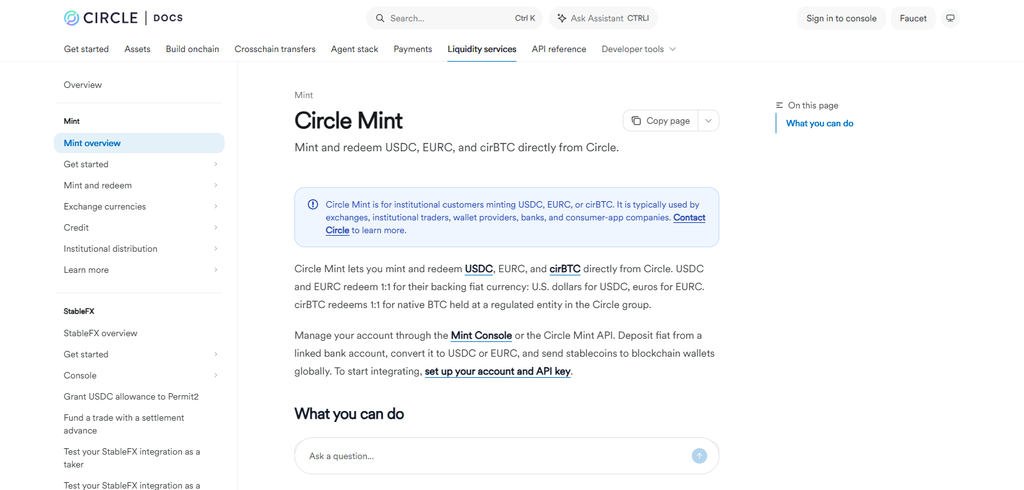
Compliance: Circle uses interior financial infrastructure and regulatory controls in accounting to determine the specific controls and regulations surrounding eligible customers. Fees: Standard USDC redemptions may be done for no fee, however, this may not always be the case and are subject to thresholds or conditions.
Payout Speed: Fiat redemptions take longer than on-chain transfer settlement. Supported Networks: USDC is offered through multiple blockchain networks. Supported Stablecoins: USDC is the default stablecoin, however EURC is offered through some services at Circle.
Best Use Case: Affiliate networks that largely want USDC-based payouts with direct issuer infrastructure.*
Unique Feature: Direct access Circle’s USDC ecosystem and cross-chain settlement through CCTP.*
Potential Con: Its USDC-centric model is more restrictive of affiliates that need USDT or other stablecoins.*
Best Use Case: Affiliate networks standardizing commissions in USDC across various blockchain ecosystems.*
Keep in Mind: Confirm the exact blockchain availability, account eligibility, redemption costs, and compliance for your desired markets.
Circle Mint API Pros & Cons
| Pros | Cons |
|---|---|
| Direct access to Circle’s USDC infrastructure | Primarily USDC-focused |
| Strong option for automated USDC transfers | Less suitable for USDT-focused programs |
| Supports multiple blockchain networks | Account eligibility requirements apply |
| Useful for developer-led payment systems | Requires technical implementation |
| Established stablecoin infrastructure | Exact costs depend on services used |
5. Conduit Pay
Conduit Pay focuses on B2B payments. It may be useful for those looking to set up stablecoin funding that is tied to local fiat payouts.
Payout Model: Businesses have a few payout methods using stablecoins, including using a stablecoin-to-fiat conversion option before sending payments through local and international payment rails.
Compliance: The platform routes payment flows and performs the needed business and recipient checks based on the specific jurisdiction and transaction type. Fees: The pricing model varies with the payment route, currency, and transaction requirements, unlike a single affiliate payout fee.
Payout Speed: Conduit enables stablecoin-to-fiat conversions and payouts in minutes. Supported Networks: Availability is dependent on the selected stablecoin. Supported Stablecoins: It offers stablecoins for more than 15 fiat currencies.
Best Use Case: Affiliate networks facilitating international payouts primarily in emerging market corridors.*
Unique Feature: Integrates stablecoin transactions with local FIAT and cross-border payment transactions.*
Potential Con: It is more aligned with corridor-based B2B payments, making it less optimal for networks looking for a large, consumer-centric payout infrastructure.*
Best Use Case: Programs that pay contractors or partners across many geographies.*
Keep in Mind: Consider corridor availability, supported currencies, transaction pricing, and compliance costs in relation to settlement time.
Conduit Pay Pros & Cons
| Pros | Cons |
|---|---|
| Designed for cross-border payments | Not specifically built for affiliate management |
| Combines stablecoin and fiat payment workflows | Route availability varies |
| Useful for international affiliate payouts | Pricing depends on payment corridor |
| Supports local-fiat settlement | Compliance requirements may differ by market |
| API-based infrastructure | May require integration resources |
6. Request Finance
Request Finance unifies crypto payments, invoices, accounting workflows, and payouts, and so is well adapted to affiliate networks looking to integrate transaction records and payment systems. Payout Model: Supported payment methods include automation for individual payments and batch payments, and crypto-to-fiat transactions.
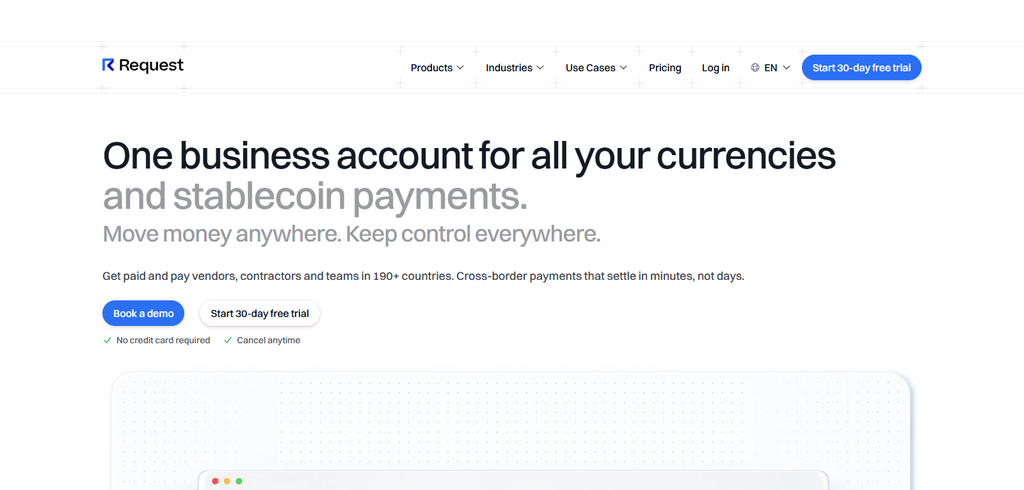
Compliance: Business-account services leverage regulated infrastructure and policies and enforce jurisdiction-related legal restrictions. Fees: Depending on the plan, request states minimum fees of $10 for local payments, with $30 for SWIFT payments and volume discounts. Payout Speed: Payments made on the blockchain are fast.
Fiat payouts are contingent upon the banking infrastructure. Supported Networks: It supports 20+ networks, including Ethereum, Polygon, Base, Arbitrum, Solana, Optimism, Avalanche, and Tron. Supported Stablecoins: DC, USDT, EURC, and other assets depending on the network and jurisdiction are supported.
Best Use Case: Affiliate networks that want to integrate payouts with invoices, approvals, accounting, and reconciliation.*
Unique Feature: Its finance-ops focused approach makes it helpful for tracking payments and connecting transactions to record business activities.*
Potential Limitation: Current cross-chain solutions are more restricted than dedicated stablecoin routing APIs.
Best Use Case: Stablecoin-routing APIs make the most sense for networks with partners where accounting, invoicing, approval, and reporting workflows are significant.
Watch Before Choosing: Make sure they support the chains, stablecoins, and payment methods you need, and check their pricing. Also see if their accounting workflow integrates with your affiliate-management system.
Request Finance Pros & Cons
| Pros | Cons |
|---|---|
| Combines payments with accounting workflows | Can be more feature-rich than needed for simple payouts |
| Supports batch payments | Some fiat payment fees can be significant |
| Useful for reconciliation and reporting | Network support varies by asset |
| Supports crypto-to-fiat payment workflows | Not solely focused on affiliate payouts |
| Helpful for finance teams | Pricing depends on payment method and plan |
7. Dakota
A dedicated global infrastructure for programmable money can accommodate stablecoins, wallets, FX, fiat rails, and compliance for affiliates all in one API.
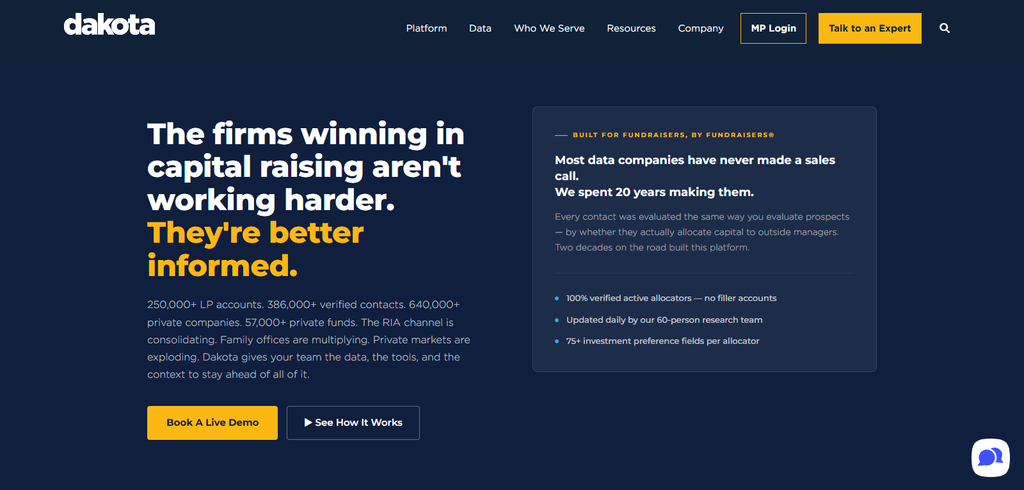
Payout Model: Modern digital asset technology enables more flexible and programmable solutions than traditional affiliate payout models. Compliance: Dakota has built its own compliance infrastructure.
The particular features will depend on the transaction and the jurisdiction. Fees: Public information does not set a fixed affiliate payout fee for which businesses can prepare. The pricing is flexible based on the integration and the volume of transactions.
Payout Speed: Dakota’s API structures transactions between fiat and stablecoins quickly. Supported Networks: Blockchain availability will depend on the implementation and the supported routes. Supported Stablecoins: The available stablecoins will depend on the payment and settlement routes selected.
Best For: Affiliate networks that wish to automate payouts coupled with treasury and approval workflows.
Key Advantage: Dakota offers bulk payouts and is compatible with screening recipients, compliance workflows, and controls suited for recurring audits.
Potential Limitation: Providers like Dakota may require financial-operations integration outside basic payout solutions.
Best Use Case: High growth affiliate networks that require access to extensive payout controls.
Watch Before Choosing: Evaluate their supported chains, recipient verification, approval workflows, reporting, and regional availability.
Dakota Pros & Cons
| Pros | Cons |
|---|---|
| Designed for programmable money movement | May require technical integration |
| Supports controlled payout workflows | Not a traditional affiliate dashboard |
| Useful for treasury operations | Pricing may require a business quote |
| Can support approval and compliance workflows | Supported assets and networks should be verified |
| Suitable for growing payment operations | May be more infrastructure than smaller networks need |
8. Mesh Payments
As a crypto payments processor, Mesh Payments processes payments as well as cash-outs across chains and digital assets. Payout Model: It depends more on the particular crypto payment or payout workflow than on an individual affiliate-network payout product.
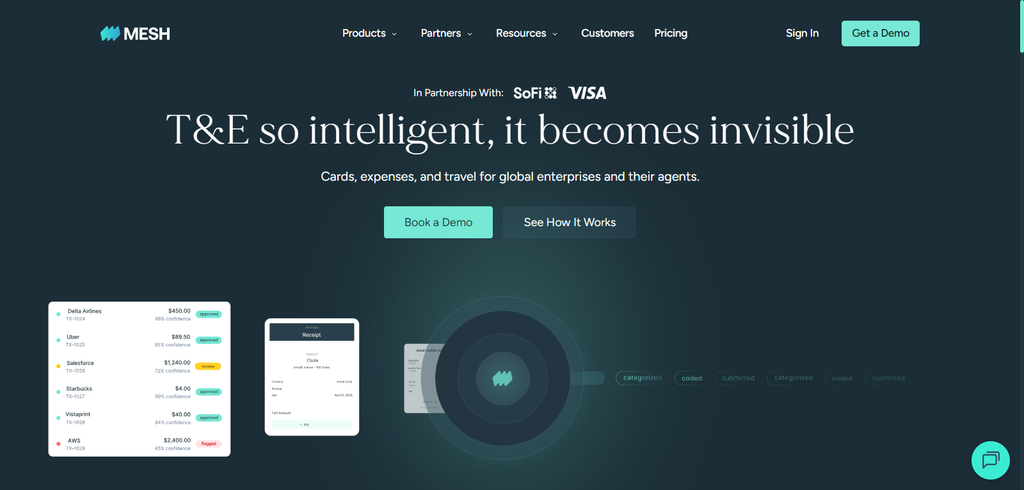
Compliance: Businesses should consider KYC, transaction monitoring, geographic restrictions, and recipient due diligence before using crypto payout services. Fees: There is no published public fee that can be assumed as an affiliate stablecoin payouts service cost – costs depend on the type of transaction and service. Payout Speed: With blockchain transactions, the settlement of the payment can be done quickly.
However, a fiat currency conversion and banking can additionally process the payment. Supported Networks: The availability of payment networks depends on the payment integration that is being used. Supported Stablecoins: The use of stablecoins needs to be confirmed for the account, the specific jurisdiction, and the payout.
Best For: Corporations needing payouts in stablecoins, but also needing wider payment and spend management.
Key Advantage: Mesh payments offers controls and approval spend management umbrella which integrates payment workflow.
Potential Limitation: Solutions like Mesh Payments provide less OpRAIL focus and flexibility than competitors like Eco or Bridge.
Best Use Case: Stablecoin payment and financial management integration best suits mid-sized affiliate networks.
Mesh Payments Pros & Cons
| Pros | Cons |
|---|---|
| Broader financial-management capabilities | Less focused on pure stablecoin payouts |
| Useful for payment and spending operations | Crypto functionality may vary by product |
| Can support business payment workflows | Exact network support should be confirmed |
| Suitable for finance teams | May not fit crypto-native payout requirements |
| Can reduce reliance on multiple finance tools | Pricing depends on selected services |
9. Stripe Crypto
For platforms and marketplaces requiring global payout options, the use cases for Stripe’s stablecoin infrastructure are growing. Payout Model: Stripe Global Payouts includes both fiat-backed stablecoin payouts and stablecoin payouts.
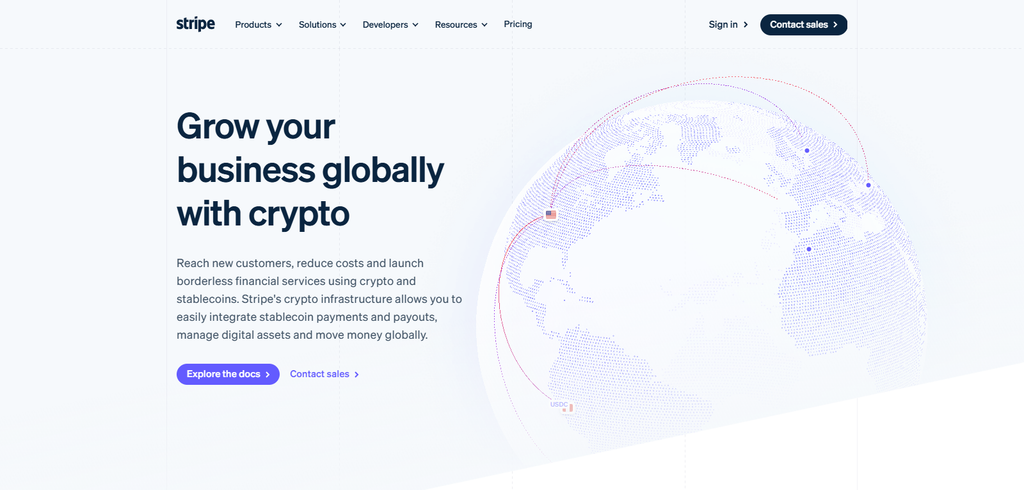
For USDC payouts, Stripe Express is used. Compliance: Stripe implements account verification, financial-services controls, and jurisdiction-based eligibility. Fees: Pricing for stablecoin payouts is determined at the Stripe product, country, payout method, and transaction level product. As a result, there are no stablecoin payout fees.
Payout Speed: Once a stablecoin transfer is initiated, it can settle quickly. However, it ultimately depends on the supported service and the destination. Supported Networks: Currently, for Stripe Express, USDC payouts are supported on Base and Polygon. Supported Stablecoins: Currently, the functional payouts only support USDC.
Best For: Affiliate platforms that use Stripe and already have a payment stack that offers stablecoin payouts.
Key Advantage: Developers work in an environment that they are familiar with rather than creating a payment system from scratch.
Potential Limitation: Stablecoin payouts and blockchain coverage may be more limited than dedicated multi-chain payout providers.
Best Use Case: Affiliate networks on Stripe that offer payouts in the form of USDC.
Watch Before Choosing: Verify account requirements, country eligibility, supported chains, current fees, payout limits, and stablecoin availability before launch.
Stripe Crypto Pros & Cons
| Pros | Cons |
|---|---|
| Integrates with the Stripe ecosystem | Stablecoin support can be more limited |
| Familiar infrastructure for Stripe users | Availability varies by country |
| Useful for platform and marketplace payouts | USDC is central to current payout functionality |
| Developer-friendly integration options | Eligibility requirements apply |
| Strong option for existing Stripe businesses | May lack specialized crypto treasury features |
10. Utopia Labs
Utopia Labs focuses on crypto-native financial operations. Affiliate networks that process recurring digital-asset payments may find it relevant. Payout Model: Utopia Labs’ approach is more aligned to treasury, payment, and operational workflows as opposed to traditional affiliate-network software.

Compliance: Affiliate networks should assess if account verification, wallet controls, and jurisdiction requirements are covered. Fees: There should not be an assumption of a single public fee of affiliate stablecoin payouts. The cost may depend on the product, network, and the transaction structure.
Payout Speed: Broader payments settle quickly once a transaction is submitted, and stablecoin transfers are no exception. Supported Networks: This depends on the Utopia product and current integration. Supported Stablecoins: What stablecoins are available (if any) depends on the supported networks and products; therefore, affiliate networks should check current asset availability.
Best For: Affiliate networks, DAOs, and Web3 organizations that manage payouts from treasury or multisig wallets.
Key Advantage: Bulk payout workflows help simplify payout operations and retains control over payments.
Potential Limitation: Not the best fit for traditional affiliate networks that require multi-rail payouts or extensive fiat payout and banking integrations, as well as extensive enterprise compliance infrastructure.
Best Use Case: Affiliate programs in Web3 that pay contributors directly from an on-chain treasury.
Watch Before Choosing: Consider approval workflows, compliance, supported chains, stablecoins, signer availability, and settlement.
Utopia Labs Pros & Cons
| Pros | Cons |
|---|---|
| Well suited to crypto-native organizations | Less suitable for traditional fiat-heavy networks |
| Useful for bulk on-chain payments | Requires blockchain familiarity |
| Supports treasury-oriented workflows | Banking/fiat capabilities may be limited |
| Helpful for recurring Web3 payouts | Supported networks and assets should be verified |
| Can simplify multisig-based payment operations | May not provide all enterprise compliance infrastructure |
Conclusion
Stablecoin payouts have recently become a viable option for affiliate networks looking to improve ease, global availability, and more flexibity in their systems for commission payouts in 2026. The optimal solution will depend on the network’s liquidity, preference for stablecoins, their blockchain of choice, level of automation, and overall cost.
In the API driven payment infrastructure space, Eco and Bridge.xyz are strong options. For international payment-centric businesses, both BVNK and Conduit Pay could work better. The Circle Mint API is designed for networks preferring USDC, whereas Request Finance works better for business accounting and payment operations.
Dakota, Stripe Crypto, and Utopia Labs work best for more specialized workflows. Affiliate networks should consider compliance and recipient coverage, comparison of Integrations and payout speed, and cost, not just features, as they evaluate their options.
FAQ
What are stablecoin payout tools for affiliate networks?
Stablecoin payout tools help affiliate networks send commissions to publishers, partners, and affiliates using digital currencies such as USDC or USDT. They can automate payments and support cross-border settlements.
Why should affiliate networks use stablecoin payouts in 2026?
Stablecoins can provide faster cross-border settlement, predictable digital-dollar value, automated payouts, and access to affiliates who prefer receiving cryptocurrency instead of traditional bank payments.
Which stablecoins are commonly used for affiliate payouts?
USDC and USDT are among the most commonly supported stablecoins. Availability varies by provider, blockchain network, jurisdiction, and account type.
Are stablecoin payouts faster than traditional affiliate payments?
They can be. On-chain stablecoin transactions may settle within minutes, while traditional bank transfers can take longer, especially for international payments. Actual speed depends on the blockchain and payout provider.
What fees should affiliate networks compare?
Networks should compare platform fees, transaction fees, blockchain gas fees, conversion costs, withdrawal charges, FX costs, and minimum payout fees rather than looking at only one advertised fee.