
With the rise of multi-chain applications, reliable RPC infrastructure has become a must-have to connect dApps, wallets, DeFi platforms and other Web3 products with blockchain networks. Ankr is a popular choice, but developers may need alternatives depending on network coverage, performance, pricing, scalability, or specialized features. In this article, I’ll discuss the Top Ankr Competitors for Multi-Chain RPCs and compare their key features, infrastructure, pricing, and ideal use cases.
What Is a Multi-Chain RPC?
Multi-chain RPC (Remote Procedure Call) is an infrastructure service that enables applications to communicate with multiple blockchain networks using available endpoints. Instead of running individual nodes for each blockchain, developers may use a single RPC provider to send requests, retrieve blockchain data, submit transactions, and communicate with intelligent contracts across different networks.
Multi-chain RPC services usually provide support for networks like Ethereum, Polygon, BNB Chain, Arbitrum, Solana, and other ecosystems, helping dApps, wallets, DeFi platforms, exchanges, and Web3 apps to make blockchain connectivity and infrastructure management easier.
Why Look for Ankr Competitors?
More Blockchain Support: Some options support additional blockchain networks, enabling developers to build applications that interact with multiple ecosystems without having to manage separate infrastructure providers.

Improved RPC Performance: Alternative providers with different latency, throughput, routing, and infrastructure configurations provide developers with the ability to choose services for applications that demand lower latency and more reliable RPC responses.
Flexible Pricing: Competitors offer multiple pricing models, free tiers, limits on requests, pay-as-you-go models, enabling developers to choose better based on the volume of usage and budgets for infrastructure.
Dedicated Infrastructure: Certain platforms offer dedicated or private RPC endpoints. These allow high-volume applications to access isolated resources, improved capacity, and more predictable performance for production workloads.
Advanced Developer Tools: Competitors may provide additional APIs, WebSockets, archive data, debugging tools, blockchain data services, and dev features that help you build complex multi-chain applications.
More Scalability: Other RPC providers may offer infrastructure that can handle more requests, supporting growing dApps, DeFi protocols, wallets, gaming platforms, exchanges, and enterprise blockchain applications.
Decentralized RPCs: Some providers are based on distributed node networks rather than primarily centralized infrastructure, providing developers an alternative architectural approach to accessing blockchain data across multiple networks.
Specialized Use Cases: Various providers support specific use cases such as DeFi, gaming, wallets, exchanges, analytics, payments, or enterprise use cases so developers are able to pick the infrastructure best suited for their workload.
Key Points
1. Alchemy
Alchemy is a Web3 infrastructure platform that was founded in 2017 and is one of the leading alternatives for developers looking for multi-chain RPC access. It supports major networks like Ethereum, Solana, BNB Smart Chain, Avalanche, Polygon, Arbitrum, Optimism, Base, Starknet and zkSync.
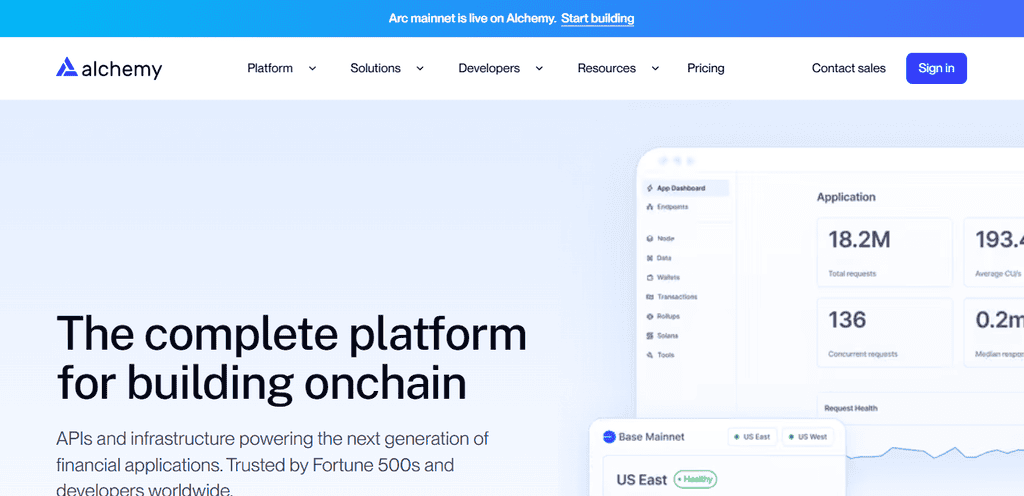
Its infrastructure includes Node API, Smart WebSockets, archive data, Debug and Trace APIs and developer APIs for NFTs, tokens, transfers and wallets. Alchemy is built for scalable infrastructure and high throughput apps.
The current Pay-As-You-Go plan starts at $0.45 per 1 million Compute Units. The free tier gives you 30 million CUs monthly and 25 RPS. Suitable for dApps, DeFi platforms, wallets, gaming applications and Web3 developers that require extensive chain coverage.
Characteristics
- RPC APIs for multi-chain
- Websockets and live data
- Token, NFT and wallet APIs
- Developer infrastructure that scales
Best Match
- DeFi apps
- NFT Marketplaces
- Wallet Web3
- Popular dApps
2. QuickNode
Founded in 2017, QuickNode offers multi-chain RPC infrastructure for developers building blockchain applications. Its Core RPC API provides JSON-RPC, REST and WebSocket access to 80+ chains such as Ethereum, Solana, Bitcoin, Base and Hyperliquid HyperEVM.
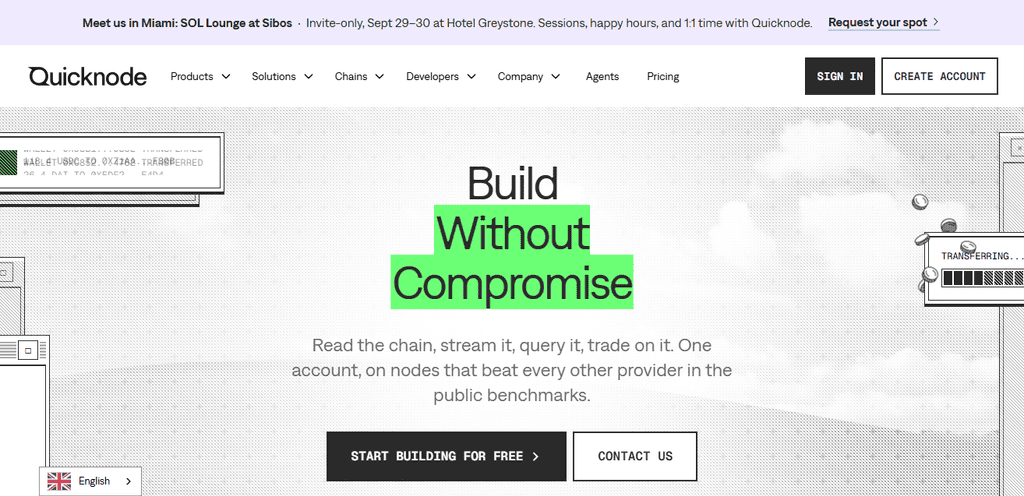
Its infrastructure comprises full and archive nodes, dedicated clusters and high-capacity endpoints, built for production workloads. QuickNode has an average Core RPC response time of 81ms, and dedicated infrastructure that can handle much higher throughput for demanding applications.
It is used by developers for dApps, wallets, DeFi, trading platforms, NFT applications and blockchain data services. It’s currently priced with a 10M API-credit free trial and paid plans start with Build at $49/month or $34/month when billed annually.
Main Features
- Multi-chain RPC end-points
- REST, JSON-RPC and Websocket APIs
Dedicated node infrastructure - blockchain and data API add-ons
Best match
- Trading software
- *DeFi developers
- Gaming dApps
- High volume web3 applications
3. Infura
Infura is a veteran infrastructure provider founded in 2015. It is focused on providing reliable API and RPC connectivity. It is built on a platform that supports 40+ networks with developers able to access the major blockchain ecosystems via managed infrastructure.
Infura offers RPC endpoints, full archive data, Debug and Trace APIs, Gas API and other Web3 development services. Its infrastructure is designed for applications that need to connect to the blockchain reliably without running their own nodes.
Developers use Infura for dApps, wallets, DeFi protocols, NFT platforms, exchanges & blockchain applications that need API-based access to the network. The Core plan is free with 3 million daily credits Developer is $50/month with 15 million daily credits and other features Team starts at $225/month.
Main Features
- Management of blockchain RPC nodes
- Multichain & Ethereum support
- Debug, Trace and Archive APIs
- Robust, API-based infrastructure
Best match
- dApps on Ethereum
- Wallets Providers
- Decentralized finance ( DeFi ) protocols
- Enterprise web3 solution
4. Chainstack
Chainstack is a managed blockchain infrastructure provider (est. 2018) offering multi-chain RPC, dedicated nodes, and self-hosted deployment. Its infrastructure covers major public blockchain protocols and offers global and regional nodes, archive data, WebSockets, dedicated nodes and geo-balanced RPC infrastructure.
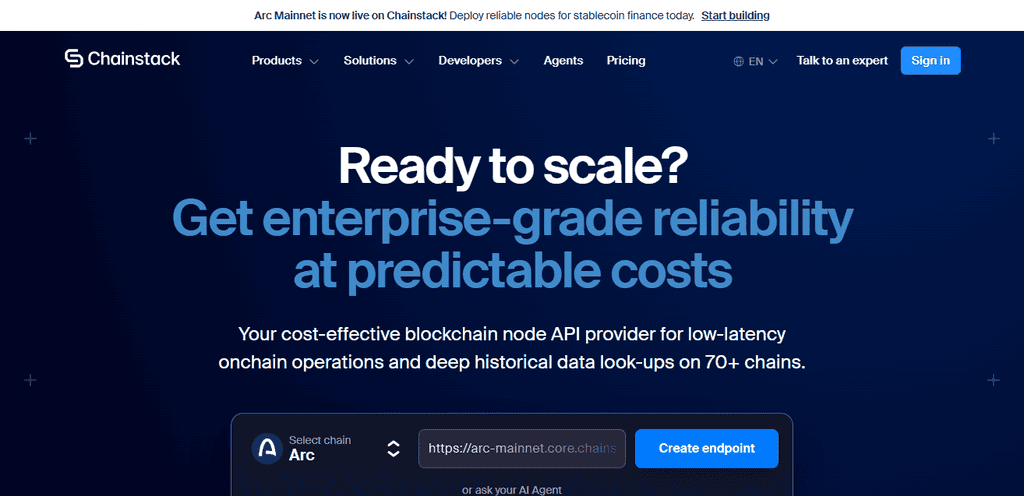
With configurable infrastructure, Chainstack delivers predictable performance and its dedicated nodes give production applications isolated resources and control. Developers use it for DeFi, trading, wallets, analytics, gaming, enterprise blockchain apps and high-volume dApps.
The Developer plan is free with 3 million request units per month at 25 RPS. Paid plans start at $49/month for Growth and $199/month for Pro today with higher request limits, archive data and dedicated infrastructure available as workloads grow.
Key Features
- Multi-chain node handling
- Dedicated nodes and archive
- World-wide RPC infrastructure
- WebSocket and JSON-RPC access
Best-Fit
- Blockchain Projects for Enterprises
- DeFi apps
- Blockchain analytics
- dApps on a large scale
5. dRPC
dRPC is a decentralized RPC infrastructure provider that connects developers with distributed blockchain node providers. Its infrastructure is built upon a network of independent RPC providers and routing mechanisms, not a single centralized node infrastructure.
The platform is multi-chain, supporting multiple blockchain ecosystems such as Ethereum and other major EVM networks like Polygon, Optimism, Base, BNB Smart Chain and Arbitrum. This approach is especially suitable for applications requiring redundancy and distributed access to the blockchain data.
Developers are able to use dRPC for dApps, wallets, DeFi applications, infrastructure services and other Web3 products that need RPC connectivity. It is priced in ** Compute Units ** and the current docs show ** $ 0.30 per 1 million CUs ** . Individual RPC methods generally use a standard amount of CUs .
Main Features
- Decentralized RPC-network
- Multi-chain interconnectivity
- Node providers distributed
- RPC routing and failover
Most Relevant
- Applications, decentralized
- Web3 infra providers
- Multi-chain wallet
- Projects looking for RPC redundancy
6. GetBlock.
GetBlock, has been in business since Q4 2019, and provides managed RPC infrastructure and API access to more than 130+ blockchain networks. Its infrastructure consists of shared nodes, dedicated nodes, JSON-RPC, WebSockets, archive data, MEV-protected endpoints and multi-region routing.
GetBlock is suitable for small development projects as well as high load production applications. It has a performance focused infrastructure with configurable RPS limits. Dedicated nodes can provide higher capacity and isolated resources for demanding workloads.
GetBlock enables developers to create dApps, DeFi, wallets, exchanges, blockchain analytics and the like that need wide chain coverage. The free plan now offers 50K Compute Units and 20 RPS, with paid shared-node plans beginning at approximately $39–$49/month based on the current pricing model.
Main Features
- 130+ Blockchain
- Shared and dedicated nodes
- WebSocket & JSON-RPC API’s
- MEV-protected archiving and infrastructure
Best Fit
- Multi-chain dApps
Cryptocurrency exchanges - DeFi platforms
- Blockchain analytics projects
7. NOWNodes
Founded in 2019, NOWNodes is a blockchain node infrastructure provider providing API and RPC access to a wide range of blockchain networks. Its infrastructure is designed for developers and businesses who need managed node connectivity and don’t want to maintain their own blockchain servers.
The platform provides node access, API endpoints, and blockchain data for networks used by wallets, exchanges, payment systems and other Web3 apps. Its multi-chain interface is useful for projects needing access to multiple blockchain ecosystems through a single infrastructure provider. Developer use cases include wallets, exchanges, portfolio services, payment apps, and blockchain integrations.
API access and node plans are generally the basis of the pricing structure, with availability and limits varying based on the supported blockchain and package, so developers should check the current plan for their required network before deployment.
Highlights
- APIs for Blockchain
- Multi-chain node access
- Node infrastructure management
- Integrated developer connectivities
Closest match
- Cryptocurrency wallets
- Swap
- Payment apps
- Blockchain-focused fintech products
8. BlockPI
Founded in 2020, BlockPI provides multi-chain RPC infrastructure with a focus on reliable, scalable and cost-efficient blockchain connectivity. Its infrastructure includes JSON-RPC, HTTPS, WebSocket, archive nodes, private RPC, MEV protection and dedicated technical support. BlockPI offers multi-chain support and geographically distributed infrastructure for applications that need stable RPC Access.
Its network-oriented architecture is designed to help developers cope with high request volumes while maintaining consistent connectivity. DeFi apps, wallets, exchanges, Web3 games, and other dApps that need scalable RPC endpoints are typical users.
BlockPI currently has a free package with 50 million request units per month for registered users, in addition to paid options such as Pay-As-You-Go and plans such as Elementary and Premium. The published pricing also notes 99.99% uptime over a 90-day period for its Stable service.
Main Features
- WebSocket and HTTPS endpoints
- Multi-chain RPC infrastructure
- RPC Private and dedicated
MEV-protected access
Best matching
- DeFi protocol
- Apps for Trading
- Web3 wallet
- dApps with large volume
9. Tatum
Tatum, established in 2018, is a blockchain development platform that integrates API-based blockchain infrastructure with tools for developing financial and Web3 applications. Tatum provides wider blockchain APIs for transactions, assets, wallets and application development across multiple networks rather than just traditional RPC endpoints.
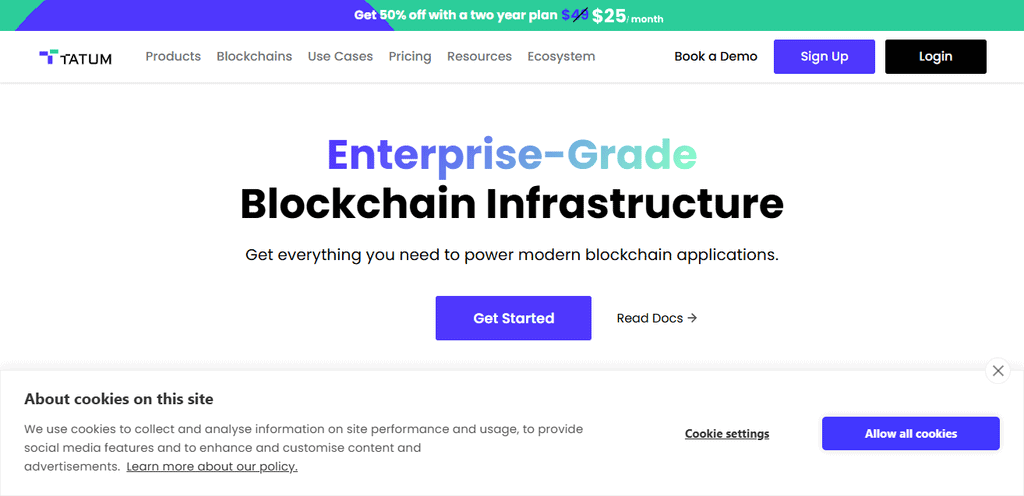
The infrastructure is designed for fintech platforms, payment applications, wallets, exchanges, custody products and other blockchain-enabled services. Tatum allows developers to interact with blockchain networks without the need to manage their own node infrastructure,
It offers dedicated API keys for when production workloads require higher throughput. Current dedicated API-key pricing starts at $99/month for 10 RPS with tiers of 25, 50 and 100 RPS at higher prices.
Highlights
- Blockchain APIs for multi-chain
- Transaction and wallet APIs
- payment and asset infrastructure
- Developer tools for blockchain
Best Fit Solution
- Wallets for crypto
- Fintech Applications
- Payment gateways
Exchanges & custody products
10. Pocket Network
Pocket Network (launching in 2017) is another way of building multi-chain RPC infrastructure but they use a decentralized network of node operators. The gateway architecture redirects application requests to supplier nodes through gateways, creating a distributed infrastructure layer to access the blockchain data.
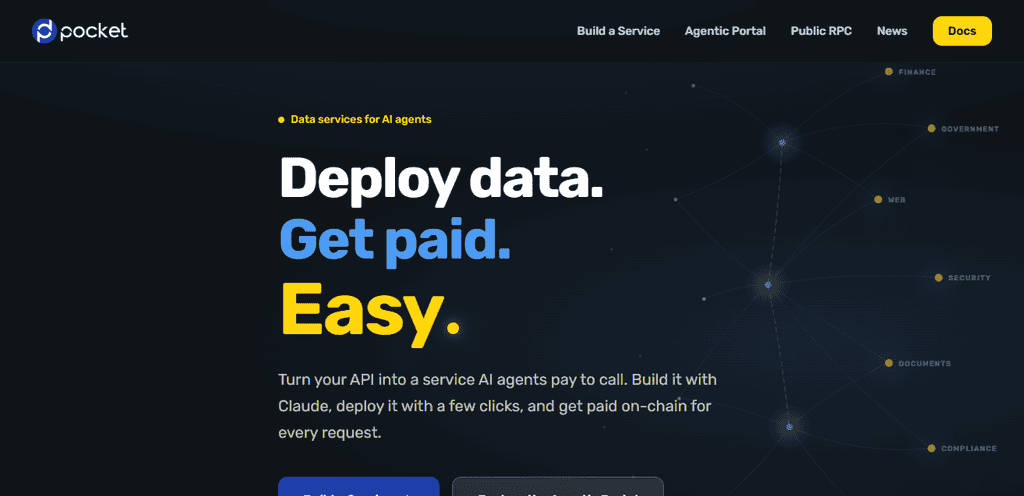
Pocket’s public RPC program currently offers no-key-required access to over 60 chains The public endpoints are lightly rate-limited. This decentralized model is particularly interesting for developers who want distributed RPC infrastructure instead of relying on one central provider.
Use cases include dApps, wallets, DeFi applications, blockchain explorers and other Web3 services that require multi-chain access. Pocket’s public RPC infrastructure is supported by the network’s ecosystem, and commercial gateway operators are enabled to set their own pricing and serve customers through Pocket’s decentralized infrastructure.
Features of Note
- Decentralized RPC infrastructure
- Node-network distribution
- Access to multi-chain blockchains
- Gateway-based RPC architecture
Best Match
- Wallets in Web3
- DeFi apps
- decentralized dApps
- Applications that need distributed RPC infrastructure
Conclusion
Choosing the right Ankr competitor depends on factors like your application’s blockchain coverage, RPC performance, scalability, infrastructure model and your budget. Alchemy, QuickNode and Infura have existing multi-chain infrastructure and developer tools, while Chainstack focuses on managed and dedicated nodes.
dRPC and Pocket Network are decentralized solutions, while GetBlock and BlockPI are centered on broad network reach and scalable RPC infrastructure. Wallets, exchanges, payments and other applications can make use of useful blockchain APIs provided by NOWNodes and Tatum.
Compare supported networks, request limits, WebSocket access, archive data, dedicated endpoints, pricing and developer requirements before choosing a provider to find the infrastructure that best suits your project.
FAQ
What is a multi-chain RPC?
A multi-chain RPC allows applications to communicate with multiple blockchain networks through RPC endpoints, enabling developers to access blockchain data and submit transactions without managing individual nodes.
What are the main Ankr competitors?
Major alternatives discussed include Alchemy, QuickNode, Infura, Chainstack, dRPC, GetBlock, NOWNodes, BlockPI, Tatum, and Pocket Network.
Why do developers look for Ankr alternatives?
Developers may compare alternatives for broader blockchain coverage, different pricing models, dedicated infrastructure, RPC performance, scalability, advanced APIs, and decentralized infrastructure options.
Which Ankr competitors offer free tiers?
Several providers offer free access or free tiers, including Alchemy, QuickNode, Infura, Chainstack, GetBlock, BlockPI, and Pocket Network, although limits and included features vary.
Which providers support dedicated RPC infrastructure?
QuickNode, Chainstack, GetBlock, and BlockPI provide dedicated or private infrastructure options designed for applications requiring greater capacity and more predictable RPC performance.