


The right choice of validator infrastructure provider can impact your uptime, security, staking performance and operational costs. InfStones offers managed blockchain infrastructure, but other providers may be better suited for organizations seeking wider network coverage, flexible deployment, institutional staking, or transparent hosting plans.
In this article, I’ll be comparing the Top InfStones Alternatives for Validator Hosting based on their infrastructure, blockchain support, staking features, pricing models, security, and use cases.
Why Look for InfStones Alternatives?
Wider blockchain support: Some alternatives offer a greater array of Proof-of-Stake networks, enabling companies to operate more validators and staking operations through a single infrastructure provider.
Competitive Pricing: Providers have different pricing models, such as subscription or commission-based or customized, allowing users to compare infrastructure costs and choose an option that fits their validator budget.

Improved Infrastructure Reliability: Alternative implementations can provide geographically distributed servers, redundant infrastructure, automated failover, and ongoing monitoring to ensure validator availability and reduce potential downtime.
Improved Staking Features: Some platforms offer professional staking products with advanced staking APIs, reward tracking, delegation management, white-label services, and institutional staking tools for organizations building those products.
Increased Security: Validator operators will probably prefer providers who provide slashing protection, secure key management, isolated infrastructure, compliance certifications, monitoring and other controls to protect their staking operations.
Flexible Deployment Options: Alternatives could offer various deployment options such as dedicated servers, cloud infrastructure, managed validators, APIs, and customizable configurations to suit different technical requirements.
Enterprise Scalability: As organizations grow, they may need scalable infrastructure that can support thousands of validators, multiple blockchain networks, institutional customers and rising staking volumes, without major operational changes.
Dedicated Support: Some options offer dedicated technical teams, network-specific expertise, professional monitoring, and institutional support, which can be helpful for organizations managing complex validator infrastructure.
How to Choose an InfStones Alternative?
Blockchain Support: Ensure the provider supports the exact Proof-of-Stake networks you need, including current mainnets, upcoming chains, and future validator rollouts for future expansion.
Infrastructure Reliability: Assess uptime, server redundancy, geographic distribution, monitoring, automated failover, and disaster recovery capabilities to ensure validators remain operational and to minimize any performance issues arising from downtime.
Validator Features: Consider validator deployment, node management, automated updates, backups, monitoring dashboards, APIs, and infrastructure customization to see if the platform fits your technical needs.
Staking Support: If you are building or running institutional staking products, look at staking services, reward management, delegation tools, commission structures, staking APIs, and white-label options.
Security Standards : Research key management , slashing protection , control of access , infrastructure isolation , monitoring , audits , certifications , and security processes before trusting a provider to operate a validator .
Pricing Model: Examine the cost of hosting, staking fees, setup fees, minimum requirements, API fees, and enterprise pricing to understand the total cost of running validators.
Scalability: Your infrastructure should be able to accommodate more validators, more blockchain networks, more users, and more staking volume as your business grows without major changes to your infrastructure.
Support Quality: Consider the availability of technical support, their response times, network expertise, documentation, account management, and operational assistance to ensure that issues can be resolved promptly when operating validators.
Key Points
| InfStones Alternative | Key Point |
|---|---|
| Allnodes | User-friendly validator hosting with automated setup and monitoring. |
| Figment | Institutional-grade staking and validator infrastructure across multiple networks. |
| Chorus One | Professional validator services focused on performance and staking rewards. |
| P2P.org | Enterprise staking platform with support for numerous blockchain ecosystems. |
| Staked | Secure validator hosting designed for institutional and retail users. |
| Blockdaemon | Scalable blockchain infrastructure and managed validator services. |
| Stakefish | Well-established staking provider with broad network coverage. |
| Everstake | Large validator operator supporting many Proof-of-Stake blockchains. |
| Bware Labs | Infrastructure provider offering reliable validator and RPC services. |
| HashQuark | Global staking and validator platform with multi-chain support. |
1. Allnodes
Allnodes has been around since 2018 providing non-custodial infrastructure for validators, full nodes, masternodes, staking and monitoring. It supports 90+ protocols, including networks like Ethereum, Cosmos, Avalanche, Arbitrum, BNB Chain, Celestia and more. It provides VPS hosting, bare metal servers, multiple geographical locations, standby hardware, monitoring, APIs, and dedicated infrastructure options.
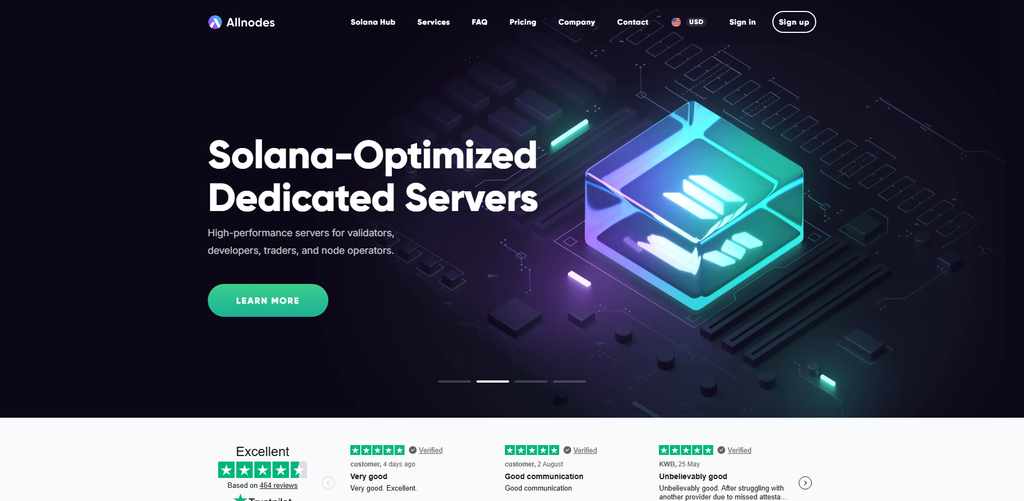
Depending on the plan, validator deployment can include MEV-Boost, sentry connections, backups and automated monitoring. Security features include multi-level protection, SOC 2 Type II compliance. Pricing differs by the blockchain and plan, for example, Cosmos validator hosting starts from $480/month and can reach plans priced at $1,920/month.
Top Use Cases*
- Multi-chain validator and node hosting, for users who are running multiple Proof of Stake networks.
- Non-custodial staking infrastructure for users who want to keep control of their assets.
- Masternode hosting for blockchain projects that need to run on a 24/7 basis.
- Validator monitoring, backups and infrastructure orchestration for smaller teams, automated.
- Developers and professional stakers that need ready to deploy blockchain infrastructure.
Limitations
- You may have higher costs if you have a lot of validators or deployments that require more resources.
- The supported blockchain networks differ significantly in terms of features and pricing.
- Your provider will have to be different if you want a really customized enterprise infrastructure.
- Some more advanced validator configurations may require more technical knowledge.
2. Figment
Founded in 2018, Figment is focused on institutional staking and validator infrastructure. It powers 30+ major Proof-of-Stake protocols like Ethereum, Solana, Avalanche, Polkadot, Polygon and NEAR. The infrastructure is built around enterprise-grade validator operations, performance monitoring, rewards optimization, APIs and institutional reporting.

Figment offers staking APIs, portfolio tracking, white-label validators and integrations to reduce the engineering needed to build an in-house staking service. Security – Audited infrastructure, non-custodial architecture, slashing protection & risk coverage. Pricing is generally service-based rather than just flat public node hosting plans. Ethereum staking currently runs on a fee structure baked into the blockchain, with Figment charging a 10% total-reward service fee for its app.
Top Use Cases
- Institutional Staking for Asset Managers, Custodians, Exchanges and Financial Platforms
- Enterprise validator infrastructure without an inhouse DevOps team.
- Wallet and digital asset app integration through a staking API.
- Institutional reporting, rewards tracking and staking portfolio management.
- Organizations who are in need of professionally managed multi-chain staking infrastructure.
Limitations
- Mostly for institutional and professional customers, not for small individual validators.
- Pricing can be less transparent than providers that offer fixed hosting plans.
- The availability of the blockchain is subject to Figment’s supported protocol portfolio.
- Its institutional infrastructure may be larger than needed for smaller projects.
3. Chorus One
Founded in 2018, Chorus One provides institutional validator infrastructure on 50+ Proof-of-Stake networks including Ethereum, Cosmos, Solana, Avalanche and NEAR. Its infrastructure depends heavily on bare-metal machines running across multiple data-center providers and countries to help provide performance and geographic resilience.

Validator operations, institutional staking, white-label validators, reporting, protocol research and infrastructure management are among staking services. Chorus One’s white label solution allows for custom branding and validator commissions, and handles maintenance and operations.
Security measures include 24/7 DevOps coverage, slashing protection, ISO 27001 certification, and more insurance options. Pricing is generally customized to network, staking volume and institutional requirements rather than published fixed hosting packages.
Top Use Cases**
- Institutional Staking on Multiple Proof-of-Stake Blockchain Networks.
- Professional validator activities with dedicated infrastructure and monitoring
- White-label staking services for exchanges, wallets and financial platforms.
- Organizations wanting managed validator infrastructure with professional operational support.
- Large staking operations that require network-specific optimization and institutional reporting.
Limitations
- It’s institutional focus may not be a fit for small independent validators.
- Pricing is not simple public hosting packages, but custom.
- The supported services are blockchain network dependent.
- You can self-host if your organization wants full control over its validator infrastructure.
4. P2P.org
Founded in 2018, P2P.org offers non-custodial staking infrastructure for 40+ Proof-of-Stake networks to wallets, exchanges, custodians, institutions and individual token holders. Its validator infrastructure is built for high uptime, monitoring, operational support, and network-specific optimization.

P2P.org runs the technical validator operations and clients retain control of their assets and private keys. Its services also include staking infrastructure for intermediaries and newer products connected to validators like Syncro, which is optimized for low-latency blockchain data and transaction delivery.
Security includes governance controls and SOC 2 Type II attestation Pricing is mostly reward-based and varies per blockchain. Ethereum at present has a standard 5% fee for vanilla staking and 7% for SSV staking taken from rewards, not principal.
Top Use Cases
- Staking for institutions such as asset managers, exchanges, custodians and wallets.
- Non-custodial validator operations, where clients retain control over their assets.
- white-label staking infrastructure for companies building their own staking products
- Ethereum staking and other PoS networks needing professional validator management.
- Staking intermediaries looking for APIs, operational support and reward management.
Limitations
- Fee structures and commissions vary by blockchain and product of staking.
- Smaller staking operators may not require sophisticated institutional services.
- Users seeking simple fixed-price node hosting may prefer a simpler provider.
- Each network’s staking features are very different among supported chains.
5. Staking
Staked has focused on building institutional Proof-of-Stake infrastructure, running reliable block-production nodes for sophisticated digital-asset investors. Its infrastructure leverages a multi-tier signing and listening-node architecture designed to decouple validator responsibilities, increase security, scalability and decentralization.
Historically, Staked has supported 20+ PoS protocols through institutional validator operations, not consumer node hosting. Its staking model is based on professional investors that need reliable infrastructure and operational management.

Security is centered around isolated signing architecture, redundant infrastructure and operational controls designed to minimize validator risks.
Staked does not offer publicly available standardized monthly hosting plans like Allnodes does. Pricing for institutions is generally negotiated based on assets, networks supported, validator needs, and service arrangements.
Top Use Cases
- Institutional investors who need professionally-run Proof-of-Stake validators.
- Large staking portfolios that need managed validator infrastructure.
- Organizations focused on validator security and operational risk management.
- Professional staking services that require redundant infrastructure/monitoring.
- Investors who are interested in using managed infrastructure rather than running validators themselves.
Limitations
- It is mainly geared toward institutional clients rather than individual users.
- There is less information about public pricing than you would get from a self-service node-hosting provider.
- The availability of blockchain is narrower than some broader multi-chain infrastructure platforms.
- You might need a different provider for broad self-service deployment controls.
6. Blockdaemon
Founded in 2017, Blockdaemon offers institutional-grade blockchain infrastructure on 70+ supported networks including Ethereum, Solana, Avalanche, Polkadot, Near, Base, Bitcoin, and more. Its validator infrastructure consists of cloud and data-center deployments across global regions, with dedicated nodes, staking APIs, dashboards and automated deployment capabilities.

It can delegate the validator operations to its Ethereum Staking API, while the clients still control the withdrawal addresses and can create multiple validators with a single transaction through batch deposits. Security features include ISO 27001 certification, SOC 2 Type II compliance, 24/7 monitoring, failover systems, and slashing-risk coverage.
The pricing is typically tailored for institutional clients, rather than being set as a universal hosting rate. Its Solana Stake for Builders validator is currently advertising 0% commission.
Top Use Cases
- Enterprise validator infrastructure for a wide range of blockchain networks.
- Exchanges, custodians, and fintech companies that incorporate staking into their platforms.
- Staking API deployments requiring managed validator automation
- Large companies that require global infrastructure, monitoring and operational support.
- Companies building institutional digital asset products around staking and blockchain infrastructure.
Restrictions
- Enterprise-oriented services may be more complex than simple validator hosting.
- Pricing is often customized, rather than a one-size-fits-all public hosting rate.
- Some features are designed for institutional-scale deployments.
- Smaller validators may not require the breadth of Blockdaemon’s infrastructure ecosystem.
7. Stakefish
Founded in 2018, Stakefish offers validator infrastructure for institutional and individual staking on 20+ Proof-of-Stake networks. Its infrastructure includes multi-cloud deployments, monitoring, validator dashboards, reporting and network-specific operational management. Stakefish provides a multi-chain staking API and SDK for wallets, exchanges, custodians, DAOs and treasury managers who want to achieve programmatic staking without building their own validator infrastructure.

Security is focused on non-custodial operations, zero-trust access, hardened key management, staged software deployments, and ongoing surveillance. stakefish currently has 0% consensus-layer commission for Ethereum and has, over time, switched its execution-layer commission structure. Then pricing will be based on the network and staking model, not a fixed validator-hosting subscription fee.
Best Use Cases
- Multi-chain staking for wallets, exchanges, custodians, and individual stakers
- Institutional validator operations that require non-custodial staking infrastructure.
- API & SDK integrations for blockchain application staking.
- Groups that want to run validators professionally but don’t want to build infrastructure.
- Users who desire to stake in different Proof-of-Stake ecosystems with just one provider.
Constraints
- Less blockchain support than some very broad infrastructure providers.
- Commission structures can differ based on the network and staking service.
- Enterprise customers with highly customized infrastructure needs may need additional solutions.
- Users who want to have full control over the operations of the validator prefer to have self-managed infrastructure.
8. Everstake
Established in 2018, Everstake has supported 130+ Proof-of-Stake networks, offering validator infrastructure for retail users, institutions, exchanges, wallets, custodians, and developers. Its infrastructure includes geographically distributed systems, automatic failover, ongoing monitoring, and redundant data centers.
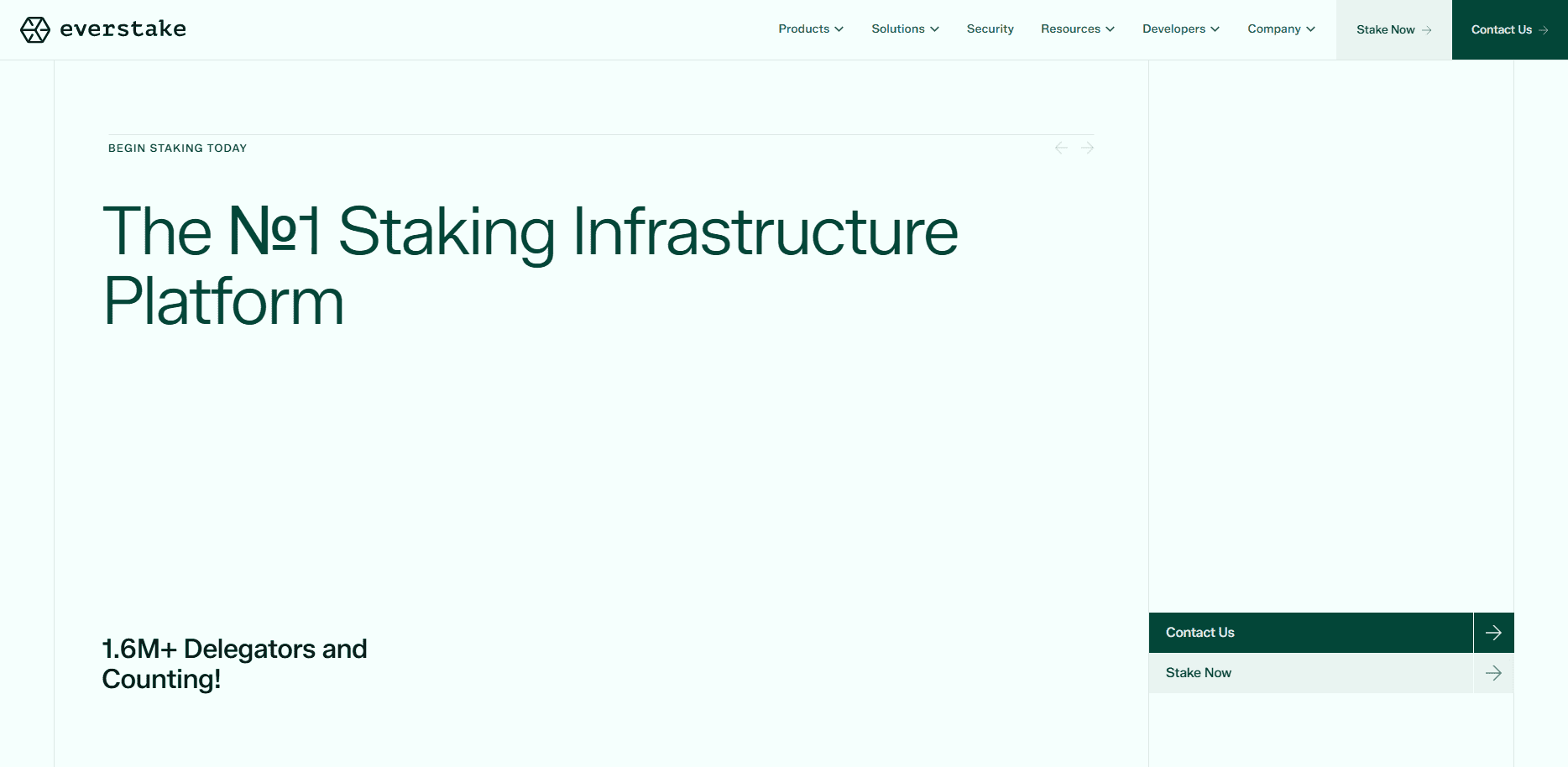
The company reports 99.98% observed uptime. Staking services include institutional staking, Validator-as-a-Service, white label validators, dashboards, reporting and custody integrations. Security & Compliance Certifications: SOC 2 Type II, ISO 27001, NIST CSF, GDPR, ITGC Its Solana VaaS plans start from $199/month for Core and $499/month for Prime, with larger deployments on custom pricing. Blockchain staking fees can also vary by network.
Top Applications
- Multi-chain validator hosting for organizations supporting a large number of Proof of Stake networks.
- Institutional Staking for Exchanges, Custodians, Wallets & Asset Managers
- White-label Validator as a Service deployments.
- Professional staking operations that need monitoring, redundancy and high availability.
- Businesses looking for staking infrastructure with compliance and enterprise security needs.
Limitations
- Direct cost comparison is more difficult as prices are different for each network and service.
- Its massive multi-chain infrastructure could be overkill for single chain operators.
- Enterprise-oriented services may include more operational complexity.
- Features and commissions for each network should be evaluated individually.
9. Bware Labs
Bware Labs has built blockchain infrastructure and validator services with its validator business taking off in 2021. At present it has 46 validators, supports 30 blockchain chains, and has over $500 million TVL in its infrastructure ecosystem. It delivers institutional validators, white-label validators, RPC infrastructure, APIs, indexing and developer tools. Validator operations are all about reliability, network participation, and competitive commissions.

There is no validator downtime reported on Bware’s published validator page in the past two years. Security is underpinned by operational infrastructure and experience of securing blockchain assets via validator and infrastructure services.
The pricing is usually based on validator commissions and enterprise contracts that are specific to the network, rather than fixed public hosting subscriptions.
Top Use Cases
- Validator hosting for blockchain projects and professional stakers.
- White label validator infrastructure for organizations starting staking services.
- A blockchain infrastructure that combines validator and RPC requirements.
- Projects that require managed node operations and don’t want to build out their own infra team.
- Developers and Web3 companies who need to access broader blockchain infrastructure services.
Disadvantages
- Smaller validator network than some large institutional competitors.
- Less public pricing info than what you’d get on fixed-price hosting sites.
- Coverage of blockchains is not as wide as some big multi-chain providers.
- Highly specialized institutional staking services may require additional capabilities for the organizations.
10. HashQuark
Founded in 2018, HashQuark (now HashKey Cloud) provides global blockchain infrastructure and staking services. Its staking infrastructure supports 40+ major public chains and previous HashQuark materials have shown validator participation on networks such as Cosmos, IRISnet, Genaro, CyberMiles, V SYSTEMS, Cybex, Ethereum, Polkadot and Klaytn. Its infrastructure is optimized for professional node operation, staking, network participation and enterprise blockchain services.

HashQuark has also been a genesis validator or supernode on several networks. It does boast security and reliability as a core part of its institutional infrastructure positioning, but detailed public validator-hosting specs are less plentiful than some competitors. Pricing is typically network and service specific with institutional customers generally requiring a bespoke commercial arrangement.
Top Use Cases
- Multi-Chain Validator and Staking Infrastructure for Proof of Stake Networks
- Blockchain projects that require mature infrastructure and validator operations.
- Enterprise customers that need managed blockchain infrastructure.
- Networks seeking experienced genesis-validator or professional node operators.
- Enterprises that require a larger blockchain infrastructure than just simple validator hosting.
Limitations
- No detailed pricing information is publicly available.
- Check current validator and network support for each particular blockchain.
- Enterprise-class infrastructure could be overkill for smaller users.
- More transparent self service hosting plans – Organizations that want to be able to see very clearly what their public hosting plans look like might prefer providers with more transparent packages.
Conclusion
InfStones alternatives provide different approaches to validator hosting, staking infrastructure, and blockchain operations. Allnodes stands out with its user-friendly multi-chain node hosting, while Figment, Chorus One, P2P.org, Staked, and Blockdaemon are more focused on institutional staking and managed infrastructure. Stakefish and Everstake have a large coverage of PoS. Bware Labs combines RPC and validator services.
HashQuark, now HashKey Cloud, is focused on enterprise blockchain infrastructure. The right choice depends on the supported networks, pricing, reliability, security, deployment flexibility, scalability, and support requirements. Organizations should take these factors into account while choosing an InfStones alternative that suits their technical and operational needs.
FAQ
What are the best InfStones alternatives?
Some of the notable InfStones alternatives include Allnodes, Figment, Chorus One, P2P.org, Staked, Blockdaemon, Stakefish, Everstake, Bware Labs, and HashQuark. Each provider differs in blockchain coverage, pricing, validator management, staking services, and enterprise capabilities.
Which InfStones alternative supports the most blockchains?
Everstake has the broadest stated coverage among the alternatives listed, supporting more than 130 Proof-of-Stake networks. Allnodes also provides broad multi-chain support with more than 90 supported protocols.
Which InfStones alternative is best for institutional staking?
Figment, Chorus One, P2P.org, Staked, and Blockdaemon are particularly focused on institutional staking and professionally managed validator infrastructure. Their services include monitoring, APIs, reporting, security controls, and managed operations.
Which InfStones alternative offers transparent validator hosting prices?
Allnodes provides some of the clearest public pricing among the listed providers, with blockchain-specific plans. For example, its Cosmos validator hosting plans in the provided data start at $480 per month. Other providers generally use network-specific, reward-based, or customized enterprise pricing
Which InfStones alternative is best for multi-chain staking?
Everstake and Allnodes are strong options for organizations that need broad multi-chain coverage. Everstake reports support for more than 130 Proof-of-Stake networks, while Allnodes supports more than 90 protocols.


