

For businesses building secure and user-friendly Web3 apps, choosing the right wallet infrastructure is essential. Dfns provides keyless wallet tech, but it might not be a good fit for every company’s budget, integration needs or security requirements. That’s why looking at the Best Dfns Rivals for Keyless Embedded Wallets can help businesses find a solution that matches their goals.
In this guide, I’ll take you through alternatives, including Turnkey, Privy, Crossmint and Fireblocks, and compare their key features, security capabilities, use cases and integration options.
Why Businesses Look for Dfns Alternatives?
Pricing and Budget Flexibility Businesses compare Dfns alternatives to find the pricing structure that suits their budget, transaction volumes, wallet requirements and long-term operational costs without compromising essential security capabilities.
Blockchain Compatibility: When choosing providers, companies frequently evaluate the compatibility of particular blockchain networks, tokens, and ecosystems to facilitate their applications, target users, and future product expansion strategies.

Developer Integration: Businesses look at the different APIs, SDKs, documentation and developer tools for easier implementation, less development time and wallet infrastructure connecting to existing applications.
Security Requirements: Organizations assess key management, MPC technology, authentication, transaction policies, and control of access to find the provider that best fits their security and compliance needs.
User Onboarding Experience: Consumer apps prioritize easy sign-up, social login, passkeys, and passwordless sign-in so users can get into embedded wallets without the headache of seed phrase management.
Customization and Flexibility: Businesses may want custom wallet experiences, transaction flows, authentication techniques, and administrative controls that fit their particular business models and application needs.
Scalability and Performance: Businesses on the rise take into account wallet creation capacity, transaction processing capabilities, infrastructure reliability, and network support to guaranty that their chosen provider can handle increasing user demand.
Enterprise Features and Support: Enterprise evaluations of administrative permissions, approval flows, compliance features, technical support and service reliability are important considerations for selecting wallet infrastructure capable of supporting complex operational needs.
Benefits and Limitations of Keyless Embedded Wallet Solutions
Simple User Onboarding: Keyless embedded wallets eliminate the need for traditional seed phrases and separate wallet installations, enabling users to interact with blockchain applications using familiar authentication methods and a more seamless registration process.
Better Application Integration: By offering APIs and SDKs, developers are able to build wallet creation, transaction signing, and blockchain interactions directly into their applications, leading to easier implementation and a better overall user experience.
Improved Key Management. Technologies like MPC can spread cryptographic responsibility across multiple components, reducing some of the risks of a single point of failure when combined with appropriate security controls and operational safeguards.
Enhanced Business Automation: Businesses may utilize programmable signing, transaction policies, and approval workflows to automate routine blockchain activity. This enables them to enforce permissions, spending limits and organizational transaction requirements.
Dependencies for Authentication: Wallets may rely on external authentication providers, devices, or recovery mechanisms, which could create complications if users lose access or authentication services are disrupted.
Provider Dependency Risks: Companies that use managed wallet infrastructure risk vendor lock-in, difficult migration processes, price increases, or service interruptions that can affect application functionality and customer experience.
Security Configuration Challenges: Keyless wallets don’t remove security risks; weak authentication, compromised application credentials, excessive permissions or poorly configured signing policies can still leave assets vulnerable to unauthorized transactions.
Compatibility and Variable Costs: Wallet infrastructure costs, supported blockchain networks, transaction fees, and feature availability differ between providers, necessitating businesses to assess long-term costs and technical compatibility prior to implementation.
Key Points
| Platform | Key Point |
|---|---|
| Turnkey | Developer-focused wallet infrastructure offering secure embedded wallets, private key management, passkey authentication, and flexible wallet APIs. |
| Privy | Popular embedded wallet platform that combines user authentication, social logins, and self-custodial wallet creation for Web3 applications. |
| Crossmint | Provides embedded wallets, NFT infrastructure, payments, and onboarding tools designed for enterprises and consumer applications. |
| Fireblocks Wallet-as-a-Service | Enterprise-grade MPC wallet infrastructure with secure wallet creation, transaction automation, and digital asset management. |
| Coinbase Developer Platform (CDP) | Offers embedded wallets, account abstraction tools, and developer APIs backed by Coinbase’s blockchain infrastructure. |
| Web3Auth | Enables passwordless wallet creation using social logins, email, and multi-factor authentication without requiring seed phrases. |
| Magic | Provides embedded wallets and authentication solutions that allow users to access Web3 apps using familiar login methods. |
| Fordefi | Institutional wallet platform featuring MPC security, policy controls, and secure asset management for businesses and developers. |
| Utila | Digital asset operations platform providing API-based MPC wallets, treasury management, and multi-chain support. |
| ZenGo X | Developer-oriented wallet infrastructure built on MPC technology, enabling keyless user experiences and enhanced account recovery. |
1. Turnkey
Turnkey is a wallet infrastructure provider that wants to help developers add secure, programmable crypto wallets to their applications. Its technology key is secure private-key management, policy-based signing and developer friendly APIs.
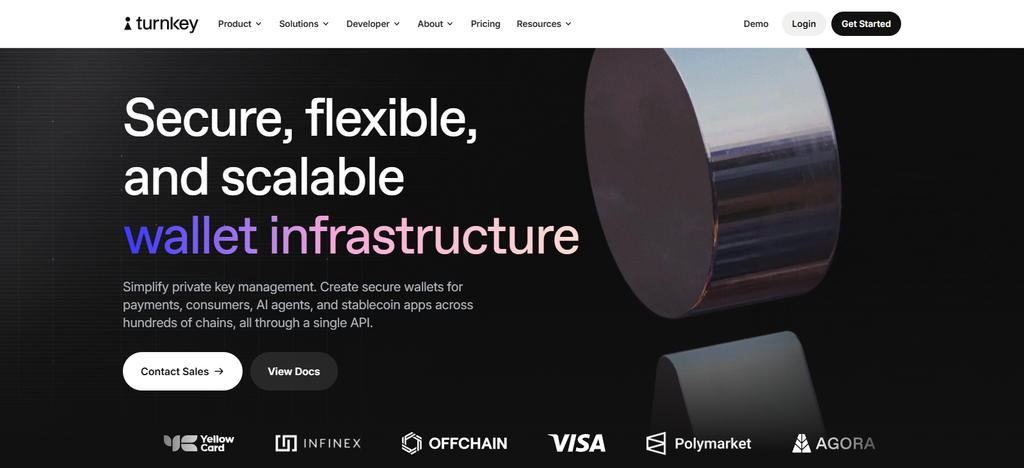
The turnkey approach is useful for keyless embedded wallets because it allows the wallet to be created and to sign transactions without requiring the user to directly handle the traditional seed phrases. Developers are able to integrate its infrastructure into fintech platforms, Web3 applications and digital asset products.
Compare Turnkey vs. Dfns on: Signing architecture, Authentication options, Policy controls, Supported blockchain networks, and how well its APIs meet your application’s security requirements.
Use Cases
- Embedded Wallets: Embed crypto wallets directly into Web3 apps, eliminating the need for users to handle traditional seed phrases.
- Fintech Applications: Create wallet-powered financial products with programmable signing and application-controlled workflows.
- Automated Transactions. Enable pre-authorized backend services to perform signing operations based on pre-defined rules.
- Web3 Gaming: Allow players to interact with blockchain-based assets and in-game transactions through wallets.
- Developer Infrastructure: Create custom wallet experiences through APIs and programmable key-management capabilities.
Security Features
- Secure Key Management Employs a secure key management infrastructure that is designed to minimize exposure of sensitive cryptographic material.
- Policy-based Signing: Create policies to determine which signing requests to accept.
- Controls of Access: Restrict wallet operations to authorized users, applications and signers.
- Auditable Operations: Use activity logs and operational monitoring to facilitate oversight and investigation
2. Privy
Privy gives you the embedded wallet infrastructure to onboard users through the authentication experiences they know and love, like email, social login, and more. This is particularly relevant for consumer-facing Web3 products that want to reduce the friction of seed phrases and traditional wallet setup.
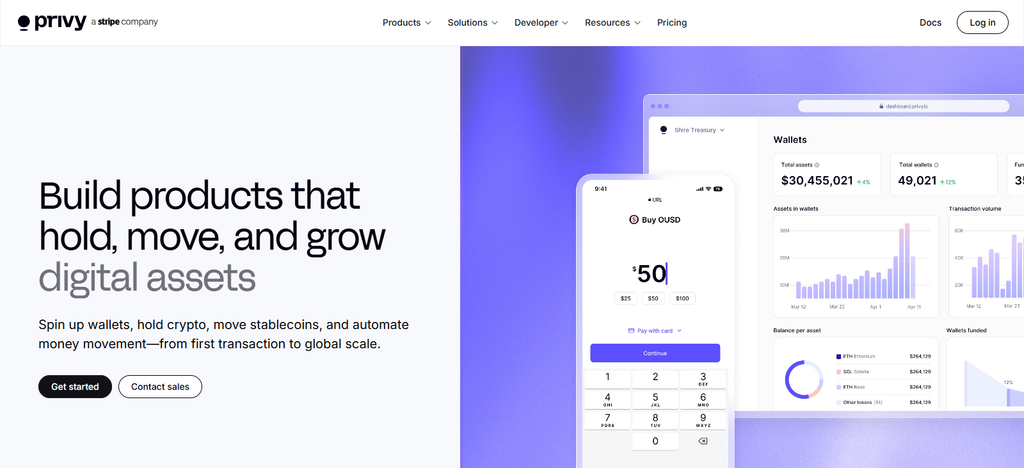
How this is done may vary depending on the implementation, but apps can embed authentication, wallet creation and transaction experiences into their existing user flows.
Privy could be a good alternative to Dfns for products where user onboarding and embedded wallet usability are paramount. When choosing a provider, look at its key-management model, authentication flexibility, blockchain support, security controls, and developer integration needs.
Application Cases
- Embedded Wallets for Consumers – Embed wallets within apps with familiar login flows.
- Social Login Onboarding: Enable users to utilize wallet functionality with supported email, social and passkey authentication methods.
- Web3 Gaming: Enable players with in-app wallets for blockchain assets and transactions.
- Fintech and Payments: Embed wallet functionality within digital financial products and payment processes.
- Multichain Applications: Build wallet experiences across supported EVM chains, Solana, and Bitcoin.
Security advantages
- Protected Key Management: Secure architecture for the management of cryptographic material.
- Authorization Controls: Confirm that requests are authorized prior to performing wallet operations.
- Transaction Policies: Set spending limits and approved addresses or intelligent contracts.
- Multi-factor Authentication: Support for additional verification via passkeys, authenticator apps and hardware security keys
3. Crossmint
Crossmint offers Web3 infrastructure to allow companies to embed wallets, payments and online assets features into their apps. Its embedded wallet solutions are convenient for companies that want to provide users access to blockchain-based services without the need for complicated wallet setup processes.
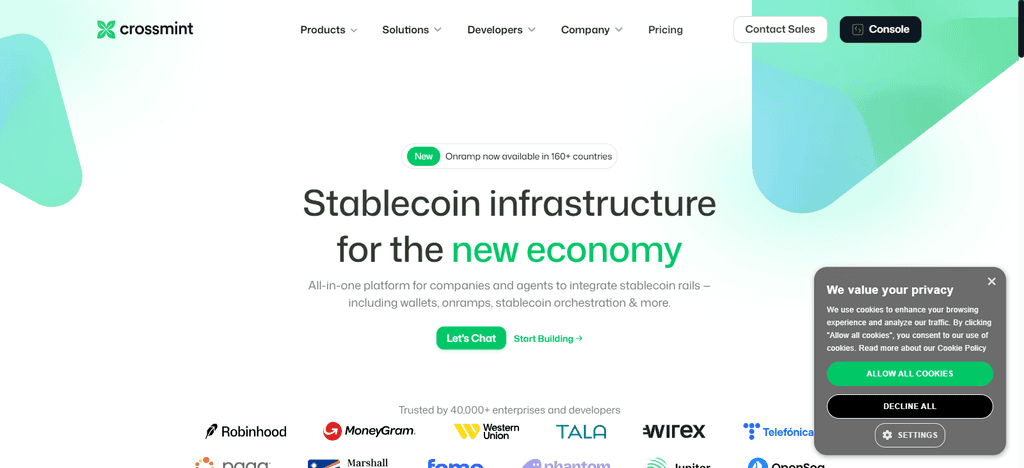
Depending on the product configuration, developers may deliver familiar authentication experiences and connect wallet functionality to broader payment or digital asset workflows.
Crossmint is a Dfns alternative for consumer-facing apps, marketplaces, gaming platforms, and enterprise Web3 products. Compare its wallet architecture, its blockchain compatibility, its authentication methods, its transaction capabilities, and its integration requirements.
Use Case scenarios
- embed wallet integration: Embed wallet functionality into applications without requiring users to install separate wallet software.
- NFT Marketplaces: They enable users to access, own and trade digital collectibles thanks to the supported wallet integrations.
- Gaming Applications: Enable in-app wallets for blockchain-based game assets & digital ownership.
- Enterprise Web3 Products: Embed wallet services into business applications handling digital resources.
- Digital Asset Payments: Develop payment and asset transfer workflows using supported blockchain and wallet capabilities.
Security Properties
- Wallet Access Control: Implement authorization mechanisms to ensure that wallet operations are performed only by authorized requests.
- Transaction permissions: Define access scopes and limitations for supported wallet transactions.
- Protected Key Management: Secure signing credentials using security features of the chosen wallet architecture.
- Operational Monitoring: Include transaction tracking and application level monitoring to help detect unexpected activity
4. Fireblocks Wallet as a Service
Fireblocks Wallet-as-a-Service enables businesses to build wallet infrastructure to secure digital asset management and blockchain transaction capabilities. Its embedded wallet technology allows developers to embed wallet functionality into customer-facing applications, while its broader platform supports institutional digital asset operations.
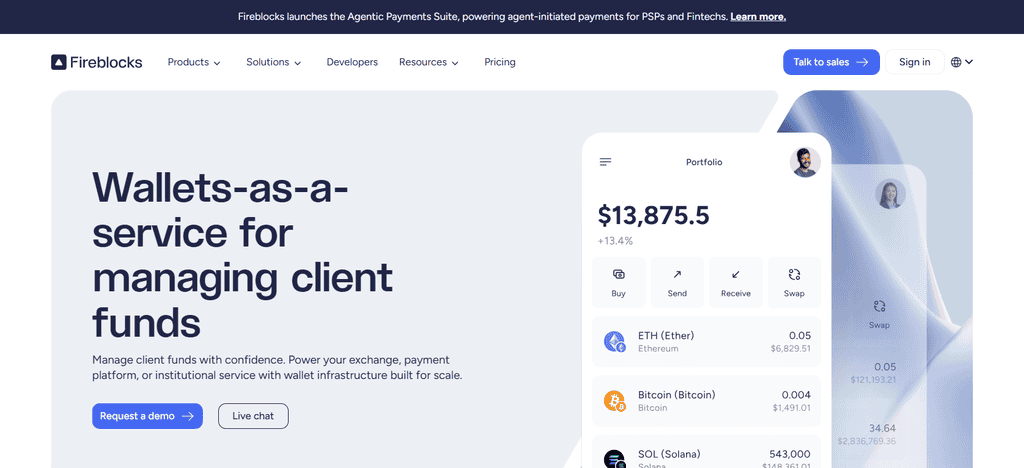
Fireblocks will be especially relevant to fintech companies, crypto businesses and enterprises that require structured transaction workflows and operational controls.
Have a look at their wallet creation flow, MPC based key management, approval policies, supported blockchain networks and admin controls compared to Dfns. See how its developer SDKs, integration architecture, and enterprise requirements align with your application needs.
Use Cases & Examples
- Fintech Wallets – Integrate digital asset wallets into financial applications and customer-facing services;
- Crypto Exchanges: Support wallet creation, digital asset transfers and transaction workflows for exchange customers.
- Stablecoin Payments: Create business payment and settlement workflows using supported stablecoin networks.
- Enterprise Blockchain Assets – Control tokenized assets and blockchain transactions through organizational controls.
- Web3 Gaming & NFTs: Provide in-app wallets and automate actions for supported tokens or NFTs.
Features for Security
- MPC-based Key Management: distribute cryptographic signing capabilities to eliminate the need for a single private key location.
- Transaction Policy Engine: Configure transaction limits, approval requirements and permitted destinations.
- Role-Based Permissions: Assign access permissions to users and administrators based on their roles.
- Threat Detection: Leverage existing security monitoring and transaction safeguards to detect anomalous blockchain activity.
5. Coinbase Developer Platform (CDP)
The Coinbase Developer Platform (CDP) provides infrastructure for developers to build applications on the blockchain, including embedded wallets and programmable wallet services. Its wallet products allow developers to build user-friendly experiences without requiring every user to manage traditional seed phrases or external wallet extensions.
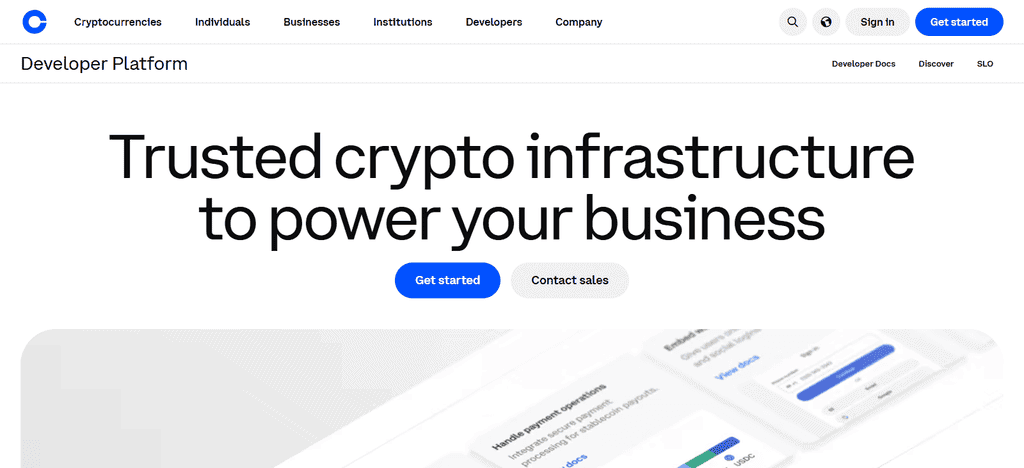
Depending on the wallet architecture chosen, CDP supports authentication integrations, transaction signing and blockchain interactions via developer tools and APIs. It can be a good alternative to Dfns for applications that want wallet features as well as more extensive onchain infrastructure.
Before deciding if it fits your product, evaluate the networks it supports, custody model, security model, transaction policies, SDKs, and integration requirements .For the first time, I’m going to try and get this thing done myself.
Cases of Use
- Embedded Consumer Wallets: Embed wallets into apps to allow access to blockchain services.
- Onchain Applications: Build applications that communicate with compatible blockchains through developer APIs.
- Smart Wallet Experiences: Allow for programmable wallet experiences and smart-account functionality where available.
- Crypto Payments Build applications to send and receive digital currencies with supported wallet infrastructure.
- Build on Base Ecosystem Applications: Use Base and other Coinbase developer tools to create blockchain products.
Security Features
- Managed Key Infrastructure Leverage the selected CDP wallet product’s key management and signing protections.
- Wallet Authorization: Enforce supported authentication and authorization methods on wallet operations.
- Transaction Controls: Leverage existing wallet policies and restrictions on smart-accounts for managing transaction behaviors.
- Secure API Access: Securely store developer credentials and backend endpoints to minimize the risk of unauthorized access to wallet services
6. Web3Auth
Web3Auth provides authentication and wallet infrastructure to bring blockchain to mainstream users. It allows apps to connect familiar login methods such as social accounts to cryptographic wallet experiences, reducing the barrier of entry of traditional wallets. Historically, its key management approach has included threshold cryptography and key-share mechanisms, with the particulars of implementation varying by product and configuration.
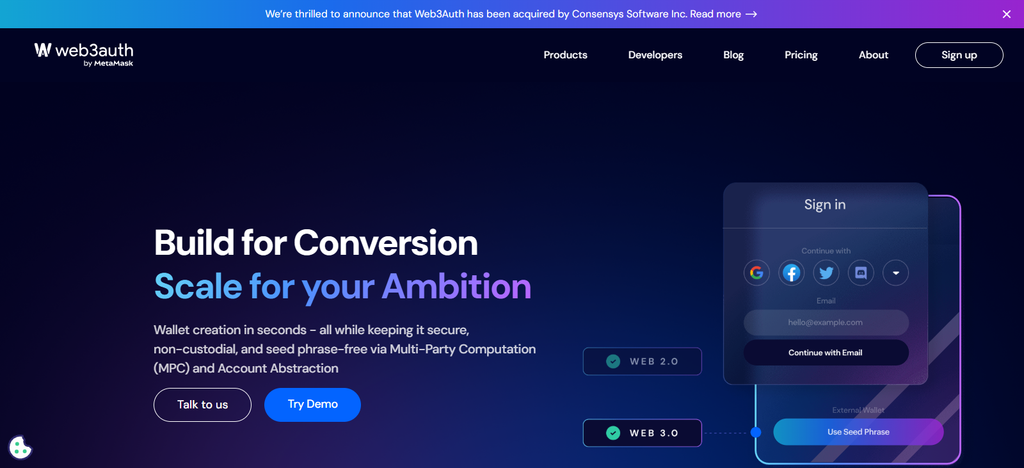
Developers building gaming platforms, decentralized applications, consumer Web3 products, and services that require simplified wallet access might consider Web3Auth. Compare its authentication flows, recovery options, wallet architecture, supported blockchains, SDK compatibility and security model with Dfns before deciding for a solution.
Use Cases
- Social Login Wallets: enable users to create or access wallets using supported social accounts, email and passkeys.
- Web3 Gaming: integrate wallets to games so that players can interact with blockchain based assets.
- Decentralized Apps: Make it easier for users to onboard wallets to access DeFi and other decentralized services.
- Mobile Apps: Leverage supported development tools to integrate wallet access into mobile apps.
- Multichain Products: Develop apps for supported networks like EVM-compatible chains, Solana, Bitcoin, and other integrations on offer.
Security features
- MPC-based key management. MPC capabilities can be used to distribute key-management responsibilities among multiple components.
- Multi-Factor Authentication: Use extra authentication steps to protect wallet access.
- Account recovery: Supported recovery mechanisms to recover a wallet for users.
- Authentication Controls. Integrate supported login providers and authentication methods to help prevent unauthorized access.
7. Magic
Magic provides wallet and authentication infrastructure that allows developers to add blockchain functionality to applications with user experiences that they are familiar with. Its tools are designed to reduce onboarding friction by offering passwordless authentication options, and embedded wallet experiences, depending on the integration.

This can be a boon for businesses that want users to interact with digital resources, without requiring the installation of separate wallet applications or manual seed phrase management. Magic deserves consideration as a Dfns rival in consumer apps, gaming products, marketplaces and Web3 services.
Examine its key-management architecture, options for authentication, wallet-recovery mechanisms, blockchain support, developer documentation, and transaction capabilities to determine whether it is suitable.
Usecases
- Embedded Wallets Embed blockchain wallets into web sites and applications.
- Passwordless Onboarding: Let users use their existing authentication methods to sign into supported wallet experiences.
- E-commerce Applications: Incorporate wallet features to facilitate digital asset ownership and blockchain-enabled commerce.
- Gaming Platforms: Support wallet for games that use blockchain assets and collectibles.
- Web3 Applications: Develop user-friendly blockchain applications with wallet integration and developer APIs.
Safety features
- Key Management Protection: Employ the key-protection architecture of the chosen Magic wallet implementation.
- Authentication Checks: Require supported authentication mechanisms before providing access to wallet functionality.
- Secure Session Management: Implement proper session controls to limit unauthorized access to accounts.
- Developer Access Control: Protect API keys and app integrations from abuse.
8. Fordefi
Fordefi is focused on institutional digital asset security, wallet infrastructure and transaction management for organizations operating in Web3. The platform is particularly important for businesses that need controlled access to blockchain assets, secure transaction signing, and control over sensitive on-chain actions.
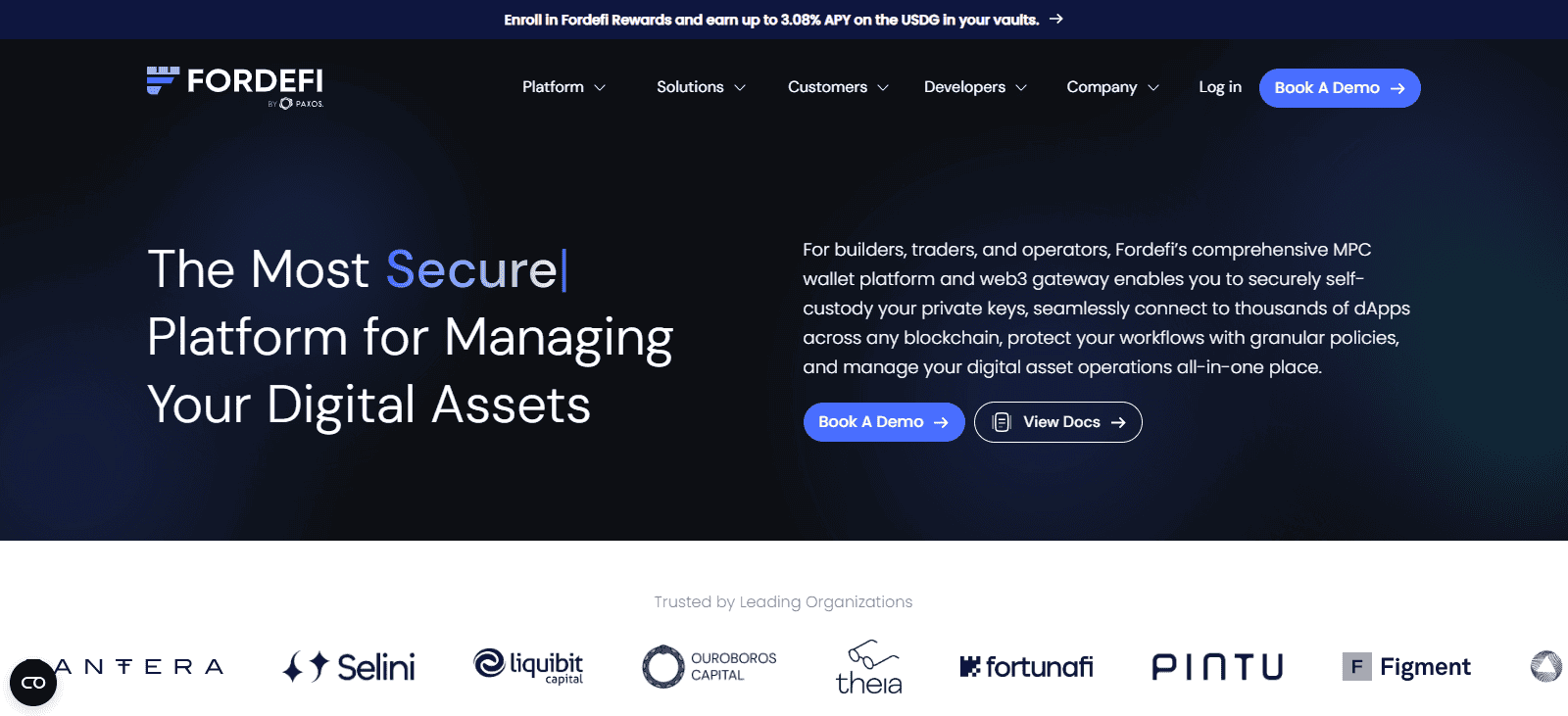
Compared to Dfns, Fordefi is frequently a better fit for institutional workflows compared to consumer-facing embedded wallet experiences, so the intended use case is important.
Organizations should consider its MPC-based security architecture, transaction simulation and policy controls, supported networks, DeFi integrations, and admin permissions. Evaluate whether it can support your embedded wallet and app level integration requirements from an institutional perspective.
Applications
- Institutional crypto asset management: Management of crypto assets via organizational wallet infrastructure and transaction workflows.
- DeFi Operations: Interact with supported decentralized finance applications with institutional transaction controls.
- Treasury Management: Allow for digital asset transfer and approval among business teams.
- Institutional Trading: Enable controlled transaction signing to support wallet operations related to trading.
- Multichain Asset Operations: Manage supported blockchain assets and transactions via institutional wallet infrastructure.
Security Features
- Security of MPC Wallet: Using multi-party computation technology to distribute cryptographic signing responsibilities.
- Transaction Simulation: Review supported transaction details and possible impacts before signing off on blockchain transactions.
- Policy-Based Approvals: Implement transaction policies and approval workflows that meet organizational needs.
- DeFi Threat Protection: Discover potentially malicious interactions with the help of available transaction and application security tools.
9. Utila
Utila provides institutional digital asset infrastructure across wallet management, treasury operations and secure transaction workflows. Its platform is relevant for businesses that need to manage digital resources in a coordinated way such as crypto companies, financial institutions and organizations processing onchain payments.
Enterprise wallet infrastructure wise, Utila is similar to Dfns but the positioning might be different than providers that are more focused on consumer embedded wallets.
Evaluate the key-management architecture, transaction approval workflows, access permissions, supported blockchain networks and integration capabilities before selecting. Also, make sure its operational model is right for your intended use, particularly if you need to build and authenticate user-facing wallets.
Use Cases
- Crypto Treasury Management: Manage the organization’s crypto assets and treasury transactions.
- Stablecoin Payments: Use supported stablecoins to support business payment and settlement workflows.
- Institutional Custody Operations: Control access and transfer of electronic assets with a controlled wallet infrastructure.
- Fund Management Manage wallet activity and asset movement for crypto native funds and finance teams.
- Payment Service Providers: Design operational workflows for businesses that trade electronic assets between counterparties.
Features of security
- MPC Key Management: Share key shares among different parties to mitigate single-point-of-compromise risks.
2.Multi-Administrator Approval: Require appropriate administrative approvals for sensitive operations. - Control Whitelisting: Limit eligible transfers to pre-approved wallet addresses when configured.
- Authentication Tied to Device: Leverage supported device identity, biometrics, and passkeys to help secure access to signing credentials
10. ZenGo X
ZenGo X is connected to research in cryptographic security and keyless wallet technology and ZenGo’s consumer wallet products use keyless approaches to make cryptocurrency easier to access. This distinction is relevant in the comparison between ZenGo and Dfns, as ZenGo X should not be assumed to be directly comparable as a commercially available embedded Wallet-as-a-Service competitor.
When considering a keyless wallet infrastructure for businesses, consider the specific ZenGo product or technology being offered, the target users, the integration availability and the current support arrangements. Cryptographic design Recovery approach Blockchain compatibility Developer tooling Compare with Dfns You should confirm commercial availability and application integration options before adding to a vendor shortlist.
Use Cases That Might Be Relevant
- Research Keyless Wallets: Investigate cryptographic methods to minimize reliance on conventional private key management.
- Safe Wallet Structure: Learn about wallet structures that are intended to reduce the risks of traditional key storage.
- Recovery Techniques: Explore alternative methods to regain access to the wallet without solely relying on traditional seed phrases.
- Consumer Wallet Experiences: Evaluate keyless wallet approaches for applications focused on ease of onboarding and recovery.
- Cryptographic Innovation: Investigate secure signing protocols and distributed cryptographic techniques for digital asset wallets.
Security Features
- Multi-Party Computation: MPC is a cryptographic technique that comes into play for distributed signing, as it obviates the need to put all key material in one place.
- Keyless cryptography: Discover alternatives to traditional private key storage and seed phrase based wallet management.
- Wallet Recovery Research: Research ways to improve the account recovery process without reducing the cryptographic security.
- Secure Signing Protocols: Explore cryptographic methods for securing signing operations and minimizing the exposure of sensitive key material.
Conclusion
The choice of the right Dfns alternative for keyless embedded wallets depends on the business security requirements, budget, blockchain compatibility, and integration needs. Providers such as Turnkey, Privy, Crossmint, Fireblocks and Coinbase Developer Platform offer different approaches to wallet infrastructure, authentication and transaction management.
When making their decision, businesses should consider MPC-based key management, control of access, recovery options, APIs, scalability, and pricing.
Keyless wallets are easier to onboard and allow for automation, but still require careful security configuration and reliable recovery mechanisms. Ultimately, the best solution is one which balances user satisfaction with operational flexibility, asset protection and long-term business growth.
FAQ
What are the best alternatives to Dfns?
Popular alternatives include Turnkey, Privy, Crossmint, Fireblocks Wallet-as-a-Service, Coinbase Developer Platform (CDP), Web3Auth, Magic, Fordefi, Utila, and ZenGo-related wallet technology. The right choice depends on your application and requirements.
What is a keyless embedded wallet?
A keyless embedded wallet is a cryptocurrency wallet integrated directly into an application, allowing users to access blockchain services without manually managing traditional private keys or seed phrases.
Why do businesses choose Dfns competitors?
Businesses explore alternatives to compare pricing, blockchain compatibility, developer tools, authentication methods, security architecture, transaction controls, scalability, and enterprise support.
Which Dfns alternative is suitable for consumer applications?
Privy, Crossmint, Web3Auth, Magic, and Coinbase Developer Platform are options to evaluate for consumer-facing applications. Compare onboarding experiences, wallet recovery, supported networks, and integration requirements.
Which Dfns alternatives are suitable for institutional businesses?
Fireblocks, Fordefi, and Utila are worth evaluating for institutional wallet operations, treasury management, and transaction governance. Turnkey can also suit businesses building custom wallet infrastructure.