


Fintech companies are transforming digital banking, payments and financial services, so identifying your customers and preventing financial crime are top priorities. The right KYC and AML compliance platform can help businesses to streamline the customer onboarding process, detect suspicious activity, and meet compliance requirements more efficiently. But with so many out there, choosing the right solution can be difficult.
In this guide, I’ll cover the best KYC and AML compliance platforms for fintech companies, comparing their core features, capabilities, pricing, and best use cases.
What to Look for in a KYC and AML Compliance Platform
Select platforms that confirm government-issued IDs, validate customer information, and utilize biometric checks to avoid identity theft and fraudulent account registrations during digital onboarding.
AML Screening Features Look for sanctions screening, politically exposed person (PEP) checks and adverse media monitoring to identify high-risk customers and help prevent financial crime.

Monitoring of the Transactions Choose solutions that monitor transactions, detect unusual financial behavior, and generate alerts to enable compliance teams to quickly investigate potentially suspicious activities.
AI and Automation Focus on AI-enabled tools for automated verification, customer risk assessment, fraud pattern detection, reduced manual reviews, and improved compliance workflow efficiency.
APIs and Integration Select platforms with robust APIs and integrations with banking systems, payment gateways, customer databases, and existing fintech apps for smooth data exchange.
Global Reach and Scalability As your fintech business grows, think about whether the platform can accommodate higher volumes of customers, international identity checks, multiple jurisdictions and evolving compliance requirements.
Pricing and Costs Look at subscription fees, per-verification fees, implementation costs, and other service costs to see if the platform meets your budget and anticipated business growth.
Data Security & Regulatory Compliance Look for strong data encryption, control of access, audit trails, and appropriate privacy safeguards. A provider should also support applicable regulatory obligations across your operating markets.
How to Choose the Right KYC and AML Platform for Your Fintech Business
Understand Your Business Needs
Determine the compliance services your fintech business needs – identity verification, AML screening, transaction monitoring, fraud prevention or a combination of these, depending on your business model and customer risks.
Assess Core Features
Assess identity verification, KYB, sanctions screening, PEP monitoring, adverse media screening and transaction monitoring to ensure the platform meets your operational and compliance needs.
Check out Regulatory Coverage
Choose a platform that satisfies the regulatory and verification requirements that apply in every country you operate in, helping your business keep its compliance processes current with changing regulations.
Evaluating AI and Automation
Consider AI-powered verification, automated risk scoring, suspicious activity detection and alert management to cut manual workloads, boost efficiency and enable consistent compliance decisions
Check Integration Capabilities
Choose a solution with proven APIs and integrations to your existing banking systems, payment gateways, customer databases and onboarding workflows for easier implementation.
Cost & Budget Comparison
Assess subscription fees, per-verification costs, implementation costs, and additional service fees to get a clear picture of the total cost of ownership and make an informed decision on a platform that is compatible with your budget.
Assess Scalability and Flexibility
Look for software that can scale to handle increasing customer volumes, international expansion, additional verification requirements and evolving risk policies without adding unwanted operational complexity.
Choose Security and Support First
Evaluate encryption, control of access, audit trails, data privacy protections, implementation support and customer service to safeguard confidential information and ensure reliable compliance activities.
10 Best KYC and AML Compliance Platforms for Fintech Companies
| Platform | Key Point |
|---|---|
| Sumsub | All-in-one KYC, KYB, AML screening, sanctions monitoring, transaction monitoring, and fraud prevention platform designed for global fintech onboarding. |
| Trulioo | Provides global identity verification, business verification, AML screening, and access to extensive international data sources for fintech compliance. |
| Jumio | Enterprise-grade identity verification platform offering document verification, biometric authentication, AML capabilities, and risk-based customer onboarding |
| Onfido (Entrust IDV) | AI-powered identity verification solution known for document verification, liveness detection, and seamless digital onboarding workflows. |
| Persona | Developer-friendly platform with customizable KYC workflows, identity lifecycle management, AML integrations, and flexible API-based implementation. |
| ComplyAdvantage | Specialized AML compliance platform focused on sanctions screening, PEP checks, adverse media monitoring, and ongoing risk detection. |
| Alloy | Identity decisioning and compliance orchestration platform that helps fintechs automate KYC, AML checks, fraud prevention, and customer risk assessment. |
| Veriff | AI-driven identity verification provider offering document authentication, biometric verification, fraud prevention, and regulatory compliance support. |
| Socure | Digital identity verification platform leveraging AI and alternative data to improve customer verification accuracy and reduce fraud risk. |
| SEON | Compliance and fraud prevention platform combining digital footprint analysis, AML screening, identity verification, and real-time risk scoring. |
1. Sumsub
Sumsub is an all-in-one compliance platform for fintechs that need KYC, KYB, AML screening, transaction monitoring, and fraud prevention in one ecosystem. It offers identity verification, business verification, sanctions screening, PEP screening, adverse media monitoring and ongoing customer monitoring. The platform provides API and no-code integrations for flexible deployment for startups and enterprises alike.
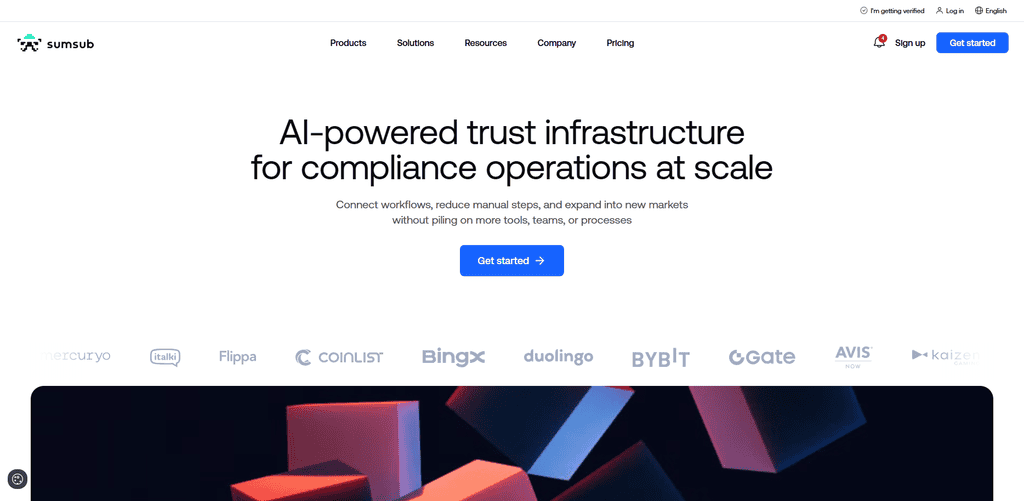
Pricing is typically customized depending on volume of verification and compliance requirements. Sumsub’s focus on automation, AI-powered document verification and risk scoring, and scalable infrastructure enables global onboarding across multiple jurisdictions and regulatory regimes.
Features
- Identity Verification (KYC): Verifying customer identity with identity documents, biometric checks, and liveness detection.
- Business Verification (KYB): Assists in verifying businesses and their ownership information.
- AML Screening: AML Screening screens customers against sanctions lists, politically exposed persons (PEPs), and other risk databases.
- Fraud Prevention: Employing risk signals and automated checks to identify suspicious identities and fraudulent onboarding attempts.
- Automated Compliance Workflows: Automates tasks of verification, risk assessment, and monitoring to enhance compliance processes
Top Use Cases
- Digital banking: Verification of customers at account sign-up and onboarding.
- Cryptocurrency Platforms: Enable customer onboarding, AML screening, and crypto-related compliance workflows.
- Payment Service Providers: Identify your customers and detect suspicious activity.
- Growing Fintech Startups: A single platform to handle different compliance requirements.
2. Trulioo
Trulioo offers a global identity verification and compliance platform to help fintech companies meet KYC and AML obligations. The core services include: individual verification, business verification, AML screening, watchlist checks and access to vast international identity data sources.
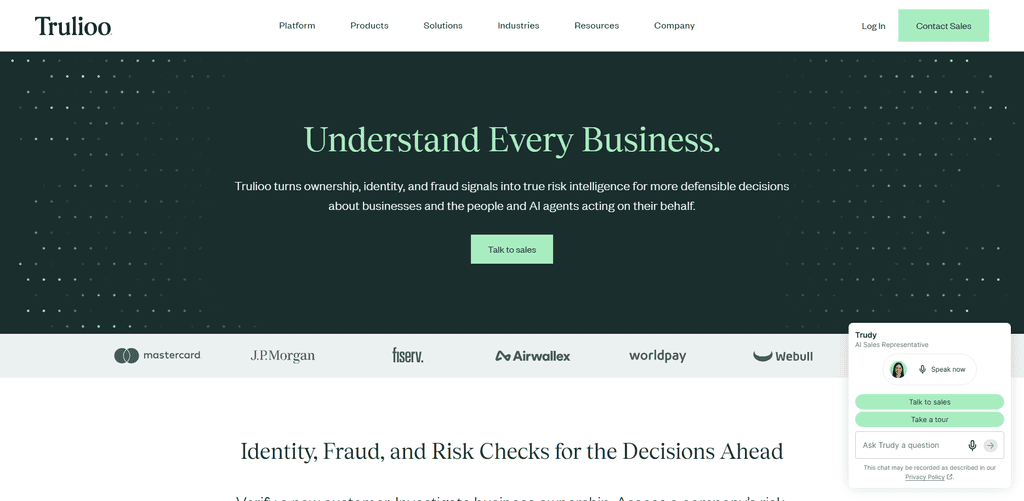
The platform is designed to support cross-border customer onboarding and compliance to regulations across multiple markets. Pricing is generally quote based, depending on the volume of data access and verification.
API-driven verification processes with a scalable architecture that can serve businesses from startups to large financial institutions, Trulioo’s automation capabilities streamline onboarding workflows and reduce the need for manual compliance reviews.
Main Features
- World Identity Verification: Verifies customer identity against data sources in different countries.
- Document Checking: Helps verify identity documents and confirm customer details.
- Business Verification (KYB): Verifies business identity and gets relevant company information.
- API Integration: Integrates identity verification services into existing fintech apps and onboarding systems.
- Automated Identity Checks: Uses data-driven verification processes to decrease manual reviews and enable efficient onboarding.
Top Use Cases
- International Fintech Companies: Verifying customers in various countries and jurisdictions.
- Digital Banks: allowing remote customer identity verification.
- Cross-Border Payment Platforms: Verifying individuals and businesses in international transactions.
- Global Marketplaces: Verifying the identity of customers and business partners across different markets.
3.Jumio”
Jumio is an identity verification platform for enterprises, with a reputation for merging document verification, biometric authentication and compliance controls. It provides services such as ID verification, selfie and liveness checks, AML support and customer onboarding solutions for regulated industries.

Financial institutions, lenders and fintech firms use Jumio extensively to reduce fraud and increase the accuracy of verification. Pricing is typically customized and geared toward enterprises, based on the volume of transactions and the scale of deployment.
The platform leverages machine learning and artificial intelligence to automate identity decisions, and the platform’s global verification capabilities and high-volume processing infrastructure are designed to support fast-growing and multinational fintech organizations.
Main Features
- Document Authentication: Scrutinizes identity documents for inconsistencies and tampering.
- Biometric Verification: Matches facial images against identity documents to aid identity verification.
- Liveness Detection: Helps to verify whether a person is physically present during verification.
- AI-Driven Risk Assessment: Identifies identity and fraud signals to facilitate automated verification decisions.
- AML Screening: Assists in screening processes to help identify customers associated with financial crime risks.
Top 4 Use Cases
- Digital Banking: Confirming new customers before opening accounts.
- Lending Online: Verifying the identity of borrowers applying for loans.
- Payment platforms: Tighten KYC before allowing payments.
- Large Financial Institutions: Automating the identity verification process for large volumes of customer applications.
4. Onfido (Entrust IDV)
Onfido (Entrust IDV) is focused on digital identity verification through AI-based document authentication and biometric analysis. It offers essential services for identity document verification, facial biometrics, liveness detection, fraud prevention and customer onboarding.
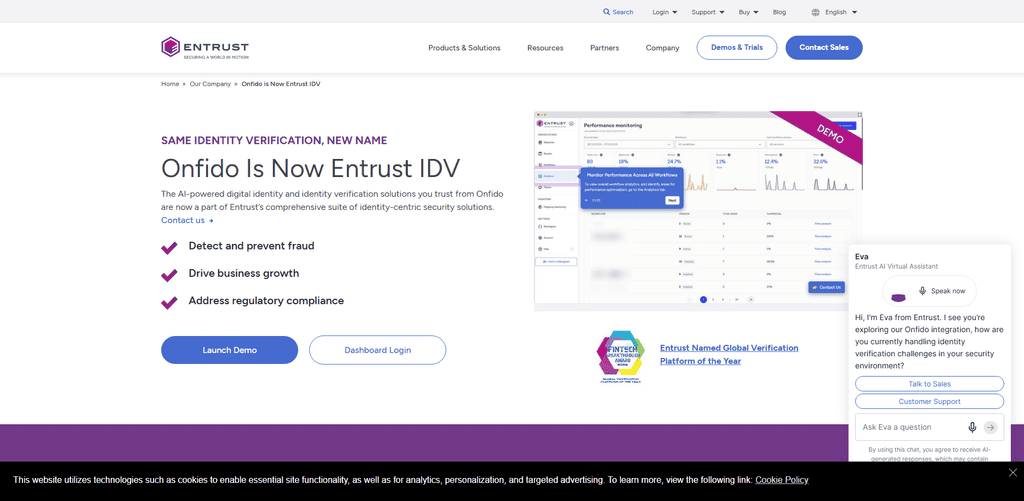
The platform is popular with fintechs seeking secure remote account opening and regulatory compliance. Prices usually depend on the volume of verifications and the features you need. Automation is at the core of this process, with machine learning algorithms used to assess documents and user authenticity in seconds.
Onfido provides a scalable infrastructure to enable millions of identity checks around the world and is suitable for startups, digital banks and high growth financial technology companies.
Important Features
- Identity Document Verification: Reviews government-issued identity documents to confirm customer information.
- Facial Biometric Matching: Matches the customer’s face to the identity document.
- Liveness Detection: Helps to detect attempts to impersonate another person using pictures or pre-recorded media.
- AI-Assisted Verification: Automates the analysis of documents and biometric verification to boost onboarding efficiency.
- API and SDK Integration: Allows businesses to integrate identity verification into websites and mobile applications.
Top Use Cases
- Online Lending Platforms: Identity verification of applicants prior to loan applications.
- Digital Financial Services: Remote onboarding customer identity verification.
- Digital Wallets: Enhanced identification verification for account creation.
- Enterprise Applications: Embedding identity verification into existing digital identity and security flows.
5. Persona
Persona is a developer-centric identity platform that fintechs use to build highly customizable KYC and onboarding flows. Services include identity verification, document validation, AML integrations, workflow automation, case management, and user lifecycle monitoring. Fintech organizations can customize verification journeys via APIs and low-code tools to meet their compliance needs.
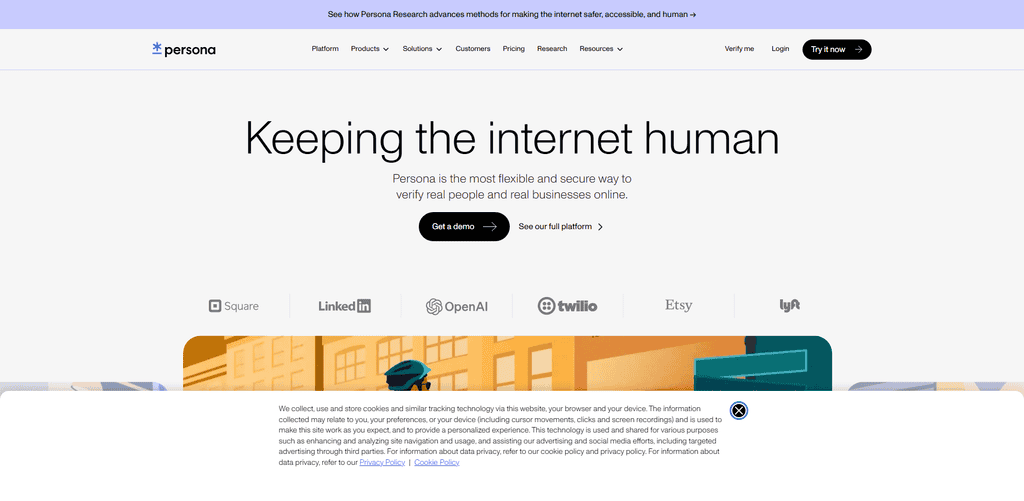
Prices are normally individual and depend on the usage and selected modules. Persona offers flexibility, scalability and automation with configurable workflows and intelligent verification systems. Its AI-enhanced capabilities aid in reducing onboarding friction while maintaining strong compliance standards for rapidly growing financial services businesses.
Main Features
- Customizable Identity Verification: Enables you to configure identity verification processes that match your business needs.
- Document Check: Validate customer information and identity documents.
- Biometric Verification: Supports facial verification and liveness checks based on configured workflows.
- Risk-Based Workflows: Guides customers through different verification steps based on risk signals and business rules.
- Workflow Automation: Combines verification checks, review processes, and decision-making via configurable workflows.
Best Applications
- Digital banking: Different verification requirements for customers based on risk.
- Fintech Startups: Create custom customer onboarding and identity verification flows.
- Online Marketplaces: Verification of users and business participants to reduce identity fraud.
- Financial Platforms: Enable customer verification and review processes through flexible workflows.
6. ComplyAdvantage
ComplyAdvantage is a purpose-built AML compliance platform designed to help fintechs identify financial crime risks and meet regulatory obligations. Key services include sanctions screening, PEP screening, adverse media monitoring, transaction monitoring and ongoing customer risk assessment.
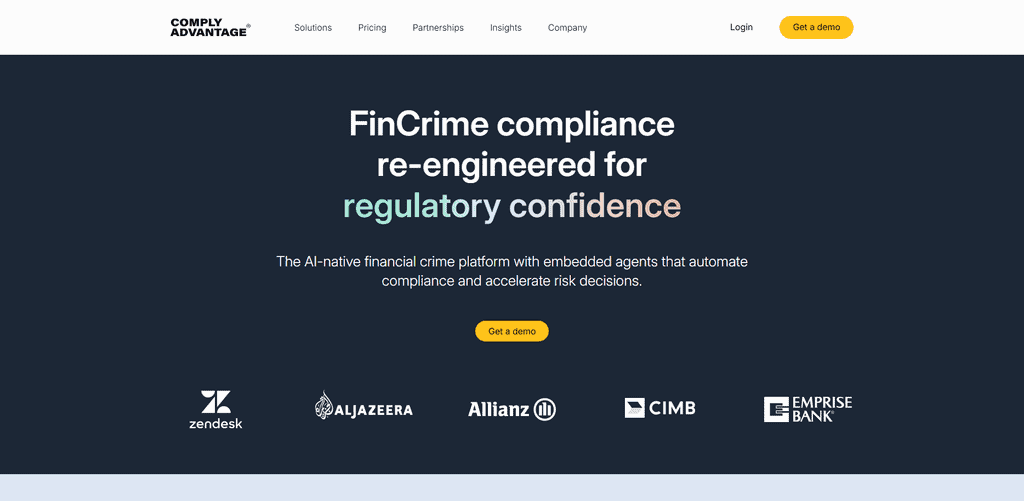
ComplyAdvantage is different from platforms that are focused mainly on identity verification, instead focusing on AML intelligence and risk detection. The cost is usually dependent upon the volume of screening and monitoring requirements.
Its AI-powered technology continuously analyzes risk data and automates compliance workflows, reducing manual review workloads. It’s a highly scalable platform for fintechs, digital banks, payment providers and regulated financial institutions globally.
Key Features
- Sanctions Screening: Compares customers to relevant sanctions lists to identify potential matches.
- PEP Screening Screens for politically exposed persons and supports related risk assessments.
- Adverse Media Screening: Assists in uncovering any bad press about customers or businesses.
- Transaction Monitoring: Looks at transaction behavior to identify potentially suspicious financial activity.
- Automated Alert Management: Enables compliance teams to prioritize alerts, investigate potential risks, and manage review workflows.
Top Use Cases
- Banks and Financial Institutions: To assist with ongoing AML screening and risk management for financial crime.
- Payment Service Providers: Monitoring transactions and screening customers for potential financial crime risks.
- Global Corporations: Vetting clients and counterparties across multiple jurisdictions.
- Compliance Teams: Managing AML alerts, investigating potential matches and assisting with regulatory reporting procedures.
7. Alloy
Alloy is an identity decisioning and compliance orchestration platform that allows fintechs to handle KYC, AML, fraud prevention, and onboarding all in one interface. The platform brings together multiple data providers and verification sources to build compliance workflows on demand. Services include identity verification, fraud detection, risk assessment, AML screening and customer onboarding orchestration.
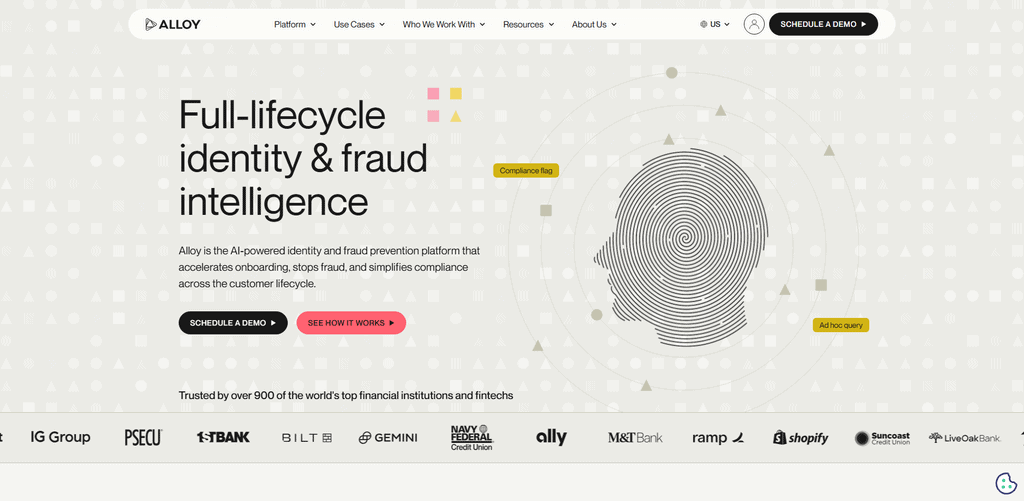
The prices are generally adapted to the needs of the enterprise and the volume of transactions. Alloy’s automation engine enables organizations to make real-time identity decisions based on risk signals and configurable rules. Its scalable architecture supports growing fintechs while providing the flexibility needed to meet changing compliance requirements.
Important Features
- Identity Verification Orchestration: A central workflow to link multiple identity verification providers.
- KYC and KYB Workflows: Allows you to verify persons and companies.
- Fraud Detection: Uses available identity and risk signals to help detect potentially fraudulent applications.
- Automated Decisioning: Configurable rules are applied to determine whether applications should be approved, declined or reviewed.
- Integration Management: Allows fintech companies to use their current systems to manage multiple data providers and compliance services.
Top Use Cases
- Digital Banks: Decisions on identity verification, fraud checks and customer onboarding to be coordinated.
- Fintech Companies: Orchestrating multiple verification vendors through a single decisioning platform.
- ** Online Lending Companies:** Assessing the applicant information and using risk-based approval rules.
- Scale Financial Institutions: Scale compliance workflows without owning each verification integration on its own.
8. Veriff
Veriff is an AI-powered identity verification provider that helps fintech companies onboard customers safely and prevent fraud. Core services include government ID verification, biometric authentication, liveness detection, document validation, and fraud risk analysis.
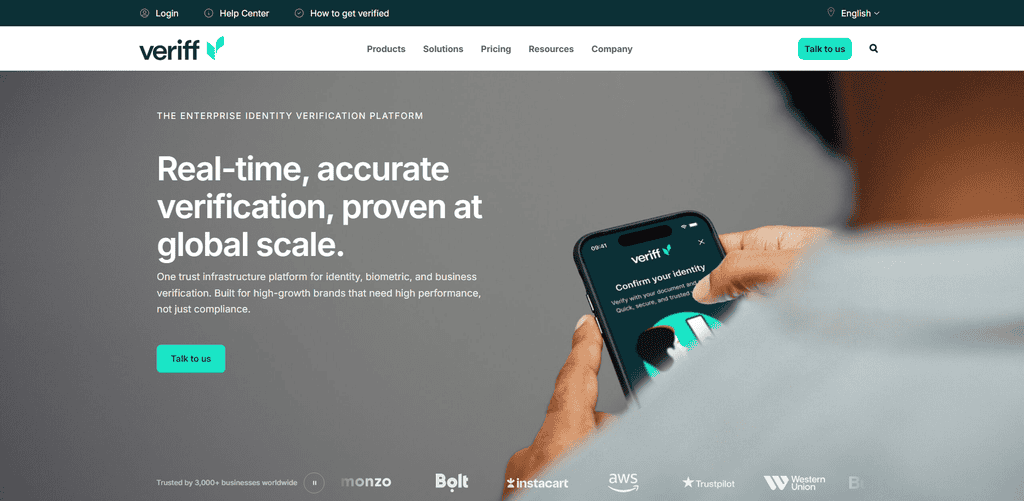
The platform helps businesses that work internationally to meet KYC compliance requirements. Prices usually depend on the volume of verifications and the configuration of the service.
Veriff leverages automation and machine learning to speed up approval decisions and decrease fraudulent applications. It has a scalable infrastructure that is built to handle high volumes of verification efficiently, making it a popular choice for fintech companies, digital platforms, and online financial services.
Main Features
- Identity Document Verification: Validates government-issued identity documents at the time the customer onboards.
- Biometric Verification: Uses facial matching to help ensure the applicant is the same person as the identity submitted.
- Liveness Detection: Helps to detect spoofing attempts with photos, videos or other presentation attacks.
- Detect Fraud With AI – Analyzes identity and verification signals to detect suspicious onboarding attempts.
- Developer Integrations: Offers APIs and SDKs to integrate verification into websites and mobile apps.
Best Use Cases
- Digital Banking: Customer verification remotely to open accounts.
- Financial Services: Verifying identities before granting access to payment apps.
- Online Lending: Checking out borrowers and helping to cut down on identity fraud.
- International Consumer Platforms: Supporting the digital identity verification of customers in different markets.
9. Socure
Socure offers digital identity verification and fraud prevention solutions powered by artificial intelligence and deep data analysis. Its services include identity verification, fraud detection, customer risk assessment, account opening verification and regulatory compliance support.
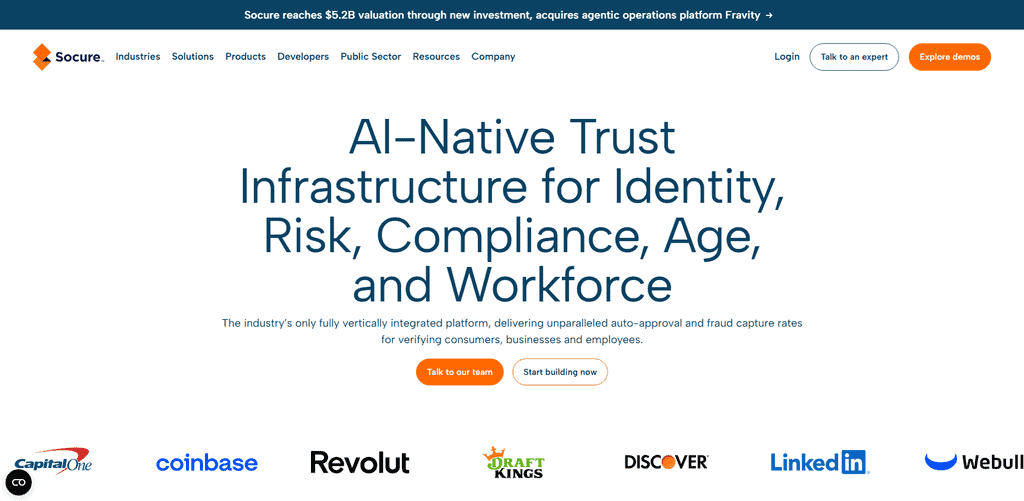
Socure is particularly noted for its use of alternative data sources to improve identity accuracy and decrease false positives. Pricing is typically quote based and custom to the business.
The platform’s AI models automate verification decisions and risk assessments, helping fintechs onboard legitimate users more efficiently. Its scalable infrastructure can handle high-volume onboarding operations and helps organizations maintain robust compliance standards.
Main Features
- Digital Identity Verification: It uses identity information and data signals to help determine if an applicant is legitimate.
- Synthetic Identity Detection: Helps to identify potentially fake identities which are a mix of real and false information.
- Fraud Risk Assessment: Analyzes identity risk signals to assist with informed onboarding decisions.
- Automated Decisioning: Enables automated application assessment via risk models and configurable workflows.
- Compliance Screening: Provides the screening capabilities that could help identify potential sanctions and other compliance risks, depending on the chosen solution.
Best Applications
- Digital Banks: Risk assessment of identity at account opening.
- Consumer Lending Firms: Detecting suspicious applications and potential synthetic identities.
- Financial Services Platforms: Assessing customer risk before granting access to financial products.
- **US-focused Fintechs:**Leveraging US-specific identity data and risk signals to verify identities and prevent fraud.
10. SEON
SEON provides fintech and online financial service providers with a single platform for AML compliance, identity verification and fraud prevention. Its services include digital footprint analysis, email and phone intelligence, device fingerprinting, AML screening, identity verification and real time risk scoring.
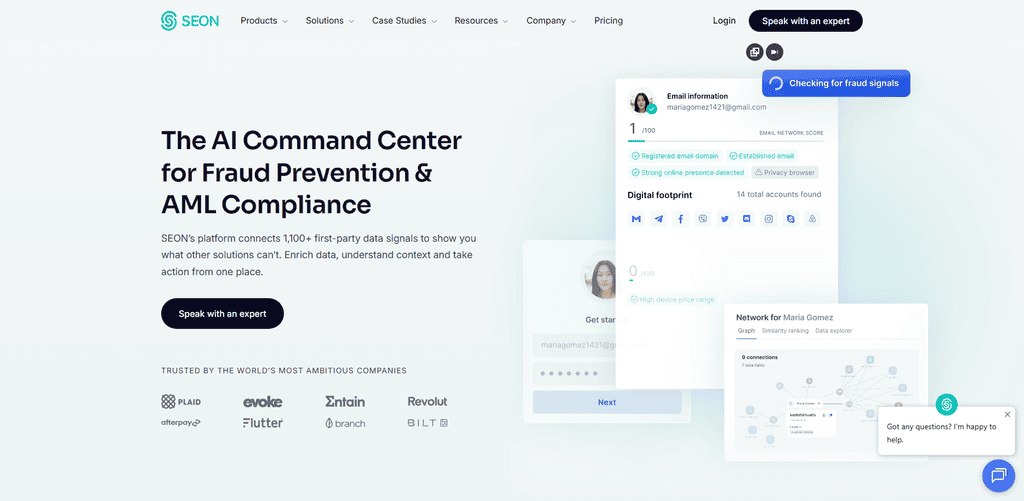
” SEON helps companies to identify suspicious activity before spending money on verification. Pricing is driven by usage, features and transaction volume.
The platform leverages automation and AI-based insights on behavior and risk signals to enhance the effectiveness of fraud detection. Its scalable architecture is built for fast-growing fintech companies that need fast onboarding and strong risk management.
Main Features
- Email Intelligence: Reviews email signals to assist in detecting suspicious or potentially fraudulent users.
- Phone Number Analysis: Evaluates information associated with phone numbers as part of a risk assessment of customers.
- Device Fingerprinting: Identifies device characteristics to help detect fraud activity and repeated fraud access.
- Digital Footprint and IP Analysis: Analysis of IP addresses and available digital signals to detect potentially risky behavior.
- Fraud Scoring on Automation: Aggregates risk signals to enable automated decisioning and fraud investigation processes.
Best Use Cases of
- Digital Payment Platforms: To detect suspicious users and possible fraudulent payment activity.
- Online Lending Businesses: Evaluate application risk and identify possible fraudulent accounts.
- E-Commerce and Marketplaces Detect account abuse, suspicious sign-ups, and payment fraud.
- Digital Wallet Providers: Identifying suspicious account behavior and improving fraud prevention at onboarding and during transactions.
Conclusion
Choosing the right KYC and AML compliance platform is essential for fintech companies that want to avoid fraud, verify customer identities, and remain compliant with regulations. Sumsub, Trulioo, Jumio and Veriff are platforms that are heavily focused on identity verification, while ComplyAdvantage specializes in AML screening and transaction monitoring.
Alloy supports integrated risk decisioning and Persona offers customizable verification workflows. Socure and SEON focus on identity intelligence and fraud prevention.
Fintech companies should compare features, automation capabilities, integration options, scalability, data security and pricing before choosing a solution to ensure the platform meets their operational needs and supports long-term growth.
FAQ
What are KYC and AML compliance platforms?
KYC and AML compliance platforms help fintech companies verify customer identities, screen high-risk individuals, monitor transactions, detect fraud, and support regulatory compliance.
Which KYC and AML platform is best for fintech companies?
The best platform depends on business requirements. Sumsub offers broad compliance capabilities, Trulioo specializes in global identity verification, and ComplyAdvantage focuses on AML screening and monitoring.
What features should fintech companies look for in KYC software?
Important features include identity verification, document authentication, biometric checks, sanctions screening, PEP monitoring, transaction monitoring, fraud detection, automation, and API integrations.
How much do KYC and AML compliance platforms cost?
Pricing varies by provider, verification volume, selected features, geographic coverage, and contract terms. Some platforms offer published plans, while enterprise solutions generally require customized quotations.
Can KYC and AML compliance processes be automated?
Yes. Automation can streamline identity verification, customer screening, risk assessment, transaction monitoring, and alert management. However, complex cases may still require manual review by compliance professionals.