This article will explore the Best Bond Investment Platforms for Income-Focused Investors, with the aim of constructing a solid fixed-income portfolio and earning steady interest over time. Government bonds, corporate bonds, municipal bonds and bond ETFs all trade on different platforms and the choice can be hard to make.
It’s important to carefully evaluate each option. I will look at the best investment platforms, their main features, bond choice, pricing, research tools and income opportunities to enable investors to make informed decisions based on their financial objectives and risk tolerance.
How Do Bond Investment Platforms Help Generate Regular Income?
1Regularly Scheduled Coupon Payments: Investors can access securities that offer regular interest payments through bond platforms, allowing them to earn scheduled income based on the bond’s coupon rates and payment schedules.
Bond Laddering: Investors can purchase bonds with different maturity dates, which generate staggered repayment schedules. This helps provide a consistent cash flow and reduces dependence on a single maturity date.

Treasury investments: Platforms offer you the ability to invest in government securities such as Treasury bills, notes, and bonds. You can earn interest for a variety of maturity periods and payment schedules.
Corporate Bond Access: Investors gain access to corporate bonds with fixed or floating interest payments, offering income opportunities while considering issuer creditworthiness and default risks.
Municipal Bond Income: Some platforms offer access to municipal bonds that may pay periodic interest payments, and some bonds may offer federal tax benefits depending on the investor’s location and situation.
Bond ETF Distributions: Bond ETFs pay income from the underlying fixed income securities, allowing investors to gain diversified exposure, as well as potentially recurring distributions.
Automatic Reinvestment: Some platforms offer the option to reinvest eligible bond interest or fund distributions, allowing investors to compound returns through the purchase of additional income-generating investments.
Tools for Tracking Income: Fixed income dashboards allow investors to track coupon dates, expected interest payments, maturity dates and portfolio yields, helping with income planning and cash flow management.
Benefits of Using Online Bond Investment Platforms
Wider choice of bonds: Online platforms allow investors to purchase government, corporate, municipal and agency bonds, which means they can compare different fixed income securities and choose investments that match their desired income.
Simple Investment Management: Investors can purchase, track, and manage their bond investments through digital accounts, reducing the reliance on manual investment processes or traditional brokerage interactions.
Yield Information: There are many websites that provide information on coupon rates, yield to maturity, maturity dates and bond prices. Investors use these to assess income potential and compare investment choices.
Portfolio Diversification: Investors can diversify their fixed income portfolio by holding bonds of different types, maturities and issuers, reducing the importance of any one investment or borrower.
Regular income planning: The payment schedule and maturity date of a bond help the investor to organize expected interest payments, plan cash flow and align investments with recurring financial needs.
Lower Investment Barriers: Some platforms offer fractional bond investment, bond funds or ETFs, allowing qualified investors to invest in the fixed income markets with relatively lower investments.
Advanced Research Tools: Bond screeners, credit information, yield calculators and market analysis tools help investors evaluate securities and make more informed fixed income investment decisions.
Maturity Options: Flexible Investors can choose bonds with short, medium and long terms to match their financial objectives, liquidity needs and desired investment horizon.
Key Points
| Bond Investment Platform | Best For | Key Points |
|---|---|---|
| Fidelity Investments | Best Overall Bond Investing Platform | Offers government, corporate, municipal, and Treasury bonds, bond ETFs, fixed-income research, and bond laddering tools. |
| Charles Schwab | Best for Fixed-Income Research | Provides access to Treasury securities, corporate bonds, municipal bonds, CDs, bond funds, and fixed-income education. |
| Interactive Brokers | Best for Global Bond Investing | Offers access to more than one million global bonds, including government and corporate debt, with bond screening and transparent commission structures. |
| E*TRADE | Best for Beginner-Friendly Bond Investing | Provides individual bonds, Treasury securities, CDs, bond ETFs, research resources, and bond laddering tools. |
| Vanguard | Best for Long-Term Bond Investors | Offers diversified bond mutual funds, fixed-income ETFs, Treasury securities, and investment-grade bond exposure. |
| J.P. Morgan Self-Directed Investing | Best for Chase Customers | Provides access to Treasury securities, corporate bonds, municipal bonds, CDs, and integrated investment research. |
| Merrill Edge | Best for Bank-Linked Investment Management | Combines brokerage services with fixed-income investments, including Treasury securities, corporate bonds, municipal bonds, and bond funds. |
| Ally Invest | Best for Self-Directed Investors | Offers fixed-income investment options, including individual bonds, CDs, and bond ETFs, alongside self-directed brokerage services. |
| Firstrade | Best for Low-Cost Bond Investing | Provides access to government and corporate bonds, CDs, bond ETFs, and commission-free stock and ETF trading. |
| Public | Best for Simplified Bond Investing | Offers access to selected U.S. Treasury and corporate bonds, alongside stocks, ETFs, and other investment products. |
1. Fidelity Investment
Fidelity is a full service broker/dealer with a deep fixed income marketplace. Fidelity offers over 100,000 new issue and secondary bonds and CDs and over 150,000 quotes with depth of book. Investors can buy U.S. Treasuries, municipal bonds, corporate bonds, agency securities, brokered CDs, bond funds, ETFs and managed bond portfolios.
Online secondary bond trades are $1 per bond; online U.S. Treasury and CD trades are free. Trades assisted by a representative have a minimum markup/markdown of $19.95. Minimums vary by security, typically $1,000–$5,000 for individual bonds. Fidelity offers screening, yield curves, calculators, research, laddering help and fixed-income specialists.
Main Features
- Access to government, corporate, municipal and US Treasury bonds.
- Supports new issue and secondary market bond trading.
- Offers bond laddering tools to assist with maturity date management.
- Offers fixed income research, yield data, and bond screening.
- Bond funds, ETFs and individual fixed income securities.
Ideal For
- Income investors who want diversified exposure to bonds.
- Long term investor’s fixed income portfolio construction
- Investors are looking at bond yields and maturity terms.
- Investors looking for research tools and portfolio management support.
2. Charles Schwab
Charles Schwab is a large U.S. brokerage with a large fixed-income marketplace for new issues and secondary-market bonds. It includes Treasuries, municipal bonds, corporate bonds, agency bonds, brokered CDs, bond funds, ETFs and managed portfolios.
Schwab’s standard online bond commission is $1 per bond, with a $10 minimum and $250 maximum, and trades of less than $100 in principal are free of the transaction fee. Most individual bonds come with a minimum face value of $1,000, though offerings and dealer minimums vary.
Investors get bond screeners, yield and maturity data, research, portfolio tools, education and advisor support. Schwab is good for investors wanting a large, established fixed-income platform.
Main Features
- Supplies Treasury, corporate, municipal and agency bonds.
- Provides access to new-issue and secondary market bonds.
- Provides BondSource tools for fixed-income research.
- Allows for bond laddering and maturity planning.
- Offers bond funds, ETFs, and brokered CDs.
Great For
- Investors looking for a broad array of fixed income investment opportunities.
- First time investors looking at individual bonds.
- Investors looking to build regular income with bond ladders.
- Investors that value fixed income research and advice.
3. Interactive Brokers
Interactive Brokers is a low-cost, global brokerage for active and sophisticated investors. Its bond marketplace includes U.S. government securities, non-U.S. sovereign bonds, municipal securities, CDs and more than 36,000 global corporate bonds, as well as fixed-income futures and options. IBKR does not charge bond markups, but transparent commissions.
Corporate bonds are charged 0.1% of the first $10,000 face value, plus 0.025% above that, with a $1 minimum and capped at the lesser of $250 or 1% of the trade value. Municipal bonds are cheaper at 0.05% and 0.0125% respectively. The first $1 million of Treasuries cost 0.2 basis point. The platform provides powerful screeners, global market access, analytics and professional trading tools.
Highlights
- Gives you access to domestic and international bond markets.
- Supports government, corporate and other fixed income securities.
- Offers sophisticated bond screening and comparison tools.
- Has professional trading and portfolio management capabilities.
- Supports various currencies and international investment opportunities.
Most Suitable For
- Seasoned investors with an interest in global bond markets.
- Active traders who want sophisticated fixed income tools.
- Investors with international diversification in their portfolio.
- Investors who want to save money on bond trading costs
4. ETRADE
ETRADE, a Morgan Stanley company, provides an accessible fixed-income marketplace for individual investors looking for bonds, CDs and bond funds. Products typically available include U.S. Treasuries, municipal bonds, corporate bonds, agency bonds, brokered CDs, bond mutual funds and bond ETFs. Online secondary-market bond commission is $1 per bond with a $10 minimum and $250 maximum per trade.
The minimum for an individual bond can be as low as $1,000 face value, but CDs and funds vary. E*TRADE provides bond screeners, yield and maturity filters, credit-quality information, educational resources and portfolio-analysis tools. This is particularly good for investors who want a simple platform, good research and a wide selection of bonds.
Features
- Offers Treasury, corporate, municipal and agency bonds.
- Access to new issue and secondary market bonds.
- It includes tools for bond laddering and maturity management.
- Supports bond ETFs and fixed income mutual funds
- Offers investment research and bond market information.
Perfect For
- For investors seeking to diversify their fixed-income investments.
- Newbie searching individual bonds and bond funds.
- Investors building staggered maturity strategies.
- Investors who combine bonds with stocks and ETFs.
5. Vanguard
Vanguard is best known for its low-cost index funds and ETFs, and its fixed-income offering is focused on funds, not individual-bond trading. Mutual funds and ETFs provide investors with access to Treasury, municipal, corporate, international, inflation-protected and high-yield bonds. Vanguard’s brokerage also offers individual bonds and CDs, but its commission structure for bond trading is less competitive for smaller trades.
Its published comparison shows a $10 minimum commission for online bond trading. Minimums vary, with some Vanguard funds requiring $1,000, some $3,000 or more, and ETFs generally selling for share price. Vanguard offers fund research, portfolio tools, retirement planning, and low-cost diversified sources of income, making it a great fit for buy-and-hold bond-fund investors. investors.
Key Features
- Provides diversified bond mutual funds and ETFs.
- Gives access to U.S. Treasury securities.
- Offers investment grade corporate bond fund options.
- Helps diversify a fixed-income portfolio.
- Sells brokered CDs, individual Treasury investments.
Best suited for
- Investors seeking diversified bond exposure for the long term.
- Retirement investors looking to build income-oriented portfolios.
- Investors seeking low-cost bond funds and ETFs.
- Investors contemplating equity and fixed-income allocations.
6. J.P. Morgan Self-Directed Investing
J.P. Morgan Self-Directed Investing is Chase’s online brokerage, and it features a simple interface, plus J.P. Morgan research and banking integration. Its fixed income offerings include U.S. Treasury bills, notes and bonds; agency discount notes; municipal and corporate bonds, including zero coupon bonds; and brokered CDs. There is no per-bond commission on U.S. Treasury trades.
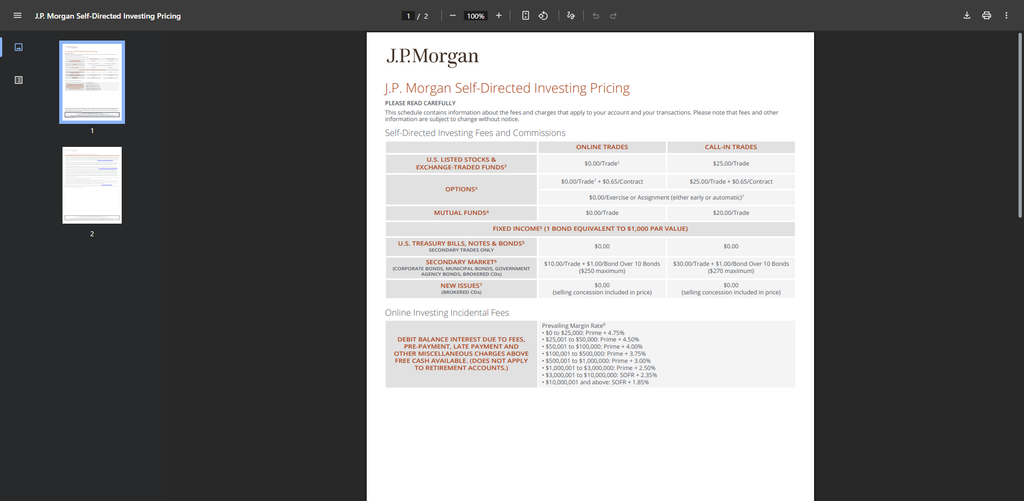
Secondary corporate, municipal, agency and brokered-CD trades are $10 per online trade plus $1 per bond above 10 bonds, to a maximum of $250. Trades made by calling in cost more. Individual bonds generally have a minimum face value of $1,000 (subject to market availability). It also provides investors with research, screening tools, market commentary and smooth integration with Chase accounts.
Main Features
- Gives you access to U.S. Treasury securities.
- Investment opportunities in corporate and municipal bonds.
- Supports brokered certificates of deposit.
- Investment accounts connected to Chase banking services.
- Provides investment research and tools for self-directed portfolios.
Ideal For
- Target customers who handle banking and investments together.
- Investors who want government and corporate bonds
- Do-it-yourself investors who build fixed-income portfolios.
- Investors comparing bonds and brokered CDs.
7. Merrill Edge
Bank of America’s self-directed brokerage platform, Merrill Edge, has a broad fixed income marketplace and integrates with Bank of America banking and Merrill wealth services. Investors can trade U.S. Treasuries, municipal bonds, corporate bonds, government agency bonds, brokered CDs, bond mutual funds and bond exchange-traded funds.
Secondary online trades are $1 per bond with a $10 minimum and $250 maximum; Treasury auction and secondary trades are $0 online; and representative-assisted trades are $29.95 in service charges.
Individual bonds often have a minimum face value of $1,000. Merrill Edge has bond screeners, yield and maturity analysis, credit research, portfolio tools and MarketPro research. It’s good for Bank of America customers who want one point of access to banking, brokerage and fixed-income investments.
Key Features
- Buys Treasury, corporate and municpal bonds.
- Lets you tap bond funds, fixed-income ETFs.
- Supports research and analysis on fixed income investments.
- Connects brokerage accounts to Bank of America services.
- Offers investment tracking and portfolio management tools.
Best for:
- Bank of America customers who are managing investments alongside their banking.
- Investors looking for traditional fixed-income securities.
- Investors seeking municipal bond opportunities.
- Investors who blend individual bonds with diversified funds.
8. Ally Invest
Ally Invest is an online brokerage that is easy to use and has low-cost pricing. It also integrates with Ally Bank’s savings and banking products. Its fixed-income menu generally includes U.S. Treasuries, corporate bonds, municipal bonds, brokered CDs, bond mutual funds and bond ETFs. Individual bonds typically have a minimum face value of $1,000, while CDs and funds can have varying minimums.
Ally’s published pricing frequently uses $1 per bond for secondary market trades, with minimums and maximums that may apply. Investors should verify current terms before trading. The platform includes bond screeners, yield-to-maturity information, maturity-date filters, educational content, and basic portfolio tools. Ally is a good, practical choice if you want to put your money into Treasuries, CDs and bonds, but also want basic banking services.
Key Features
- Offers fixed-income investment opportunities via brokerage services.
- Provides access to brokered certificates of deposit.
- Supports stocks, ETFs and other investment vehicles.
- Provides the management of digital brokerage accounts.
- Links Ally banking products to investment services.
Ideal for
- Self-directed investors looking at fixed income.
- Investors comparing CDs to other income-producing products.
- Customers desiring integrated banking and brokerage services.
- Digital investors with diversified portfolios.
9. Firstrade
Firstrade is a commission-free, mobile-friendly brokerage that appeals to beginning and cost-conscious investors, including those outside the United States. Fixed-income availability is more limited than full-service bond desks, but investors can typically access U.S. Treasury securities, corporate bonds, municipal bonds, brokered CDs, bond mutual funds, and bond ETFs as available in its marketplace.
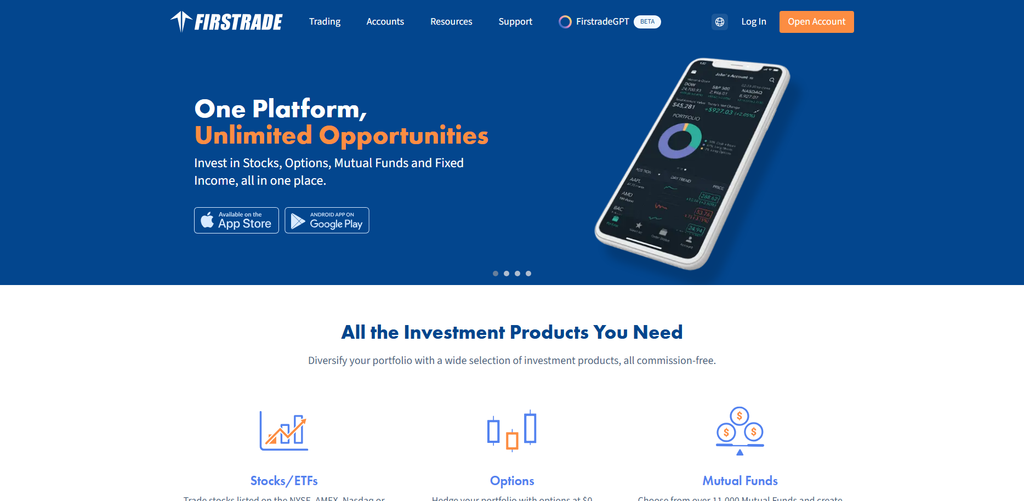
Individual bonds usually have a minimum face value of $1,000, while ETFs can be purchased for the price of a single share. At Firstrade, bond commissions and spreads may vary by security and dealer. Investors should review the quote prior to ordering. The platform offers screening, market data, education and simplified account management. Best for investors who want easy access and inexpensive ETF-based bond exposure.
Characteristics
- Access to certain government and corporate bonds.
- Provides options for fixed-income investments, besides stocks and ETFs.
- Allows online management of brokerage accounts.
- Provides research on investments and market data.
- Provides commission-free trading for eligible stocks and ETFs.
Best For
- Individual investors research their own bonds.
- Investors pairing fixed income securities with ETFs.
- Price-aware investors with diversified portfolios.
- Digital-first investors looking for basic brokerage services.
10. Public
Public is a modern investing app that focuses on stocks, ETFs, options, crypto, alternative assets and, more and more, fixed income products. It has a narrower bond offering than traditional brokerages and specializes in making Treasury, corporate and muni bond exposure available, as well as bond ETFs and Treasury bill products.
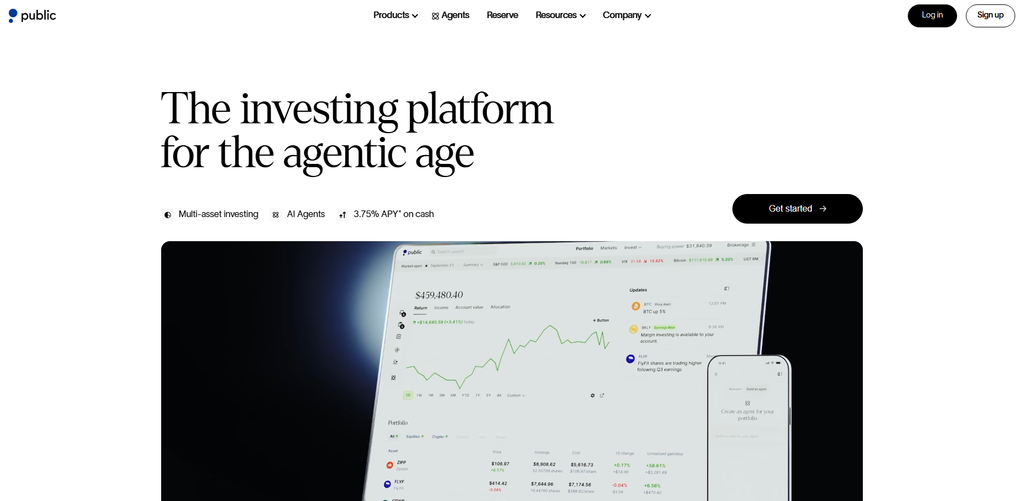
Public is geared for smaller investors, so it can be useful to build a simple bond allocation without a large commitment to start. Exact minimums depend on the security or fund available.
Public touts transparent pricing and easy mobile trading but investors should compare the all-in yield, spread and fees before buying. Research tools include company and asset pages, portfolio tracking and educational content, but its fixed income analytics aren’t as robust as Fidelity, Schwab or Interactive Brokers.
Key Features
- Allows you to buy certain U.S. Treasury securities.
- Provides selected investment opportunities in corporate bonds.
- Shows bond investment details and pricing information.
- Mixes bonds with stocks and ETF investments.
- Provides a simplified digital investing experience.
Best For
- Digital-first investors who want to simplify investment management.
- Newcomers to fixed-income investing.
- Investors searching for particular Treasury securities.
- Investors adding corporate bonds to diversify from stocks.
Conclsuion
Selecting the right bond investment platform for income-oriented investors unlocks access to a diverse range of fixed-income opportunities and enables more streamlined portfolio management. Some platforms — such as Fidelity Investments, Charles Schwab, Interactive Brokers and Vanguard — have a variety of bond selections, research tools, maturity options and investment management capabilities.
Investors need to factor in coupon rates, yield to maturity, minimum investment requirements, trading fees and available bond categories when making their decisions. Bond laddering, Treasury securities, corporate bonds and bond ETFs can support a variety of income strategies. But interest rate risk credit risk and inflation risk are also worthy of consideration in building a sustainable fixed income portfolio.
FAQ
What are the best bond investment platforms for income-focused investors?
Some leading platforms include Fidelity Investments, Charles Schwab, Interactive Brokers, E*TRADE, Vanguard, J.P. Morgan Self-Directed Investing, Merrill Edge, Ally Invest, Firstrade, and Public. They offer different bond investment options, research tools, and income-generating opportunities.
How do bond investment platforms help investors generate regular income?
Bond platforms provide access to fixed-income securities that pay interest through scheduled coupon payments. Investors can build diversified portfolios with different maturity dates to create more predictable income streams.
What types of bonds can investors purchase through online platforms?
Depending on the broker, investors may access U.S. Treasury bonds, corporate bonds, municipal bonds, agency securities, brokered CDs, and bond ETFs. Available products vary by platform.
Which factors should investors compare before choosing a bond investment platform?
Investors should compare bond selection, yields, minimum investment requirements, trading costs, research tools, maturity options, account fees, and access to new-issue and secondary-market bonds.