


Private equity investment is a growing option for investors looking to diversify beyond traditional stocks and bonds and invest in private companies, venture capital and alternative funds. But the right investment opportunities demand access to reliable platforms, transparent fees, experienced fund managers and clear investment terms.
This article will be discussing Private Equity Investment Platforms to Know, their key features, investment opportunities, eligibility requirements, and potential risks so that they can help investors make a more informed decision.
What Are Private Equity Investment Platforms?
Access to Investment: Private equity investment platforms offer investors access to privately held companies, private equity funds, and alternative investment opportunities that are usually not accessible through mainstream stock markets.
Fund Opportunities: These platforms provide access to buyout funds, growth equity, venture capital and secondary investments and allow investors to explore a range of private market investment strategies.

Eligibility of Investors: Most platforms are open to accredited investors, qualified purchasers, institutional investors and high-net-worth individuals, depending on the rules and who the fund allows to participate.
Minimum Investment: Every platform will have minimum investment requirements that are a function of fund structures, investment opportunities, types of investors and financial regulations that govern participation in private markets.
Diversification of Portfolio: Investors can diversify their portfolios across private companies, industries, investment managers and fund strategies rather than just publicly traded securities.
Due Diligence: Private equity platforms provide due diligence on fund managers, investment opportunities, financial data and potential risks to help investors make better investment choices.
Fees and Management: These platforms can charge management fees, performance fees, carried interest and administrative expenses, depending on the investment structure and services provided.
Liquidity & Returns: Private equity investments tend to have long holding periods with limited withdrawal options and uncertain returns. Exits may be through acquisitions, secondary sales or public listings.
How to Choose the Best Private Equity Investment Platform?
Investment Opportunities: Choose a platform that provides access to the types of private equity funds, venture capital, growth equity and pre-IPO investments that suit your financial objectives and investment style.
Minimum Investment Requirements: Compare minimum investments across platforms to ensure their capital requirements align with your available budget and long-term private market investment strategy.
Investor Qualifications: Check whether the platform accepts accredited investors, qualified purchasers, institutional investors, or individual investors, depending on the regulatory requirements and eligibility criteria of a specific fund.
Fees and Charges: Understand management fees, performance fees, carried interest, transaction costs and administrative expenses.
Fund Manager Experience: Evaluate the experience of the fund managers, their investment strategies, past performance, and due diligence process to assess their ability to manage private market investments effectively.
Liquidity and Exit Options: Before committing capital to long-term private equity investments, understand the lock-in periods, redemption restrictions, access to secondary markets and potential exit opportunities.
Risk Management and Diversification: Choose platforms that provide clear risk disclosures, investment research, and the capability to spread investments across different industries, companies, and private market strategies.
Technology of the platform and reporting: Compare digital onboarding, investment tracking, portfolio reporting, documentation management, and customer support to ensure efficient investment administration and ongoing portfolio monitoring.
Key Points
| Platform Name | Key Point |
|---|---|
| Moonfare | Provides access to carefully selected private equity funds, diversified fund portfolios, co-investments, and secondary investment opportunities. |
| iCapital | Connects wealth managers, financial advisors, and eligible investors with private equity, private credit, and other alternative investment funds. |
| CAIS | Offers financial advisors access to alternative investment products, including private equity, hedge funds, and real assets. |
| Opto Investments | Helps financial advisors build and manage client portfolios with private market and alternative investment opportunities. |
| Allocate | Provides digital infrastructure for discovering, evaluating, and investing in private market funds and alternative investment opportunities. |
| Titanbay | Offers access to private market funds through digital investment infrastructure designed for wealth managers and eligible investors. |
| Forge Global | Provides a marketplace for private company shares, supporting secondary transactions involving eligible investors and private shareholders. |
| AngelList | Supports investments in startups and venture capital through syndicates, funds, and special purpose vehicles (SPVs). |
| InvestX | Provides eligible investors with access to private equity and late-stage private company investment opportunities through structured investment vehicles. |
| Nasdaq Private Market | Provides private company transaction solutions, including tender offers, liquidity programs, and secondary share transactions. |
1. Moonfare
Moonfare is a digital private-markets platform that offers eligible investors access to funds from established private-equity and venture-capital managers, generally through feeder or portfolio-fund structures. Its investment opportunities include diversified portfolio funds, access feeders to individual funds and a secondary fund.
Minimum commitments are typically €50,000 for portfolio funds and €100,000 for feeder funds, while its secondary fund starts at €25,000. Some European retail-focused ELTIF offers may start at €10,000.
Eligibility varies by jurisdiction and usually requires professional, semi-professional, accredited or high-net-worth status. Moonfare charges a one-off set-up fee and ongoing management fees, typically in the range of 0.25%-1%, plus underlying fund fees. It mainly serves investors in Europe, UK, Switzerland, Singapore, Australia and other approved jurisdictions.
Key Features
- Access to private equity funds and selected institutional-quality investment opportunities.
- Provides diversified portfolios through multiple fund managers and private equity funds.
- It covers direct funds, co-investments, secondaries and open-ended products.
- Digital onboarding, investment subscriptions, capital call management, and portfolio reporting included.
- Screens fund managers and carries out due diligence before bringing investment opportunities forward.
Material Risks
- Many fund offerings require relatively large minimum investment commitments.
- Private equity investments are generally illiquid and held for long periods of time.
- Access is limited to professional, qualified or accredited investor categories, as appropriate in each jurisdiction.
- Returns depend on the performance of the underlying fund and are not guaranteed.
2. iCapital
The iCapital is a financial-technology platform that enables wealth managers, private banks, RIAs, broker-dealers and family offices to offer alternative investments to clients. Its marketplace includes private equity, private credit, real assets, hedge funds and structured products, which are often set up as feeder funds with lower entry points. Most investors come to iCapital via an advisor already using the platform, not via a direct to consumer account.
Minimums often range from about $25,000 to $100,000, but some funds may require more; many offerings require accredited-investor or qualified-purchaser status. Fees can include the underlying manager’s management fee and carried interest, as well as platform, feeder and advisor fees. Based in the U.S., iCapital offers international infrastructure and distribution capabilities for wealth managers.
Main Features
- Access to private equity, private credit, hedge funds and alternative assets.
- Links wealth managers, financial advisors, banks and institutional investors to private market opportunities.
- Investment research, fund analytics and due diligence tools.
- Provides digital subscription processing, investment administration and portfolio monitoring.
- Offers technology for alternative investment portfolio and investor reporting.
Principal Risks
- Illiquid Private market investments can be illiquid for long periods
- Complex fund structures can make it harder to assess investment costs, valuations and risks.
- Access to investments may be dependent on the financial advisors or wealth management institutions involved.
- Underlying funds may have large minimum commitments and other management fees.
3. CAIS
CAIS is an alternative investment marketplace mainly targeted at financial intermediaries like RIAs, broker-dealers, banks, trusts and select institutional family offices. It offers access to private funds, interval funds, non-traded REITs, structured notes and other alternatives via a curated marketplace.
CAIS does not typically work with individual investors directly, but with financial firms or advisors that then invest on behalf of individual investors. There is no single minimum across the platform, but many portal products require $100,000, according to CAIS, while selected funds may have lower minimums.
One CAIS fund, for example, has a $25,000 minimum. Eligibility varies by product. Accredited investor requirements are common. CAIS itself may receive placement, introduction or marketing fees, while investors also pay product-level management fees, expenses and possibly incentive fees. The platform is primarily U.S.-focused.
Features
- Access to private equity, alternative investment and private credit and real estate funds.
- Connects financial advisors with alternative investment managers and fund opportunities.
- Provides fund research, education resources and investment due diligence support.
- Supports digital subscriptions, documentation and operational workflows for investment.
- Assists advisors in managing their alternative investment allocations and portfolio diversification.
Main Risks
- Alternative investment products can be expensive and have long holding periods.
- The platform is mainly for financial advisors and wealth management institutions.
- Some funds may be unavailable due to investment eligibility requirements.
- Investment decisions can be affected by limited liquidity and uncertain valuations of private assets.
4. Opto Investsments
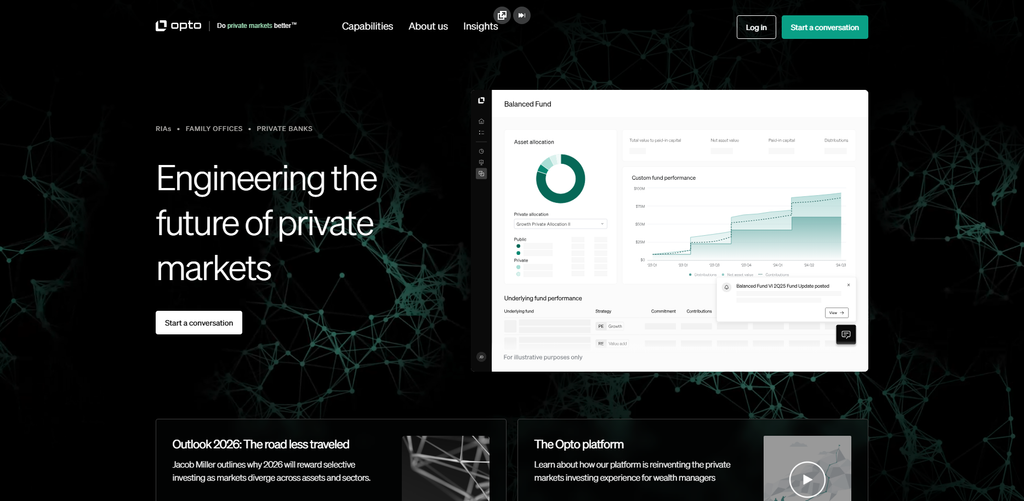
Opto Investments is a private markets platform for fiduciary wealth managers and RIAs serving families and high-net-worth individuals. It’s a technology-enabled service that combines fund sourcing, portfolio construction, investor qualification, subscription administration and reporting.
Investment vehicles may include single asset feeder vehicles and customized fund of funds programs tailored to the clientele and investment strategy of an advisory firm. Opto does not publish a universal retail minimum, but structures vehicles and programs around the needs of each advisor, with eligibility based on the underlying fund and any relevant regulations.
Its normal economics might be a software fee, a low management fee and an incentive fee only if returns exceed a hurdle. Opto says it doesn’t charge fund managers to be on the platform, which helps position its manager selection around merit. It is mainly for U.S. advisory firms.
Main Features
- Offers private market investment solutions to registered investment advisors and wealth managers.
- Provides access to private equity, venture capital, private credit and real estate funds.
- Allows advisors to build custom private market investment portfolios.
- Provides fund manager research, due diligence and investment selection support-
- Digitizes investment operations, reporting and portfolio management.
Important Risks
- Investment opportunities may be available only to eligible advisory clients and qualified investors.
- Private funds may require large capital commitments.
- Long investment horizons limit access to invested capital.
- Performance depends on fund managers, underlying assets and general market conditions.
5. Allocation
Allocate is a private-markets infrastructure that allows asset managers and wealth advisors to aggregate smaller investor commitments into a single limited-partner position. It supports investor onboarding, KYC, subscriptions, capital calls, distributions, K-1 administration and portfolio reporting.
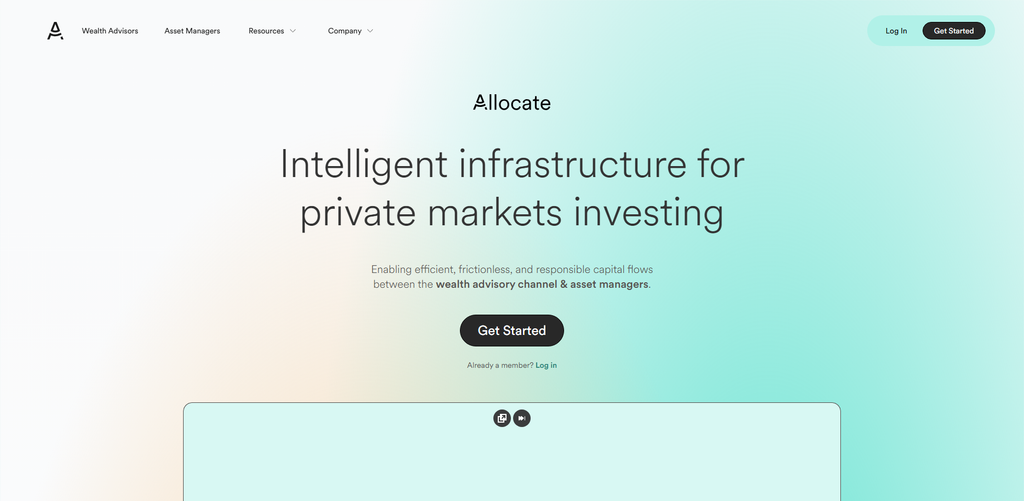
Its investment offerings span curated private-market funds, bespoke fund structures, and SPVs delivered via advisors. Allocate is especially useful where a fund has a normal minimum of $1 million or more, but the manager wants to accept commitments of around $100,000 to $500,000 through a feeder.
Eligibility will vary by offering and may include accredited investors, qualified purchasers, family offices and RIAs investing on behalf of clients. Servicing fee for management plus an admin fee, usually paid by limited partners of the feeder vehicle. Allocation of charges. It’s mostly focused on the U.S. private-markets advisory market.
Main features
- Provides technology to source and manage private market investment opportunities.
- Supports deal structures for private equity, venture capital and alternative investments.
- Assists investors and investment firms in structuring deal participation and fundraising.
- Provides digital workflows for investor onboarding, documentation and subscriptions.
- Supports investment administration, portfolio monitoring and reporting.
Major Risks
- Investments in private companies carry high business and valuation uncertainty.
- Little secondary market activity may make it difficult to exit investments.
- Investment opportunities may be limited by investor relationships and eligibility.
- Fees, investment terms and holding periods may vary per deal.
6. Titanbay
Titanbay is a private markets infrastructure provider that connects asset managers with wealth managers, private banks and other distributors. It provides fund structuring, AIFM services, fund administration, investor onboarding, eligibility checks, subscriptions, redemptions and trading operations through a single integrated system.
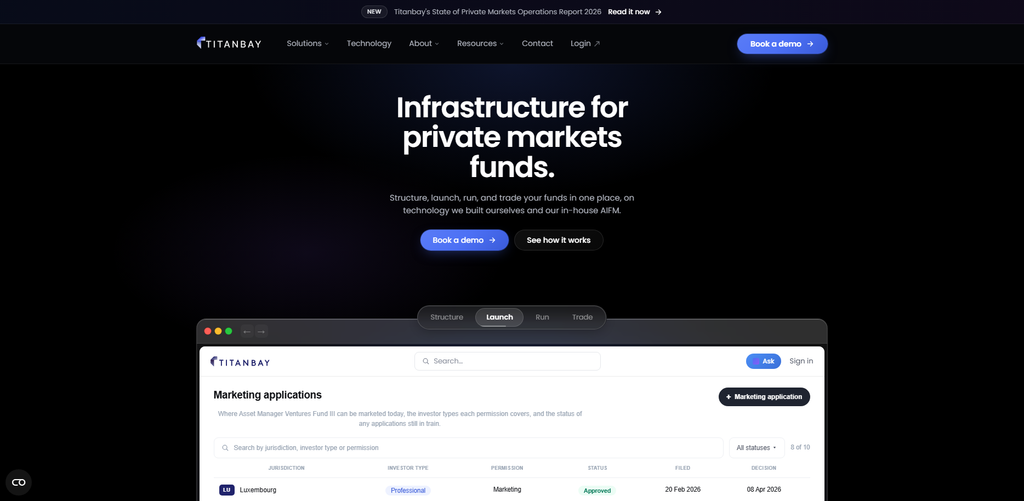
Rather than a direct consumer investing app, investment opportunities are made available through Titanbay’s distribution partners. Titanbay supports marketing passporting in more than 40 jurisdictions and verifies each investor’s eligibility, lock-ups, gating rules and dealing windows before processing a subscription.
It does not publish a standard minimum investment or a universal fee schedule. Pricing is generally embedded in an all-in infrastructure fee negotiated with fund managers and distributors. The platform is aimed at professional or sophisticated investors and its services are now predominantly institutional rather than directly retail-facing.
Main Features
- Private equity and alternative investment fund access.
- Connects wealth managers, institutional investors and private market fund managers.
- Offers feeder fund structures to enable access to certain private market investments.
- Digital onboarding, fund subscriptions and investment administration can be carried out.
- Offers portfolio reporting and operational support for private market allocations.
**Major Risks
- Availability to investors will vary by jurisdiction, eligibility and fund requirements.
- There can also be additional administrative costs and charges on feeder structures.
- Private equity investments typically have long holding periods.
- Limited options for redemption and secondary exit for investors.
7. Forge Global
Forge Global is a marketplace for the buying and selling of shares of private, pre-IPO companies including late-stage technology and growth companies. Subject to availability, investors can avail of single-company funds, exclusive fixed-price offerings and direct secondary transactions.
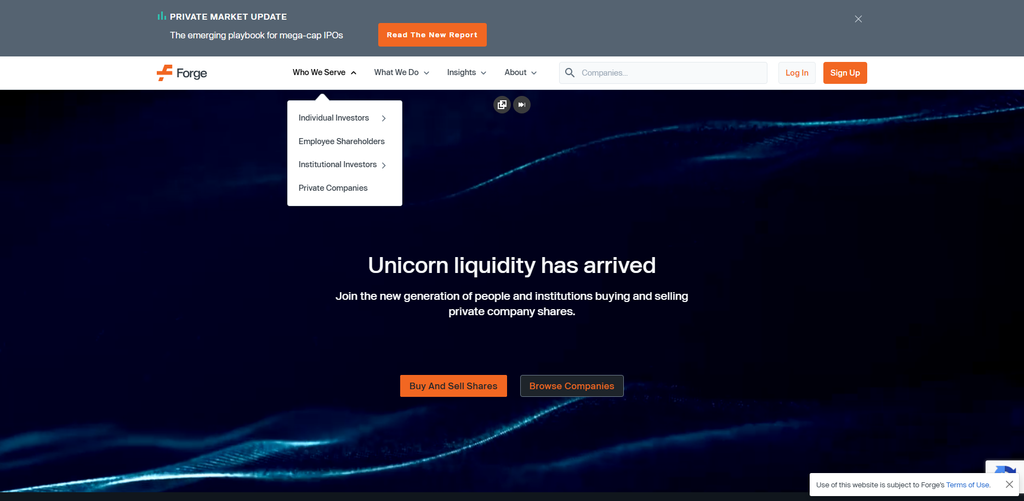
Forge’s minimum investment levels for some of its fund offerings typically start at $50,000, and direct secondary transactions typically start at $100,000. Actual minimums vary by deal. Buyers are generally required to be accredited investors, and their eligibility is checked during the onboarding process.
Opening an account, accessing the marketplace and expressing interest are all free of charge. For marketplace trades, its buyer brokerage commission is 2.5% on the first $1 million, and 1.5% on anything above that. Forge is primarily for U.S. investors, although access to an account and certain offerings may be subject to jurisdictional restrictions.
Highlights
- Allows investors to buy shares of selected private companies through secondary market trading.
- Connects private company stock to qualified investors.
- Offers pre-IPO investment opportunities in selected private companies.
- Offers private market data, company insights and transaction support.
- Provides for share transfers and secondary liquidity opportunities for eligible participants.
Primary Risks
- Selling shares of a private company before a liquidity event is difficult.
- Stock prices and valuations may not be indicative of the company’s actual performance.
- Investment opportunities are limited to company restrictions and transfer approval.
- Risks to business, regulation and market related to pre-IPO investments.
8. AngelsList
AngelList is a startup investing platform that mostly runs syndicates, venture funds, and special-purpose vehicles led by seasoned investors. It provides accredited investors with access to early-stage venture deals that might otherwise be hard to discover themselves. Each syndicate lead or fund sets minimum investments.
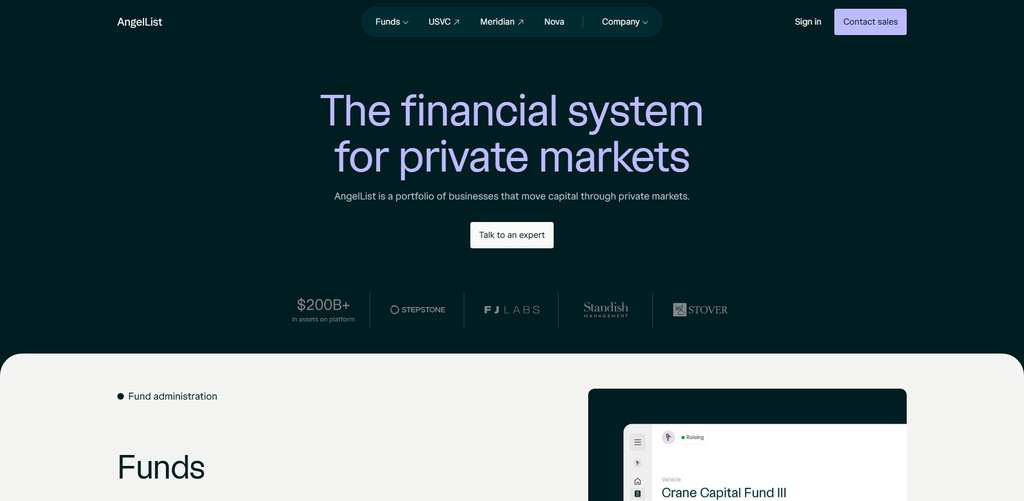
The minimums can be as low as $1,000 but many deals require larger commitments. The minimum amount for each deal is listed on that deal page. Users in the United States and elsewhere must be accredited investors under U.S. securities law to invest.
AngelList itself is free, but you may be subject to proportional set-up or administrative costs, management fees (typically 2% for funds) and carried interest, payable to the lead or investment adviser, on investments. Fundamentally, it’s U.S.-regulated and aimed at accredited investors.
Features
- Gives access to venture capital funds, startup investments and private company deals.
- Backs syndicates and special purpose vehicles for startup investing.
- Connects startups with angel investors, venture capitalists and fund managers.
- Provides tools for fund formation, fundraising and investment administration.
- Capabilities for portfolio management and investor reporting.
Major Risks
- Investments in early-stage startups carry a high risk of business failure.
- Investments may be illiquid until the time of an acquisition, IPO or other exit event.
- SPV and fund structures may include management fees and carried interest.
- Startup valuations and future returns can be very uncertain.
9. InvestX
InvestX is a private-markets investment platform that provides access to pre-IPO and secondary market opportunities, typically through pooled funds or structured vehicles. It provides exposure to select late-stage private companies and other private market assets, and its offerings will change over time.
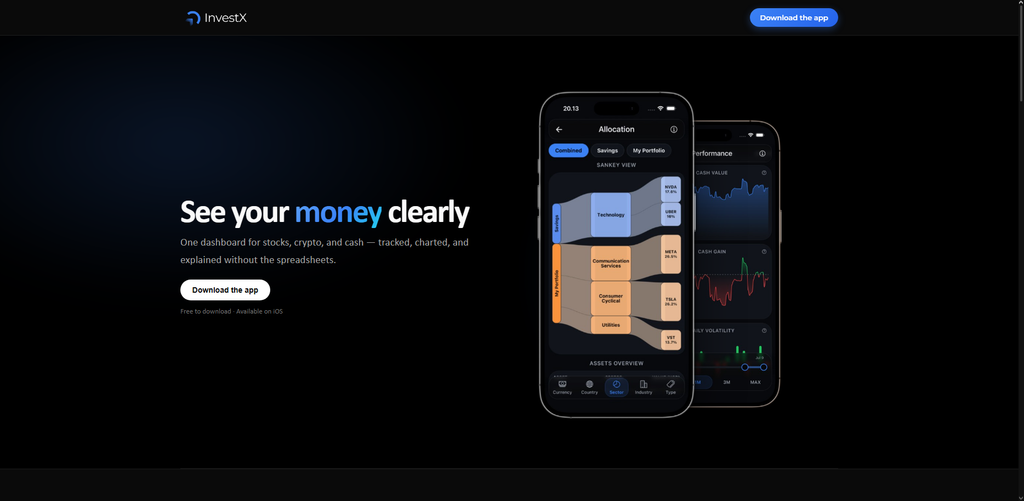
Its published minimums have been $75,000 in the U.S. and $50,000 in Canada for some investments, though the requirement varies by vehicle and offering. Investor eligibility is usually subject to accredited investor or equivalent local standards, and verification at the time of onboarding.
InvestX investments typically include an annual management fee and a carried interest or performance fee, plus other fund level expenses; specific economics vary by product. The platform is available to eligible investors in the United States and Canada in accordance with the applicable securities regulation governing access and product availability.
Important Features
- Provides access to select late stage private equity and pre-IPO investment opportunities.-
- Provides access to investments through special purpose vehicles and structured investment products.
- links eligible investors to private company investment opportunities.
- Focus on existing private companies with potential liquidity events.
- Supports investment subscription, transaction processing and investor management.
Key Risks
- Investment opportunities may only be available to accredited and qualified investors.
- Resale and transfer options for private company shares may be limited.
- Expected exits for the investment may be delayed due to delays in IPOs or acquisitions.
- Investing in a single company can increase the risk in the investment.
10. Nasdaq Private Markets
Nasdaq Private Market (NPM) is a marketplace and infrastructure provider of private company shares, tender offers, liquidity programs and secondary transactions, primarily for institutional investors. It is not a consumer investing app but a platform that links companies, shareholders, brokers, banks and institutional buyers looking for liquidity in private markets.
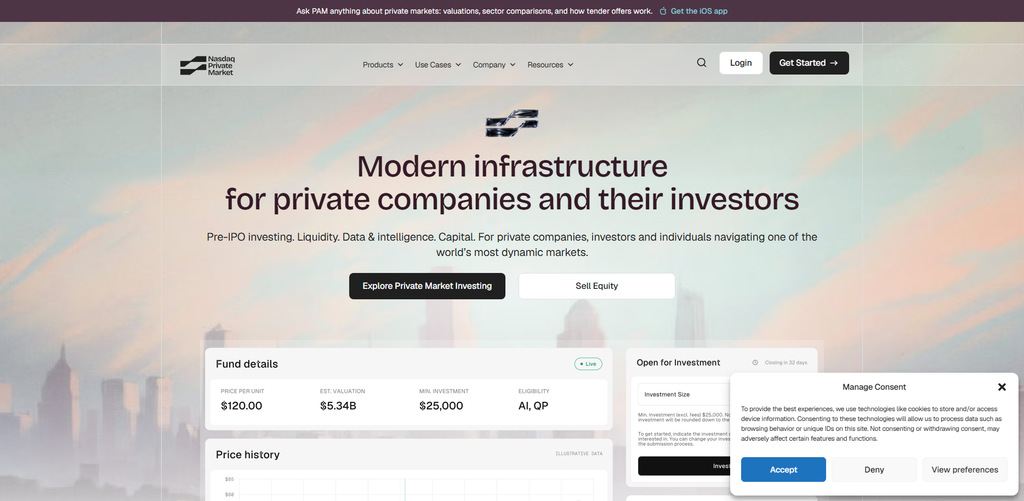
The investment opportunities are in company-specific secondary share trades or structured liquidity programs, not diversified retail funds. NPM does not publish a standard minimum investment or a simple universal fee schedule. Transaction economics, eligibility and access are determined by the issuer, the type of transaction and the participating intermediary.
The participants are usually institutional or other professional investors who are qualified, with the broker or transaction process concerned assessing eligibility and suitability. Its marketplace is globally relevant but access is largely institutional and deal-by-deal.
Characteristics
- Private company secondary market transactions solutions.
- Executes tender offers, share repurchases and liquidity programs.
- Connects private companies, shareholders, employees and eligible investors.
- Supports transaction management and private share transfer.
- Provides private market infrastructure to manage employee and shareholder liquidity events.
Main Risks
- Transfer of shares may require approval of the company and regulatory compliance.
- Investment opportunities depend on the availability of private companies willing to participate and transactions to invest in.
- Stock in a private company may have limited liquidity and its value may not be certain.
- Availability of transactions and exit opportunities may be unpredictable.
Conclusion
Private equity investment platforms enable investors to invest in private companies, venture capital, growth equity and alternative investment funds. Platforms like Moonfare, iCapital, CAIS, Opto Investments, Allocate and others offer a range of investment options, portfolio management tools and access to funds.
But to choose the right platform, you’ll want to look at minimum investment requirements, investor qualifications, fees, fund manager experience, liquidity, and risk management.
Investors should also be aware of holding periods, withdrawal restrictions and potentially capital losses before committing funds. Comparing these factors helps investors find the right platforms that fit their financial objectives and long term investment strategies.
FAQ
What Are Private Equity Investment Platforms?
Private equity investment platforms connect eligible investors with private companies, private equity funds, venture capital, growth equity, and other alternative investment opportunities.
Which Are the Best Private Equity Investment Platforms?
Popular private equity investment platforms include Moonfare, iCapital, CAIS, Opto Investments, Allocate, Titanbay, Forge Global, AngelList, InvestX, and Nasdaq Private Market.
Who Can Invest Through Private Equity Platforms?
Depending on the platform and investment offering, accredited investors, qualified purchasers, institutional investors, and high-net-worth individuals may access private equity investment opportunities.
What Is the Minimum Investment Required for Private Equity Platforms?
Minimum investment requirements vary by platform, fund structure, and investment opportunity. Some funds require substantial capital commitments, while others provide comparatively lower entry thresholds.
What Types of Investments Do Private Equity Platforms Offer?
These platforms may offer private equity funds, venture capital, growth equity, pre-IPO shares, secondary transactions, private credit, and other alternative investment opportunities.