
Binance to List 1,000+ Hong Kong Stocks and ETFs on Its Platform
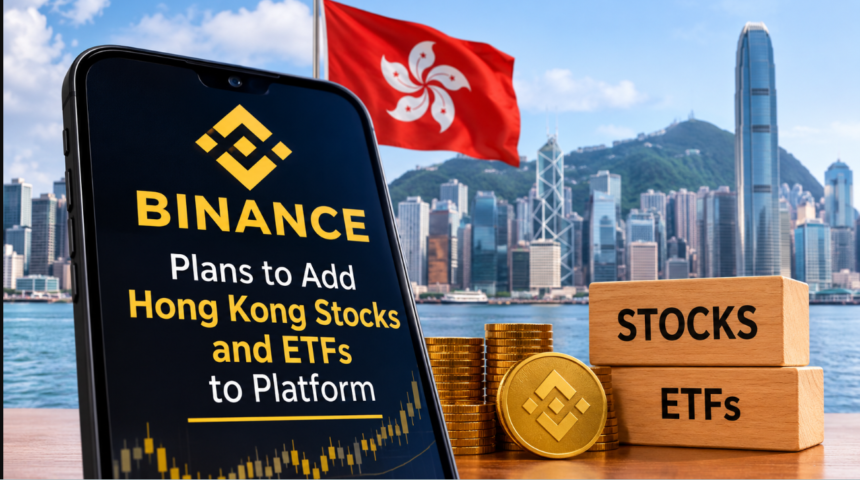
Binance will soon be adding more than 1,000 stocks and exchange-traded funds (ETFs) listed in Hong Kong to its platform, starting on Dec. 1, as the crypto exchange seeks to expand beyond cryptocurrency trading. The move is another big step in the exchange’s strategy of connecting conventional financial markets with digital investments.
In the new offering, qualified users will be able to purchase eligible securities using USDC, Circle’s dollar-pegged stablecoin, from the same account they use for cryptocurrency and US-listed shares.
The expansion comes as crypto exchanges have increasingly expressed interest to offer traditional investment products. The effort bolsters Binance’s broader ambitions of becoming a one-stop financial platform, said Yi He, co-founder of Binance. With this strategy, Binance wants to bring together cryptocurrency investments, traditional securities, payments and more financial services in one ecosystem.
Binance Steps Into Hong Kong Stock and ETF Market
When it starts, Binance will give eligible customers access to more than 1,000 Hong Kong-listed stocks and ETFs. The firm intends to start direct purchases in USDC, which will allow eligible users to buy traditional securities without converting their stablecoin holdings to another currency first.
Such an integration might make it easier for current crypto users to invest in stocks. Eligible customers will be able to access multiple financial products via Binance’s platform, rather than needing to maintain separate accounts for electronic assets and traditional investments.
The exchange will also be listing some Hong Kong stocks through its tokenized securities offering, bStocks. The announcement said: “These tokenized instruments will enable 24/7 trading, a minimum access of $5 and will be pegged 1:1 to their underlying shares.”
But the new products won’t be available in all countries. Binance confirmed that availability will be dependent on local regulations and jurisdictional requirements. The company also said the stock will not be traded on the Hong Kong exchange for the general public.
Binance’s All Finance Strategy Connects Crypto and Traditional Markets
Binance co-founder Yi He said the Hong Kong expansion was an early part of the company’s broader All Finance on Binance strategy. The initiative is to bring together traditional investments, cryptos, payment services and other financial products under one platform.
The strategy highlights the increasing convergence between cryptocurrency markets and conventional financial markets. Binance is trying to woo customers who are interested in more than just digital assets by giving them access to various investment opportunities under one account.
After the Hong Kong launch, the exchange also plans to expand its conventional financial offerings into more markets, subject to regulatory approval and market conditions.
Binance keeps expanding its stock and derivatives offerings.
The Hong Kong initiative comes after a number of traditional finance developments launched by Binance in 2026. The exchange launched commodity and equity perpetual futures in January before adding direct trading in US-listed shares and tokenized bStocks in June.
Traditional asset-backed derivatives have also seen a surge in demand. Binance’s traditional asset-linked perpetual futures had a monthly trading volume of nearly $445 billion in July, compared with about $30 billion in January, Bloomberg reported.
That’s nearly 15 times higher in six months, and signals increasing activity in traditional asset-based derivatives on cryptocurrency platforms.
Binance has other investment features planned as well. Its roadmap includes listing eligible bStocks on Earn and Dual Investment products. The exchange has also outlined Smart Portfolios, which would provide exposure to multiple stocks and ETFs in a single subscription.
Crypto Exchanges Move into Traditional Finance, Rivalry Intensifies
The expansion comes as cryptocurrency exchanges increasingly compete to offer conventional financial products. Companies such as Coinbase and Kraken are also building services that bridge online assets with traditional investments.
Adding Hong Kong-listed stocks and ETFs could help cement Binance’s position as a platform for investors seeking exposure to both markets. Allowing users to trade stocks, tokenized securities and crypto derivatives from a single account could also help exchanges diversify their sources of income beyond crypto transactions.
But, regulatory approvals, product availability and customer demand will remain important factors in the success of these initiatives.
Binance’s Growth: Security and Regulatory Challenges
Binance’s newest expansion is coming amid security concerns after a big theft of cryptocurrency. On Oct. 31, the FBI said North Korean actors operating under the TraderTraitor designation were responsible for the theft of more than $6 billion in virtual assets.
The U.S. Department of Justice later announced that it was taking steps to seize more than $1.1 billion in cryptocurrency linked to the theft. Authorities also said they assisted in freezing, seizing or recovering nearly $3 billion from various sources.
The developments emphasize the need for security, compliance and investor confidence as Binance enters more financial markets.
The exchange’s foray into Hong Kong stocks and ETFs is a major strategic play for the business. Traditional securities access may appeal to a wider customer base, but success in the long term will depend on regulatory access, demand for trading, platform reliability and strong security measures.