

This article will cover the Amazon FBA Beginner Guide—an excellent resource for aspiring online entrepreneurs using the Amazon fulfillment service.
You will gain a fundamental understanding of FBA, the steps for account registration, strategies for identifying winning products, and the process for extending your business on a global level. This guide will also help you create a solid base for your e-commerce success.
What Is Amazon FBA?
Fulfillment by Amazon (FBA) is a service where Amazon stores seller products in their fulfillment centers. From there, Amazon manages the storage, packaging, shipment, and customer interactions for these products. After a customer places an order, Amazon performs the duties of a seller.
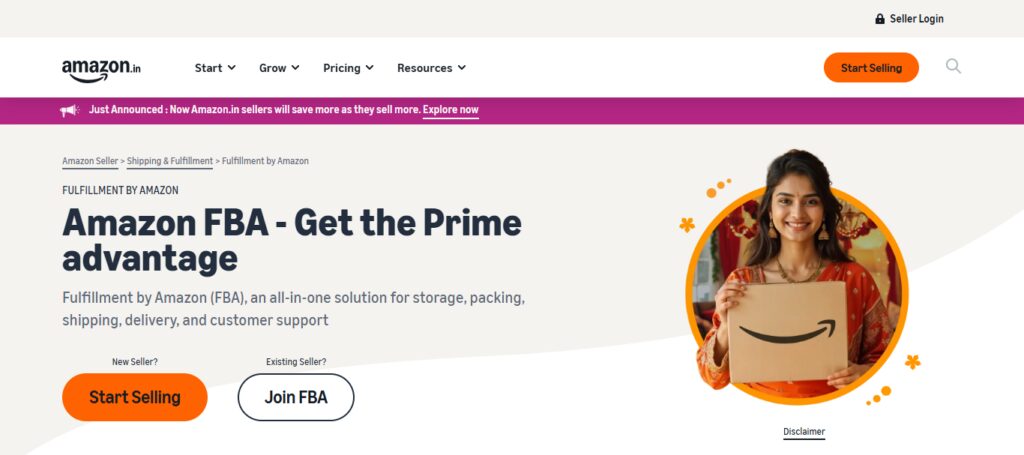
They go pick the item order, package it, and ship it directly to the customer. This service saves sellers a significant amount of time and effort. Running a business is made easier, even for individuals without a background in logistics. That works out in favor for Amazon too because its service is a means of giving online businesses a trusted delivery service.

Setting Up Your Amazon FBA Business
Step 1: Decide on Your Selling Style
You have three methods to consider for your Amazon FBA eCommerce business:
- Private Label (control your brand)
- Wholesale (resell well-known brands)
- Retail/Online Arbitrage (sell underpriced products)
Step 2: Sign Up for a Selling Account on Amazon
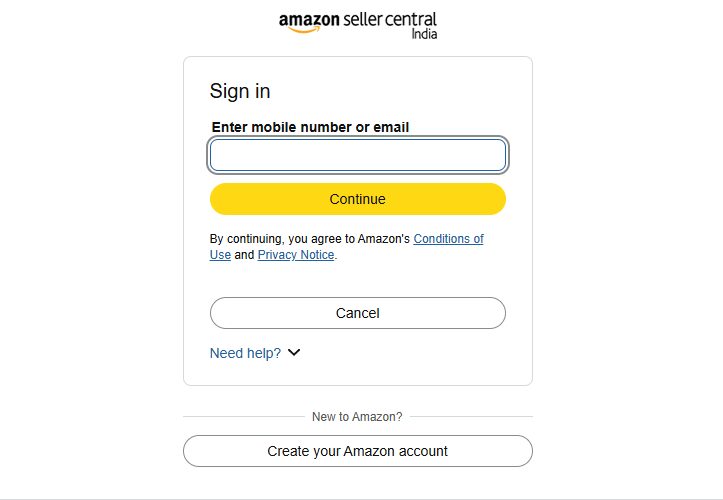
- Head to Amazon Seller Central
- Complete the account creation steps
- Choose between an Individual or Professional plan
- Input your personal and business information
Step 3: Submit Required Documents
- Proof of identification (PAN Card, or government-issued ID)
- Payment bank details
- Tax documents (GST if you are in India)
Step 4: Browse for Products to Sell
- Research products for profitability and low competition
- Use Amazon search and tools to verify product demand
- Assess potential competitors including their pricing and reviews
Step 5: Build a Supplier Base
- Find products on Alibaba or search nearby manufacturers
- Review the products for pricing, quality and shipping alternatives
- Always ask for a sample first
Step 6: Upload Your Product Listing
- Write the product title and description, and include product images
- Use SEO strategy to determine price and product visibility
Step 7: Send Your Product to Amazon
- Adhere to rigid packing rules for FBA products
- Use Seller Central to create your shipping plan
- Dispatch your inventory
Step 8: Go Live
- Start the product listing on Amazon
- Use Amazon PPC to buy product ads
- Aim for timely reviews and product ratings
How Amazon FBA Works
Create a Seller Account: Sign up for an account on Amazon Seller Central. This initiates your FBA business.
List Your Products: Complete product listings on Amazon by adding a title and description, selecting product shots, adding keywords, and setting a price.
Send Inventory to Amazon: Before sending your products to an Amazon fulfillment center, you must package and label your inventory in accordance with FBA requirements.
Amazon Stores Your Products: Your products remain in Amazon fulfillment centers until they are ordered by consumers.
Customer Places an Order: An order is automatically sent to Amazon when a consumer purchases your product.
Amazon Picks and Packs the Product: Staff at Amazon fulfillment centers collect, pack, and prepare your products for shipment.
Amazon Ships the Product: Your products are shipped to consumers by Amazon’s network.
Amazon Handles Customer Service & Returns: Customer service, product returns, and order refunds are processed by Amazon.
You Receive Payment: After applicable fees are charged, your sales revenue is sent to your bank account by Amazon.
Product Research for Success
Profitable Amazon FBA businesses begin with effective product research. Beginners can study Amazon’s search bar, the best seller lists, and key word tools to find products and categories that have customer interest and demand that are undersupplied.
The ideal product sells year around, is affordable to ship, and not sold for a penny. Investigating your competitors can assist a seller in identifying customer and market expectations. Sellers should pick a product that is under supplied, not heavily branded, and not competitors’ best sellers. This practice creates a sustainable and encouraging Amazon FBA business.
Branding and Product Listing Optimization
To succeed on Amazon FBA, you need strong branding and product listing optimization. Branding gives your products a unique identity and helps them stand out. Strong branding builds trust in customers and encourages repeat purchases. Product listing optimization improves visibility and conversion rates.
To achieve this, you need to use relevant keywords across your product’s title, bullet points, and description. Exciting product features and high-quality images attract customers. Keywords help your product rank higher and order flows. Incorporating positive reviews in your product listing tells customers you have a legit and trustworthy product. Effective branding and listing optimization increase traffic and sales.
Pricing Strategy and Profitability
| Factor | Description | Impact on Profitability | Best Practice |
|---|---|---|---|
| Product Cost | Cost of sourcing or manufacturing the product | Directly affects profit margin | Negotiate with suppliers for lower cost |
| Amazon FBA Fees | Includes fulfillment, storage, and handling fees | Reduces overall profit | Use FBA calculator before pricing |
| Competitor Pricing | Prices set by other sellers in the same niche | Influences your sales volume | Keep price competitive but profitable |
| Profit Margin | Difference between selling price and total cost | Determines business success | Aim for 20%–40% margin |
| Shipping Cost | Cost to send products to Amazon warehouse | Adds to overall expense | Optimize packaging and bulk shipping |
| Discount Strategy | Coupons, deals, and promotions | Can increase sales but reduce margin | Use strategically for product launch |
| Break-even Price | Minimum price needed to cover all costs | Helps avoid losses | Always calculate before listing |
| Dynamic Pricing | Adjusting prices based on demand | Maximizes revenue opportunities | Use automated pricing tools |
Marketing and Driving Sales
| Strategy | Description | Purpose | Best Practice |
|---|---|---|---|
| Amazon PPC Advertising | Paid ads on Amazon search results | Increase product visibility and traffic | Start with low budget and optimize keywords |
| Product Reviews & Ratings | Customer feedback and star ratings | Build trust and improve conversion rate | Encourage honest reviews through follow-ups |
| SEO Optimization | Using relevant keywords in listing | Improve organic ranking on Amazon | Use high-volume, relevant search terms |
| Lightning Deals & Discounts | Time-limited promotional offers | Boost short-term sales and ranking | Use during product launch or peak seasons |
| Social Media Marketing | Promotion on platforms like Instagram, Facebook | Drive external traffic to Amazon listing | Collaborate with influencers for reach |
| Influencer Marketing | Partnering with niche creators | Increase brand awareness and trust | Choose influencers with engaged audience |
| Email Marketing | Sending updates to potential buyers | Build customer relationship and repeat sales | Use follow-up emails for engagement |
| External Traffic Ads | Ads on Google or other platforms | Bring new customers outside Amazon | Track ROI carefully for profitability |
| A+ Content Optimization | Enhanced product description pages | Improve conversion and brand image | Use high-quality images and storytelling |
| Retargeting Campaigns | Targeting users who viewed but didn’t buy | Recover lost sales opportunities | Use Amazon DSP or external retargeting tools |
Common Mistakes to Avoid

Product Research Fails
Picking a product with no understanding of demand or competition can lead to losses.
Fees All Over the Place
Not calculating various fees ending up with unrealistic profits.
Identity Crisis
Lack of brand identity diminishes customer trust.
Optimizing Failure
Listing items with poor imagery and no keywords sinks visibility.
Stock Piling
Buying too much stock causes unsold products to sit and risk higher storage fees.
Product Value
Selling a product below value.
Loss of Value
Not managing a brand reputation can lead to loss of rank.
Advertising Stunts
Not employing a proper PPC strategy cuts Amazon growth.
Potential Success
Focusing on short term gains and not the long term growth of a brand can cause a lot of destabilized growth.
Pros & Cons
| Pros (Advantages) | Cons (Disadvantages) |
|---|---|
| Easy to start an online business without logistics hassle | High competition in most product categories |
| Amazon handles storage, packing, and shipping | FBA fees can reduce profit margins |
| Access to Amazon Prime customers and fast delivery | Limited control over fulfillment process |
| Global marketplace reach for scaling business | Inventory storage fees for slow-moving products |
| Customer service and returns handled by Amazon | Strict Amazon policies and account risk |
| Scalable business model with automation | Requires strong product research to succeed |
| Builds trust due to Amazon’s brand reputation | Dependence on Amazon platform for sales |
| Opportunity for passive income | Initial investment needed for inventory |
Conclusion
Selling products from your own online business can be complex and time-consuming, but beginners selling through Amazon FBA can make a customer-friendly global business with relatively low effort. Amazon even provides a network for them to send products to consumers, allowing for more time to be spent on advertising and scaling instead of delivery.
Provided they are committed to FBA, users can expect to see the fruits of their labor. That labor comes in the form of selecting the best selling products, determining the correct prices to sell, and optimizing listings with advertisements. Market trends and timing should be constantly analyzed in order to achieve great long-term profit. With the right mindset, FBA users can build an income source that will last a long time.
FAQ
What is Amazon FBA?
Amazon FBA (Fulfillment by Amazon) is a service where Amazon stores, packs, ships, and handles customer service for your products, allowing sellers to focus on growing their business.
Is Amazon FBA good for beginners?
Yes, Amazon FBA is beginner-friendly because Amazon manages logistics, but success depends on good product research and marketing.
How much money do I need to start Amazon FBA?
The starting cost varies, but typically beginners may need $500 to $2,000+ depending on product type, inventory size, and marketing budget.
How do I find profitable products?
You can use Amazon best-seller lists, keyword tools, competitor analysis, and trend research to find high-demand, low-competition products.
Do I need a company to start Amazon FBA?
No, but having a registered business can help with taxes, branding, and scaling in the long term.