This article will review the Crypto Beginner Guide, and provide an outline of the critical components a beginner needs to know in order to start investing in cryptocurrency safely and securely.
You will learn the basics, how cryptocurrency operates, safe investment strategies, how to manage risks, and ways to earn profits in the long term. The purpose of this guide is to assist new investors in gaining necessary knowledge of the market in order to invest safely, and make sound financial decisions.
What is cryptocurrency?
Cryptocurrency is a form of digital or virtual money. The technology that makes cryptocurrency secure and prevents counterfeiting is called cryptography. Traditional monies are centralized and issued by a government or institution. Currency that is not issued by a government or institution is classified as a cryptocurrency, in which transactions are verified by a blockchain.

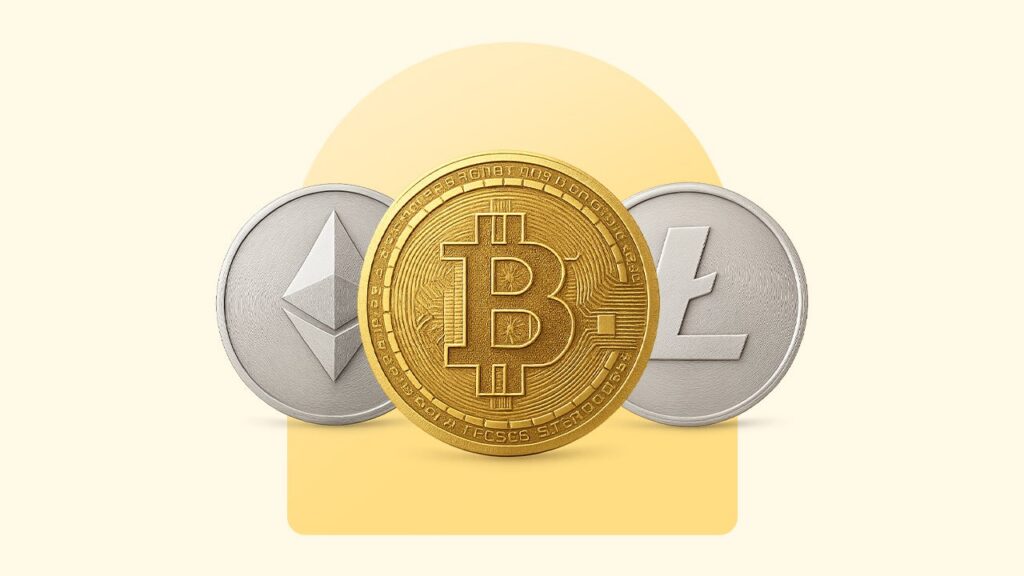
A blockchain a public ledger of all transactions that is distributed across many computers. The first and most widely recognized example of cryptocurrency is Bitcoin, however there are many other cryptocurrencies such as Ethereum and stablecoins. Cryptocurrency can be used to transfer money anywhere in the world, invest, and use decentralized financial applications.


Setting Up for Crypto Investing

Understand Basic Crypto Concepts
Before purchasing any cryptocurrencies, be sure to educate yourself on cryptocurrency. Learning how blockchain functions and the potential risks of cryptocurrency is also important.
Pick a Reputable Exchange
Choose a well-known exchange such as Binance, Coinbase, and Kraken. You’ll also need to evaluate user-reviews on the exchange and assess the security features and fees.
Register for an Account
Create an account on the exchange with your email.
Turn on KYC Verification
To unlock all of the exchange’s trading features, upload an ID and proof of residence to you KYC Verification.
Change Security Settings
Change your password to a strong one and enable Two-Factor Authentication and anti-phishing if the option is available.
Choose a Crypto Wallet
You have the option for:
- Hot Wallets (easily accessible and stored online)
- Cold Wallets (secured offline for long-term storage)
Fund Your Account
Money can be deposited using a bank transfer, UPI, card, or any of the exchange’s supported payment methods.
Make Small Investments
Investing small amounts allows for the experience of market behavior and helps reduce risk.
Decide Which Cryptocurrency to Purchase
Purchasing well-known coins, such as Bitcoin, and Ethereum is more advisable than purchasing unknown coins.
Analyze Your Portfolio Frequently
Use available tools to analyze your profits, losses, and price movements in your portfolio.
Seek New Knowledge Regularly
Learn more about cryptocurrency investing to help you stay informed on the market. Be sure to follow updates on current events in the cryptocurrency communities.
How Cryptocurrency Works
Blockchain Technology: A blockchain is the foundation of cryptocurrency. It is a digital ledger that registers transactions from multiple computers in an incorruptible and verifiable manner. (Add more explanation here)
Decentralization: Unlike banks, there is no central authority that governs cryptocurrency. Instead, cryptocurrencies operate on decentralized networks of computers (nodes).
Digital Transactions: Sending crypto occurs when the transaction is broadcast to the network members.
Mining / Validation Process: To validate transactions, there is a consensus on the security mechanisms in place, such as Proof of Work or Proof of Stake.
Creation of new coins: Mining or staking is the method in which cryptocurrencies are created, and this is determined by the network rules.
Wallet SystemDigital wallets are used to store cryptocurrency. Private and public keys are a secure way of receiving and sending funds.
Cryptographic Security: Transactions are secure using highly sophisticated encryption techniques that cannot be modified easily.
Role of Major Cryptocurrencies: Bitcoin is the first widely adopted cryptocurrency, and Ethereum is a cryptocurrency network that is used for smart contracts and other decentralized applications.Bitcoin and Ethereum
Transaction Transparency: The blockchain captures all confirmed transactions, and this makes the system traceable and transparent.
Global Accessibility: Cryptocurrency is accessible to those with internet connections and is a digital currency that allows users to send and receive funds and become investors, without the need of a bank account.
Types of Cryptocurrencies
Bitcoin (BTC) – Digital Gold
The first cryptocurrency, and the most popular, BTC is a store of value and a long-term investment.Bitcoin
Ethereum (ETH) – Smart Contract Platform
A blockchain that supports smart contracts and dApps and is widely used in DeFi and NFTs.Ethereum
Stablecoins – Price-Stable Crypto
A cryptocurrency that is pegged to a stable asset so as to decrease volatility (for example, USDT, USDC) and used for trading and saving purposes.
Altcoins – Alternative Cryptocurrencies
Any cryptocurrency besides BTC. There are thousands of them, and can cover a myriad of use cases, including the gaming and financial sectors, as well as infrastructure.
Utility Tokens
These tokens give access to some services of the blockchain. For example, paying fees or accessing certain features.
Governance Tokens
These tokens give the right to vote for decisions in the decentralized projects.
Meme Coins
Cryptocurrencies that are born from memes and online communities (for example, Dogecoin and Shiba Inu) and are usually very speculative and volatile.
Privacy Coins
Enhanced anonymity and privacy when transacting as compared to other cryptocurrencies.
DeFi Tokens
Used for lending, borrowing, and staking or earning yield in the decentralized finance sector, for banking services.
NFT-Related Tokens
Tokens related to the ownership of unique digital assets on the blockchain, such as art and collectibles.
Safe Investing Strategies for Beginners
Understanding the nature of the cryptocurrency market is part of beginner safe investing. The cryptocurrency market is very volatile. This means you should only invest money you can afford to lose. Once you feel comfortable in the cryptocurrency space, you can gradually increase your investment.
One way to reduce your risk is to invest in a variety of cryptocurrencies such as Bitcoin and Ethereum as part of your diversified portfolio. Instead of investing all of your funds into one asset, choose multiple. If you do ignore all of the negative and positive media trends (FOMO) and hysteria, and do your own research, you won’t lose money to projected investments which can become careless.
Of course, if you want to protect your movement and cryptocurrency, you should use safe exchanges and strong security features like 2FA; you should also consider adopting a long-term movement strategy such as dollar cost averaging (DCA).
Risk Management in Crypto
Invest Only What You Can Afford to Lose: Don’t use money intended for your day-to-day survival as capital for such a volatile industry.
Diversify Your Portfolio: Don’t concentrate your holdings in one asset.
Use Stop-Loss Orders: You can secure a maximum loss on a trade by having your assets sold automatically at a preset price.
Avoid Emotional Trading: Making financial decisions on the basis of Fear, Uncertainty, and Doubt (or the opposite) will almost always lead to loss.
Do Your Own Research (DYOR): Understand the people who run a project, the market need for the project, and if the project has any chance of eventual success.
Secure Your Assets Properly: To protect crypto, use strong passwords, 2FA, and keep them in offline storage.
Stay Away from Scams and Fake Projects: Watch out for schemes and projects that promise instant and guaranteed returns.
Plan Entry and Exit Strategies: Determine your buy/sell criteria before making any trades, avoiding poor decisions made in the heat of the moment.
Monitor Market Trends Regularly: Stay updated on crypto events, regulatory changes, and price behavior that have the potential to impact your portfolio.
Long-Term Investment Approach
Investments in cryptocurrency that take a long-term approach prioritize securing reliable assets over the long term to avoid trying to make quick gains from market volatility every day. Investing in this long-term method is referred to as HODLing. Investors have a belief in the appreciation of the asset over time and will buy Bitcoin or Ethereum and hold them for years. Over the long term, the asset will only increase in value.
By choosing to invest in even small amounts consistently, regardless of the price, dollar-cost averaging will allow investors to take the edge off potentially hazardous price swings.
The long-term investor is most interested in projects that have a strong user-based, a solid dev team, and a strong community. It can be a challenge to avoid emotional trading, especially with the inherent volatility in the crypto market, but long-term investing builds faith in growing wealth and will see the return of that faith over time.
Common Mistakes to Avoid
Chasing After Profits: The chance of becoming rich in the stock market motivates people to consider running the risky game, which earns big losses instead of big returns.
Investing Without Research (DYOR Ignored): Buying coins via tipsters, trends, and social media communications style which can result in big losses.
Following FOMO (Fear of Missing Out): Investing a lot of money during price surges ultimately results in losses once the prices reach a critical point and fall.
Ignoring Risk Management: Financial risks are amplified by not setting limits, or making the single investment in one coin.
Using Untrusted Exchanges or Platforms: Poor security leads to hacks, scams, and the loss of money.
Not properly Securing Wallets: Lacking 2FA can also expose your funds to theft through weak passwords.
Overtrading: Making multiple trades without appropriate margins leads to huge losses.
Falling for Scams and Fake Projects: Avoid schemes that promise guaranteed returns.
Not Having a Long-Term Plan: Investing randomly results in losses.
Tools and Resources for Beginners
Crypto Exchanges
When looking to buy, sell, or trade cryptocurrency, check out Binance, Coinbase, and Kraken. They are all trustworthy exchanges.
Crypto Price Tracking Apps
The prices of coins in the digital marketplace are always shifting. To keep up with this, CoinMarketCap and CoinGecko offer services to track prices and market performance.
Trading & Chart Analysis Tools
If you are looking to improve your trading performance, the TradingView application has charts that are more advanced along with indicators and tactics to optimize your performance.
Crypto Wallets (Asset Storage)
There are many options to secure your crypto assets along with the management of your private keys. MetaMask and Trust Wallet are some wallets that you could use.
Portfolio Trackers
Delta and CoinStats are apps that offer one hub to track all of your cryptocurrency.
News & Research Platforms
Do some research and read analysis and news on CoinDesk, Cointelegraph, and Binance Academy to learn more.
Blockchain Explorers
Take a look at Etherscan to see blockchain transactions and verify them in real time.
Future of Cryptocurrency
The evolution of Blockchain technology will bolster the mainstream adoption of cryptocurrencies, in turn, creating vast opportunities for businesses and services. The adoption of digital currency has already started by various organizations, financial institutions, and even government bodies.
Recent developments in the Decentralized Finance (DeFi) space coupled with secure and reliable Blockchain platforms like Ethereum that support smart contracts, allow real-world applications including trade, commerce, and other industries to be conducted and facilitated in a decentralized, borderless and permissionless manner.
As the legal frameworks for these technologies are developed, many of the existing market concerns will be addressed, providing the stabilty and security that long-term investors demand. Volatility, security and regulatory issues will continue to pose challenges. Cryptocurrencies will increasingly become an integral part of the digital commerce and the global economy.
Conclusion
There are exciting investment opportunities in cryptocurrency, but you should proceed with caution because of the potential risks this market presents. If you are just starting, the right approach is to build a strong foundation. Good first steps are to invest with the attitude that you may lose the money with no personal impact, and to keep a long-term vision.
Following safe investment practices, including risk management and supporting infrastructure, you will protect your investment and preserve growth. The most important element in the long-term growth that you will receive will be your personal education and service to your investment. The crypto market is constantly changing and with that your confidence and knowledge will improve and help you to make good rational investment decisions.
FAQ
What is HODLing in crypto?
HODLing means holding your cryptocurrency for a long time instead of selling during short-term market changes.
Do I need technical knowledge to invest in crypto?
No, but having basic knowledge about blockchain, wallets, and market risks is very important before investing.
Is crypto legal in India?
Cryptocurrency is not banned in India, but it is regulated and taxed under government rules, so always stay updated with laws.
How do I avoid crypto scams?
Avoid unknown projects, never share private keys, and be careful of offers that promise guaranteed profits.