The Best Cloud Workload Protection Platforms that assist businesses in safeguarding their cloud environments—which include virtual machines, containers, and serverless apps—will be covered in this post.
These solutions include sophisticated capabilities including cloud-native security, runtime threat detection, vulnerability management, and compliance monitoring. Selecting the appropriate solution improves overall cloud security posture, lowers risks, and guarantees strong protection.
Key Point & Best Cloud Workload Protection Platforms List
| Platform | Key Features / Highlights |
|---|---|
| Sysdig Secure | Runtime threat detection, compliance monitoring, container & Kubernetes security, vulnerability scanning, cloud-native security posture management (CSPM). |
| Orca Security CWPP | Agentless scanning, full-stack visibility, vulnerability & misconfiguration detection, risk prioritization, cloud infrastructure security. |
| Microsoft Defender for Cloud | Threat protection across Azure & hybrid cloud, vulnerability management, compliance assessments, integration with Microsoft 365 & Sentinel, cloud security posture management. |
| Snyk Cloud Workload Protection | Developer-first approach, container & Kubernetes security, CI/CD integration, vulnerability scanning, open-source dependency security. |
| AWS GuardDuty + Inspector (CWPP) | Threat detection & continuous monitoring, automated security assessments, compliance reporting, AWS-native integration, runtime & network protection. |
| Palo Alto Networks Prisma Cloud | Full lifecycle cloud security, vulnerability management, runtime defense, network & identity security, compliance monitoring. |
| CrowdStrike Falcon Cloud Security | Cloud workload protection, endpoint integration, AI-powered threat detection, runtime & network security, visibility across multi-cloud environments. |
| Trend Micro Cloud One – Workload Security | Server & container protection, vulnerability management, runtime defense, application control, automated threat detection & response. |
| Check Point CloudGuard Workload Protection | Threat prevention, workload segmentation, real-time monitoring, cloud-native security, compliance & governance support. |
| McAfee MVISION Cloud Workload Protection | Cloud-native workload security, automated threat detection, compliance enforcement, vulnerability scanning, container & serverless security. |
1. Sysdig Secure
Sysdig Secure focuses on offering an all-inclusive sustained protection for different containers, alongside Kubernetes environments protection, including acquisition, incident involvement, all-in-one reconciliation, and compliance processor positioning offered via dual scanners.
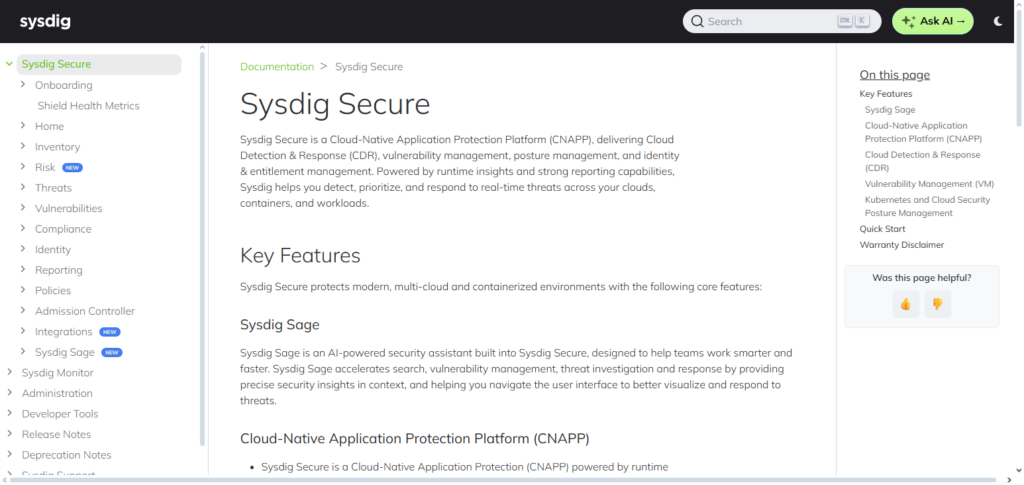
Organizations get multi-function, multi-volume visibility, ascertaining secure query, visibility, erasure, floaters. Coupled with automating DevOps scan adapters, Sysdig Secure makes possible real-time logging, monitoring run-time pivot, and epochal capture dual warning systems with role-based listed gateways.
Beside the leading position among Best Cloud Workload Protection Platforms, Sysdig Secure is recognized for advanced automated reporting systems, focus on advanced pivot reporting, and incident involvement systems. Best Cloud Workload Protection Platforms focus on protection incident Kubernetes runtime Sysdig Secure seamless DevOps workflows.
Sysdig Secure Features , Pros & Cons
Key Features
- Detecting threats during runtime
- Ensuring the security of Kubernetes and containers
- Scanning images and hosts for vulnerabilities
- Reports for compliance and auditing
- Integration with DevOps and CI/CD
Pros
- Visibility with the containers and Kubernetes deep down
- Detecting threats during runtime is strong
- Supports compliance excellently
- Works well with DevOps toolchain integrations
- Forensic data is detailed
Cons
- Initial deployment can be complicated
- Likely to need tuning for alert noise
- Heavy resource usage
- At scale, the price can be high
- Less non-container workload focus
2. Orca Security CWPP
Orca Security is a Cloud Workload Protection Platform (CWPP) that doesn’t require installation. Unlike other services that require intrusive installation, Orca scans all assets, has full-stack visibility, and detects vulnerabilities, misconfigurations, and sensitive data exposure.
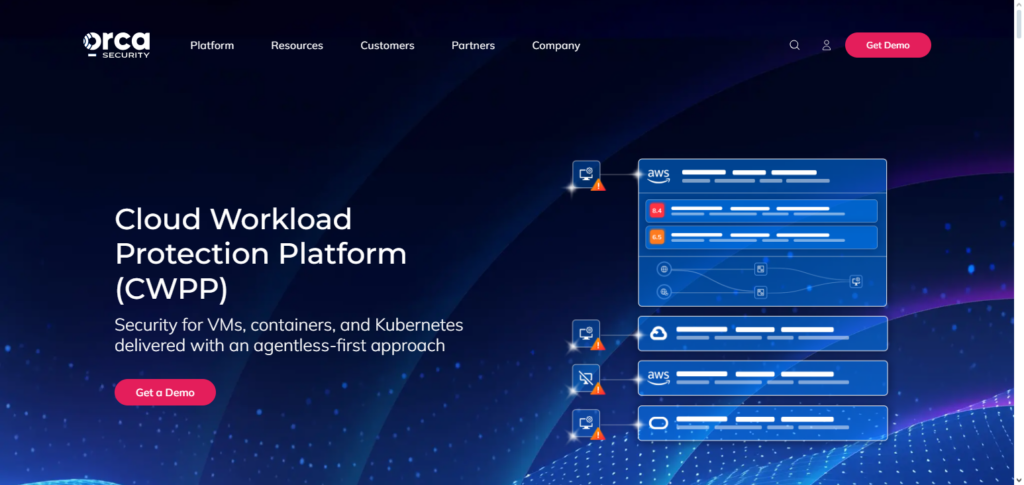
Orca’s platform assesses and prioritizes risks to assist teams in concentrating on the worst exposure. Orca Security CWPP is one of the Best Cloud Workload Protection Platforms and helps streamline the management of security with simple dashboards and integration with cloud providers. Orca is also able to assist in the opaque security/operations workload prosthesis with minimal deployment friction.
Orca Security CWPP Features , Pros & Cons
Key Features
- Scanning workloads with no agent
- Full stack context, host, container, and infra
- Detecting vulnerabilities and misconfigurations
- Risk alerts and detection
- Cloud inventory with actions
Pros
- Zero deployment and agentless
- Visibility across entire cloud quickly
- Extremely strong prioritization
- Less maintenance
- Good reporting and dashboard
Cons
- Limitations for runtime telemetry
- More expensive for larger estates
- Less granular controls compared to agent-based tools
- Only API data dependency
- Less integrations compared to others
3. Microsoft Defender for Cloud
Microsoft Defender for Cloud is one unified security management for the Azure, hybrid and multi-cloud environments. It provides threat defense and vulnerability assessments, as well as compliance monitoring. Along with Microsoft 365 and Azure Sentinel, other integration tools can provide real-time alerts and automated responses.

Microsoft Defender for Cloud is also one of the Best Cloud Workload Protection Platforms because it has built in policies that assist with compliance ease and work protection, as well as a streamlined defense against workload attacks. Microsoft Defender for Cloud is also one of the Best Cloud Workload Protection Platforms and is perfect for those in the Microsoft Ecosystem providing unified oversight and compliance simplicity.
Microsoft Defender for Cloud Features , Pros & Cons
Key Features
- Unified threat protection hybrid and cloud
- Vulnerability assessment
- Built-in compliance policies
- Integration with Azure Sentinel
- Secure score & continuous monitoring
Pros
- Great for Azure native environments
- Centralized Microsoft stack integration
- Strong compliance automation
- Easy to onboard for Azure users
- Native threat detection
Cons
- Best value only within Microsoft ecosystem
- Mixed signal quality for non‑Azure clouds
- Complex licensing tiers
- UI can be overwhelming
- Less container‑focused than some
4. Snyk Cloud Workload Protection
Snyk Cloud Workload Protection focuses on developer-first security by embedding into CI/CDs to create vulnerability scanning for containers, serverless, and cloud-native applications, Workload Protection does scanning on applications cloud and Snyk identifies risks in code, dependencies, container images, and Kubernetes Snyk automates the reporting and compliance to operationalize outcomes.
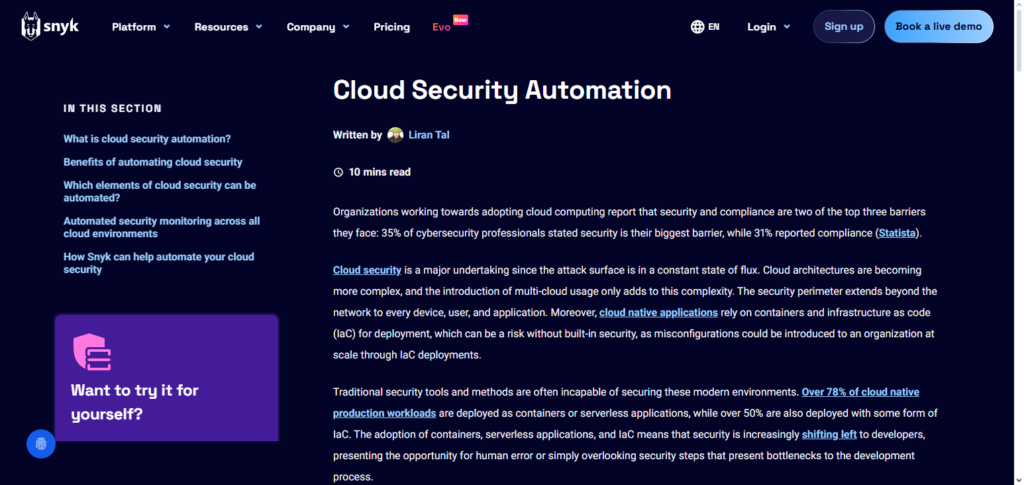
Snyk empowers developers to operationalize security and workload continues to protect applications and added operational friction in agile and DevOps. Best Cloud Workload Protection.
Snyk Cloud Workload Protection Features , Pros & Cons
Key Features
- Developer-centric vulnerability scanning
- CI/CD pipeline integration
- Container & Kubernetes security
- Open source dependency scanning
- Policy enforcement
Pros
- Excellent developer integration
- Great early-stage security
- Strong open-source focus
- Easy to adopt with DevOps
- Clear actionable insights
Cons
- Less mature runtime protection
- Not full-featured CWPP for non-DevOps workloads
- Smaller enterprise feature set
- Can require DevOps culture shift
- Dependency focus may miss infra risks
5. AWS GuardDuty + Inspector (CWPP)
GuardDuty and Inspector provide a powerful CWPP Protection for Amazon Web Services workloads. Vulnerability, and compliance Assessing Inspector alerts the stream the suspicious activities and GuardDuty automates threats, monitors, and provides real-time protection.
Together Best Cloud Workload Protection Platforms offers GuardDuty + Inspector is a protection stream for organizations heavily operational on AWS. AWS Best GuardDuty + Inspector is scalable automated protection across multiple workloads security.
AWS GuardDuty + Inspector (CWPP) Features , Pros & Cons
Key Features
- Threat detection (GuardDuty)
- Vulnerability assessments (Inspector)
- AWS native platform integration
- Automated findings & alerts
- Continuous assessment
Pros
- Deep AWS integration
- Low operational overhead
- Managed service – easy to scale
- Pay-as-you-go pricing
- Good threat detection
Cons
- Best suited for AWS workloads only
- Inspector lacks deeper runtime context
- GuardDuty can create many alerts
- Limited cross-cloud capability
- Requires AWS skillset
6. Palo Alto Networks Prisma Cloud
With Prisma Cloud, Palo Alto Networks offers complete lifecycle cloud security, encompassing cloud workloads, containers, and serverless environments. Prisma Cloud provides organizations with substantial risk reduction on multi-cloud infrastructures with seamless AI-driven threat detection and visibility.

Vulnerability management, defense in depth, and continuous network and compliance monitoring. Recognized in numerous reviews as one of the Best Cloud Workload Protection Platforms, Prisma Cloud stands out of the pack with its complete and unified enterprise solution for complex cloud deployment, proactive security integration with DevOps toolchains and seamless compliance and threat detection in hybrid and multi-cloud environments.
Palo Alto Networks Prisma Cloud Features , Pros & Cons
Key Features
- Full lifecycle cloud security
- Vulnerability & configuration scanning
- Runtime protection & network controls
- Serverless & container support
- Compliance & governance
Pros
- Very comprehensive feature set
- Strong network security controls
- Excellent multi-cloud support
- Great for large enterprise
- Good compliance tooling
Cons
- Expensive relative to peers
- Steep learning curve
- UI complexity
- Resource heavy
- Sometimes too broad for small teams
7. CrowdStrike Falcon Cloud Security
CrowdStrike Falcon Cloud Security expands the company’s endpoint protection expertise into cloud workloads. It provides runtime protection, network security, and AI-driven threat detection for serverless workloads, containers, and VMs.
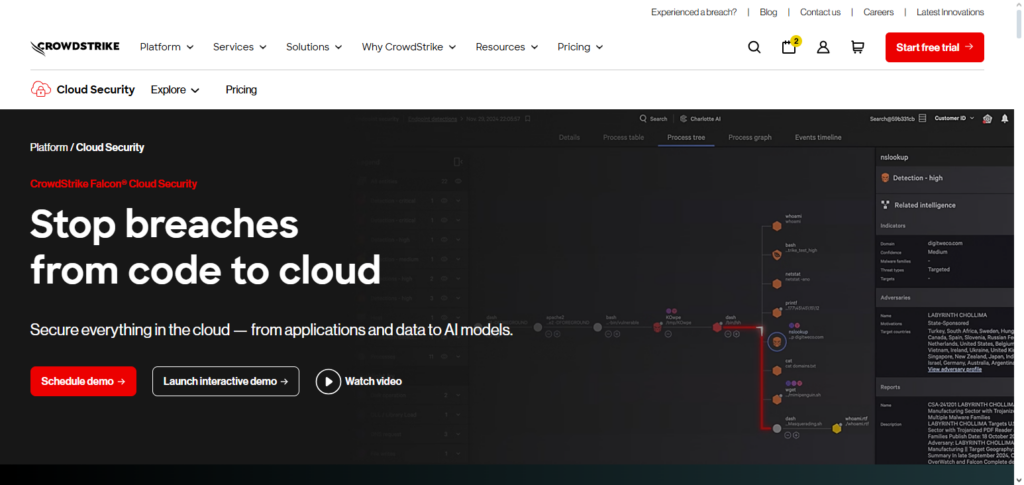
CrowdStrike’s unified platform offers complete visibility into disparate cloud environments while leveraging ML to identify, intercept, and mitigate threats in advance. Recognized as one of the Best Cloud Workload Protection Platforms, CrowdStrike Falcon Cloud Security is uniquely positioned to support organizations with lightweight deployment, real-time threat intelligence, and burst protection for multi-cloud workloads with reduced operational overhead.
CrowdStrike Falcon Cloud Security Features , Pros & Cons
Key Features
- Runtime threat detection
- AI/ML-driven analytics
- Cloud workload visibility
- Container & VM protection
- Unified console with endpoint
Pros
- Strong AI detection
- Lightweight deployment
- Excellent threat intelligence
- Unified endpoint + cloud view
- Scales easily
Cons
- Cloud features can trail endpoint focus
- Pricing premium
- Limited configuration scanning
- Requires tuning
- A growing understanding compliance workflows.
8. Trend Micro Cloud One – Workload Security
Trend Micro Cloud One – Workload Security provides protection to servers, containers, and cloud-native applications. This also includes real-time threat detection, vulnerability scans, application control, and compliance enforcement. Automated response functions minimize the need for manual work, while the service’s comprehensive integration with cloud-based services amplifies insight across workloads.
The service offers support for DevOps and CI/CD, and therefore, accommodates advanced working methods. Among the top Cloud Workload Protection Platforms, Trend Micro Cloud One Workload Security is distinguished by the high level of visibility, proactive protection, and large-scale threat management for hybrid and public cloud environments.
Trend Micro Cloud One – Workload Security Features , Pros & Cons
Key Features.
- Runtime defense & malware protection.
- Vulnerability scanning.
- Application control & IPS.
- Integrations with other cloud platforms.
- Reports on compliance.
Pros.
- Security stack on the mature side.
- Deep protection on each layer.
- Suitable for hybrid deployments.
- Reputation is good.
- Compliance features are solid.
Cons.
- UI is dated.
- Less real-time context on cloud threats.
- Tuning is necessary.
- Resource heavy.
- Alerts broad.
9. Check Point CloudGuard Workload Protection
Check Point CloudGuard Work Protection offers real-time threat prevention and monitoring, and provides workload separation to ensure that cloud workloads remain safe. This includes protection of applications, servers, and containers, while compliance with industry regulations is also catered for.
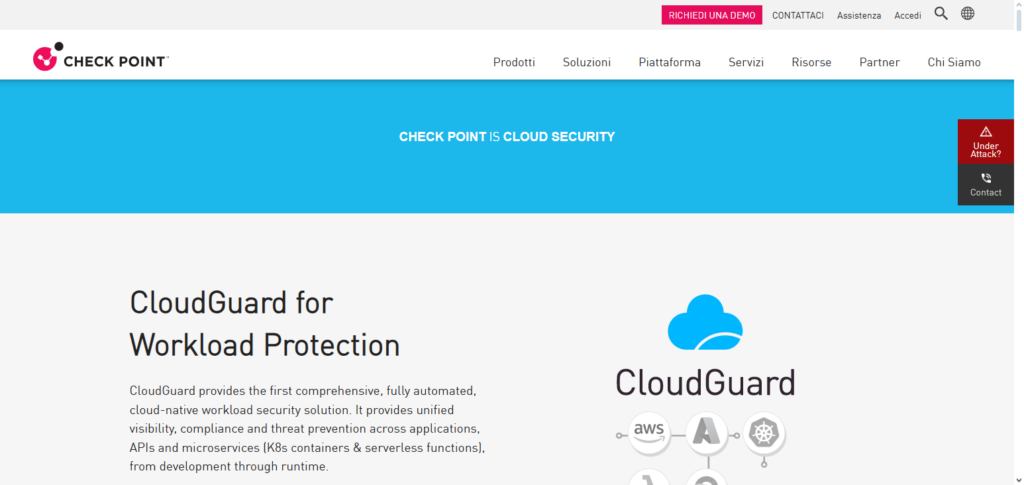
The service provides fully automated threat detection and response tools to combat any security vulnerability in the fast-changing cloud systems. CloudGuard policy-based security simplifies the management of cloud security in multi-cloud environments.
One of the Best Cloud Workload Protection Platforms, Check Point CloudGuard is praised for its substantial control and simplified management stream, and strong protection of cloud workload security. This cloud protection also extends to hybrid and public cloud environments.
Check Point CloudGuard Workload Protection Features , Pros & Cons
Key Features.
- Threats prevention and segmentation.
- Monitoring in real-time.
- Enforcement of compliance
- Posture in cloud-native.
- Automated security policies.
Pros.
- Strong policy controls.
- Good segmentation.
- Enterprise governance.
- Good for multi-cloud.
- Strong prevention threats.
Cons.
- Tuning is complex.
- Higher learning curve.
- Expensive for smaller teams.
- Alerts contextualize poor.
- Check Point expertise required.
10. McAfee MVISION Cloud Workload Protection
Protection from Workloads in the Cloud using McAfee MVISION gives automated security for serverless workloads cloud-native server and container and. It provides automated threat detection along with vulnerability scanning and compliance to regulations and standards.
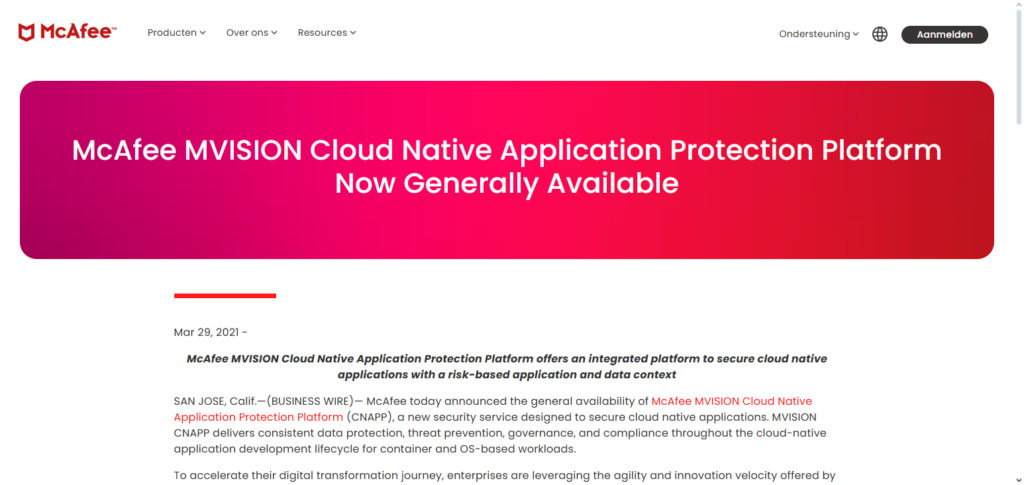
The system interacts with DevOps security to sustain in the development life cycle and provides continuous protection during runtime. The single console provides visibility into multi cloud environments and eases control & reporting.
McAfee MVISION Cloud Workload Protection is among the best in the field of automated protection and compliance for workloads spread in Cloud platforms like AWS, Google, and Azure and is best for enterprises who want operational simplicity to reduce complexity in workloads to improve compliance and security to operational cloud platforms.
McAfee MVISION Cloud Workload Protection. Features , Pros & Cons
Key Features.
- Protection against threats in cloud workloads.
- Vulnerability scanning.
- Compliant frameworks.
- Integrations on the DevOps pipeline.
- Visibility on multi-cloud.
Pros.
- Visibility across clouds is good.
- Excellent compliance tools
- DevOps are included
- Unified policy control
- Advanced analytics
Cons
- Resource heavy
- Steep UI
- Alerts need adjustments
- Not as detailed as some in runtime
- Confusing Price
Conclusion
Securing workloads across containers, virtual machines, and serverless environments is crucial in today’s ever changing cloud ecosystem. Comprehensive solutions to these issues are provided by the Best Cloud Workload Protection Platforms, including Sysdig Secure, Orca Security CWPP, Microsoft Defender for Cloud, Snyk Cloud Workload Protection,
AWS GuardDuty + Inspector, Palo Alto Networks Prisma Cloud, CrowdStrike Falcon Cloud Security, Trend Micro Cloud One – Workload Security, Check Point CloudGuard Workload Protection, and McAfee MVISION Cloud Workload Protection.
These platforms offer a combination of threat detection, runtime protection, vulnerability management, and compliance monitoring. All of these platforms offer strong choices for protecting contemporary cloud workloads, but choosing the best CWPP solution depends on cloud architecture, operational requirements, and security considerations.
FAQ
What is a Cloud Workload Protection Platform (CWPP)?
A Cloud Workload Protection Platform (CWPP) is a security solution designed to protect workloads running in cloud environments, including virtual machines, containers, and serverless applications. CWPPs offer vulnerability management, runtime protection, threat detection, and compliance monitoring to ensure workloads are secure and meet regulatory requirements.
Why are CWPPs important for businesses?
As organizations increasingly migrate applications to the cloud, securing workloads against misconfigurations, vulnerabilities, and attacks is critical. CWPPs provide visibility across cloud environments, reduce security risks, automate threat detection, and ensure compliance, making them essential for modern cloud operations.
Which are considered the Best Cloud Workload Protection Platforms?
Some of the leading CWPPs include Sysdig Secure, Orca Security CWPP, Microsoft Defender for Cloud, Snyk Cloud Workload Protection, AWS GuardDuty + Inspector, Palo Alto Networks Prisma Cloud, CrowdStrike Falcon Cloud Security, Trend Micro Cloud One – Workload Security, Check Point CloudGuard Workload Protection, and McAfee MVISION Cloud Workload Protection. These platforms excel in runtime defense, vulnerability management, and cloud-native security features.
How do I choose the right CWPP for my organization?
Choosing the right platform depends on your cloud architecture, the type of workloads, integration with DevOps pipelines, scalability, compliance requirements, and budget. Organizations should evaluate features like runtime protection, vulnerability scanning, automated response, and multi-cloud support before making a decision.
Can CWPPs protect both public and hybrid clouds?
Yes, most modern CWPPs support multi-cloud and hybrid cloud environments. They provide consistent visibility, security policies, and threat detection across public clouds like AWS, Azure, and Google Cloud, as well as on-premises workloads.