I’ll go over the top cryptocurrency exchanges for simple fiat on-ramp and off-ramp in this post, assisting you in locating safe places to deposit and withdraw conventional currencies with low fees, quick processing times, and dependable payment options.
This guide identifies reliable exchanges that make it easy to convert fiat to cryptocurrency and cash out your digital assets effectively, regardless of your level of experience.
What Is A Crypto Off-Ramp Platform?
A cryptocurrency off-ramp platform is a service that enables users to withdraw their cryptocurrency holdings to a bank account, credit card, or digital wallet after converting them into conventional fiat currencies like USD, EUR, or INR.
It enables real-world spending, bill payment, and cash access by bridging the gap between blockchain-based assets and the conventional financial system.
Crypto exchanges, payment processors, and fintech apps frequently provide off-ramps, which usually include transaction fees, identity verification, and compliance checks to guarantee safe and controlled transfers.
Key Point
| Exchange | Key Fiat On-Ramp & Off-Ramp Feature |
|---|---|
| Binance | Supports many fiat currencies via bank transfer, card & P2P; excellent liquidity & wide payment options globally. |
| Coinbase | Highly regulated with strong fiat support (bank transfers, debit/credit) and very high fiat withdrawal limits. |
| Paybis | Broad fiat on-ramp/off-ramp via cards and bank transfers; regulated in major regions. |
| OKX | Instant bank withdrawals, 100+ P2P fiat methods; competitive off-ramp options. |
| Kraken | Strong fiat support (ACH, SEPA, SWIFT, etc.); secure and regulated. |
| Bitget | Supports 140+ fiat currencies via bank transfers, card & P2P; wide fiat access. |
| KuCoin | Fiat deposits via SEPA/cards/third-party on-ramps; P2P off-ramp. |
| Gate.io | Fiat purchases via third-party on-ramps & card; some withdrawal options. |
| Uphold | Multi-asset platform with fiat bank transfers & card deposits/withdrawals. |
| Bitfinex | Professional exchange with fiat (bank wire) support for on/off ramps. |
1. Binance
Binance is one of the largest cryptocurrency exchanges, measured by trading volume, globally since it began operations in July 2017. It was founded by Yi He and Changpeng Zhao. The exchange currently has over 500 cryptocurrency pairs available for trading.
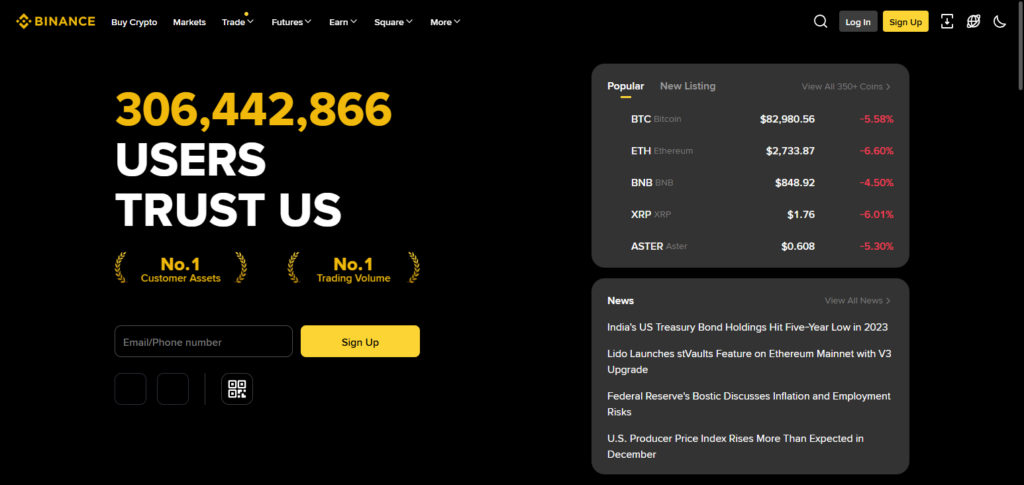
Binance charges a standard 0.10% trading fee for makers and takers, which is lowered based on a user’s trading volume. Fees paid with Binance’s native token, BNB, are also discounted. Other than cryptocurrencies, Binance supports fiat currency purchases and sales via a credit, debit, or bank transfer in certain jurisdictions.
Binance Features, Pros & Cons
Features
- Liquidity and trading volume
- Multiple fiat on-ramp/off-ramp methods (bank transfers, cards, P2P)
- Variety of crypto and markets
- Trading fees are competitive and offer discounts with BNB
- Derivative and advanced trading features
Pros
- Extremely high levels of liquidity
- Tier discounts for low fees
- Comprehensive fiat on-ramp/off-ramp options
- Ecosystem (staking and savings) is strong
- P2P in many countries
Cons
- More advanced crypto traders only
- Regulatory risk depending on jurisdiction
- Verification is more of a hassle
- Support not as responsive
- Jurisdictional risk for account use or P2P
2. Coinbase
Coinbase is one of the major cryptocurrency exchanges in the world and was founded in the United States in 2012, and it has gained recognition for its prudent compliance with the law. A major aspect of Coinbase’s business model is the provision of services enabling users to deposit and withdraw fiat, like USD and EUR, and soon rupees for users in India, through national or international bank transfers, along with card purchases via the platform.
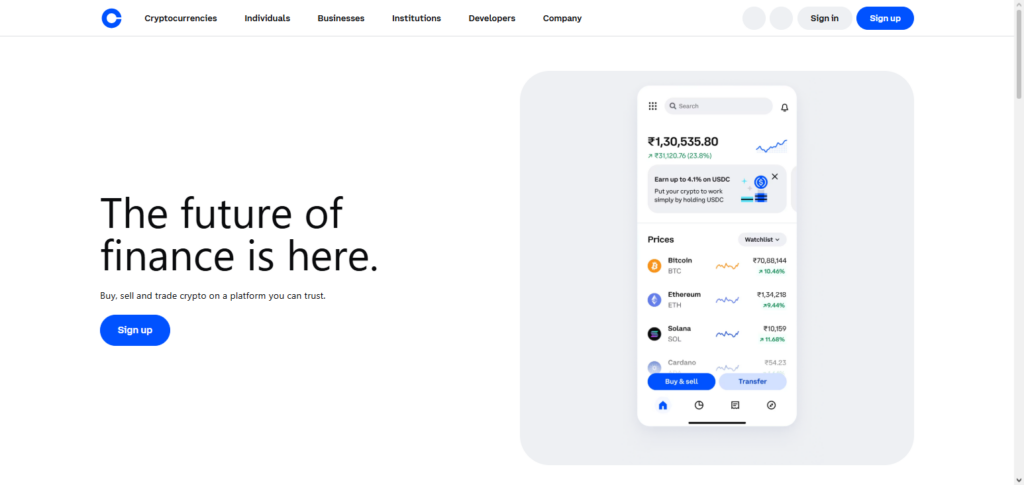
Coinbase is known for its simplicity. Coinbase has also received a significant amount of investment capital.Fees depend on the type of transaction and region, and they include spreads and maker/taker fees (often higher than some competitors). Coinbase has developer APIs with no fees for certain USDC on-ramp/off-ramp flows.
Coinbase Features, Pros & Cons
Features
- Course intuitive and easy design
- Compliance is strict and strong to KYC
- Support for all direct fiat on-ramp/off-ramp methods
- Insurance on custodial assets, sometimes called ‘hot’
- Education, courses, and rewards offer a more wholistic approach
Pros
- KYC to controls is simple
- Multiple fiat countries are supported
- Trust is high with licenses and regulations
- Fees are set deliberately on the platform
- Insurance is a competitive offer with software wallets.
Cons
- Compared to other options, fees are high
- Trading features are basic
- Compared to other options, support is slow
- Legal availability in each jurisdiction is frustrating
- More options exist vs larger platforms.
3. Paybis
Paybis was founded in 2014 in Warsaw, Poland, by Innokenty Isers and Konstantin Vasilenko. Paybis focuses on traditional on/off-ramp services. It allows users to buy/sell crypto with credit/debit cards, bank transfers, and various online payment systems.
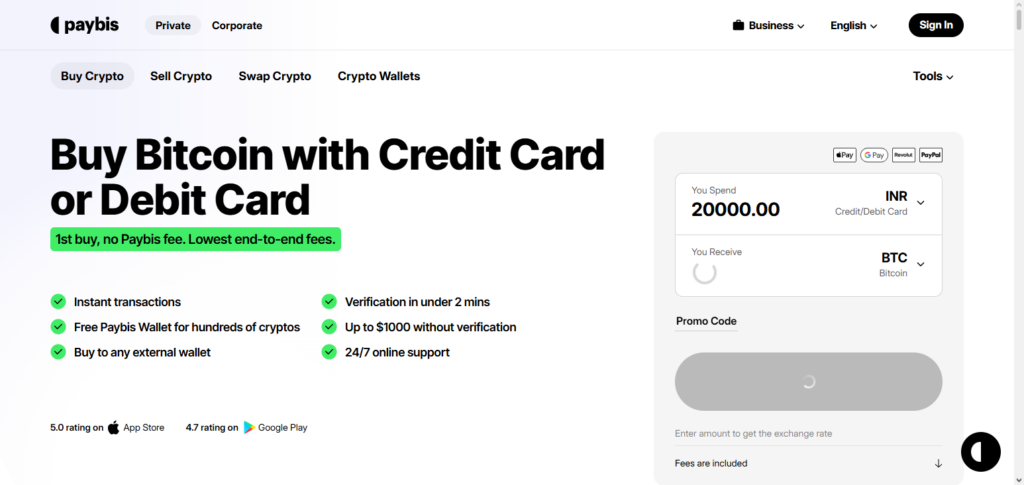
Third-party processor fees can be higher than regular exchanges, and they vary by region and payment. Paybis does not function in the way most traditional order-book exchanges do for more advanced trading. It does not offer more advanced trading services like order-book exchanges. Instead, Paybis streamlines the process by directly connecting users to fiat/crypto purchases and sales.
Paybis Features, Pros & Cons
Features
- Constraints about fiat on-ramp/off-ramp
- Support for cards and bank transfers
- Availability across the globe
- KYC process is very quick
- Order book trading is unavailable
Pros
- Flow from fiat to crypto is very easy
- Transactions occur very quickly
- Many methods of payment are supported
- Trading interface is not complex
- Suitable for small purchases
Cons
- Fees are higher than those of the big exchanges
- The exchange does not offer full services
- Advanced trading features are unavailable
- They rely on third party processors for most functions
- Tools for investment that is long-term are unavailable
4. OKX
OKX (formerly OKEx) has been around since 2017. Star Xu was the founder of the company and built it as a global crypto exchange after his earlier attempts at building OKCoin.
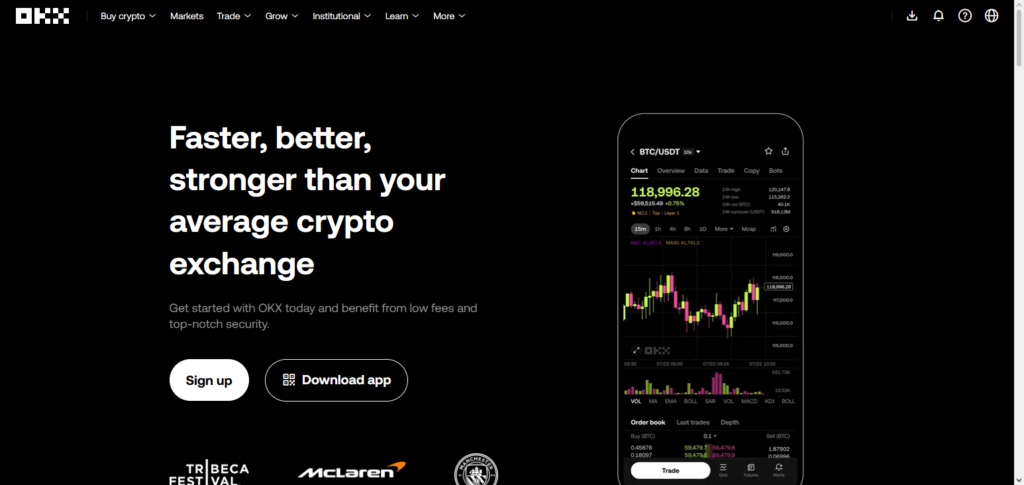
It has developed into one of the best trading platforms in the world, offering a multitude of services, including spot services, margin, and futures trading, as well as DeFi functions. The fees they charge are competitive, with entry-level spot trading maker/taker fees typically around 0.08%/0.10%, but this varies by region and volume.
With integrated banking and payment methods, users can deposit and withdraw fiat or use the P2P option for fiat on-ramp/off-ramp services in most markets. The platform has millions of users across the globe.
OKX Features, Pros & Cons
Features
- Trading of both spots and derivatives
- Plenty of options for fiat to crypto conversion
- Fees are quite competitive
- Trading P2P is possible
- Tools and charts that are advanced
Pros
- Lots of liquidity
- Fees for trading are very low
- Support for fiat is adequate
- Lots of different assets to trade
- Interface is very professional
Cons
- Pricing is very high for beginners
- They have scope restrictions for different regions
- Getting verified can be very time consuming
- They can take a long time to respond to support questions
- Handling of capital is not readily available in every country
5. Kraken
Kraken is among the first regulated crypto exchanges with over a decade of experience. Since its inception in 2011, it has offered fiat on-ramp and off-ramp services for USD, EUR, GBP, CAD, etc., and for depositing and withdrawing to and from bank accounts.
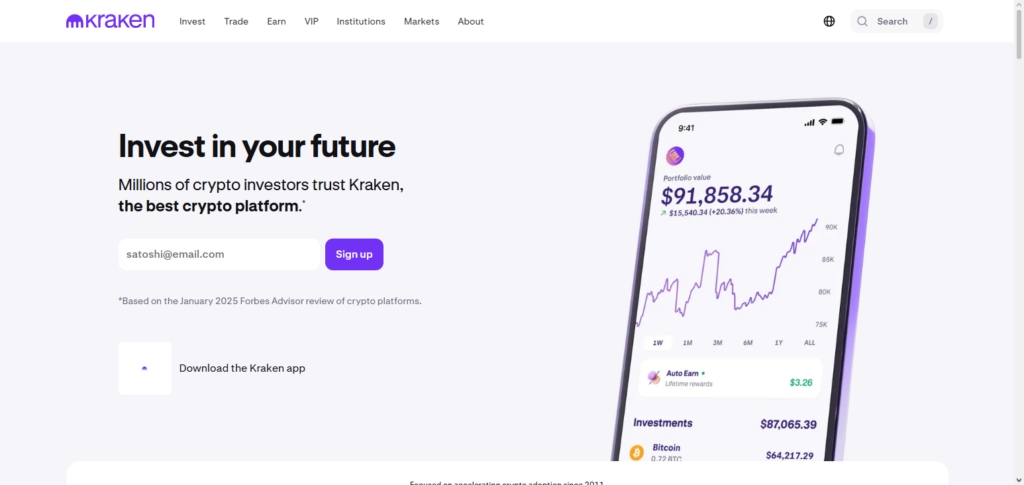
The exchange has a competitive margin of about 0.16% maker and 0.26% taker for spot trading and up to 1% for other services. Kraken has set high standards when it comes to regulation, demonstrating proof of reserves, and is known for high levels of security, making it a strong competitor for retail and institutional customers.
Kraken Features, Pros & Cons
Features
- They are one of the most reliable and oldest exchanges
- Highly regulated with strong compliance
- Support for bank transfers to fiat
- Offer both margin and spot trading
- They have high security
Pros
- The platform is very secure
- They have a good reputation
- Fees charged are very reasonable
- They have support for lots of fiat (different currencies)
- They are very responsive to compliance and audits
Cons
- Complicated fee structure
- Not user friendly
- Fewer options for buying with cards
- Delays in verification
- Limited list of smaller altcoins
6. Bitget
Bitget is one of the most recent exchange platforms, founded in 2018. They are based in both Singapore and Seychelles and offer a complete package of crypto trading including spot, futures, and copy trading. Trading fees for standard spot trading are approximately ** 0.10%** and can be lowered based on the native BGB token payment or volume.
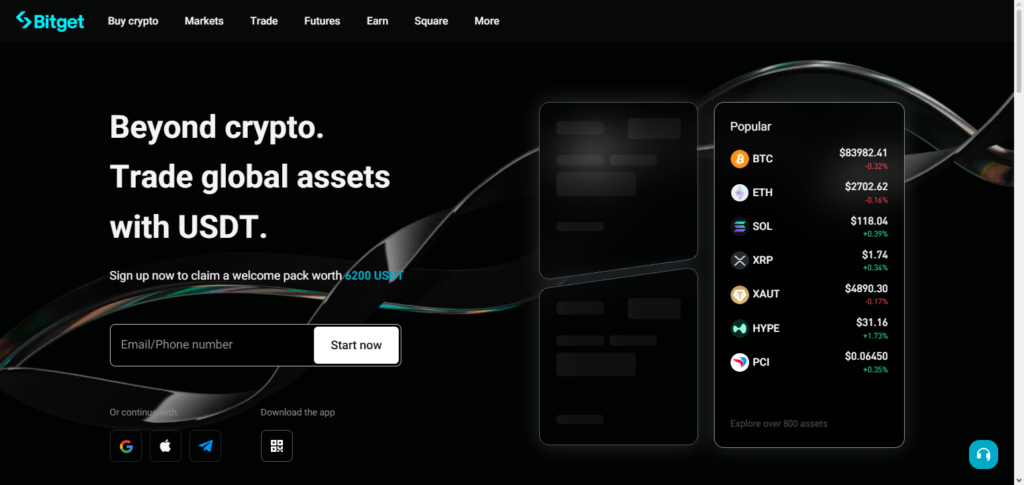
Bitget supports fiat on ramps and off ramps through card payments, P2P, and other payment providers in 140+ fiat currencies. Users can easily convert their local fiat currencies to crypto and vice versa. It appeals to both novice and experienced traders.
Bitget Features, Pros & Cons
Features
- Futures and Spot trading
- Copy trading
- Buy crypto with cards and P2P
- Fees are reasonable
- Rewards programs
Pros
- Buy crypto with ease
- Features for social and advanced trading
- Major coins with high liquidity
- Bonus and low trading fees
- Multiple P2P currencies
Cons
- Users with no experience will struggle
- Some withdrawals have fees
- Users from some regions have regulatory restrictions
- Slow customer support
- Users with no experience may find advanced tools too much
7. KuCoin
KuCoin started its operations in 2017 and has become one of the top global crypto exchanges. Its co-founders are Chun Gan, Ke Tang, and Johnny Lyu. KuCoin’s standard trading fee is roughly 0.10% for both maker and taker.

Users who have high trading volumes or hold KuCoin’s native token get additional discounts. Users can also buy and sell cryptocurrencies using a number of fiats through KuCoin’s P2P and partnered fiat payment processors, although country support varies. KuCoin is most popular for the number of altcoin listings.
KuCoin Features, Pros & Cons
Features
- P2P and 3rd party fiat with non-restrictive KuCoin fees
- Futures and margin trading
- Rewards with KuCoin Token (KCS)
- Altcoin trading
Pros
- A wide selection of trading assets
- Competitive fees for trading
- Various options for fiat trading via P2P
- Bonuses for trading with KCS
- It’s good for more advanced trading
Cons
- Most functions are still not fully regulated
- Direct trading with fiat is restricted in many places
- Sometimes the fee structure is confusing
- Poor customer support
- There are better options for beginner traders
8. Gate.io
Gate.io was established in 2013 and is one of the oldest players in the space. Its founder Lin Han started the platform as Bter.com. Gate.io has more than 1,000 cryptocurrencies and also offers advanced features like margin trading. Gate.io’s maker and taker fees start at 0.20% and discounts are available to GT token holders and also on VIP tiers.
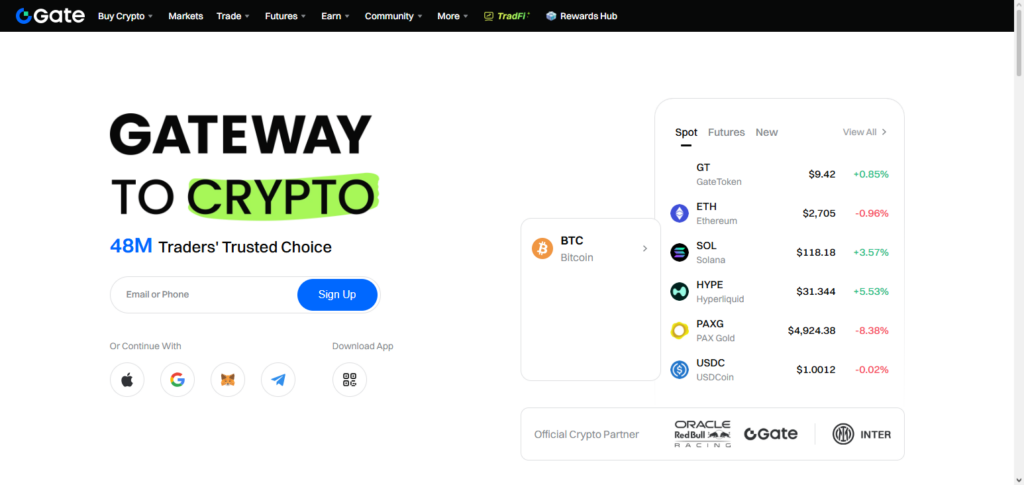
The services of Gate.io pertaining to fiat on-ramp are reliant on third party providers, and there are no direct withdrawal and deposit services for Gate.io, so users have to rely on intermediaries or P2P for converting crypto to fiat, and fiat to crypto. The direct fiat services are limited, but Gate.io is still favored because of the market and the diversity of the services offered.
Gate.io Features, Pros & Cons
Features
- Tokens in the thousands
- More sophisticated trading instruments
- Third-party fiat on-ramping
- Integration of Futures and decentralized finance
- Mining of liquidity
Pros
- Huge diversity of coins
- Community and listings are active
- Trading capabilities are robust
- Rewards and incentives
- High liquidity across a wide range of pairs
Cons
- Increased Costs for Novices
- Limited fiat support compared to leading exchanges
- Complicated
- Casual consumers are not a target audience
- Slow customer service
9. Uphold
Uphold began operations in 2013 (initially Bitreserve) and also has a unique all-in-one financial services platform, as it integrates cryptocurrencies, fiat, equities, and commodities.
Uphold does not charge the standard trading fees, but has a spread-based fee model, meaning that the fees are incorporated in determining the trade price and that the fees vary depending on the asset (e.g. stablecoins are over 0.25% lower, while BTC/ETH are higher).
Uphold also supports fiat on-ramp and off-ramp through various services like banking, cards, and Apple/Google Pay and PayPal (these services are limited to certain regions). Because users can deposit money in their accounts with fiat and can also withdraw money in their accounts with fiat, the platform functions as a bridge between conventional and crypto finance .
Uphold Features, Pros & Cons
Features
- Multi-asset platform (crypto, stocks, metals)
- Simple fiat on-ramp/off-ramp
- Spread-based pricing
- Support for cards & transfers
- Wallet integration
Pros
- Simple, cash, and cryptocurrency transactions
- Different asset classes
- Support for Apple/Google Pay
- Clear trade processes
- Diversified portfolios are optimal.
Cons
- Spread costs might be significant.
- Not ideal for active traders
- Limited advanced chart analysis.
- fiat restricted by region
- primary focus on underdeveloped crypto markets
10. Bitfinex
Bitfinex is another example of a crypto exchange. In 2012, Bitfinex was founded and is also regarded as one of the most established ones. It is also an exchange with a good reputation for offering substantial liquidity and having advanced trading functionalities. The fees for trading on the exchange are also competitive, averaging around 0.1% maker and 0.2% taker and are also volume dependent.
Bitfinex also provides a fiat on-ramp and off-ramp which enables users to directly deposit and withdraw USD, EUR, YEN, and GBP through bank transfers and other settlement options. Although its interface and other offerings are more advanced, it still remains a good option for users requiring direct fiat access and deep markets.
Bitfinex Features, Pros & Cons
Features
- Extensive liquidity.
- Trading at spots and margins
- Direct support of fiat banks
- Complex order types
- Services for institutions
Pros
- For significant amounts, the fees are minimal.
- Excellent liquidity for the main coins
- A very professional interface
- Reliable connections to fiat banks
- Excellent for trading bots
Cons
- Difficult for beginners
- Fiat functionality requires verification
- Small retail support is lacking
- Restriction by region
- Complex User Interface
Conclusion
The ease, security, and cost-effectiveness of switching between conventional currency and digital assets will determine which cryptocurrency exchange is best for fiat on-ramp and off-ramp. Strong regulatory compliance, dependable bank integrations, and extensive fiat currency support make platforms like Binance, Coinbase, and Kraken stand out.
For more extensive regional access, OKX, Bitget, and KuCoin provide flexible P2P and third-party payment possibilities. While Bitfinex and Gate.io serve seasoned customers looking for deeper liquidity, exchanges like Uphold and Paybis streamline direct fiat-to-crypto conversions. In the end, the ideal option strikes a compromise between low costs, security, local fiat support, and easy withdrawal alternatives.
FAQ
What does “fiat on-ramp and off-ramp” mean?
A fiat on-ramp allows you to convert traditional currency (like USD, EUR, INR) into cryptocurrency. A fiat off-ramp lets you convert crypto back into fiat. Exchanges with strong on-ramp/off-ramp capabilities make it easier to enter and exit the crypto market using regular money.
Which exchanges offer the easiest fiat on-ramp?
Exchanges like Binance, Coinbase, Kraken, OKX, Bitget, KuCoin, Uphold, and Paybis are known for easy fiat on-ramps via bank transfers, credit/debit cards, and P2P methods. Coinbase and Binance are especially beginner-friendly.
Are fiat off-ramps supported on all major exchanges?
Most major regulated exchanges such as Coinbase, Kraken, Binance, and Bitfinex support fiat off-ramps. Others like OKX, Bitget, and KuCoin may rely on third-party or P2P solutions to withdraw fiat depending on your region.
Which exchange has the lowest fees for fiat transactions?
Fees vary by country, payment method, and volume. Binance and Kraken typically offer competitive trading fees, while Uphold uses spread-based pricing. Paybis may have higher fees due to card processor charges. Always check the fee schedule before depositing or withdrawing.