


I will discuss the Best Crypto Payment Providers for Digital Agencies in 2026 in this article. Given how digital agencies are expanding globally, the optimal crypto payment solution agents must offer would assist in streamlined recurring billing, accounting integrations, refund handling, compliance/KYC, and support for stablecoins. The optimal crypto payment solution would assist clients in seamless transactions, cash out faster, and reliable cross border payments over numerous blockchain networks.
Why Choose Crypto Payment Providers for Digital Agencies
Global Presence
Building payment structures across borders is simplified by using cryptocurrencies as the settlement currency, reducing transaction costs and time.
Recurring Billing
Stablecoin payments and subscription models supported by Coinbase Commerce and Stripe respectively allow digital agencies to automate SaaS and retainer billing.
Accounting Integrations
QuickBooks and Xero integrations, used by most payment services, reduce the financial reporting effort for agencies.

Refunds
BitPay and CoinGate allow recipients to decide whether to accept refunds in Cryptocurrency or Fiat Currency.
Compliance and KYC
Payment services like Triple-A and CoinGate meet EU/US requirements for compliance and KYC, allowing agencies in regulated industries to use these services.
Invoicing and Payment Links
Using payment service APIs to create invoices, digital agencies benefit from lower payment lead times and client trust.
Stablecoins
Stablecoins USDC and USDT, compared to volatile cryptocurrencies, provide agencies with stable sources of revenue.
Blockchain Networks
Payment service providers supporting the Ethereum, Solana, Polygon, Bitcoin Lightning networks offer agencies flexibility for settlement.
Cost Efficiency
Crypto payments are more economical than traditional banking payment systems and further reduce costs for agencies with thin margins.
Innovation
Being the first digital agency to utilize crypto payments positions an agency as an innovator and attracts tech-savvy clients.
Benefits Of Crypto Payment Providers for Digital Agencies
International Payments
Agencies can process client payments without incurring the delays associated with currency conversion.
Billing on a Regular Basis
Coinbase Commerce and Stripe’s Stablecoin support subscription bills, making billing easy for Servies used on a subscription or retainer basis.
Accounting Integrations
Most providers integrate to some extent with QuickBooks, Xero, or SAP, simplifying agency reporting and reconciliations.
Refund Flexibility
BitPay and CoinGate allow for refefunds in crypto and fiat currencies, making resolution of client’s concerns easy for digital agencies.
Compliance & KYC
Triple-A and CoinGate are compliant with strict EU/US regulations, making them safe for agencies in regulated sectors.
Invoice & Payment Links
Many crypto payment providers offer free instant invoices, improving payment request process and customer trust for agencies.
Stablecoins
Stablecoins, like USDC and USDT, maintain their value at $1, making them a reliable source of revenue for agencies.
Options for Networks
Most providers serve multiple blockchains, allowing settlement via Ethereum, Solana, Polygon, Tron, or Bitcoin Lightning.
Lower Costs
For many agencies, crypto transactions are cheaper than card or traditional banking transactions.
Innovate First
For digital agencies, becoming the first innovators in the industry to provide crypto payment options gives them a competitive advantage.
Key Points
| Provider | Best For | Fees | Settlement Options | Custody Model | Key Strength |
|---|---|---|---|---|---|
| Coinbase Commerce | Shopify & no-code agencies | 1% | Crypto or fiat (USDC/USD) | Custodial | Easy plug‑and‑play checkout |
| Stripe Stablecoin | US/EU SaaS & enterprise | ~1% | Fiat settlement via Visa rails | Custodial | Seamless UX with stablecoin rails |
| BitPay | Mid‑market merchants | 1–2% + $0.25 | Fiat or crypto | Custodial | Multi‑user access & compliance |
| NOWPayments | SMBs & high‑risk verticals | 0.5% | Crypto or fiat | Hybrid | Flexible plugins & payout options |
| CoinGate | EU agencies & WooCommerce | ~1% | Automated fiat payouts | Custodial | Strong EU compliance & bank integrations |
| Triple‑A | APAC/global SMBs | ~1% | Fiat or crypto | Custodial | Enterprise‑grade regulatory compliance |
| OpenNode | Bitcoin‑first agencies | 1% | BTC or fiat | Custodial | Lightning Network support |
| BTCPay Server | Sovereign, zero‑KYC operators | Free | Crypto only | Self‑hosted | Full control, open‑source |
| Plisio | Low‑fee no‑code setups | ~0.5% | Crypto or fiat | Custodial | Simple API & plugin support |
| B2BinPay | B2B platforms & brokers | ~1% | Crypto & fiat | Custodial | Strong treasury & broker integrations |
1. Coinbase Commerce
Coinbase Commerce is popular with digital agencies due to its Shopify and WooCommerce integrations, as well as custom APIs. One of its key features is support for recurring billing via subscription APIs, making it a great option for SaaS agencies.
Accounting integrations come via QuickBooks and Xero connectors. Refunds are handled by Coinbase and require a fiat currency Coinbase account. Agencies are protected from compliance/KYC since it is the merchant’s obligation. Invoice and payment links can be created instantly for USDC, USDT and DAI stablecoins.
Ethereum, Solana and Polygon blockchains are some of the options agencies have when it comes to settlement. Taking into consideration compliance and ease of use, Coinbase Commerce offers an excellent balance for the digital agencies who serve a global market.
Coinbase Commerce Characteristics, Advantages & Disadvantages
| Characteristics | Advantages | Disadvantages |
|---|---|---|
| Recurring billing via API | Easy Shopify/WooCommerce integration | Limited customization for advanced SaaS |
| QuickBooks/Xero accounting sync | Strong brand trust | Refunds require Coinbase accounts |
| Refund handling in crypto/fiat | Supports USDC, USDT, DAI | Fiat settlement delays (1–2 days) |
| Compliance under US regulations | Multi‑chain support (ETH, SOL, POL) | Custodial model (counterparty risk) |
| Invoice/payment links | Instant generation | Limited sovereignty |
| Stablecoin support | Wide coverage | Fees ~1% |
| Blockchain networks | ETH, SOL, POL | No Lightning support |
| Settlement | Crypto or fiat | Restricted in some regions |
| API flexibility | Developer‑friendly | Limited customization for niche workflows |
| Security | Coinbase custody | Centralized risk exposure |
2. Stripe Stablecoin
The initial release of Stripe’s stablecoin payment rails in 2025 introduces a solution for agencies to perform recurring billing with Stripe’s subscription engine. Automation of accounting integrations with Quickbooks, NetSuite, and Xero is built in.

Refunds can be issued in fiat or stablecoins (partial or full refunds). Compliance/KYC has been taken care of as Stripe operates within US/EU regulations. Agencies can generate invoice/payment links from the Stripe UX for stablecoin payments with instant settlement for USDC or PYUSD.
Stripe Stablecoin has built product integrations on blockchain networks with Ethereum and Solana for fast settlement. Stripe Stablecoin Payments has enterprise grade compliance for seamless fiat conversion and is targeted towards regulated industries, especially within fintech and SaaS.
Stripe Stablecoin Characteristics, Advantages & Disadvantages
| Characteristics | Advantages | Disadvantages |
|---|---|---|
| Recurring billing native | Enterprise‑grade subscription engine | Only stablecoins (USDC, PYUSD) |
| Accounting integrations | QuickBooks, NetSuite, SAP | Limited crypto diversity |
| Refund handling | Partial/full fiat/stablecoin | Custodial only |
| Compliance | Strict US/EU frameworks | No sovereignty option |
| Invoice/payment links | Instant dashboard generation | Higher fees (~1%) |
| Stablecoin support | USDC, PYUSD | No BTC/altcoin support |
| Blockchain networks | ETH, SOL | Limited chain coverage |
| Settlement | Fiat via Visa rails | Conversion delays possible |
| API flexibility | Strong developer tools | Restricted to Stripe ecosystem |
| Security | PCI‑grade compliance | Centralized control |
3. BitPay
BitPay, as a veteran of blockchain payments, has introduced recurring billing as part of its subscription invoicing. Agencies will appreciate accounting integrations with QuickBooks and NetSuite as reconciliation will be improved.
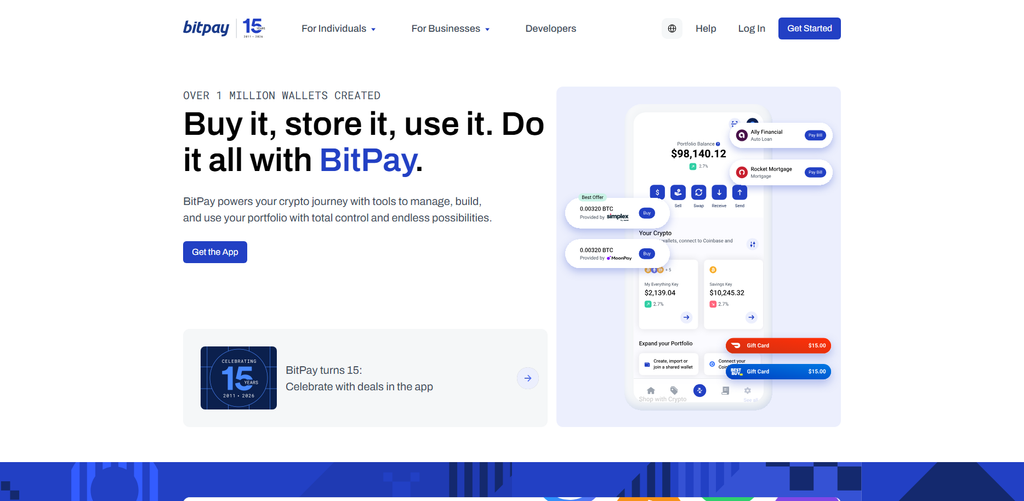
While refunds are possible, fiat settlements bring with them a delay. Compliance/KYC is robust as BitPay is operating under US regulations. Payment and invoice links are user generated and support payments in cryptocurrency (including stablecoins like USDC) and Bitcoin and Ethereum as well.
BitPay’s blockchain settlement networks include Bitcoin, Ethereum, Polygon, and Litecoin. BitPay’s strength is in compliance which makes it a good choice for regulated industries and corporate clients such as SaaS and fintech.
BitPay Characteristics, Advantages & Disadvantages
| Characteristics | Advantages | Disadvantages |
|---|---|---|
| Recurring billing | Subscription invoicing | Higher fees (1–2% + $0.25) |
| Accounting integrations | QuickBooks, NetSuite | Limited SaaS automation |
| Refund handling | Crypto/fiat supported | Fiat refunds slower |
| Compliance | US regulatory alignment | Custodial only |
| Invoice/payment links | Easy generation | Limited customization |
| Stablecoin support | USDC, USDT | Limited multi‑chain |
| Blockchain networks | BTC, ETH, LTC, POL | No Lightning |
| Settlement | Fiat or crypto | Settlement delays |
| API flexibility | Strong merchant tools | Less developer‑friendly |
| Security | Established brand | Centralized custody risk |
4. NOWPayments
As a subscription API based recurring billing processor suitable for SaaS model agencies, NOWPayments offers numerous integrations like accounting integrations via CSV exports and third-party connectors.
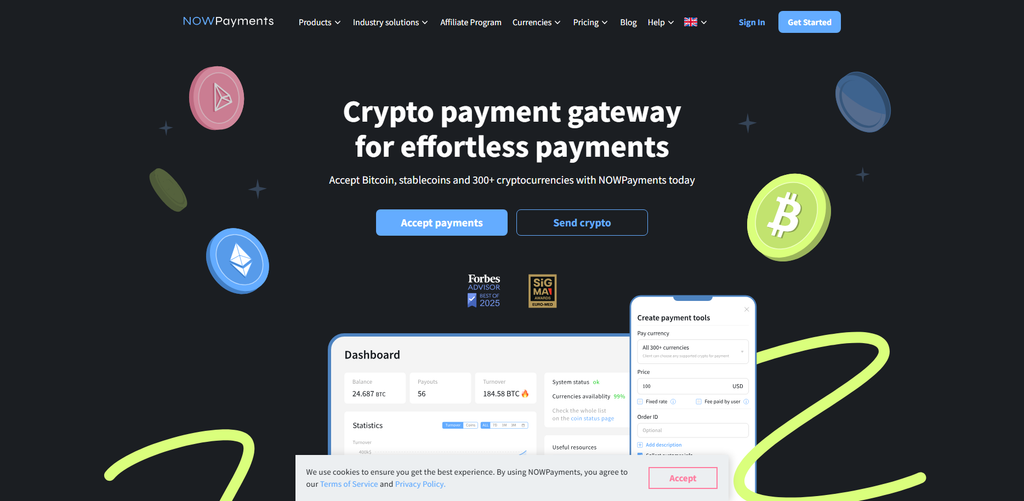
The asymmetrical crypto-native refund processing allows agencies to process refunds directly in crypto. The compliance/KYC is minimal, making it a great fit for high-risk vertical agencies. Payment and invoice links can be customized to support stablecoins like USDT, USDC and DAI.
The blockchain networks NOWPayments operates on include Ethereum, Tron and Binance Smart Chain. Because of these factors, NOWPayments draws a lot of agencies with a need for international coverage due to the low fees and the wide crypto coverage for the client base.
NOWPayments Characteristics, Advantages & Disadvantages
| Characteristics | Advantages | Disadvantages |
|---|---|---|
| Recurring billing | Subscription APIs | Less enterprise‑grade |
| Accounting integrations | CSV exports | No native QuickBooks |
| Refund handling | Crypto‑native | No fiat refunds |
| Compliance | Minimal KYC | Risk for regulated agencies |
| Invoice/payment links | Customizable | Limited fiat support |
| Stablecoin support | USDT, USDC, DAI | Custodial hybrid |
| Blockchain networks | ETH, TRX, BSC | Limited fiat rails |
| Settlement | Crypto or fiat | Conversion delays |
| API flexibility | Wide plugin support | Less compliance assurance |
| Security | Decentralized options | Higher risk exposure |
5. CoinGate
CoinGate specializes in recurring billing through subscription invoicing for EU-centric agencies. Accounting integrations through Xero are strong and have great reconciliation tools. Refund processing can be done in crypto or fiat dependent on the settlement choice. KYC/compliance is more strict to ensure EU VASP regulations are met. Invoice and payment links can be created to support USDC and USDT.
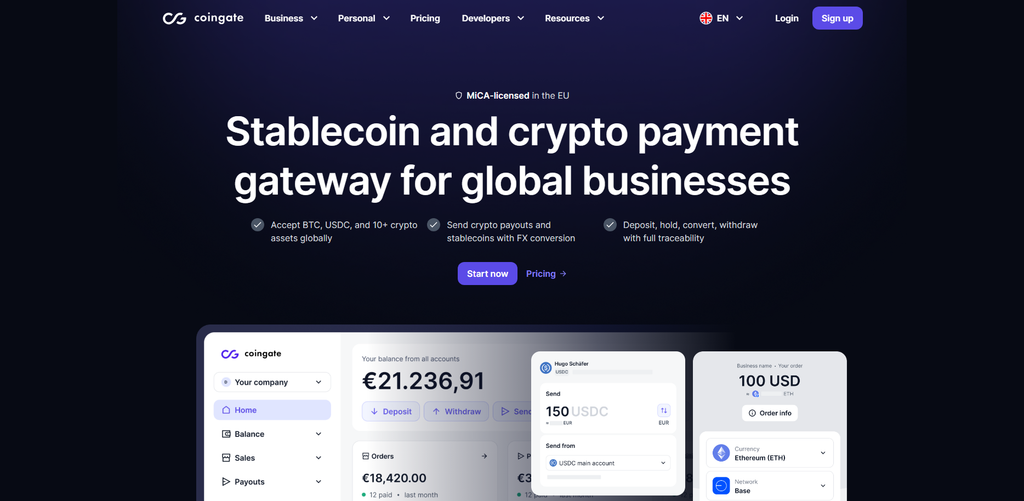
The blockchain networks CoinGate operates on include Bitcoin and Ethereum, Litecoin and Polygon. CoinGate’s strength is in compliance and EU focused regulations with auto fiat payouts, making it a ledger focused agency in Europe and a good fit for MiCA compliance.
CoinGate Characteristics, Advantages & Disadvantages
| Characteristics | Advantages | Disadvantages |
|---|---|---|
| Recurring billing | Subscription invoicing | Limited SaaS automation |
| Accounting integrations | QuickBooks, Xero | EU‑centric |
| Refund handling | Crypto/fiat | Fiat delays |
| Compliance | EU VASP/MiCA | Strict KYC |
| Invoice/payment links | Easy generation | Limited customization |
| Stablecoin support | USDC, USDT | Limited DAI |
| Blockchain networks | BTC, ETH, LTC, POL | No Lightning |
| Settlement | Automated fiat payouts | EU focus only |
| API flexibility | Strong plugins | Less global reach |
| Security | EU compliance | Custodial risk |
6. Triple‑A
Triple‑A provides enterprise‑level solutions that automate recurring billing for SaaS and subscription businesses. It integrates with popular accounting software packages, including QuickBooks, NetSuite, and SAP. Triple‑A can handle refunds in both fiat and crypto, which is unusual amongst its competitors.
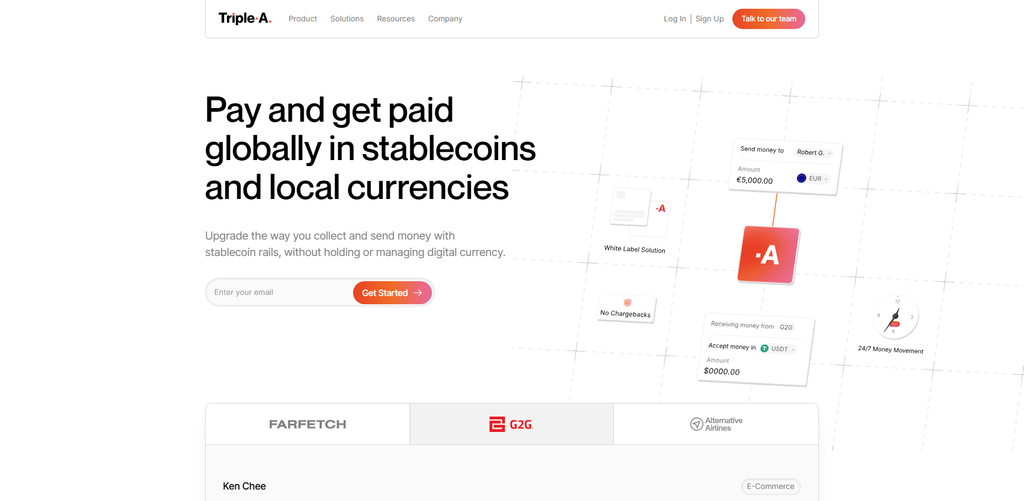
As far as regulatory/KYC is concerned, Triple‑A looks great, being licensed in Singapore and the EU. Payment and invoice links can be customized and will support stablecoins. Triple‑A has great technology and enterprise integrations, and is an excellent option for agencies that serve clients with cross border operations and are in regulated industries.
Triple‑A Characteristics, Advantages & Disadvantages
| Characteristics | Advantages | Disadvantages |
|---|---|---|
| Recurring billing | SaaS subscription support | Higher fees (~1%) |
| Accounting integrations | QuickBooks, SAP, NetSuite | Limited customization |
| Refund handling | Fiat/crypto | Settlement delays |
| Compliance | MAS & EU licensed | Strict KYC |
| Invoice/payment links | Customizable | Less sovereignty |
| Stablecoin support | USDC, USDT, DAI | Limited altcoins |
| Blockchain networks | ETH, TRX, POL | No BTC Lightning |
| Settlement | Fiat/crypto | Conversion delays |
| API flexibility | Enterprise‑grade | Complex onboarding |
| Security | Strong compliance | Custodial risk |
7. OpenNode
OpenNode is a processor that focuses on billing and payments using Bitcoin and the Lightning Network. Accounting integrations include QuickBooks and the ability to export CSVs. Refunds can be done in Bitcoin, but, for fiat, OpenNode requires a conversion.
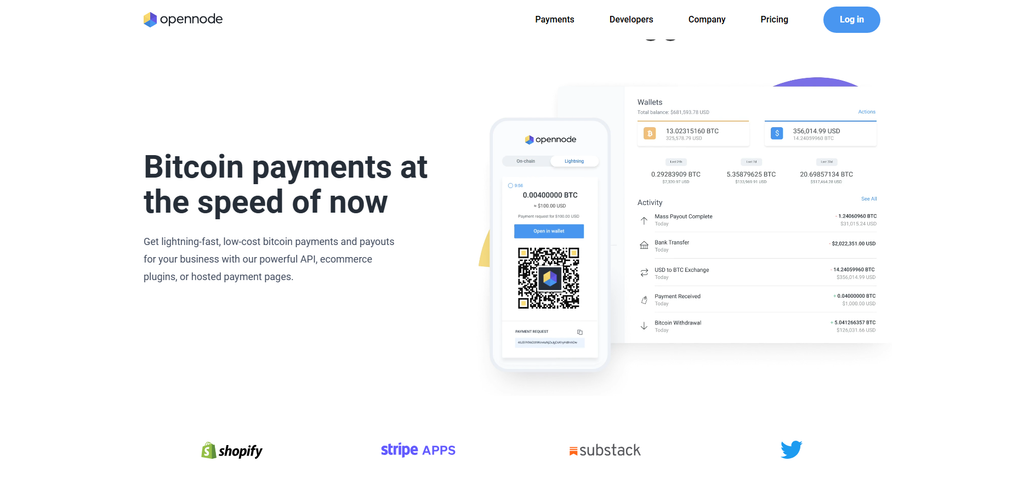
In terms of regulatory/KYC, OpenNode is somewhere in the middle, since they operate under US regulations. Payment links can be used over the Lightning Network and will settle quick. OpenNode focuses on Bitcoin and stablecoins that are built on top of Bitcoin. It is a great option for agencies that have clients that prefer Bitcoin payments and want quick settlement for low fees using the Lightning Network.
OpenNode Characteristics, Advantages & Disadvantages
| Characteristics | Advantages | Disadvantages |
|---|---|---|
| Recurring billing | Lightning subscriptions | Limited stablecoin support |
| Accounting integrations | QuickBooks, CSV | No SAP/NetSuite |
| Refund handling | BTC refunds | No fiat refunds |
| Compliance | US regulated | Limited global coverage |
| Invoice/payment links | Lightning‑enabled | No stablecoin invoices |
| Stablecoin support | Minimal | BTC‑only focus |
| Blockchain networks | BTC, Lightning | No ETH/altcoins |
| Settlement | BTC/fiat | Fiat conversion delays |
| API flexibility | Developer‑friendly | Narrow crypto scope |
| Security | Lightning speed | Custodial risk |
8. BTCPay Server
BTCPay Server is an open-source, self-hosted option for crypto-based recurring billing via custom plugins. Currently, integrations for accounting systems are manual and require user CSV exports. BTCPay’s refund solution is crypto-native; agency refunds are done directly.
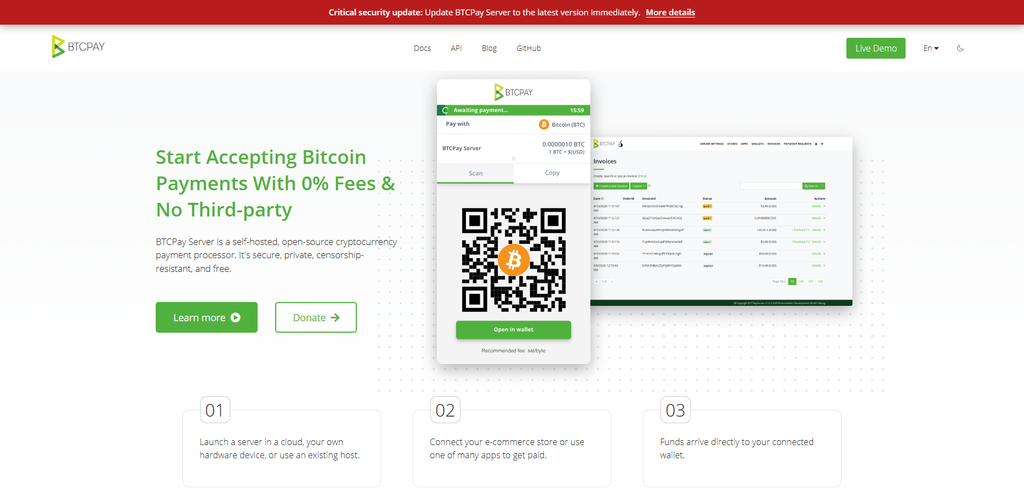
In regards to compliance and KYC, BTCPay is self-hosted and sovereignty-focused, so there is nothing there. The user can customize their payment/invoice links.
BTCPay Server supports all major blockchains: Bitcoin, Ethereum via extensions, and Lightning. Overall, BTCPay Server can be a good option for agencies looking for high levels of sovereignty and zero KYC, but do expect a learning curve to manage their product.
BTCPay Server Characteristics, Advantages & Disadvantages
| Characteristics | Advantages | Disadvantages |
|---|---|---|
| Recurring billing | Custom plugins | Requires technical setup |
| Accounting integrations | Manual CSV | No native integrations |
| Refund handling | Crypto‑native | No fiat refunds |
| Compliance | Zero KYC | Risk for regulated agencies |
| Invoice/payment links | Fully customizable | Manual setup |
| Stablecoin support | Via plugins | Limited coverage |
| Blockchain networks | BTC, Lightning, ETH (plugins) | Complex setup |
| Settlement | Crypto only | No fiat |
| API flexibility | Full control | Technical expertise needed |
| Security | Self‑hosted | Maintenance burden |
9. Plisio
Plisio offers SaaS agencies recurring billing through their subscription API. Plisio offers Quickbooks integrations and accounting CSV exports. Your refund solution is crypto native, fiat refunds are done via a conversion. Compliance and KYC regulation varies by jurisdiction.

Payment links and invoices can be customized, Plisio supports stablecoins like USDT and USDC. Plisio supports Tron, Binance Smart Chain and Ethereum Blockchains. Plisio differentiates itself with low fees and simple API integrations,so it works great for small to medium sized agencies needing a crypto based payment system.
Plisio Characteristics, Advantages & Disadvantages
| Characteristics | Advantages | Disadvantages |
|---|---|---|
| Recurring billing | Subscription APIs | Less enterprise‑grade |
| Accounting integrations | QuickBooks, CSV | No SAP/NetSuite |
| Refund handling | Crypto refunds | No fiat refunds |
| Compliance | Moderate | Limited global compliance |
| Invoice/payment links | Customizable | Less advanced |
| Stablecoin support | USDT, USDC | Limited DAI |
| Blockchain networks | ETH, TRX, BSC | No BTC Lightning |
| Settlement | Crypto/fiat | Conversion delays |
| API flexibility | Simple API | Limited enterprise features |
| Security | Low fees | Custodial risk |
10. B2BinPay
B2BinPay specializes in B2B recurring billing for brokers and enterprise agencies. The account integrations with QuickBooks, NetSuite, and SAP are solid. Refund handling is supported for both fiat and crypto. The compliance/KYC is built to cover the EU and global regulations.
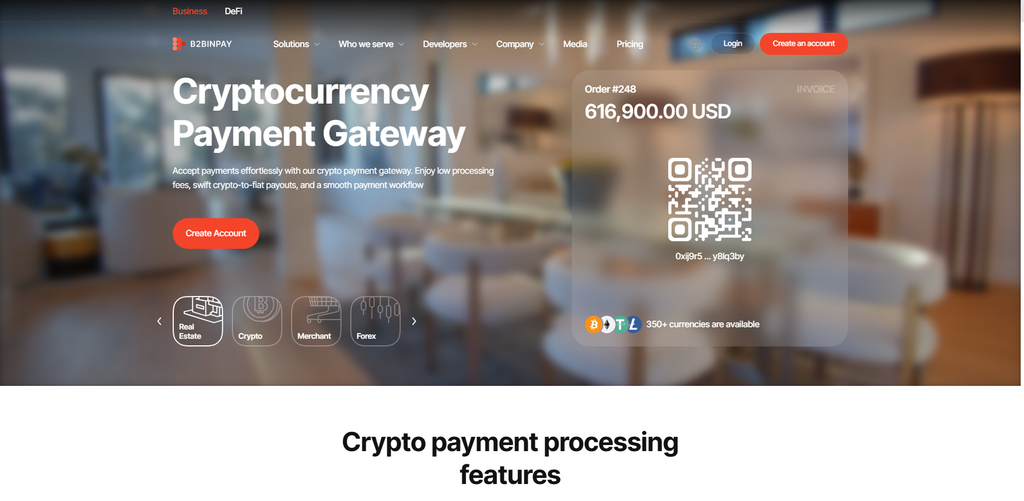
Invoices and payment links can be customized and support stablecoins like USDC, USDT, and DAI. The supported blockchains are Ethereum, Tron, Binance Smart Chain, and Polygon. Strong treasury management tools and broker integrations make B2BinPay the best option for agencies working with financial institutions and trading platforms.
B2BinPay Characteristics, Advantages & Disadvantages
| Characteristics | Advantages | Disadvantages |
|---|---|---|
| Recurring billing | Broker/SaaS support | Complex setup |
| Accounting integrations | QuickBooks, SAP, NetSuite | Higher cost |
| Refund handling | Fiat/crypto | Settlement delays |
| Compliance | EU/global regulations | Strict KYC |
| Invoice/payment links | Customizable | Less plug‑and‑play |
| Stablecoin support | USDC, USDT, DAI | Limited altcoins |
| Blockchain networks | ETH, TRX, BSC, POL | No Lightning |
| Settlement | Fiat/crypto | Conversion delays |
| API flexibility | Enterprise‑grade | Technical onboarding |
| Security | Strong treasury tools | Custodial risk |
Conclusion
In 2026, digital agencies are not just looking for Bitcoin payment service providers, but rather payment service providers that have stability, compliance, and seamless integrations with their existing workflow.
Coinbase Commerce and Stripe Stablecoin are best suited for SaaS and enterprise agencies due to their strengths in recurring billing and accounting integrations. BitPay and CoinGate are strong players in compliance and fiat settlement, while NOWPayments and Plisio are strong players in flexibility and low fees.
BTCPay Server is the best in terms of sovereignty and technical control, while OpenNode is the best in terms of Bitcoin Lightning adoption. Finally, with regard to enterprise-grade compliance and integrations for global clients, Triple‑A and B2BinPay hold the lead.
FAQ
Which provider is best for recurring billing?
Agencies needing subscription models should consider Coinbase Commerce and Stripe Stablecoin, both offering native recurring billing APIs. OpenNode supports Lightning‑based subscriptions, while BTCPay Server allows custom recurring billing via plugins.
Do these platforms integrate with accounting tools?
Yes. Stripe Stablecoin, Triple‑A, and B2BinPay offer direct integrations with QuickBooks, NetSuite, and SAP. Coinbase Commerce and BitPay sync with QuickBooks/Xero, while NOWPayments and Plisio rely on CSV exports or third‑party connectors.
How do refunds work with crypto payments?
Refund handling varies: BitPay, CoinGate, and Triple‑A allow fiat or crypto refunds. NOWPayments, Plisio, and BTCPay Server issue refunds only in crypto. Stripe Stablecoin supports partial or full refunds in fiat or stablecoins.
Which providers are strongest on compliance/KYC?
For regulated industries, Triple‑A, CoinGate, and BitPay excel with strict KYC/AML frameworks. Stripe Stablecoin enforces enterprise‑grade compliance. In contrast, BTCPay Server is self‑hosted and sovereignty‑focused, offering zero KYC.
Can agencies generate invoice/payment links easily?
Yes. Coinbase Commerce, Stripe Stablecoin, and BitPay provide instant invoice links. NOWPayments and Plisio offer customizable links, while BTCPay Server requires manual setup but allows full customization.