


This article will focus on top crypto payment solutions for global suppliers in 2026. As the international trade market continues to expand, suppliers need more secure crypto on-ramp and off-ramp services to process cross-border transactions faster and more efficiently.
The proper choice of a platform decreases the cost of cross-border transactions, removes delays caused by handling different fixture currency conversions, and aligns with local regulatory compliance.
Why Choose Crypto Payment Solutions for Global Suppliers
Increased Speed – Traditional payment methods like bank transfers can take up to a few days to settle. In contrast, payments through crypto settle in a few minutes, or a maximum of 24 hours, meaning suppliers receive the payment a lot faster.
Reduced FX Risk – Some gateways offer automatic USD, EUR, or local currency conversions, reducing FX risk.

Lower Fees – Crypto gateways present a better value over SWIFT and card network payment systems, saving suppliers significant money.
Multiple Assets – With most crypto payment solutions, suppliers are able to accept 70 – 300+ different options, including stablecoins, Bitcoin (BTC), and Ether (ETH).
Compliance – Several solutions (Stripe Stablecoin and Triple‑A) ensure that suppliers are compliant with MiCA and APAC VASP regulations, and help supply companies in the APAC region with enterprise-grade onboarding.
Accounting – Most gateway solutions connect to ERP systems to simplify accounting and tax reporting.
Supplier Flexibility – Several solutions offer suppliers a custody service (BitPay, NOWPayments), while others, like BTCPay Server, allow suppliers to operate a self-hosted, self-custodial WALLET.
Key Points
| Gateway | Best For | Key Features | Fees / Settlement |
|---|---|---|---|
| BTSE Enterprise | High‑volume global suppliers | 30+ assets, instant fiat ramps, Fireblocks custody, white‑label APIs | 24h crypto, 1‑2 days fiat |
| BitPay | Established merchants worldwide | 15+ cryptos, fiat payouts in 38 countries, Shopify/WooCommerce plugins | 1% fee, daily fiat |
| CoinGate | EU & global suppliers | 70+ coins, MiCA compliance, Lightning Network, subscription billing | 1% fee, SEPA/ACH payouts |
| Stripe Stablecoin | US/EU SaaS & enterprise | Stablecoin checkout, Visa‑style UX, automatic USD/EUR settlement | Enterprise pricing, instant |
| NOWPayments | SMBs & high‑risk verticals | 300+ cryptos, APIs, invoices, custodial by default | Variable, crypto/fiat hybrid |
| Triple‑A | APAC & global SMBs | Stablecoin settlement, compliance infrastructure, local currency payouts | Enterprise onboarding |
| OpenNode | Bitcoin‑first suppliers | Lightning APIs, fiat conversion, BTC invoices | Low fees, instant BTC |
| BTCPay Server | Sovereign, zero‑KYC operators | Open‑source, self‑hosted, non‑custodial | Free, merchant handles fiat |
| Crypto.com Pay | Retail & gaming suppliers | CRO rewards, Visa card integration, NFC POS | 0.4–0.75%, instant fiat |
| B2BinPay | B2B brokers & platforms | Multi‑asset support, API‑first, enterprise treasury tools | Competitive, fiat/crypto hybrid |
1. BTSE Enterprise
BTSE Enterprise works best for global high-volume suppliers. It has fiat conversions for USD, EUR, and major Asian currencies. Competitive rates for BTSE Enterprise are typically under 1%. Settlement times are around 24 hours for crypto and 1-2 days for fiat.
When it comes to payment types, BTSE Enterprise offers invoices and APIs along with white-label merchant solutions.
Supported assets number over 30 and can include BTC, ETH, USDT, USDC, and regional stablecoins. Accounting can be integrated easily via ERP connectors and Fireblocks custody. BTSE Enterprise balances speed and flexibility and is a great choice for large cross border settlements.
BTSE Enterprise Features, Pros & Cons
Features
- Provides crypto payment and settlement infrastructure aimed at enterprises.
- Supports the management of crypto assets and institution-level workflows.
- Built for high-volume business transactions.
- Offers integration based on API.
- Supports crypto transactions for both fiat and crypto.
Pros
- Fits big businesses and big institutions.
- Designed for enterprise-level crypto activities.
- Fits businesses that deal with high transaction volumes.
- Supports the payment infrastructure.
- Supports businesses that need flexible crypto systems.
Cons
- Can be more complicated than basic merchant gateways.
- Enterprise onboarding has additional requirements and considerations.
- Availability of features may vary with jurisdiction.
- May not be the best choice for small suppliers.
- Costs may be adapted with no set infrastructure.
2. BitPay
BitPay has been one of the first providers of crypto payment systems that cater to global suppliers. BitPay has fiat conversions in 38 countries with settlements made daily. Transaction costs are set at 1% for merchants, making it predictable.
As for payment types, BitPay offers host checkouts and plug-ins for Shopify, WooCommerce, and Magento. Supported assets include BTC, ETH, LTC, BCH, DOGE, and stablecoins like USDC and USDT. The integrations BitPay offers makes accounting and reconciliation all the more easy.
BitPay’s compliance and fraud systems make it ideal for suppliers that need enterprise crypto payment systems and fiat liquidity. Its length of time in the business and integration systems make it a trusted supplier for global trade.
BitPay Features, Pros & Cons
Features
- Registered businesses can receive payments in crypto.
- Supports crypto payment processing for merchants.
- Supports payouts in crypto via BitPay Send.
- Supports payment acceptance for varied merchant integrations.
- Supports the ability for merchants to accept crypto payments while not managing the payment workflow.
Pros
- A well-known enterprise in the crypto payment processing industry.
- Supports payments by merchants on an international scale.
- Supports settlement features to limit the risk of payments falling due to crypto price fluctuations.
- Supports sending and receiving crypto.
- Supports enterprise payments.
Cons
- Requires a registered business to set up a merchant account.
- Fees may exceed those of self-hosting alternatives.
- Supported assets and services differ by country.
- Less flexibility compared to running a custom payment system.
- May be too much for suppliers with extremely low payment volumes.
3. CoinGate
CoinGate is a preferred provider among EU and international suppliers for fiat conversion with SEPA and ACH transfers. Transaction costs are 1%, and you get a settlement in EUR, USD or crypto.
Payment options include invoices, APIs, and subscription billing control, making it ideal for supplier contracts of a recurring nature. Assets supported exceed 70, including BTC, ETH, XRP, and LTC and payments via the Lightning Network.
Reconciliation is straightforward with the provided accounting integration via ERPs and CSV exports. CoinGate also has an advantage through its MiCA compliance and Lightning support. For suppliers, this means faster, less cost transactions. Solid global supplier support and a broad asset range make this a strong option.
CoinGate Features, Pros & Cons
Features
- Accepts payments in BTC, ETH, USDC and more.
- Facilitates automatic conversion to fiat or crypto settlement.
- Provides APIs, payment buttons and integrations for e-commerce.
- Issues invoices and payment links.
- Includes reporting, refunds and mass payouts. ([CoinGate Support][3])
Pros
- Excellent for cross-border B2B payments.
- Settlement in either crypto or fiat is possible.
- Multiple ways to integrate ease setup.
- Excellent reporting and tracking provided.
- Transfers plus payments to businesses are supported.
Cons
- Transaction fees apply.
- Supported currencies and networks are subject to change.
- KYC / AML may apply.
- Suppliers must check the network to receive funds.
- May be too much for a small supplier.
4. Stripe Stablecoin
Stripe Stablecoin offers an enterprise supplier focused solution with an emphasis on stablecoin rails including USDC and PYUSD. Fiat conversions are processed automatically into USD and EUR with instant settlement. Transaction fees are based on the enterprise contract, but are still very competitive compared to legacy options.
Payment options include checkout APIs, invoice links, and embedded ERP integrations. There is minimal volatility risk, as supported assets are stablecoins only. Accounting integration is done via direct integrations with ERP and accounting software.
Within its Lightning Network and Compliance infrastructure, Stripe Stablecoin offers a Visa-like UX. This makes it very well suited for suppliers in the SaaS, enterprise, and regulated industries. Its emphasis on stability and compliance assures predictable supplier payments.
Stripe Stablecoin Features, Pros & Cons
Features
- Accepts stablecoin payments globally.
- Supports USDC, USDP and USDG.
- Payments settle to the Stripe balance in USD.
- Supports Checkout, Elements, Invoicing, and Payment Links.
- Supports recurring payments and refunds.
Pros
- Payment support is strong with the Stripe infrastructure.
- Excellent for supplier payments in USD.
- Less work for the merchant for a conversion to USD.
- Supports existing payment products.
- Eases Stripe use for businesses.
Cons
- Currently, only U.S. businesses may accept Stablecoins.
- Funds settle into Stripe in USD as opposed to a direct settlement into a crypto balance.
- There is a limit of $10,000 per transaction for customers.
- There is no dispute settlement for stablecoin payment transactions.
- Limitations exist for supported tokens and networks compared to crypto-native payment gateways.
5. NOWPayments
After understanding user needs, roadblocks, and pain points, NOWPayments was founded in 2019. At its inception, NOWPayments was designed to support both High Risk industries and SMBs. NOWPayments facilitates fiat conversions through a network of partner exchanges. For transactions in most digital assets, fees are around 0.5%, but may be up to 1% for some transactions.
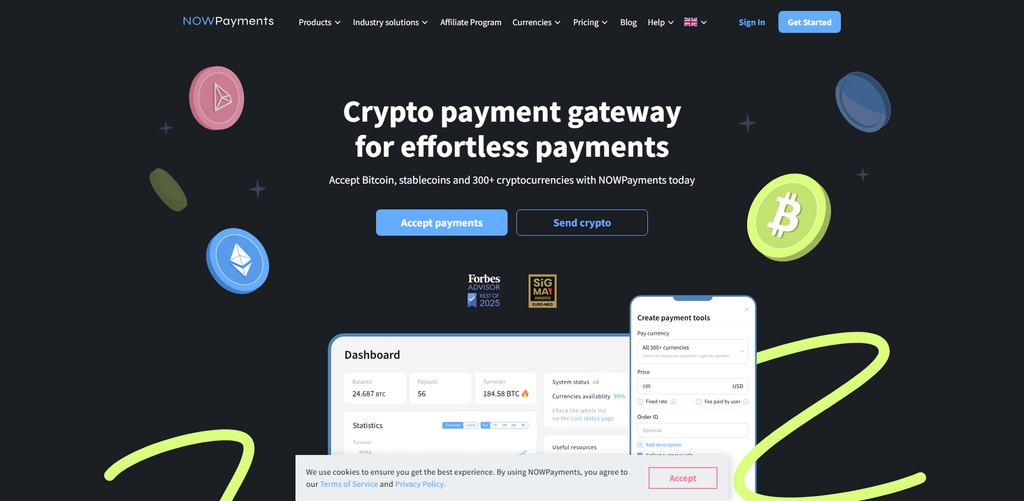
NOWPayments offers several payment options, including invoices, API, and donation links. Custodial processing is the default option for all payments. NOWPayments supports over 300 assets, including BTC, ETH, SHIB, DOGE, as well as several stablecoins.
NOWPayments offers basic tools suited for accounting, such as API connections or CSV exports, but may not meet the demands of large enterprises. NOWPayments supports both crypto and fiat settlements, which makes it a flexible crypto onramp for suppliers that operate in various industries, even though enterprises may be put off by the custodial risk.
NOWPayments Features, Pros & Cons
Features
- Offers businesses the ability to accept cryptocurrency payments.
- Offers API installations to facilitate custom payment flows.
- Offers payment features for e-commerce.
- Supports invoicing and point-of-sale (POS) services.
- Offers services to automatically convert crypto-to-fiat and settle automatically.
Pros
- Supports a wide variety of payment cryptocurrencies.
- Offers services to support international businesses on the Internet.
- Supports a variety of integrations.
- Supports automatic conversion of payment.
- Supports e-commerce businesses and businesses built on cryptocurrency.
Cons
- Payment processing and conversion fees are charged for every payment setup.
- The support of a high number of assets may create operational challenges.
- Not every payment asset or feature is available in every jurisdiction (country).
- The availability of settlement in fiat currency varies.
- Businesses must evaluate the cost of currency conversion and payout services.
6. Triple‑A
Triple‑A also targets the APAC and global SMB supplier markets. They, similarly, offer local currency conversions for fiat in markets spanning Asia, Europe, and the US. Transactions settled regionally may incur fees less than 1%, though settlement times may vary. Triple‑A offers payment options via invoices, APIs, as well as ERP integrations.
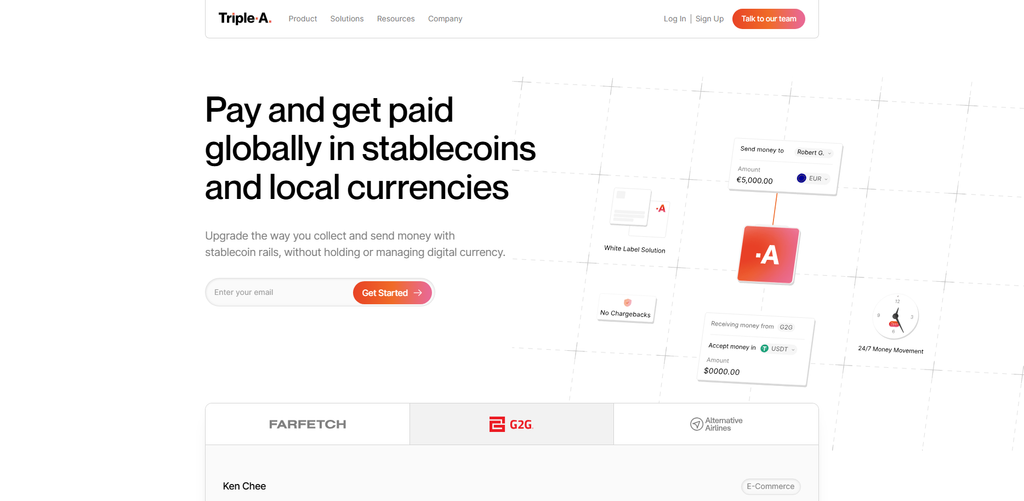
Assets offered by Triple‑A include BTC, ETH, several stablecoins, as well as USD based stablecoins. Triple‑A’s sole focus of offering a payment solution with minimal risk may appeal to suppliers that operate cross‑border payment networks. Triple‑A’s stablecoin settlement and compliance infrastructure may appeal to suppliers with cross-border payment requirements.
Triple-A Features, Pros & Cons
Features
- Accepts payments in cryptocurrencies and stablecoins.
- Offers both crypto and fiat currency settlement options.
- Supports invoice-based payment requests.
- Offers crypto and fiat payouts.
- Supports transaction tracking and user management with CSV export.
Pros
- Offers a good solution for cross-border business to business (B2B) payments.
- Offers the flexibility to choose either crypto or fiat settlement to suppliers.
- Using stablecoins for payment reduces the risk of crypto currency variability.
- Dedicated invoice processing features support supplier billing.
- Supports compliance and business focused onboarding.
Cons
- Business onboarding requires KYC (Know Your Customer) and KYB (Know Your Business).
- Country and regulatory requirements impact availability.
- Solution not intended to be fully self custodial.
- Some payout functions may require setup.
- Businesses should check local currencies before selecting.
7. OpenNode
OpenNode is an access point for transactions with Bitcoin and instant settlement of Bitcoin. With low transaction fees, typically under one percent, OpenNode offers daily payouts in cash. Among payment methods available are API integration, Lightning Network integration, and invoicing.
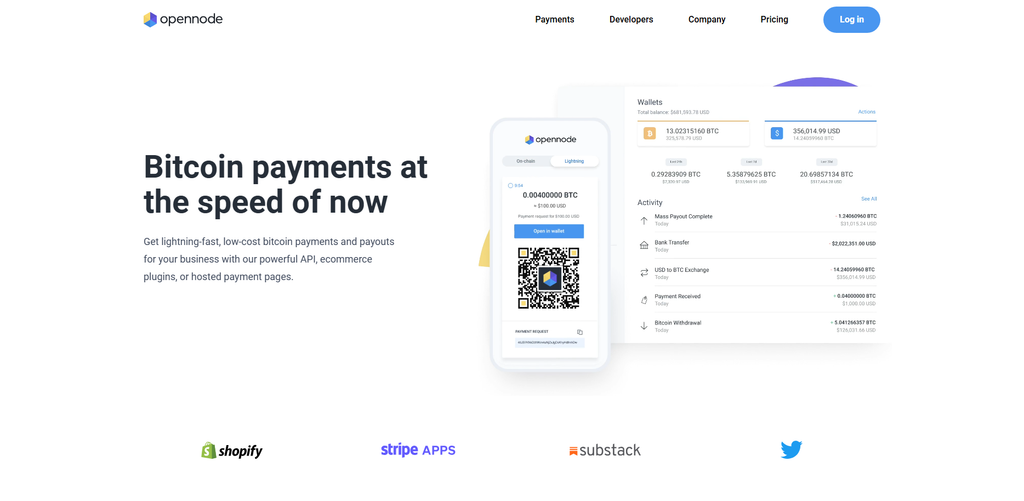
Other features that OpenNode offers includes simplifying accounting methods such as ERP integration and CSV export. OpenNode specializes in Bitcoin and features fast and low cost transactions through the Lightning Network, serving non traditional industries such as technology and digital services. OpenNode’s one Bitcoin payment method may be a drawback to using their services, but they serve such clients with excellent Bitcoin payment services.
OpenNode Features, Pros & Cons
Features
- Focus is on Bitcoin payments.
- Works with both Lightning and on-chain payments.
- Offers hosted checkout and payment buttons.
- Includes invoicing and payout features.
- Supports Bitcoin and local-currency settlement. ([OpenNode][7])
Pros
- A great choice for suppliers that only work with Bitcoin.
- Lightning allows payment to be processed almost instantly.
- Payments can be automatically converted to local currency.
- Offers API and other integrations to e-commerce.
- Integration helps remove the exposure to Bitcoin price risk.
Cons
- A Bitcoin rather than multi-asset solution.
- Unfit if suppliers require payments in USDC, USDT and similar tokens.
- Transfer fees apply.
- Bank transfer fees depend on payment method and bank partner.
- Choice of network adds complexity for inexperienced users.
8. BTCPay Server
BTCPay Server is an open source and self hosted payment gateway that does not offer fiat currency conversion. With merchants hosting their own nodes and processing their own settlements, transaction fees are virtually nonexistent. Payment bits methods include invoicing, API integration, and POS integration.
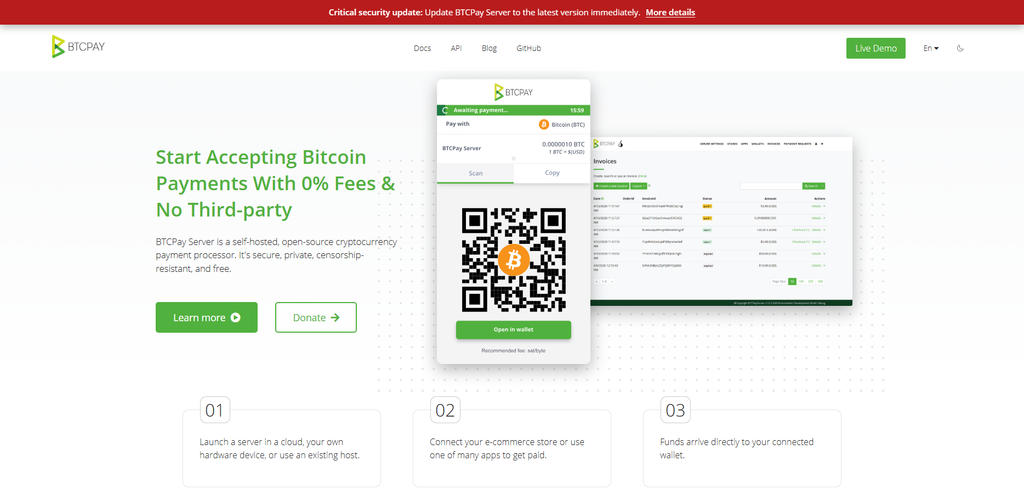
Payment assets are user controlled and may include BTC, Lightning, and altcoins if configured. Accounting integration through BTCPay Server may include manual exports or third-party integrations, making it less efficient than traditional custodial gateways.
BTCPay Server is most suitable for suppliers who desire freedom and privacy along with zero KYC. BTCPay Server will suit non-enterprise clientele due to flexibility and open source.
BTCPay Server Features, Pros & Cons
Features
- Open-source, self-hosted crypto payment processor.
- Peer-to-peer payment processing without merchant processing fees.
- Non-custodial architecture gives businesses control of private keys.
- Supports Bitcoin and Lightning Network.
- Offers e-commerce integrations, payment buttons and POS tools.
Pros
- No third-party merchant processing fee.
- Strong privacy and self-custody.
- No mandatory KYC/AML within the software itself.
- Highly customizable for technical businesses.
- Excellent for suppliers wanting full control over payment infrastructure.
Cons
- Requires technical knowledge to self-host.
- Services are responsible for their own infrastructure custody.
- Security risks are partially transferred to the service provider.
- Fiat settlements are more complex than hosted payment processors.
- Not suited for businesses requiring plug-and-play solutions.
9. Crypto.com Pay
Crypto.com Pay is designed for retail and gaming suppliers. It is set up to allow instant USD, EUR, and other major currencies. It charges a fee of 0.4-0.75% and settles transactions instantly. Payment methods include invoices, APIs, and NFC POS integrations.

It accepts CRO, BTC, ETH, USDT, and USDC. Integrations for accounting systems can be done via ERP connectors and CSV exports. Loyalty rewards are built into supplier payments and integrate with Crypto.com Pay’s Visa card and cashback CRO. Its retail focus and strong fiat conversion options make it a viable option for global suppliers.
Crypto.com Pay Features, Pros & Cons
Features
- Supports payments in BTC and other cryptocurrencies.
- Offers more than 20 payment settlements in cash and crypto depending on the user’s country.
- Facilitates one-time and recurring payments.
- Automates invoicing for B2B clients.
- Provides a range of payment plugins and offers direct API and SDK integrations.
Pros
- Well established and pervasive global network.
- Multiple settlement options.
- Prompt payment facilitation.
- Beneficial to both online and offline merchants.
- Integrations with Shopify and WooCommerce for easy setup.
Cons
- Some features are settlement dependent.
- Limited availability for recurring payments.
- Ecosystem can be too supportive of Crypto.com’s clients.
- Availability for on-chain payments is limited to settlement jurisdiction.
- Clients need to confirm what payments can be settled in their country.
10. B2BinPay
B2BinPay targets B2B brokers and enterprise suppliers. It offers USD, EUR, and other regional currencies conversion into fiat. Fees vary by asset, as do settlement times. Payment methods include invoices, APIs, and enterprise treasury solutions.
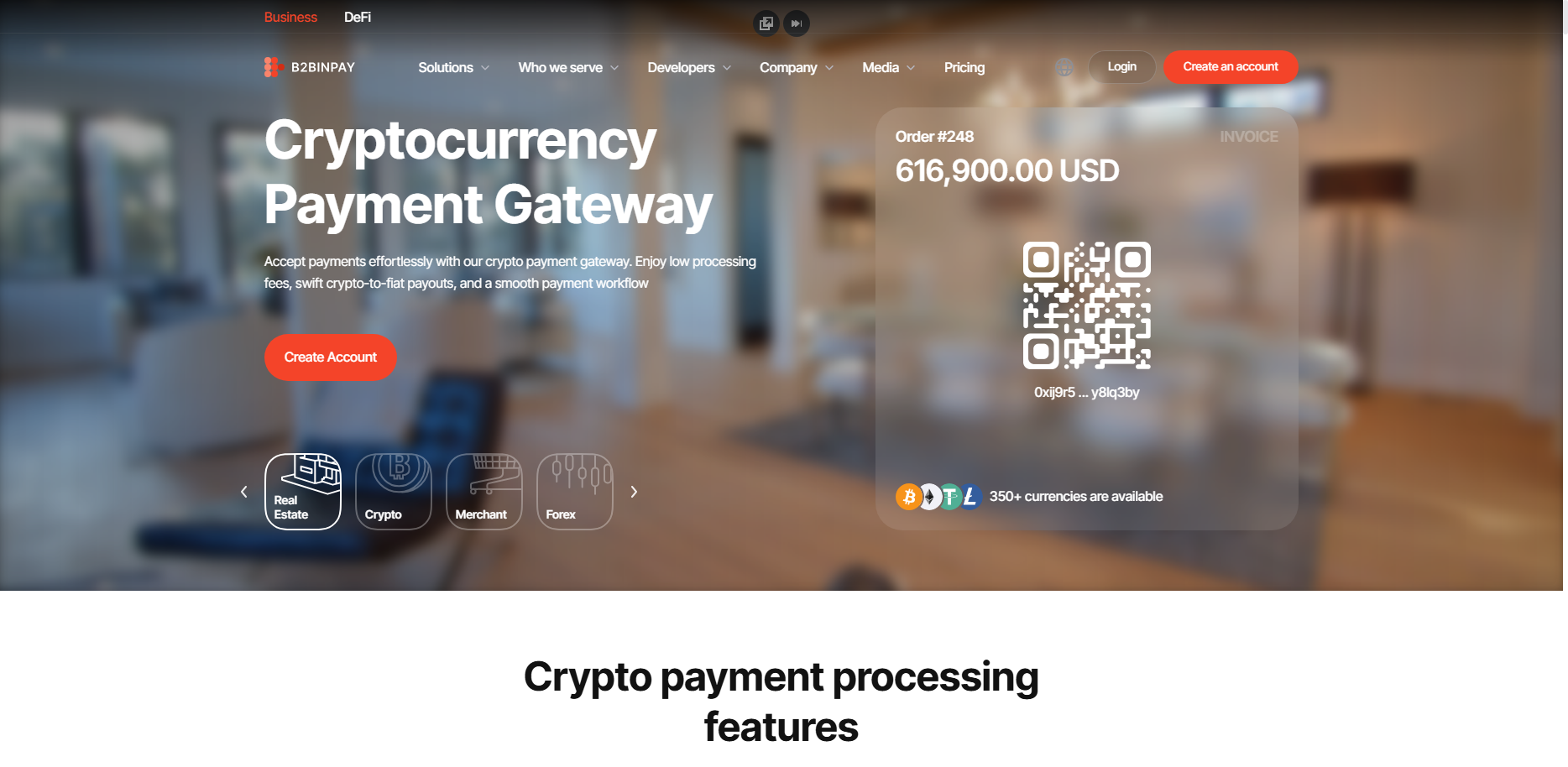
It processes payments for BTC, ETH, XRP, LTC, USDT, USDC, among others. Refined accounting integrations include ERP connectors, automated reconciliations, and compliance reporting. B2BinPay’s enterprise focus means robust transaction volume support for brokers and suppliers. Its treasury tools and multi-asset support make it one of the most comprehensive gateways for global suppliers.
B2BinPay Features, Pros & Cons
Features
- Accepts payments in over 350 cryptocurrencies.
- Provides payment processes and APIs with transaction analytics and invoicing.
- Facilitates auto conversion to fiat.
- Advanced security controls like 2FA, address whitelisting, access role controls, and approval for withdrawals.
Pros
- Extensive support of assets.
- Suited for international and high transaction volume businesses.
- Supports conversion of stablecoins and fiat.
- Security and approval controls are very flexible.
- API and infrastructure support for automated payment processes.
Cons
- Extensive functionality can make the service complex.
- The standard terms of business onboarding and compliance apply.
- The fees depends on the token and the volume of transactions.
- Some of the more advanced features are better suited for larger businesses.
- Incorrect-network transactions can be challenging and possibly not attainable to retrieve.
Conclusion
With the proliferation of crypto payment gateways in 2026, there are various options at enterprises’ disposal. BTSE and B2BinPay have treasury tools built for big businesses and multi-currency conversion. For large B2B operations, these two options cover all the bases.
Bitpay and CoinGate would be solid options as well due to their predictable fees and strong integration with accounting software, respectively. For instant compliance and stability through instant conversion to fiat, Stripe Stablecoin is the option.
For SMBs and niche suppliers, the options NOWPayments and Triple-A offer flexibility and coverage in various regions. For Lightning based Bitcoin speed and sovereignty options, BTCPay and OpenNode are two good options. Crypto.com Pay also offers good options with integration through Visa while also providing users with rewards for CRO.
FAQ
What is fiat conversion?
Fiat conversion means suppliers can automatically convert crypto payments (BTC, ETH, USDT, etc.) into local currencies like USD, EUR, or INR. Gateways like BTSE Enterprise and BitPay offer daily fiat settlements, while BTCPay Server leaves conversion to the supplier.
Which gateways have the lowest transaction fees?
Fees vary: BitPay charges a flat 1%, Crypto.com Pay ranges 0.4–0.75%, and OpenNode offers sub‑1% Lightning fees. BTCPay Server is open‑source, meaning zero gateway fees but suppliers handle their own nodes.
What payment types are supported?
Suppliers can accept payments via invoices, APIs, checkout plugins, or POS systems. Stripe Stablecoin focuses on enterprise APIs, CoinGate supports subscription billing, and Crypto.com Pay adds NFC POS for retail suppliers.
Which assets can suppliers accept?
Asset diversity is key: NOWPayments supports 300+ coins, CoinGate covers 70+, while OpenNode and BTCPay Server are Bitcoin‑only. Stablecoin‑focused gateways like Stripe Stablecoin minimize volatility risk.
Do these gateways integrate with accounting systems?
Yes. BitPay, CoinGate, and Triple‑A integrate with QuickBooks, Xero, and ERP systems. BTSE Enterprise offers Fireblocks custody with ERP connectors. BTCPay Server requires manual exports or third‑party plugins.