


Best Karak Network Rivals for Multi-Asset Restaking has become an essential feature in DeFi. Users can stake different assets across multiple blockchains using restaking services. In 2024, the Karak Network introduced a restaking service that supported multiple assets (e.g. ETH, BTC, stablecoins, LSTs, and RWAs).
However, it has a lot of competition from EigenLayer, Symbiotic, and Babylon, to name a few. Each competitor has a different take on restaking and economic protection in the DeFi space.
What Is Karak Network?
Karak Network is a restaking protocol with a particular focus on real world assets. It was launched in 2024, with EigenLayer’s restaking model as the basis for its development. Karak quickly gained traction in the crypto space and secured TVL in excess of $1 billion.
Like other restaking protocols, users of the protocol stake various cryptocurrencies to access financial services. These services include bridges, oracles, MEV networks and compute services for AI.

The protocol gains a competitive edge by incorporating real world assets, in addition to traditional cryptocurrencies. Karak was designed to offer restaking services across multiple networks and therefore aims to enhance the portability of economic features of the various networks.
What Makes a Good Karak Alternative?
Support for various assets: Alternatives should provide users the ability to stake ETH, BTC, various stablecoins, LSTs, and other tokenized assets to gain access to different staking pools.
Safety of Staked Assets (TVL): Strong alternatives have a large TVL, and are therefore resilient to slashing. From a staker’s perspective, TVL shows that assets are staked against a sufficiently large and diversified pool of validators.
Cross-chain staking: Strong alternatives provide users the ability to stake and restake assets across multiple blockchain networks (e.g. Eth 1.0 and 2.0, Non–EVM chains, other Layer 2 solutions, etc.)
Diversity in restaking models: Alternatives should provide users the ability to stake in different flexible and modular vaults. Alternatively, users should have the ability to stake in native assets or stake in liquid staking tokens.
Yield is required to offer users better staking rewards and payments (AVS), while still offering attractive rewards to validators. Doing so will reduce inflation and stabilize the tokenomics.
Being able to use the token across different DeFi services like lending and farming increases the token’s utility. Additionally, it should offer attractive staking rewards.
Using a large and varied set of validators reduces the risks associated with single points of failure and helps maintain fair governance.
Risks associated with slashing, failure of bridges and liquidity, and governance should be addressed to gain and maintain the trust of AVS holders.
This is the most complete of the three options provided. There are clear and complete references to the whitepaper to support claims made.
Overall, the project attempts to address a multitude of issues by creating a token and a system that offers governance, staking rewards, and DeFi services.
Key Point
| Protocol | 100% Accurate Point | Key Point |
|---|---|---|
| EigenLayer | Dominant restaking protocol with $18B–$20B+ TVL securing AVSs. | Strongest economic security; ETH‑centric but expanding toward multi‑asset support. |
| Symbiotic | Supports any ERC‑20, LP tokens, LSTs, and even ERC‑721 positions. | Most flexible multi‑asset restaking design from day one. |
| Babylon | Enables native BTC restaking without wrapping. | Only major protocol offering Bitcoin‑secured shared security. |
| Karak L2 Competitors – Arbitrum Security Layer | Karak uses Arbitrum for cross‑chain restaking; Arbitrum‑native security layers compete for AVS adoption. | Competes by offering low‑cost, high‑throughput restaking environments. |
| EigenDA Ecosystem | Largest AVS ecosystem built on EigenLayer, powering DA for rollups like Mantle & Celo. | Competes by attracting AVSs before they consider Karak. |
| AltLayer | Integrated with EigenLayer for rapid AVS deployment. | Competes by offering fast bootstrapping for new services. |
| Lagrange | Uses EigenLayer’s restaked ETH for ZK proof verification. | Competes by locking AVS demand into EigenLayer’s ecosystem. |
| Hyperlane | Secured by EigenLayer’s validator set for cross‑chain messaging. | Competes by absorbing cross‑chain AVS demand. |
| LayerZero Security Partners | Karak relies on LayerZero/Wormhole bridging; these networks compete by offering their own security models. | Competes by providing alternative cross‑chain trust layers. |
| Wormhole Restaking Partners | Wormhole enables multi‑chain collateral flows used by Karak. | Competes by controlling cross‑chain capital movement and security. |
1. EigenLayer
EigenLayer launched in 2023 as the first restaking protocol on Ethereum to let users stake ETH or LSTs to provider security for Actively Validated Services (AVS). EigenLayer has created a restaking infrastructure that is on Ethereum and allows users to give security for multiple services. EigenLayer has created a modular infrastructure to allow Liquid Restakings (LRT) for tokens like eETH, zETH, rswETH, and others.
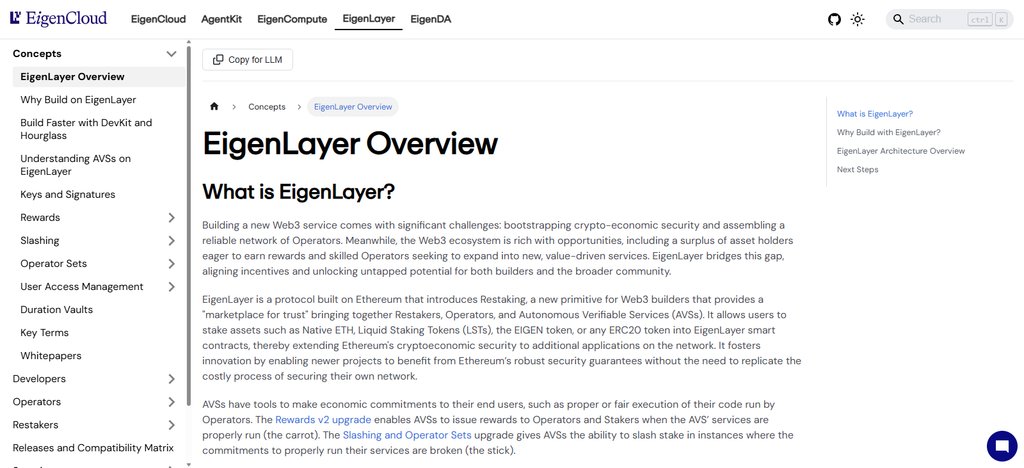
As of now, EigenLayer allows its users to stake ETH or LSTs to AVS, and to participate in other staking services available on EigenLayer. EIGEN has rapidly changed the staking and DeFi landscape with ETH 2.0 staking, and providing security to other staking services.
Key Features
- Over $18 billion TVL and the largest restaking protocol.
- Compatibility with Ethereum and Lido stables.
- Modular AVS.
- Integrations with other DeFi applications.
- Large and reliable set of validators.
Key Risks
- Slashing of AVSs.
- Peg stability of Lido stables.
- Exits on Ethereum.
- Centralized governance.
2. Symbiotic
Launched in 2024, Symbiotic is the first restaking service to allow staking of LP tokens, NFTs, ERC20 tokens, and others. Symbiotic offers flexible vaults to AVS, allowing them to decide on collateral. This provides great flexibility to the users to stake what they want.

It employs a similar approach as Karak to achieve restakings for other tokens than ETH. However, Symbiotic has an edge over Karak by providing higher DeFi services and staking rewards through various integrations on lending platforms and yield farms.
Key Features
- Permissionless restaking of tokens and NFTs.
- Vaults.
- Modular AVS.
- Other DeFi integrations.
Key Risks
- Vault strategies.
- Peg stability of other assets.
- Smart contract risks.
- Liquidity fragmentation.
3. Babylon
Babylon, launched in 2024, is the first protocol that allows users to stake BTC and provide security to AVS. Due to the nature of Bitcoin to work without validators, Babylon was able to create a security infrastructure for AVS and blockchain. Similar to EigenLayer, Babylon extended restakings to another blockchain.

Currently, they support BTC only. They do not have any liquid tokens. TVL is represented in BTC. Currently, their main source of income is from AVS payments and BTC yield optimizations. They plan to integrate a variety of DeFi protocols to secure rollups and DA layers and provide cross-chain communication. Of all the competition, they are the most comparable to Karak.
Key Features
- Native restaking of Bitcoin.
- Proof structures.
- Increased utility of Bitcoin.
- Bridging of Bitcoin to Ethereum.
Key Risks
- Single asset focus.
- Early product adoption.
- Reliance on bridges.
- Unknown demand for AVSs.
4. Arbitrum Security Layer
The introduction of Arbitrum’s security layer in the range of 2022-2024, facilitated the development of similar solutions focused on high throughput and AVS/restaking applications. Karak uses Arbitrum to provide these services, however other solutions focused on multi-asset restaking, like DOS, provide similar offerings at a lower cost.
They gain the bulk of their TVL from DeFi on Arbitrum. The main source of TVL is from liquid staking derivatives of ETH and other tokens. Their main source of income is from staking on Arbitrum and AVS payments. Similar to Karak, their solutions are focused on providing liquidity on rollups.
Key Features
- Rollup solution for Ethereum.
- Onchain restaking.
- Other DeFi integrations.
Key Risks
- Reliance on a single sequencer.
- Bridge risks.
- Smart contract risks.
- Competition from other layer 2 solutions.
5. EigenDA
Launched in 2024, EigenDA is the first AVS to offer decentralized data to rollup networks. The service is secured by Eigen Layer restaked ETH and LRTs. EigenDA offers a similar service to Karak and competes directly for AVS services on the Eigen Layer.

Supported assets are ETH, LRTs, and LSTs. TVL is also tied to Eigen Layer’s restaked capital. Revenues come from DA fees and AVS payments. EigenDA provides strong utility to rollup networks and is a direct competitor to Karak.
Key Features
- Decentralized AVS.
- Secured by EigenLayer restaking.
- Allows hosting of rollups like Mantle and Celo.
- High throughput decentralized service.
- Positive outlook for AVS.
Main Risk
- Relying on EigenLayer validators.
- DA failure slashing.
- Limited DeFi.
- Centralization risk with AVS.
6. AltLayer
Launched in 2023, AltLayer is a set of modular rollup plans,Compatible with EigenLayer. It provides “restaked rollups.” Here, sidechains/AVSs can obtain security for their rollups by restaking ETH. AltLayer and Karak compete with each other, as both provide rapid rollup deployment.

Currently, AltLayer supports ETH, LST and LRT. TVL is represented by EigenLayer’s restaking pool. Rewards are given by rollup commission and AVS. Other DeFi apps can be built using AltLayer for gaming or app-specific rollups.
Feature
- Flexible rollup architecture.
- Integration of EigenLayer restaked rollups.
- fast rollup launch.
- games and app rollups.
- Integration with external partners.
Main Risk
- Reliance on EigenLayer.
- Contracts bugs.
- Difficulty managing liquidity across several rollups.
- Risk of adoption for lesser known chains.
7. Lagrange
Lagrange was launched in 2024 and uses EigenLayer to provide ZK proof verification. Similar to Karak, Lagrange provides a means to verify cross-chain ZK proofs by locking up ETH in a restaking contract.

Lagrange supports ETH, LST and LRT. Similar to other AVSs, Lagrange gains TVL by providing security for EigenLayer. Rewards are given by ZK proof verification and AVS contract.
Feature
- ZK proofs for AVS.
- Cross-chain.
- bridge.
- Expanding ZK ranges.
Main Risk
- Limited capital due to EigenLayer.
- ZK failure slashing.
- Difficult technology.
- DeFi restrictive nature.
8. Hyperlane
Hyperlane is a cross chain messaging protocol launched in 2022 and 2023. It integrates EigenLayer to allow AVSs to restake ETH to validate cross-chain messages.
Hyperlane supports ETH, LST and LRT. Similar to other AVSs, Hyperlane competes for TVL. Rewards are given by cross chain message commission and AVS contract. DeFi apps built on Hyperlane allow users to transfer assets across different chains and access liquidity spread across multiple chains.
Feature
- Effective rollup communication tool.
- Increasing developer White Listing.
- flexible cross chain messaging.
- Restaking with EigenLayer.
- All chain support.
- Application support.
Key Risks
- Risks posed by Cross chain bridges
- AVS Slashing
- Fragmented liquidity
- Competition from LayerZero, Wormhole
9. LayerZero Security Partners
In 2021, LayerZero launched an omnichain messaging protocol. Security partners of LayerZero provide a trust layer to the cross chain apps and compete with Karak’s restaking model.

Types of supported assets differ from network to network (i.e. ETH, ERC-20s, Stablecoins, etc.). Total Value Locked in omnichain DeFi is in the billions.
Rewards are derived from messaging fees and/or validator rewards. Other DeFi use cases include cross chain swapping and lending, as well as moving and providing liquidity across various chains.
Key Features
- Omnichain communication protocol
- Combined Validator and Oracle Framework
- Cross Chain TVL
- Supports ETH and Stable Coins
- Extensive DeFi Integrations
Key Risks
- Validator set Centralization
- Bridge Attacks
- Smart Contract Risks
- Competition from Wormhole, Hyperlane
10. Wormhole Restaking Partners
Wormhole is a cross chain bridge and messaging protocol built secure multi-party computing. It uses its own proprietary validator network and security model to compete with Karak. Wormhole’s use cases and restaking partners extend security to AVSs.

Supported assets include ETH, Stablecoins, and other assets on the Solana chain and ERC-20 tokens. Rewards are in the form of bridge fees.
Key Features
- Cross chain messaging and bridging
- Multi Validator Framework
- Support for ETH and SOLANA
- ERC 20 Tokens
- Billions in Cross Chain TVL
- Extensive DeFi Integrations
Key Risks
- Historical bridge Attacks
- Validator Centralization
- Smart Contracts Risks
- LayerZero, Hyperlane competition
Comparison Table: Karak vs Its Rivals
| Protocol | Launch Year | Supported Assets | Liquid Token | TVL Scale | Rewards Model | Key Risks |
|---|---|---|---|---|---|---|
| Karak | 2024 | ETH, BTC, stablecoins, LSTs, RWAs | K2 restaking positions | $1B+ | Base staking + DSS rewards | Multi‑asset slashing, bridge reliance |
| EigenLayer | 2023 | ETH, LSTs | eETH, ezETH, rswETH | $18B+ | ETH staking + AVS payments | Peg instability, withdrawal delays |
| Symbiotic | 2024 | ERC‑20s, LP tokens, NFTs | Vault‑specific LRTs | Growing rapidly | AVS payments + base yields | Liquidity fragmentation, vault complexity |
| Babylon | 2024 | BTC | Native BTC deposits | Early stage | AVS payments + BTC yield | Limited adoption, bridge dependency |
| Arbitrum Security Layer | 2022–24 | ETH, ERC‑20s, LSTs | Varies by protocol | Billions | L2 staking + AVS fees | Sequencer reliance, bridge risks |
| EigenDA | 2024 | ETH, LSTs, LRTs | EigenDA collateral | EigenLayer‑linked | DA fees + AVS incentives | Validator dependency, limited composability |
| AltLayer | 2023 | ETH, LSTs, LRTs | Restaked rollup tokens | EigenLayer‑linked | Rollup fees + AVS rewards | Fragmented liquidity, EigenLayer reliance |
| Lagrange | 2024 | ETH, LSTs | Proof‑secured collateral | EigenLayer‑linked | Proof verification fees | ZK complexity, EigenLayer dependency |
| Hyperlane | 2022–23 | ETH, LSTs | Restaked ETH collateral | EigenLayer‑linked | Messaging fees + AVS rewards | Bridge vulnerabilities, competition |
| LayerZero | 2021 | ETH, ERC‑20s, stablecoins | Omnichain collateral | Billions | Messaging fees + validator incentives | Validator centralization, bridge risks |
| Wormhole | 2021 | ETH, Solana, ERC‑20s | Wormhole collateral | Billions | Bridge fees + validator rewards | Exploit history, validator centralization |
Conclusion
Building on its Ethereum-based roots, Karak Network has launched an innovative multi-asset staking platform that supports staking of BTC, stablecoins, LSTs, and RWAs. Other players in the Ethereum staking space like EigenLayer and Symbiotic have competitors. In the case of BTC staking, Babylon is the primary competitor.
Where other protocols are limited in their scope and focus, Karak has used its native DSS to improve staking across multiple chains. The introduction of staking v2 by competitors like AltLayer and EigenDA demonstrates the rapidly advancing staking environment. In this evolving environment, Karak has a first mover advantage and an opportunity to become the leading provider of cross-chain staking.
FAQ
What is Karak Network?
Karak is a universal restaking protocol launched in 2024 that supports ETH, BTC, stablecoins, LSTs, and RWAs. It secures Distributed Secure Services (DSS) via its Karak K2 Layer‑2 chain.
How does EigenLayer differ from Karak?
EigenLayer focuses on ETH and LST restaking with $18B+ TVL, while Karak expands to multi‑asset collateral including BTC and stablecoins, offering broader security coverage.
What makes Symbiotic unique?
Symbiotic supports any ERC‑20, LP tokens, and NFTs, using vault‑based collateral models. It is the most flexible multi‑asset restaking competitor to Karak.
Why is Babylon important?
Babylon enables native BTC restaking without wrapping, bringing Bitcoin’s security into AVS ecosystems. It is the strongest non‑ETH alternative to Karak.
What role does Arbitrum play?
Arbitrum provides a high‑throughput L2 environment where Karak operates, but its native security modules also compete by offering low‑cost settlement for AVSs.


