Today’s rapidly evolving forex market has traders in search of brokers who offer better pricing, execution, and trading tools than what they currently have. Pepperstone is highly regarded by many, yet many professionals look elsewhere for improved flexibility, leverage, and trading platform features.
The Best Pepperstone Alternatives for Professional Traders incorporate IC Markets, FP Markets, IG and many others for ECN pricing and superior trading tools for enhanced market access and trading performance.
Key Point for Professional Traders
| Broker | Key Point for Professional Traders |
|---|---|
| IC Markets | Ultra-low spreads with deep liquidity and strong ECN execution for high-frequency trading |
| FP Markets | True ECN pricing with fast order execution and strong MT4/MT5 support |
| IG | Highly regulated global broker with advanced trading tools and institutional-grade platforms |
| OANDA | Transparent pricing model with strong API access for algorithmic and quant trading |
| XM | High leverage options and zero requotes, suitable for active and scalping strategies |
| Exness | Extremely high leverage and instant withdrawals, popular among high-volume traders |
| Saxo Bank | Premium institutional platform with access to global markets and advanced research tools |
| CMC Markets | Powerful proprietary platform with advanced charting and professional risk tools |
| FXTM (ForexTime) | Flexible account types with strong execution speed for EA and copy trading |
| BlackBull Markets | New Zealand-based ECN broker with raw spreads and strong liquidity providers |
1. IC Markets
Established in 2007 in Australia, IC Markets has become a popular choice for professional traders. The minimum deposit is $200 and traders can use leverage as high as 1:500. The Australian Securities and Investment Commission, Cyprus Securities and Exchange Commission, and the FSA Seychelles regulate IC Markets.
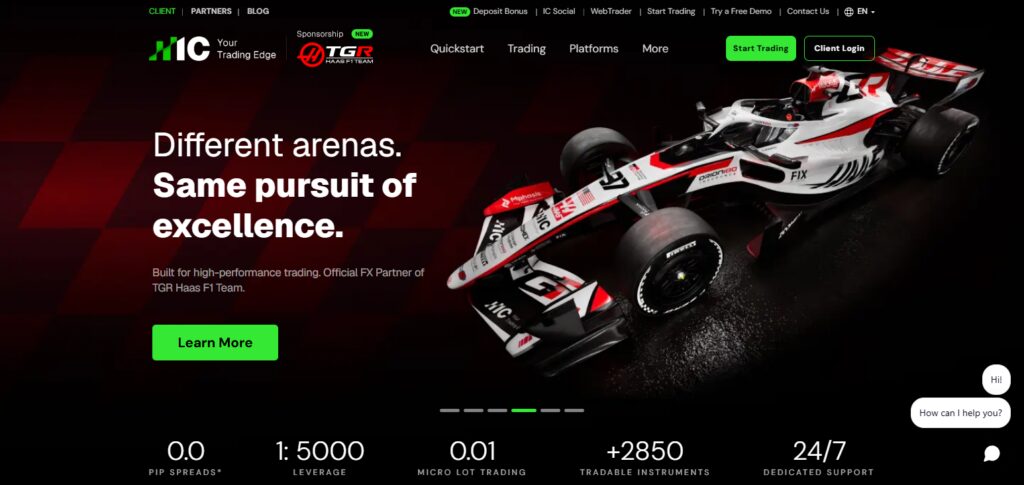
IC Markets has the MT4, MT5, and cTrader platforms. This makes IC Markets best for algorithmic trading and scalping. The ECN broker is also known for its fast execution. IC Markets lists a variety of trading instruments including forex, indices, commodities, bonds, and crypto CFDs.

Key Features
- True ECN pricing with raw liquidity provider spreads
- MT4, MT5, and cTrader platforms
- Deep liquidity and fast execution
- High leverage (up to 1:500) (depending on region)
- Extensive CFDs (forex, indices, crypto, and commodities)
Pros
- Low spreads are ideal for scalping
- Fast execution with little to no slippage
- Good support for algorithmic trading (EA friendly)
- Trust is built through ASIC and CySEC regulation
Cons
- May be a high minimum deposit for beginners ($200)
- Limited proprietary trading platform
- Offshore entities have no investor protection
2. FP Markets
FP Markets has also gained popularity for their tight spreads and ECN execution. Established in 2005 in Australia, they require a minimum deposit of $100 and traders can use leverage up to 1:500 based on the regulatory entity. FP Markets is also regulated by the Australian Securities and Investments Commission and Cyprus Securities and Exchange Commission.
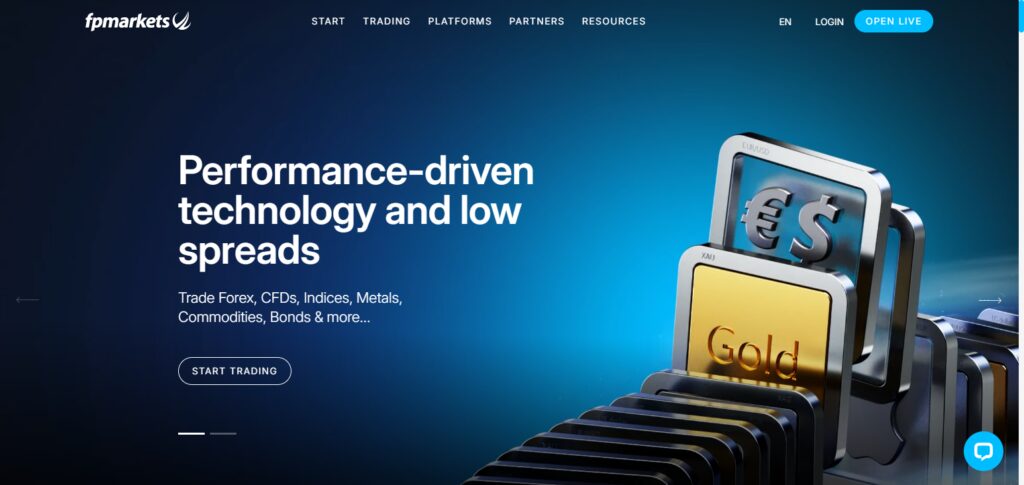
The platforms available to FP Markets customers include MT4, MT5, and IRESS. Traders have a variety of instruments including forex, shares, indices, commodities, and crypto CFDs. This variety makes FP Markets a great choice for an active trading portfolio.
Key Features
- ECN and STP execution
- MT4, MT5, and IRESS
- Tight 0.0 pip spreads
- Leverage of 1:500
- Multi-asset trading including equity and crypto CFDs
Pros
- Excellent pricing transparency
- Excellent platform flexibility
- Good copy trading with EAs
- API trading available
Cons
- IRESS platform requires higher deposits
- Limited research tools vs. premium brokers
- Customer support can be slow
3. IG
One of the original CFD brokers, IG Group was established in the UK in 1974. There is typically no minimum deposit and traders can use leverage of 1:30 in the regulated regions of the UK/EU. The FCA and ASIC are some of the regulators of IG Group.
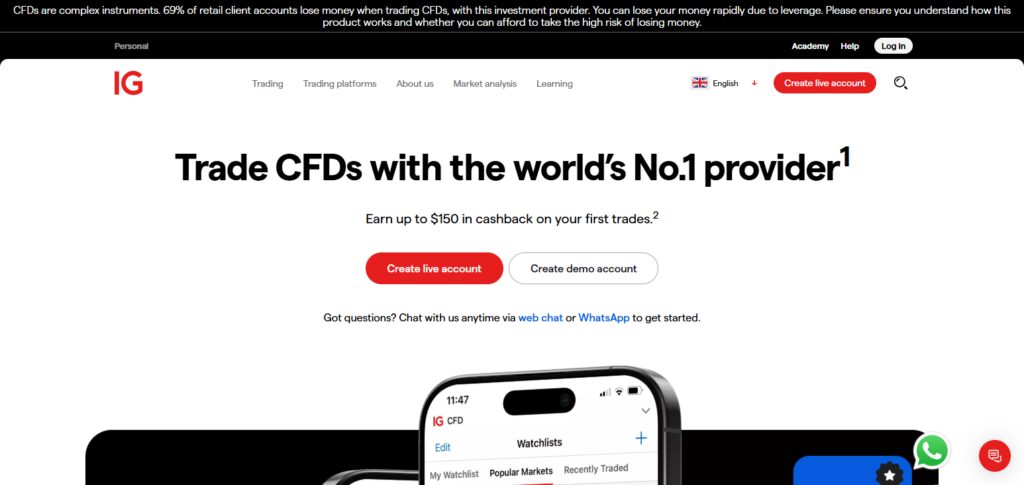
Traders using IG can access the proprietary platforms as well as MT4, ProRealTime, and L2 Dealer. IG’s institutional-grade tools can trade forex, indices, shares, commodities, bonds, and crypto CFDs. Because of this, IG appeals to advanced and professional traders.
4. OANDA
Started in the U.S. in 1996, OANDA is a trading platform that emphasizes transparency and strong pricing. OANDA has a $0 minimum deposit in many regions, and OANDA offers leverage of 1:30 to 1:50 depending on where the trader is located. OANDA is one of the many trading platforms that the FCA, CFTC/NFA, ASIC, and other global bodies regulate.
OANDA provides MT4, its proprietary platform, and offers API integration. Because of this fact, the platform is great for the trading of algorithms and other data-based trades. OANDA offers trading of forex, indices, and commodities and bond CFDs. OANDA emphasizes the efficiency of its currency trading and the quality of the execution of its trades.
Key Features
- Low or no minimum deposit in many regions
- Advanced API for algorithmic trading
- MT4 and OANDA platform
- Proprietary currency data analytics
- Globally regulated (FCA, ASIC, NFA)
Pros
- Pricing is very transparent
- Good for automated trading systems
- Good regulation and trust
- Simple account setup
Cons
- Limited leverage (1:30–1:50)
- Less trading instruments than peers
- No aggressive trading incentives
5. XM
XM Group is based out of Cyprus and started in 2009. The platform provides flexible trading conditions. XM has a minimum deposit that starts at $5 and can leverage up to 1:1000 based on the account region and type. XM is regulated by CySEC, ASIC, and FSC Belize.
XM provides the MT4 and MT5 platforms and offers stable execution with no requotes. XM also offers forex, stock CFDs, commodities, indices, and metals, which provides a great trading venue that offers flexibility in leverage for both beginner and professional traders.
Key Features
- Minimum deposit as low as $5
- MT4 and MT5
- High leverage of 1:1000
- No requotes with fast execution
- Global access to forex and CFD trading
Pros
- Good account setup for beginners
- High leverage
- Good promotions
- Good execution
Cons
- Offshore entity means lower trust in some regions
- Standard account has higher spreads
- Limited tools for institutions
6. Exness
Founded in Cyprus in 2008, Exness has a great reputation for ultra-fast withdrawals and a great trading platform, primarily due to high leverage. The platform allows a $10 minimum deposit with rapidly high leverage that can be unregulated. The platform is also regulated by FCA, CySEC, FSCA, and FSA Seychelles.
Exness provides trading tools for major instruments like Cryptocurrency, Forex, Indices, and Metals on their optimized MT4 and MT5 platforms. If you are a trader with an aggressive trading style, Exness can be a good option for you.
Key Features
- Unlimited Leverage in some regions
- Instant withdrawals
- MT4 and MT5
- Low minimum deposit ($10)
- Multi-asset CFD
Pros
- Very fast withdrawals
- Very high leverage
- Raw account with low spreads
- Flexible trading environment
- Fast trading speeds
Cons
- Risky due to high leverage
- Few research tools
- Not available globally
7. Saxo Bank
Founded in 1992 in Denmark, Saxo Bank is a premium institutional-grade broker with a minimum deposit of $2,000 to more than $10,000. Saxo Bank has a maximum leverage cap of 1:30 in most markets and is regulated by the FCA and the Danish FSA, among other top tier regulators.
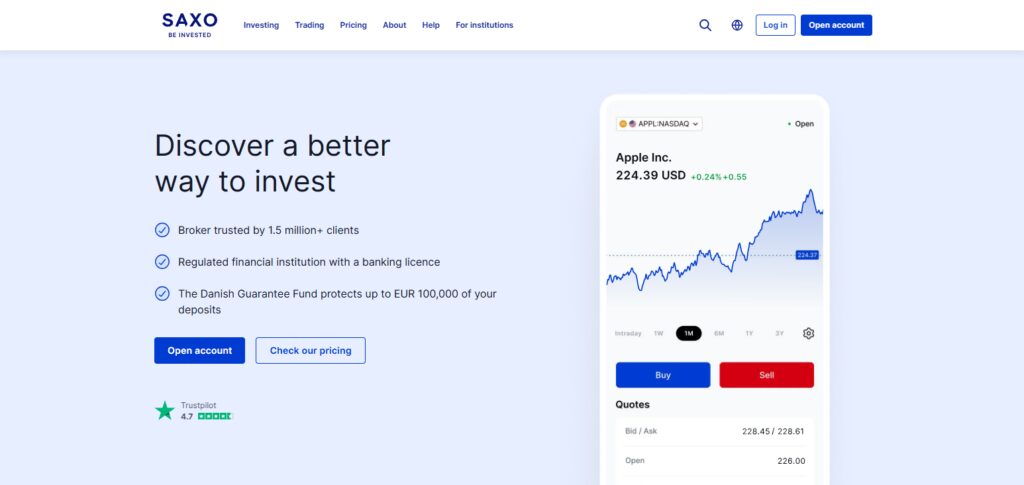
Saxo Bank caters to traders using the institutional-grade SaxoTraderGO and SaxoTraderPRO Platforms, offering access to professional grade products, including forex, stocks, ETFs, Bonds, Futures, and CFDs.
Key Features
- SaxoTraderGO/PRO
- Access to all global markets
- Exceptional research and analytic tools
- Security and regulation
- Multi-Asset Investment Ecosystem
Pros
- Well-trusted and well-regulated
- Great for professional investors
- Excellent research tools
- Great for access to all global markets
Cons
- Higher minimum deposits
- Higher costs
- Not for beginner investors
8. CMC Markets
Established in 1989 in the UK, CMC Markets is a broker with great charting tools. CMC markets has a $0 minimum deposit in most regions and a maximum leverage of 1:30 in most jurisdictions. Their regulators are the FCA and ASIC.
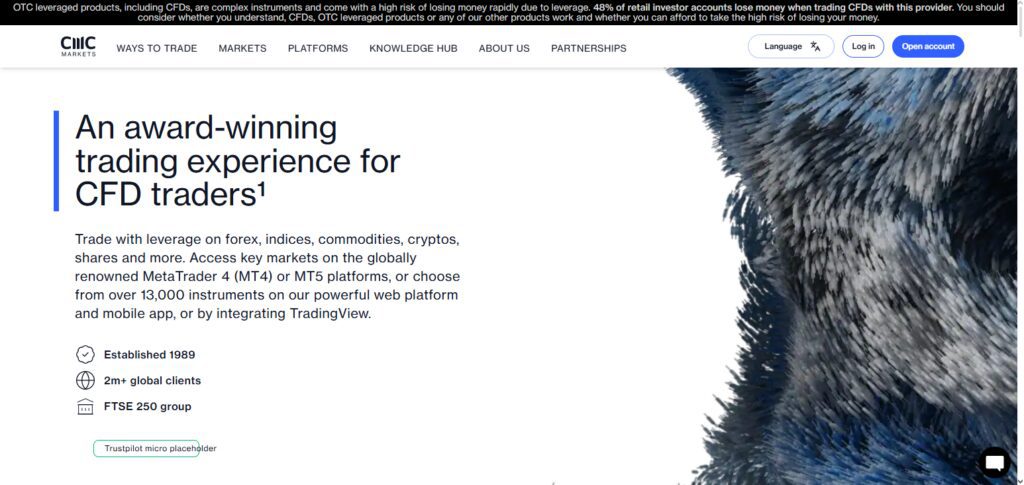
Traders using the platform have access to a good amount of analytical tools with CMC Markets Next Generation Platform and MT4, and can trade forex, indices, commodities, treasuries and CFDs making it a great option for professional traders.
Key Features
- Next Generation platform
- MT4 integration
- 10,000+ instruments
- Great analysis tools
- CFD pricing
Pros
- Excellent analysis tools
- Strong regulation
- Wide selection of assets
- No minimum deposit for many regions
Cons
- Not beginner friendly
- Not ECN execution
- Limited crypto
9. FXTM (ForexTime)
FXTM, established in 2011 in Cyprus, provides flexible account options. The minimum deposit is $10, with leverage options regionally and account type dependent, going up to 2000. FXTM is regulated by the FCA, CySEC, FSCA and FSC of Mauritius.

FXTM offers the popular MT4 and MT5 platforms, which aid automated trading and copy trading. Active traders may view FXTM as a flexible broker, as they trade in forex, commodities, indices, stocks, and metals.
Key Features
- MT4, MT5
- Copy trading and PAMM
- 1:2000
- Low minimum deposit (10)
- Multiple accounts
Pros
- Great for copy trading
- Fast execution
- Flexible accounts
- Strong education
Cons
- High risk due to leverage
- Few advanced tools
- Offshore regulation for some entities
10. BlackBull Markets
BlackBull Markets, established in 2014 in New Zealand, is a pure ECN broker dealing with institutional liquidity. The minimum deposit is between $0 and $200 depending on account type, while leverage is offered at 1:500. Their regulation is with the FMA New Zealand.
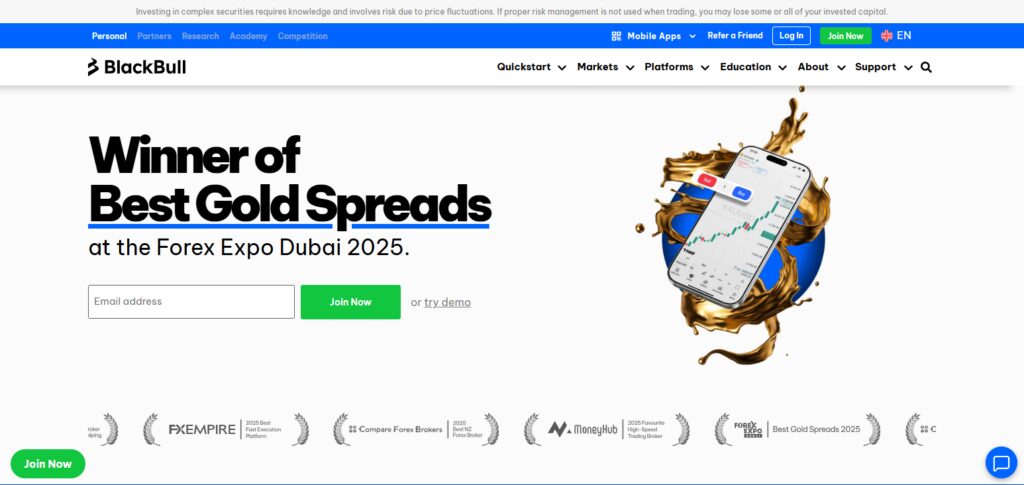
BlackBull broker is good with professional setups as they offer MT4, MT5 and cTrader. They offer good liquidity and fast execution with the following product offerings: forex, indices, commodities, equities, and crypto CFDs.
Key Features
- ECN/STP execution
- Supports MT4, MT5, cTrader
- Access to institutional liquidity
- Leverage 1:500
- Multi-asset CFDs, includes crypto
Pros
- Execution speeds
- Great for scalping and EA
- No dealing desk intervention
- Good liquidity
Cons
- Limited brand recognition
- Premium accounts require higher deposits
- Limited educational resources
Key Factors to Choose a Professional Forex Broker
Security and Regulation
Forex brokers are required to be regulated under authorities such as FCA, ASIC, or CySEC. Regulations deal with the safety of funds, transparency, and protection from fraud or bad brokering practices.
Cost of Trading
The cost of trading for professional brokers is the spread and the commission. Professional forex traders tend to be scalpers or high-frequency traders and therefore require the tightest spreads.
Speed of Trade Execution and Order Fulfilment
Fast execution with the lowest possible slippage is the standard for professional forex brokers. Deep liquidity is required for the broker to be able to provide the correct fill for a trade even when the market is volatile.
Available Trading Platforms and Tools
Forex brokers should be able to provide trading platforms such as MT4, MT5, or cTrader. Most professional trading platforms require advanced charting capabilities and support for the automation of trades.
Flexibility in Leverage and Margin
Leverage is a choice for the trader and should be available according to the trader’s risk profile. High leverage may be offered, but in a regulated environment, a broker is required to protect their client from large losses.
Range of Trading Instruments
A professional forex broker is required to have a wide variety of markets to trade. Brokering multiple trading instruments such as forex, indices, commodities, stocks, and crypto CFDs allows better control and flexibility of the trading strategies and balance.
Funding and Customer Support
Customer support should be offered for extended hours to aid in resolving trading problems. Support for fast deposits and withdrawals improves trader confidence overall.
Why traders look for alternatives to Pepperstone
Regional Constraints
In certain countries, Pepperstone is restricted and some traders are pushed to find brokers with better global access and similar/better trading conditions.
Preference for Higher Leverage
According to regional Pepperstone regulations (especially the FCA/ASIC), traders have been pushed to find brokers with more flexible margin requirements to offer higher leverage.
Cost Comparison
Even though Pepperstone has very low raw spread/commission costs, some brokers have better/trade cost lower raw spread and commission costs.
Preference for Alternative Trading Platforms
Some traders don’t even consider Pepperstone broker for trading, and some traders even consider brokers with additional platforms such as cTrader, proprietary platforms, and platforms with more robust automation.
Liquidity and Execution
High-frequency traders expect better market liquidity and quick execution. Alternatives are often sought to minimize slippage and trade precision.
Bonuses
Some brokers have attractive offers that Pepperstone does not and traders have been forced to find brokers with more attractive trade bonuses to offer better deals.
Flexibility
More flexible account options such as cent accounts, VIP accounts, or accounts that allow copy trading, are considered a better alternative when trading conditions are desired.
Conclusion
Recognizing Pepperstone’s placement among leading Forex and CFD brokers, we note that most professional traders like to widen their scope and discover other options to fit their trading styles better. Leading brokers comparison such as IC Markets, FP Markets, IG, OANDA, XM, Exness, Saxo Bank, CMC Markets, FXTM, and BlackBull Markets reveals differences in spreads, leverage, regulations, execution speeds/times, and trading tools.
This shows that trading styles and preferences are diverse; therefore, no trading platform can satisfy all traders. ECN-based brokers, such as IC Markets and BlackBull Markets, are the best options for low cost and intraday trading, while brokers such as Saxo Bank and IG are better suited to institutional traders and offer multi-asset trading with excellent research. The selection of the alternative to Pepperstone is pegged on the trading style, risk appetite, and the trading style preferences.
FAQ
Which is the best alternative to Pepperstone for low spreads?
Brokers like IC Markets and FP Markets are considered top choices for ultra-low spreads and ECN execution, making them ideal for scalping and high-frequency trading.
Which broker is best for beginners among Pepperstone alternatives?
XM Group is often recommended for beginners due to its low $5 minimum deposit, easy-to-use MT4/MT5 platforms, and flexible account options.
Which broker offers the highest leverage?
Exness and XM offer some of the highest leverage options, reaching up to 1:1000 or even unlimited in certain regions, depending on account type and regulations.
Which broker is best for professional and institutional traders?
Saxo Bank and IG Group are ideal for institutional traders due to their advanced platforms, global market access, and strong regulatory framework.
Which brokers are best for scalping and algorithmic trading?
IC Markets, BlackBull Markets, and FP Markets are highly preferred for scalping because of their ECN execution, low latency, and support for MT4/MT5 and cTrader.