

As Web3 companies scale in size and reach, handling salaries, contractor payments, and stablecoin transfers can get increasingly complicated. Request Finance offers crypto payroll and financial operations tools, but it may not be the best fit for every business’s budget, payment needs or technical requirements.
That’s why it’s worth exploring the Best Request Finance Competitors for Web3 Payroll. In this guide, I will go through 10 alternatives you can consider including Bridge, Fireblocks, Conduit and Ripple Payments. I will compare their main features, pricing considerations, payment capabilities and use cases to help you find the right fit.
How to Choose the Right Request Finance Alternative?
Payroll Needs Assessment: Select a service that meets your payroll needs, such as employee pay, contractor payments, bulk payouts, recurring transfers, and payroll reporting.
Check Supported Cryptocurrencies: Ensure the platform supports your favorite stablecoins such as USDC and USDT, and the digital currencies your employees can receive.

Compare Fees & Pricing: Compare transaction fees, blockchain network fees, currency conversion fees, withdrawal fees and subscription fees to understand the platform’s total operating costs.
Assess Blockchain Networks: Choose a provider that works with the networks your business relies on, factoring in transaction speed, network fees, wallet compatibility, and payment reliability.
Check for Automation Features: Look for features like automated payroll schedules, bulk transactions, payment approvals, transaction tracking, and integrations that can reduce the manual workload and administrative errors.
Review global payment coverage: Examine supported countries, local currency options, fiat withdrawal methods, and international transfer capabilities to make sure employees get paid conveniently.
Security and Compliance: Review wallet security, transaction approval processes, identity verification, regulatory compliance, and audit trails to protect company funds and comply with relevant requirements.
Think about integration and scalability: Select a platform that integrates with your accounting and monetary systems and can scale to match your employee numbers, payment volumes and international operations.
Key Points
| Platform | Key Point |
|---|---|
| Rise | Web3-focused payroll and compliance platform that helps companies onboard, manage, and pay global contractors and employees in both crypto and fiat currencies. |
| Deel | Global payroll and EOR platform with crypto payout options, making it suitable for Web3 companies hiring and paying international teams. |
| Toku | Specialized in token compensation, payroll, tax reporting, and compliance for crypto-native organizations and blockchain startups. |
| Bitwage | Enables employees and contractors to receive salaries in Bitcoin, stablecoins, or local currency while employers can continue paying in fiat. |
| Remote | Global employment and payroll platform supporting international hiring, contractor management, and compliant cross-border payments. |
| Franklin | Blockchain-based payroll and workforce management solution designed for Web3 businesses paying teams with stablecoins and digital assets. |
| Ontop | International contractor payroll platform that supports global payouts and offers flexible payment methods, including crypto-related options. |
| Rippling | Comprehensive HR, payroll, and workforce management platform that can support crypto-native companies managing distributed teams worldwide. |
| Fireblocks Payments | Enterprise-grade digital asset infrastructure that allows organizations to securely automate crypto payouts, treasury operations, and payroll workflows. |
| BVNK | Stablecoin payment infrastructure provider that helps businesses automate cross-border payroll, vendor payments, and treasury transfers using crypto rails. |
1. Bridge (Stripe)
Bridge is a stablecoin infrastructure provider that helps businesses build digital payment solutions for Web3 operations. Its services can support international payments, stablecoin transfers, and digital dollar payment systems.
Pricing depends on transaction volume and selected services. Businesses should verify supported stablecoins, blockchain networks, conversion charges, and payout fees before choosing Bridge for payroll.
Its APIs can facilitate automated payment workflows, while employee management and salary calculations may require separate software. Security, identity verification, transaction monitoring, and regulatory requirements should also be assessed according to the business’s operating regions.
Most Common Use Cases
Stablecoin Payroll: Bridge can help Web3 companies set up stablecoin-based payroll workflows to pay the salary of international employees and contractors.
Cross-Border Payments: Its infrastructure can be leveraged to develop international payment solutions that reduce dependence on traditional cross-border transfer methods.
Payment API Integration Technology companies can embed Bridge APIs into their existing platforms to build customized payment and transfer experiences.
Digital Dollar Transfers: If your business needs to move supported dollar-pegged stablecoins between compatible accounts and networks, Bridge has the infrastructure to help.
Main Differences
Infrastructure focus: Bridge is primarily a stablecoin payment infrastructure, not a full payroll management platform.
Pricing Structure: No single published payroll subscription, but the price is based on the services you choose, transactions and commercial agreements.
Integration Requirements: Often companies need additional software to maintain employee records, salary calculations, approvals and payroll reporting.
Stablecoin Operations: Depends on which stablecoins, networks, jurisdictions supported and what conversion or payout services are available.
2. Fireblocks
Fireblocks provides digital asset infrastructure for businesses managing cryptocurrencies, stablecoins, and blockchain transactions. Web3 companies can use its technology to manage treasury operations and facilitate employee or contractor payments through integrated payment solutions.
Pricing generally depends on the selected services, usage, and business requirements, so companies should request a customized quotation. Supported assets and blockchain networks vary by product and integration.
Its automation capabilities can streamline transaction approvals and transfers, while global payment capabilities depend on connected providers. Security features include institutional wallet infrastructure, policy controls, and transaction authorization mechanisms.
Beste Anwendungsfälle
Institutional Treasury Management Companies with large digital asset portfolios may utilize Fireblocks infrastructure to manage wallets, transactions and treasury operations.
Bulk Payment Workflows Its transaction infrastructure can be integrated into systems that send digital resources to multiple recipients, for Web3 companies.
DAO Contributor Payments: Decentralized organizations can use policy-based transaction controls to facilitate payments to contributors and treasury disbursements.
Secure Digital Asset Transfers Companies that need control over approvals and management of electronic assets in a secure way can consider Fireblocks as their payment infrastructure.
Major Difference
Security-Driven Infrastructure: Fireblocks is committed to security, infrastructure related to custody and transaction management of electronic assets, not employee payroll administration.
Transaction Governance: Its approval workflows and policy controls are particularly applicable to organizations with complex treasury authorization requirements.
Integration Flexibility Companies can link digital asset activities to existing applications, but deployment might require technical resources.
Enterprise Orientation Infrastructure is designed for institutional digital asset operations and pricing and services are configured on a business basis
3. Conduit
Conduit provides stablecoin and cross-border payment infrastructure designed to help businesses move money internationally. It can be relevant to Web3 companies seeking efficient settlement, treasury management, and payment workflows across different markets.
Pricing depends on the services, transaction volumes, and business arrangements, so organizations should confirm applicable fees directly. Supported stablecoins, blockchain networks, and fiat currencies should be checked for each corridor.
Conduit’s infrastructure can support integrated payment workflows, although comprehensive payroll management may require additional software. Businesses should also evaluate regional availability, compliance requirements, transaction monitoring, and security controls before implementation.
Top Use Cases
International Contractor Payments: With Conduit, businesses can manage international payments workflows with global teams and service providers.
Stablecoin Settlement: Companies looking to settle on blockchain can consider its existing stablecoin payment functionality.
Emerging-Market Transfers For companies making payments to payees in supported international payment corridors, Conduit could be appropriate for regional money movement.
Payment Infrastructure Integration: Fintech firms can tap into its infrastructure to connect payment operations with their banking systems.
What’s Different
Cross-Border Specialization: Conduit is not a full payroll application but rather a payment infrastructure for international payments.
Payment Corridor Coverage: Its value depends on the countries it supports, the methods of payout, the currencies, and the routes of settlement.
Stablecoin Capabilities: Verify digital resources and blockchain networks offered for the particular service to be utilized.
Payroll Administration: Companies often need external tools to do the calculations for salaries, employee records, tax reporting, and recurring payroll schedules
4. Ripple Payments
Ripple Payments helps financial institutions and businesses facilitate cross-border payments using blockchain-based infrastructure and digital assets where supported. It may suit Web3 businesses and international organizations looking for alternative settlement methods and more efficient treasury operations.
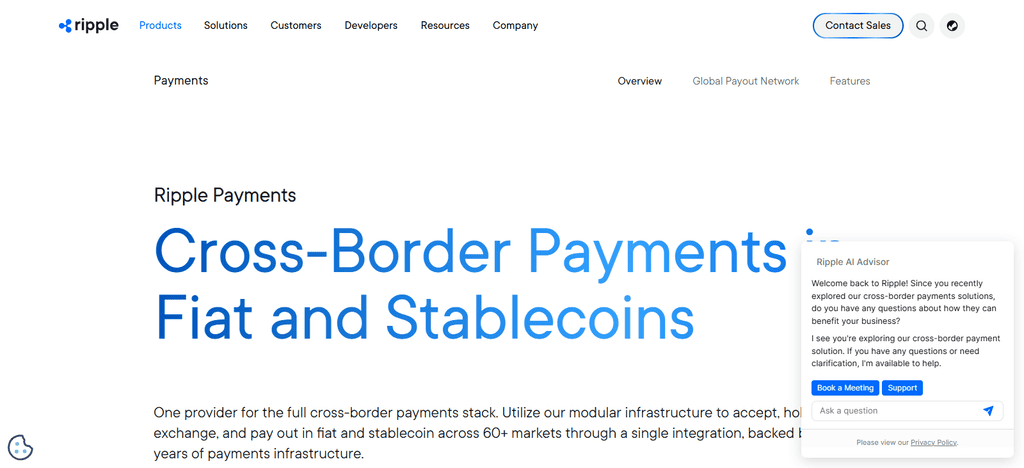
Pricing varies according to the services, payment corridors, and commercial agreement. Companies should verify supported currencies, digital assets, and blockchain functionality rather than assuming every transaction uses XRP.
Payment automation and integration capabilities depend on the implementation. Global coverage, fiat payout availability, licensing, compliance checks, and settlement arrangements should be evaluated for the countries in which a business operates.
Top Use Cases
International Business Payments – If you’re a company who sends money internationally, check out Ripple Payments for international payment options.
Financial Institution Settlement: Banks and payment providers can use its infrastructure to improve international settlement processes.
Cross-border Treasury Transfers: Businesses operating in multiple markets can use supported payment services to move money across borders.
Settlement on the Blockchain: Organizations that want to use electronic assets to enable settlement can see if Ripple’s solutions meet their payment needs.
Key Differences
Enterprise Payment Focus Ripple Payments is focused on cross-border business and financial institution payments. It does not offer a dedicated Web3 payroll dashboard.
Settlement Options The available settlement methods vary by product, corridor and participating financial institutions. Not all payments are settled using XRP.
Regional Availability: Companies should verify coverage and payout options for the countries in which employees or contractors are paid.
Integration Model: Payroll functionality might need to be built or provided by a different platform that is integrated with Ripple’s infrastructure.
5. CoinsPaid
CoinsPaid offers cryptocurrency payment infrastructure for businesses that need to accept, process, and transfer digital assets. It may be useful for Web3 companies seeking crypto payment processing and treasury-related capabilities alongside their existing payroll systems.
Pricing depends on the selected services, transaction volume, and commercial terms, so businesses should request current fee information. Supported cryptocurrencies and blockchain networks must be verified against the company’s payment requirements.
Integration options can help automate parts of transaction processing, although dedicated payroll functions may require additional tools. Businesses should examine custody arrangements, security controls, compliance procedures, and supported jurisdictions before adoption.
Best Use Cases
Cryptocurrency Business Payments: Businesses that need to process business transactions in supported cryptocurrencies can consider CoinsPaid’s payment infrastructure.
Crypto Treasury Operations: Web3 organizations can use its services to manage their cryptocurrency payment operations.
Digital asset transfers: Businesses can use the transfer capabilities of supported electronic assets to pay their partners or contractors.
Crypto Payment Integration: Companies that are developing products that are enabled for crypto may want to explore its payment processing and integration capabilities.
Main differences
Crypto Payment Processing: CoinsPaid is focused on cryptocurrency payment services, rather than primarily operating as a full payroll management system.
Supported Assets: Before using a crypto payment solution to pay employees, businesses should check which cryptocurrencies, networks and withdrawal methods are supported.
Commercial Pricing: Fees will be based on the applicable products, transaction activity and contractual terms.
Payroll Features: Employee onboarding, salary calculations, tax documentation and payroll-specific reporting may require additional software
6. OpenPayd
OpenPayd provides financial infrastructure that enables businesses to access payment accounts, banking services, and payment connectivity through integrations. It may be suitable for Web3 companies that need fiat payment rails alongside their digital asset operations.
Pricing varies according to account services, payment types, currencies, transaction volumes, and contractual terms. Companies should confirm whether their chosen solution supports the required stablecoin workflows, because fiat payment infrastructure does not automatically provide direct on-chain payroll.
API integrations can help automate transfers and reconciliation. Businesses should also assess international coverage, account eligibility, regulatory obligations, and security procedures before using OpenPayd.
Best Applications
Fiat Payroll Transfers – OpenPayd’s payment infrastructure enables businesses to conduct fiat payroll transfers through supported payment rails.
International Business Payments: If you are in international business, you can check out its payment services for making transfers between supported markets.
Fiat and Digital Asset Operations: This could be a good fit for Web3 companies that require traditional payment infrastructure, as well as digital asset services.
Automated Payment Processing: Companies can integrate the available APIs into their financial workflows to enable payment initiation and reconciliation.
Important Differences
Fiat Payment Infrastructure: OpenPayd’s core proposition is financial accounts and payment connectivity, not direct crypto payroll.
Banking Connectivity: Its services can help businesses connect to supported payment rails and financial infrastructure.
Stablecoin Requirements: Companies need to double-check that the product or integration they are looking to use has the stablecoin functionality they desire.
The availability of services, currencies, account features and fees and eligibility of your business will depend on the jurisdiction in which you operate and the services you are offering.
7. Circle Payments Network
Circle Payments Network is designed to connect financial institutions and payment providers for cross-border payments using stablecoin-based settlement infrastructure. It may interest Web3 businesses that need to move funds internationally and integrate digital dollar payments into their operations.
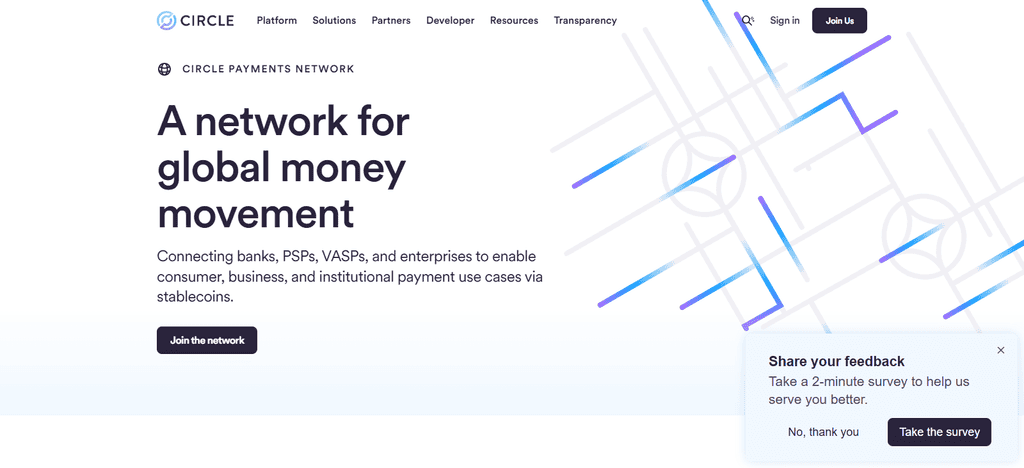
Pricing and access depend on participating providers, transaction arrangements, and eligibility requirements. USDC is central to Circle’s ecosystem, but businesses should verify supported assets and network availability for the particular service.
Payment automation depends on the integration and participating institutions. Companies should evaluate supported corridors, redemption options, compliance requirements, and settlement processes before considering it for payroll.
Best Use Cases
USDC-based payments. Companies participating in supported arrangements may look to USDC-based settlement for international payment flows.
Cross-Border Settlement: Payment providers and eligible financial institutions may utilize the network as a conduit for cross-border payment services.
Digital Dollar Transfers: Companies that need dollar-linked digital asset settlement can consider the USDC payment options available to them.
Payment Provider Connectivity: Businesses can assess if the institutions and service providers in the mix support the payment routes they need.
Main Discrepancies
Network-based approach: Rather than providing a standalone employee payroll application, Circle Payments Network is centered on connecting payment participants.
USDC ecosystem: USDC is at the heart of Circle’s digital dollar infrastructure, but the assets and services it supports vary by product.
Participant Requirements: Access and functionality may be subject to participant institutions, eligibility criteria, and applicable compliance requirements.
Payroll Integration: A business may need a separate application to keep track of employee records, calculate recurring salaries, and generate payroll reports.# 8. Hash Zero
8. Zero Hash
Zero Hash provides infrastructure that allows businesses to integrate digital assets, stablecoins, and related financial services into their products. Web3 companies may use it to support cryptocurrency transactions, payment experiences, and digital asset operations.
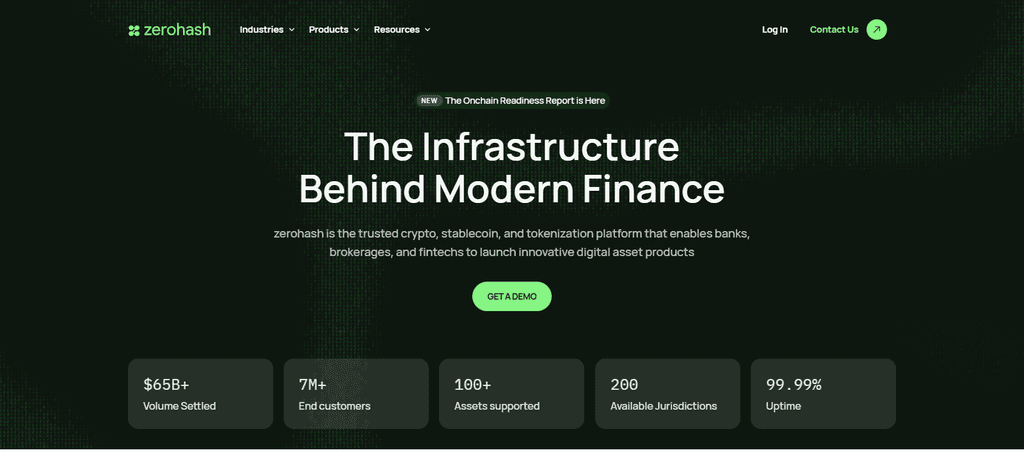
Fees depend on the selected services, transaction activity, and commercial agreements, so businesses should obtain current pricing directly. Available cryptocurrencies and blockchain networks vary by product and jurisdiction.
APIs can help automate supported transaction workflows, but payroll administration may require separate software. Businesses should review custody arrangements, licensing, identity verification, transaction monitoring, and international service availability before choosing Zero Hash.
Best Use Cases
Crypto Payment Integration Companies can use eligible Zero Hash services to add digital asset capabilities to their products.
Stablecoin Transfers: Through integrated financial apps, companies can assess supported stablecoin services for digital fund transfers.
Embedded Financial Products: Fintech companies may utilize its infrastructure to provide digital asset services within their platforms.
Automated Transaction Workflows Developers are able to integrate supported APIs to automate digital asset transactions and related operational workflows that are eligible
Major Differences
Embedded Infrastructure: Zero Hash is an infrastructure provider that allows businesses to embed digital asset and related financial services into their own products.
Product Integration: Companies can build custom experiences on top of its infrastructure instead of a standalone payroll interface.
Asset and Network Support: Functionality available varies based on supported assets, jurisdictions and product selected.
Additional payroll software. You may need to get dedicated salary management, employee administration and payroll reporting from another provider
9. Sphere
Sphere provides stablecoin payment infrastructure designed to help businesses facilitate global payments and transfers using blockchain technology. It can be relevant to Web3 startups, marketplaces, and companies paying international contractors.

Pricing depends on the selected services, transaction volumes, and applicable payment routes; businesses should confirm current charges directly. Supported stablecoins, currencies, and blockchain networks should be verified for the intended use case.
APIs may enable businesses to integrate payment workflows into their existing systems, although employee management and salary calculations may require additional tools. Security measures, compliance requirements, regional availability, and payout options are important evaluation factors.
Best Applications
Cross-Border Payments with Stablecoins Web3 companies should consider Sphere to facilitate international payment flows with supported stablecoins.
Contractor Payouts: Companies paying remote contractors can tap into its available infrastructure for sending digital payments to supported markets.
Marketplace Disbursements: Useful for businesses that need to send money to multiple recipients, can be assessed for integrated payment workflows.
API-Enabled Payments: It invites developers to explore its APIs to integrate payment capabilities with business applications and financial processes.
Major differences
Concentrate on Stablecoin Payments: Sphere is focused on payment infrastructure and not necessarily replacing all the functions of a dedicated payroll platform.
Developer Integration: APIs provide the flexibility to customize payment experiences for the features at hand and the implementation needs.
Network Compatibility: Check the stablecoins, blockchains and payout destinations supported before adoption.
Regional Coverage: Supported jurisdictions and the services we offer determine payment availability and conversion options
10. Bitso Business
Bitso Business provides cryptocurrency and cross-border payment infrastructure for companies, with particular relevance to businesses operating in Latin America. It can help organizations explore digital asset settlement and international payment solutions for regional teams and business partners.
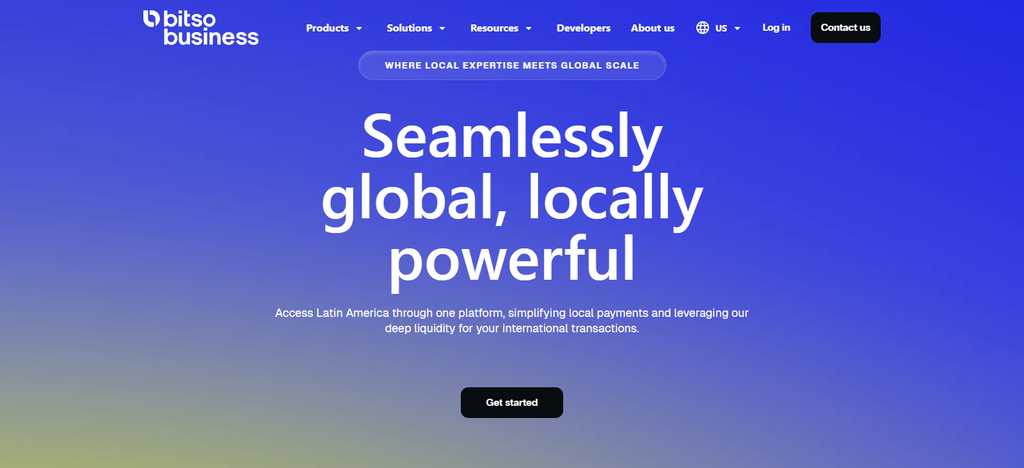
Pricing depends on the services used, transaction volumes, currencies, and commercial arrangements. Companies should confirm supported stablecoins, blockchain networks, and local fiat payout options for their target markets.
Integration capabilities can support payment workflows, but dedicated payroll administration may require separate software. Businesses should assess transaction costs, regional coverage, security practices, regulatory requirements, and eligibility before selecting Bitso Business for Web3 payroll.
Best Uses
Latin America Payments Businesses in Latin America can consider Bitso Business for regional payment and digital asset services that are supported.
Cross-Border Transfers: Companies paying partners or contractors internationally can explore its payment corridors and settlement options.
Stablecoin-Enabled Business: Companies that use supported stablecoins may look to the platform for applicable treasury and payment operations.
Regional Fiat Payouts: If your organization needs to offer local currency payment options in supported markets, it’s worth looking at its available conversion and payout services.
Major Differences
Regional Coverage: Since Bitso Business is focused on the Latin American markets, regional coverage is an important factor to consider.
Fiat and Crypto Services Businesses can assess its combination of digital asset features and local payment services supported.
Market Availability Supported countries, currencies and payout options may vary, businesses should verify eligibility for each destination.
Payroll Integration: More software may be needed to schedule salaries, manage employees, approvals, and payroll-specific documentation.
Request Finance vs. Its Top Alternatives: Comparison Table
| Platform | Primary Use Case | Stablecoin & Crypto Support | Payroll Automation | Best For |
|---|---|---|---|---|
| Request Finance | Crypto payroll, invoicing, and expense management | Supports selected cryptocurrencies and stablecoins | Payroll payments, batch payments, and payment management | Web3 companies and DAOs |
| Bridge (Stripe) | Stablecoin payment infrastructure | Depends on supported assets and services | API-based payment workflows | Stablecoin-powered global payments |
| Fireblocks | Digital asset security and treasury infrastructure | Supports selected digital assets and networks | Transaction automation through integrations | Enterprises managing digital assets |
| Conduit | Cross-border payments and stablecoin settlement | Depends on supported payment services | Integrated payment workflows | International business transfers |
| Ripple Payments | Cross-border payment and settlement infrastructure | Depends on the service and payment corridor | Integration-based payment workflows | Financial institutions and global businesses |
| CoinsPaid | Cryptocurrency payment processing | Supports selected cryptocurrencies | Payment processing and integrations | Businesses accepting crypto payments |
| OpenPayd | Fiat payment infrastructure and financial connectivity | Primarily payment and account infrastructure; verify digital asset integrations | API-based payment processing | Businesses needing fiat payment rails |
| Circle Payments Network | Stablecoin-based cross-border payments | USDC-focused ecosystem; verify product-specific support | Integration-dependent payment workflows | Businesses exploring USDC settlement |
| Zero Hash | Embedded digital asset infrastructure | Supports selected digital assets and stablecoins | API-driven transaction workflows | Fintechs and digital asset businesses |
| Sphere | Stablecoin payments and international transfers | Depends on supported assets and networks | API-based payment integrations | Web3 businesses and global payouts |
| Bitso Business | Digital asset services and cross-border payments | Supports selected digital assets and stablecoins | Integration-dependent payment workflows | Businesses operating in Latin America |
Conclusion
The best Request Finance alternative will depend on your business needs, payment volume and international payroll requirements. Some, like Bridge, Conduit and Ripple Payments, are building payment infrastructure. Others, like Fireblocks and Zero Hash, are providing digital asset management and integration capabilities.
There are different payment solutions for cryptocurrencies or finance like CoinsPaid, OpenPayd, Circle Payments Network, Sphere, Bitso Business. When making a decision, take into account transaction fees, supported stablecoins, blockchain networks, automation features, security, and compliance requirements.
Request Finance is still a viable option for businesses looking for crypto payroll, invoicing and expense management. Ultimately select a platform that can deliver reliable payments, transparency and scalability.
FAQ
What are the best Request Finance competitors for Web3 payroll?
Some alternatives to consider are Bridge, Fireblocks, Conduit, Ripple Payments, CoinsPaid, OpenPayd, Circle Payments Network, Zero Hash, Sphere, and Bitso Business. Each serves different payment, digital asset, or financial infrastructure needs.
Which Request Finance alternative is best for stablecoin payments?
Bridge and Circle Payments Network are worth evaluating for stablecoin payment infrastructure. The best choice depends on supported assets, blockchain networks, payment corridors, and business eligibility.
Which platforms support international Web3 payroll?
Bridge, Conduit, Ripple Payments, and Bitso Business offer payment infrastructure relevant to cross-border transfers. However, available countries, currencies, and payout methods vary by provider and service.
Are Request Finance alternatives suitable for DAO payments?
Yes. Platforms with digital asset transaction controls, stablecoin transfers, or payment integrations may support DAO contributor payments. Fireblocks is worth evaluating for treasury controls, while Request Finance offers payroll-oriented functionality.
How much do Request Finance competitors charge?
Pricing varies by provider, transaction volume, and selected services. Businesses should compare transaction fees, blockchain network costs, currency conversion charges, withdrawal fees, and subscription or integration expenses.