
I’ll go over the top SBA loan providers for startups in this post. For early-stage companies hoping to expand, control cash flow, or make equipment investments, obtaining the appropriate SBA funding is essential.
To help companies grow, leading lenders like Live Oak Bank, Wells Fargo, and SmartBiz Loans provide customized SBA 7(a) and 504 loans, flexible terms, and professional advice.
What is SBA Loan Providers?
A financial organization that offers loans that are partially insured by the U.S. Small Business Administration (SBA) is known as an SBA loan provider. These institutions are typically banks or specialty lenders.
These loans are intended to assist small firms in obtaining funding that they might not otherwise be able to obtain because of a lack of collateral or credit history. In order to lessen lender risk and give borrowers advantageous terms like smaller down payments, longer payback terms, and competitive interest rates, SBA loan providers collaborate with the SBA.
7(a) loans, 504 loans, and microloans are common SBA loan types that can be used for real estate, working capital, equipment purchases, or business expansion.
Key Point & Best SBA Loan Providers for Startups
| Lender | Key Points |
|---|---|
| Live Oak Bank | Specializes in SBA loans, strong support for small businesses and startups, fast digital loan processing. |
| Wells Fargo | One of the largest U.S. banks offering diverse business financing, SBA loans, and strong nationwide branch network. |
| JPMorgan Chase | Major global bank providing business loans, lines of credit, and treasury services for small to large enterprises. |
| Bank of America | Offers SBA loans, business credit lines, and digital banking tools for entrepreneurs and corporations. |
| PNC Bank | Known for flexible business lending solutions, SBA programs, and strong customer service for mid-size businesses. |
| Huntington National Bank | Popular for SBA 7(a) lending, small business financing, and relationship-based banking services. |
| TD Bank | Provides convenient business banking, lines of credit, and quick loan approvals with extended banking hours. |
| Celtic Bank | Specializes in SBA lending and fintech partnerships, offering funding to small and online businesses. |
| SmartBiz Loans | Online platform that connects businesses with SBA lenders, known for streamlined digital application process. |
| Byline Bank | Provides commercial loans, SBA financing, and tailored banking services for small and mid-size businesses. |
1. Live Oak Bank
Live Oak Bank is the Best SBA Loan Provider for Startups because they specialize in offering loans through SBA 7(a) and 504 loans. They streamline their process by offering digital funding to small and new businesses and offering guidance throughout the process.
Startups and new businesses gain the most benefit from the banks specific knowledge for lending for the Healthcare, Manufacturing, and Technology sectors.
They offer new businesses and small business’s Fully Online Applications to minimize the time and paperwork needed to be completed on their business’s end so they can receive funding faster. Live Oak Bank is dedicated to small business funding and is a top choice for new and small businesses.
Live Oak Bank Features, Pros & Cons
Features
- Provides SBA loans and business lines of credit for $5 million.
- Small business loans and lines of credit can be applied for and processed online.
- They specialize in niches like healthcare, manufacturing, and franchises.
- Based on the type of loan, the repayment terms may be different.
- They assist you and provide direction every step of the way in the lending process.
Pros
- Expert lending knowledge in your specific field.
- Competitive pricing for borrowers who qualify.
- Robust online application process.
- Funding options for lower risk with SBA.
- Loan officers to help along the way.
Cons
- Few branches in person to visit.
- Eligibility along with documentation can be a hassle.
- Without a revenue history, you may have a less flexible situation.
- Approvals for SBA loans can take time.
- If you’re in need of fast funding, this is not your ideal option.
2. Wells Fargo
Wells Fargo ranks among the Best SBA Loan Providers for Startups thanks to its vast experience and extensive resources. As a major U.S. bank, it offers SBA 7(a) and CDC/504 loans with flexible terms suitable for new businesses. Startups gain access to Wells Fargo’s nationwide branch network, enabling face-to-face guidance and support.
The bank also provides digital tools to manage loans, monitor cash flow, and forecast financing needs. With a strong reputation and comprehensive offerings, Wells Fargo helps startups secure funding efficiently while providing long-term banking solutions, ensuring they have the capital and support needed to grow successfully.
Wells Fargo Features, Pros & Cons
Features
- Business credit lines can be secured and unsecured.
- Business of all sizes can be accommodated with a diverse range of credit.
- Online and through the branches, account management can be done.
- Access to traditional loans in addition to SBA loans.
- Business banking products come with that additional integration.
Pros
- In-person support via branches.
- Interest rates are competitive.
- Repayment flexibility.
- Financial institution you can trust.
- Variety of products for business banking.
Cons
- Approval is not guaranteed.
- Process can take long from application to underwriting.
- Lots of documents are required.
- Not ideal for startups.
- Fintech lenders fund faster.
3. JPMorgan Chase
JPMorgan Chase has been selected as one of the Best SBA Loan Providers for Startups because of its flexible lending programs and international lending experience. They have SBA 7(a) and SBA Express loans that are suitable for early-stage businesses.

Startups also take advantage of Chase’s business advisory services and expertise in cash flow management and credit improvement. Chase’s online banking services make it easy for entrepreneurs to manage and pay off loans and get more funds as their business grows. Startups get funding and financial management programs to help their business grow.
JPMorgan Chase Features, Pros & Cons
Features
- Offers revolving business credit lines and term loans.
- Chase Business Banking services can be integrated.
- Established Companies receive interest rates that are more competitive.
- Digital tools for managing lines of credit.
- Corporates and treasury services available.
Pros
- Significant lending capacity.
- Banking trust / global brand.
- Financial strength.
- Advisory services personalized.
- Various financial services.
Cons
- Credit and revenue requirements are unreasonably strict.
- Online lenders have faster approvals.
- Applications are tedious.
- Startups have little access.
- Unreasonable requirements for documentation.
4. Bank of America
Bank of America is known for being one of the Best SBA Loan Providers for Startups due to its range of SBA 7(a) and SBA Express loans. They have different financing options available for new businesses including working capital, equipment financing, and business growth.
Startups working with Bank of America can take advantage of the great online tools offered for loan management, cash flow tracking, and payment scheduling. Bank of America also has business professionals in its branches that can help you through the process of making sure your business meets the SBA requirements, as well as helping you structure your loan for the best use. Bank of America combines technology, financing, and business advice to help startups.
Bank of America Features, Pros & Cons
Features
- Offers business credit lines that are both unsecured and secured.
- Business checking accounts integration.
- SBA Loans and other financing options.
- Access to branches across the country.
- Online account management and supervision.
Pros
- Tailored financial advice.
- Custom funding options.
- Attractive rate offers.
- Reliable service and support.
- Easy-to-use online banking and mobile applications.
Cons
- High barriers to entry.
- Limited geographic contact points.
- Funding speed that lags behind competitors in the market.
- High documentation burden.
- Credit lines aross larger amounts may require a lien.
5. PNC Bank
PNC Bank provides a range of services for small businesses and startups, allowing for a more tailored and personal approach. The bank provides early-stage businesses tailor-made equipment financing, business lines of credit, and SBA 7(a) loans.
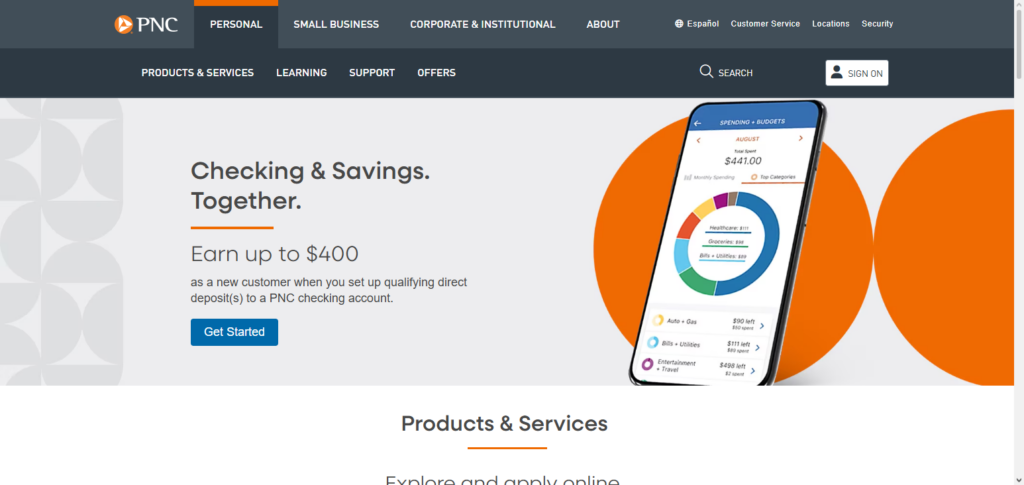
Unlike most banks, PNC provides its own personal consultants to assist in paying and completing an SBA application, helping to reduce time and ensuring completion of all SBA steps.
PNC also provides digital tools to assist in payment management, cash flow monitoring, payment forecasting, and overall financing management. PNC provides excellent network services which helps small businesses and startups obtain funding for a long-lasting business.
PNC Bank Features, Pros & Cons
Features
- Business lines of credit with limits that are more flexible.
- Merger with business checking accounts.
- Access online and at branches to control credit lines.
- Rates are competitive and terms for repayment are flexible.
- Accessible programs for loans through the SBA.
Pros
- Services in financial advising that are customized.
- Financing options that are more flexible.
- Interest rates that are competitive.
- Support for customers that is strong.
- Digital tools for banking for increased ease.
Cons
- More rigid requirements for credit and revenue.
- Fewer branches in various regions.
- Compared to fintech lenders funding is slower.
- More extensive documentation is required.
- For larger lines of credit with are more flexible collateral may be required.
6. Huntington National Bank
Huntington National Bank provides personal consulting for early-stage businesses, promoting a more relationship-oriented banking style. They help business owners decide which financing option to choose for working capital, equipment, or expansion projects.
They assist in overcoming all obstacles in the SBA funding process, allowing for the fastest financing turnover for projects. Huntington National Bank offers digital banking services for easier loan management and advanced financial organization. Combined with all of the previously mentioned features, Huntington National Bank has the most complete financing services for early-stage businesses.
Huntington National Bank Features, Pros & Cons
Features
- Business lines of credit and term loans.
- Emphasis on small and mid-sized businesses.
- Rates that are competitive and terms that are flexible.
- Merger with Huntington business checking accounts.
- Support in branches at online risk to the borrower.
Pros
- Banking offers tailored experience.
- Presence in multiple local and regional areas.
- Flexible options for repayment.
- Quick response time for businesses that qualify.
- Business banking services of many kinds.
Cons
- Presence in limited areas across the nation.
- Eligibility requirements are rigid.
- Process requires a lot of documentation.
- Businesses without a history are less suited for this.
- Less lending capacity compared to large national banks.
7. TD Bank
TD Bank is one of the Best SBA Loan Providers for Startups because of its accessibility, quick approvals, and flexible financing. The bank provides loans for new businesses under the SBA 7(a) and Express loans for working capital, equipment, or expansion.
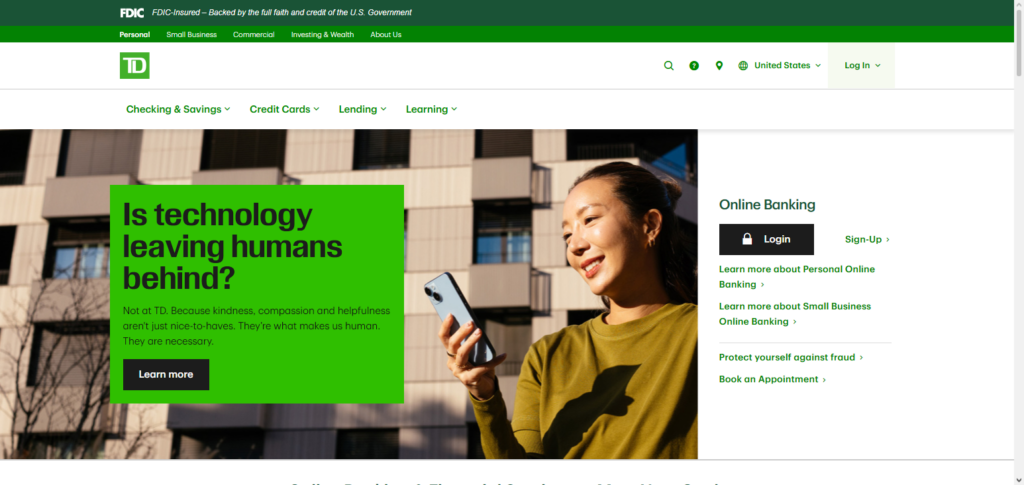
Startups enjoy the bank’s extended branch hours, digital applications for loans, and business specialists who assist in guiding them through the SBA process. The bank’s convenience, speed, and support helps entrepreneurs obtain funding with little to no wait. Making TD Bank’s dedication to small businesses and focus on startups, it is an excellent SBA lending partner.
TD Bank Features, Pros & Cons
Features
- Flexible borrowing ability with business lines of credit
- TD business checking account integration
- Customized assistance and customer service
- Convenient banking with extended hours
- Digital credit usage monitoring tools
Pros
- Strong relationship banking
- Strong payment flexibility
- Low interest rates for qualified lenders
- Good for small to medium businesses
- Low interest rates for business lenders
Cons
- Not as fast as approval as Fintech lenders
- Limited services locations outside TD
- Strict qualifications
- Detailed documentation required
- Large credit lines may require Collateral
8. Celtic Bank
Celtic Bank is one of the biggest SBA lenders and is ranked one of the Best SBA Loan Providers for Startups because it only does SBA 7(a) and 504 loans. The bank teams up with fintech companies and brokers to offer early-stage companies streamlined and technology-based lending solutions.
Celtic has flexible loan options and the loan application process is faster than most traditional banks. It is also one of the few banks that specialize in SBA lending. This is why it is one of the most recommended banks for new business owners.
Celtic Bank Features, Pros & Cons
Features
- Focused on SBA 7(a) and 504 loans
- Business lines of credit and term loans
- Online loan application and management
- SBA loan lender nationwide
- Based on type of loan, different repayment terms may apply.
Pros
- Loans backed by the SBA lower the risk for the borrow.
- There is a national reach.
- There is the ease of applying online.
- If your business is qualified, you will be offered rates that are less than the competition.
- They have a lot of experience with small business lending.
Cons
- There are strict requirements for eligibility.
- They do not offer funding that is short term and quick.
- The processes require a lot of documents.
- There is a lot of time to wait for the funding.
- There are few options for financing that are alternatives.
9. SmartBiz Loans
SmartBiz Loans earned one of the Best SBA Loan Providers for Startups awards for making the SBA application process more accessible. The company simplifies approval for applicants through digital application submissions and document management. SmartBiz Loans provides entrepreneurs automated loan prequalification and offers SBA insight.

SmartBiz Loans is ideal for new businesses that want to obtain funding quickly because of the limited paperwork and reduced delays compared to traditional banks. SmartBiz Loans stands out to early stage businesses because of its transparency and marketplace model along with its technology driven financing solution to obtain an SBA loan.
SmartBiz Loans Features, Pros & Cons
Features
- Marketplace for online SBA loans for small businesses.
- Pre-qualification and application processes are quick.
- SBA 7(a) and term loans are offered.
- Approvals are faster if integrated with business bank accounts.
- Interest rates and fees are clear.
Pros
- There is a quick process that is online.
- There are many SBA lenders that you can have access to.
- There are clear terms and fees.
- It is ideal for the growth of a small business.
- There is no penalty for prepayment.
Cons
- The only financing that is provided are those that are backed by the SBA.
- There is a longer approval process than for online lines of credit.
- Businesses that do not meet the requirements of the SBA are limited.
- Funding can take a number of weeks.
- They are less suitable for funding that is short term and urgent.
10. Byline Bank
Byline Bank earned one of the Best SBA Loan Providers for Startups awards for offering customized SBA 7(a) and CDC/504 loans to small and midsize businesses. The bank offers customized support through loan officers who assist new businesses with understanding eligibility and the entire application and funding process.
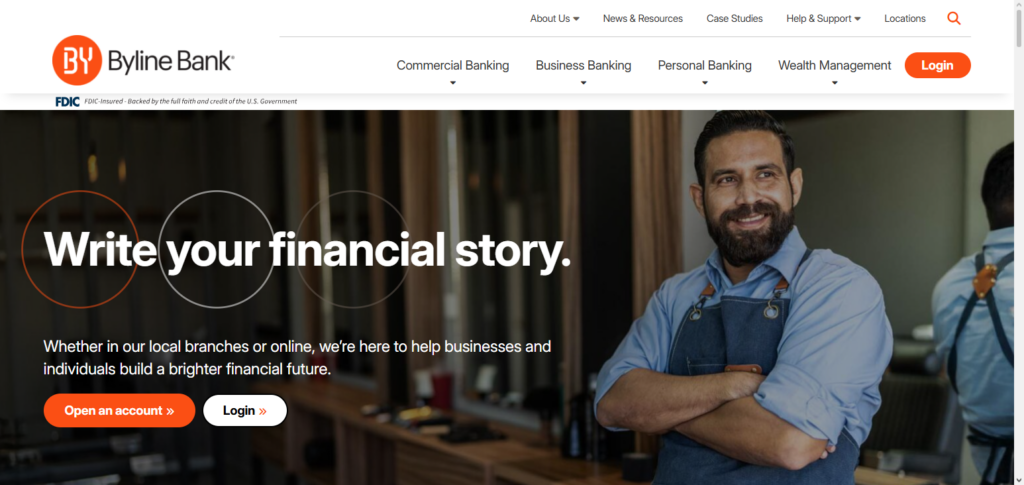
Byline’s relationship banking approach ensures that new business owners receive support and guidance on cash flow management, the repayment process, and business expansion. New businesses also receive competitive rates and better terms combined with faster SBA approvals. Byline Bank provides a great combination of customer support and SBA financing which is what sets them apart for new business financing.
Byline Bank Features, Pros & Cons
Features
- SBA loans, term loans, and lines of credit are available.
- They concentrate on small to midsized businesses.
- They have flexible repayment options and competitive rates.
- Relationship banking with loan officers.
- Mobile banking and banking apps.
Pros
- Strong local support for local businesses.
- Relationship banking.
- Borrowing options that are less restrictive.
- Financing options available for both the short and long term.
- Experience with small business lending.
Cons
- Limited presence in the U.S.
- Funding takes longer than online lenders.
- Needs a good credit and financial history.
- Heavy documentation.
- Smaller loan amounts than the national banks.
Conclusion
In conclusion, choosing the appropriate SBA loan source is essential for entrepreneurs looking for the capital and direction required to expand profitably. The combination of competitive rates, flexible loan terms, digital tools, and individualized support makes banks like Live Oak Bank, Wells Fargo, JPMorgan Chase, Bank of America, PNC Bank, Huntington National Bank, TD Bank, Celtic Bank,
SmartBiz Loans, and Byline Bank stand out as the Best SBA Loan Providers for Startups. In addition to giving access to SBA 7(a) and 504 loans, these lenders also give tools and strategic counsel specifically designed for early-stage companies, guaranteeing that entrepreneurs can obtain dependable funding and lay a solid basis for long-term success.
FAQ
What is an SBA loan and why is it important for startups?
An SBA loan is a business loan partially guaranteed by the U.S. Small Business Administration. It provides startups with access to funding that might be difficult to secure from traditional lenders due to limited credit history or revenue. SBA loans offer lower interest rates, longer repayment terms, and flexible options, making them ideal for startups needing working capital, equipment purchases, or business expansion. Choosing the right SBA lender ensures startups receive guidance, faster approvals, and access to the capital necessary for early-stage growth.
Which banks are considered the best SBA loan providers for startups?
Top SBA lenders for startups include Live Oak Bank, Wells Fargo, JPMorgan Chase, Bank of America, PNC Bank, Huntington National Bank, TD Bank, Celtic Bank, SmartBiz Loans, and Byline Bank. These banks specialize in SBA 7(a) and 504 loans, offering competitive rates, flexible repayment terms, and personalized support tailored for early-stage businesses. Many also provide online tools to simplify the application and loan management process, making them ideal choices for startups seeking efficient and reliable SBA financing.
How do startups qualify for an SBA loan?
To qualify for an SBA loan, startups must meet several requirements, including being a U.S.-based business, demonstrating the ability to repay the loan, and having a sound business plan. Lenders also consider the owner’s personal credit, business experience, and collateral. Each SBA lender may have additional criteria or documentation requirements, which is why working with established banks like Live Oak Bank or platforms like SmartBiz Loans can simplify the process and improve approval chances for startups.