

Solana is a popular blockchain for building DeFi platforms, NFT marketplaces, trading bots and decentralized applications, but choosing the right RPC provider can make a real difference on how smoothly these projects run.
There are so many infrastructure providers out there, it can be hard to find one that has the right mix of speed, reliability, pricing, and developer-friendly tools. In this guide, I’ll walk you through the Best Solana RPC Node Providers in 2026, compare their key features, and help you decide which option is best for your project.
What to Look for in a Solana RPC Node Provider
Performance & Latency: Select a provider that offers rapid RPC response times, low latency, and effective transaction delivery for smooth blockchain interactions and responsive applications.
Uptime and Reliability: Seek a provider with reliable infrastructure, monitoring systems, and redundancy to ensure consistent service availability and minimize downtime, providing uninterrupted access to Solana blockchain data.

Pricing and Free Tier: Check out free-tier limits, monthly subscriptions, request quotas and overage charges to find a provider that suits your budget and expected usage.
Scalability: Select a provider that can accommodate rising traffic, expanding API calls, and substantial transaction volumes, ensuring that application performance and reliability remain unaffected.
Developer Tools. Look for full APIs, WebSockets, gRPC streaming, SDKs, clear documentation and debugging tools that make it easier to integrate and continue application development.
Data Access: Seek providers who offer real-time updates, historical blockchain data, account information, transaction details, and streaming capabilities that fit your application’s requirements.
Security: Assess API key protection, access control, infrastructure security, traffic management, and compliance measures available to protect your applications and ensure secure blockchain connectivity.
Technical Support: Select a supplier who offers responsive technical support, detailed documentation, troubleshooting resources, and support plans that suit your needs to resolve integration issues and production incidents.
How to Choose the Best Solana RPC Provider?
Decide on what you are building — a DeFi application, an NFT marketplace, a trading bot, a wallet or an analytics platform. This will help you determine what RPC capabilities you require.
Compare Performance and Latency: Look at response times, transaction submission speed, and real-time data delivery to choose a provider that fits your application’s performance needs.
Consider Pricing Models: Look at free-tier limits, call allowances, monthly fees, and overage charges to identify the provider offering the best value for your budget.
Look for Scalability Options: Select a provider that can handle increasing traffic, higher request volumes, and dedicated infrastructure as your application grows and attracts more users.
Developer Tools: Seek APIs, WebSockets, gRPC streaming, SDKs, and well-documented resources that ease integration and enable developers to create and sustain applications efficiently.
Check Data Availability: Confirm that the provider has the historical data, transaction information, account updates, and real-time streaming needed by the specific functionality of your application.
Reliability and Security: Review uptime commitments, redundancy, API key protection, control of access, and monitoring capabilities to ensure secure and reliable blockchain connectivity.
Test Before Committing: Use free trials or test plans to compare providers under realistic workloads, measure performance, assess support quality and find the best long-term fit.
10 Best Solana RPC Node Providers in 2026
| Solana RPC Provider | Key Point |
|---|---|
| Helius | Solana-native infrastructure provider known for high-performance RPC endpoints, enhanced APIs, LaserStream, and specialized tools for NFTs, DeFi, and trading applications. |
| QuickNode | Popular multi-chain RPC platform offering scalable Solana nodes, analytics, streaming support, and strong developer tooling for production workloads. |
| Alchemy | Enterprise-grade RPC provider recognized for reliable infrastructure, archival access, developer tools, and strong performance benchmarks on Solana. |
| Triton One | Solana-focused infrastructure specialist that maintains Yellowstone gRPC technology and provides low-latency services for trading, MEV, and high-frequency applications. |
| Chainstack | Offers dedicated and managed Solana RPC nodes with global deployment options, enterprise features, and support for Yellowstone gRPC integrations. |
| dRPC | RPC aggregation platform designed to improve reliability through provider redundancy, intelligent routing, and cost-effective Solana access. |
| Syndica | Solana-native infrastructure provider focused on enterprise applications, advanced data services, compliance, and scalable RPC access. |
| GetBlock | Multi-chain node provider offering Solana RPC, streaming capabilities, trading-focused infrastructure, and flexible deployment options. |
| Blockdaemon | Institutional-grade blockchain infrastructure platform providing Solana RPC services alongside staking and validator management solutions. |
| Validation Cloud | Enterprise-focused RPC provider offering usage-based Solana infrastructure, high availability, and compliance-oriented services |
1. Helius
Helius is a native Solana infrastructure provider built for developers building wallets, NFT platforms, DeFi apps and trading systems. Its core services include RPC endpoints, Enhanced APIs, webhooks, LaserStream and asset indexing tools. Performance is a big plus since the platform is fully dedicated to Solana infrastructure.
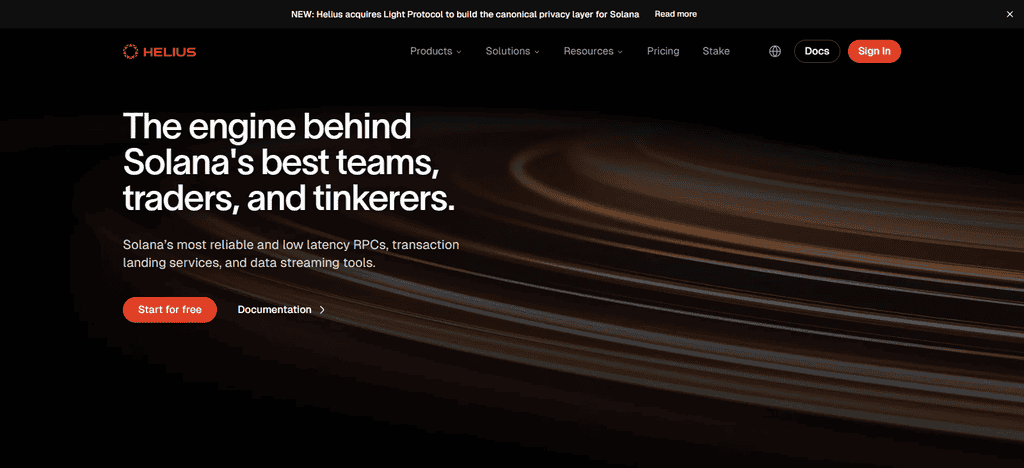
Pricing is usually free for a developer tier, with paid plans for larger volumes of requests. Helius helps your app scale with a developer-friendly SDKs and scalable RPC architecture. It’s a favorite for Solana apps that are production-ready, because it maintains and monitors the infrastructure for security and reliability.
Main Features
- Solana focused RPC infrastructure
- Better APIs for parsed transaction data
- Digital Asset Standard (DAS) APIs for token & NFT data
- LaserStream for real-time streaming of blockchain data
- Blockchain event monitoring webhooks
Use Cases
- DeFi Apps: Access account data and track transactions.
- NFT Marketplaces: Retrieve NFT metadata and asset data.
- Crypto Wallets: Show token balances and transaction history.
- Trading Bots – To watch the blockchain and send transactions
2. QuickNode.
QuickNode is a leading blockchain infrastructure provider, supporting a number of blockchains including managed Solana RPC nodes. Higher-tier plans offer core services like RPC endpoints, APIs, analytics, and Yellowstone gRPC support. We use a globally distributed infrastructure to reduce latency and improve performance.
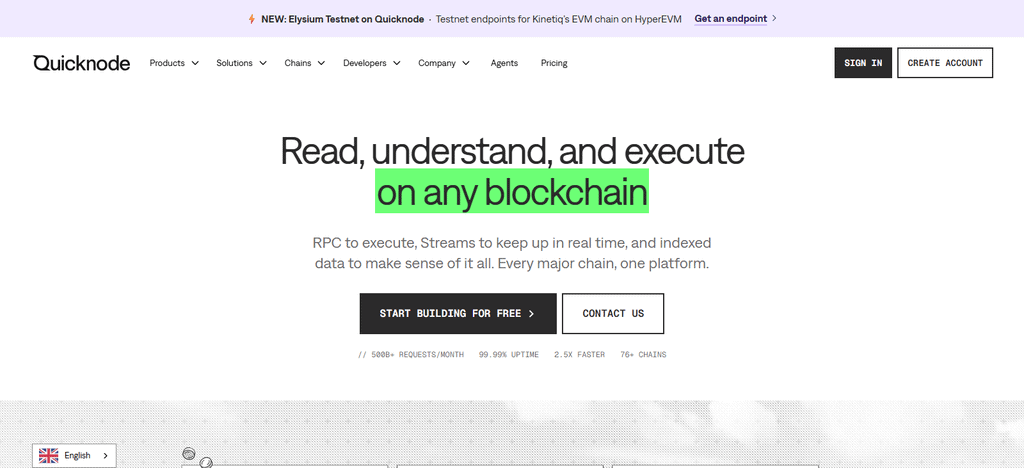
Pricing begins with entry-level plans for startups and extends to enterprise packages for large applications. It scales well, allowing developers to increase resources as traffic grows.
Deployment is made easy by developer tools, dashboards, monitoring features and extensive documentation. Security, uptime guaranties and enterprise-oriented support make it appealing to both startups and more mature blockchain companies.
Main Features
- Kept Solana RPC endpoints.
- Live updates via WebSocket subscriptions
- Blockchain data streams
- APIs for token & NFT information
- Scalability of infrastructure and use
Use Case
- DeFi Platforms: Access blockchain data, interact with on-chain programs.
- NFT Marketplaces: Retrieve NFT metadata & transaction data.
- Trading Apps: Track blockchain activity and execute transactions.
- Multiple Chain dApps: Connect apps to the supported blockchain networks
3. Alchemy
Alchemy is an enterprise-grade blockchain infrastructure platform known for its reliability, performance, and advanced development tools. It gives developers high-performance RPC endpoints, archival access, analytics capabilities and infrastructure solutions for Solana.
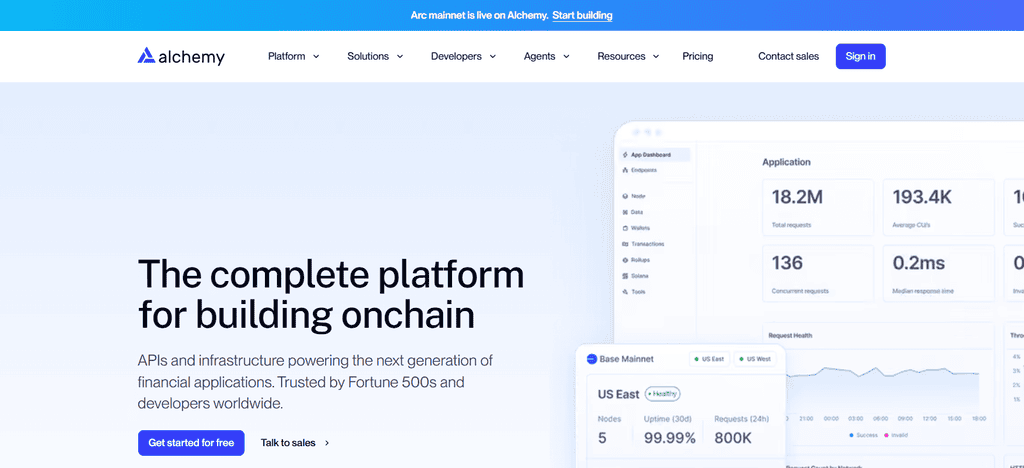
Production workloads have competitive response times based on performance benchmarks. Pricing is generally usage based models and scales according to compute needs. Alchemy’s infrastructure is built to handle increasing application demand with minimal service disruptions.
Developers are provided with detailed dashboards, monitoring tools, APIs and debugging capabilities. With its strong uptime commitments, infrastructure redundancy and operational reliability, it has become a preferred choice for mission-critical blockchain applications.
Features
- Solana RPC Endpoints Management.
- Websocket connection
- Blockchain Real-Time Data Streaming Options
Historical blockchain data access - Developer dashboards and API monitoring
Application
- Wallet Development: Get balance and transaction history.
- DeFi Apps: Read Blockchain Data and Send Transactions
- Blockchain Analytics: Collect transaction data to analyze
- Multi-Chain Apps: Integrate Solana & other supported networks
4. Triton One
Triton One is a favorite among trading firms, market makers and high frequency applications, focusing on Solana infrastructure. The company is tightly integrated with advanced streaming services and Yellowstone gRPC technology.
The core services it provides are RPC endpoints, Dragon’s Mouth streaming, and specialized data feeds for performance-sensitive workloads. The performance is very much focused on low latency and consistent transaction processing.
The pricing is generally targeted at professional and institutional customers who want robust infrastructure. It supports scalability with a strong network architecture for demanding environments. Security, reliability and robust engineering support help provide stable operations for latency-critical Solana apps and trading systems.
Key Features
- High performance Solana RPC infrastructure
Yellowstone gRPC streaming - Stream shredding for low latency data access
- Old Faithful Historical Data Structure
- Infrastructure options that are dedicated
Case studies
- High-Frequency Trading: Access real-time blockchain data for your trading strategies.
- MEV applications: Observe transactions to identify execution opportunities.
- Blockchain Indexers: Handle massive on-chain data.
- Historical Data Analysis. Analyze historical blockchain activit
5. Chainstack
Chainstack offers managed blockchain infrastructure for a number of networks, including Solana. Its services include Yellowstone gRPC integrations, archive access, RPC endpoints, shared nodes, and dedicated nodes. Performance is improved by global routing and infrastructure built for production workloads.
Pricing ranges from inexpensive developer plans to enterprise deployments with dedicated resources. As usage grows, organizations can scale up their throughput and infrastructure capacity with Chainstack.
Developer tools provide monitoring dashboards, control of access, analytics, and deployment management. Security and reliability remain important advantages, with enterprise grade architecture and strong operational standards to support business running mission critical blockchain applications.
Key Features
- handled Solana RPC endpoints
- Specific node deployment choices
- WebSocket connectivity
- Access to historical blockchain data
- Yellowstone gRPC stream options
Application Cases
- dApp Development: Integrate your apps with Solana infrastructure.
- DeFi platforms: View account data and perform transactions.
- Blockchain Analytics: Analyze past blockchain data.
- Enterprise Applications: Infrastructure for production workloads
6. dRPC
dRPC offers a new infrastructure model by aggregating multiple RPC providers into a single service. The main value is intelligent routing, redundancy and improved network resilience. The risk of downtime is minimized by auto-selecting optimal infrastructure routes, which benefits performance.
Pricing is usually economical for projects that need reliable RPC access and don’t want to deal with multiple providers. Scalability to handle growing workloads through distributed architecture.
Unified APIs and endpoint management make it simple to onboard developers. Having a variety of providers enhances security and reliability, as you are not depending on one source for your infrastructure. This means that your services continue to function in the event of network outages.
Main Features
- One RPC to rule them all
- Routing infrastructure multi provider
- Smarter routing between upstream nodes
- Request analytics and usage tracking
- Supported redundancy options of networks
Use Cases
- RPC Failover: Failover to other infrastructure when endpoints fail, when supported.
- Multi-Chain Apps: Connect to multiple blockchains that are supported.
- DeFi Platforms: Use Solana RPC services.
- Infrastructure Redundancy: Reduced reliance on a single RPC provider
7. Syndica
Syndica is an infrastructure platform on Solana for businesses and developers looking for custom blockchain services. It supports RPC access, data indexing, application infrastructure and enterprise support. It’s optimized for performance for solana workloads and so it’s attractive to projects that are solely in the Solana ecosystem.
Pricing caters to pro users who want reliable infrastructure and advanced features. Scalability allows applications to handle growing transaction volumes and user base efficiently.
APIs, integrations, and operational tools that support blockchain development are developer resources. Security practices, compliance considerations and infrastructure stability make Syndica a great choice for organizations looking for dedicated Solana expertise.
Features
- Blockchain infrastructure focused on Solana
- handled RPC access
- real-time streaming of blockchain data
- Infrastructure for high-demand workloads
- Data access and monitoring for developers
Use Cases
- DeFi Applications: Query transaction data and account state.
- Blockchain Indexing: Gather on-chain data for searchable databases.
- Trading Systems: Watch live blockchain activity.
- Enterprise dApps: Integrate Solana infrastructure into production applications
8. GetBlock.io
GetBlock is a multi-chain node infrastructure provider, providing Solana RPC services and many other blockchain networks. Core services are shared and dedicated nodes, RPC endpoints, streaming, and tools for access to blockchain data. Performance is all about reliable node operation and wide infrastructure coverage.
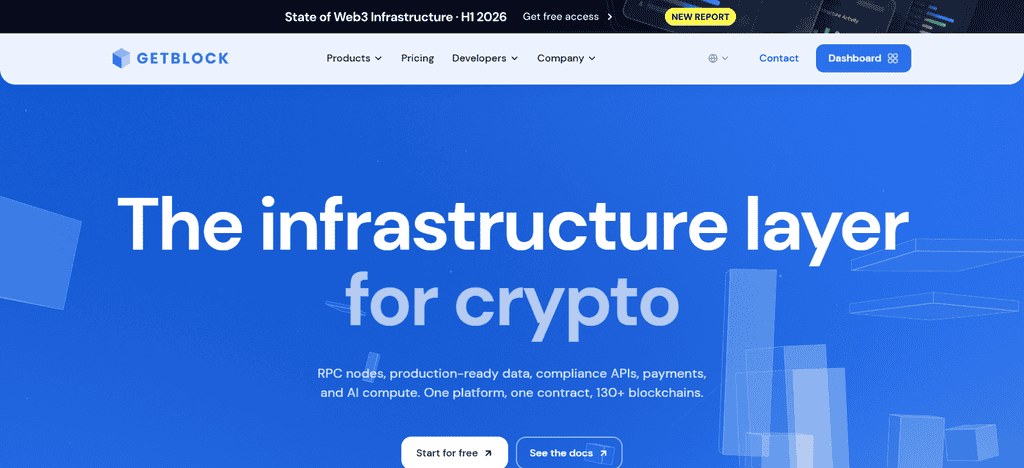
Prices start at entry-level for developers and go up to premium plans for heavier workloads. Scalability lets teams scale node access and request capacity as projects scale. Easy node management for API integrations and developers.
They provide security and reliability through managed infrastructure, allowing organizations to focus on application development instead of maintaining blockchain nodes themselves.
Key Features
- Managed the blockchain node infrastructure
- Access to Solana RPC endpoint
- Blockchain integration with API
- Service plans that are sustainable
Less maintenance Managed Infrastructure with fewer nodes
Use Cases
- Crypto Wallets: See balances and transaction history.
- DeFi Applications: Read blockchain data and broadcast transactions.
- Trading Tools: Connect supported RPC endpoints with trading systems.
- Blockchain Explorers: Retrieve blocks, transactions and account data.
9. Blockdaemon –
Blockdaemon is a provider of institutional blockchain infrastructure to enterprises, financial institutions and professional digital asset organizations. Solana provides RPC services, validator infrastructure, staking solutions, and node management. Performance is tuned for business-critical applications on a reliable infrastructure.
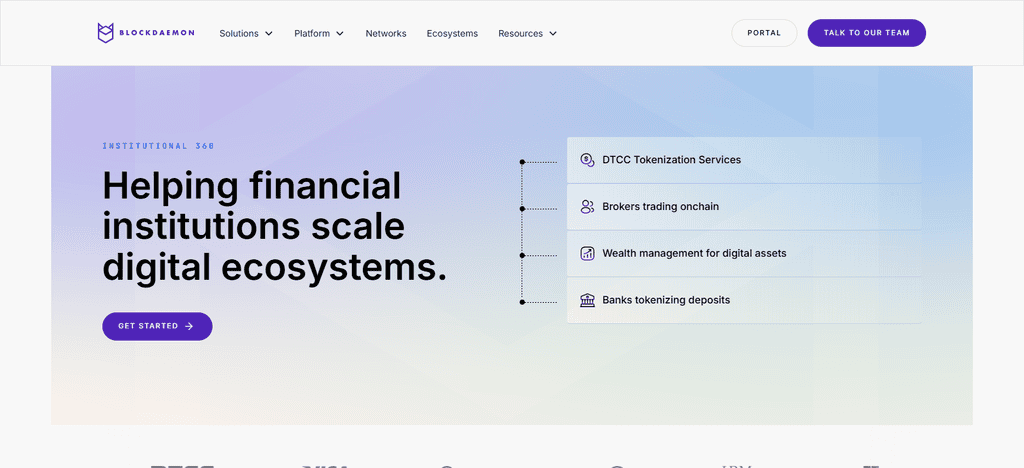
The prices are generally targeted to professional and institutional clients who need a higher level of service. Scalability enables organizations to scale up their operations without having to directly manage complex technical infrastructure.
Developer and operational tools make it easier to access blockchain services. “Security and reliability are top-of-mind, with enterprise-grade controls, operational expertise and infrastructure management to help clients run secure blockchain operations.
Main features
- Kept RPC connectivity on the supported networks
- Institutional blockchain node infrastructure
- Validator & Staking Infra
- Enterprise infrastructure management
- Support and service options for business-oriented
Use Cases
- Enterprise Applications: Integrate enterprise systems with supported blockchains.
- Staking Platforms: Build infrastructure for supported staking services.
- Financial Services Access to blockchain data for financial applications.
- Enterprise Blockchain Projects: Manage blockchain connectivity and infrastructure
10. Validation/cloud
Validation Cloud is an enterprise blockchain infrastructure company, providing Solana RPC services designed for reliability and operational efficiency. The core services include managed RPC access, data connectivity solutions, and infrastructure support for digital asset businesses.
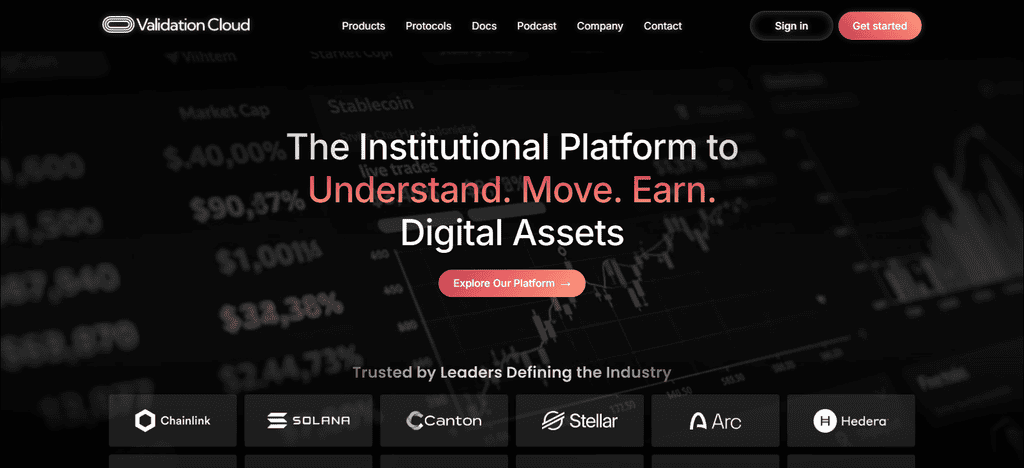
Designed for organizations requiring predictable access to blockchain networks, performance is optimized. Pricing is calculated based on infrastructure usage and enterprise requirements. Scalability enables higher transaction volumes and larger application ecosystems without compromising the quality of services.
Integration capabilities and managed endpoints make it easier for developers to access. Security, monitoring, compliance-minded practices and reliable uptime make Validation Cloud a good choice for enterprises building long-term blockchain products and services.
Key Features
- Infrastructure services for Web3
- Networks supported for connection to blockchain node
- APIs services and access to blockchain data
- Infrastructure for staking
- Infrastructure built for enterprise workloads
Use Cases
- Web3 Apps: Connect your apps to the supported blockchain networks.
- Blockchain Data Platforms: Fetch and analyze on-chain data.
- Staking Applications: Integrate with supported staking infrastructure.
- Business Applications with Enterprise Web3 Projects: Add blockchain connectivity to enterprise applications.
Conclusion
The right Solana RPC node provider in 2026 for your application hinges on your application’s performance needs, budget, scalability needs, and development goals. These providers such as Helius, QuickNode, Alchemy, Triton One, and Chainstack offer a variety of infrastructure capabilities to developers building DeFi platforms, NFT marketplaces, trading bots, and blockchain analysis tools.
Other options such as dRPC, Syndica, GetBlock, Blockdaemon, and Validation Cloud may be suitable for certain infrastructure and enterprise needs. Look at pricing, latency, uptime, API features, historical data access, and tech support before you decide. Testing shortlisted providers with real workloads ensures reliable performance and long-term scalability.
FAQ
What is a Solana RPC node provider?
A Solana RPC node provider offers infrastructure that allows applications to communicate with the Solana blockchain, retrieve transaction data, check account balances, and submit transactions through APIs.
Which are the best Solana RPC node providers in 2026?
Popular options include Helius, QuickNode, Alchemy, Triton One, Chainstack, dRPC, Syndica, GetBlock, Blockdaemon, and Validation Cloud. The best choice depends on your application’s specific requirements.
Are there free Solana RPC providers?
Yes, some providers offer free tiers with limited API requests, throughput, or features. Check current plan limits and usage policies before selecting a provider for your project.
How do I choose the right Solana RPC provider?
Compare latency, uptime, pricing, request limits, scalability, historical data access, developer tools, security features, and technical support. Test shortlisted providers against your application’s workload.