

The right funding option can make a huge difference in how small and medium-sized businesses manage their finances and grow. Today, SME investment and financing platforms are providing businesses access to capital via business loans, equity crowdfunding, peer-to-business lending and alternative financing solutions.
But every platform has different funding opportunities, costs and eligibility requirements. This article will be discussing the Best SME Investment and Financing Platforms in UK, their key features, financing options and major differences to help businesses to make informed decisions.
Why Do SMEs Need Investment and Financing Platforms?
Access to Business Capital SMEs depend on financing platforms to access capital for daily operations, business expansion, new projects, and strategic investments when traditional bank financing is unavailable.
Working Capital Management: These platforms help businesses to get money for inventory, employee salaries, paying suppliers, and other operational costs, while keeping a healthy cash flow.
Business Expansion: SMEs can access funding to open new locations, enter new markets, increase production capacity, and invest in long-term business development opportunities.
Alternative Funding Options: Investment platforms provide access to business loans, equity crowdfunding, peer-to-business lending and property-backed finance beyond traditional banking services.
Investor Access: Equity crowdfunding platforms connect SMEs to individual and professional investors, helping businesses raise growth capital by offering company shares rather than traditional loans.
Flexible Funding Options: Different funding models allow SMEs to choose the right funding amounts, repayment structures, loan terms, and investment arrangements according to their financial requirements.
Equipment and Technology Investment: Companies can obtain funding to purchase machinery, upgrade technology, enhance infrastructure, and implement modern systems that boost productivity and operational efficiency.
Support for Business Growth: SMEs can finance acquisitions, launch new products, improve their market positions and seize growth opportunities through financing platforms, without having to depend solely on their current business resources.
How to Choose the Best SME Investment and Financing Platform?
Assess Funding Options: Look at business loans, equity crowdfunding, peer-to-business lending, and secured financing to find platforms that suit your company’s funding requirements and investment targets.
Compare Funding Limits: Compare the minimum and maximum funding amounts available on each platform to ensure that the financing you find can be utilized to support your business expansion, working capital, or investment requirements.
Compare Interest Rates and Returns: Before selecting a financing platform, review the interest rates on borrowing, the returns for investors, and the costs associated to understand the financial commitments and potential for profit.
Review Eligibility Requirements: Examine the minimum trading history, annual revenue, creditworthiness, business structure, and collateral required to determine if your company qualifies for financing from the platform.
Review Repayment Terms: Compare terms of the loan, repayment schedules, conditions for early repayment and flexibility to ensure financing commitments are manageable with your business’s projected cash flow.
Evaluate Platform Fees: Look at arrangement fees, administration fees, transaction fees, and investor fees to understand the total cost of financing and avoid unexpected costs.
Check Security and Regulation: Before investing money or applying for business finance, make sure you understand the platform’s regulatory status, how it protects investors, how it lends money, what collateral is required, and what risks are involved.
Check Platform Reputation: When looking for a reliable platform to meet your long-term business financing needs, you should check their lending experience, successful fundraising history, client feedback, funding processes, and transparency.
Key Comparison Table
| Platform | Main Financing Model | Key Funding Options | Best For |
|---|---|---|---|
| Funding Circle | Business lending | Term loans, credit facilities, asset finance | Established SMEs seeking business capital |
| iwoca | Digital business lending | Flexible business loans, working capital | SMEs needing flexible short-term funding |
| Crowdcube | Equity crowdfunding | Share-based investment, growth capital | Startups and growing businesses raising equity |
| Republic Europe (formerly Seedrs) | Equity crowdfunding | Startup shares, private business investment | Businesses seeking investment from multiple investors |
| Folk2Folk | Peer-to-peer secured lending | Property-backed business loans | SMEs with suitable land or property security |
| CrowdProperty | Property development finance | Development loans, property-backed investment | Property developers and investors |
| Allica Bank | Business banking and lending | Business loans, growth finance | Established SMEs funding expansion |
| Fleximize | Alternative business lending | Secured and unsecured business loans | SMEs seeking flexible borrowing |
| ThinCats | Specialist business lending | Growth capital, term loans, debt finance | Established businesses seeking larger funding |
| rebuildingsociety.com | Peer-to-business lending | Business loans, investor-funded lending | SMEs seeking marketplace-based finance |
1. Circle Funding
Funding Circle is a UK business lending marketplace that matches small businesses to institutional finance, not retail peer-to-peer investors. Established in 2010, it currently funds loans institutionally. Retail investing was closed to new investors in March 2022, but existing investors continue to receive repayments.
It funds fixed-term business debt, normally from £10,000 to £750,000, for periods of between six months and six years. Borrower rates start from 6.9% per annum, there’s one completion charge and no early settlement penalty. After fees and bad debt, historic retail investors made about 4-7% per annum. There was a 1% per annum servicing fee deducted from repayments.
Important Features
- Provides business loans to UK SMEs for working capital, expansion and operating expenses.- Provides business loans from £10,000 to £750,000.
- Offers repayment terms of up to six years.
- Provides FlexiPay revolving credit facilities to help manage short-term cash-flow.
- Leverages digital apps and tech-enabled credit decisions to accelerate funding decisions.
Key Differentiator
- It specializes in financing small and medium sized businesses.
- Multiple financing products, all in one platform.
- Access to institutional funding, as opposed to individual retail investors.
- Provides financing under Growth Guaranty Scheme to eligible businesses.
2. iwoca.co.uk
Founded in 2011 by Christoph Rieche and James Dear, iwoca is a SME lender based in London that provides quick, flexible working-capital finance, rather than a retail peer-to-peer marketplace. It offers business loans and Flexi-Loans from £1,000 to £1 million, usually repaid in fixed monthly instalments over a maximum of five years.
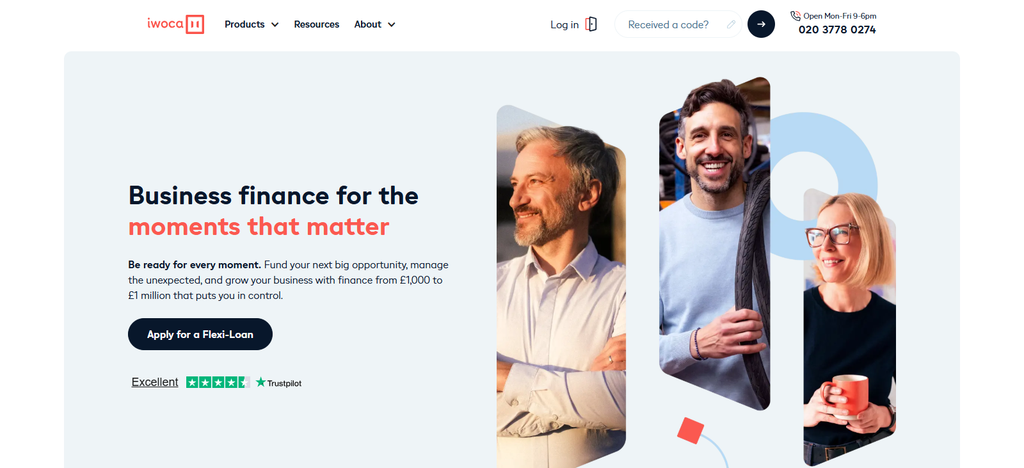
Interest is often quoted at between 1.5% and 5.7% per 30 days and so annualized costs can be materially higher than bank lending. No charge for 12 months or less, upfront fee for longer terms, free early repayment. Funding is mainly institutional, and iwoca does not offer direct loan investment to retail investors.
Key Features
- Offers business loans from £1,000 to £1 million with flexible terms.
- Offers Flexi-Loan facilities for working capital and business expenses.
- Enables businesses to draw down funds up to their approved credit limits.
- It charges interest based on how much is borrowed and for how long it is used.
- Lets you make early repayments without any penalty for doing so.
What makes us different?
- Access to approved business credit on flexible terms
- Provides automated lending decisions and digital applications.
- Provides businesses with access to additional funding through eligible top ups.
- Focus on flexible finance for small businesses and growing SMEs.
3. Crowdfunding
Crowdcube is a UK-based equity crowdfunding platform that enables investors to purchase shares in private, high-growth companies. Founded in 2011, it is an all-or-nothing platform, so if a campaign doesn’t reach its minimum target, investor money is returned.
Its financing model is equity not debt, so there is no interest rate, fixed repayment schedule or guarantyd return; investors may receive dividends, a sale proceeds or nothing.
Retail investors can access investors subject to suitability and risk warnings. Crowdcube charges 2.49% on investments with a minimum of £2.49 and a maximum of £250. It also charges 5% on profits made on investments at the point of exit. There are no annual fees for investors.
Main Features
- Equity crowdfunding for growing businesses and start-ups.
- enables companies to raise capital through the sale of shares to investors.
- Links companies to a community of individual investors.
- Supports online fundraising campaigns with investment objectives.
- Offers nominee shareholding arrangements for managing investors’ shares and shareholder administration
Major Diffs
- Focuses on equity investment instead of traditional business loans.
- It allows a company to raise capital for growth without having to make scheduled loan repayments.
- Access to a large community of retail investors.
- Enables shareholder engagement & eligible secondary share trades.
4. Republic Europ
Republic Europe (formerly Seedrs) is an equity-crowdfunding platform that was founded in 2012 and acquired by Republic in 2022. This allows retail investors to invest from small amounts into private companies in Europe, where shares are usually held via a nominee structure.
Its model is equity investment, not lending: investors do not receive any contractual interest or repayment date, and returns are tied exclusively to company performance, exits, dividends, or secondary market sales.
Businesses raise growth capital and investors find campaigns online. Republic Europe charges an investor fee of 2.5% up to a maximum of £250 per investment and 5% of the profits when shares are sold at a gain, and it also makes success-based fees from fundraising companies.
Main Features
- Offers equity crowdfunding for startups and established growth companies.
- It allows companies to raise money by selling equity to investors.
- Links businesses with the UK and European investment community.
- Nominee arrangements are available to manage investor share holdings.
- Allows access to the secondary market for eligible investments where companies allow trading.
What Makes Us Different
- Blends startup fundraising and private-company investment opportunities.
- Nominee-based shareholder administration.
- Provides support to businesses that qualify for investment outside of traditional lending.
- Provides secondary-market functionality for participating investments.
5. Folk2Folk
Founded in Launceston, Cornwall in 2013, Folk2Folk is a peer-to-peer lending marketplace based in the UK. Through a property-backed lending model, it connects investors with established UK businesses looking for secured finance. All loans are secured on UK land or property by a first legal charge, normally up to 60% loan to value.
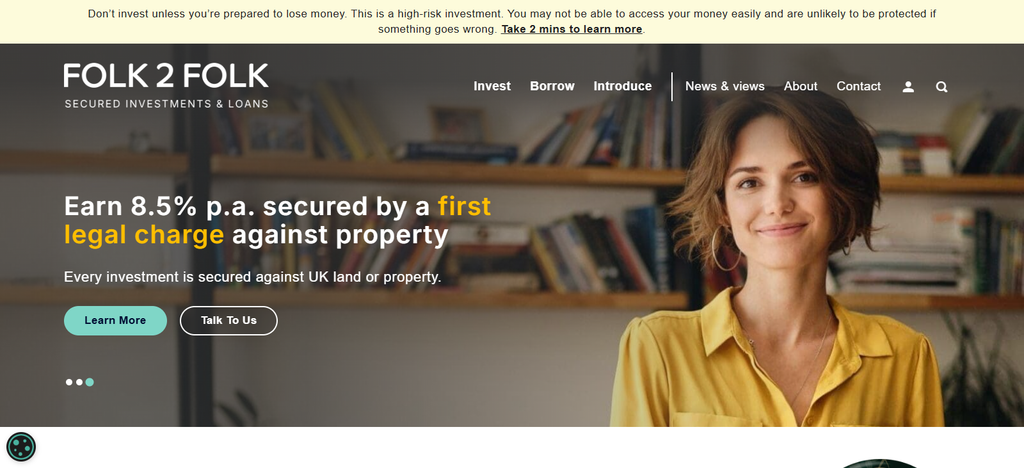
Investors can enter from £20,000 and receive a fixed rate of interest each month, typically 8.5% per annum; returns are not guarantyd and capital is at risk if a borrower defaults. Loans are normally interest only for the term with principal repaid at maturity. There are no fees to invest, but selling out early on the secondary market will cost a flat £250.
Features**
- Provides property secured business loans to businesses in the UK.
- Business finance from £100,000.
- Loans secured by qualifying land or commercial property other than the borrower’s home.
- Offers interest only loan structures at fixed rates.
- Provides loan terms from six months to five years.
What sets us apart
- Specializing in secured property-backed business lending.
- It provides a lending model that links business borrowers to investors.
- Serves a range of business purposes from expanding your business to refinancing.
- Gives investors the chance to lock in a fixed rate and receive monthly interest payments.
6. PropertyCrowd
CrowdProperty is a UK property development and property-backed lending platform launched in 2013. It provides funding for property professionals and property projects for SMEs, with capital from institutional and private investors matched with secured development loans. Its financing model is project-based property debt, typically secured by a first charge.
CrowdProperty says it has delivered an average first-charge secured return of 8.07% on £172m repaid to capital providers. Returns are project-dependent and not guarantyd and development lending involves construction, valuation and completion risk. Borrowers pay arrangement fees of 1.5–3.0%, and the platform adds a lending margin of 1.5–2.5 percentage points per year. Minimum investment and investor access depend on the specific offering.
Key takeaways:**
- Specialist property development finance for UK businesses.
- Offers development loans typically in the £250,000 to £10 million bracket.
- Supports residential development, renovation and conversion projects.
- Provides finance for bridging, development and finish-and-exit.
- Leverages its investment platform to combine institutional funding with investor capital.
Differentiators
- Concentrated on property developers and development projects.
- Financing available at various stages of property development.
- Engages property professionals for development opportunities assessment.- Provides investors with exposure to property backed project finance.
7. Allica Bank
Allica Bank is a UK challenger bank for established small and medium sized businesses, particularly those underserved by the high street banks. Founded in 2016, it is not a crowdfunding or peer-to-peer platform but a regulated bank, funding lending through customer deposits and institutional funding.
Its business loans are typically in the £25,000 to £1m range with fixed monthly repayments over multi-year terms. Published unsecured business-loan interest rates are 9.90% to 13.75% plus 3% arrangement fee.
Allica also offers business current accounts and savings products. Its savings rate can comprise a standard 3.08% AER with promotional boosts subject to conditions. Investors are getting in through bank deposits, not direct loan investing.
Features
- Offers business loans to established SMEs in the UK.
- Offers business loans from £25,001 to £150,000.
- Encourages business growth, investment and capital expenditure.
- The repayment period is between one and five years.
- provides digital applications and personalized lending evaluations.
Differentiators
- targets established small and medium-sized businesses.
- Combines digital banking services with business loans.
- Provides clear indicative rates of interest.
- allows eligible borrowers to pay off loans early with no early payment fees.
8. Fleximize
Fleximize is a UK direct lender to SMEs, founded in 2013. It offers flexible business finance, rather than a marketplace for retail investors. It provides unsecured and secured business loans typically between £10,000 and £500,000 with repayment terms between three and 60 months. The model is funded by fixed monthly repayments with interest rates ranging from 0.9% to 3.6% a month depending on the risk, term and security.
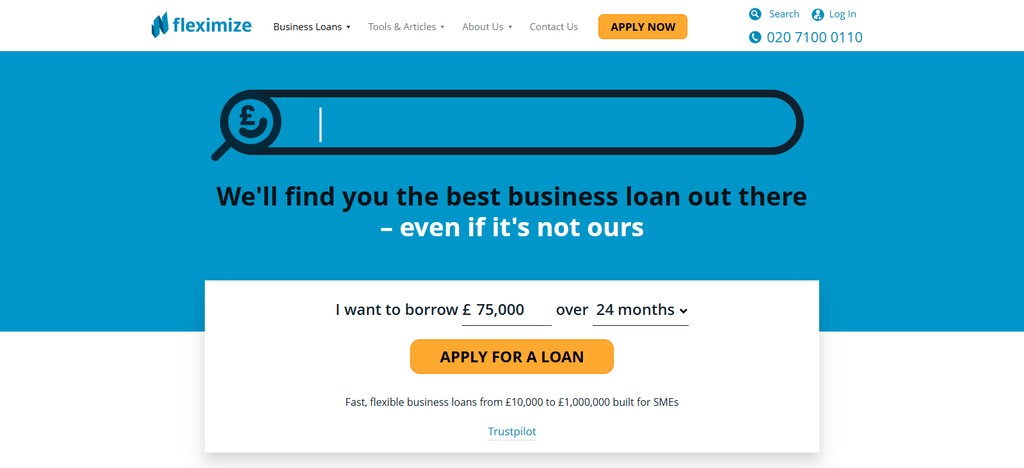
Fleximize says it has no hidden fees, set up fees, application fees, arrangement fees or early repayment fees for customers applying directly. The funding comes from Fleximize and its institutional investors, so individual business loans are not directly chosen by ordinary investors. “Borrowers should look at the total cost of credit, not just the monthly rate.
Features
- Offers secured and unsecured business loans to SMEs in the UK.
- Provides business finance from £10,000 – £1 million.
- Repayment terms are flexible and depend on the financing product.
- Allows for repayment holidays and extra funding via top-ups.
- Interest is calculated on a reducing balance and allows for early settlement.
Important Diffs
- Provides tailored business financing to suit the needs of each individual company.
- Dedicated relationship management for borrowers.
- It helps the companies with flexible repayment options.
- Offers early settlement without any additional early settlement penalties.
9. Skinny Cats
ThinCats is a UK alternative-business-finance provider established in 2011, providing larger, often secured loans to established SMEs including acquisitions, growth capital, refinancing and property-related transactions. It’s not a simple retail peer-to-peer marketplace anymore. The funding is coming mostly from institutional investors and funds.

Typical facilities are typically between £1 million and £30 million with repayment terms of six to 60 months and fixed monthly repayments. Indicative pricing is in the range of 6% to 13% dependent on security, leverage, term and borrower risk.
Consequently, retail investors have little or no access to new direct lending. Fees, security requirements, covenants and repayment structures are unique to each deal and should be reviewed in the formal offer documents.
Main Features
- Specialist business lending to medium-sized UK SMEs.
- Typically Provides funding of between £1 million and £30 million.
- Facilitates organic growth and acquisition financing.
- Offers cash-flow and asset-based lending solutions.
- Uses specialist underwriting and financial data analysis to determine borrowing needs.
Unique Selling Points
- Targeting mid-market businesses with complex financing needs.
- Provides larger funding facilities than many small business lenders.
- Tailors lending structures according to cash flow of the business.
- Supports management buyouts, acquisitions and business expansion.
10. rebuildingsociety.com
rebuildingsociety.com is a peer-to-peer business-lending platform in the UK which allows individual investors to lend directly to small companies. Founded in 2012, it operates a marketplace lending model where investors fund slices of secured or unsecured business loans and receive monthly repayments of principal and interest.

Typical loans are between £25,000 and £250,000, with advertized rates starting at 6% a year, but the actual pricing will depend on the borrower’s credit risk and the loan structure. Investors can spread their money across a number of loans, but they could lose their capital if borrowers default and returns are not guaranteed.
The platform charges fees to borrowers and borrowers may be subject to investor-related charges so investors should review the current fee schedule and loan documentation prior to committing funds.
Main Features
- Provides peer to business lending to UK SMEs.
- Provides secured and unsecured business loan options.
- Supports borrowing to finance business growth, equipment purchases, acquisitions and working capital.
- Links qualified businesses with investors through a lending marketplace.
- Internet applications and loan arrangements funded by lenders.
Key Differentiators
- Runs a marketplace business lending model.
- Gives access to the money of individual investors.
- Provides secured and unsecured financing solutions.
- No penalties for paying the loan off early.
Conclusion
SME investment and financing platforms play an essential role in enabling UK businesses access capital, manage cash flow and deliver sustainable expansion. Funding Circle, iwoca, Crowdcube, Republic Europe and ThinCats are among the platforms that provide different financing opportunities such as business loans, equity crowdfunding and specialist funding solutions.
Different platforms cater to different business needs, from working capital to expansion to real estate development. SMEs and investors need to compare funding limits, interest rates, repayment terms, eligibility criteria, platform fees and associated risks before choosing a provider. Selecting the right platform can help you make the right financial decisions and grow your business in the long run.
FAQ
What Are SME Investment and Financing Platforms?
SME investment and financing platforms connect small and medium-sized businesses with funding opportunities through business loans, equity crowdfunding, peer-to-business lending, and alternative financing solutions.
Which Are the Best SME Investment and Financing Platforms in the UK?
Some leading UK platforms include Funding Circle, iwoca, Crowdcube, Republic Europe, Folk2Folk, CrowdProperty, Allica Bank, Fleximize, ThinCats, and rebuildingsociety.com.
How Do SME Financing Platforms Work?
These platforms help businesses access capital by connecting them with lenders, institutional funding providers, or investors. Funding arrangements depend on the platform’s financing model and eligibility requirements.
Can SMEs Get Funding Without Traditional Bank Loans?
Yes. SMEs can explore equity crowdfunding, peer-to-business lending, property-backed finance, and alternative business loans instead of relying exclusively on traditional bank financing.
What Types of Financing Do These Platforms Offer?
Common options include business term loans, working capital, equity investment, secured lending, property development finance, acquisition funding, and growth capital.