

The private aviation industry offers many investment opportunities beyond the traditional model of owning an aircraft. Investors can gain access to this niche market through fractional private jet ownership and aircraft leasing, charter companies, aviation infrastructure and private credit. In this article I will discuss the Best Private Aviation Investment Opportunities. I will highlight key features, income potential, investment requirements, growth prospects and major risks to help investors identify suitable opportunities.
How to Choose the Best Private Aviation Investment Opportunity?
Investment Capital and Entry Requirements: Assess the minimum investment levels, initial capital, any additional fees, and financing requirements. Select opportunities that are within your budget, not creating too much financial stress or liquidity constraints.
Earning Potential and Expected Returns: Compare the potential returns from aircraft leasing, charter operations, dividends, interest income and asset appreciation. Understand how revenue is generated and whether distributions are tied to business performance.
Investment Time and Liquidity: Investigate how long investments are required to be held, the conditions under which they can be sold or redeemed, the possibility of reselling them and any associated exit fees from an investment. Generally, public aviation stocks are more liquid than private aircraft ownership, leasing funds and infrastructure investments.
Quality of Aircraft and Asset Valuation: Examine the aircraft’s age, condition, maintenance history, market demand, depreciation, and resale value. The quality of aircraft is a direct determinant of demand for leases, operating costs and possible long-term investment returns.
Company’s financial stability: Analyze revenue, profitability, debt ratios, cash flow, customer concentration and financial statements. Airline operators and leasing companies with strong balance sheets may be better positioned to weather market downturns.
Management and operational efficiency: Consider management experience, aircraft utilization, maintenance planning, customer relationships, fleet management, and cost controls. Efficient operations can drive efficiency and help deliver sustainable investment performance.
Maintenance Costs and Operating Expenses: Consider fuel costs, insurance, repairs, crew costs, hangar fees, administrative costs and maintenance reserves. Higher operating costs can decrease net income and overall investment returns.
Risk Management and Regulatory Compliance: Examine the aviation regulations, safety requirements, insurance coverage, contractual obligations, financing terms and investment risks. Before you invest money, make sure you have legal protections, that you are the owner of the asset, and know the exit conditions.
Why Invest in Private Aviation?
Growing Private Travel Demand: Greater demand for business travel, luxury experiences, and flexible flight schedules presents opportunities for private aviation operators, aircraft leasing companies, and charter service providers.
Possibility of Recurring Revenue: Aircraft leasing, hangar rentals, charter operations, and aviation services can provide recurring sources of income from contract payments, customer bookings, and long-term service agreements.
Portfolio Diversification: Investments in private aviation provide exposure to a variety of assets including aircraft, aviation infrastructure, maintenance businesses and financing opportunities, allowing investors to diversify beyond traditional stocks, bonds and real estate.
Aircraft Asset Ownership: Direct aircraft investments allow investors to own physical aviation assets that can generate leasing income, operational revenue or potential resale value in favorable market conditions.
Long-Term Growth Potential: Investing in airports, hangars, aircraft leasing, and maintenance facilities can capitalize on long-term growth in aviation infrastructure and demand for specialized aviation services.
Different Investment Avenues: Investors can choose fractional ownership, lease funds, private credit, charter companies, infrastructure firms or publicly traded aviation stocks based on their capital and risk tolerance.
Business Aviation Growth: Business travel needs, international business operations, and a demand for time-saving transportation can foster commercial opportunities for private jet companies and aviation service providers.
Special investing opportunities: Aircraft engine leasing, asset-backed lending and FBO operations and maintenance businesses provide exposure to niche aviation markets with alternative revenue models and investment structures.
Key Points Comparison Table
| Investment Opportunity | Primary Income / Growth Potential |
|---|---|
| Fractional Private Jet Ownership | Charter revenue, aircraft utilization, resale value |
| Private Aircraft Leasing | Recurring lease payments and residual aircraft value |
| Private Jet Charter Companies | Charter bookings, fleet utilization, premium travel demand |
| Aircraft Leasing Funds | Lease income, portfolio appreciation, aircraft sales |
| Aviation Infrastructure Investment | Facility fees, rentals, operating revenue, infrastructure growth |
| Fixed-Base Operators (FBOs) | Fuel sales, hangar rentals, aircraft handling, passenger services |
| Aircraft Maintenance and Repair Businesses | Maintenance contracts, repair services, recurring fleet demand |
| Aircraft Engine Leasing | Engine lease payments, maintenance-related asset value |
| Aviation Private Credit and Asset-Backed Lending | Interest payments and secured financing income |
| Publicly Traded Aviation Companies | Dividends, earnings growth, share-price appreciation |
1. Fractional ownership of private jets
Fractional private jet ownership allows an investor to purchase a share – typically from one-sixteenth to one-half – in a particular plane, which entitles them to guarantyd access without the full expense and operational obligations of sole ownership. Investment cost includes share purchase, monthly management fees for crew, insurance, hangarage, maintenance, plus occupied-hour charges, fuel and possible exit or remarketing fees.
A 1/8 share in a super-midsize jet can require roughly $1.5-3 million upfront. The income model is largely utility-based, not cash-yield-based: Owners get flight access, possible tax depreciation benefits and sometimes residual value proceeds at the end of the contract, but most programs don’t really share charter revenue.

“Growth potential will depend on premium travel demand, fleet utilization, and residual aircraft values, but this is not a traditional high-growth investment. The main risks are aircraft depreciation, multi-year lock-ups, peak-period scheduling constraints, unexpected maintenance costs, and resale uncertainty.
Shares cannot be sold immediately and are subject to remarketing fees, so it is not a liquid investment. This is more for rich people who want convenience and control, rather than investors looking for liquid returns.
Main Features
- Co-ownership allows an investor to purchase a fraction of a private jet instead of the whole.
- Gives access to private aircraft via scheduled usage rights, flight-hour allocations or ownership agreements.
- Initial aircraft acquisition cost is less than outright ownership.
- Professional aircraft management can handle maintenance, crew, scheduling, insurance and other operational administration.
- Some fractional ownership programs may allow aircraft resale, share transfer or exit options subject to contractual terms.
Major Risks
- Management fees, maintenance costs, fuel surcharges and monthly expenses for the aircraft can erode the value of the investment.
- The depreciation of aircraft could reduce the resale value of ownership interests.
- Flights may be impacted by scheduling demand, maintenance or peak travel periods.
- Ownership agreements may contain restrictions, exit fees, transfer conditions or resale limitations.
2. Private Aircraft Hire
Private Aircraft Leasing: This is the acquisition or financing of business jets which are then leased to corporate users, charter operators or high-net-worth individuals for recurring rental income. The investment cost can range from buying an aircraft outright (often several million dollars per aircraft) to investing in a leasing platform or fund, with additional costs for financing, insurance, maintenance reserves, storage and remarketing.
Income is derived from fixed monthly lease payments, usage based lease payments, maintenance reserves and potential gains from the sale or re-lease of the aircraft. Lessees benefit from the avoidance of significant capital expenditures, while operators benefit from fleet flexibility.

Demand from corporations, charter companies and fractional programs, particularly where there is limited supply of aircraft, is supporting the growth potential. There are, however, risks including lessee credit degradation, between-leases vacancy, maintenance cost overruns, interest rate exposure, geopolitical or repossessions issues and declining aircraft values.
Liquidity is relatively low as it can take time to sell whole aircraft and private lease portfolios, although diversified funds or listed leasing companies may provide better access than direct ownership.
Important Features
- Generates contractual income from leasing aircraft to private operators, charter companies or corporate aviation customers.
- Lease contracts specify payment terms, contract length, aircraft usage terms, and maintenance responsibilities.
- Investors have access to aircraft assets without running aviation businesses themselves
- The leasing structures can be operating leases, finance leases or other aircraft financing arrangements.
- Aircraft residual values can contribute to potential returns when assets are sold at the end of the lease.
Primary Risks
- Lessees may default or experience financial difficulties.
- The residual value of assets may be reduced by aircraft depreciation and changing market demand.
- Investment costs can be increased by maintenance, refurbishment, insurance and repossession costs.
- Income interruptions can occur from lease renewals, aircraft remarketing and operator replacement.
3. Companies Renting Private Jets
Private jet charter companies offer on-demand flights, memberships, jet cards and managed-aircraft services. They generate revenue from flight hours, fuel surcharges, membership deposits, aircraft management fees and charter brokerage margins. Investment costs can vary widely. A negotiated capital commitment may be required for a minority stake in a private company.
Public operators can be accessed via shares. Operating businesses require significant working capital for crews, aircraft leases, insurance, scheduling technology, and customer acquisition. The model for income is driven by high utilization, pricing power at peak demand, repeat corporate and leisure customers, and ancillary revenue from catering, ground transport, and aircraft management.

Growth potential can be strong if the operator can expand routes, fleet capacity, membership programs or international coverage, but profitability is sensitive to fuel costs, pilot availability, demand cycles and fixed cost leverage.
Risks include safety incidents, regulatory oversight, customer concentration, high fixed operating costs and thin margins in downturns. The structure of an investment affects liquidity . Publicly traded operators provide daily market liquidity, while an investment in a private charter company can be illiquid and require a longer holding period.
Features
- Generate revenue from private jet charter reservations, premium travel services and custom flight itineraries.
- Take advantage of demand from corporate executives, high-net-worth travelers and business customers.
- Financial performance is driven by aircraft utilization, booking volume, pricing and operational efficiency.
- Offer services such as on-demand charter flights, empty-leg flights, group travel and managed aircraft operations.- Business expansion could include fleet expansion, new destinations, new customers and technology-driven booking systems.
Major Risks
- Operating costs can increase substantially because of fuel prices, pilot salaries, insurance and aircraft maintenance.
- Demand for charters can fall in a recession or when there is less business travel.
- Competition from other charter operators, fractional ownership programs and commercial premium travel could affect pricing.
- Aircraft availability, operational disruptions, regulatory compliance and cancelations can affect revenue.
4. Aviation Leasing Funds
Aircraft leasing funds pool money from investors to buy commercial or business aircraft, and then lease them to airlines, cargo operators, charter firms or corporate users. This gives investors a diversified exposure to aviation assets without the need to buy a whole plane. The investment costs are dependent on the fund structure, minimum subscription, management and performance fees and whether the vehicle is open-ended or closed-ended.
Direct aircraft ownership is capital intensive, but fund participation reduces the entry threshold. Income is primarily generated from contractual lease rentals, maintenance reserves, security deposits and eventual aircraft sales, with returns typically being targeted by combining current yield and capital appreciation. Growth potential is driven by growth in global air-travel, fleet renewal, demand for cargo and the ability to re-position aircraft among lessees and regions.
The main risks are airline default or insolvency, aircraft downtime, decline in residual value, maintenance surprises, currency mismatch, movements in interest rates, sanctions and concentration in specific aircraft types or jurisdictions. Liquidity tends to be limited, especially for private funds with multi-year lockups, but listed aviation-leasing companies or secondary-market interests could provide more flexibility.
Main Features
- Give investors access to diversified aircraft leasing portfolios through structured investment funds.- Generate potential earnings from aircraft operators and airlines lease payments.
- Portfolio diversification can help reduce exposure to a single aircraft, lessee or lease contract.
Professional fund managers arrange the acquisition of aircraft, leasing arrangements, portfolio administration and asset disposal.- Investment structures may provide periodic distributions, capital appreciation or proceeds from the sale of aircraft.
Major Risks
- Fund returns driven by lessee payment performance, aircraft demand and portfolio management decisions.
- Net investor returns can be reduced by management fees, fund expenses and financing costs.
- Redemption possibilities are limited and investment horizon is longer in private aviation funds.
Volatility in the aircraft market, uncertainty as to residual values and defaults on leases can have an adverse impact on fund valuations.
5. Investment in Aviation Infrastructure
Investment in aviation infrastructure includes airports, terminals, runways, hangars, cargo facilities, air-traffic systems, ground-handling assets and airport-service companies that allow passengers and freight to move. Investment costs are usually high and long-term in nature, often requiring substantial equity, project finance, concessions or participation from infrastructure funds; returns are based on regulated fees, landing fees, concession rents, parking, retail, cargo handling and long-term usage agreements.
The income model is generally contractual and inflation linked, with revenues coming from airlines, passengers, retailers, logistics companies and government or concession authorities. Growth potential is linked to passenger traffic, air cargo driven by e-commerce, airport expansion and modernization programs and increasing demand for capacity in constrained markets.

Risks include political and regulatory intervention, volatility of traffic volumes, high capital expenditure, construction delays, environmental opposition, labor disputes and leverage sensitivity.
Direct infrastructure assets are typically not very liquid as airports and concessions are specialized, but exposure can be more readily accessed through publicly listed airport operators, infrastructure funds or listed aviation-infrastructure companies. This is for long-term investors who want inflation-linked cash flows rather than quick capital gains.
Main Features
- Offers investment exposure to airports, private aviation terminals, hangars, runways and supporting infrastructure.- Infrastructure assets can provide recurring income through rentals, landing fees, facility charges and service agreements.
- There is future demand for air travel which can maintain the use of infrastructure and growth of facilities.
- Investments can be in privately managed airport facilities, aviation real estate or infrastructure funds.
- Infrastructure development and modernization can provide opportunities for asset appreciation and revenue growth.
Risk Factors
- Infrastructure projects are capital intensive and have long investment and construction periods.
- Operations can be affected by regulatory approvals, zoning restrictions, environmental requirements and government policies.
- Economic conditions can affect airport traffic, private aviation activity and tenant demand.
- Construction delays, financing costs, maintenance needs, and facility upgrades can influence profitability.
6. Fixed-Base Operators (FBOs)
Fixed-base operators, or FBOs, are airport businesses that provide fueling, hangar space, ground handling, passenger lounges, de-icing, charter coordination, maintenance referrals and other services for private, corporate and charter aircraft. Investment costs may include purchase or development of an FBO location, airport leases or concession rights, construction of hangars and terminals, purchase of fuel farms and ground equipment, and working capital.
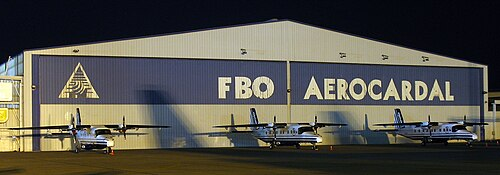
Costs can be substantial as there is a scarcity of prime airport locations. The business generates revenue from fuel margins, hangar and office leases, handling fees, landing-fee pass-throughs, de-icing, concierge services and aircraft-management or charter partnerships. The growth potential is supported by business-aviation growth, airport congestion, premium-service expectations and the ability to expand across a network of locations.
The risks are that you depend on local traffic levels, the terms of your lease with the airport authority, the volatility of fuel prices, that you comply with environmental regulations, that you face competition from other FBOs and that your fixed costs are high. Liquidity is moderate to low: standalone FBOs can be sold to strategic buyers or consolidators but deals take time; investment through listed aviation-services companies provides easier access to the market.
Features
- Provide necessary services for private aircraft such as fueling, parking, hangar space, and ground handling.
- Generate revenues from aircraft fuel sales, facility rentals, passenger services and aviation support operations.
- Meet the needs of business aviation operators, charter companies and corporate flight departments and private jet owners.
- Recurring revenue can be supported by repeat customer relationships and long-term hangar leases.- Opportunities for expansion may include new airport locations, new facilities, premium passenger lounges and service diversification.
Principal Risks
- Volatility in fuel prices impacts operating margins, inventory costs and customer demand.
- Continuity of business may be affected by lease agreements, operating permissions and regulatory requirements at the airport.
- Competition from other FBO operators can put pressure on fuel pricing and revenue from services.
- Fluctuations in airport traffic, investment in infrastructure and maintenance of facilities all play a role in profitability.
7. Aircraft Maintenance and Repair Firms
MRO, which stands for maintenance, repair and overhaul, companies inspect, service, repair, modify and certify aircraft, engines, components and avionics for airlines, cargo carriers, business-jet owners and leasing companies.
Investment costs depend on scope: a component-repair shop or line-maintenance operation may require less capital than a heavy-check facility, engine shop, or avionics center, but all require certified technicians, tooling, spare parts, hangar space, regulatory approvals, insurance, and quality systems.

Revenue sources include labor-hours, fixed-price maintenance contracts, time-and-material billing, parts sales, engine shop visits, component exchanges and long-term service agreements. Growth prospects are strong, as aircraft fleets need regular maintenance irrespective of economic cycles.
The demand can be boosted by fleet age, supply-chain constraints, technician shortages and airframe/engine upgrades. Risks include failure to get certified, safety incidents, lack of skilled workers, rising parts prices, customer concentration, working capital pressure and expensive regulatory compliance.
Liquidity is fair: established MRO players can attract strategic or private equity investors, but niche facilities and licenses can restrict the universe of buyers; public MRO players offer more liquid exposure.
Main Features
- Earn revenue by scheduled maintenance, inspections, repairs, aircraft upgrades and technical servicing.
- Ongoing maintenance requirements throughout the aircraft operating lifecycles.
- Specialized capabilities in aircraft engines, avionics, airframes and component repairs can provide competitive advantages.
- Support of service delivery through certified technicians, maintenance facilities, equipment and regulatory approvals.
- Long term maintenance contracts and repeat business from operators may provide better revenue visibility.
Major Risks
- A shortage of skilled technicians can lead to higher labor costs and reduced service capacity.
- Ongoing costs of regulatory certification, safety standards and compliance requirements.
- Equipment investments, facility upgrades, and specialized tooling may require significant capital requirements.
- Maintenance delays, technical errors, liability claims and operational disruptions may harm reputation and profitability.
8. Aircraft Engine Leases
Aircraft engine leasing provides engines, spares or engine services to airlines, cargo operators and MRO providers through operating leases, power-by-the-hour contracts or sale and leaseback structures. The cost of investment is high as modern engines are expensive and technically complex assets and investors may have to provide for the purchase of engines, green-time checks, spare-part inventories, maintenance reserves, transport and insurance. Participation through a specialized leasing company or fund can reduce the minimum capital requirement.
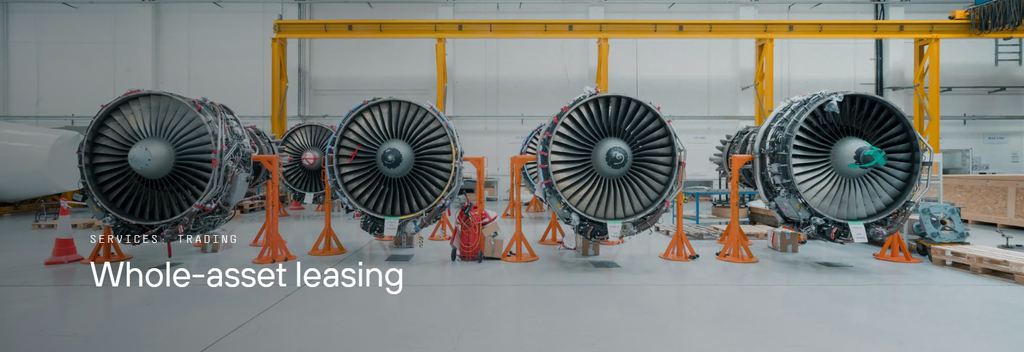
Sources of income are monthly lease rentals, usage-based charges, maintenance-reserve payments, shop-visit reimbursements and asset sales, and engine lessors often benefit from high utilization and contractual cash flows. Fleet expansion, engine shortages, longer aircraft utilization and demand for flexible capacity during maintenance events support potential for growth.
Risks include: engine value volatility; unanticipated shop visits; technological obsolescence; lessee default; aircraft repossession difficulty; interest-rate risk; and geopolitical limitations. Direct engine portfolios are typically quite illiquid, though exposure can be obtained through listed engine-leasing companies or diversified aviation funds which are more accessible and tradable exposures.
Tech specs
- Provides exposure to aircraft engines on a stand-alone leasing asset basis rather than the whole aircraft.- Provides potential recurring revenue from airline and aviation operator engine lease payments.
- Engine leasing is an option for operators needing replacements for maintenance, repairs or fleet expansion.- Lease agreements may include payment schedules, conditions of use and maintenance clauses.
- Engine remarketing, leasing demand and residual asset value can support investment performance.
Principal Risks
- Older engine types may see demand drop as engine technology evolves.
- Maintenance reserves, refurbishment costs and overhaul costs can be significant.
- The amount of income from the engine lease depends on the financial strength of the operator and the performance of the lease contract payments.
- The value of the engine, availability and resale demand may differ depending on the state of the aviation market.
9. Private credit and asset backed lending in aviation
Aviation private credit and asset-backed lending is a type of loan secured by aircraft, engines, leases, receivables or aviation-related cash flows, as opposed to owning the underlying asset directly. The cost of investing will depend on whether the investor is participating directly in a loan, buying notes or investing through a private-credit fund. Minimum commitments can be high and investors should also factor in management fees, due-diligence costs and leverage, if applicable.
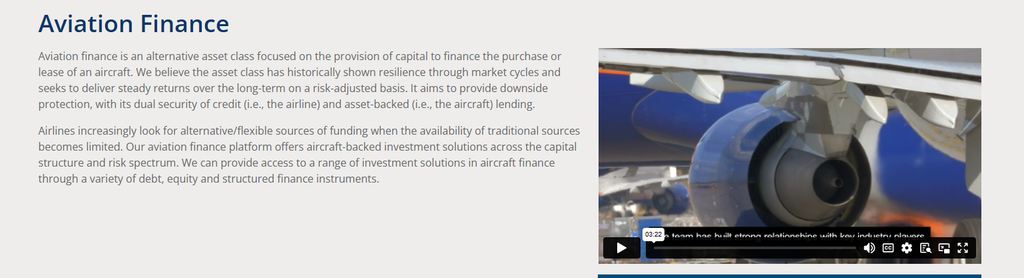
The income model is primarily interest income, arrangement fees, origination fees and sometimes equity upside or warrants. Collateral and lease payments are structured to protect principal. “We see opportunity for growth from borrowers looking to raise capital to buy fleets, refinance, charter operations, MRO expansion and aircraft acquisitions, particularly at times when bank lending is constrained.
Risks include borrower default, repossessing aircraft being difficult, collateral value declines, maintenance status deteriorating, interest rate and refinancing risk, currency exposure, sanctions, and legal enforceability across jurisdictions. Aviation loans and private credit positions are not exchange-traded and therefore typically have low liquidity, but access can be improved through diversified funds, credit intervals or listed aviation lenders.
Main Features
- Provides financing to aircraft owners, leasing companies, aviation operators and the private aviation business.- Provides possible investment income via contractual interest payments and loan origination fees.
Financing may be against aircraft, engines, aviation equipment or other qualifying assets.- Investment structures include senior secured loans, asset-backed and private debt arrangements. - The loan term, interest rate, collateral value and repayment schedule determine the investment structure.
Key Risks
- Borrowers can default on loans, interest payments or contractual duties.
- Aircraft collateral values can decline, reducing the value recovered in the event of a default.
- Loan restructuring, repossession, legal proceedings and asset recovery may add to costs.
- Private credit investments may be illiquid, with limited exit opportunities and unclear recovery horizons.
10. Aviation Public Trading Companies
Publicly traded aviation companies provide liquid exposure to the aviation value chain, including airlines, aircraft manufacturers, engine makers, leasing companies, MRO providers, airports, defense contractors and business-aviation operators. Investment costs are flexible, as investors can buy shares through a brokerage account with relatively small sums, although it may be wise to diversify across several companies or an aviation ETF.
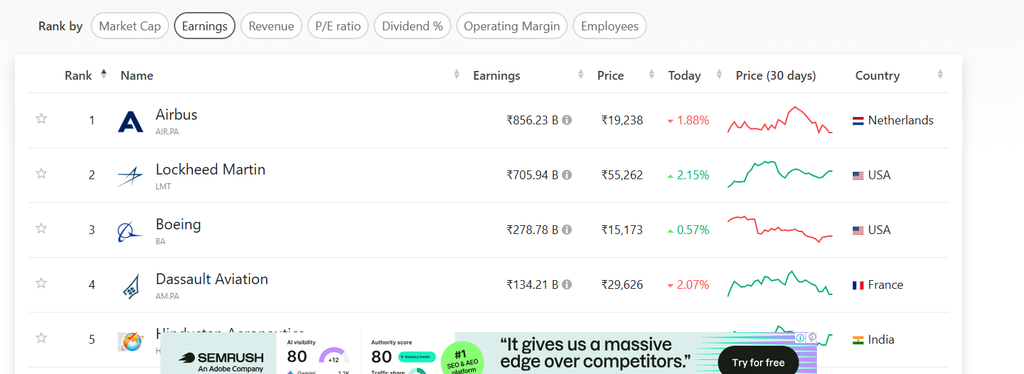
The income model can include share price appreciation and dividends. Underlying businesses generate revenue from sales of aircraft, lease rentals, maintenance services, passenger travel, cargo, airport fees and government contracts. Growth prospects are tied to global demand for air travel, fleet renewal, defense expenditure, supply-chain normalization, technology uptake and operating leverage. Valuations could be volatile.
Risks include recessions, fuel price swings, labor disputes, regulatory changes, safety events, geopolitical disruption, interest rate sensitivity and company-specific execution problems. The biggest benefit is liquidity . Generally , shares listed on the stock exchange can be bought and sold every day . This is the most accessible form of investment in aviation , although short-term losses can be very large because of market volatility .
Main Features
- Investors can buy shares of aviation companies that are listed on stock exchanges.
- Exposure to aircraft leasing, aviation services, manufacturing, maintenance and business aviation operations.
- Potential for capital growth can be realized through share price appreciation as company earnings and business valuations increase.
- Some aviation companies may pay dividends, depending on profitability and corporate policies.
- Publicly traded stocks generally offer greater liquidity and ease of trading than direct private aircraft ownership.
Principal Risks
- The stock price may fluctuate due to market volatility, economic conditions and the performance of the aviation industry.
- Profitability of the company may be affected by debt levels, changes in interest rates and cost of financing.
- Earnings could be affected by fuel prices, demand for aircraft, maintenance costs and regulatory changes.
- Dividends are not guarantyd and you may lose capital if you sell your shares.
Conclusion
Private aviation investments offer a variety of ways to participate in the growing business aviation market, including fractional jet ownership, aircraft leasing, charter companies, infrastructure and aviation financing. Every investment option has different income models, capital, growth potential and levels of risk.
Aircraft and FBO leasing can provide you with recurring revenue. Publicly traded aviation companies are easier for the market. But investors should take into account the costs of maintenance, depreciation of assets, liquidity, regulatory requirements and financial stability. Choosing the right opportunity requires thorough research , realistic return expectations , and effective risk management , as well as a fitting long-term investment strategy .
FAQ
What Are the Best Private Aviation Investment Opportunities?
The best opportunities include fractional private jet ownership, aircraft leasing, charter companies, aircraft leasing funds, aviation infrastructure, FBOs, maintenance businesses, engine leasing, private credit, and publicly traded aviation companies.
Is Investing in Private Aviation Profitable?
Private aviation investments can generate income through aircraft leasing, charter bookings, hangar rentals, maintenance services, interest payments, and dividends. However, profitability depends on operating costs, market demand, asset values, and management performance.
How Much Money Is Required to Invest in Private Aviation?
Investment requirements vary significantly. Publicly traded aviation stocks may require relatively small amounts, while fractional aircraft ownership, private funds, aircraft leasing, and infrastructure investments can require substantially more capital.
Can Investors Earn Money Through Private Aircraft Leasing?
Yes. Aircraft owners and leasing investors can earn contractual rental income by providing aircraft to aviation operators. Returns depend on lease agreements, payment reliability, maintenance expenses, and aircraft residual values.
Is Fractional Private Jet Ownership a Good Investment?
Fractional ownership provides shared access to aircraft without purchasing an entire jet. However, management fees, operating expenses, depreciation, usage restrictions, and resale conditions should be evaluated before investing.