

In this article, I will talk about the Best Semiconductor Investment Funds for investors who want to explore opportunities in booming chip industry. As the demand for artificial intelligence, data centers, electric vehicles and advanced computing increases, semiconductor companies are becoming a key part of the global technology market. To select the right investment fund, you need to know what it contains, its expense ratio, investment strategy, diversification and potential risks. In this guide we will explore some of the best semiconductor funds to help investors compare their choices and make sound investment decisions.
Why Invest in Semiconductor Investment Funds?
AI Demand Rises: Semiconductor funds invest in companies making the sophisticated chips needed for AI, machine learning and high-performance computing.
Tech Industry Growth: The growing need for smartphones, computers, cloud computing and connected devices offers investment opportunities in the semiconductor industry.
Investment Diversification: The funds invest in a range of semiconductor companies, allowing investors to diversify their holdings across chip designers, manufacturers, and equipment suppliers.
Growth of Electric Vehicles: The growing popularity of electric vehicles drives the demand for automotive chips, power semiconductors, sensors, and advanced electronic components.
Data Center Build-out: Cloud infrastructure and AI data centers will drive demand for processors, memory chips, networking components and advanced semiconductor technologies.
Exposure to Industry Leaders Semiconductor ETFs give you exposure to established companies that are engaged in chip manufacturing, chip design, semiconductor equipment and other related technologies.
Advanced Manufacturing Opportunities: Investment funds can offer exposure to companies developing advanced fabrication processes, smaller chip architectures, and next-generation semiconductor production technologies.
Opportunities in Long-Term Technology: Semiconductor innovation is foundational to developments in robotics, automation, telecommunications and computing, offering potential long-term investment opportunities.
How to Choose the Best Semiconductor Investment Fund?
Check Out Expense Ratios You can also look at the annual expense ratio for each fund to see how much it costs to invest. Lower fees can help you keep more of your potential investment returns and reduce long-term costs.
Look at the Top Holdings: Look at the fund’s top holdings to see which semiconductor companies are included in its portfolio, such as chip designers, manufacturers, equipment suppliers and technology companies.
Evaluate Fund Performance: Look at the fund’s track record, especially during different market conditions, to see how consistent it has been.
Evaluate Portfolio Diversification: Consider the number of holdings, company weightings and industry exposure to avoid over-dependence on a few major semiconductor firms. Think long-term rather than just short-term market fluctuations.
Understand the Investment Strategy: Understand if the fund is market-cap weighted, equal weighted, quantitative selection or thematic investing so that you can be sure that the fund’s strategy is in line with your investment goals.
Evaluate Assets and Liquidity: Review the fund’s assets under management, average trading volume, and bid-ask spreads to confirm it provides adequate liquidity and convenient trading conditions.
Industry Exposure: If there are areas within technology that you are looking to invest in, see if the fund has a focus on AI chips, semiconductor manufacturing, lithography, equipment, memory, or fabless businesses.
Analyze Investment Risks: Before you select a fund that is aligned with your financial objectives and risk appetite, get a sense of the volatility of the semiconductor market, geopolitical constraints, supply-chain disruptions and the race for technology.
Key Points
| Fund Name | Key Investment Focus |
|---|---|
| VanEck Semiconductor ETF | Leading global semiconductor companies, chip designers, and manufacturers |
| iShares Semiconductor ETF | Established semiconductor companies across chip design, manufacturing, and equipment |
| Invesco PHLX Semiconductor ETF | Large semiconductor companies listed in the United States |
| SPDR S&P Semiconductor ETF | Semiconductor companies with diversified, modified equal-weight exposure |
| Invesco Semiconductors ETF | Semiconductor companies selected through a quantitative investment methodology |
| First Trust Nasdaq Semiconductor ETF | Semiconductor companies selected using Nasdaq-based smart-beta methodology |
| Xtrackers Semiconductor Select Equity ETF | Global semiconductor companies with relatively low annual fund expenses |
| Strive U.S. Semiconductor ETF | U.S. semiconductor companies with concentrated sector exposure |
| VanEck Fabless Semiconductor ETF | Fabless chip designers that outsource manufacturing |
| Corgi Lithography and Semiconductor Photonics ETF | Semiconductor lithography and photonics technology companies |
1. VanEck Semiconductor ETF (SMH):
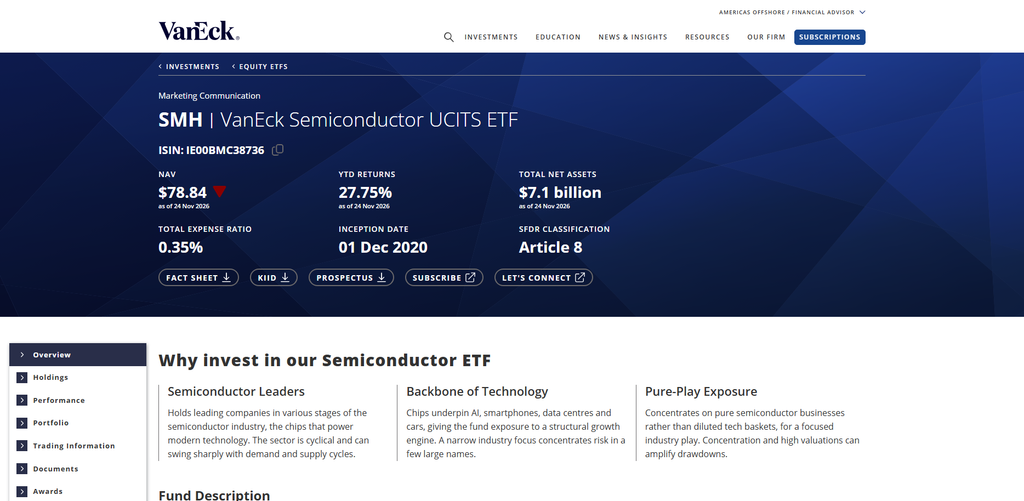
VanEck Semiconductor ETF (SMH) is a large, concentrated semiconductor fund that mirrors the MVIS US Listed Semiconductor 25 Index. It invests in companies in chip design, manufacturing and semiconductor equipment. Holdings must have at least 50% of revenues from semiconductors.
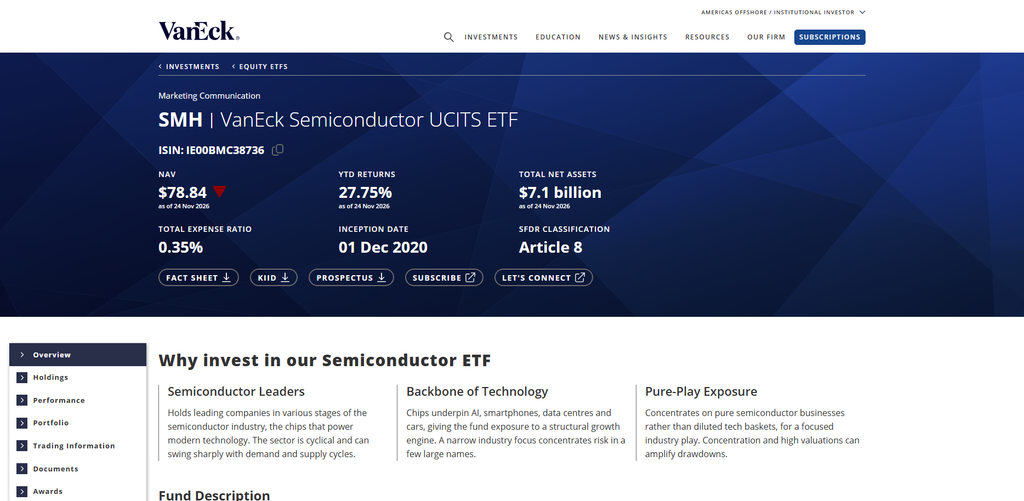
Its top holdings include NVIDIA, Taiwan Semiconductor, Texas Instruments, Broadcom, AMD, Analog Devices and ASML, providing it significant exposure to leading U.S. and global chipmakers.
The portfolio is concentrated in about 25 stocks, not widely diversified but with hefty weightings in mega-cap AI-related names. SMH has an expense ratio of 0.35% and employs a passive, index-replication investment strategy focused on pure-play semiconductor companies.
Main strengths:
- Offers focused exposure to the world’s leading semiconductor companies.- Features major chip makers and semiconductor makers.
- Exposure to AI and data-center chip demand.
- Invests in established companies throughout the semiconductor value chain.
- Exposure to large-cap leaders in the semiconductor industry.
Ideal For
- Investors want exposure to the big semiconductor companies.- AI chip growth pulls in long-term investors.
- Established chip makers and designers are eyed by investors.
- Investors are comfortable with concentrated sector exposure.
2. iShares Semiconductor ETF (SOXX)
The iShares Semiconductor ETF (SOXX) is designed to track an equity index of semiconductor-sector companies in the U.S. It gives investors exposure to chip designers, manufacturers and semiconductor-equipment providers. In iShares’ most recent sector allocation, the portfolio is heavily skewed toward semiconductors, with approximately 83.6% in semiconductor companies and 16.4% in semiconductor equipment.
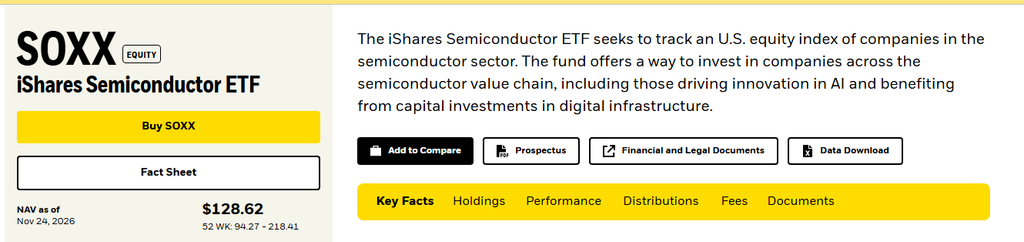
The fund tends to focus on large, established companies in logic chips, analog chips, memory and fabrication equipment, providing investors a broad but still sector-specific approach. SOXX is passively managed and typically employs full or near full replication of its underlying index. It’s a fit for investors looking for diversified exposure across the semiconductor value chain, instead of a concentrated bet on a single chip category.
Key Strengths
- Covers a specialized semiconductor industry index.
- Gives exposure to about 30 semiconductor companies.
- Includes chip designers, manufacturers and equipment suppliers.
- Provides exposure to established businesses in the semiconductor industry.
- Gives diversified exposure to the semiconductor industry.
Best For
- Investors looking for wide semiconductor industry exposure.
- Investors with a long-term view on semiconductor industry growth.
- Investors interested in companies that produce chips and equipment.- Investors looking for an established semiconductor ETF.
3. Invesco PHLX Semiconductor ETF (SOX)
The Invesco PHLX Semiconductor ETF (the “Fund”) is based on the PHLX Semiconductor Index and seeks to replicate, before fees and expenses, the performance of the Index. The fund provides exposure to large U.S.-listed semiconductor companies including leading chip designers, manufacturers and equipment companies. The fund’s portfolio leans toward large-cap industry leaders. NVIDIA is one of the fund’s largest holdings.
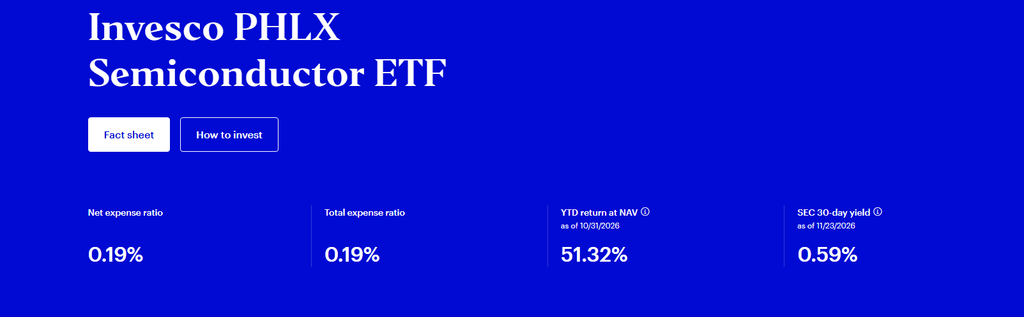
The top 10 holdings make up a large portion of the fund. SOXQ is more diversified alternative to the very concentrated semiconductor ETFs as it tracks the broader PHLX Semiconductor Index versus a small 25- or 30-stock universe. It is passively managed and for investors who want straightforward exposure to the largest, most liquid companies in the semiconductor industry.
Strong Points:
- Follows the PHLX Semiconductor Sector Index.
- Exposure to leading U.S. listed semiconductor companies.
- Has a relatively low expense ratio (0.19%).
- Features leading manufacturers and designers of semiconductors.
- Transparency of sector exposure through index-based investment management.
Best Suited For
- Semiconductor investors on a budget
- Investors looking for exposure to large semiconductor companies.
- Long-term investors who are fond of index-based funds.
- For investors seeking fairly low cost sector diversification.
4. SPDR S&P Semiconductor ETF (XSD)
SPDR S&P Semiconductor ETF (XSD) SPDR S&P Semiconductor ETF (XSD) seeks to replicate the S&P Semiconductor Select Industry Index, which provides exposure to the semiconductor sub-industry of the S&P Total Market Index. Unlike semiconductor funds that are mega-cap heavy, XSD employs a modified equal-weighted approach to offer a more balanced exposure across large-, mid- and small-cap semiconductor companies.
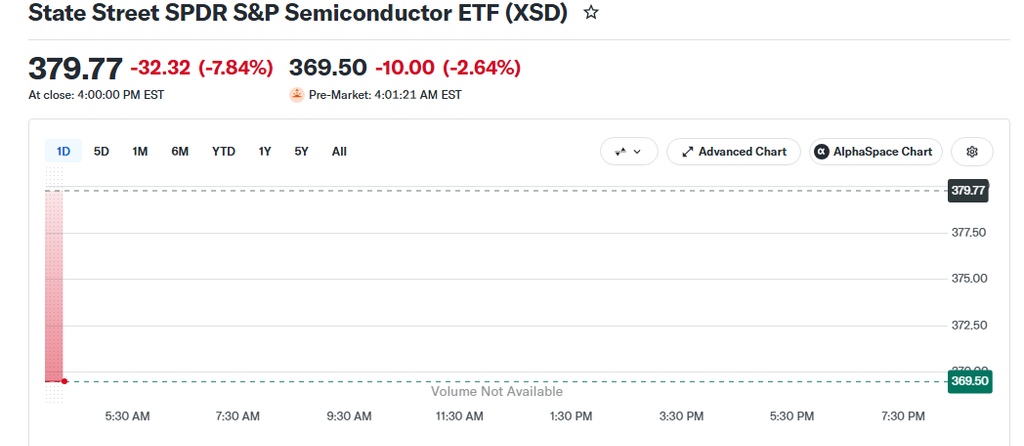
It holds Synaptics, NXP Semiconductors, Texas Instruments, Monolithic Power Systems and Cirrus Logic, a more diversified mix of chip designers and specialized semiconductor firms. The fund holds about 47 securities, offering greater diversification by company size and business models than focused ETFs like SMH. XSD has an expense ratio of 0.35% and uses a sampling approach to track its index.
Main Strengths
- Follows the S&P Semiconductor Select Industry Index.
- Utilizes a modified equal-weight investing strategy.
- Cuts dependence on biggest semiconductor companies.
- Provides exposure to small and mid-sized semiconductor companies.
- Covers various segments of semiconductor industry.
Best Suited For
- Investors looking for a more balanced exposure to semiconductors.
- Investors looking for smaller semiconductor companies.
- Investors looking beyond the dominant chip makers.
- Investors seeking diversified exposure to semiconductor stocks.
5. Invesco Semiconductors (ETF) (PSI)
The Invesco Semiconductors ETF (PSI) seeks to track an index of 30 U.S. semiconductor companies and generally invests at least 90% of its assets in the index’s underlying securities. The fund provides exposure to chipmakers, memory producers and semiconductor equipment companies. Its holdings include Texas Instruments, Analog Devices, AMD, Micron and KLA.
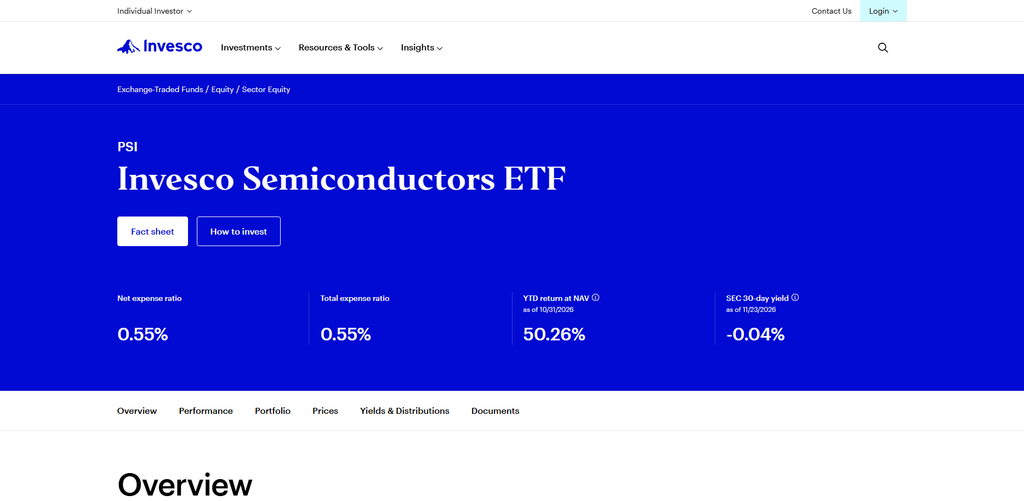
PSI has 30 companies in total, so it is moderately diversified but still very heavily in the semiconductor. It is passively managed and is index based. It seeks to replicate the performance of its underlying index, rather than actively selecting stocks. PSI is a good option for investors seeking U.S.-focused semiconductor exposure with a reasonably balanced allocation across key segments of the chip industry.
Major Strengths
- Uses a quantitative approach to choose semiconductor stocks.
- is the index for the Dynamic Semiconductor Intellidex Index
- Assesses companies on different investment attributes.
- Provides exposure to semiconductor manufacturers and equipment companies.
- Sector investing with a rules-based approach.
Ideal For
- Investors looking to quantitative investment strategies.
- Investors interested in rules-based semiconductor stock selection.
- Investors seeking growth opportunities in the semiconductor industry.
- Investors who are comfortable with factor-based portfolio management.
6. First Trust Nasdaq Semiconductor ETF (FTXL)
First Trust Nasdaq Semiconductor ETF (FTXL) FTXL seeks to track the Nasdaq US Smart Semiconductor Index before fees and expenses, and the performance of the index before fees and expenses. The fund invests at least 80% of net assets in index constituents and holds about 38 securities. FTXL employs a smart-beta, multi-factor approach that weights holdings based on factors like momentum, not just market capitalization.
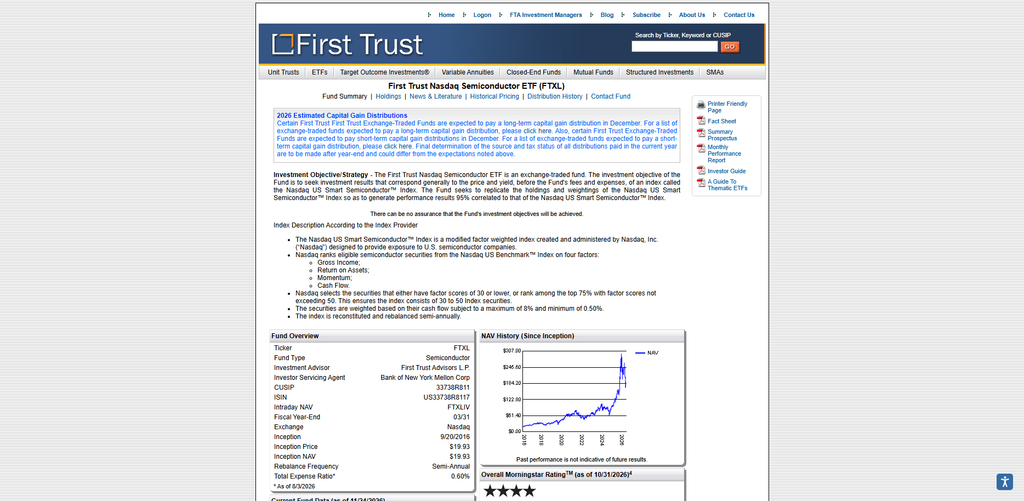
This can help cut dependence on the largest chipmakers while highlighting companies with better recent performance trends. The top holdings tend to be the big semi and equipment companies, although the exact weights change through time. The expense ratio for FTXL is 0.60%, higher than many broad semiconductor ETFs, in line with its factor-based approach.
Key Strengths
- Aims to mirror the Nasdaq US Smart Semiconductor Index.
- Employs a cash-flow based weighting methodology.
- Offers exposure to companies in the semiconductor industry.
- Provides a systematic method for selecting semiconductor stocks.
- Includes companies engaged in chip design and manufacturing.
Best For
- Investors looking to pick stocks using cash flow.
- Investors want to buy Nasdaq semiconductor stocks
- Long-term investors looking for semiconductor sector investment opportunities.-
- Investors who are comfortable with smart-beta investment strategies.
7. Xtrackers Semiconductor Select Equity ETF (CHPS)
The Xtrackers Semiconductor Select Equity ETF (CHPS) aims to track the Solactive Semiconductor Focus Index and offers exposure to companies across the global semiconductor value chain.
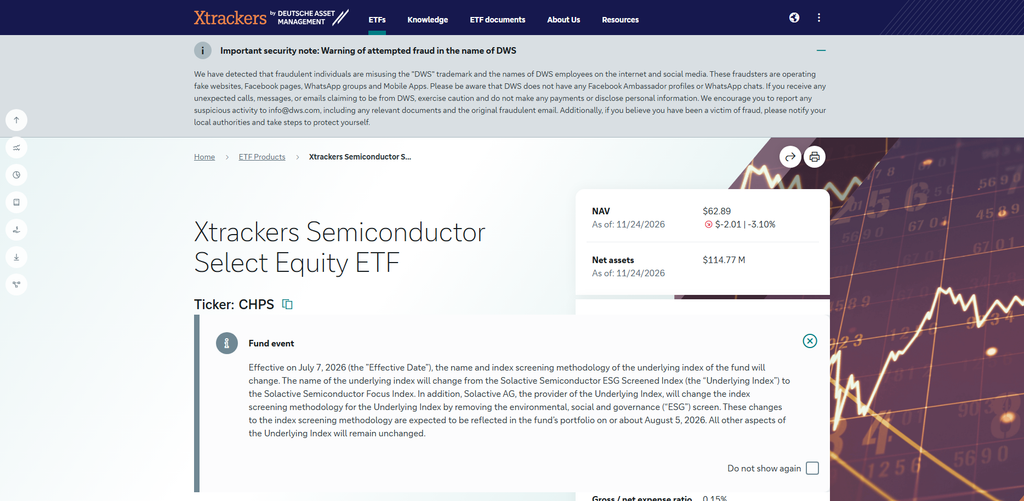
The fund invests in chipmakers, semiconductor-materials and equipment companies and related technology companies and has sector exposure to semiconductors, semiconductor materials and equipment, electronic manufacturing services, lasers and electronic components.
It holds SK hynix, Micron, Broadcom, Applied Materials, KLA and Intel, providing exposure to both chip making and the manufacturing infrastructure. CHPS is a passively managed ETF with a gross expense ratio of 0.15%, one of the lowest in the semiconductor ETF space. Its strategy is weighted more toward broad industry coverage, as opposed to an exclusive focus on U.S. chip designers.
Strengths**
- Provides exposure to global semiconductor companies.
- Expense ratio is relatively low at 0.15%.
- The diversified semiconductor equity portfolio
- Gives you exposure to the international semiconductor industry.
- Index weighting rules limit concentration of individual companies.
Ideal For
- Investors looking for cheaper substitutes to semiconductors.
- Investors are looking at global semiconductor companies.
- Investors looking to gain exposure to non-U.S. chip companies.
- Long-term investors seeking international semiconductor opportunities.
8. Strive US Semiconductor ETF
The Strive U.S. Semiconductor ETF (SHOC) is a passively managed fund that seeks to mirror the performance of the Bloomberg US Listed Semiconductors Select Total Return Index, providing a concentrated exposure to U.S.-listed semiconductor companies. The fund targets major chipmakers, memory companies and semiconductor-equipment makers.
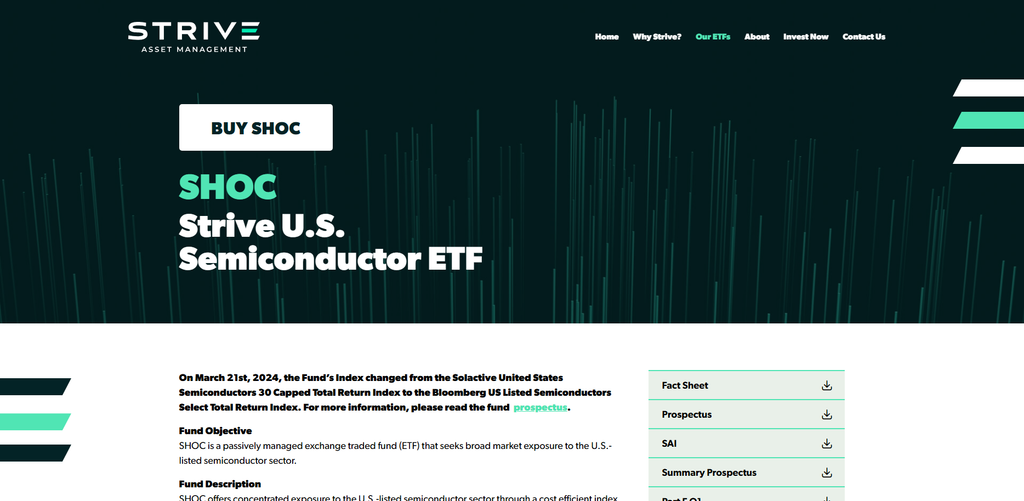
Top holdings include NVIDIA, Micron, Broadcom, Applied Materials, KLA, AMD, ASML, Lam Research, Intel and Marvell. SHOC is also very concentrated in the latest data, with over 17% of the portfolio in NVIDIA, which presents considerable single-stock risk.
It normally invests at least 80% of the assets in U.S. semiconductor companies. It may use replication or representative sampling. SHOC carries an expense ratio of 0.40%. It is intended for investors seeking focused exposure to top semiconductor companies.
Main Strengths**
- U.S. semiconductor companies are the focus.
- Offers targeted exposure to semiconductor companies.
- Includes companies in chip design and manufacturing.
- Provides a focused approach to semiconductor investing.
- Offers exposure to the U.S. semiconductor ecosystem.
Perfect For
- Investors in U.S. semiconductor companies.
- Investors looking for targeted exposure to the technology sector.
- Investors looking to profit from growth in the domestic chip industry.
- Investors comfortable with the investment risks specific to the sector.
9. VanEck Vectors Semiconductor ETF (SMH)
The VanEck Fabless Semiconductor ETF (SMHX) seeks to track the performance of the MarketVector US Listed Fabless Semiconductor Index, which tracks companies that design chips but outsource their production to foundries. The fabless model allows companies to focus on chip design, IP and innovation, leaving the manufacturing to external partners. Top holdings: NVIDIA, Broadcom, AMD, Synopsys, Cadence Design Systems, Qualcomm.
Heavy exposure to AI chips, networking, design software and mobile semiconductors. The fund is concentrated in a relatively small number of leading fabless companies and thus has higher single-name and sector risk than broader semiconductor ETFs. SMHX is passively managed and provides targeted exposure to the design side of the semiconductor industry, not the manufacturing or equipment side.
Core Competencies
- Only targets fabless semiconductor companies.
- Gives exposure to chip-design oriented businesses.
- Focuses on companies that outsource semiconductor manufacturing.
- Provides niche exposure to semiconductor innovation.
- Gives access to companies that produce advanced chip technologies.
Great for
- Investors seeking fabless semiconductor companies.
- Investors looking at semiconductor design companies.
- Investors seeking exposure to semiconductor innovation.
- Investors targeting niche areas of the semiconductor industry.
10. Corgi Lithography & Semiconductor Photonics ETF (EUV)
Corgi Lithography & Semiconductor Photonics ETF (EUV) is an ETF that invests across the photonics and light-based technology value chain including extreme ultraviolet lithography, lasers, optical components, silicon photonics and semiconductor inspection tools. The fund offers exposure to companies involved in the development, deployment and operation of technologies used in advanced chip manufacturing and AI data-center infrastructure.
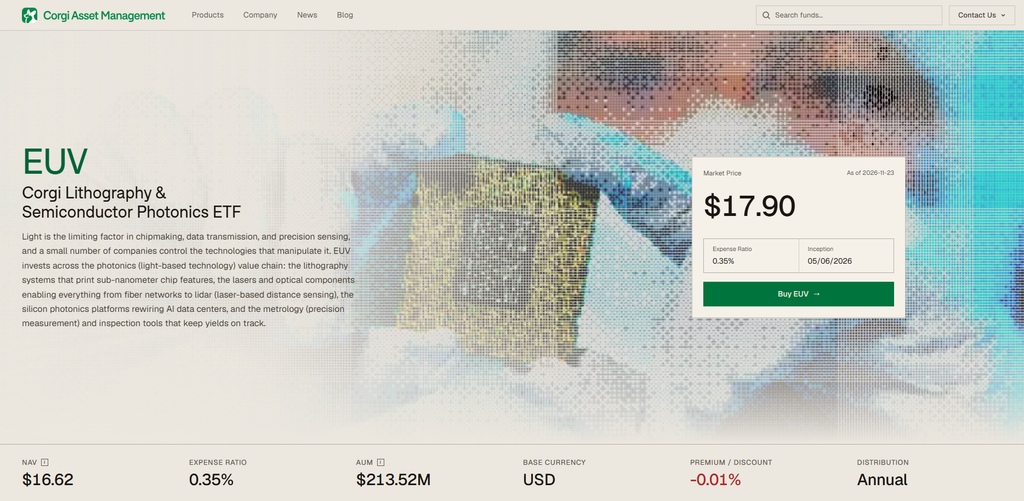
Top holdings include Taiwan Semiconductor, ASML, Applied Materials, Lam Research, KLA, Corning, Lumentum, Entegris, Coherent and MACOM. EUV has about 40 to 42 holdings and provides a moderate level of diversification across lithography, photonics and semiconductor equipment companies. The fund has a 0.35% fee and is more focused and thematic, not following a broad semiconductor index.
Main Strengths
- Focuses on semiconductor lithography and photonics technologies.
- Offers specialized exposure to semiconductor manufacturing technologies.
- targets firms backing high-end chip production
- exposure to semiconductor equipment and photonics innovation.
- Offers a thematic approach to semiconductor investing.
Perfect For
- Investors in semiconductor lithography technologies.
- Investors interested in advanced chip manufacturing infrastructure.
- Investors interested in developing photonics in semiconductors.
- Investors looking for focused exposure to semiconductor technology.
Conclusion
Semiconductor investment funds allow investors to tap into the growth of the global chip industry, from AI to data centers to electric vehicles to sophisticated manufacturing. Funds such as SMH, SOXX, SOXQ, and XSD offer various investment strategies, company exposures, and diversification.
SMHX and similar funds specialize in fabless chip designers, while other funds focus on more general semiconductor technologies. Compare expense ratios, top holdings, historical performance, liquidity and portfolio diversification before investing. By understanding market volatility, industry risks, and investment objectives, investors can choose a semiconductor fund that fits their long-term financial objectives.
FAQ
What are semiconductor investment funds?
Semiconductor investment funds are ETFs or other investment funds that invest in companies involved in chip design, manufacturing, semiconductor equipment, memory, and related technologies.
Which are the best semiconductor investment funds?
Some notable semiconductor funds include VanEck Semiconductor ETF (SMH), iShares Semiconductor ETF (SOXX), Invesco PHLX Semiconductor ETF (SOXQ), and SPDR S&P Semiconductor ETF (XSD).
What is the difference between SMH and SOXX?
SMH provides exposure to leading global semiconductor companies, while SOXX tracks a dedicated semiconductor index with exposure to chip designers, manufacturers, and equipment providers.
Which semiconductor ETF has a low expense ratio?
Among the funds listed, Xtrackers Semiconductor Select Equity ETF (CHPS) has a stated expense ratio of 0.15%, followed by SOXQ at 0.19%.
Are semiconductor ETFs good for long-term investing?
Semiconductor ETFs may suit long-term investors seeking exposure to technological developments, AI computing, chip manufacturing, and growing demand for advanced electronic devices.