By using this site, you agree to the Privacy Policy and Terms of Use.
Accept
CoinRoopCoinRoopCoinRoop
  • Home
  • Exchange
    • Best Crypto Exchange 2026
  • Learn
    • Crypto Business
    • Forex
    • Crypto Wallet
    • Forex Broker
    • How To Buy
    • Bitcoin
    • Net Worth
    • Crypto Knowledge
    • Crypto People
    • DEFI
    • Sponsored
  • Crypto News
    • Press Release
  • Altcoin
    • Live Price
    • Prediction
  • Crypto Casino
  • Contact Us
  • Directory
    • Best Crypto Casinos List
    • Best Crypto Exchange Directory
    • Web3 Ai Agents Directory
    • Live Events Directory
    • Top Crypto Peoples
    • Best Crypto Media Sites 2026
    • Global Cryptocurrency Regulations Directory 2026
    • Coinroop Wiki
    • 2000+ Crypto Coin Price Predictions & Forecasts
    • Best Crypto Wallets 2026
    • Top Crypto Lawyers, Attorneys & Law Firms
    • Top Crypto Venture Capital Firms
    • Best Prop Trading Firms Directory
    • Best Forex Brokers Directory
    • Best Crypto Pr Agency List
    • Best Crypto Tax Tools
Search Article On Coinroop
- Advertisement -
  • Advertise
  • Media Kit
  • Contact Us
  • Verify Us
  • About CoinRoop
  • Disclaimer
  • Editorial Guidelines
  • Authors
  • Terms of Use
  • Privacy Policy
  • FAQ
  • Sitemap
  • Live Events
© 2025 Coinroop News Network. All Rights Reserved. Email - hello@coinroop.com
Reading: How to Run a Bridging Validator Node – Step-by-Step Guide
Share
Sign In
Notification Show More
Font ResizerAa
CoinRoopCoinRoop
Font ResizerAa
  • Advertise
  • Media Kit
  • Contact Us
  • Verify Us
  • About CoinRoop
  • Disclaimer
  • Editorial Guidelines
  • Authors
  • Terms of Use
  • Privacy Policy
  • FAQ
  • Sitemap
  • Live Events
Search Article On Coinroop
  • Home
  • Exchange
    • Best Crypto Exchange 2026
  • Learn
    • Crypto Business
    • Forex
    • Crypto Wallet
    • Forex Broker
    • How To Buy
    • Bitcoin
    • Net Worth
    • Crypto Knowledge
    • Crypto People
    • DEFI
    • Sponsored
  • Crypto News
    • Press Release
  • Altcoin
    • Live Price
    • Prediction
  • Crypto Casino
  • Contact Us
  • Directory
    • Best Crypto Casinos List
    • Best Crypto Exchange Directory
    • Web3 Ai Agents Directory
    • Live Events Directory
    • Top Crypto Peoples
    • Best Crypto Media Sites 2026
    • Global Cryptocurrency Regulations Directory 2026
    • Coinroop Wiki
    • 2000+ Crypto Coin Price Predictions & Forecasts
    • Best Crypto Wallets 2026
    • Top Crypto Lawyers, Attorneys & Law Firms
    • Top Crypto Venture Capital Firms
    • Best Prop Trading Firms Directory
    • Best Forex Brokers Directory
    • Best Crypto Pr Agency List
    • Best Crypto Tax Tools
Have an existing account? Sign In
Follow US
  • Advertise
  • Media Kit
  • Contact Us
  • Verify Us
  • About CoinRoop
  • Disclaimer
  • Editorial Guidelines
  • Authors
  • Terms of Use
  • Privacy Policy
  • FAQ
  • Sitemap
  • Live Events
© 2026 Coinroop News Network.. All Rights Reserved. Help/Ads Email us - hello@coinroop.com
- Advertisement -
Ad imageAd image
- Advertisement -
How To

How to Run a Bridging Validator Node – Step-by-Step Guide

Muffin Lomboda
Last updated: 09/04/2025 3:12 PM
By
Muffin Lomboda
ByMuffin Lomboda
Articles about cryptocurrency usage, account deletion and how-to guides are written by Muffin Lomboda. For nearly three years, Muffin has been actively involved in the crypto...
Follow:
Share
8 Min Read
Disclosure: This website may contain affiliate links, which means I may earn a commission if you click on the link and make a purchase. I only recommend products or services that I personally use and believe will add value to my readers. Your support is appreciated!
How to Run a Bridging Validator Node – Step-by-Step Guide
SHARE

In this article I will cover the How to Run a Bridging Validator Node operation. Bridging validator nodes are essential for the secure communications between different blockchains.

They validate and relay cross-chain transactions, ensuring the interoperability runs smoothly. If you wish to support rewards earning blockchain bridges, knowing how to operate one increases your chances of success.

What is Validator Node?

A validator node is a specific type of computer in a blockchain network that verifies transactions, maintains consensus, and secures the network.
What is Validator Node?

Validators check and authenticate new blocks in accordance with the rules of the network for integrity and fraud prevention. Validators put up tokens as collateral in proof-of-stake (PoS) and similar mechanisms for validation.

- Advertisement -
stake banner

Bridging validator nodes specifically enable cross-communication between blockchains by confirming transactions that occur across chains. Operating a validator node requires advanced technical skills, requisite computing machinery, and strict security compliance.

How to Run a Bridging Validator Node
How to Run a Bridging Validator Node

Let’s look at an example of a platform to show the steps necessary to run a bridging validator node: Shardeum.

Shardeum: Running a Validator Node Step By Step

Ensure the Hardware Requirements Fit:

A minimum of 1 Gbps internet, an 8-core CPU, a stable 16 GB RAM, and 500 GB of SSD.

Install Prerequisites:

Make sure to have Docker and Docker Compose installed on your machine which are required to containerize and run the node.

Download Validator Script

Visit or access the official Shardeum documentation and download the validator script. Make sure to have permissions to run the script.

- Advertisement -

Configure the Node

Setting the validator node will require you to run the downloaded script. You need to setup configuration details like port numbers and passwords.

Check Web Dashboard

With your browser, open the Shardeum web dashboard in order to monitor and manage your node.

Connect Wallet

Staking and earning rewards will only be possible after linking your MetaMask wallet which is connected to the dashboard.

- Advertisement -

Stake Tokens

You will need to set the required amount of SHM tokens in order to activate your validator node.

Start the Node

Utilize the dashboard or even the CLI commands to start your node. You need to confirm it is syncing with the network.

Monitor Performance

Consistently verify that the node is functioning properly by checking its status and logs.

Maintain and Update

Your node has to be updated regularly to the latest software versions, and it has to be optimized to prevent incurring penalties.

Other Place Where Run a Bridging Validator Node

Arbitrum

Arbitrum operates a bridging validator node for its optimization Layer 2 network to allow seamless interfacing on Ethereum.

Arbitrum

It’s use of optimistic rollups is one of the most distinct features, as it alleviates burden on-chain data while still requiring on-chain validators to supervise cross-chain transaction execution.

These validators have an important function in the trustless ecosystem of Arbitrum, preserving seamless data interchange for rapid and low-cost transfers while retaining the decentralized security framework of Ethereum.

Axelar

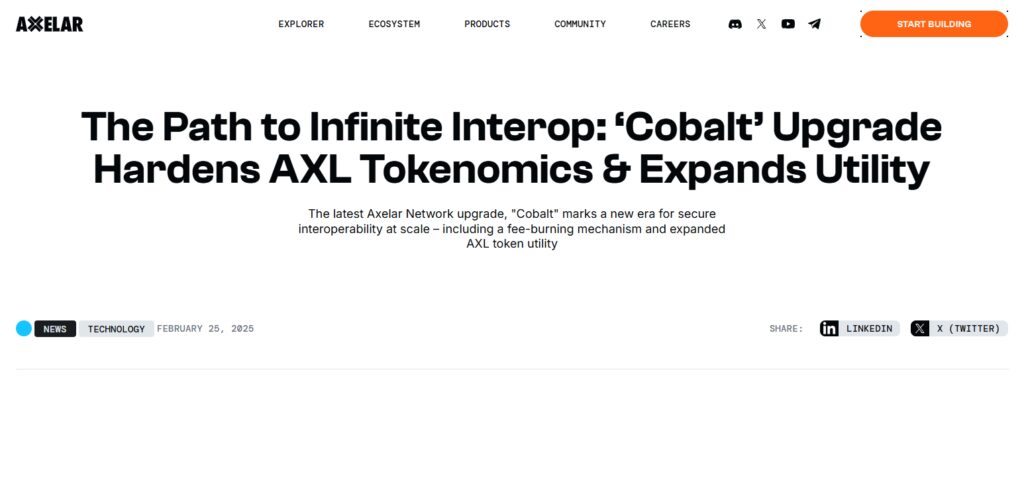
Axelar operates a bridging validator node for universal interoperability between various blockchain networks. Its approach is distinct in utilizing a decentralized validator set to securely handle cross-chain routing as well as message delivery.
Axelar

Different from centralized bridges, Axelar validators cross-validate and cross- execute transactions in a trustless manner, facilitating communication across chains. With this structure, Axelar can onboard more networks while being consistent, scalable and multi-chain decentralized in its bridging operations.

Configuring Validator Parameters

Staking Amount: Set a threshold consensus of the amount of tokens that allows one to validate and cover a portion of the network cost.

Commission Rate: Set the violator reward policy from the delegates in a manner they get to keep certain percentage of the rewards.

Minimum Self-Delegation: Specify the limitation on the self-delegated tokens that the violator must stake to stay active within the network.

Key Management: Establish and protect the consensus keys that are essential to block signing, and performing the tasks needed to properly validate.

Peer Connections: Set the number of minimum peers to guarantee strength and stabilization of network communication and the upper side of the range as a cap.

Block Time Settings: Establish upper and lower thresholds for the production and proposal of novel and innovative blocks.

Slashing Conditions: Define punitive actions that can be taken against malicious actions, double transaction signing, lack of activity.

Gas and Resource Limits: Striking a balance with regard to the number of transactions that can be processed accepts optimizations.

Backup and Monitoring Tools: Set up additional services and tools that ensure better service uptime and tracking.

Testing and Validation

Run on Testnet

Set up the node on a testnet to validate its performance in a risk-free environment.

Check Logs and Errors

Look through logs for various issues including—but not limited to—missed blocks, failures in connecting, and key errors.

Validate Transactions

Make sure that all transactions from your node are being processed and validated accurately.

Network Synchronization

Make sure your node is up-to-date with the current latest blocks.

Security Testing

Conduct scans for vulnerabilities, and evaluate the management of security keys for potential risks.

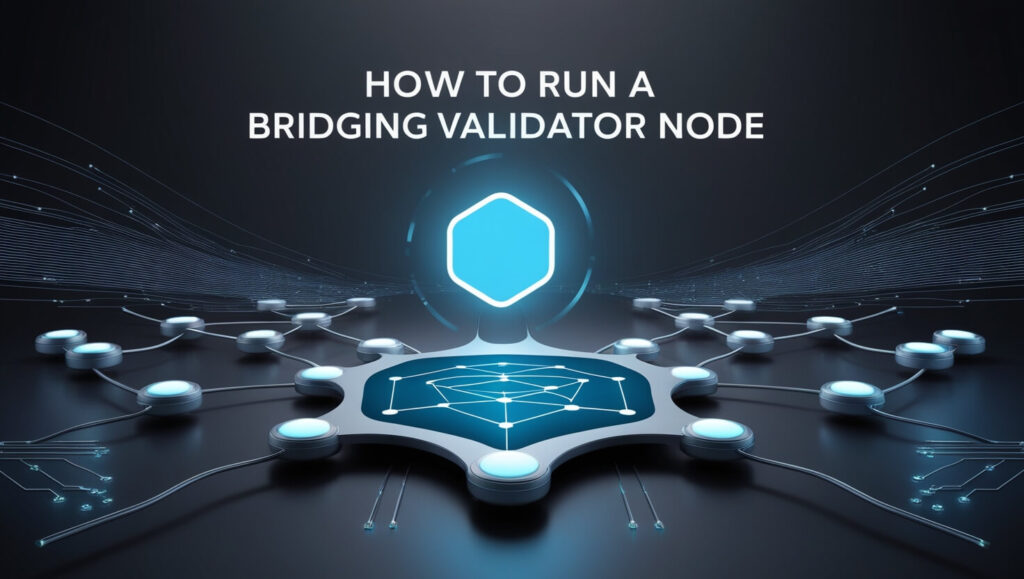
Maintaining and Securing the Node
Maintaining and Securing the Node

Regular Software Updates

Update node software, dependencies, and apply security patches regularly and without fail.

Automated Monitoring

Implement monitoring applications that track uptime and performance and notify you of potential failures and slashing threats.

Secure Key Storage

Private keys should be kept in secure hardware like an HSM, Ledger, or storage that is not connected to the internet.

Firewall and Access Control

Limit connectivity via firewalls; block all non-essential ports; disable password-based logins and enable SSH key-based authentication.

Data Backups

Important configurations and keys should be backed up regularly as part of an office policy.

Pros & Cons

ProsCons
Earn rewards for validating blocksRequires technical knowledge and maintenance
Participate in network governanceRisk of slashing for misbehavior or downtime
Strengthen blockchain decentralizationHigh hardware and bandwidth requirements
Potential long-term incomeConstant need for monitoring and updates
Build reputation in the blockchain ecosystemSecurity risks if keys are compromised

Conclusion

To summarize, the task of operating a bridging validator node is critical in the support of blockchain interoperability and security. It helps in earning rewards while maintaining the network as well as facilitating communication between different blockchains.

Nevertheless, it demands a high level of technical expertise, round-the-clock attention, and stringent security protocols. When configured and maintained adequately, a bridging validator node can contribute meaningfully to the decentralized network while being a part of the ecosystem’s incentives.


Share this:

  • Share on Facebook (Opens in new window) Facebook
  • Share on X (Opens in new window) X
How to Buy TikTok Stock in 2026: Step-by-Step Guide
How to Create Bridging Aggregator Scripts: Step-by-Step Guide
How to Build a Blockchain-based Application for Business?
How to Add Arbitrum to MetaMask Wallet – Step by Step Guide
How To Convert an Air-Cooled Miner into a Liquid-Cooled Beast!

Disclaimer

The content posted on Coinroop.com is for informational purposes only and should not be taken as financial or investment advice. We cannot always ensure that everything is complete, accurate, or reliable.
By signing up, you agree to our Terms of Use and acknowledge the data practices in our Privacy Policy. You may unsubscribe at any time.
Share This Article
Facebook Whatsapp Whatsapp LinkedIn Reddit Telegram Threads Bluesky Copy Link Print
ByMuffin Lomboda
Follow:
Articles about cryptocurrency usage, account deletion and how-to guides are written by Muffin Lomboda. For nearly three years, Muffin has been actively involved in the crypto industry and this has given him enough skills to offer useful tips aimed at guiding people on their digital journeys.
Previous Article 10 Best crypto ETF by performance in 2025 10 Best crypto ETF by performance in 2026
Next Article 10 Best Ether.fi Ecosystem Coins By Market Cap 10 Best Ether.fi Ecosystem Coins By Market Cap
cloudbet
TOP CRYPTO CASINOS
Best Casino Sites
Play slots, live games and sports betting using trusted crypto casinos worldwide.

Shuffle

Crypto Casino & Sports
Play

Rain.gg

Provably Fair Games
Play

Cloudbet

Bitcoin Sportsbook
Play

Wild.io

Instant Crypto Betting
Play

Sportsbet.io

Sports & Live Casino
Play
CONTACT COINROOP
Ads & Partners
Reach Coinroop for sponsored posts, exchange listings, partnerships and promotions.
hello@coinroop.com
GOOGLE PREFERRED SOURCE
Coinroop Trusted Crypto News
Add Coinroop as your preferred Google source to see more crypto news, market updates, and analysis.
✓ Experience | ★ Expertise | 🏆 Authority | 🛡 Trust
Add on Google
TOP CRYPTO PLATFORMS
Best Crypto Exchanges
Trade Bitcoin, altcoins, futures and Web3 assets using trusted global exchanges.

OKX

Web3 & Futures
Trade

KuCoin

Altcoin Exchange
Trade

Bitget

Copy Trading
Trade

MEXC

Fast Listings
Trade

Gate.io

Crypto Marketplace
Trade
- Advertisement -
TOP CRYPTO WALLETS
Best Wallet Apps
Store, swap and manage Bitcoin, Ethereum and Web3 assets securely.

Trust Wallet

Multi-Chain Wallet
Open

MetaMask

Web3 Wallet
Open

Ledger

Hardware Security
Open

Exodus

Desktop & Mobile
Open

Phantom

Solana Wallet
Open
TOP CRYPTO TOOLS
Trader Essentials
Track prices, charts, liquidations and on-chain trends using pro crypto tools.

CoinMarketCap

Crypto Price Tracker
Open

CoinGlass

Liquidation Heatmaps
Open

TradingView

Advanced Charts
Open

DexScreener

DEX Analytics
Open

Arkham

Wallet Intelligence
Open
- Advertisement -

Stay Connected

FacebookLike
XFollow
PinterestPin
TelegramFollow

Latest News

10 Financial Data Brands Using Decentralized Oracle APIs
Blog
10 Global Agencies Launching Web3 Brand Consultancies in 2026
Blog
10 E-Commerce Platforms Using Crypto Cashback for Retention
Blog
10 Real Estate Firms Using Security Tokens for Fractional Property
Blog

You Might also Like

How to Open a Binance Corporate Account: Step-by-Step Guide
How To

How to Open a Binance Corporate Account: Step-by-Step Guide

11 Min Read
How to Open a Euro Business Account in Europe – Step-by-Step Guide
How To

How to Open a Euro Business Account in Europe – Step-by-Step Guide

14 Min Read
How to Install and Use the Dapper Wallet – Step-by-Step Guide
How To

How to Install and Use the Dapper Wallet – Step-by-Step Guide

11 Min Read
How to Set Up an NFT Drop: Step-by-Step Guide
How To

How to Set Up an NFT Drop: Step-by-Step Guide

13 Min Read
CoinRoop
Crypto News
Now visible in
AI Search
9+ engines
ChatGPT
OpenAI
Perplexity
Search AI
Copilot
Microsoft
Gemini
Google
Claude
Anthropic
DeepSeek
Deep AI
Meta AI
Meta
Manus
Agentic AI
Grok
xAI
You.com
AI Search
Kagi
AI Search
ChatGPT
OpenAI
Perplexity
Search AI
Copilot
Microsoft
Gemini
Google
Claude
Anthropic
DeepSeek
Deep AI
Meta AI
Meta
Manus
Agentic AI
Grok
xAI
You.com
AI Search
Kagi
AI Search
Visit Now
Crypto since day 1

Our Address

In Heart Of World
Dubai & Europe
hello@coinroop.com
For Advertisement Email us or telegram at our telegram id - @coinroopads

Subscribe to Blog via Email

Enter your email address to subscribe to this blog and receive notifications of new posts by email.

  • Advertise
  • Media Kit
  • Contact Us
  • Verify Us
  • About CoinRoop
  • Disclaimer
  • Editorial Guidelines
  • Authors
  • Terms of Use
  • Privacy Policy
  • FAQ
  • Sitemap
  • Live Events
binance sidebar
CoinRoopCoinRoop
Follow US
✓ Experience ★ Expertise 🏆 Authority 🛡 Trust

Investment Disclaimer: Coinroop provides educational and informational content only. Nothing on this website constitutes financial, investment, legal, or tax advice. Cryptocurrency investments carry significant risk. Always conduct your own research and consult a qualified financial advisor before making investment decisions.